Avocado Tree Bacon - Persea americana
Avocado Tree Bacon - Persea americana
Persea americana Bacon
avocado
Back-to-school special offer!
Get €10 off for every €50 you spend! And get up to €40 off on a single order.
How does it work?
1. Shop your favourites
Add your favourite plants to your basket. For every €50 you spend (excluding delivery charges, store credit and the plastic-free option), you’ll receive a €10 voucher.
€50 spent = €10 voucher
€100 spent = €20 voucher
€150 spent = €30 voucher
€200 spent = €40 voucher
2. Place your order
Once your basket reaches one of the spending thresholds, place your order. You can even choose your delivery date!
3. Receive your voucher
As soon as your order has been shipped, you’ll receive an email containing your personal voucher code and its value.
4. Use it on your next order
Your voucher is valid for 90 days from the date you receive it. It can be used once only, on a new order worth at least the value of the voucher, excluding delivery charges.
Please note: Vouchers can be combined with other offers, but cannot be split or refunded.
This plant carries a 12 months recovery warranty
More information
We guarantee the quality of our plants for a full growing cycle, and will replace at our expense any plant that fails to recover under normal climatic and planting conditions.
Description
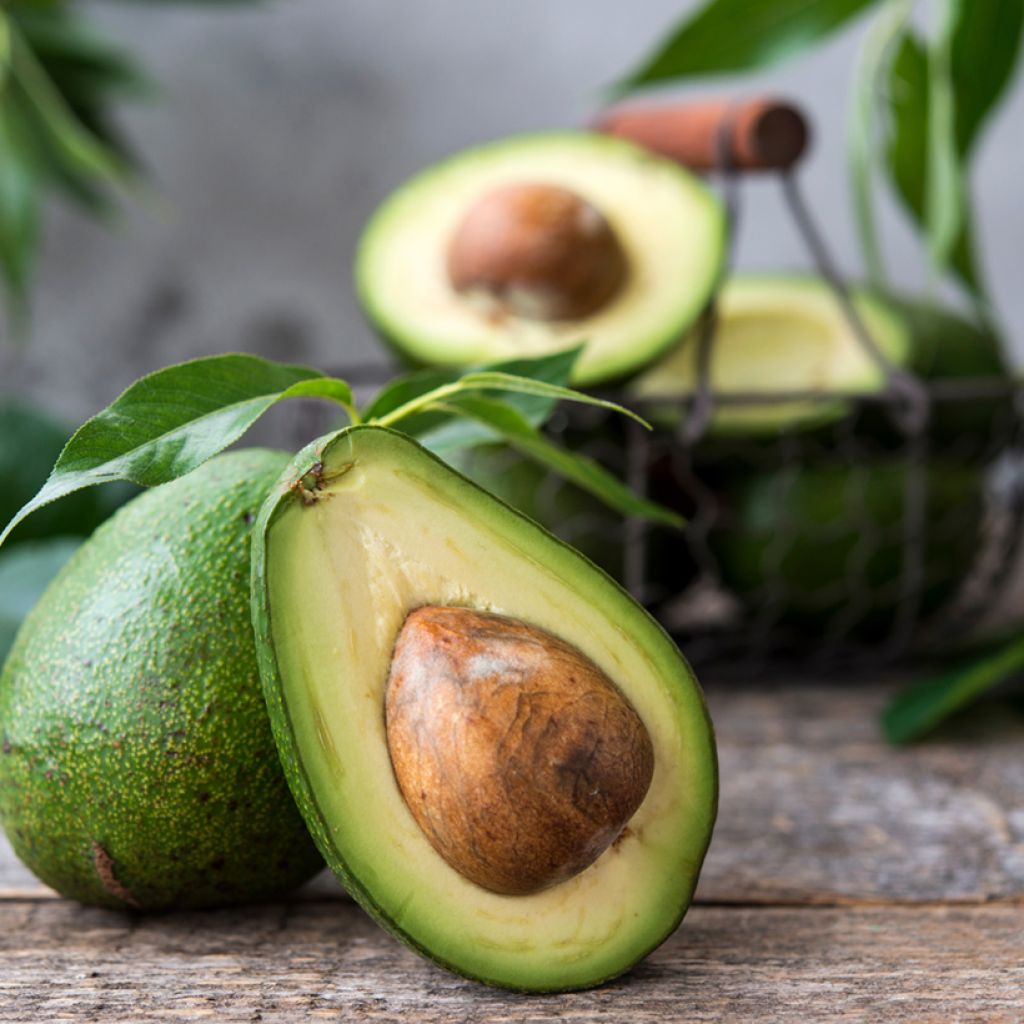
Persea americana 'Bacon' produces pear-shaped avocados, with smooth green skin and excellent taste quality. Their yellow-green flesh is non-fibrous and creamy in texture. The 'Bacon' avocado variety is known for its hardiness compared to other varieties. It can withstand temperatures around -5 to -6°C, and even -7°C for very short periods. It can be grown in the ground in the mildest regions in a sunny or partially shaded position, well sheltered from the wind. Elsewhere, grow your avocado tree in a pot, ideally in a greenhouse or conservatory, or on a well-exposed balcony sheltered from the wind. The conditions for avocado harvest are optimal heat and humidity, along with a good dose of patience. Expect between 4 and 8 years after planting for your first harvest.
Persea americana, better known as the avocado tree, is an evergreen tree from the Lauraceae family, native to Central America. It grows in humid forests, from almost sea level up to 2000 m. Its native range determines its level of hardiness. There are three geographical types: the Mexican avocado tree (subtropical), the Guatemalan avocado tree (subtropical), and the West Indian avocado tree (tropical). It is cultivated in many subtropical regions, in Israel, and more recently in southern Spain. Avocados are appreciated, especially in winter, for their richness in fibre, lipids, vitamins, minerals, and trace elements. This medium-sized tree can reach a height of 10 to 20 metres in its natural habitat, more often 10 than 20. The 'Bacon' variety, if grown in the ground, will not exceed 5 m high in our latitudes. This variety was discovered by James Bacon in 1954. The 'Fuerte' and 'Hass' varieties have overshadowed it, and it is rarely found in cultivation.
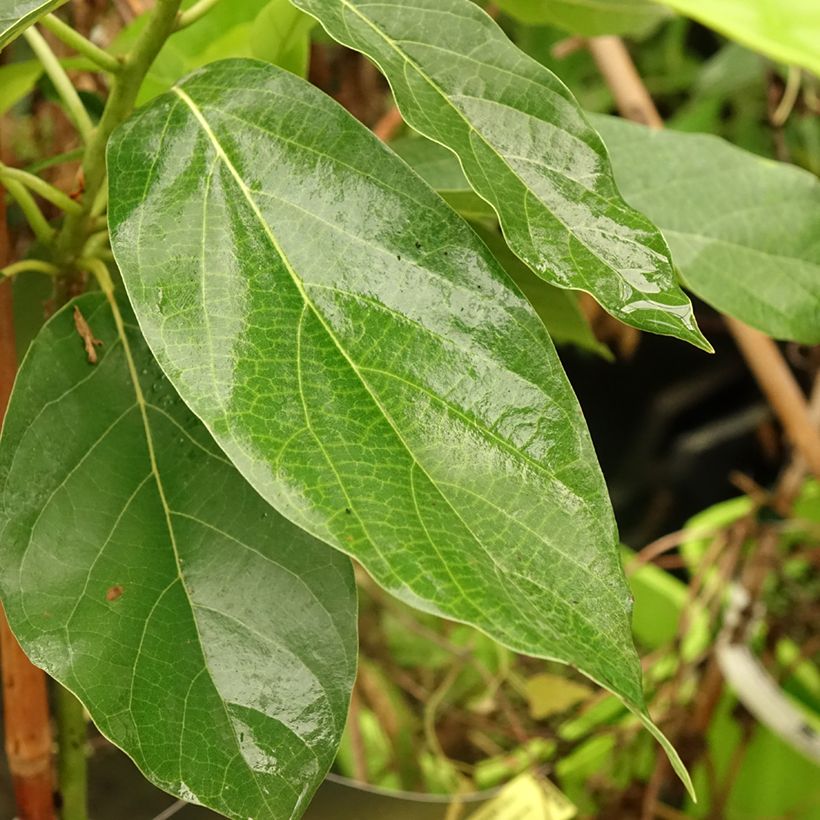
The leaves are rather large, 20 to 30 cm long and 10 to 15 cm wide. They are dark green and shiny. They fall every year, but only after the tree has already formed its new foliage: so the tree remains leafy all year round. Its spring flowers are hermaphroditic, either male or female. And the male and female blooms succeed each other. There are 2 types of avocado trees: protogynous, which starts with female flowering, or protandrous, which starts with male flowering. The 'Bacon' variety, being protandrous, is self-fertile, as both male and female blooms can overlap. However, to maximize your chances of harvest, it is advisable to plant a protogynous variety like 'Hass' or 'Pinkerton' nearby to ensure pollination of the flowers.
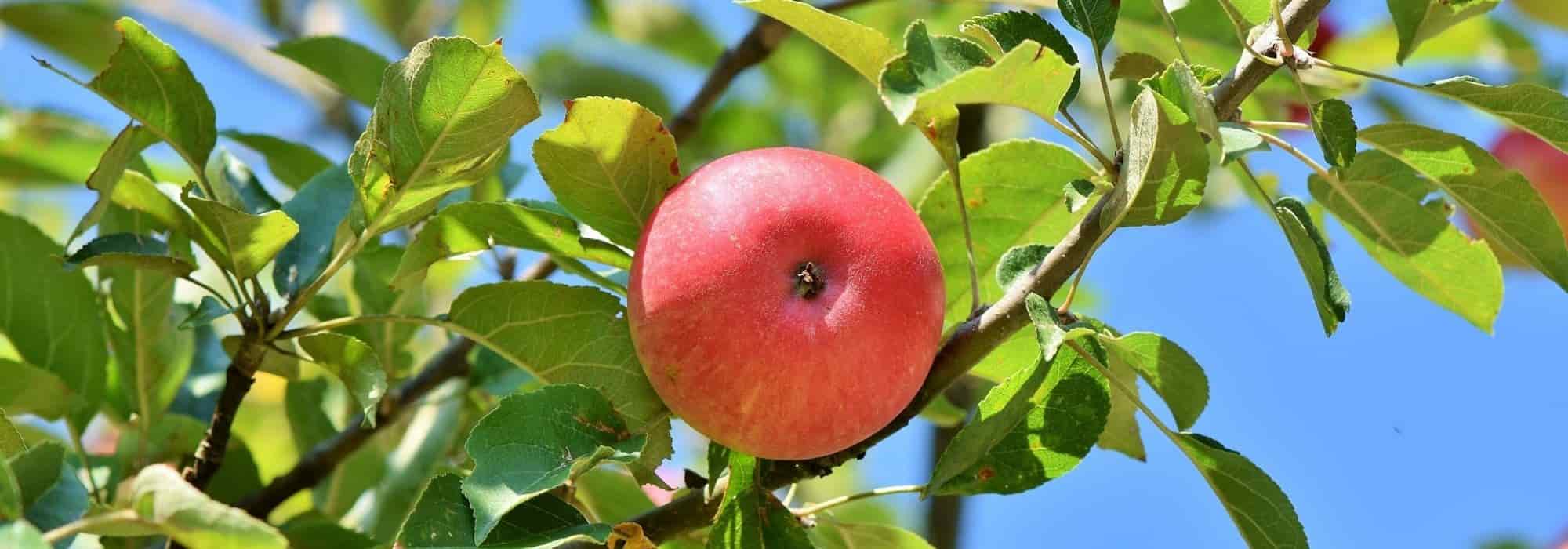
The 'Bacon' avocado is pear-shaped (ovoid). It is a good size, weighing between 200 and 400 g on average. Its green skin is thin and smooth. It remains green even after ripening. The fruit contains a large oval central seed measuring 3 to 5 cm long. Harvest them from October, preferably before the arrival of frost. They ripen after picking, usually within 4 to 7 days. Their flesh is yellowish-green and creamy, ideal for making excellent guacamole. It is important to note that the harvest is conditioned by providing sufficient sunlight to the tree, as well as high humidity during the initial fruit formation phase.
Report an error about the product description
Avocado Tree Bacon - Persea americana in pictures
Plant habit
Fruit
Flowering
Foliage
Botanical data
Persea
americana
Bacon
Lauraceae
avocado
Central America
Planting and care
The 'Bacon' Persea americana should be planted in light, deep, rich soil, ideally neutral to slightly acidic, moist, both in winter and summer and well-drained. However, it dislikes excessively wet soils. To ensure good fruiting, provide regular organic fertiliser and regular watering in summer.
Choose a very sunny location, or partially shaded, and well-protected from strong winds, for example against a well-exposed wall. This variety is self-fertile, but to maximize your harvest it is advisable to plant at least two different types of plants (The 'Bacon' variety is protandrous), spacing them about a metre apart. Planting should be done in spring.
In cool or cold regions, grow your avocado tree like a citrus tree, in a large pot for wintering, protected from the cold, in a bright, frost-free, unheated room. Feed every year in spring and regularly water your potted plant.
As for pests, avocados are susceptible to attacks from scale insects, thrips, the Mediterranean fruit fly, and red spider mite.
Planting period
Intended location
Care
Planting & care advice
-
-
-
-
-
-
-
-
This item has not been reviewed yet - be the first to leave a review about it.
Recently viewed products
Haven't found what you were looking for?
Hardiness is the lowest winter temperature a plant can endure without suffering serious damage or even dying. However, hardiness is affected by location (a sheltered area, such as a patio), protection (winter cover) and soil type (hardiness is improved by well-drained soil).

The flowering period indicated on our website applies to countries and regions located in USDA zone 8 (France, the United Kingdom, Ireland, the Netherlands, etc.)
It will vary according to where you live:- In zones 9 to 10 (Italy, Spain, Greece, etc.), flowering will occur about 2 to 4 weeks earlier.
- In zones 6 to 7 (Germany, Poland, Slovenia, and lower mountainous regions), flowering will be delayed by 2 to 3 weeks.
- In zone 5 (Central Europe, Scandinavia), blooming will be delayed by 3 to 5 weeks.
In temperate climates, pruning of spring-flowering shrubs (forsythia, spireas, etc.) should be done just after flowering.
Pruning of summer-flowering shrubs (Indian Lilac, Perovskia, etc.) can be done in winter or spring.
In cold regions as well as with frost-sensitive plants, avoid pruning too early when severe frosts may still occur.
The planting period indicated on our website applies to countries and regions located in USDA zone 8 (France, United Kingdom, Ireland, Netherlands).
It will vary according to where you live:
- In Mediterranean zones (Marseille, Madrid, Milan, etc.), autumn and winter are the best planting periods.
- In continental zones (Strasbourg, Munich, Vienna, etc.), delay planting by 2 to 3 weeks in spring and bring it forward by 2 to 4 weeks in autumn.
- In mountainous regions (the Alps, Pyrenees, Carpathians, etc.), it is best to plant in late spring (May-June) or late summer (August-September).
The harvesting period indicated on our website applies to countries and regions in USDA zone 8 (France, England, Ireland, the Netherlands).
In colder areas (Scandinavia, Poland, Austria...) fruit and vegetable harvests are likely to be delayed by 3-4 weeks.
In warmer areas (Italy, Spain, Greece, etc.), harvesting will probably take place earlier, depending on weather conditions.
The sowing periods indicated on our website apply to countries and regions within USDA Zone 8 (France, UK, Ireland, Netherlands).
In colder areas (Scandinavia, Poland, Austria...), delay any outdoor sowing by 3-4 weeks, or sow under glass.
In warmer climes (Italy, Spain, Greece, etc.), bring outdoor sowing forward by a few weeks.
Shipping country and language
Your country of residence may be:
Your country of residence is:
For a better user experience on our website, you can select:
Your shipping country:
-
 Austria
-
 Belgium
-
 Bosnia & Herzegovina
-
 Bulgaria
-
 Croatia
-
 Cyprus
-
 Czechia
-
 Denmark
-
 Estonia
-
 Finland
-
 France
-
 Germany
-
 Greece
-
 Hungary
-
 Iceland
-
 Ireland
-
 Italy
Italy
-
 Latvia
-
 Liechtenstein
-
 Lithuania
-
 Luxembourg
-
 Malta
Malta
-
 Netherlands
-
 Poland
-
 Portugal
-
 Romania
-
 Serbia
-
 Slovakia
-
 Slovenia
-
 Spain
Spain
-
 Sweden
-
 Switzerland
Language:
-
French
-
 English
-
Spanish
-
Italian
-
German
-
Portuguese
-
Dutch
-
Finnish
My Account
Hello
My wish lists
My cart
Log in / Register
Existing customer?
This form is protected by reCAPTCHA - the Google Privacy Policy and Terms of Service apply.
New customer?
Create an account to track your orders, access our customer service and, if you wish, make the most of our upcoming offers.