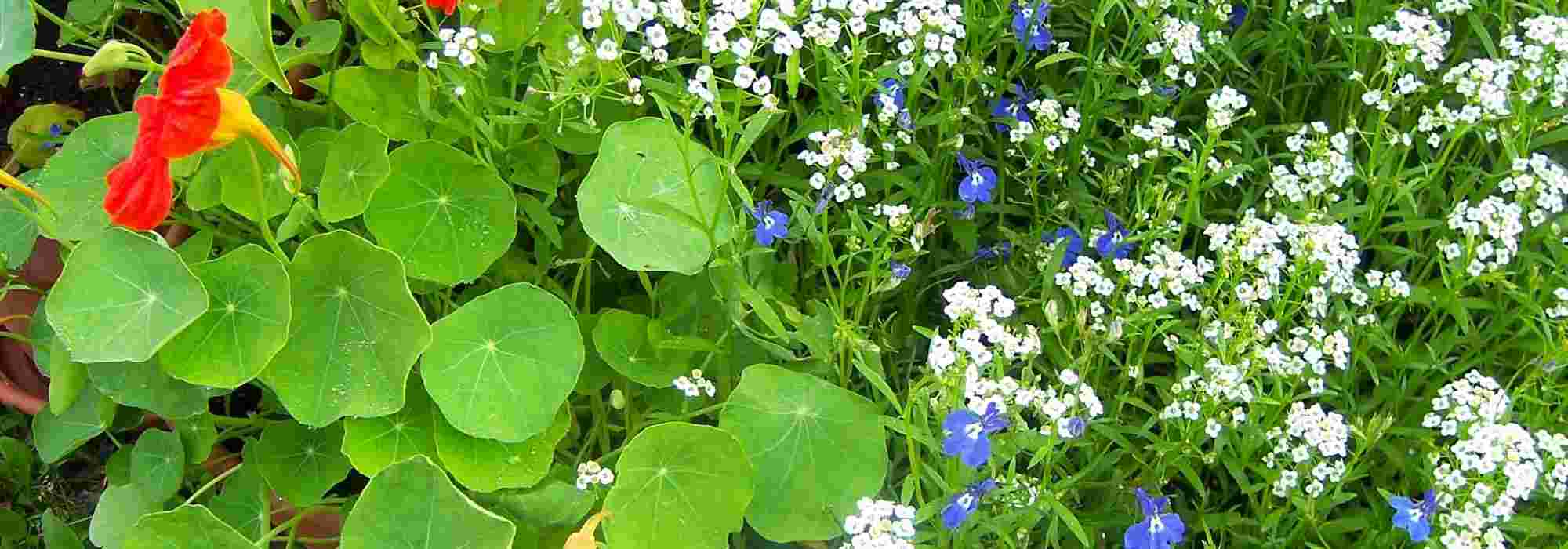
10 easy-to-sow annual flowers
Perfect for beginner gardeners!
Contents
Somewhat doubtful about your ability to grow plants from seed, whether due to a lack of time or experience, you put off this seasonal task year after year. The result: another summer without flowers! Yet there are annual flower seeds that are easy to sow and grow. Enjoy the satisfaction of seeing the little flowers appear after just a few weeks! Perfect for beginner gardeners, these flowers are almost foolproof and can be sown directly in the garden or in pots. Sow these bright flowers, then let nature do the rest!
These are ideal plants for low-maintenance or weekend gardens. They offer an infinite variety of shapes, sizes, colours and fragrances, allowing you to create lovely beds, abundant borders, window boxes or flower-filled meadows and change the scene every year according to your wishes. They are also attractive, although short-lived, in cut flower arrangements. Here is a selection of 10 annual plants that are quick to sow and grow, ideal for creating a flowering display in the blink of an eye.
If you would like more choice, discover all our annual flower seeds!

Annual poppies
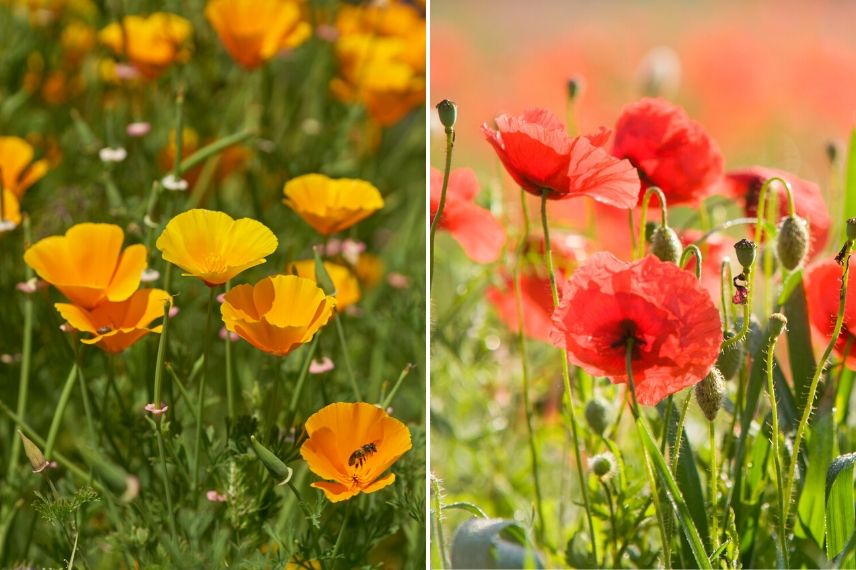
Californian Poppy produces an abundance of single, crumpled, double or semi-double flowers in vibrant colours from June to September. It also has finely divided, highly ornamental foliage. While the best-known variety bears bright orange flowers, pink, multicoloured and peach-coloured varieties are now available. It readily self-seeds in light soil and copes with the most challenging conditions, such as gravel, stony rockeries and dry banks. Sow the seeds of Eschscholzia californica directly in their final position from March to May or in September. Choose a very sunny spot and sow in poor, perfectly drained, sandy or stony soil.
It is equally at home in flower meadows and naturalistic or more sophisticated vicar’s gardens, as well as in rockeries or pots on the terrace. Its nectar-rich, pollinator-friendly flowers attract insects throughout the summer.
The Papaver rhoeas, or Common Poppy, produces its simple, brilliantly coloured, crumpled corollas in summer, from May to August depending on the climate. With few demands, this wild annual readily self-seeds wherever it pleases. It is virtually impossible to get its sowing wrong. Sow Common Poppy seeds directly outdoors in their final position, in spring or early autumn. While the best-known form is the red poppy, varieties with more delicate shades are now available, such as Papaver rhoeas ‘Parelmoer’. At home in wild gardens, vicar’s gardens and gardens without gardeners, it grows in the sun in any soil, even poor soil.
Discover everything you need to know about poppies and annual poppies!
Nasturtium
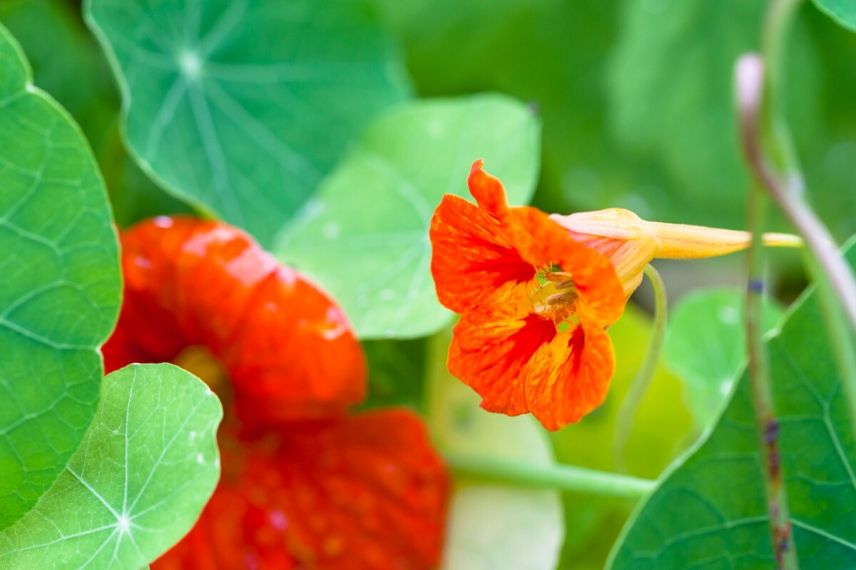
Nasturtium has everything going for it! It is very easy to sow, grows quickly and flowers from June until the first frosts. With its trumpet-shaped flowers in clear shades of red, orange and yellow, and its pretty round leaves, it always brings plenty of cheer to the garden, balcony or terrace. It grows in full sun and is happy in any soil, even poor soil. Nasturtium seeds can be sown under cover from February onwards (or in September), in pots or seed trays, or directly in the garden from March to May.
Highly floriferous and fast-growing, nasturtium is an excellent choice as a climber as well as a groundcover. It is perfect for covering a wire fence, a boundary fence or a pergola in no time at all, or simply festooning a border. It can also be grown in a pot, window box or hanging basket. With its edible flowers, nasturtium also has a place in the vegetable garden, where it will attract aphids, drawing them away from your vegetables!
→ Do not hesitate to read our guide to nasturtiums and our tutorial How to sow nasturtiums?
Discover other Flower seeds
View all →
Available in 1 sizes
Available in 1 sizes

Available in 1 sizes
Available in 1 sizes
Available in 1 sizes
Available in 1 sizes
Available in 1 sizes
Available in 1 sizes
Available in 1 sizes
Available in 1 sizes
Morning glory
Morning glory is a climbing vine with large, heart-shaped leaves, producing trumpet-shaped flowers throughout the summer in shades ranging from white and azure blue to red. It grows at astonishing speed, quickly covering a trellis, an unattractive wall, a dead tree, a window box or any other support made available to it with flowers. It provides a quick way to green terraces and balconies without taking up any ground space, making it perfect for city gardens. You can pair it with other short-lived climbers such as Sweet Peas or climbing Nasturtiums.
Morning glory seeds are sown under cover in March, or directly in the ground from late April to June, in full sun and any good, well-drained garden soil, to give their best.
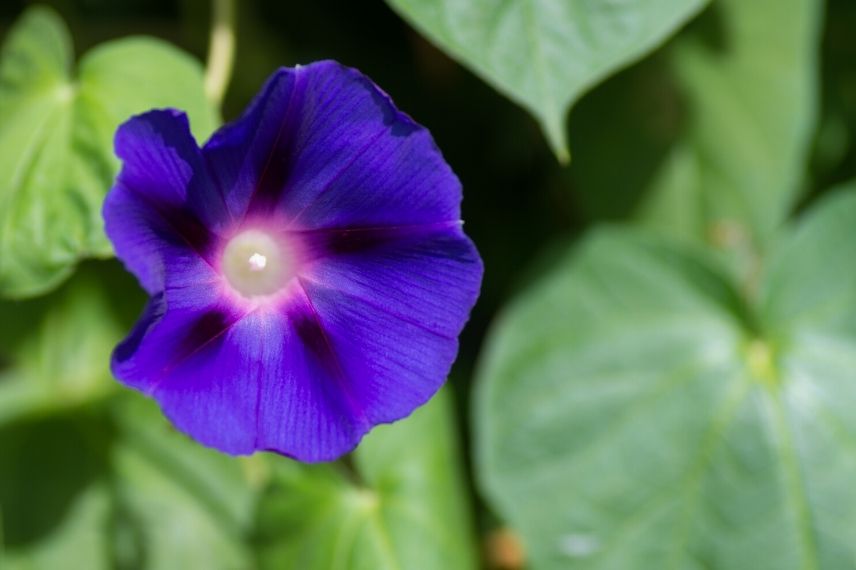
→ Discover our advice sheet to find out everything about morning glories and our tutorial How to sow morning glories easily.
Read also
Beautiful hanging baskets of flowersMarigold
The marigold, or Calendula officinalis, is a pretty, highly ornamental annual plant. Well known for its edible flowers, it also offers generous, continuous flowering from May until the first frosts. It is one of the easiest annual flowers to grow. Calendula seeds are sown directly in place from March to June. It thrives in any light, well-drained soil, in full sun. Originally orange-yellow, Calendula flowers are now available in a range of colours, from lemon yellow to creamy white (Calendula officinalis ‘Snow Princess’).
Marigolds are inseparable from vicar’s gardens, country gardens and colourful mixed borders, where they readily self-seed. Dwarf varieties are perfect for window boxes and containers on a terrace or balcony. Edible, they also have their place in an organic vegetable garden, where they attract aphids while keeping unwanted insects away.
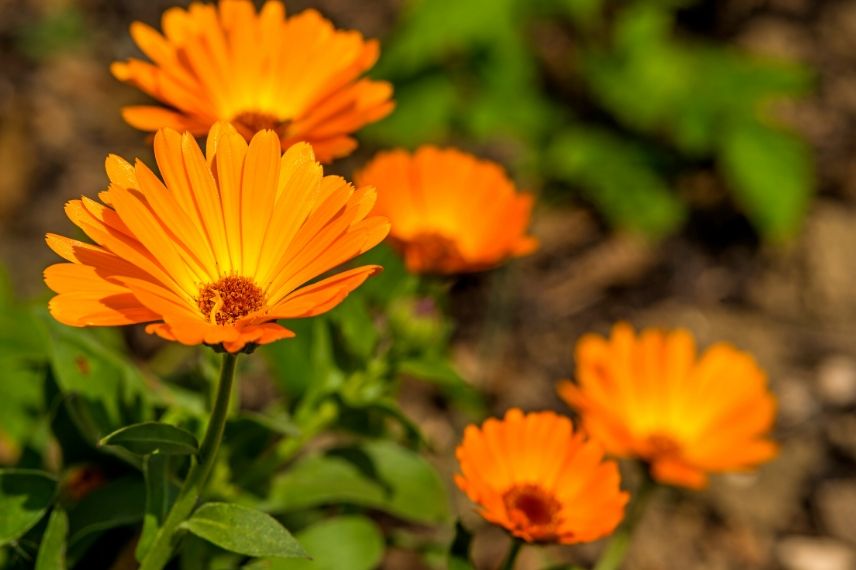
marigolds
→ To find out more about this indispensable plant, see our fact sheet: Marigold or Calendula.
Love-in-a-mist
The love-in-a-mist is a very pretty annual plant with wonderfully refined flowers set against extremely fine, airy foliage. Sow directly in place in spring or at the end of summer. It self-seeds very easily in the garden. Undemanding, happy with very little and requiring almost no care, love-in-a-mist thrives in light, well-drained soil, even poor soil. It is perfect for filling awkward areas of the garden where the soil is poor, dry and stony. You can create beautiful flowering containers for spring by sowing the seeds in a cold greenhouse or conservatory at the end of summer and in autumn. Sow it anywhere in rock gardens or sunny borders, in natural-style gardens and even in pots. You can sow it alongside other annual plants such as poppies and cosmos to create a cottage-style border.
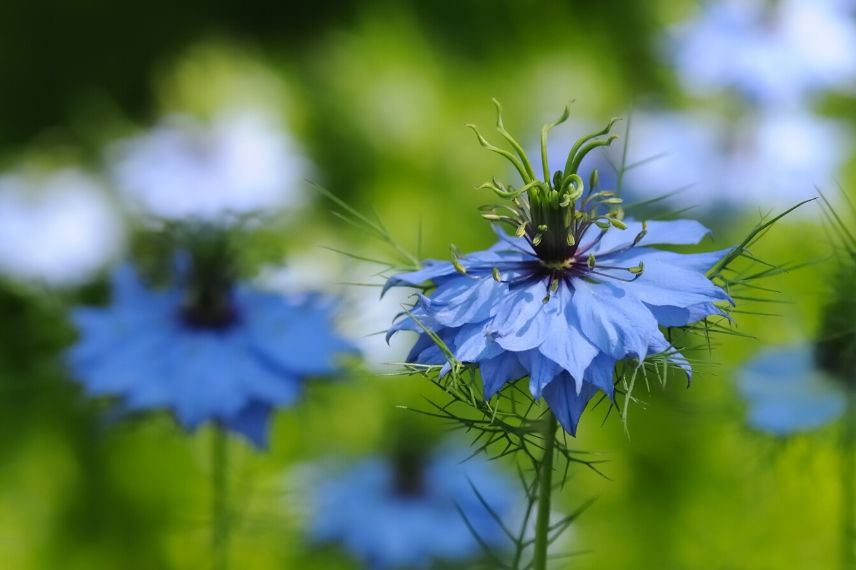
→ Discover our guide to everything you need to know about love-in-a-mist.
Cosmos
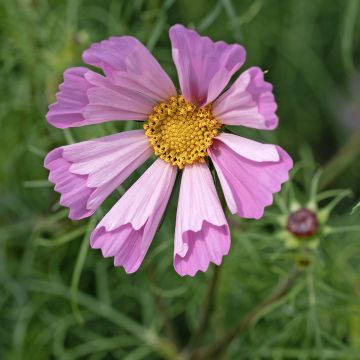
Cosmos is undoubtedly one of the easiest annuals to grow! It brings colour and cheerfulness to the garden throughout the growing season with very little care. It has an unfailing flowering period from June until the first frosts. Sow Cosmos seeds in May, after the last frosts, in ordinary, well-drained garden soil. They will flower even in dry soil and readily self-seed there.
For six months, cosmos displays large, open-faced single or double flowers in every shade from white to wine red, carried on delicate, elegant foliage. It fits in everywhere: in summer beds, to bring colour to the vegetable garden, in dry rockeries, borders and even planters or pots on the terrace or balcony. It is the perfect companion for easy-care gardens requiring little attention. It suits small gardens as well as large flower meadows. It makes lovely cut flowers.
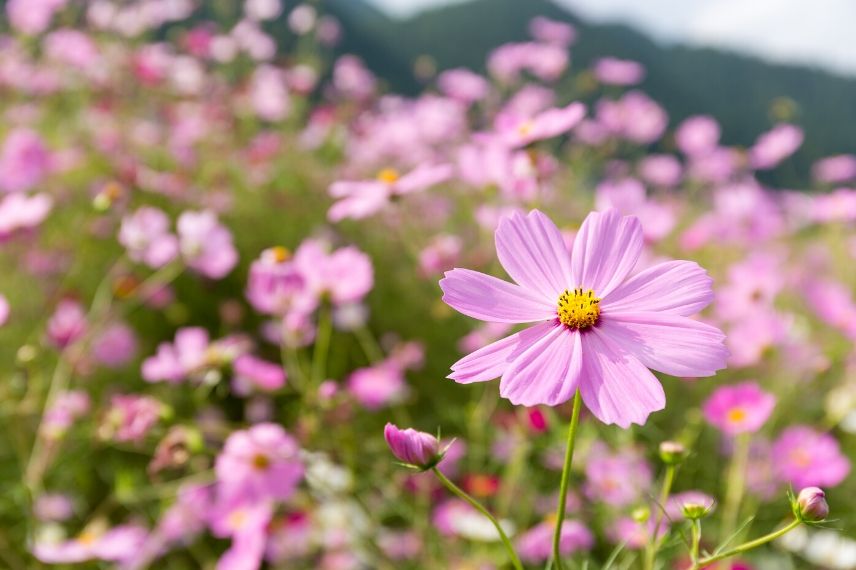
→ Read our guide to (re)discover this essential garden favourite: Cosmos: sowing and planting.
Sweet pea
The Sweet Pea is a delightful annual climber, perfect for quickly covering large areas, either at ground level or vertically. Its slightly old-fashioned flowering brings plenty of charm to the support it climbs over in a single season. A real boon for quickly covering an unsightly fence or creating a plant screen on a balcony, for example, to provide privacy. It is just as charming in summer borders or hanging baskets, or even in the vegetable garden for its cut flowers. It produces single-coloured or bicoloured flowers in an infinite range of shades, sometimes soft and pastel, sometimes bright. Some varieties are highly fragrant.
Sowing directly in place is child’s play: sow directly in the ground from March-April onwards, in fertile soil in a sunny position. The secret is to soak the seeds in water overnight before sowing them.
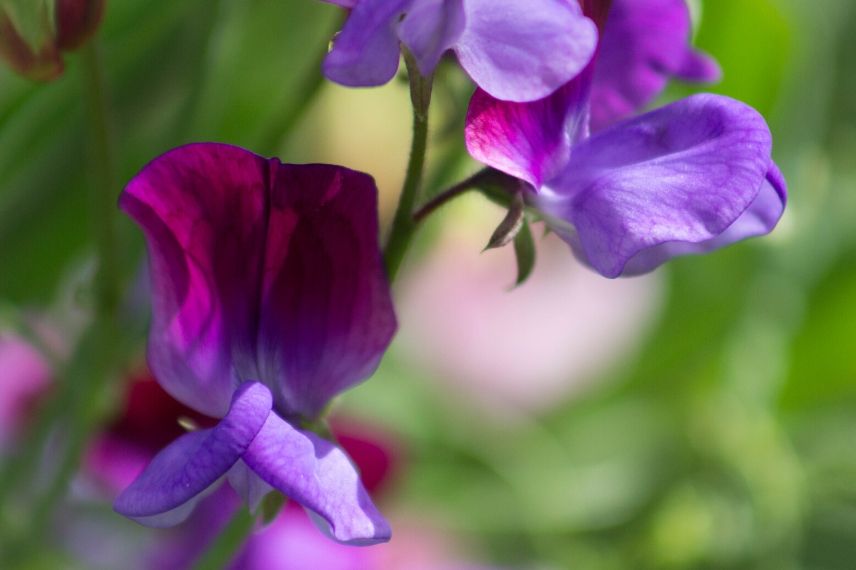
→ Do not hesitate to read our articles: everything you need to know about sweet peas and How to succeed with sweet pea sowing (tutorial)
Sunflower
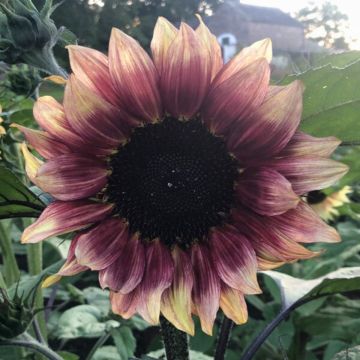
Helianthus annuus, sunflower or “garden sun”, is an ultra-easy-to-sow annual plant with spectacular growth. In a single season, it can reach up to 4 m in height and produce enormous flower heads over 40 cm in diameter. It flowers from July to October, in brilliant sunshine yellow, as well as orange, brown and red. Sow it and impress your neighbours! This sun-loving flower transforms a bed, border or even a terrace in just a few weeks when planted in a large pot.
Annual sunflower seeds are sown in the open ground from late April to mid-June, or under cover from March to May. To germinate well, it needs fairly fertile, well-drained soil that remains fresh in summer. Allow 3 months between sowing and the start of flowering.

→ Discover all our advice on sowing, planting and caring for sunflowers!
Annual lavatera
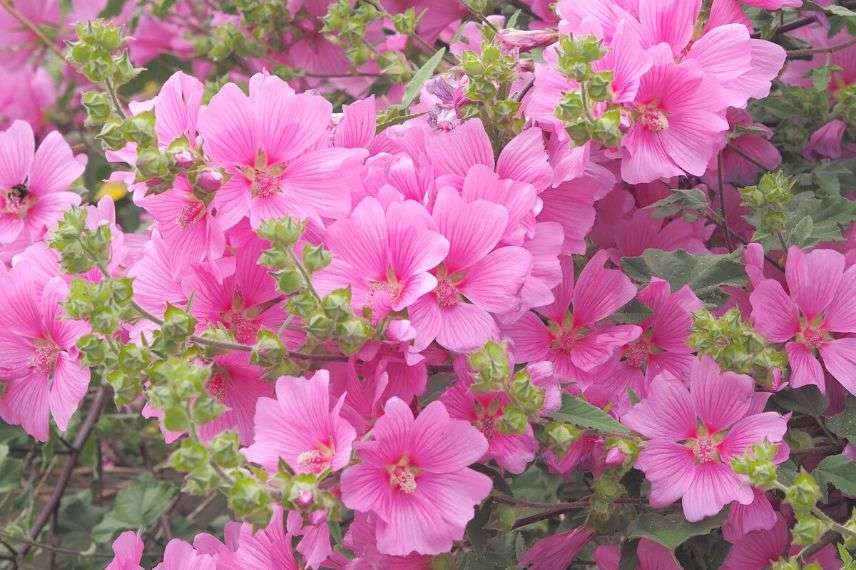
With its silky flowers, similar to those of Hibiscus and most often pink or mauve, the annual lavatera (Lavatera trimestris and its cultivars ‘Loveliness’, ‘Ruby Regis’) quickly forms charming flowering bushes. With exceptionally long-lasting flowering from July to October, it will bring colour and romance to beds of perennials or annuals, mixed borders, informal hedges and containers on a terrace or balcony. Sow it directly in place from May to June, when the soil has warmed up. A single packet of lavatera seeds is enough to bring several beds into flower. It prefers sunny positions and light, well-drained soil.
It will be perfect in annual beds with love-in-a-mist and cosmos, or in a pot mixed with sweet peas.
→ To successfully grow lavateras, see our guide.
French marigold or Tagetes
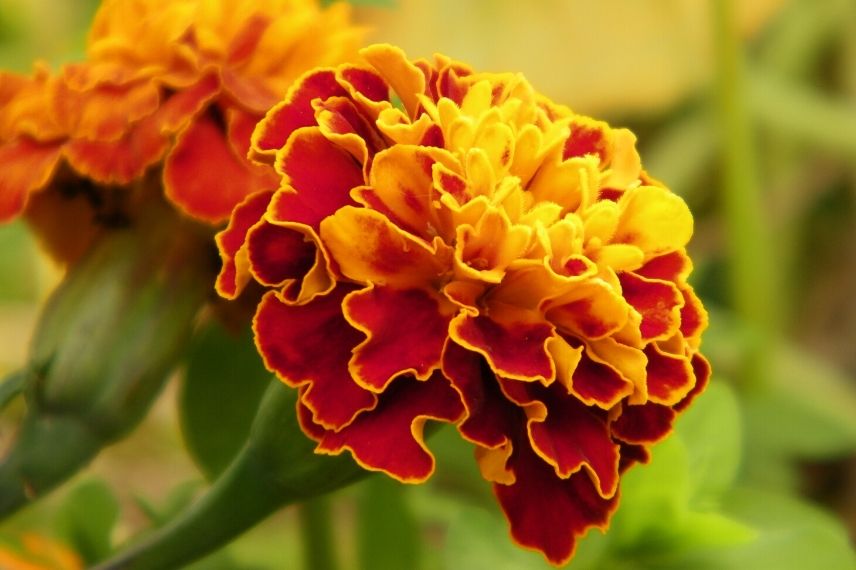
French marigold or Tagetes is the star annual plant in summer beds and around the vegetable garden. It flowers in heads from spring to autumn, in warm, bright shades of yellow and orange. There is no easier flower to grow! Virtually foolproof, highly floriferous and fast-growing, it is the ideal annual flower for beginner gardeners!
Resistant to bad weather and unaffected by heat, it grows in full sun in ordinary soil, even poor, dry and well-drained soil. In May, sow it directly in place in warmed soil.
It quickly creates a cheerful, colourful display in beds, borders and summer planters. It will brighten every corner with little splashes of colour, alongside California poppies or nasturtiums.
With its edible flowers and distinctive scent, it also has a place in the vegetable garden, where it is renowned for its repellent effect against nematodes.
→ Discover everything you need to know about French marigolds.
- Subscribe!
- Contents
This form is protected by reCAPTCHA - the Google Privacy Policy and Terms of Service apply.

































Comments