3, 5, 7, 9: The magic numbers for a successful perennial garden
or the art of planting in groups in the world of gardening
Contents
Are you dreaming of a perennial garden that is both beautiful and easy to maintain? You may be wondering why so many professional gardeners and landscape designers group plants together and talk about the “magic” of numbers when it comes to planting perennials. This is not simply a coincidence (or superstition or excessive enthusiasm), but a considered approach that has proved effective for optimising the space and beauty of a green space. In this article, we will look at the aesthetic and practical reasons for planting perennials in groups of 3, 5, 7 or 9. You will also discover how to choose the best combinations to transform your garden into a real jewel of colour and texture.

Why these figures?
When talking about planting in groups, we often hear figures such as 3, 5, 7 or 9. But why these numbers, you ask? Well, my dear Watson, the answer lies in a combination of science and art!
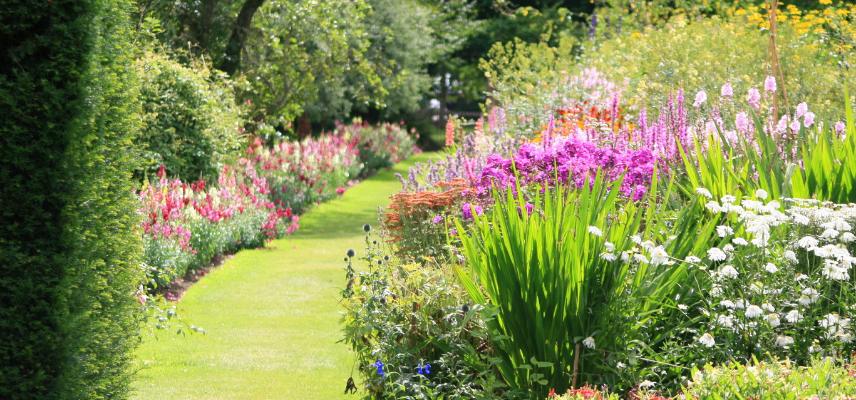
First of all, these numbers are odd. In mathematics and design, odd numbers are frequently used to create balance without symmetry, which is generally more pleasing to the eye. Next, these groups of plants, such as three lavender plants side by side, create a visual mass that has more impact than if the plants were isolated. Grouping plants creates the illusion of abundance and density, qualities sought after in a well-designed garden.
What’s more, planting in groups is much more practical. Plants with similar water and light requirements, such as petunias and begonias, can be grouped together to simplify care. This method not only reduces the time spent on care, but also makes the best use of water and nutrients.
Ultimately, planting in groups is not simply a matter of following a tradition or an arbitrary rule, but it is a way of harnessing the principles of nature and design to create a garden that is both beautiful and functional.
Details of the magic numbers and their specific uses
Three: the power of three
The number three is often the starting point for creating a minimalist effect without sacrificing visual impact. Three plants of the same species and variety, for example three agapanthus, can be planted to form a small triangle. This arrangement creates visual unity while leaving enough space for each plant to develop. What is more, three plants attract the eye more than two, without creating an impression of crowding or disorder.
Five for balance
Five is the ideal number for those looking to create a more complex visual balance. Take, for example, five peonies planted in a staggered arrangement. This layout gives the garden both structure and depth. In addition, five plants allow you to play with different heights, contrasting, for example, with three shorter plants nearby.
Seven for abundance
A group of seven plants creates an impression of abundance and fullness. Ideal for large borders or open spaces, a group of seven also allows you to mix several varieties for an even more dramatic effect. For example, you could combine three pink-flowered astilbes with four white-flowered ones (seven in total) to create an interplay of colours and textures.
The charm of nine for large borders
The number nine is generally reserved for large spaces or for gardeners looking to showcase a plant boldly. Take, for example, a group of nine irises, which can serve as a focal point in a large garden, attracting attention from a distance. The number 9 also allows for greater diversity, offering the opportunity to combine several subgroups of three different plants (for example, three varieties of three irises) to create a patchwork effect.
The benefits of planting in groups
The aesthetic impact
Aesthetic appeal is one of the main reasons why many gardeners choose to plant in groups.
Example: Take a group of 5 daylilies, positioned behind a group of 3 hydrangeas. This display creates visual harmony, with the hydrangeas providing volume and a certain roundness, while the daylilies add height and contrast with their long stems and trumpet-shaped flowers. This type of arrangement plays on differences in shape, colour and texture to create a display that is more captivating than a simple line of plants.
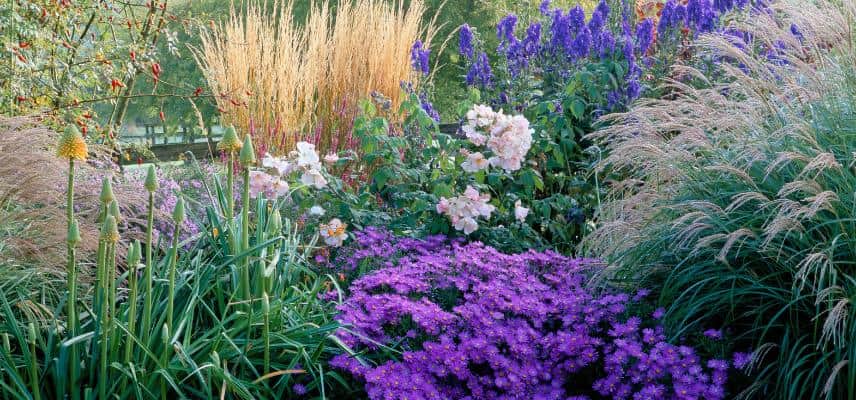
Another important point is the effect of repetition. Rather than scattering the same type of plant, such as salvias, randomly throughout the garden, grouping an odd number of these plants creates continuity and rhythm. This is not only pleasing to the eye, but also adds a certain structure to the garden, making the whole display more cohesive.
Mutual support between plants
When perennials are planted in groups, they often benefit from mutual structural support. For example, in a group of 5 coneflowers, the stems tend to lean against one another, which can help prevent the wilting or flopping sometimes seen in plants grown on their own.
In addition to structural support, grouped plants can also protect one another against certain diseases and pests. This is the case with common sage (Salvia officinalis), which is known for its natural pest-repellent properties.
Another form of mutual support is the complementary nature of their nutrient requirements. In a group of 5 plants, if, for example, you combine catmints with rudbeckias, the former prefer well-drained soil, while the latter are undemanding when it comes to soil quality. This can help create a balance, reducing the risk of nutrient deficiencies in the soil.
Ease of care
Grouping plants with similar requirements makes care much easier. This saves you time when watering or fertilising the soil. It also allows you to focus your efforts on a specific area, which can save time and energy.
Making the most of space
Planting in groups also makes better use of the available space. Imagine a group of 9 hostas in a shaded area of the garden. Not only does this group create an attractive visual effect, but it also fills a space effectively that might otherwise remain unused or become cluttered with less suitable plants.
Read also
6 ideas for red/purple garden bordersHow to choose the right perennial combinations
The key to a successful perennial garden lies largely in choosing the right combinations. Here are a few tips to help you create a successful planting scheme:
Take specific needs into account
When selecting plants to form a group, it is crucial to take their needs for water, light and nutrients into account. For example, hardy geranium and Campanula persicifolia complement each other well, as they both prefer well-drained soil and moderate sunlight.
Play with heights and textures
Vary the heights and textures to create a visually interesting landscape. For example, a group formed of five ornamental grasses at the back, Monardas in the middle and pansies at the front can provide visual depth and complexity.
Think about the seasons
Choose plants that flower at different times to extend the period of interest in your garden. For example, combine Crocosmia bulbs for summer, Asters for autumn and Bergenias for spring, ensuring a colourful display almost all year round.
Examples of successful combinations
For an English garden
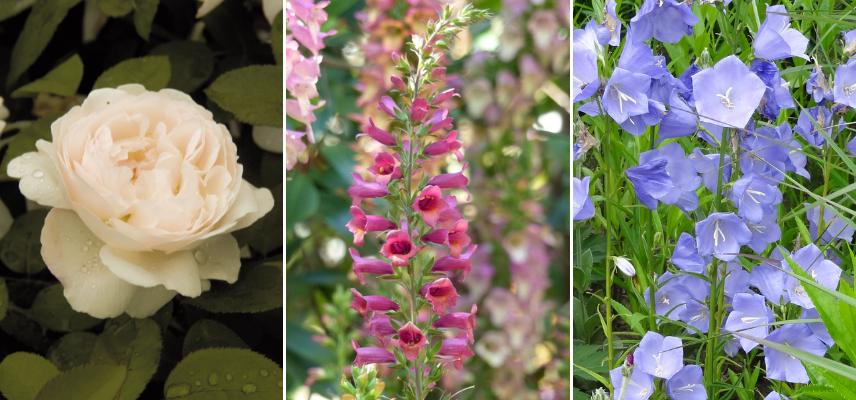
Create an atmosphere worthy of an English cottage by combining 3 sublime English roses ‘Winchester Cathedral’, 5 young plants of ‘Illumination Raspberry’ foxgloves, and 7 superb Campanula persicifolia (ideally, mix the white-flowered variety with blue-flowered ones). The roses produce delicately fragrant flowers and contrast beautifully with the pink foxglove flowers, all enhanced by the blue campanulas. This combination is perfect for a sunny position, particularly in regions north of the Loire.
For a Mediterranean or dry garden
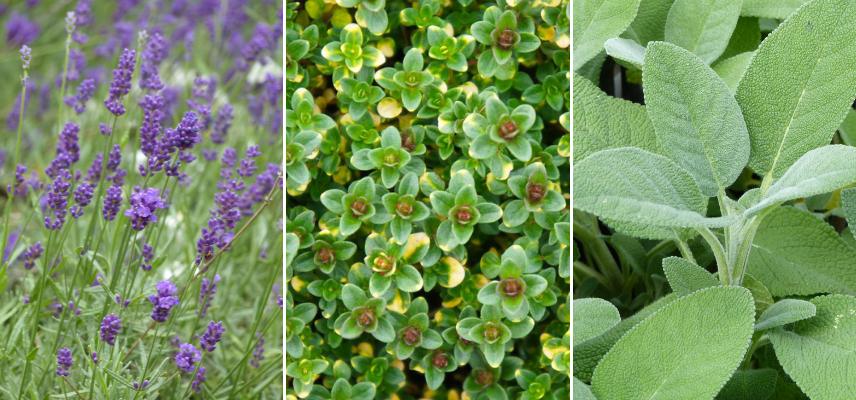
Evoking the sunny landscapes of Provence, plant 3 young Lavender ‘Hidcote’ for their fragrance, 7 creeping thymes ‘Doone Valley’ to create different heights, and 5 beautiful Sages ‘Berggarten’ for their grey-green foliage. This lovely combination of fragrances is ideal for Mediterranean or Atlantic regions and is perfectly suited to gardens in full sun.
For a cottage garden
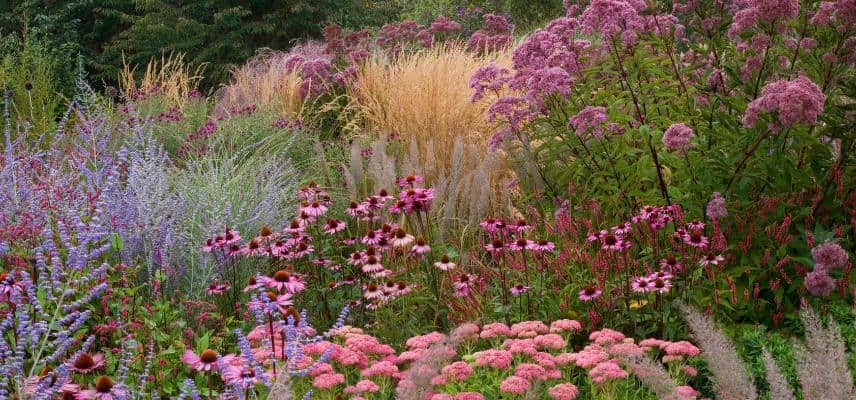
Create a bucolic atmosphere by combining 3 tall Echinacea ‘Magnus’, 7 young plants of Rudbeckia ‘Goldsturm’, and 5 ornamental grasses Calamagrostis ‘Karl Foerster’. The pink flowers of Echinacea and the golden rudbeckias attract butterflies, adding a wild note to your garden. The grasses bring movement and height with their fine, airy flower spikes. This mixture is perfect for a sunny to partially shaded position and suits almost every region of France.
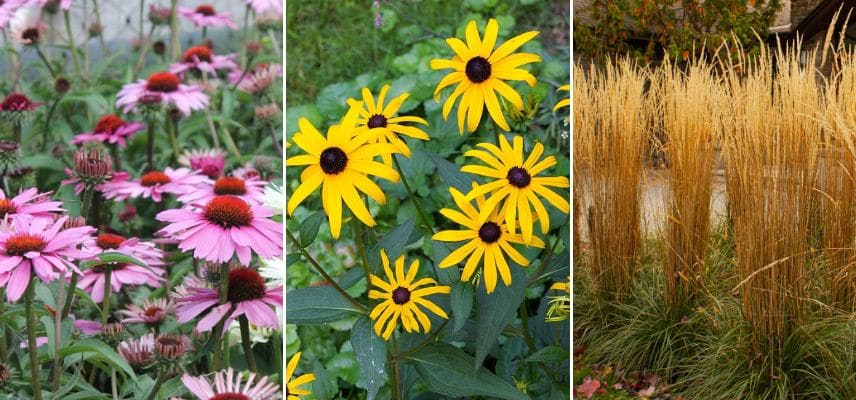
Echinacea ‘Magnus’, Rudbeckia ‘Goldsturm’ and Calamagrostis ‘Karl Foerster’
For a shade garden
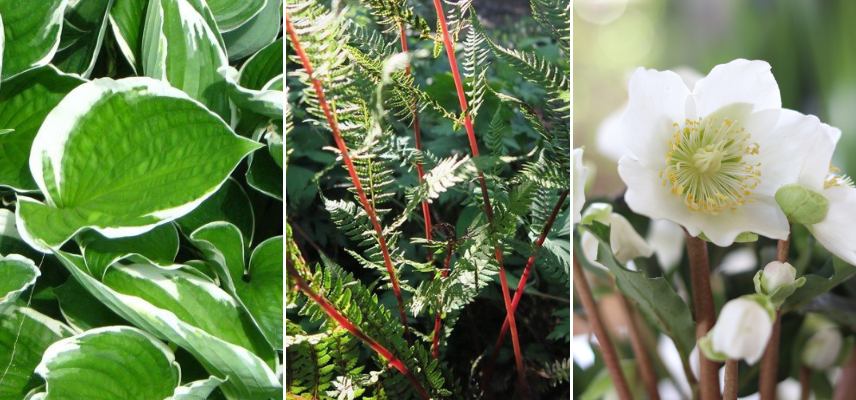
Create a peaceful, leafy space by combining 5 Hostas ‘Francee’ for their large dark green leaves edged in white, with 3 beautiful ‘Lady in Red’ ferns and their reddish stems. Add a little light with the winter flowering of 3 Helleborus niger. This display is ideal for regions north of the Loire, in shade or partial shade.
For a long-flowering garden
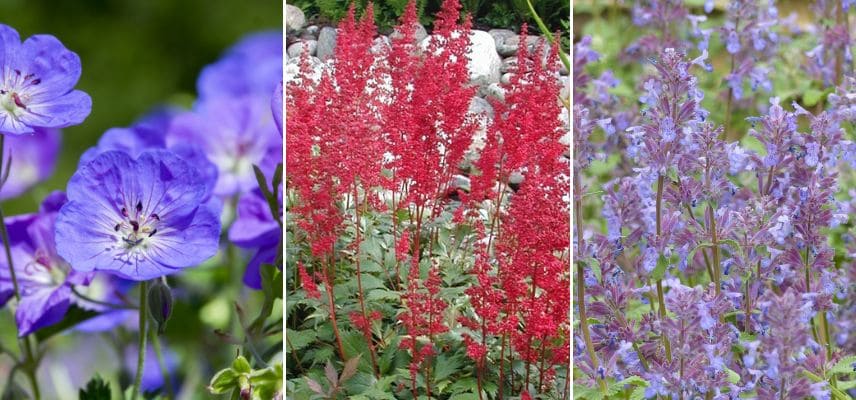
Ensure an almost continuous floral display by combining 3 hardy geraniums ‘Rozanne’, 7 unusual astilbes ‘Fanal’, and 5 young plants of nepetas ‘Cat’s Pajamas’. The hardy geraniums will flower throughout the summer and provide a lovely contrast with the red plumes of the astilbes. The nepetas extend the flowering season with their spikes of small blue flowers from spring to autumn. This combination is perfectly suited to sunny gardens and is suitable for most regions, except the driest.
- Subscribe!
- Contents
This form is protected by reCAPTCHA - the Google Privacy Policy and Terms of Service apply.

































Comments