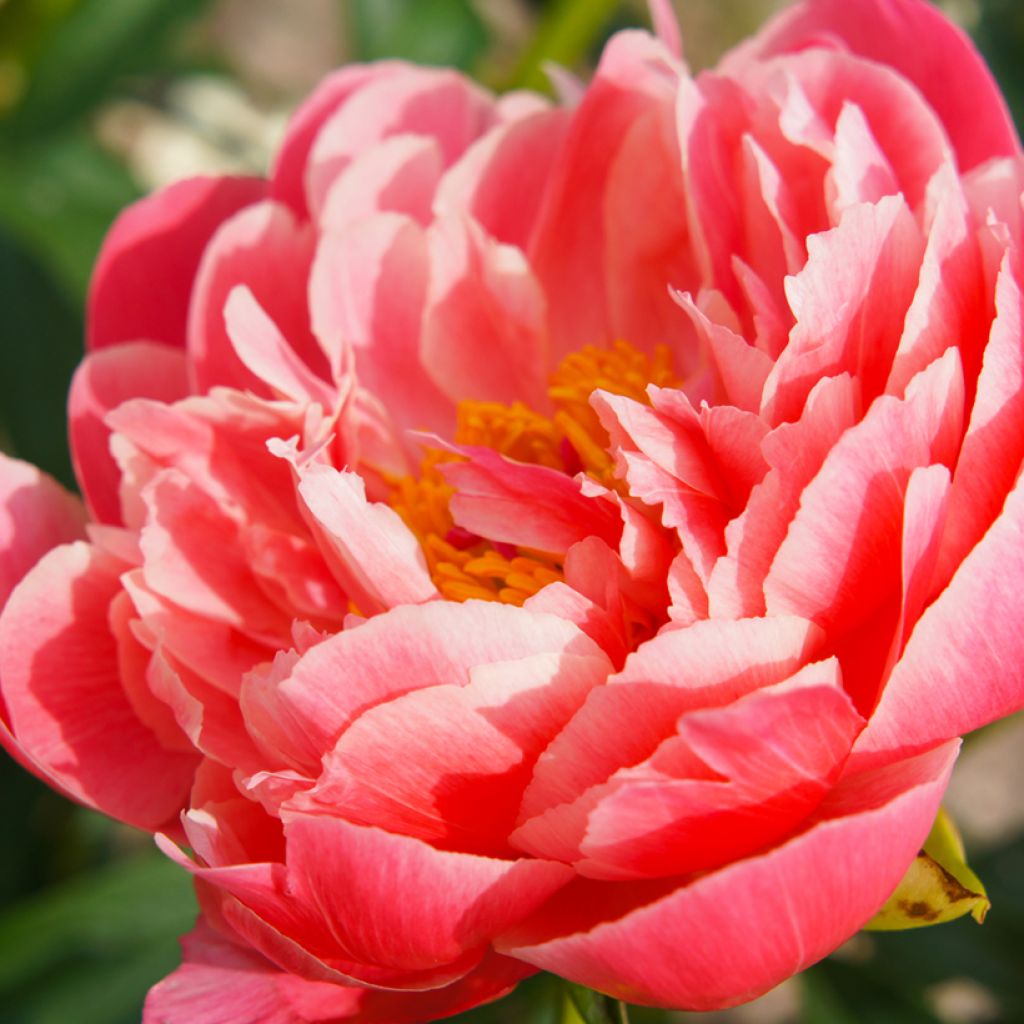
Paeonia x lactiflora Coral Sunset - Pivoine herbacée hybride Coral Sunset
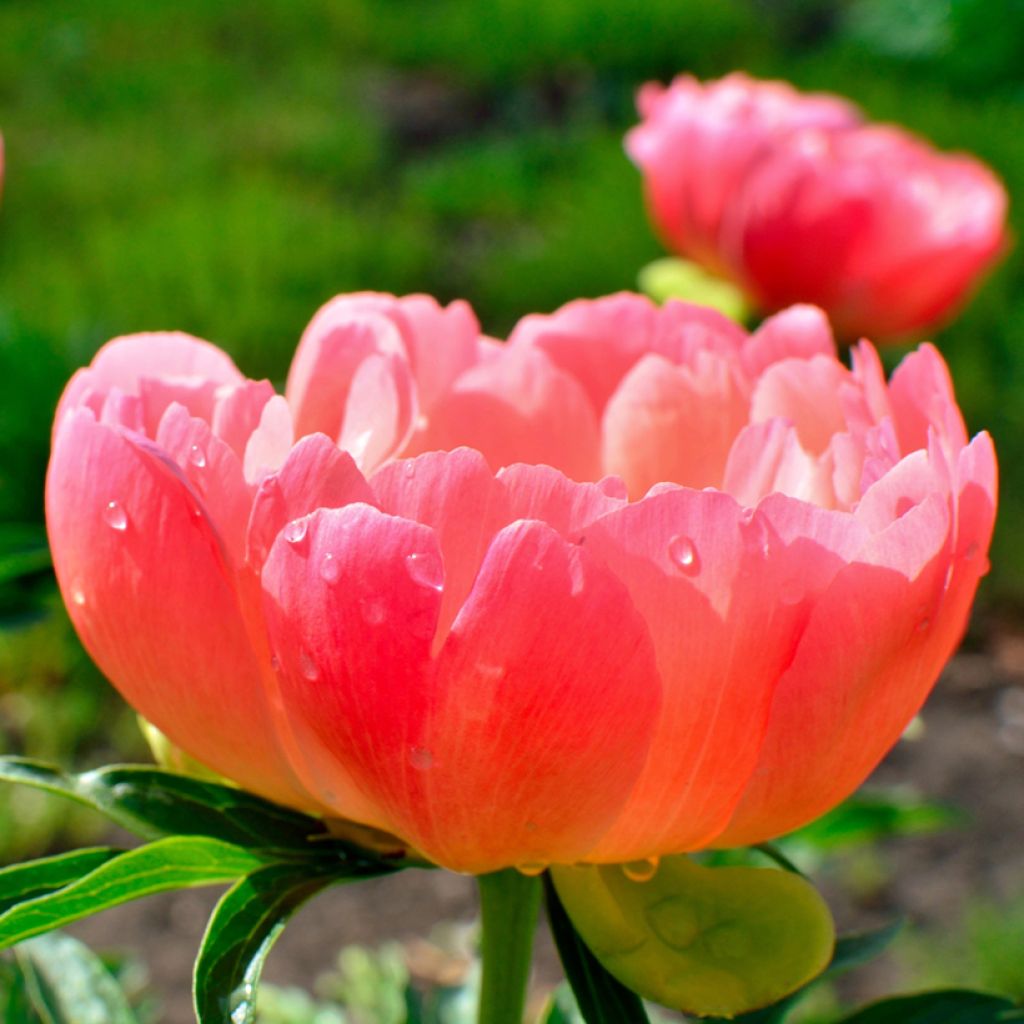
Paeonia x lactiflora Coral Sunset - Pivoine herbacée hybride Coral Sunset
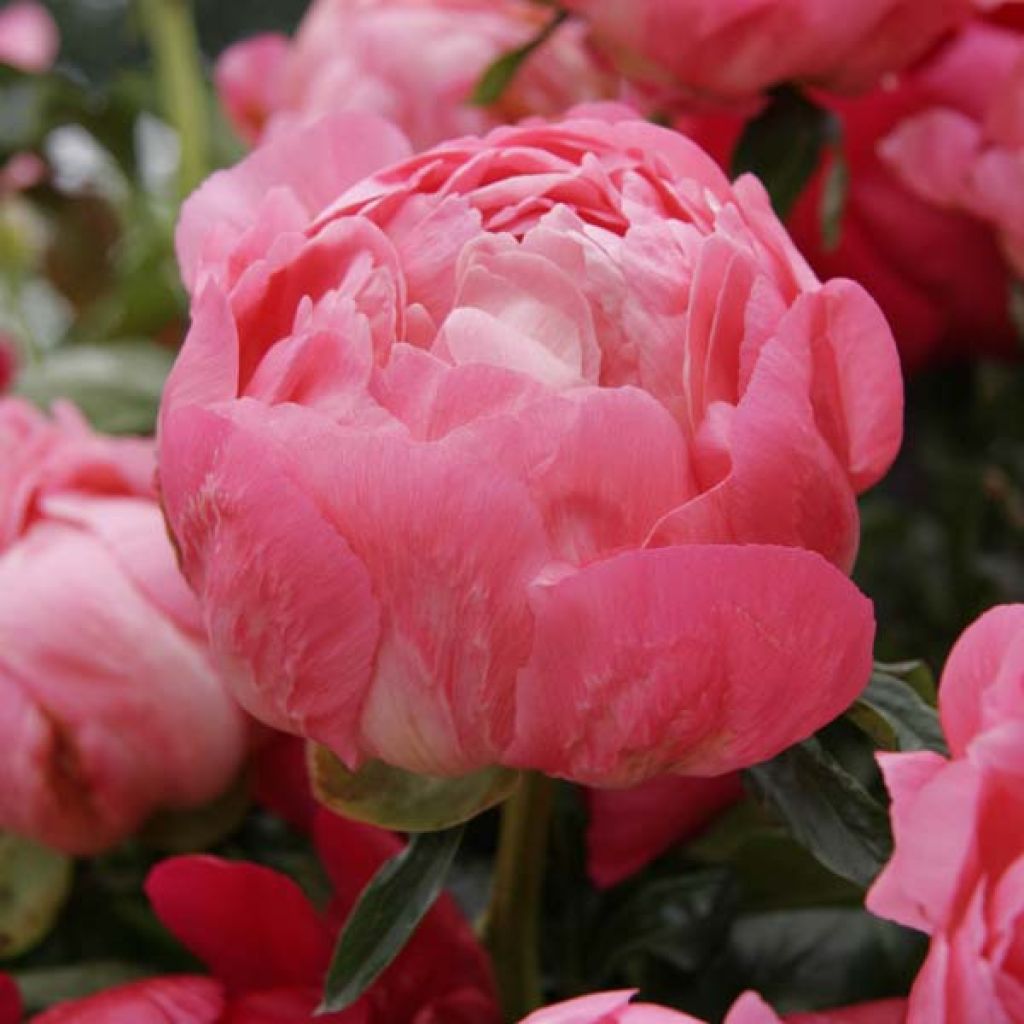
Paeonia x lactiflora Coral Sunset - Pivoine herbacée hybride Coral Sunset
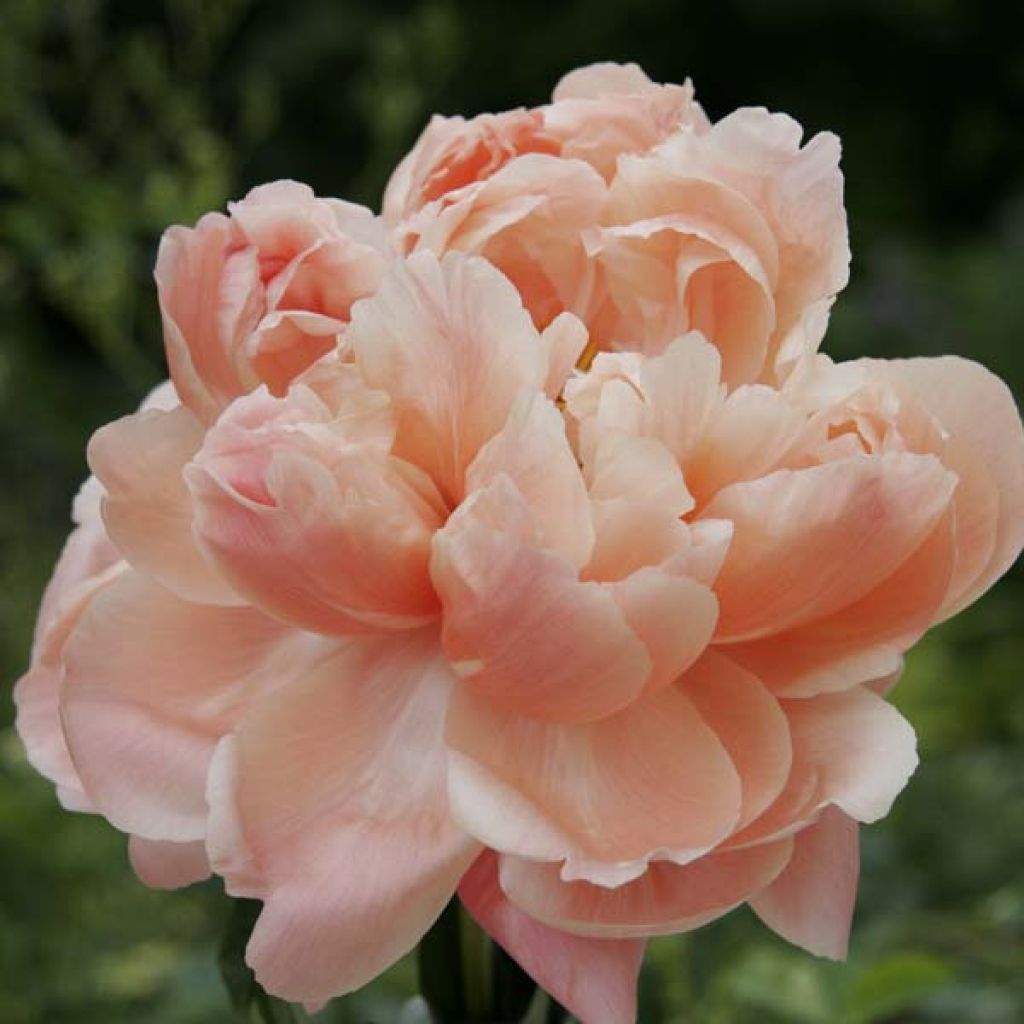
Paeonia x lactiflora Coral Sunset - Pivoine herbacée hybride Coral Sunset
View more pictures
Hide images

Elodie L.
Paeonia x lactiflora Coral Sunset - Pivoine herbacée hybride Coral Sunset
Elodie L. • 51 FR
Elodie L.
Paeonia x lactiflora Coral Sunset - Pivoine herbacée hybride Coral Sunset
Elodie L. • 51 FR
Paeonia x lactiflora Coral Sunset - Pivoine herbacée hybride Coral Sunset
Paeonia x lactiflora Coral Sunset
A little disappointed, the plants arrived in rather poor condition because they were stapled horizontally to the cardboard, so the soil had spilled out – there was soil everywhere except where it should have been, and not just for the peonies. The little buds are consequently in a deep coma; I hope they'll pull through. But as these are plants that take a very long time to flower, I'm willing to be patient. I wouldn't order them again.
Colette, 28/02/2026
Back-to-school special offer!
Get €10 off for every €50 you spend! And get up to €40 off on a single order.
How does it work?
1. Shop your favourites
Add your favourite plants to your basket. For every €50 you spend (excluding delivery charges, store credit and the plastic-free option), you’ll receive a €10 voucher.
€50 spent = €10 voucher
€100 spent = €20 voucher
€150 spent = €30 voucher
€200 spent = €40 voucher
2. Place your order
Once your basket reaches one of the spending thresholds, place your order. You can even choose your delivery date!
3. Receive your voucher
As soon as your order has been shipped, you’ll receive an email containing your personal voucher code and its value.
4. Use it on your next order
Your voucher is valid for 90 days from the date you receive it. It can be used once only, on a new order worth at least the value of the voucher, excluding delivery charges.
Please note: Vouchers can be combined with other offers, but cannot be split or refunded.
Home or relay delivery (depending on size and destination)
Important: You may be charged customs duties by your country’s customs authorities upon delivery.
Schedule delivery date,
and select date in basket
This plant carries a 12 months recovery warranty
More information
We guarantee the quality of our plants for a full growing cycle, and will replace at our expense any plant that fails to recover under normal climatic and planting conditions.


Would this plant suit my garden?
Set up your Plantfit profile →
Description
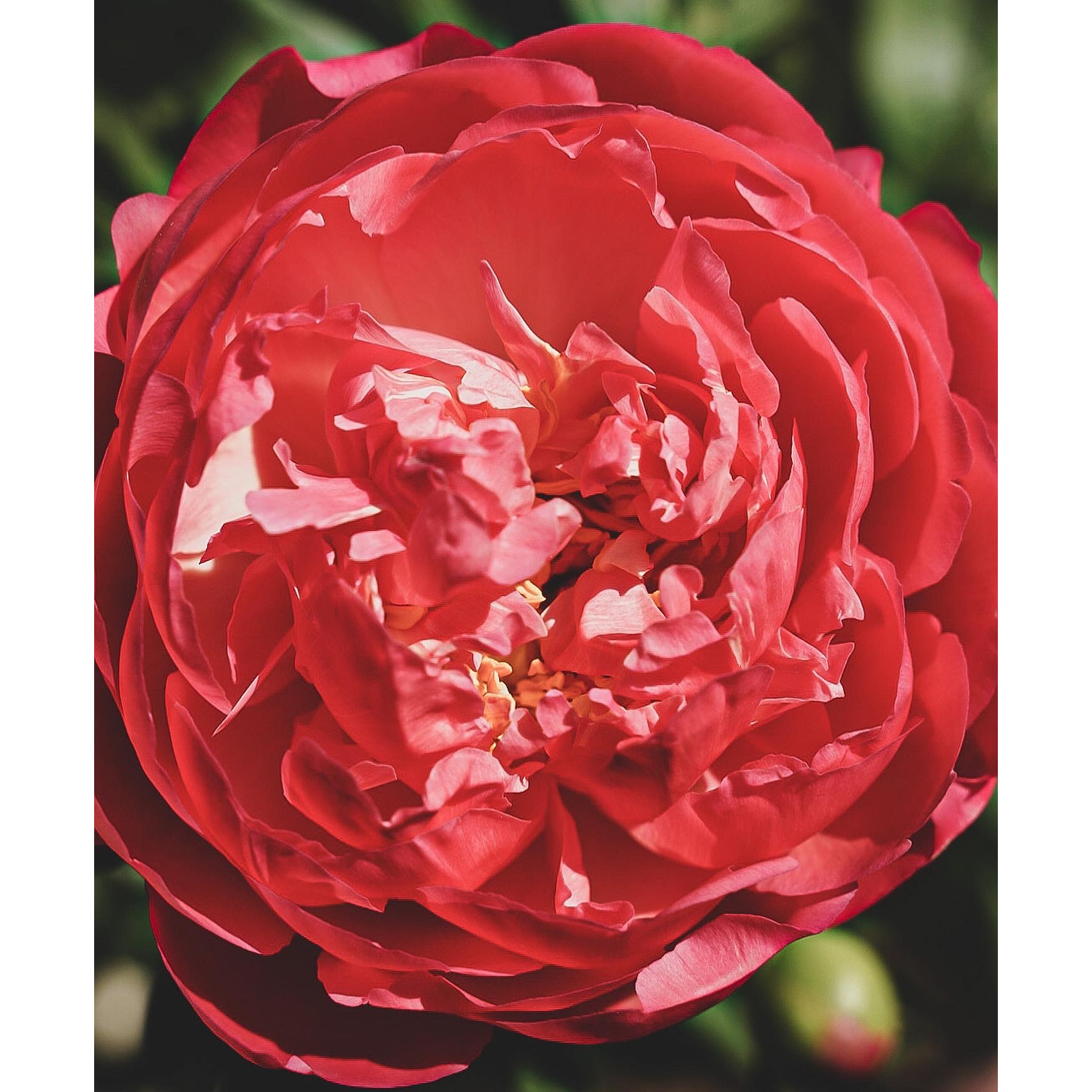
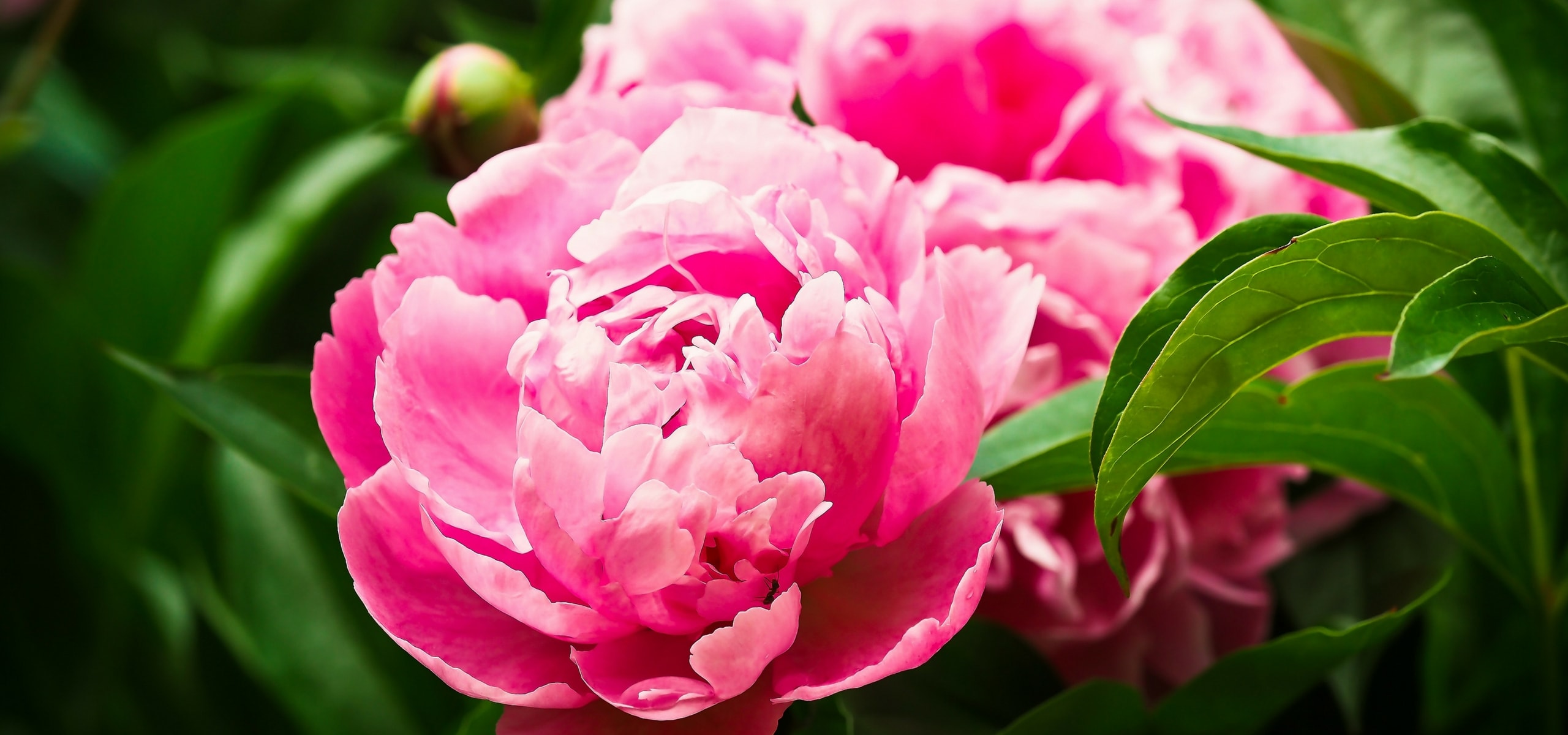
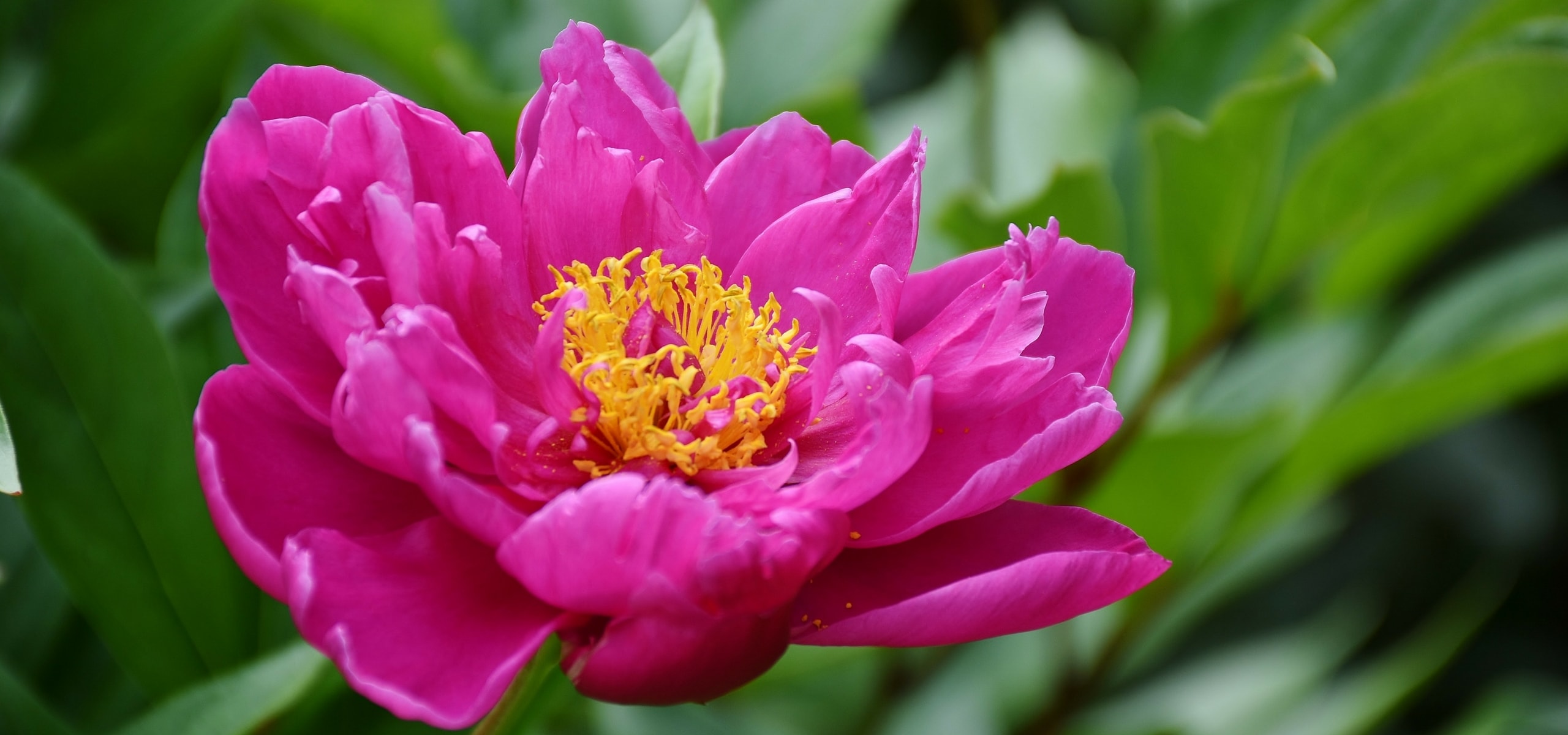
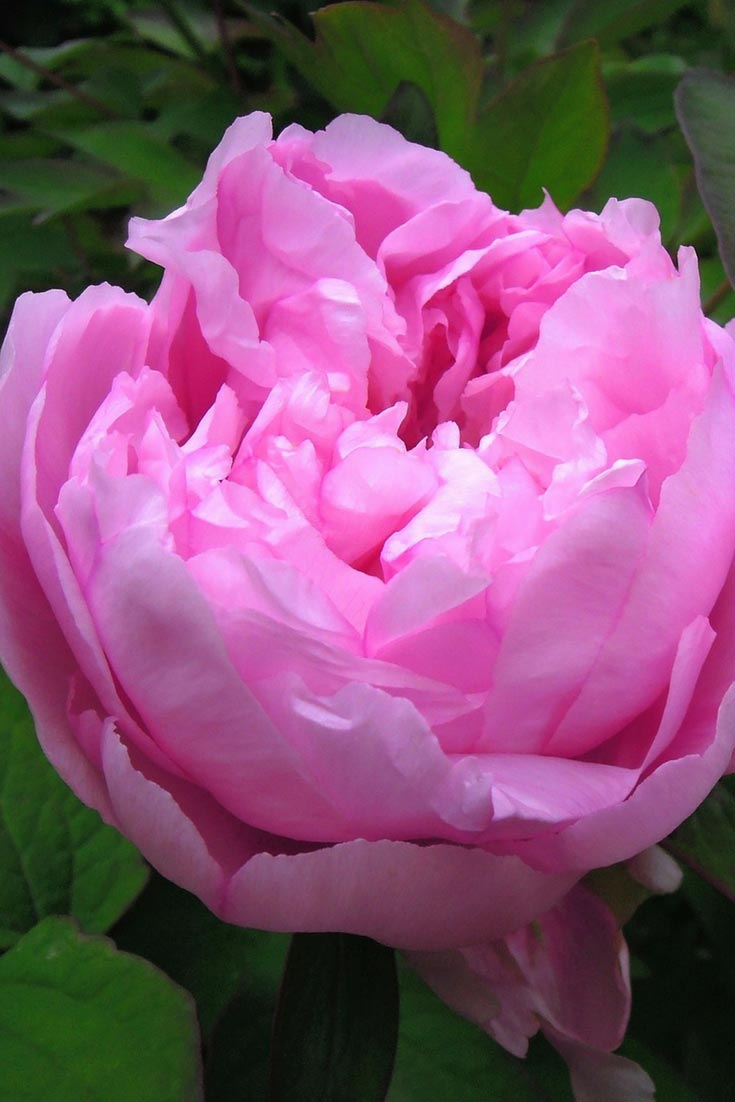
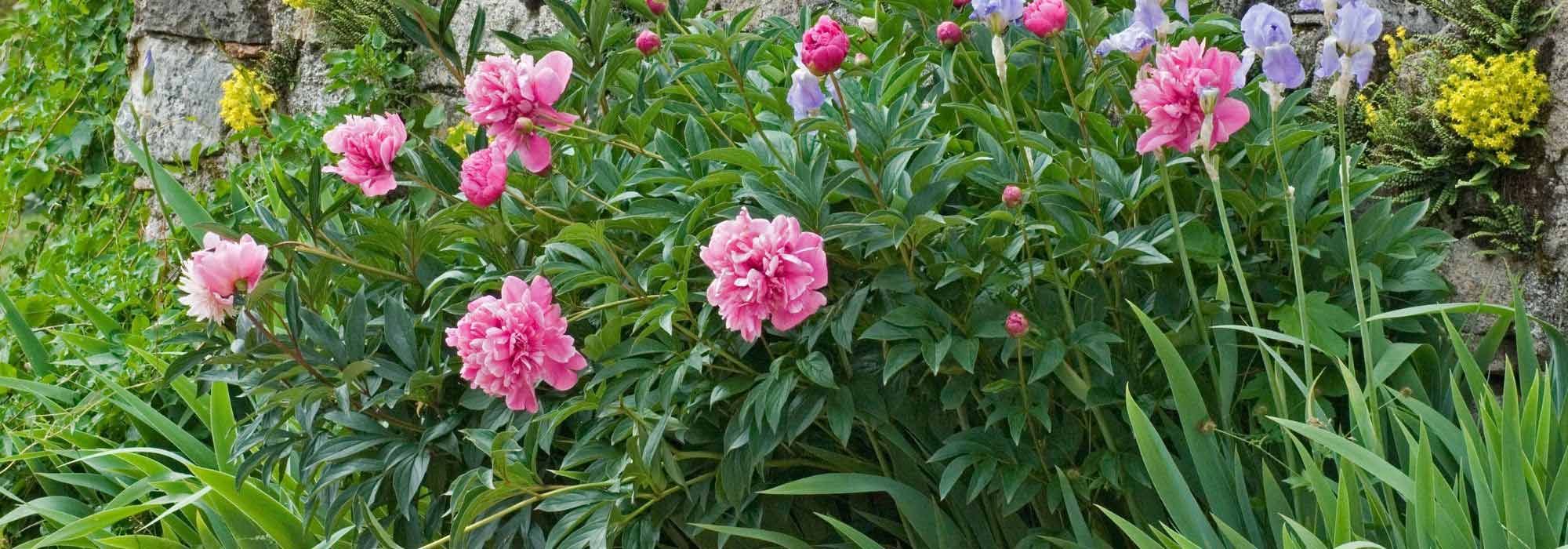
The Paeonia ‘Coral Sunset’ is a herbaceous hybrid peony very different from classic Chinese peonies. Its large semi-double flowers open in a bright coral, between pink and orange, then gradually turn to salmon, peach pink and finally cream. As several shades coexist on the same clump, the flowering creates an astonishing gradation. Early-flowering, vigorous and with sturdy stems, this excellent variety catches the eye in a border and provides good cut flowers, very long-lasting in a vase.
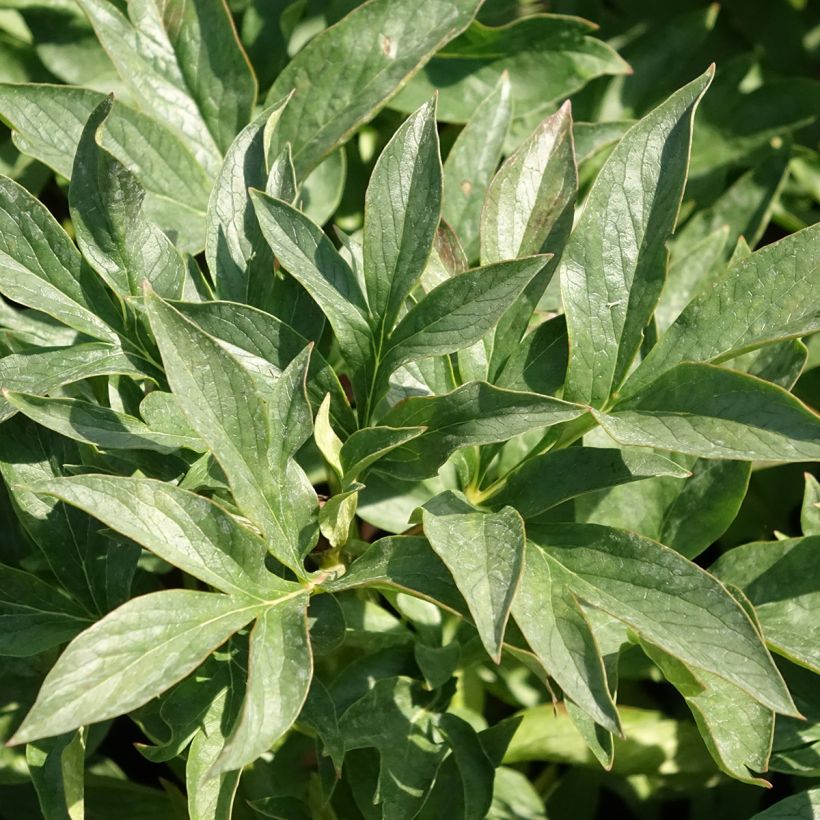
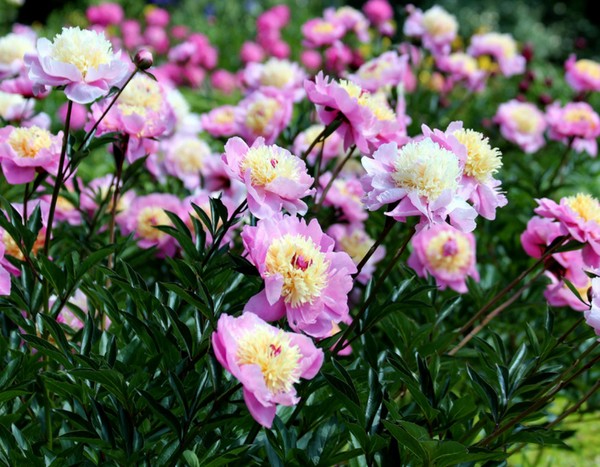
This variety belongs to the Paeoniaceae family. It is neither a pure Chinese peony nor an Itoh peony, but a hybrid between two lineages of herbaceous peonies. Samuel Wissing bred it in Illinois, USA, by crossing ‘Minnie Shaylor’, from Paeonia lactiflora, with ‘Otto Froebel’, belonging to Paeonia officinalis. The first flowering of 'Coral Sunset' was observed around 1965. Samuel Wissing had devoted twenty-six years to creating this coral-toned line. Close to ‘Coral Charm’, of which it is thought to be a seedling sibling, it produces flatter flowers and shows a very recognisable colour evolution. Its vegetation is entirely herbaceous: red buds emerge from the ground in spring, the stems and leaves dry up after the first frosts, while the stump with thick fleshy roots remains dormant underground all winter. This perennial forms a clump 80 to 90 cm tall and 70 to 90 cm wide. With growth rather fast for a peony, it reaches full development in two to five years. Its thick stems resist the weight of the flowers better than those of many old very double peonies. Each carries only one terminal bud, without side flowers, providing long stems to cut for cut flower arrangements. In May, even early June in cool regions, large semi-double flowers open that can reach 20 cm in diameter. The broad, slightly crumpled petals first form a cup, then spread around a heart of golden-yellow stamens. On opening, the colour of the petals is a blend of intense orange coral and pink shades. It then evolves to salmon, peach pink, cream yellow and finally ivory. As the flowers do not all open on the same day, several colours coexist on the same clump. The dark green foliage is divided into oval to lanceolate leaflets. Dense and healthy, it remains decorative after flowering and can take on a red tint in autumn.
'Coral Sunset' received the American Peony Society Gold Medal in 2003, the Award of Landscape Merit in 2009 and the Award of Garden Merit from the Royal Horticultural Society.
In a sunny border, this peony 'Coral Sunset' deserves to be placed prominently to be visible from a path or patio. Plants with soft or complementary shades will enhance its coral tones: ornamental alliums with light flowers like Allium ‘Silver Spring’, perennial salvias with mauve spikes like Salvia nemorosa ‘Amethyst’, hardy geraniums in blue-violet tones like ‘Orion’ or perennials with cream flowers like Baptisia ‘Vanilla Cream’. It is advisable to leave at least 80 cm of space around the stump, as the peony fears root competition.
Our secret for cut flower arrangements: cut your peonies at daybreak when the buds begin to colour up.
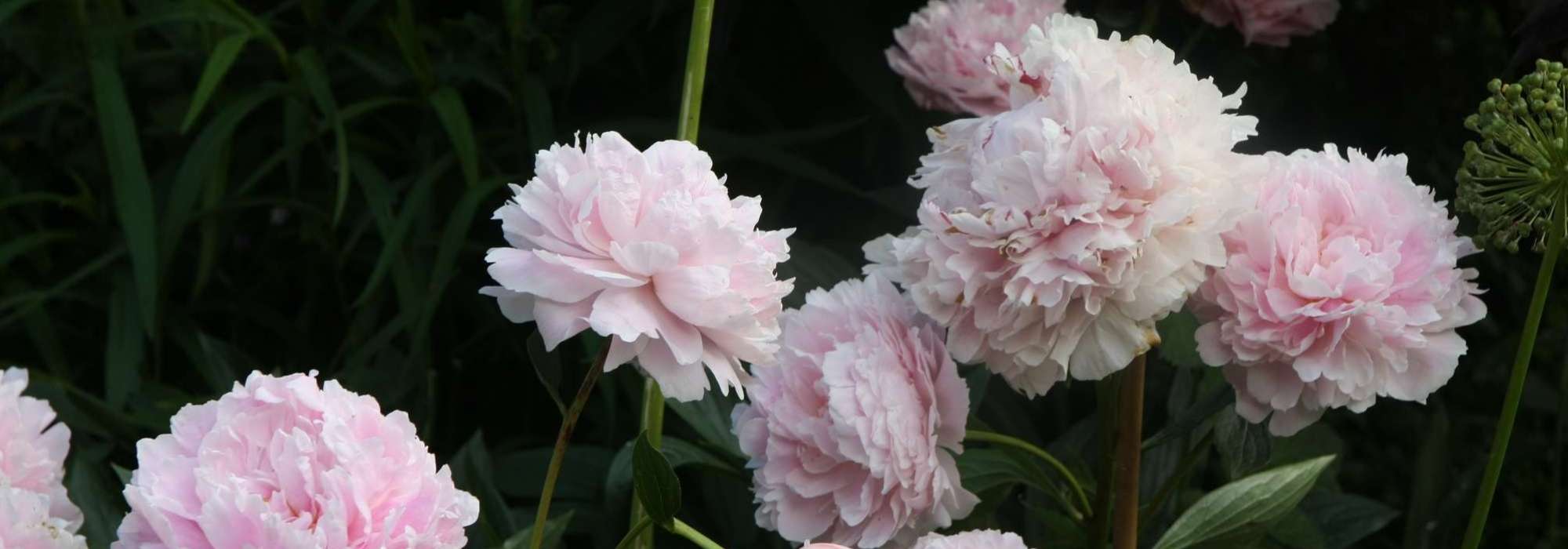
Paeonia x lactiflora Coral Sunset - Pivoine herbacée hybride Coral Sunset in pictures

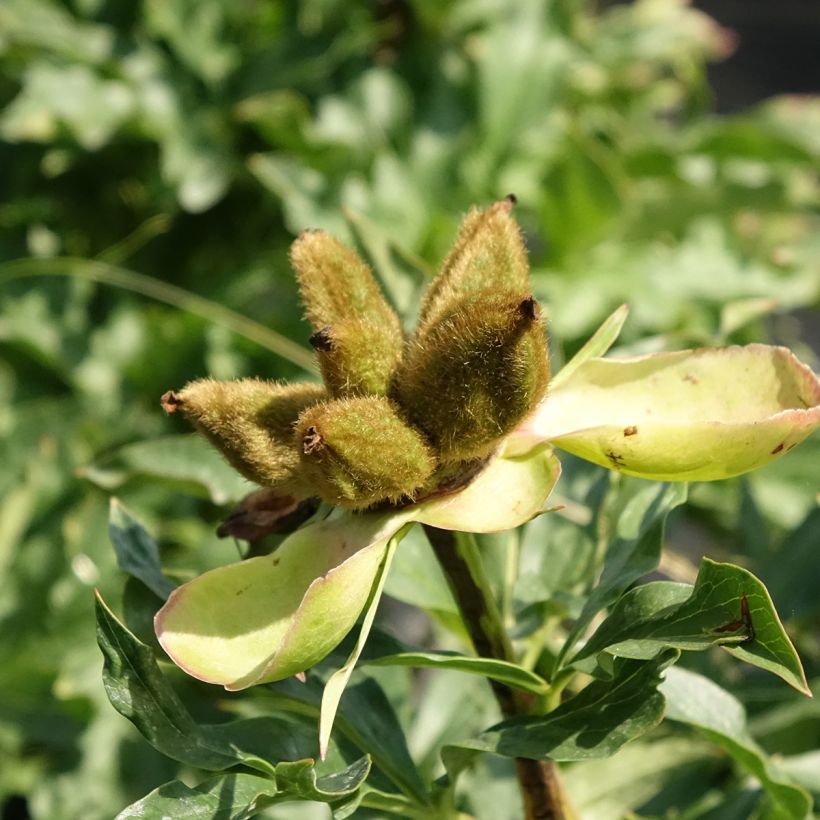
Flowering
Foliage
Plant habit
Botanical data
Paeonia
x lactiflora
Coral Sunset
Ranunculaceae
Paeonia ‘Coral Sunset’
Cultivar or hybrid
Planting and care
Plant the peony Coral Sunset preferably from September to November, in full sun, or in light shade in regions with hot summers. Choose a deep, fertile soil rich in organic matter, which retains some moisture in spring without remaining waterlogged. Clay soils are suitable if they are loosened and properly drained. Very dry, poor or compact soils reduce growth and flowering.
If you plant a stump with bare roots, cover the red eyes with only 2 to 3 cm of soil. Deeper planting may prevent flower formation. In the case of a container-grown plant, place the top of the root ball at ground level. Allow 80 cm to 1 m between two plants. Water regularly during the first year and when buds are forming if the spring is dry. Once established, the stump only needs water during prolonged drought. An application of well-rotted compost at the end of winter maintains soil fertility; leave the collar exposed. This peony does not tolerate transplanting well and can remain for several decades in the same spot. Its sturdy stems generally do not need staking. Very hardy, it withstands approximately -20 °C, even -23 °C in well-drained soil.
Planting period
Intended location
Care
Planting & care advice



-
, onOrder confirmed
Reply from on Promesse de fleurs
Recently viewed products
Haven't found what you were looking for?
Hardiness is the lowest winter temperature a plant can endure without suffering serious damage or even dying. However, hardiness is affected by location (a sheltered area, such as a patio), protection (winter cover) and soil type (hardiness is improved by well-drained soil).

The flowering period indicated on our website applies to countries and regions located in USDA zone 8 (France, the United Kingdom, Ireland, the Netherlands, etc.)
It will vary according to where you live:- In zones 9 to 10 (Italy, Spain, Greece, etc.), flowering will occur about 2 to 4 weeks earlier.
- In zones 6 to 7 (Germany, Poland, Slovenia, and lower mountainous regions), flowering will be delayed by 2 to 3 weeks.
- In zone 5 (Central Europe, Scandinavia), blooming will be delayed by 3 to 5 weeks.
In temperate climates, pruning of spring-flowering shrubs (forsythia, spireas, etc.) should be done just after flowering.
Pruning of summer-flowering shrubs (Indian Lilac, Perovskia, etc.) can be done in winter or spring.
In cold regions as well as with frost-sensitive plants, avoid pruning too early when severe frosts may still occur.
The planting period indicated on our website applies to countries and regions located in USDA zone 8 (France, United Kingdom, Ireland, Netherlands).
It will vary according to where you live:
- In Mediterranean zones (Marseille, Madrid, Milan, etc.), autumn and winter are the best planting periods.
- In continental zones (Strasbourg, Munich, Vienna, etc.), delay planting by 2 to 3 weeks in spring and bring it forward by 2 to 4 weeks in autumn.
- In mountainous regions (the Alps, Pyrenees, Carpathians, etc.), it is best to plant in late spring (May-June) or late summer (August-September).
The harvesting period indicated on our website applies to countries and regions in USDA zone 8 (France, England, Ireland, the Netherlands).
In colder areas (Scandinavia, Poland, Austria...) fruit and vegetable harvests are likely to be delayed by 3-4 weeks.
In warmer areas (Italy, Spain, Greece, etc.), harvesting will probably take place earlier, depending on weather conditions.
The sowing periods indicated on our website apply to countries and regions within USDA Zone 8 (France, UK, Ireland, Netherlands).
In colder areas (Scandinavia, Poland, Austria...), delay any outdoor sowing by 3-4 weeks, or sow under glass.
In warmer climes (Italy, Spain, Greece, etc.), bring outdoor sowing forward by a few weeks.
Shipping country and language
Your country of residence may be:
Your country of residence is:
For a better user experience on our website, you can select:
Your shipping country:
-
 Austria
-
 Belgium
-
 Bosnia & Herzegovina
-
 Bulgaria
-
 Croatia
-
 Cyprus
-
 Czechia
-
 Denmark
-
 Estonia
-
 Finland
-
 France
-
 Germany
-
 Greece
-
 Hungary
-
 Iceland
-
 Ireland
-
 Italy
Italy
-
 Latvia
-
 Liechtenstein
-
 Lithuania
-
 Luxembourg
-
 Malta
Malta
-
 Netherlands
-
 Poland
-
 Portugal
-
 Romania
-
 Serbia
-
 Slovakia
-
 Slovenia
-
 Spain
Spain
-
 Sweden
-
 Switzerland
Language:
-
French
-
 English
-
Spanish
-
Italian
-
German
-
Portuguese
-
Dutch
-
Finnish
My Account
Hello
My wish lists
My cart
Log in / Register
Existing customer?
This form is protected by reCAPTCHA - the Google Privacy Policy and Terms of Service apply.
New customer?
Create an account to track your orders, access our customer service and, if you wish, make the most of our upcoming offers.