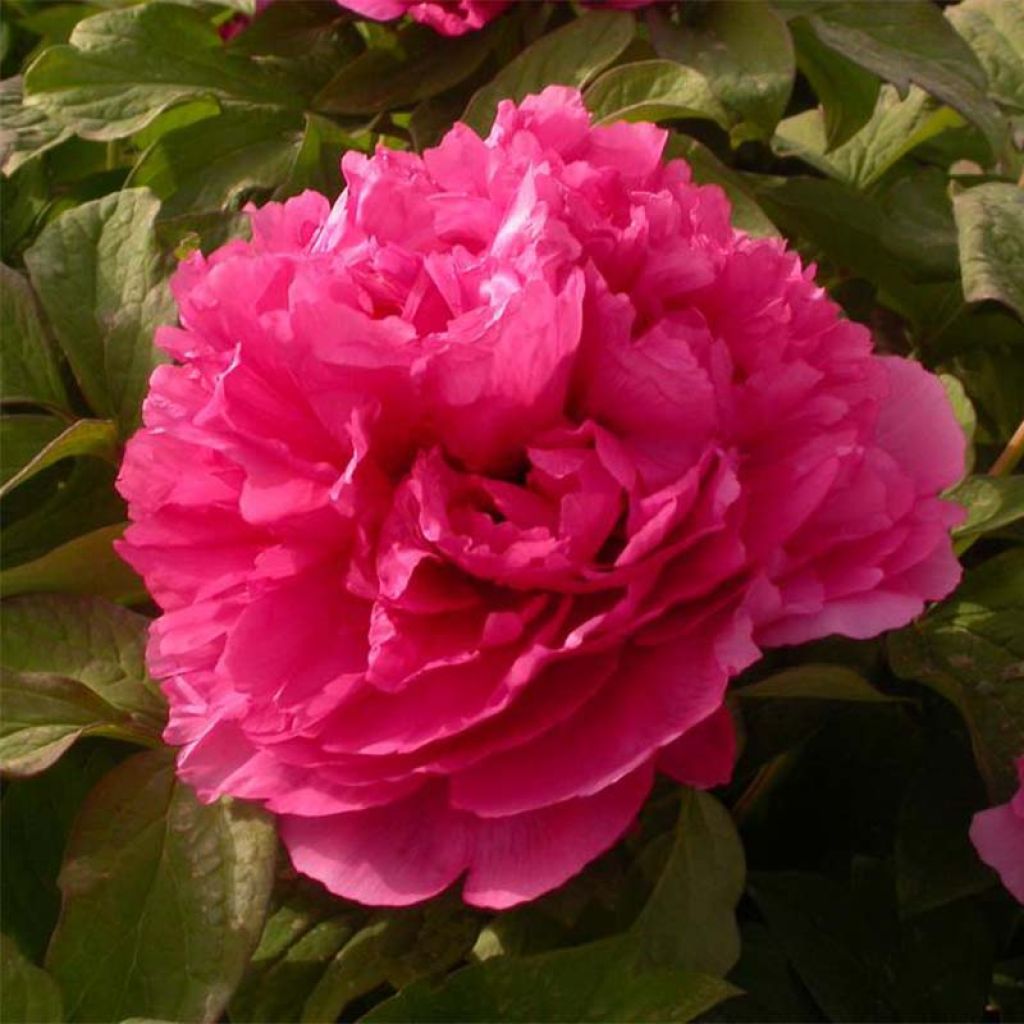
Paeonia suffruticosa Juan Ye Hong - Tree Peony
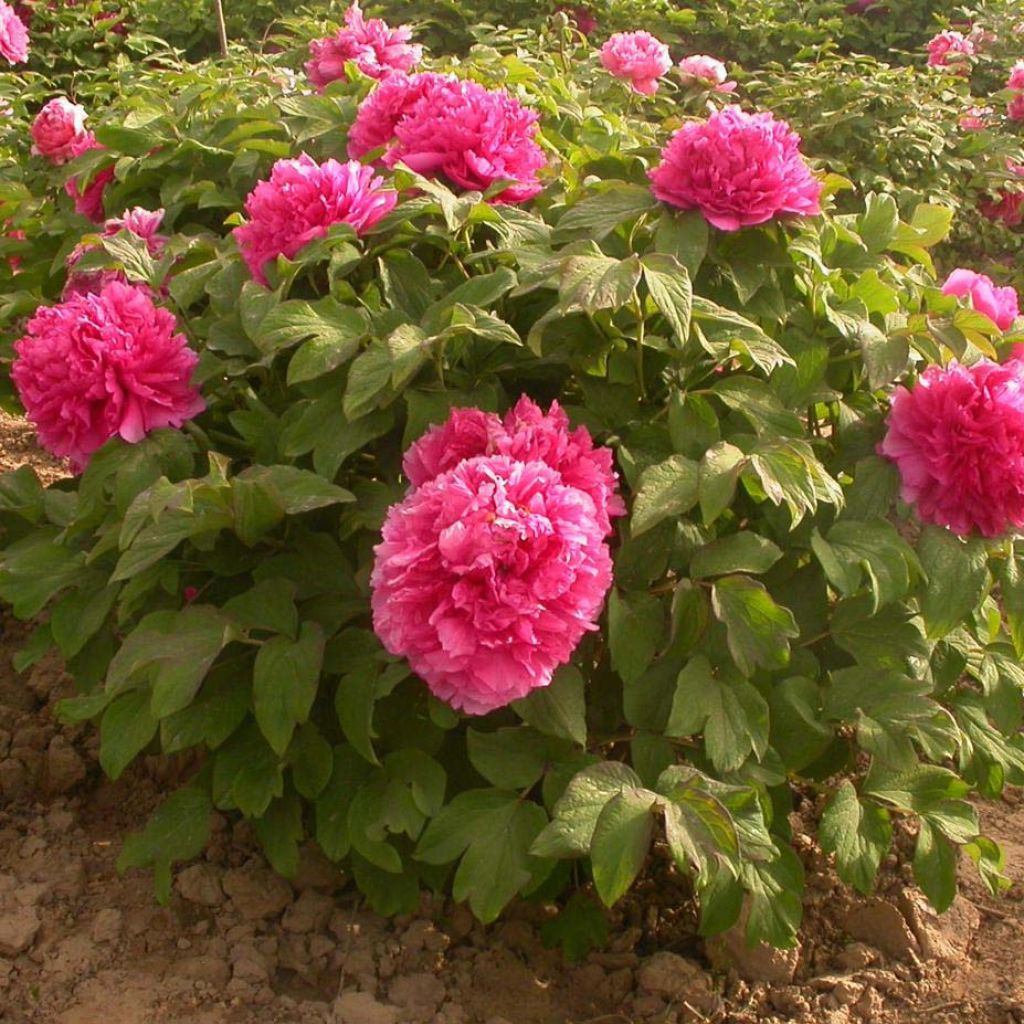
Paeonia suffruticosa Juan Ye Hong - Tree Peony
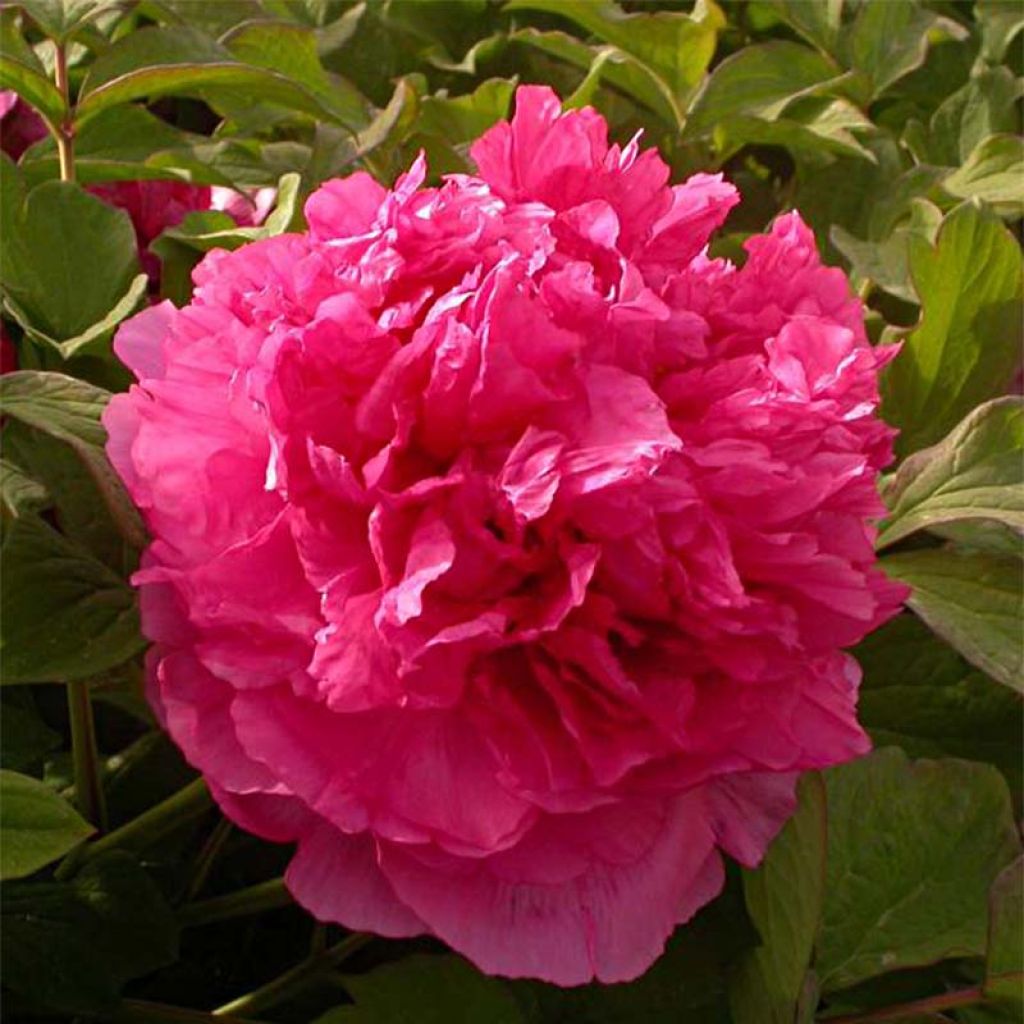
Paeonia suffruticosa Juan Ye Hong - Tree Peony
Paeonia suffruticosa Juan Ye Hong - Tree Peony
Paeonia suffruticosa Juan Ye Hong
Tree Peony
HS plate after 2 months.
Catherine, 21/09/2025
Back-to-school special offer!
Get €10 off for every €50 you spend! And get up to €40 off on a single order.
How does it work?
1. Shop your favourites
Add your favourite plants to your basket. For every €50 you spend (excluding delivery charges, store credit and the plastic-free option), you’ll receive a €10 voucher.
€50 spent = €10 voucher
€100 spent = €20 voucher
€150 spent = €30 voucher
€200 spent = €40 voucher
2. Place your order
Once your basket reaches one of the spending thresholds, place your order. You can even choose your delivery date!
3. Receive your voucher
As soon as your order has been shipped, you’ll receive an email containing your personal voucher code and its value.
4. Use it on your next order
Your voucher is valid for 90 days from the date you receive it. It can be used once only, on a new order worth at least the value of the voucher, excluding delivery charges.
Please note: Vouchers can be combined with other offers, but cannot be split or refunded.
Home or relay delivery (depending on size and destination)
Important: You may be charged customs duties by your country’s customs authorities upon delivery.
Schedule delivery date,
and select date in basket
This plant carries a 12 months recovery warranty
More information
We guarantee the quality of our plants for a full growing cycle, and will replace at our expense any plant that fails to recover under normal climatic and planting conditions.

Would this plant suit my garden?
Set up your Plantfit profile →
Description
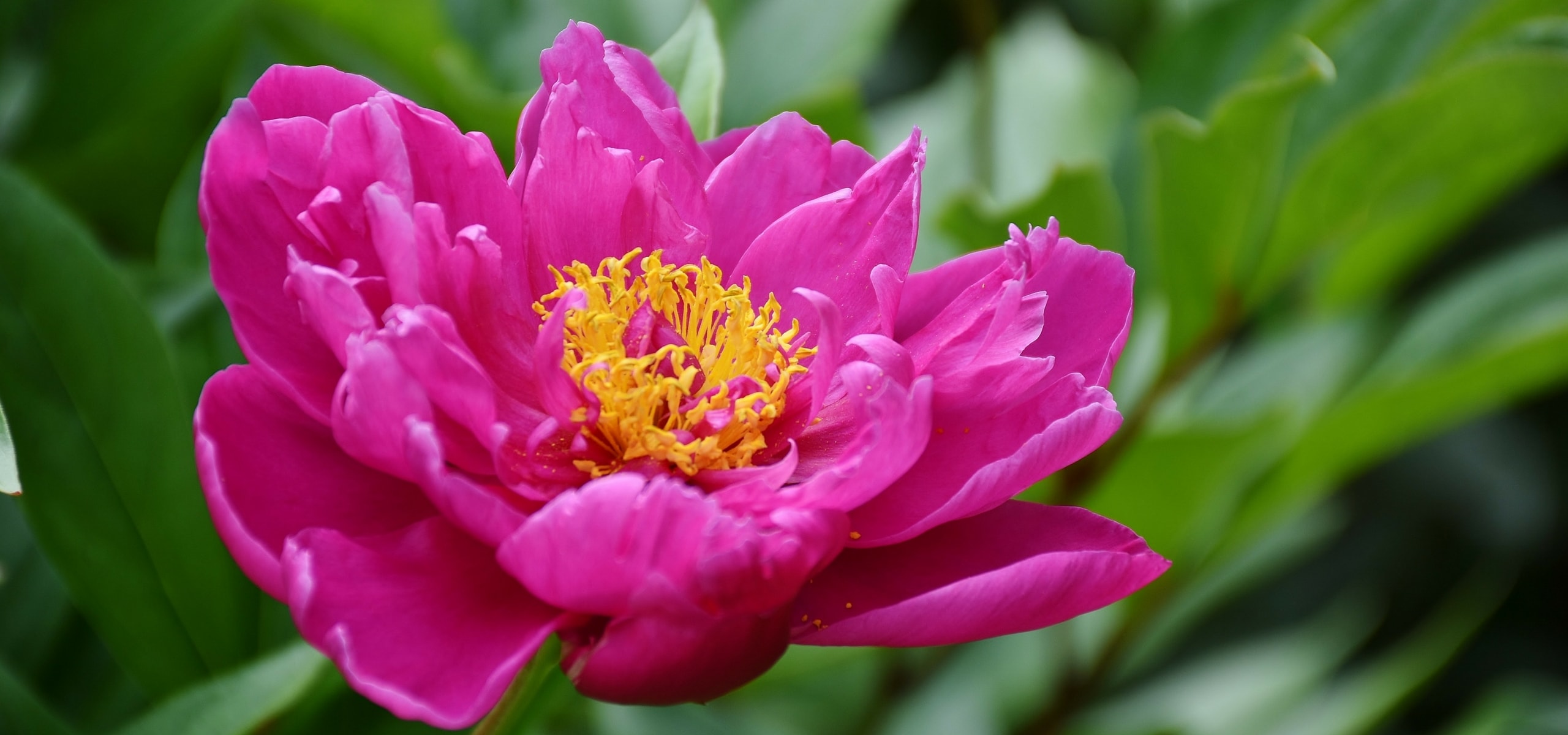
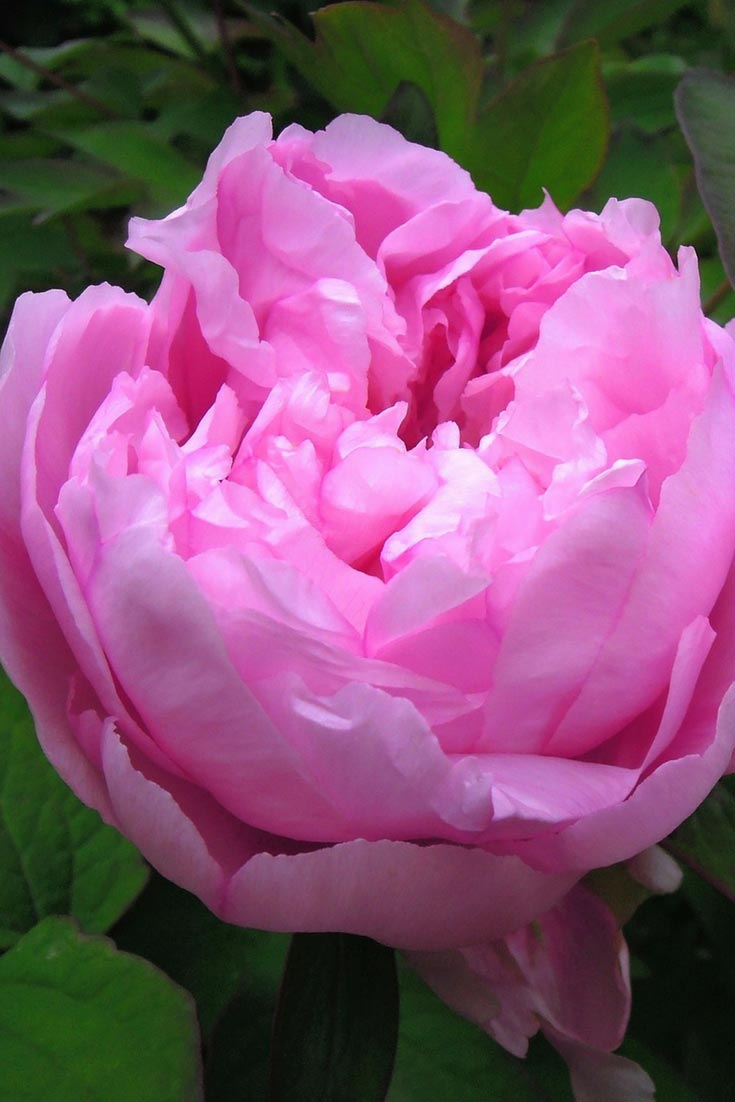
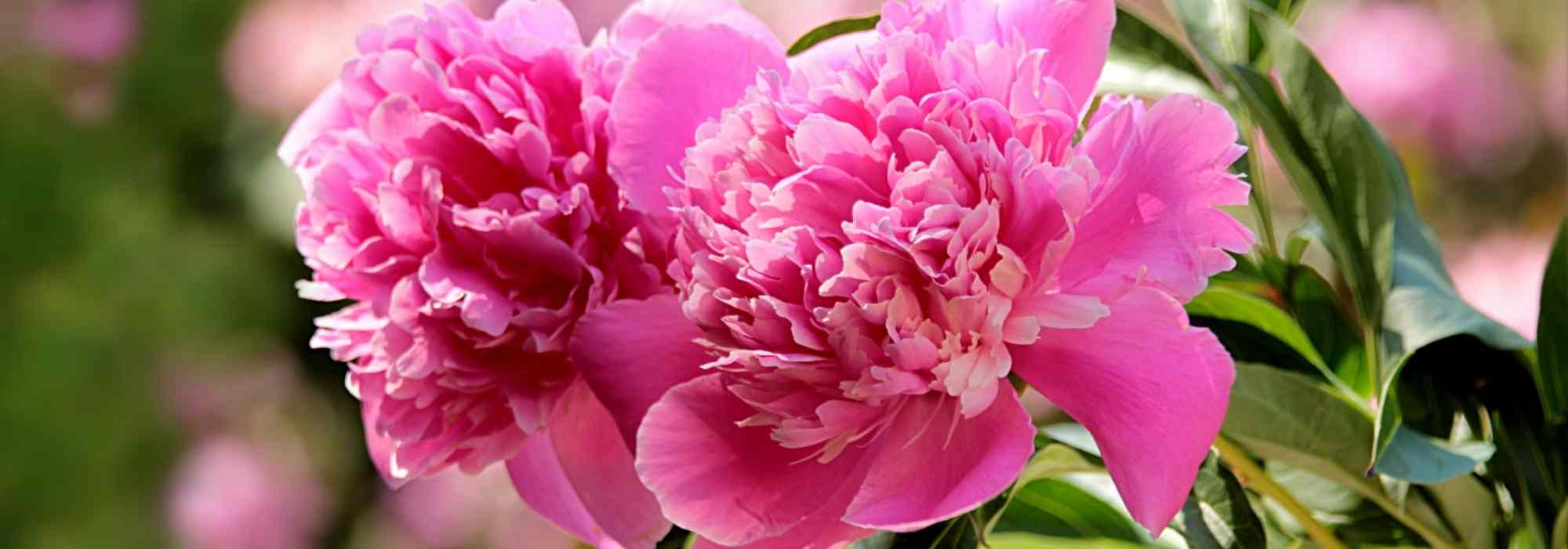
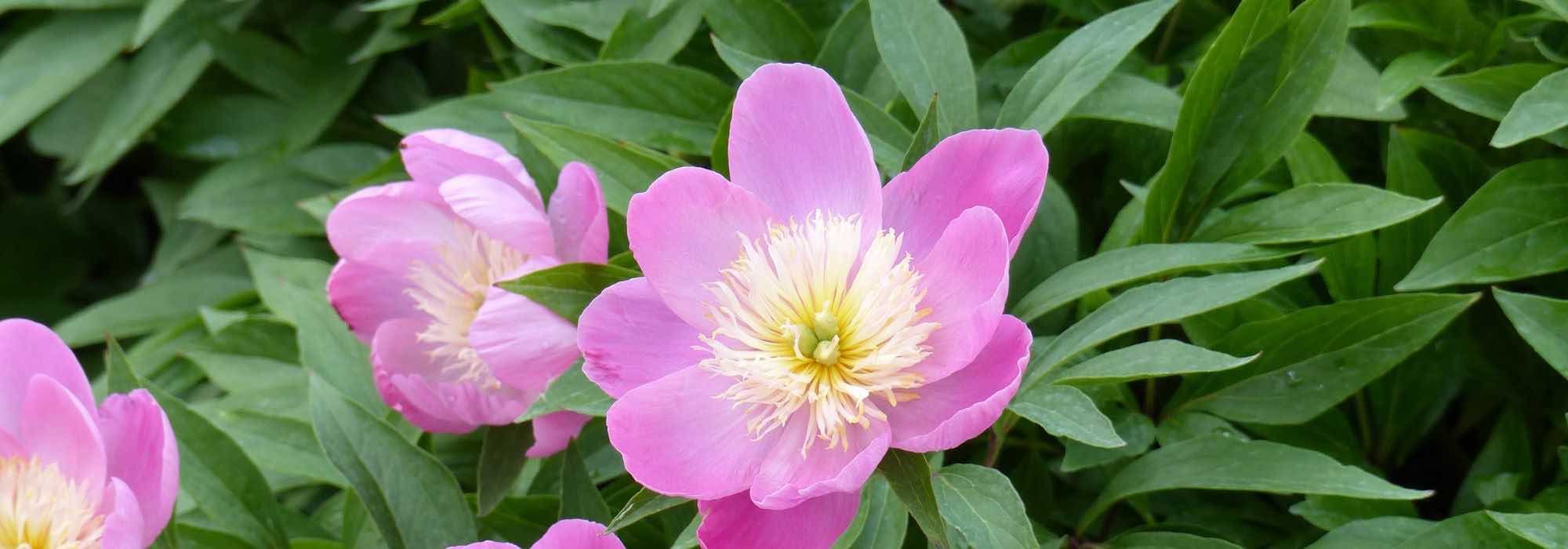
Paeonia suffruticosa 'Juan Ye Hong', which can be translated as "red ribbon," is a vigorous variety of Japanese tree peony with vibrant and slightly fragrant spring flowers. Its large, very double flowers open like roses with a tangle of petals that are more pink than red, creating striking colours and revealing the late appearance of a golden yellow stamen centre. This flowering shrub offers a breathtaking spectacle at maturity, deserving a prominent place in the garden. It also makes magnificent bouquets with its splendid flowers.
The 'Juan Ye Hong' tree peony is a beautiful descendant of Paeonia suffruticosa, native to central China. This extraordinary species, cultivated for about 1500 years in China and two centuries in Europe, has given rise to numerous cultivars with single or double flowers, in all colours except true blue. The wild form has never been formally identified. In contrast to so-called herbaceous peonies, Paeonia suffruticosa produces a woody framework, one or more small trunks, and sparsely branched knotty branches that persist all year round like shrubs. Its foliage is deciduous, emerging in spring and falling in autumn, often taking on beautiful colours at the end of the season. All these plants, native to the Far East, are very cold-resistant. They belong to the family of Ranunculaceae. P. suffuticosa is highly resistant to cold.
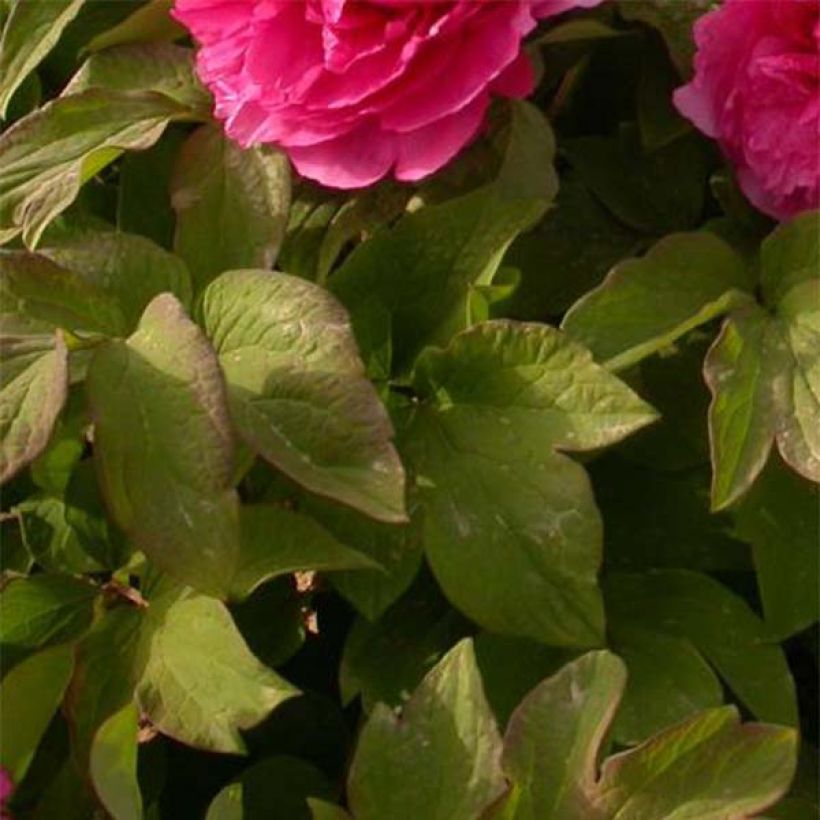
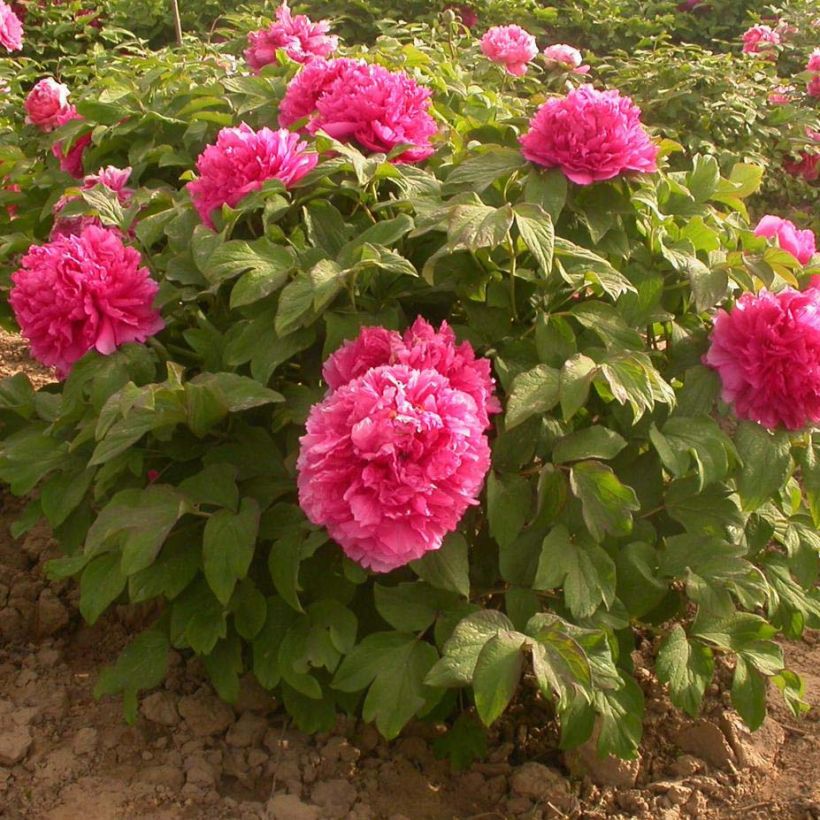
'Juan Ye Hong', slowly forms a sparsely branched, rounded bush that will reach about 1.40 metres (5 feet) in height, slightly less in width, and 1.50 metres (5 feet) in height under good growing conditions. The short, upright branches bear leaves that are deeply divided into long lanceolate leaflets, very smooth and strongly veined, reddish when buds open and quickly turning medium green on the upper side, bluish green on the underside. The flowering of 'Juan Ye Hong' takes place for about 3 weeks in April-May, typically at the beginning of the tree peony season. A 3-year-old plant will bear a single flower, and over time, the buds will multiply to reach 50 on a 20-year-old plant and over a hundred on the oldest plants. The large, solitary, rounded buds appear at the end of winter at the tips of new reddish shoots. They open into highly double corollas, erect or horizontally borne, measuring 15 to 25 cm (6 to 10in) in diameter. They are composed of multiple crinkled petals, with the flower's center visible before it fades. Their light, pleasant fragrance has hints of lemon.
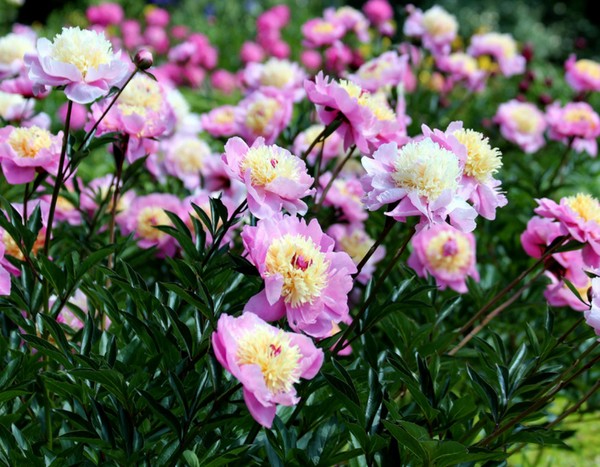
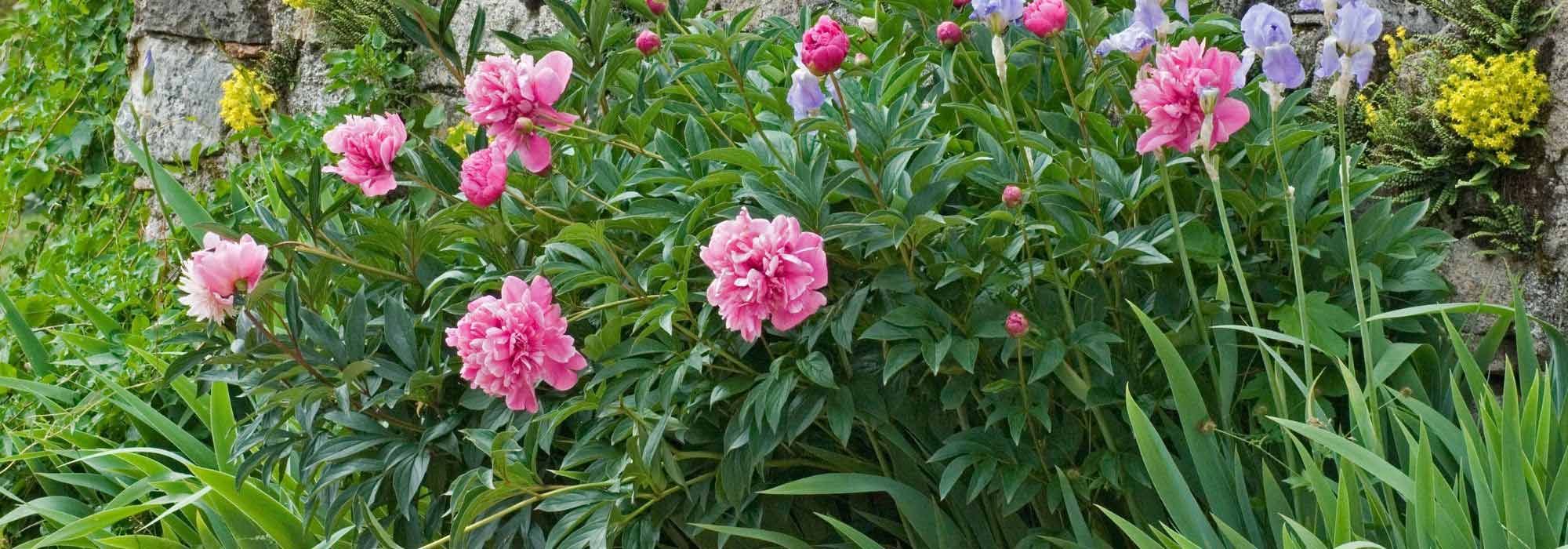
The tree peony is not a plant for impatient gardeners. It takes its time, but years of patience are rewarded by the fabulous spectacle created by this opulent shrub laden with huge flowers in spring. In the garden, the 'Lu Mu Ying Yu' tree peony will be sumptuous when planted against a wall, at the forefront of a hedge or in a border, under tall trees, but always sheltered from winds and in a bright and airy location. Its magnificent flowers will be enhanced by those of other white, pink, or mauve peonies, clusters of mauve or white lilacs, or early-flowering China roses (Old Blush). This variety also pairs well with other perennials that bloom before or after it, such as garden irises or campanulas.
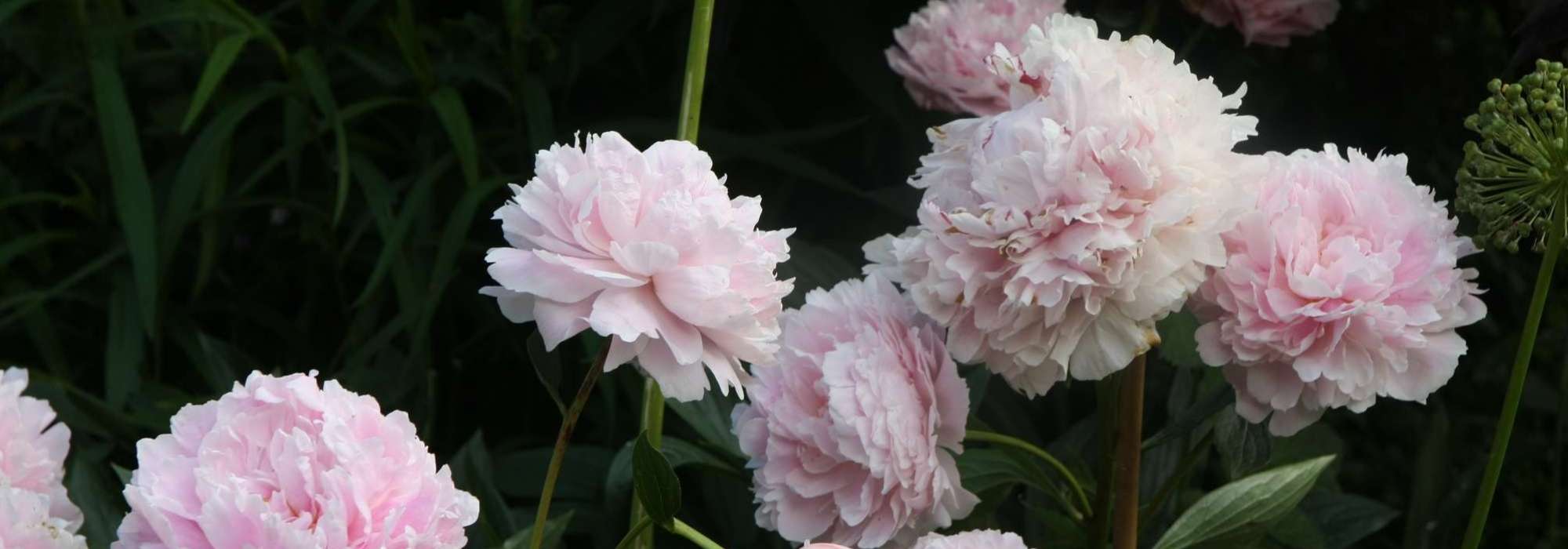
Paeonia suffruticosa Juan Ye Hong - Tree Peony in pictures
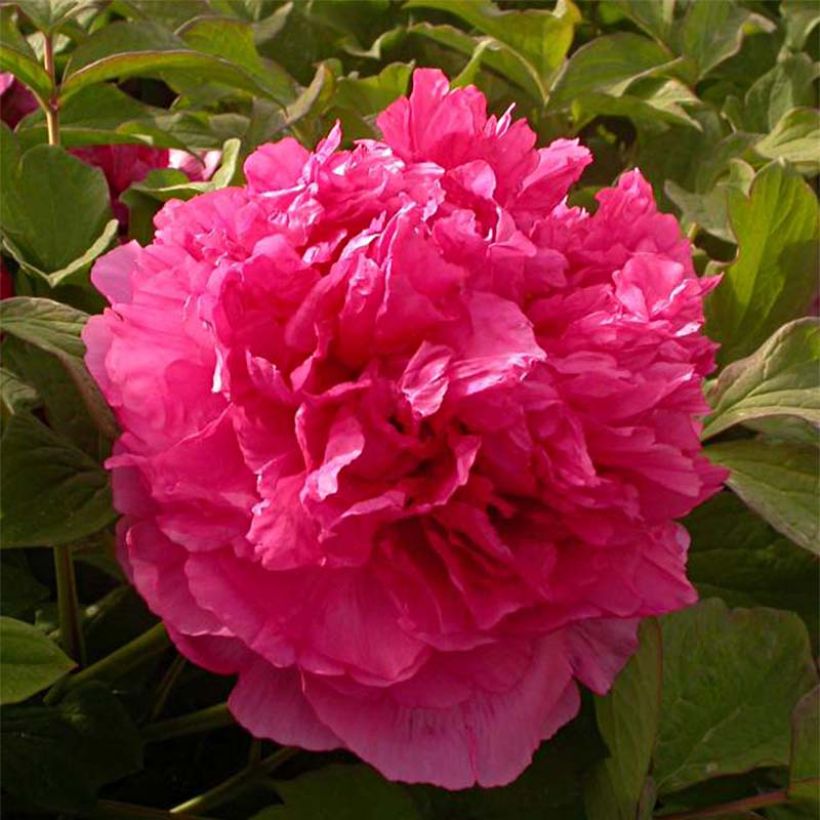
Flowering
Foliage
Plant habit
Botanical data
Paeonia
suffruticosa
Juan Ye Hong
Ranunculaceae
Tree Peony
Cultivar or hybrid
Planting and care
Place the tree peony in partial shade, 6 hours of sun per day are necessary to obtain a beautiful flowering. Morning sun is appreciated, while scorching situations should be avoided. From September to May, except during freezing periods, plant it in a fertile and deep soil, slightly acidic, neutral or even slightly calcareous, moist but well-drained to prevent the roots from rotting. Once well established in deep soil, the tree peony does not require watering in summer in all our regions, especially early spring-blooming varieties. Its cold resistance is excellent, but the flower buds can be damaged by strong or dry and cold winds.
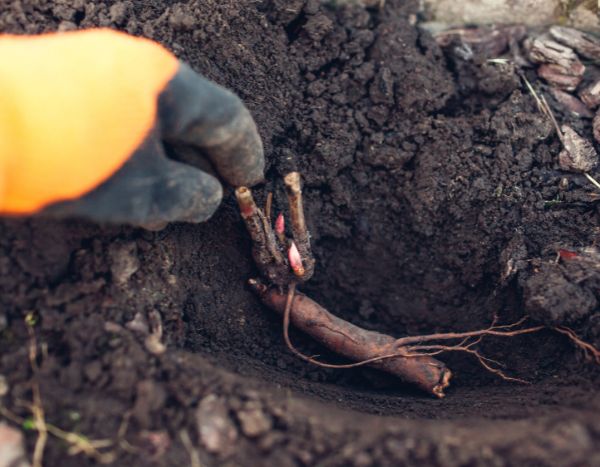
Easy to grow, shrubby peonies require little maintenance but deserve careful planting. During planting, dig a large hole 40 to 50 cm (16 to 20in) deep and at least as wide. Fill it with a mixture of garden soil, leaf compost, and river sand or gravel if your soil is very heavy and compact. Add crushed horn, bone meal, and dried blood in the bottom of the planting hole. Do not plant the plants too close together for good aeration. The shrubby peony fears competition from the roots of other plants, so allow for a spacing of 1 m (3ft) with its neighbors. The graft should be buried about twenty centimeters deep so that the plant gradually becomes independent of its rootstock. Watering should be abundant but spaced 8 to 5 days apart in the first two years, from March to September. Peonies have a reputation for being homebodies. That's why they should not be moved after planting. Avoid pruning unless the base of the plant becomes bare. If that's the case, prune at the level of the shoots from the base. Provide a support stake to support the flower stems and remove faded flowers during the season.
Planting period
Intended location
Care
Planting & care advice
-
, onOrder confirmed
Reply from on Promesse de fleurs
Recently viewed products
Haven't found what you were looking for?
Hardiness is the lowest winter temperature a plant can endure without suffering serious damage or even dying. However, hardiness is affected by location (a sheltered area, such as a patio), protection (winter cover) and soil type (hardiness is improved by well-drained soil).

The flowering period indicated on our website applies to countries and regions located in USDA zone 8 (France, the United Kingdom, Ireland, the Netherlands, etc.)
It will vary according to where you live:- In zones 9 to 10 (Italy, Spain, Greece, etc.), flowering will occur about 2 to 4 weeks earlier.
- In zones 6 to 7 (Germany, Poland, Slovenia, and lower mountainous regions), flowering will be delayed by 2 to 3 weeks.
- In zone 5 (Central Europe, Scandinavia), blooming will be delayed by 3 to 5 weeks.
In temperate climates, pruning of spring-flowering shrubs (forsythia, spireas, etc.) should be done just after flowering.
Pruning of summer-flowering shrubs (Indian Lilac, Perovskia, etc.) can be done in winter or spring.
In cold regions as well as with frost-sensitive plants, avoid pruning too early when severe frosts may still occur.
The planting period indicated on our website applies to countries and regions located in USDA zone 8 (France, United Kingdom, Ireland, Netherlands).
It will vary according to where you live:
- In Mediterranean zones (Marseille, Madrid, Milan, etc.), autumn and winter are the best planting periods.
- In continental zones (Strasbourg, Munich, Vienna, etc.), delay planting by 2 to 3 weeks in spring and bring it forward by 2 to 4 weeks in autumn.
- In mountainous regions (the Alps, Pyrenees, Carpathians, etc.), it is best to plant in late spring (May-June) or late summer (August-September).
The harvesting period indicated on our website applies to countries and regions in USDA zone 8 (France, England, Ireland, the Netherlands).
In colder areas (Scandinavia, Poland, Austria...) fruit and vegetable harvests are likely to be delayed by 3-4 weeks.
In warmer areas (Italy, Spain, Greece, etc.), harvesting will probably take place earlier, depending on weather conditions.
The sowing periods indicated on our website apply to countries and regions within USDA Zone 8 (France, UK, Ireland, Netherlands).
In colder areas (Scandinavia, Poland, Austria...), delay any outdoor sowing by 3-4 weeks, or sow under glass.
In warmer climes (Italy, Spain, Greece, etc.), bring outdoor sowing forward by a few weeks.
Shipping country and language
Your country of residence may be:
Your country of residence is:
For a better user experience on our website, you can select:
Your shipping country:
-
 Austria
-
 Belgium
-
 Bosnia & Herzegovina
-
 Bulgaria
-
 Croatia
-
 Cyprus
-
 Czechia
-
 Denmark
-
 Estonia
-
 Finland
-
 France
-
 Germany
-
 Greece
-
 Hungary
-
 Iceland
-
 Ireland
-
 Italy
Italy
-
 Latvia
-
 Liechtenstein
-
 Lithuania
-
 Luxembourg
-
 Malta
Malta
-
 Netherlands
-
 Poland
-
 Portugal
-
 Romania
-
 Serbia
-
 Slovakia
-
 Slovenia
-
 Spain
Spain
-
 Sweden
-
 Switzerland
Language:
-
French
-
 English
-
Spanish
-
Italian
-
German
-
Portuguese
-
Dutch
-
Finnish
My Account
Hello
My wish lists
My cart
Log in / Register
Existing customer?
This form is protected by reCAPTCHA - the Google Privacy Policy and Terms of Service apply.
New customer?
Create an account to track your orders, access our customer service and, if you wish, make the most of our upcoming offers.