WE’RE OPEN ALL SUMMER: Discover our current offers!
Share your pictures?
New arrival

Senecio serpens Dwarf Blue - Blue chalksticks

Senecio serpens Dwarf Blue
Blue chalksticks

Be the first to leave a review

Schedule delivery date,

and select date in basket

This plant carries a 24 months recovery warranty

More information

A creeping and compact succulent plant, forming highly branched stems covered with fleshy, cylindrical, upright, luminous silvery blue leaves. Resistant to drought and sea spray, it thrives in full sun or partial shade, in sandy or gravelly, very well-drained soil. In a rock garden or on a dry bank, it provides a beautiful presence all year round. Easy to grow in a pot, in well-drained soil, to be sheltered in winter. Hardiness: −3 to −5 °C in dry soil.
Flower size
3 cm
Height at maturity
35 cm
Spread at maturity
1 m
Exposure
Sun
Hardiness
Hardy down to -4°C
Soil moisture
Dry soil
plantfit-full

Would this plant suit my garden?

Set up your Plantfit profile →

Best planting time March to April
Recommended planting time March to June
J
F
M
A
M
J
J
A
S
O
N
D
Flowering time August to October
J
F
M
A
M
J
J
A
S
O
N
D

Description

Senecio serpens ‘Dwarf Blue’ is a very ornamental, compact succulent with silvery-blue foliage, prized for its unique texture and colour. Stunning in a dry rock garden, a mineral setting or a contemporary container, this variety is distinguished by its compact growth and beautiful density. 'Dwarf Blue' forms a low, structured carpet that remains neat. This tender, South African plant only tolerates light frosts. Growing it in a pot with a light substrate makes it possible to protect it from the cold.

Senecio serpens ‘Dwarf Blue’, also sold under the name ‘Dwarf Blue Chalksticks’, is a plant in the Asteraceae family. The type species, also known as Curio repens or Kleinia repens, is a typical plant from arid to sub-arid areas of South-Western South Africa, perfectly adapted to the harsh conditions of rocky slopes and coastal areas.
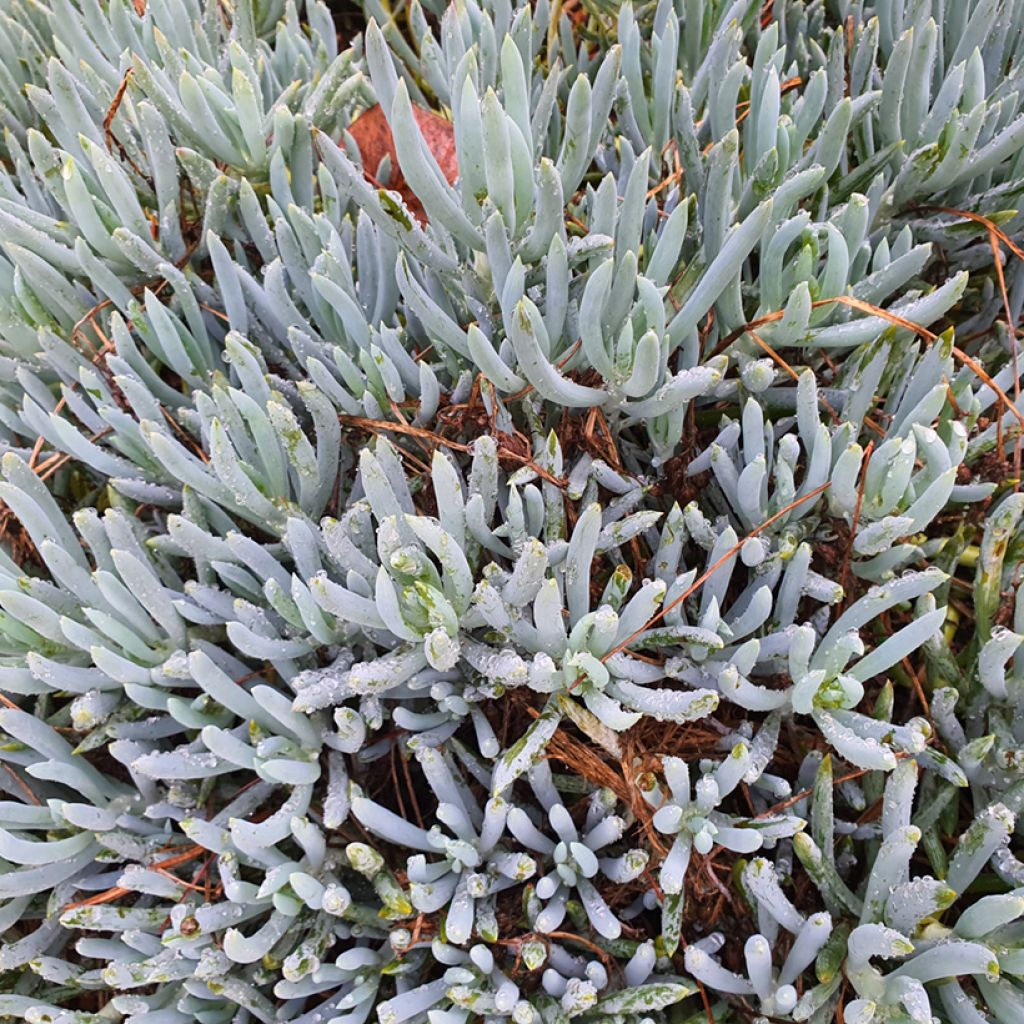
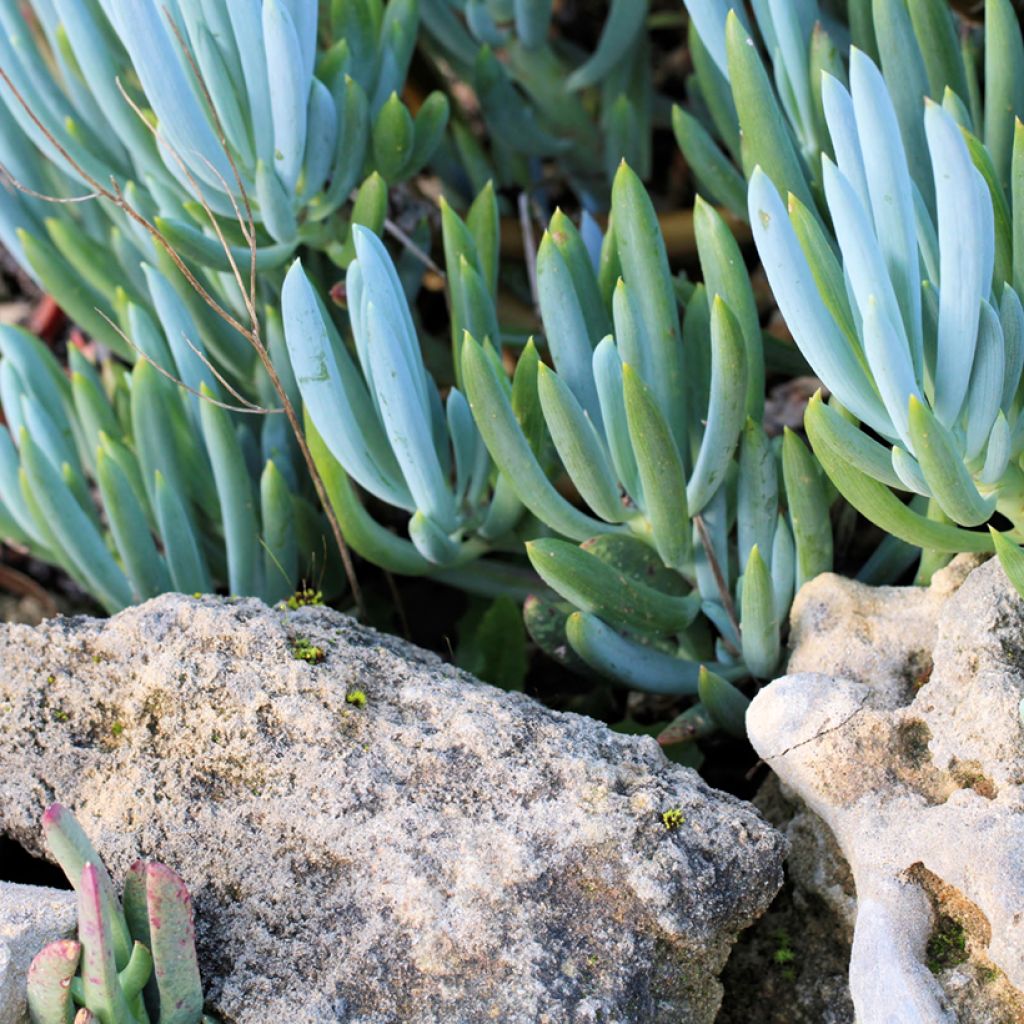
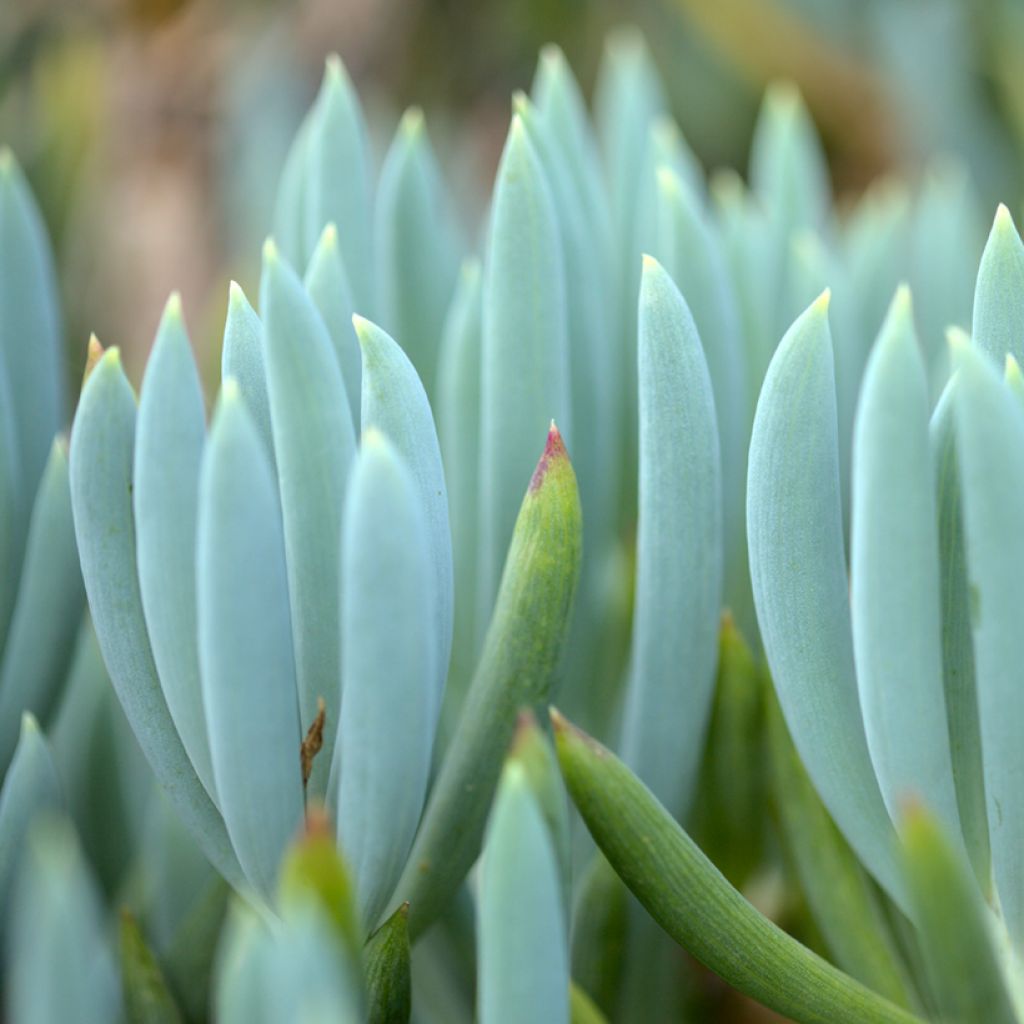
This dwarf cultivar 'Dwarf Blue' forms a very dense groundcover, with a neat appearance, 20 to 35cm tall and 70cm to 1m wide. The plant develops highly branched semi-prostrate stems. Its growth rate is moderate, faster in good conditions. Its evergreen foliage consists of fleshy, upright, cylindrical, smooth, matt silvery-blue leaves, covered with a fine white bloom that protects the plant from evaporation. The modest flowering occurs from late summer to early autumn, in the form of upright flower stems bearing cream-white heads, inconspicuous but nectar-rich.
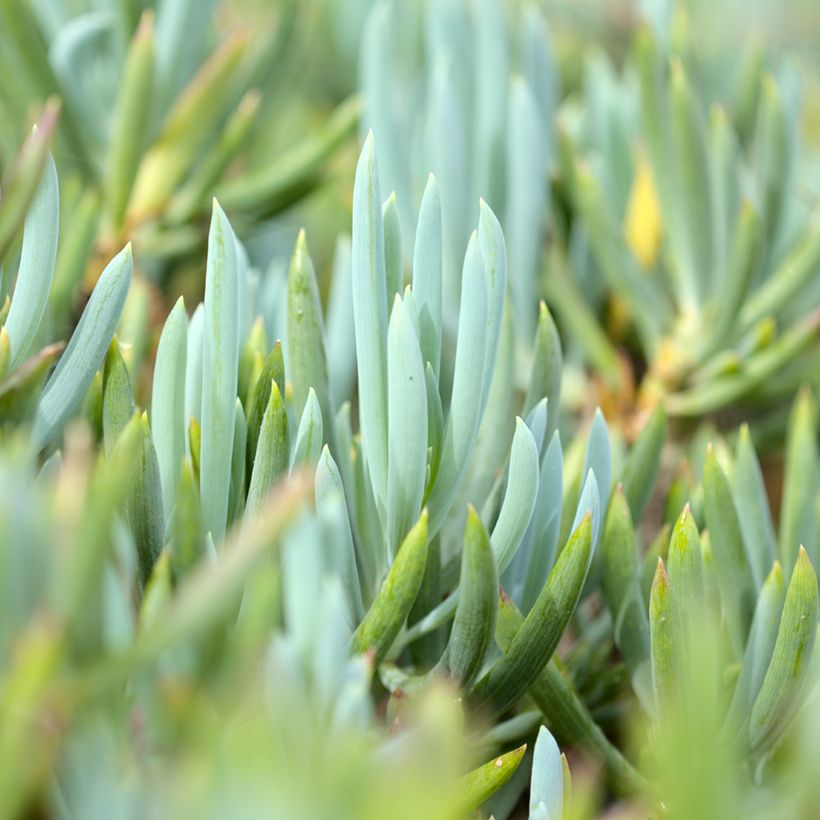
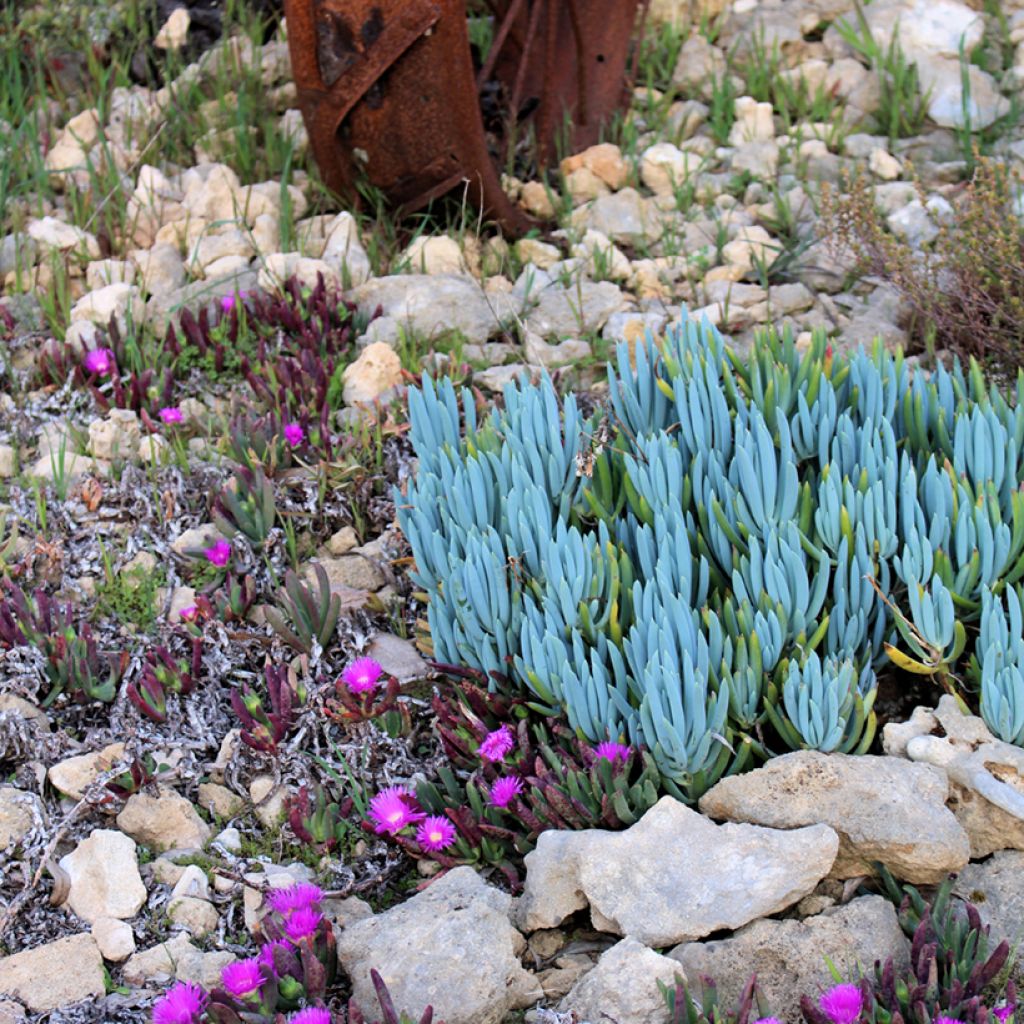
Creeping senecio 'Dwarf Blue' can tolerate occasional temperatures of −3 to −5 °C only in very well-drained soil that stays dry in winter. It is therefore a plant for coastal rock gardens, especially in Mediterranean regions. In a dry garden, it can be used at the edge of a raised bed, on top of a low wall, or between the stones of a dry rock garden. You can associate it with other small succulent plants like Delosperma, x Graptosedum 'Bronze', Echeveria, or even a small blue grass like Festuca glauca 'Elijah Blue'. Elsewhere, it thrives in pots or containers, in a cactus compost substrate. In summer, occasional watering benefits it, without overdoing it.
In winter, it must be brought into a bright, airy, cool room, and watering should be greatly reduced to avoid any risk of rot.

Report an error about the product description

Cacti and indoor succulents: how to grow and care?
Family sheet
by Alexandra 21 min.
Cacti and indoor succulents: how to grow and care?
Read article

Senecio serpens Dwarf Blue - Blue chalksticks in pictures

Senecio serpens Dwarf Blue - Blue chalksticks (Foliage) Foliage

Plant habit

Height at maturity 35 cm
Spread at maturity 1 m
Habit creeping
Growth rate normal

Flowering

Flower colour insignificant
Flowering time August to October
Inflorescence Flower head
Bee-friendly Attracts pollinators

Foliage

Foliage persistence Evergreen
Foliage colour blue

Botanical data

Genus

Senecio

Species

serpens

Cultivar

Dwarf Blue

Family

Asteraceae

Other common names

Blue chalksticks

Botanical synonyms

Curio repens 'Dwarf Blue', Kleinia repens 'Dwarf Blue'

Origin

Cultivar or hybrid, South Africa

Product reference24863

Planting and care

Plant Senecio serpens 'Dwarf Blue' in spring, after the last frosts, in the ground in a very mild climate or in a large pot elsewhere. Place it in very well-draining soil, mixing coarse sand, gravel or pozzolana into your garden soil if needed. Choose a sheltered, warm, very sunny to partially shaded position. A few generous waterings in summer, in dry and hot weather, will stimulate its growth. It tolerates periods of summer and winter drought well. Outdoors, without protection, but planted in a rock garden, this plant can withstand temperatures down to -3/-5°C at peak: the above-ground parts die back, and the plant regrows from its roots the following spring.


Container cultivation is ideal in cool or damp climates, allowing better control over the exposure and moisture of the growing medium. Choose a wide, shallow container with drainage holes, line the bottom with a drainage layer (gravel, clay pebbles), then fill it with a very light mix: 1/3 potting compost, 1/3 coarse sand, 1/3 pozzolana or perlite. Place the plant in direct sun or bright light, avoiding excess water: watering every two to three weeks in summer is sufficient, and should be greatly reduced in winter.
As soon as the first cold nights arrive (below 5 °C), bring the pot indoors to a bright, cool (between 5 and 12 °C), dry and well-ventilated location. During this overwintering period, stop watering almost completely to prevent any root rot. Once all risk of frost has passed, the plant can be taken back outside to the garden, a balcony or a sunny terrace.

Planting period

Best planting time March to April
Recommended planting time March to June

Intended location

Suitable for Rockery
Type of use Container, Slope, Greenhouse
Hardiness Hardy down to -4°C (USDA zone 9b) Show map
Ease of cultivation Amateur
Exposure Sun
Soil pH Any
Soil type Chalky (poor, alkaline and well-drained), Silty-loamy (rich and light), Stony (poor and well-drained)
Soil moisture Dry soil Very well-drained

Care

Pruning instructions Pruning is not essential. It should be light and carried out in spring, cutting just above a node. The pieces taken can also serve as cuttings, as this cultivar propagates very easily in dry, well-drained soil.
Pruning Pruning recommended once a year
Pruning time April
Soil moisture Dry soil
Disease resistance Very good
Overwinter Needs to be stored

This item has not been reviewed yet - be the first to leave a review about it.

Leave a review →

Recently viewed products

Haven't found what you were looking for?