Rosa moyesii Geranium
Rosa moyesii Geranium
Rosa moyesii Geranium

Rosa moyesii Geranium
Rosa moyesii Geranium
View more pictures
Hide images
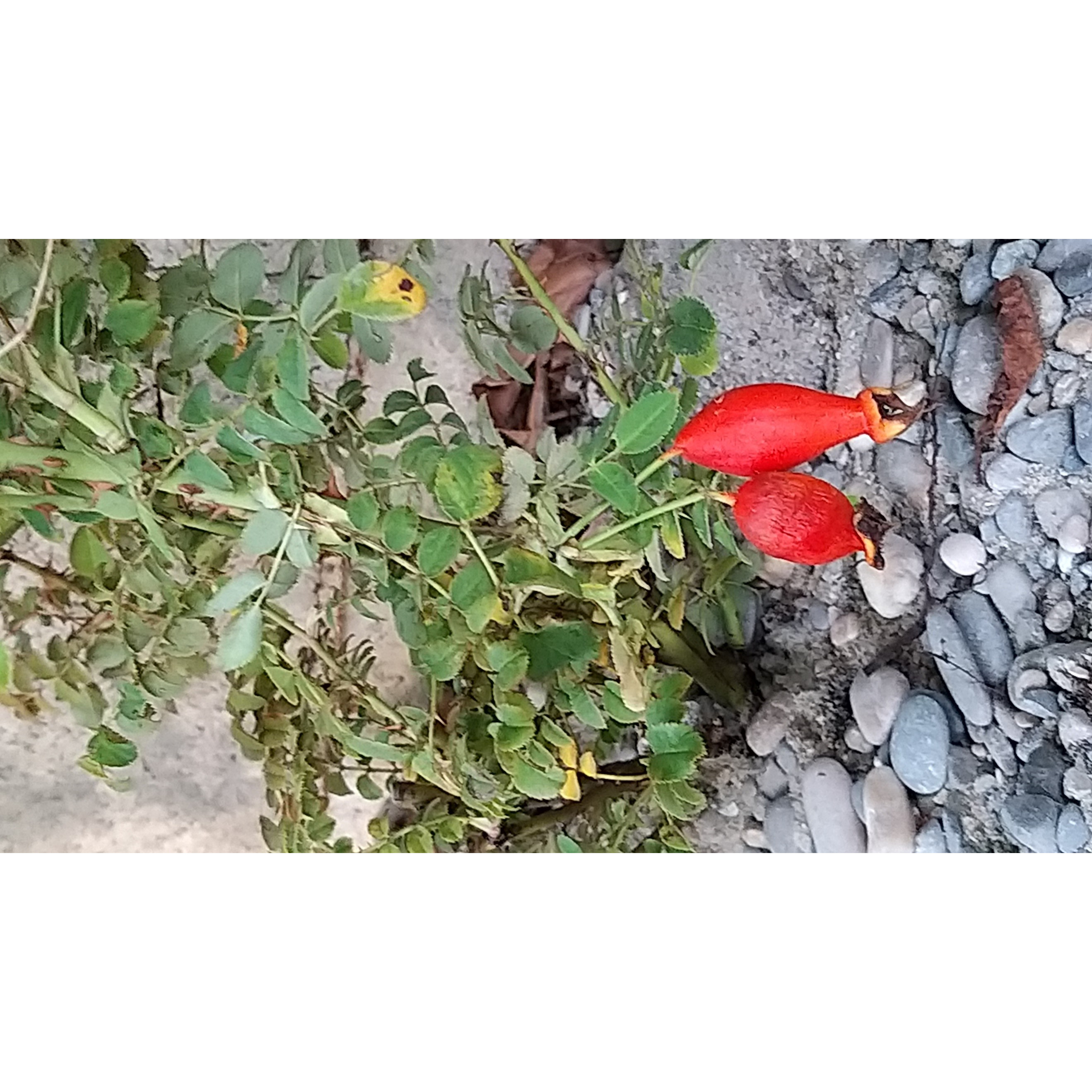
Thierry P.
Rosa moyesii Geranium
Thierry P. • 84 FR
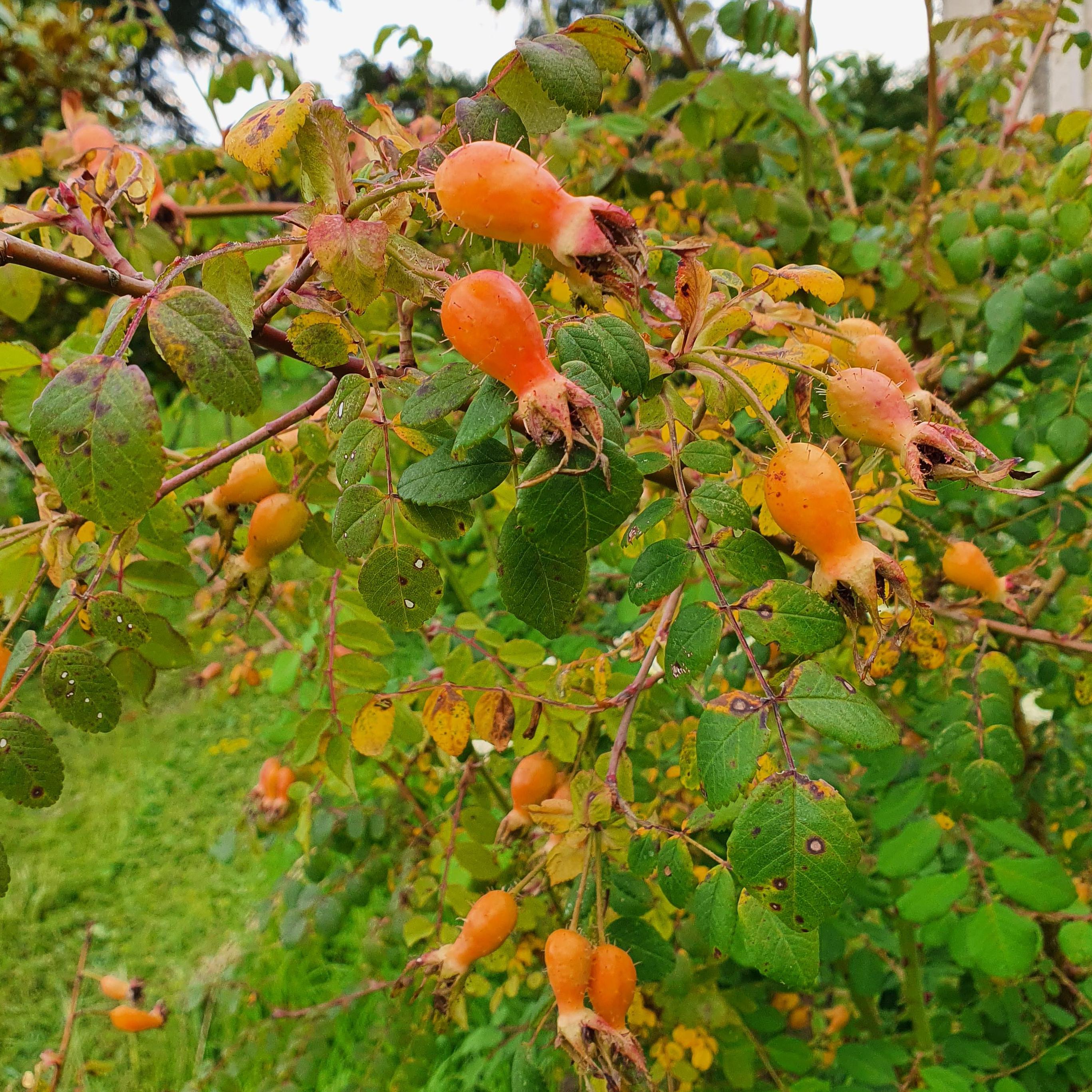
Jean H.
Rosa moyesii Geranium
Jean H. • 92 FR
Rosa moyesii Geranium
Rosa moyesii Geranium
Moyes Rose
The botanical rose I received and planted in November has established well, with lots of leafy stems.
Brigitte, 06/05/2025
Back-to-school special offer!
Get €10 off for every €50 you spend! And get up to €40 off on a single order.
How does it work?
1. Shop your favourites
Add your favourite plants to your basket. For every €50 you spend (excluding delivery charges, store credit and the plastic-free option), you’ll receive a €10 voucher.
€50 spent = €10 voucher
€100 spent = €20 voucher
€150 spent = €30 voucher
€200 spent = €40 voucher
2. Place your order
Once your basket reaches one of the spending thresholds, place your order. You can even choose your delivery date!
3. Receive your voucher
As soon as your order has been shipped, you’ll receive an email containing your personal voucher code and its value.
4. Use it on your next order
Your voucher is valid for 90 days from the date you receive it. It can be used once only, on a new order worth at least the value of the voucher, excluding delivery charges.
Please note: Vouchers can be combined with other offers, but cannot be split or refunded.
Home or relay delivery (depending on size and destination)
Important: You may be charged customs duties by your country’s customs authorities upon delivery.
Schedule delivery date
and select date in basket
This plant carries a 24 months recovery warranty
More information
We guarantee the quality of our plants for a full growing cycle, and will replace at our expense any plant that fails to recover under normal climatic and planting conditions.

Description
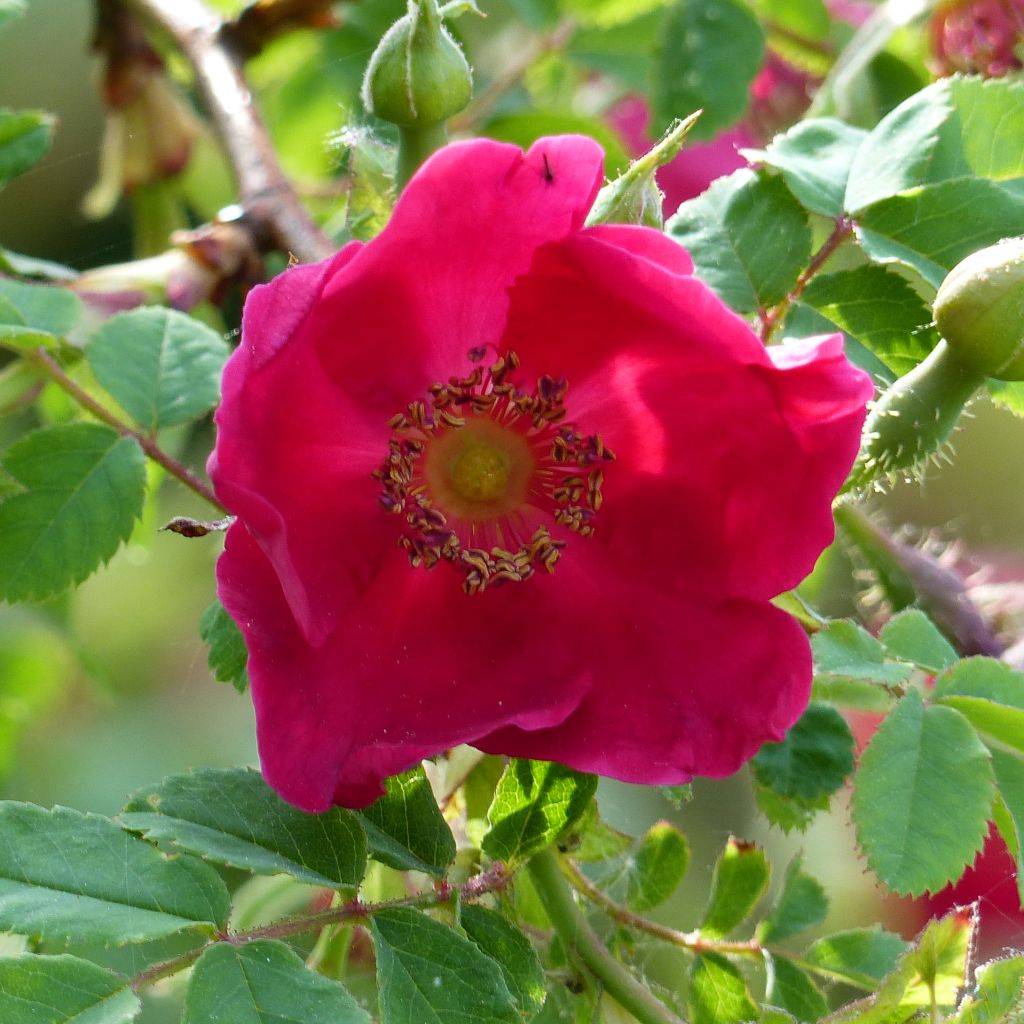
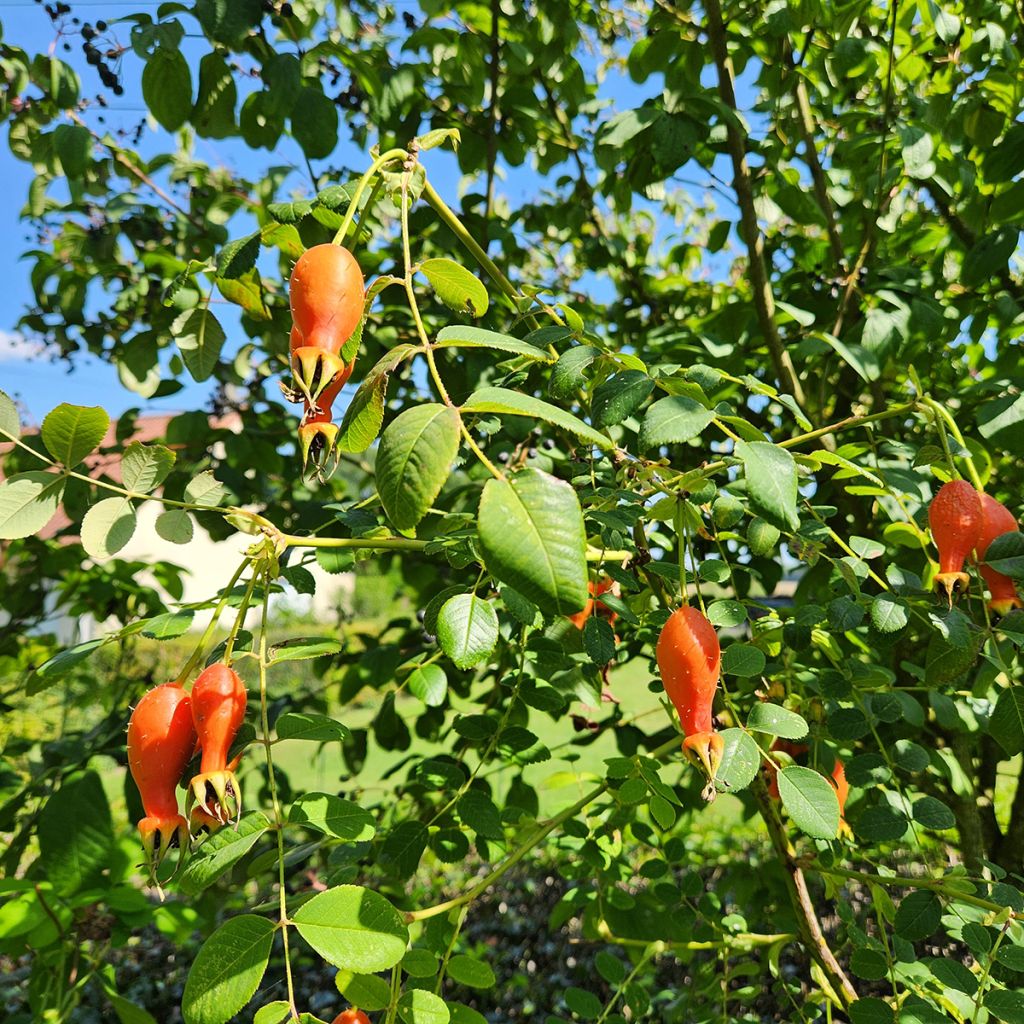
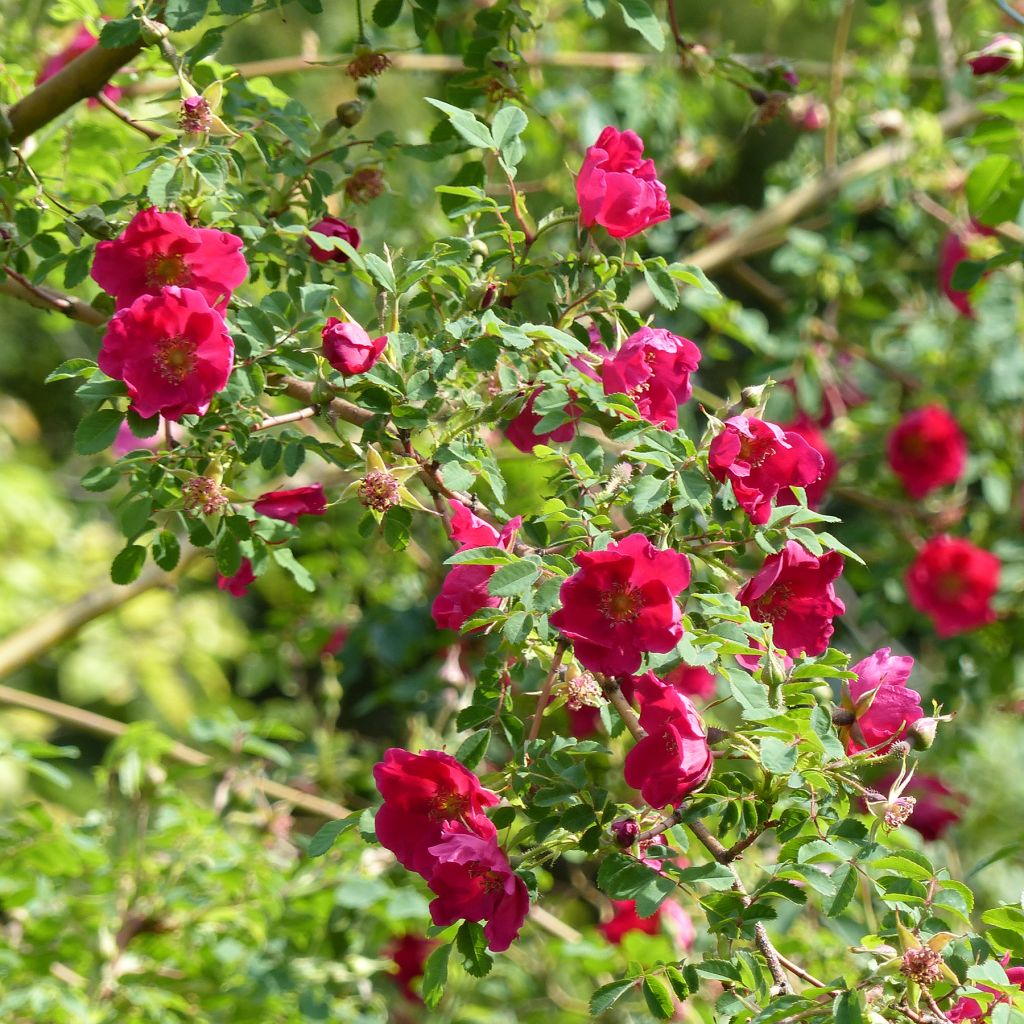
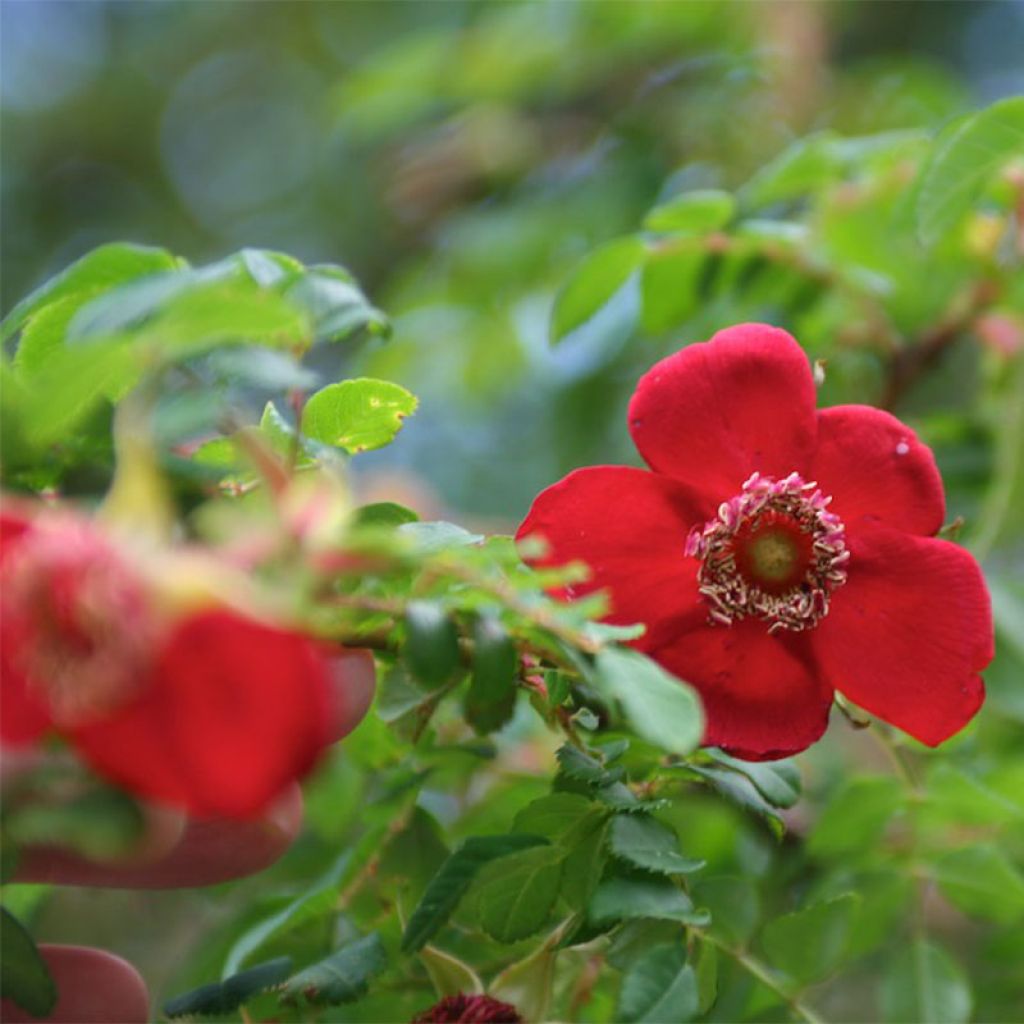
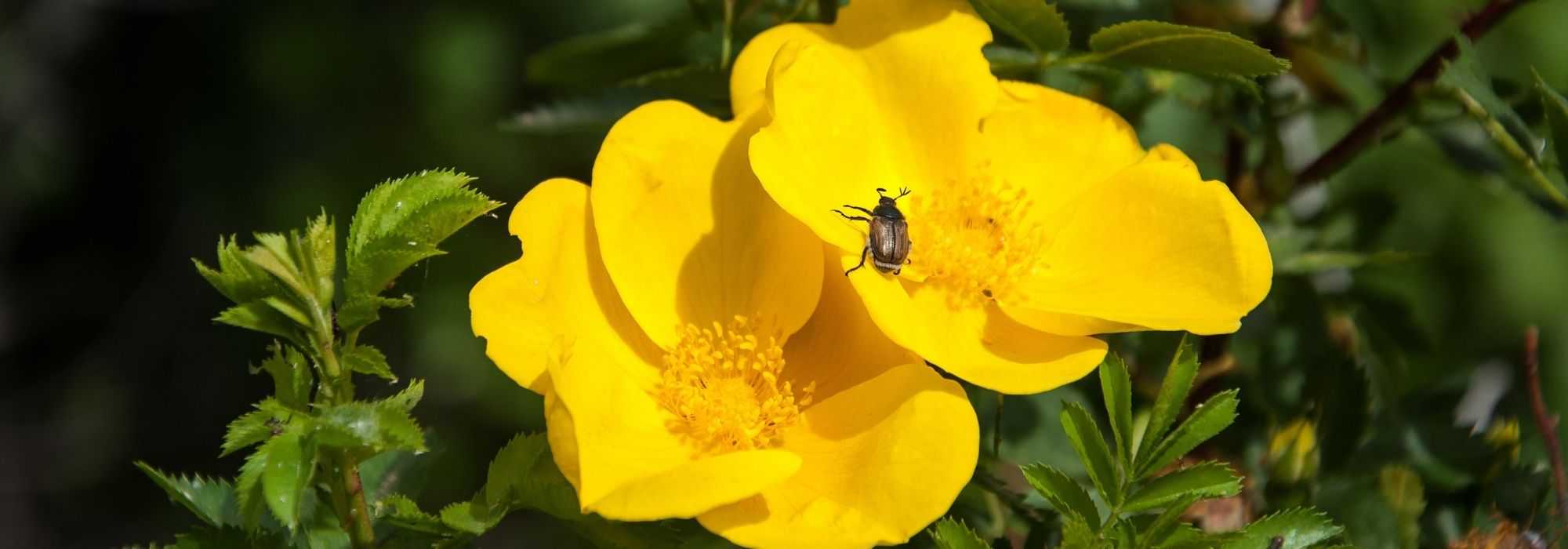
Rosa moyesii 'Geranium' is perhaps the best form of the moyesii roses, a somewhat ungainly Chinese botanical species that is often preferred due to its more compact habit and its beautiful autumn fruiting, with bright orange bottle-shaped fruits, larger than those of the species. In early summer, it produces pretty single roses of a very particular cherry red, illuminated by a few pale yellow stamens. This beautiful bush with light foliage in a bright green is easy to grow, original, undemanding and very hardy. It blends well in a rural hedge and can be trained as a small climber.
Rosa moyesii is a wild rose native to the mountains of western China, discovered in 1890 by a British missionary, Father J. Moyes, and introduced to Europe in 1894. The cultivar 'Geranium', on the other hand, appeared in the Wisley Botanical Garden in Great Britain in 1938. It is a large fast-growing bush with an upright but flexible habit, reaching a height of 2m (6ft 7in) to 2.50m (8ft 2in), slightly less in width. Its trunk, sometimes multiple, and its branches are thick, maturing to an ochre colour, armed with numerous straight prickles. The foliage, rarely diseased, is light and divided into 7 to 11 ovate leaflets, in a very bright green that enhances its red flowers. The flowering generally begins in June, lasts about 3 weeks and is not recurrent. The plant produces a multitude of single cup-shaped flowers, solitary or grouped in threes, measuring 5 to 6cm (2.4in) in width. Their colour is a very bright 'geranium' red, rarely seen in roses. They give way to curious fruits (called hips), shaped like small red-orange amphorae, 6cm (2.4in) long, much appreciated by birds and usually sterile.
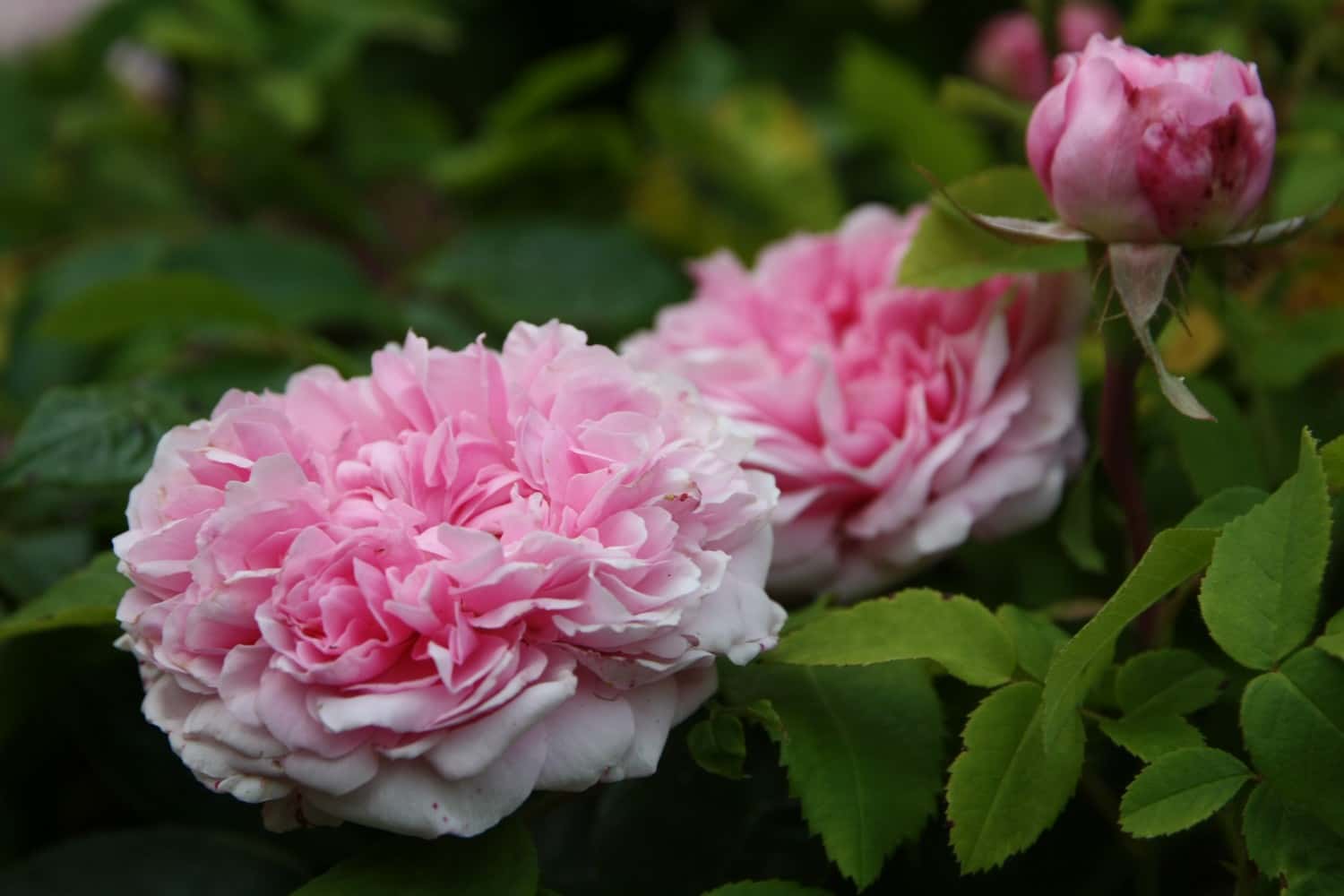
If the passion for botanical roses is not widespread, it is fully justified, especially in poor soils or difficult climates: these roses are not only the ancestors of our modern roses, but also generally more robust and very reliable. Rosa moyesii 'Geranium' is a simple and charming rose, shiny but light, that catches the eye at least twice a year. It will find its place in a hedgerow or defensive hedge, as it forms a thorny mass that is difficult to cross. It is also beautiful when planted alone, freely in a wild garden. It can be paired with Cotinus for autumn colours, lilacs for their spring fragrance, mock oranges for the same reason, with buddleias taking over in summer, but also with viburnums that show a similarly accommodating character. Finally, it is a very hardy shrub, low-maintenance, frugal, and drought-resistant once well-established, making it a unique addition to a rose garden.
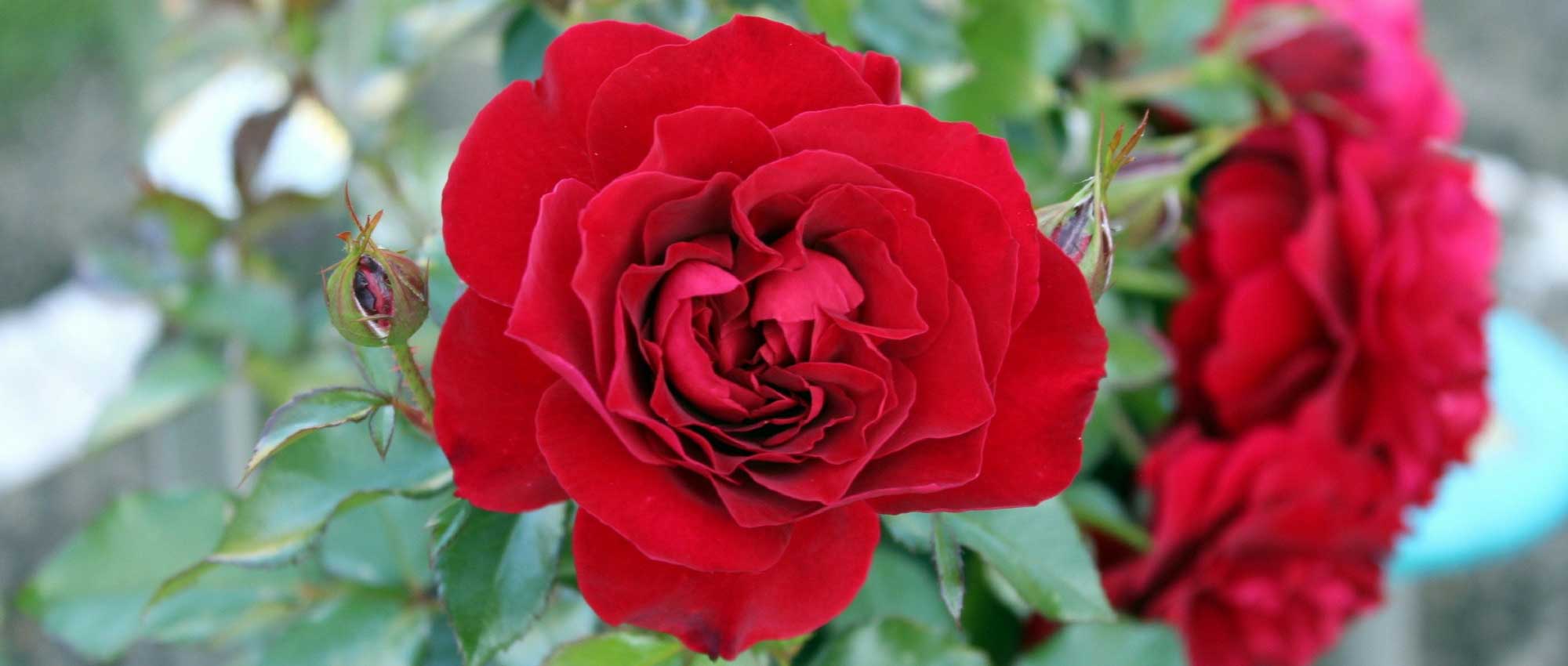
Rosa moyesii Geranium in pictures
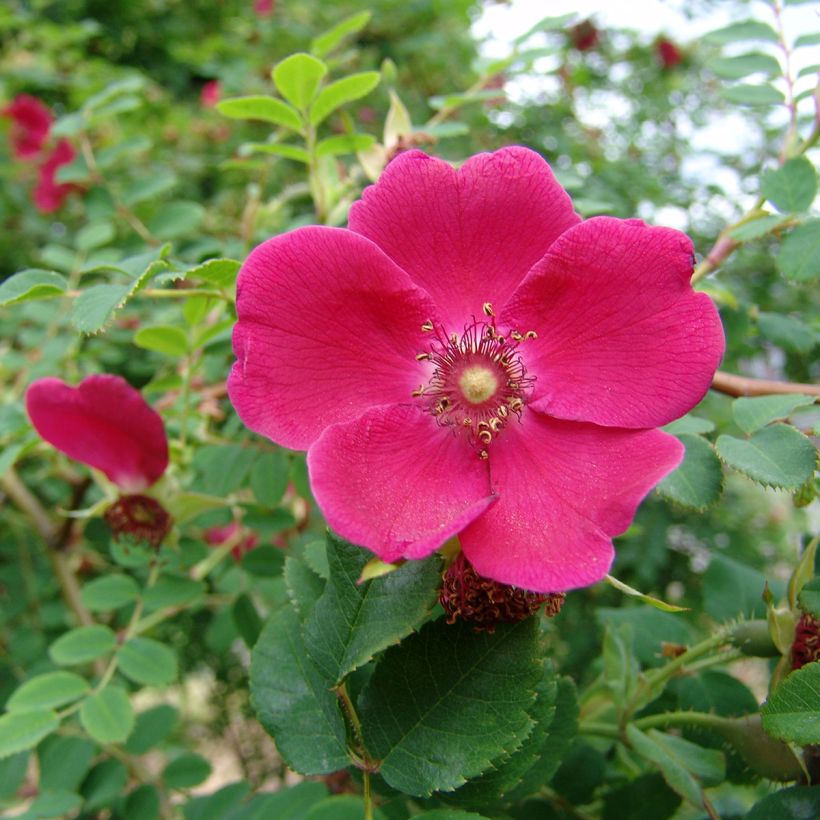
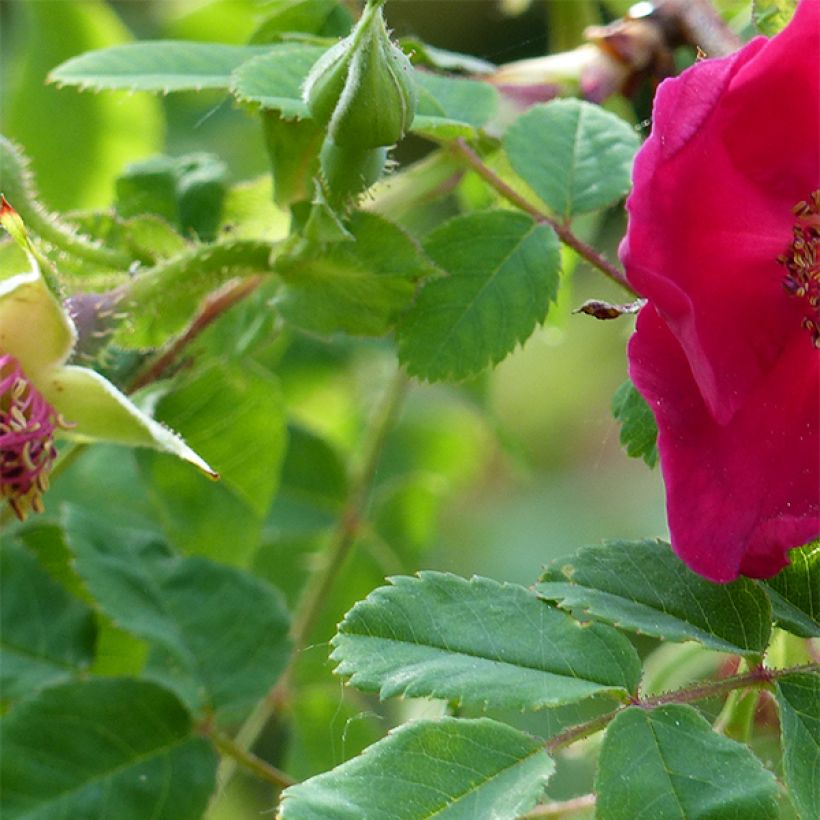
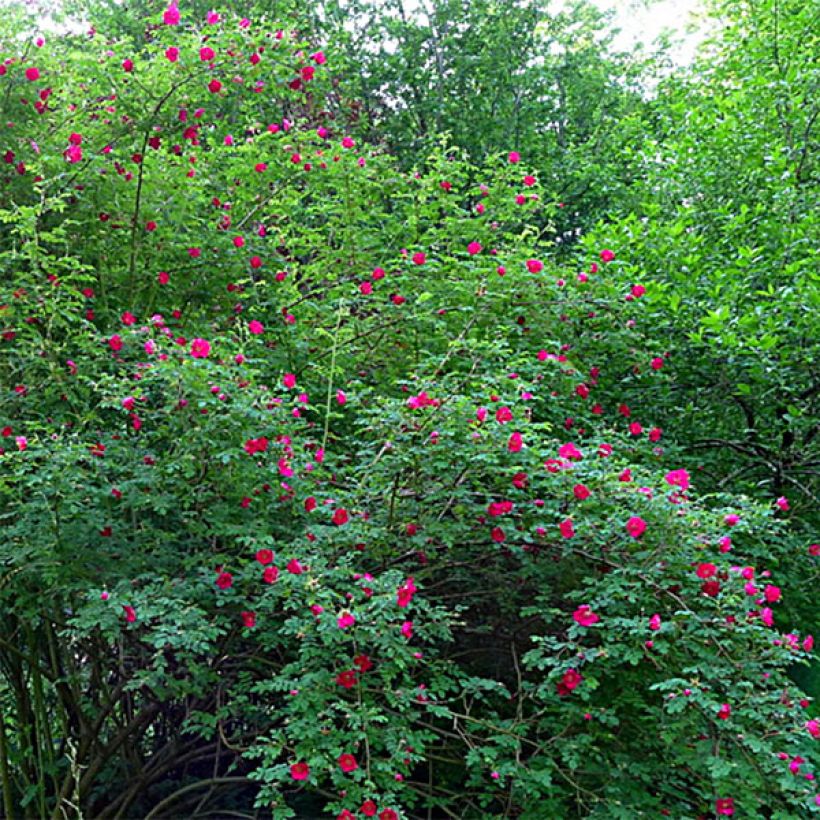
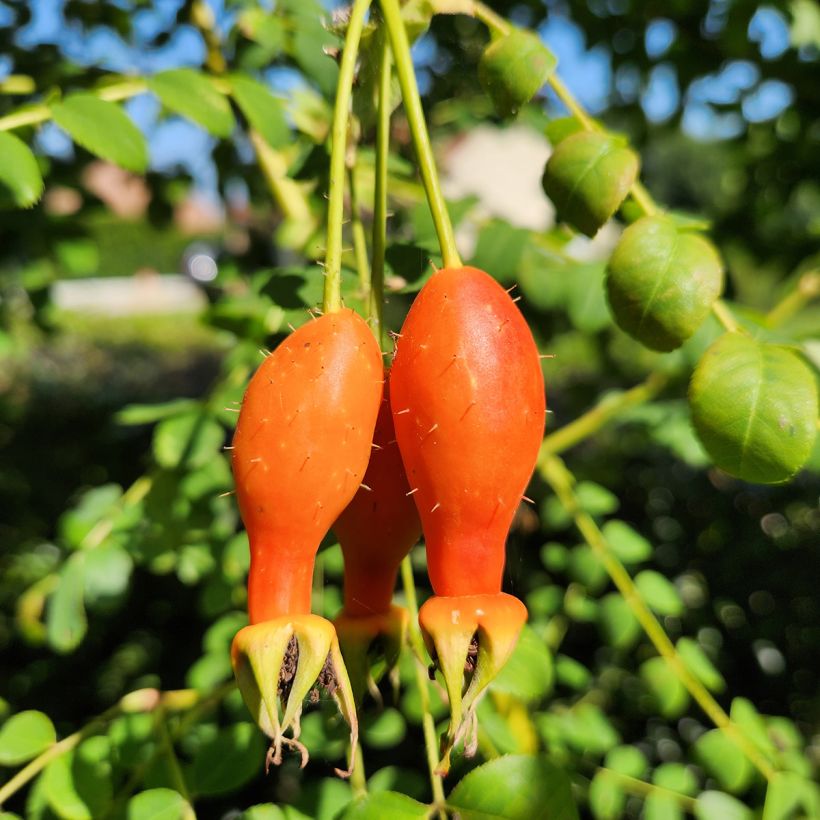
Plant habit
Flowering
Foliage
Botanical data
Rosa
moyesii
Geranium
Rosaceae
Moyes Rose
China
Planting and care
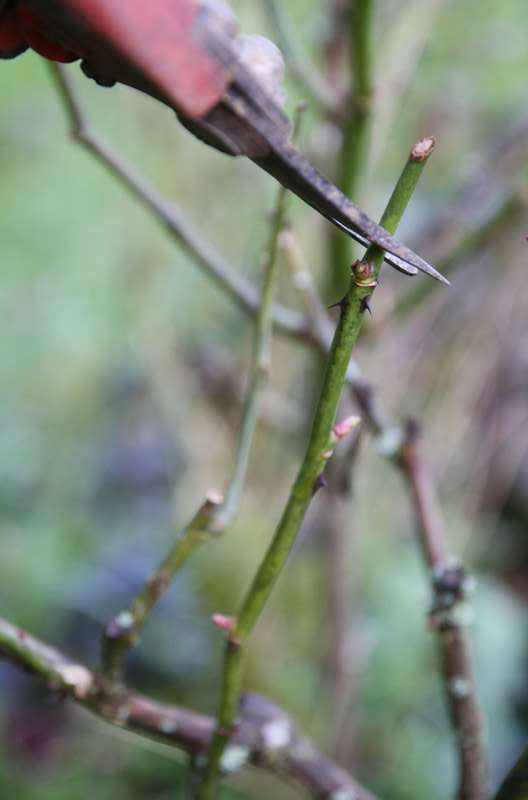
Rosa moyesii 'Geranium' is not demanding on the nature of the soil, but it dreads excess limestone and suffocating soils. It thrives in all sufficiently sunny regions, fears neither diseases nor cold. It adapts to all gardens, as long as the planting is well cared for! Plant it in well-worked and drained ordinary soil and in a sunny or partially shaded exposure, which it tolerates very well in hot climates. To keep it bushy, maintenance is simple: after winter, remove the oldest branches (2-3 years old). Quite hardy, this rose can withstand at least -25°C (-13°F). It may be useful to remove dead wood in winter. If necessary, in spring, after the risk of frost, a light pruning can be done.
Roses are often stained or unsightly at the end of summer, but this is not a problem for their development. These stains are not harmful to the rose, it is a natural phenomenon.
Planting period
Intended location
Care
Planting & care advice
-

-
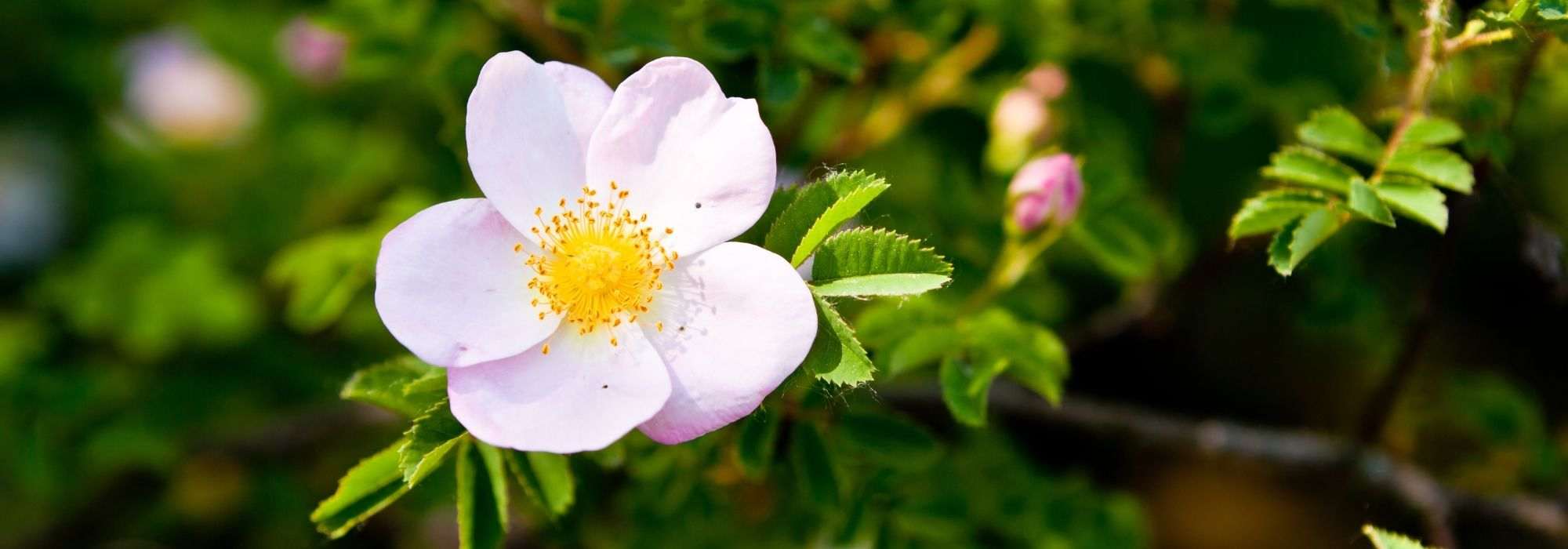
-

-

-
-
-
-
-
, onOrder confirmed
Reply from on Promesse de fleurs
Recently viewed products
Haven't found what you were looking for?
Hardiness is the lowest winter temperature a plant can endure without suffering serious damage or even dying. However, hardiness is affected by location (a sheltered area, such as a patio), protection (winter cover) and soil type (hardiness is improved by well-drained soil).

The flowering period indicated on our website applies to countries and regions located in USDA zone 8 (France, the United Kingdom, Ireland, the Netherlands, etc.)
It will vary according to where you live:- In zones 9 to 10 (Italy, Spain, Greece, etc.), flowering will occur about 2 to 4 weeks earlier.
- In zones 6 to 7 (Germany, Poland, Slovenia, and lower mountainous regions), flowering will be delayed by 2 to 3 weeks.
- In zone 5 (Central Europe, Scandinavia), blooming will be delayed by 3 to 5 weeks.
In temperate climates, pruning of spring-flowering shrubs (forsythia, spireas, etc.) should be done just after flowering.
Pruning of summer-flowering shrubs (Indian Lilac, Perovskia, etc.) can be done in winter or spring.
In cold regions as well as with frost-sensitive plants, avoid pruning too early when severe frosts may still occur.
The planting period indicated on our website applies to countries and regions located in USDA zone 8 (France, United Kingdom, Ireland, Netherlands).
It will vary according to where you live:
- In Mediterranean zones (Marseille, Madrid, Milan, etc.), autumn and winter are the best planting periods.
- In continental zones (Strasbourg, Munich, Vienna, etc.), delay planting by 2 to 3 weeks in spring and bring it forward by 2 to 4 weeks in autumn.
- In mountainous regions (the Alps, Pyrenees, Carpathians, etc.), it is best to plant in late spring (May-June) or late summer (August-September).
The harvesting period indicated on our website applies to countries and regions in USDA zone 8 (France, England, Ireland, the Netherlands).
In colder areas (Scandinavia, Poland, Austria...) fruit and vegetable harvests are likely to be delayed by 3-4 weeks.
In warmer areas (Italy, Spain, Greece, etc.), harvesting will probably take place earlier, depending on weather conditions.
The sowing periods indicated on our website apply to countries and regions within USDA Zone 8 (France, UK, Ireland, Netherlands).
In colder areas (Scandinavia, Poland, Austria...), delay any outdoor sowing by 3-4 weeks, or sow under glass.
In warmer climes (Italy, Spain, Greece, etc.), bring outdoor sowing forward by a few weeks.
Shipping country and language
Your country of residence may be:
Your country of residence is:
For a better user experience on our website, you can select:
Your shipping country:
-
 Austria
-
 Belgium
-
 Bosnia & Herzegovina
-
 Bulgaria
-
 Croatia
-
 Cyprus
-
 Czechia
-
 Denmark
-
 Estonia
-
 Finland
-
 France
-
 Germany
-
 Greece
-
 Hungary
-
 Iceland
-
 Ireland
-
 Italy
Italy
-
 Latvia
-
 Liechtenstein
-
 Lithuania
-
 Luxembourg
-
 Malta
Malta
-
 Netherlands
-
 Poland
-
 Portugal
-
 Romania
-
 Serbia
-
 Slovakia
-
 Slovenia
-
 Spain
Spain
-
 Sweden
-
 Switzerland
Language:
-
French
-
 English
-
Spanish
-
Italian
-
German
-
Portuguese
-
Dutch
-
Finnish
My Account
Hello
My wish lists
My cart
Log in / Register
Existing customer?
This form is protected by reCAPTCHA - the Google Privacy Policy and Terms of Service apply.
New customer?
Create an account to track your orders, access our customer service and, if you wish, make the most of our upcoming offers.