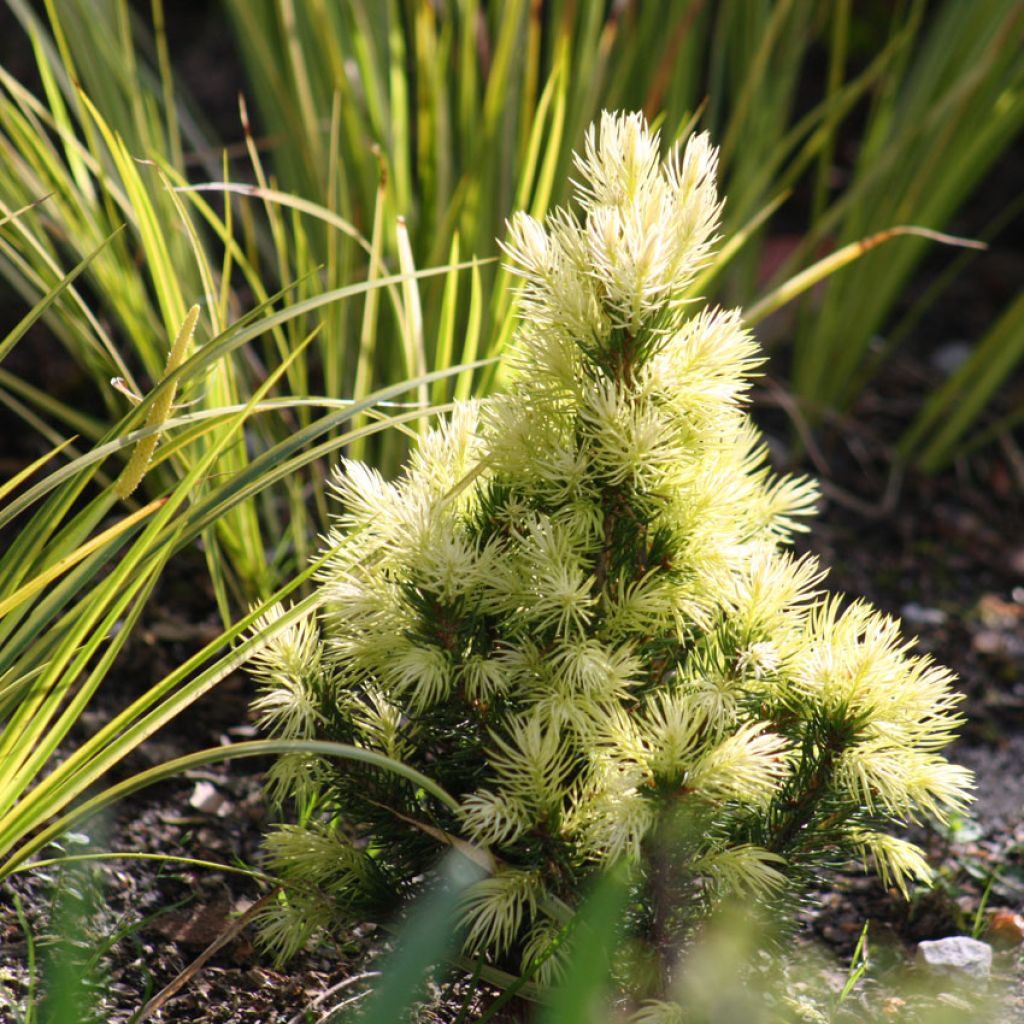
White spruce - Picea glauca Daisys White
View more pictures
Hide images
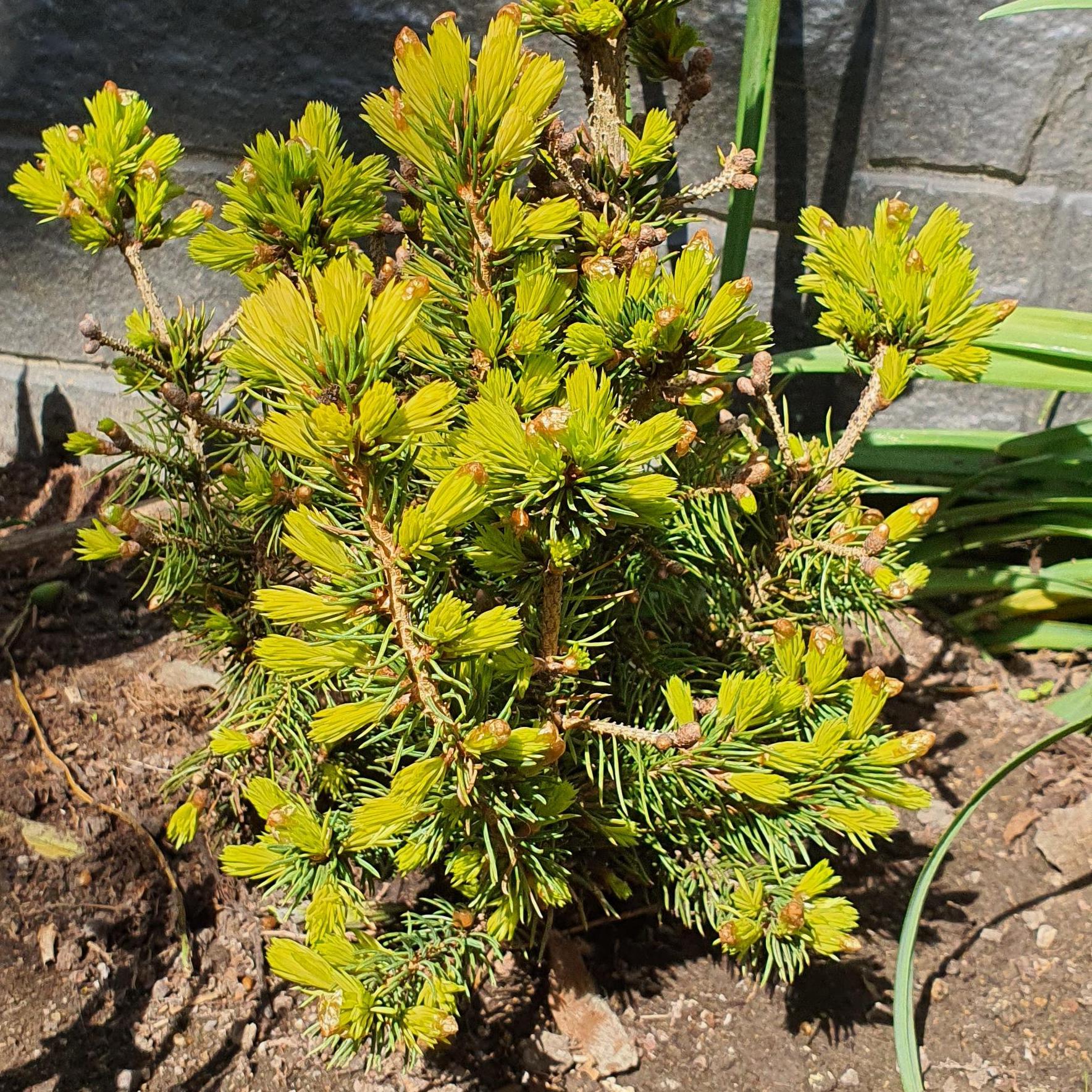
Ethan J.
White spruce - Picea glauca Daisys White
Ethan J. • BE
White spruce - Picea glauca Daisys White
Picea glauca Daisy's White
White Spruce, Canadian Spruce, Skunk Spruce, Cat Spruce, Black Hills Spruce, Western White Spruce, Alberta White Spruce, Porsild Spruce
Currently at the peak of their beauty, as their young yellow/green shoots transform them into Christmas trees. They stand out from afar. Both are magnificent in my new conifer bed. Very satisfied.
Béatrice, 12/04/2026
Back-to-school special offer!
Get €10 off for every €50 you spend! And get up to €40 off on a single order.
How does it work?
1. Shop your favourites
Add your favourite plants to your basket. For every €50 you spend (excluding delivery charges, store credit and the plastic-free option), you’ll receive a €10 voucher.
€50 spent = €10 voucher
€100 spent = €20 voucher
€150 spent = €30 voucher
€200 spent = €40 voucher
2. Place your order
Once your basket reaches one of the spending thresholds, place your order. You can even choose your delivery date!
3. Receive your voucher
As soon as your order has been shipped, you’ll receive an email containing your personal voucher code and its value.
4. Use it on your next order
Your voucher is valid for 90 days from the date you receive it. It can be used once only, on a new order worth at least the value of the voucher, excluding delivery charges.
Please note: Vouchers can be combined with other offers, but cannot be split or refunded.
Home or relay delivery (depending on size and destination)
Important: You may be charged customs duties by your country’s customs authorities upon delivery.
Schedule delivery date,
and select date in basket
This plant carries a 24 months recovery warranty
More information
We guarantee the quality of our plants for a full growing cycle, and will replace at our expense any plant that fails to recover under normal climatic and planting conditions.

Would this plant suit my garden?
Set up your Plantfit profile →
Description
The Picea glauca 'Daisy's White' is the cream form of the famous Picea glauca 'Conica'. This miniature white spruce gradually forms a perfect pyramid, covered with very regular vegetation. Its young white to pale yellow shoots overwhelm the old dark green foliage in spring, irresistibly attracting attention. Its very soft-looking foliage is dense and composed of fine, short and tight needles. Slow-growing, it is perfectly suited for rockeries, livens up flower beds, and performs well in pots. It is a small, undemanding and highly adaptable conifer, in well-drained soil and in a semi-shaded position.
The Picea glauca, also known as White spruce or Glauca spruce, is an evergreen conifer belonging to the pinaceae family, native to Canada. In its natural environment, it grows slowly and has a quite variable habit depending on its habitat, usually conical or pyramidal with a broad base. This tree can reach a height of 25m (82ft). This species is traditionally used for paper production. It can live for many years (200 or more).
The variety 'Daisy's White', derived from this species, is a dwarf and elegant form, with a compact, conical and upright habit. It grows slowly, at a rate of 5 to 8cm (3.1in) per year. It will slowly reach 1m (3.3ft)to 1.5m (4.9ft) in height and 80cm (31.5in) to 1m (3.3ft) in width, sometimes more in cool and humid climates. It produces short and very tight staggered branches, covered with short and quadrangular needles arranged in brushes, very sharp and aromatic with a covering of white wax. The young shoots, bright and soft, are very light, then its foliage takes a uniformly dark green to green-blue shade, varying according to the plant. In spring, the contrast is striking. Some branches become similar to those of 'Conica'; they are then covered with green needles. The root system of white spruces is shallow, highly branched, and creeping, which makes them difficult to transplant when they are mature and particularly sensitive to wind.
The 'Daisy's White' spruce, with its unique colour, perfect habit, very reduced growth and maintenance-free is a perfect plant for rockeries, terraces, or single planting. It thrives in many situations, in various climates, as long as the soil is well-drained and not too chalky. This plant with "platinum blonde" foliage goes well with red foliage (Photinia fraseri Little Red Robin) or purple foliage (Pittosporum tenuifolium Purpureum). It works wonders with large stones, geometric lines, and masonry. The architectural qualities of conifers naturally works in the design of a contemporary garden, which prefers the aesthetics of shapes, silhouettes, and textures to flowering. These plants durably structure a flower bed, mark pathways and border terraces, easily replacing the strong presence of trimmed boxwood or holly. They go well with heathers or ground cover plants such as aubrietas, cerastiums, shrubby salvias, as well as flowering shrubs. The key is to play with volumes and colours.
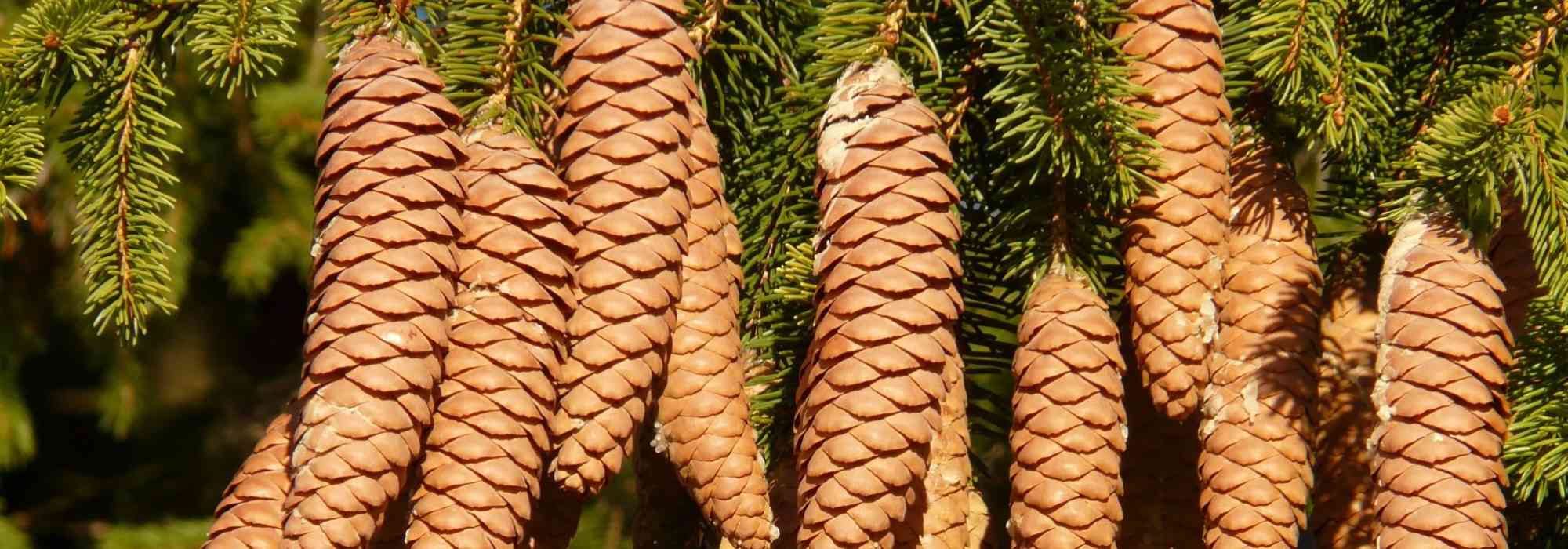
White spruce - Picea glauca Daisys White in pictures
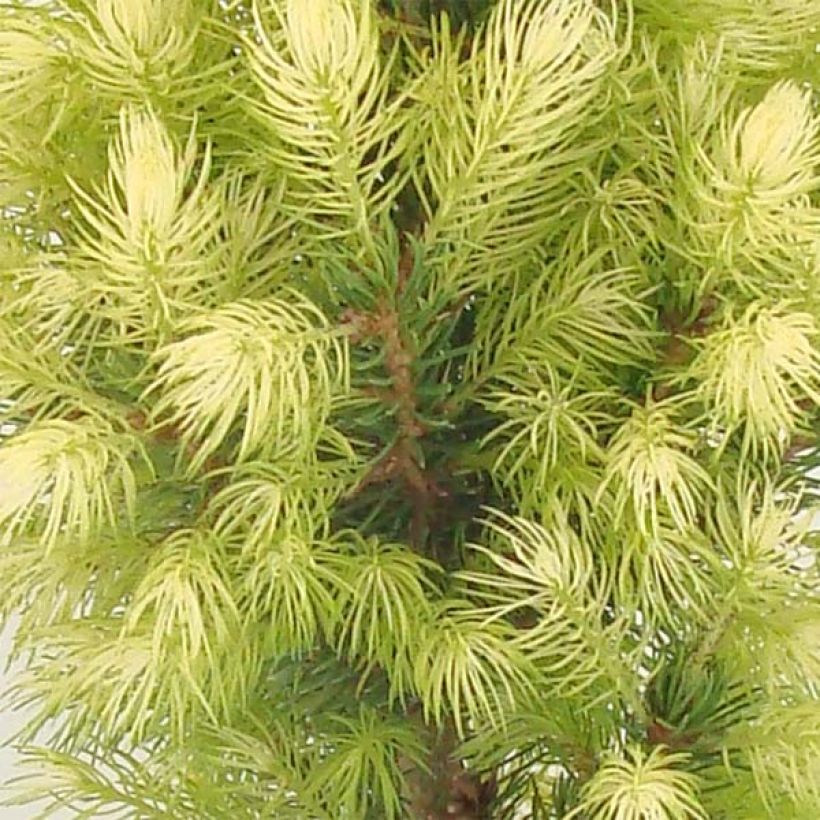
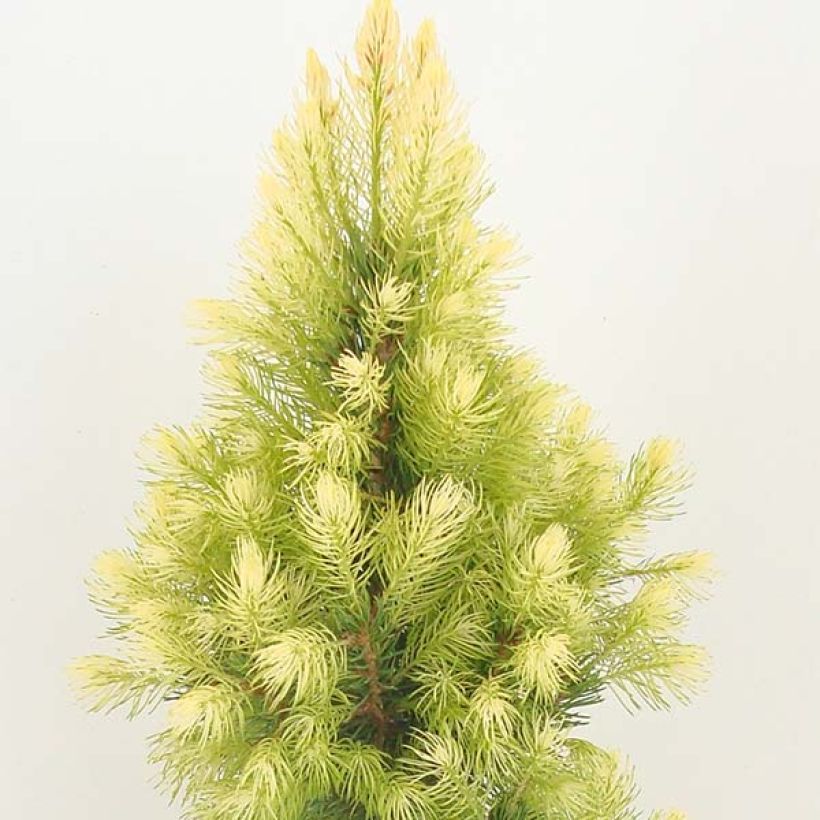
Plant habit
Foliage
Botanical data
Picea
glauca
Daisy's White
Pinaceae
White Spruce, Canadian Spruce, Skunk Spruce, Cat Spruce, Black Hills Spruce, Western White Spruce, Alberta White Spruce, Porsild Spruce
Cultivar or hybrid
Planting and care
The Picea glauca 'Daisy's White' is best planted from September to November and from February to June in deep, well-drained, light, preferably neutral, moist to dry soil. A sandy, loamy or rocky soil that is not too chalky will be perfect. Choose a sunny or semi-shady spot, preferably shaded in the afternoon, and sheltered from prevailing winds. In overly sunny and dry situations, it will be more susceptible to attacks from red spiders and its young foliage may risk scorching. Soak the rootballs well before planting. Apply organic fertiliser at planting and water generously in the first years, and during prolonged drought. Apply a special conifer fertilizer every year in April and weed the soil in summer. This extremely hardy conifer dislikes heavy soils that are waterlogged in winter. Pruning is not recommended as this pyramid-shaped plant reaches its full potential when allowed to grow freely.
Planting period
Intended location
Care
Planting & care advice
-
-
-

-
-

-

-

-

-
, onOrder confirmed
Reply from on Promesse de fleurs
Recently viewed products
Haven't found what you were looking for?
Hardiness is the lowest winter temperature a plant can endure without suffering serious damage or even dying. However, hardiness is affected by location (a sheltered area, such as a patio), protection (winter cover) and soil type (hardiness is improved by well-drained soil).

The flowering period indicated on our website applies to countries and regions located in USDA zone 8 (France, the United Kingdom, Ireland, the Netherlands, etc.)
It will vary according to where you live:- In zones 9 to 10 (Italy, Spain, Greece, etc.), flowering will occur about 2 to 4 weeks earlier.
- In zones 6 to 7 (Germany, Poland, Slovenia, and lower mountainous regions), flowering will be delayed by 2 to 3 weeks.
- In zone 5 (Central Europe, Scandinavia), blooming will be delayed by 3 to 5 weeks.
In temperate climates, pruning of spring-flowering shrubs (forsythia, spireas, etc.) should be done just after flowering.
Pruning of summer-flowering shrubs (Indian Lilac, Perovskia, etc.) can be done in winter or spring.
In cold regions as well as with frost-sensitive plants, avoid pruning too early when severe frosts may still occur.
The planting period indicated on our website applies to countries and regions located in USDA zone 8 (France, United Kingdom, Ireland, Netherlands).
It will vary according to where you live:
- In Mediterranean zones (Marseille, Madrid, Milan, etc.), autumn and winter are the best planting periods.
- In continental zones (Strasbourg, Munich, Vienna, etc.), delay planting by 2 to 3 weeks in spring and bring it forward by 2 to 4 weeks in autumn.
- In mountainous regions (the Alps, Pyrenees, Carpathians, etc.), it is best to plant in late spring (May-June) or late summer (August-September).
The harvesting period indicated on our website applies to countries and regions in USDA zone 8 (France, England, Ireland, the Netherlands).
In colder areas (Scandinavia, Poland, Austria...) fruit and vegetable harvests are likely to be delayed by 3-4 weeks.
In warmer areas (Italy, Spain, Greece, etc.), harvesting will probably take place earlier, depending on weather conditions.
The sowing periods indicated on our website apply to countries and regions within USDA Zone 8 (France, UK, Ireland, Netherlands).
In colder areas (Scandinavia, Poland, Austria...), delay any outdoor sowing by 3-4 weeks, or sow under glass.
In warmer climes (Italy, Spain, Greece, etc.), bring outdoor sowing forward by a few weeks.
Shipping country and language
Your country of residence may be:
Your country of residence is:
For a better user experience on our website, you can select:
Your shipping country:
-
 Austria
-
 Belgium
-
 Bosnia & Herzegovina
-
 Bulgaria
-
 Croatia
-
 Cyprus
-
 Czechia
-
 Denmark
-
 Estonia
-
 Finland
-
 France
-
 Germany
-
 Greece
-
 Hungary
-
 Iceland
-
 Ireland
-
 Italy
Italy
-
 Latvia
-
 Liechtenstein
-
 Lithuania
-
 Luxembourg
-
 Malta
Malta
-
 Netherlands
-
 Poland
-
 Portugal
-
 Romania
-
 Serbia
-
 Slovakia
-
 Slovenia
-
 Spain
Spain
-
 Sweden
-
 Switzerland
Language:
-
French
-
 English
-
Spanish
-
Italian
-
German
-
Portuguese
-
Dutch
-
Finnish
My Account
Hello
My wish lists
My cart
Log in / Register
Existing customer?
This form is protected by reCAPTCHA - the Google Privacy Policy and Terms of Service apply.
New customer?
Create an account to track your orders, access our customer service and, if you wish, make the most of our upcoming offers.