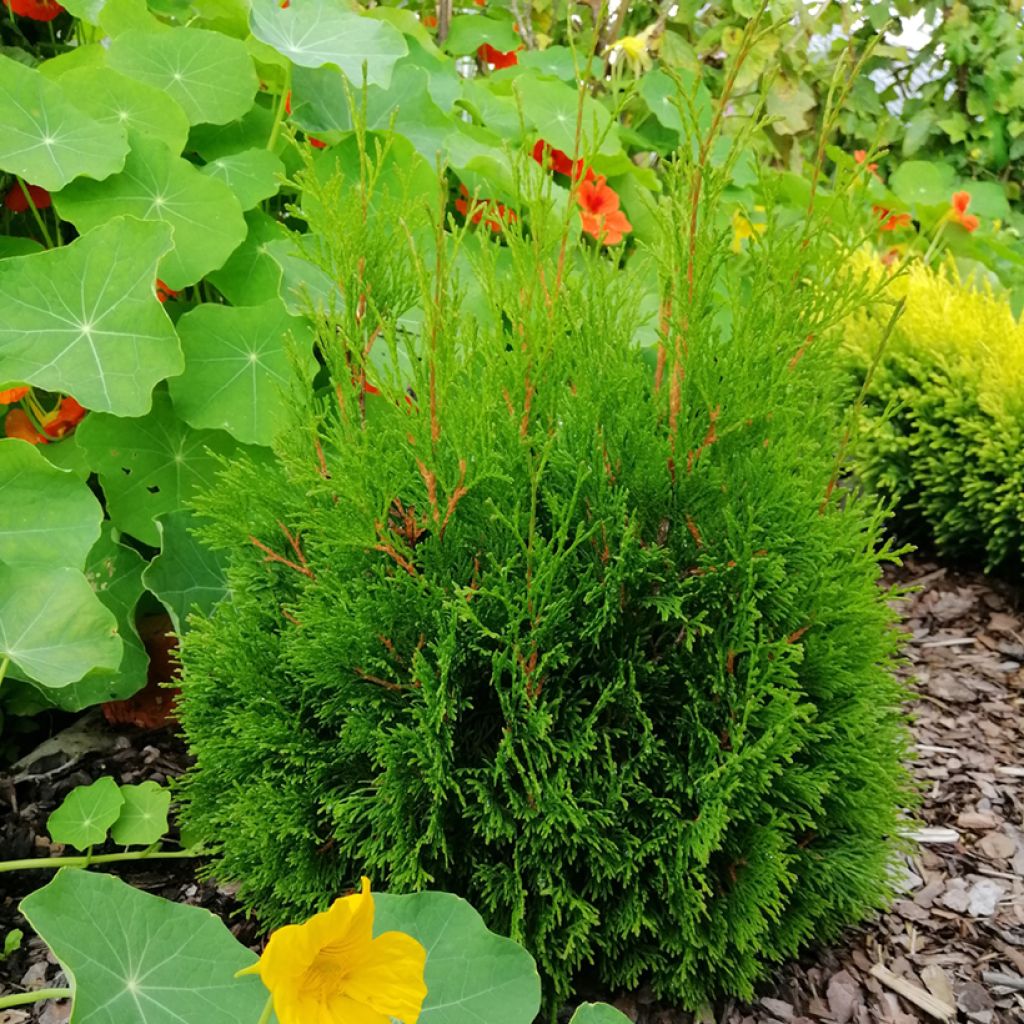
Thuja occidentalis Miky - Canadian Arborvitae
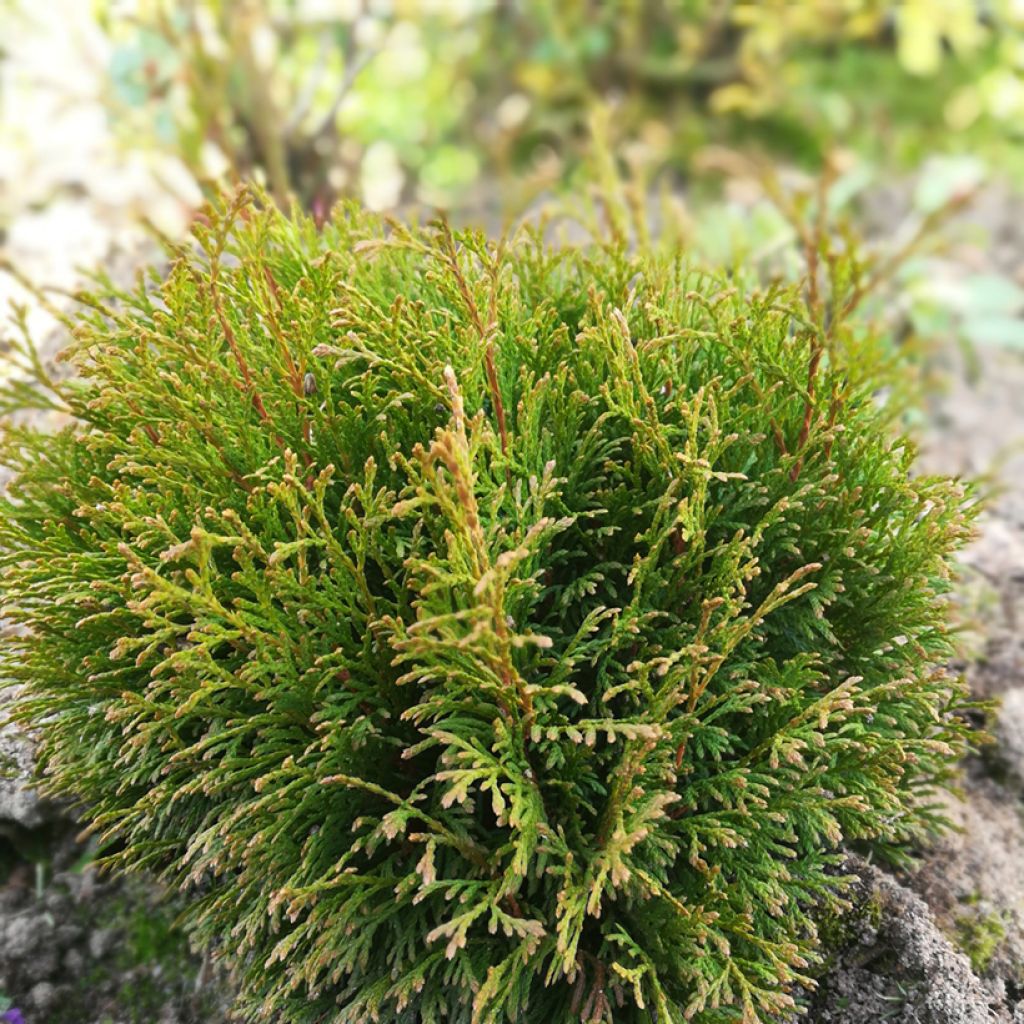
Thuja occidentalis Miky - Canadian Arborvitae
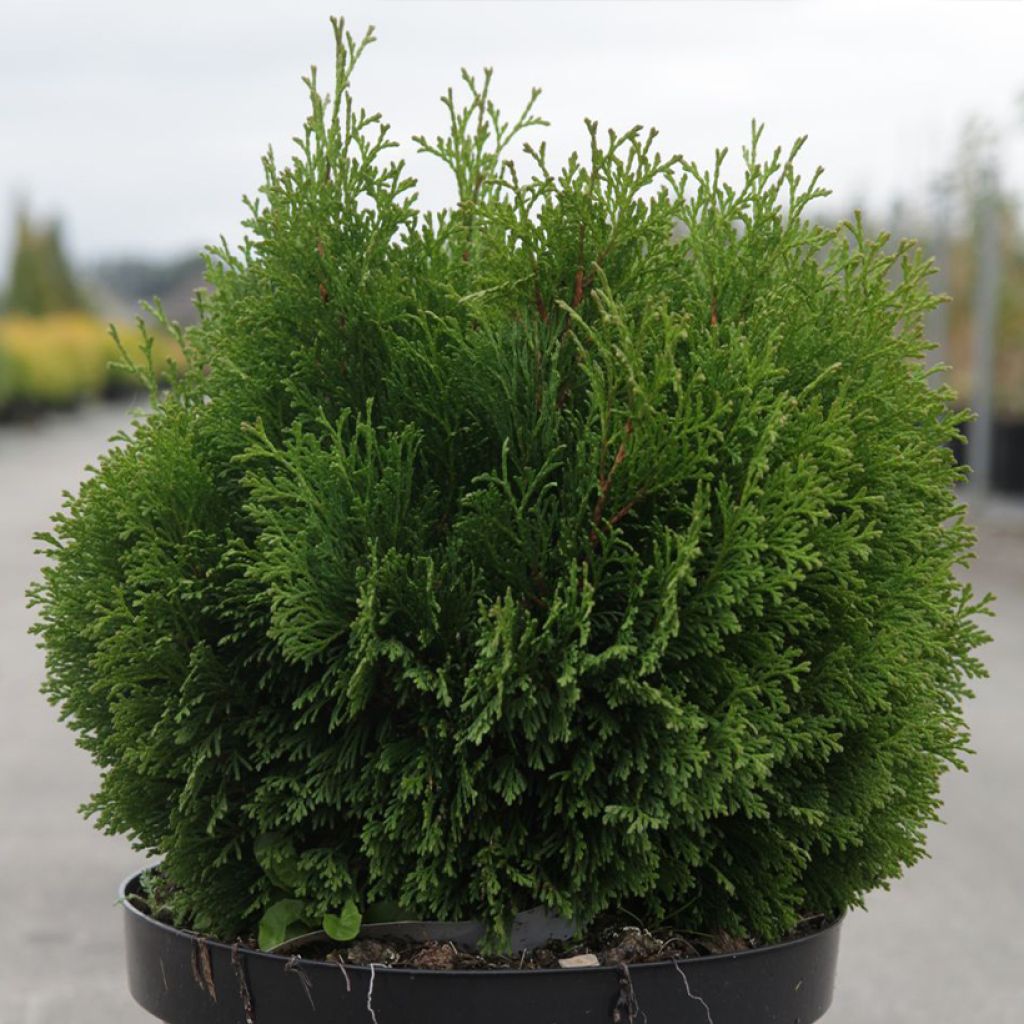
Thuja occidentalis Miky - Canadian Arborvitae
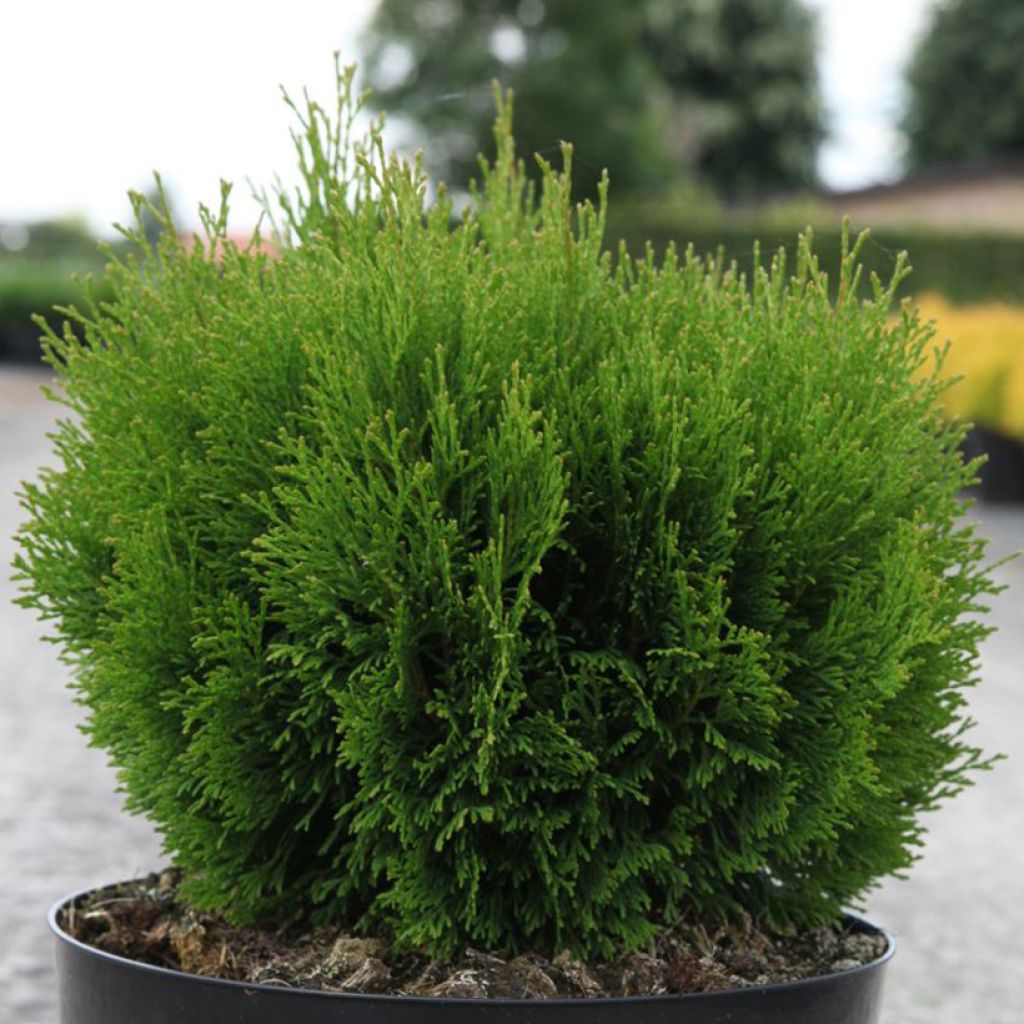
Thuja occidentalis Miky - Canadian Arborvitae
Thuja occidentalis Miky - Canadian Arborvitae
Thuja occidentalis Miky - Canadian Arborvitae
Thuja occidentalis Miky
Eastern White Cedar, Northern White Cedar, American Arborvitae, Eastern Arborvitae
Back-to-school special offer!
Get €10 off for every €50 you spend! And get up to €40 off on a single order.
How does it work?
1. Shop your favourites
Add your favourite plants to your basket. For every €50 you spend (excluding delivery charges, store credit and the plastic-free option), you’ll receive a €10 voucher.
€50 spent = €10 voucher
€100 spent = €20 voucher
€150 spent = €30 voucher
€200 spent = €40 voucher
2. Place your order
Once your basket reaches one of the spending thresholds, place your order. You can even choose your delivery date!
3. Receive your voucher
As soon as your order has been shipped, you’ll receive an email containing your personal voucher code and its value.
4. Use it on your next order
Your voucher is valid for 90 days from the date you receive it. It can be used once only, on a new order worth at least the value of the voucher, excluding delivery charges.
Please note: Vouchers can be combined with other offers, but cannot be split or refunded.
Why not try an alternative variety in stock?
View all →
Available in 4 sizes

Available in 2 sizes
Available in 3 sizes
Available in 2 sizes
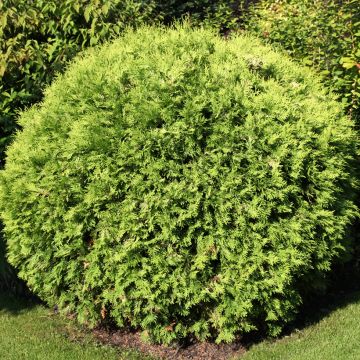
Available in 1 sizes
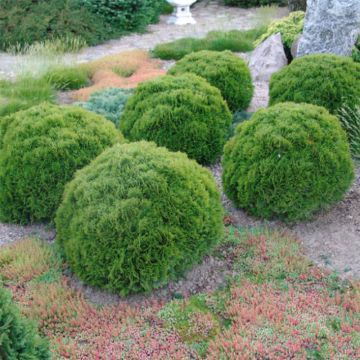
Available in 3 sizes

Available in 3 sizes
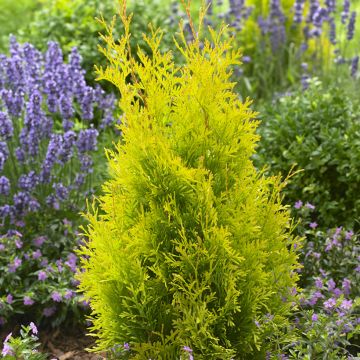
Available in 1 sizes
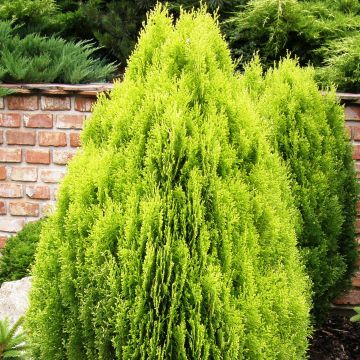
Available in 2 sizes
Available in 3 sizes
This plant carries a 24 months recovery warranty
More information
We guarantee the quality of our plants for a full growing cycle, and will replace at our expense any plant that fails to recover under normal climatic and planting conditions.
Would this plant suit my garden?
Set up your Plantfit profile →
Description
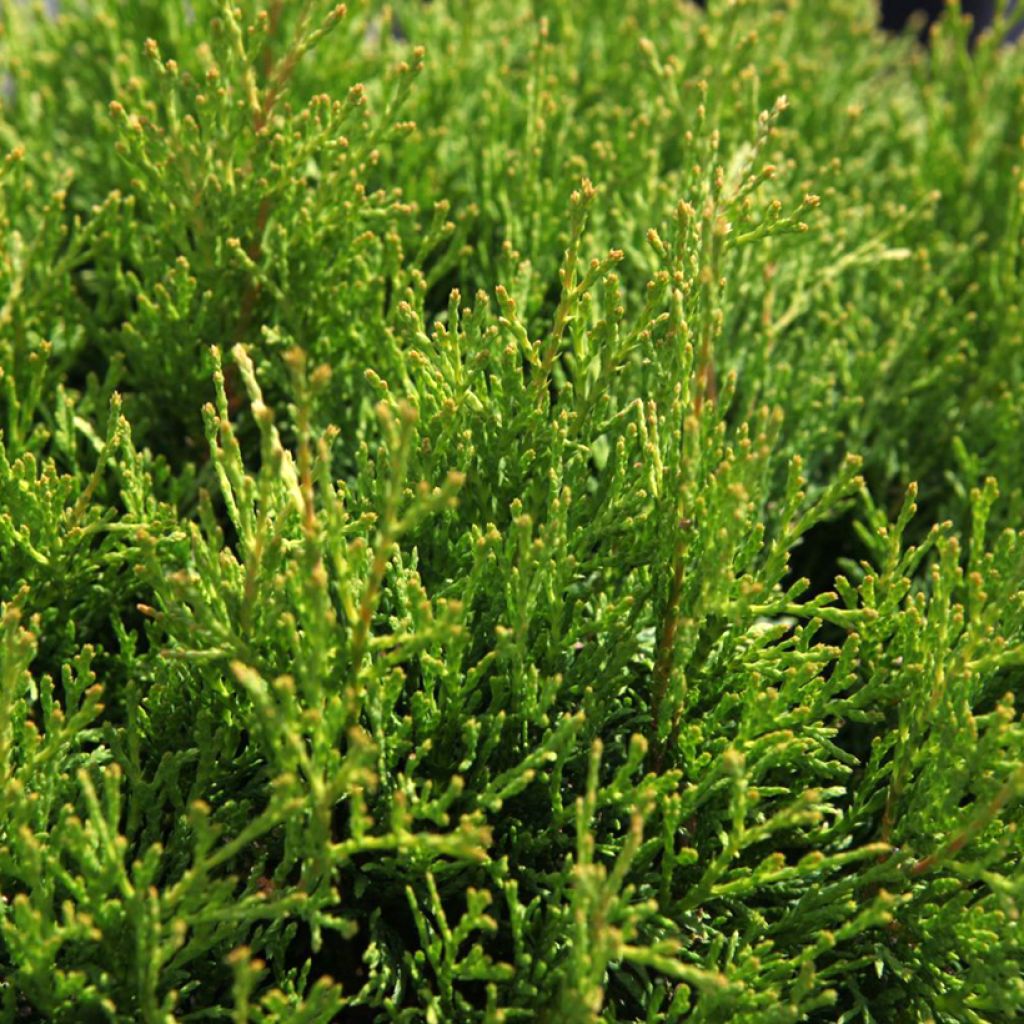
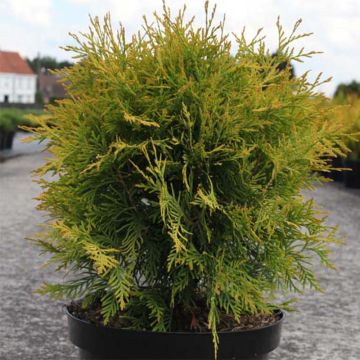
The Thuja occidentalis 'Miky' is a small coniferous with dark green foliage that turns reddish-brown under the effect of winter cold. Its small size and slow growth make it a very good rockery plant. Resistant to pollution, it is also a preferred choice for container gardening in urban environments. This hardy thuja is not demanding, it is content with a sunny or partially shaded exposure and a well-drained, but moist soil.
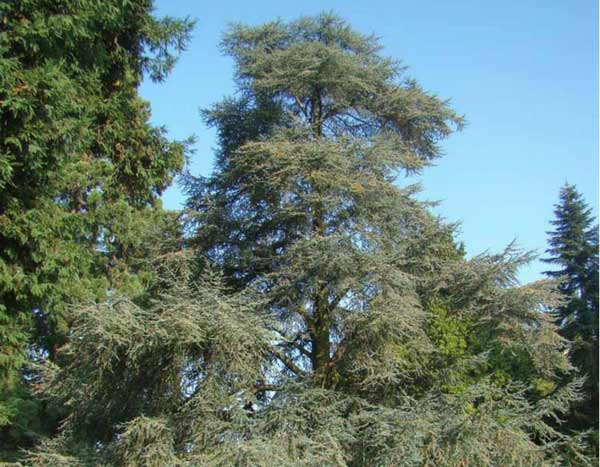
The Thuja occidentalis, known in France as Western Red Cedar or Eastern White Cedar, curiously carries the name White Cedar in this country. It is an evergreen conifer of the cypress family native to northeastern North America. It is distributed over a wide geographic area that perfectly reflects its adaptability. In nature, it reaches a height of 15 to 20 m (49 ft 2 in to 65 ft 7 in), adopting a beautiful conical habit and a trunk covered with a highly decorative reddish-brown bark. It is a perfectly hardy species, very well adapted to temperate climates and poor, wet or occasionally dry soils. Its almost rot-resistant wood, lightweight and with a cedar scent, is easily flammable and lends itself to many uses. Introduced to Europe around 1536, it is one of the first trees to come from the New World. Since then, it has become a timeless classic in our gardens, giving rise to more than 300 cultivars. Its lifespan reaches 300 years. In central Europe, it replaces Italian cypress trees in cemeteries, having become, like them, a symbol of immortality.
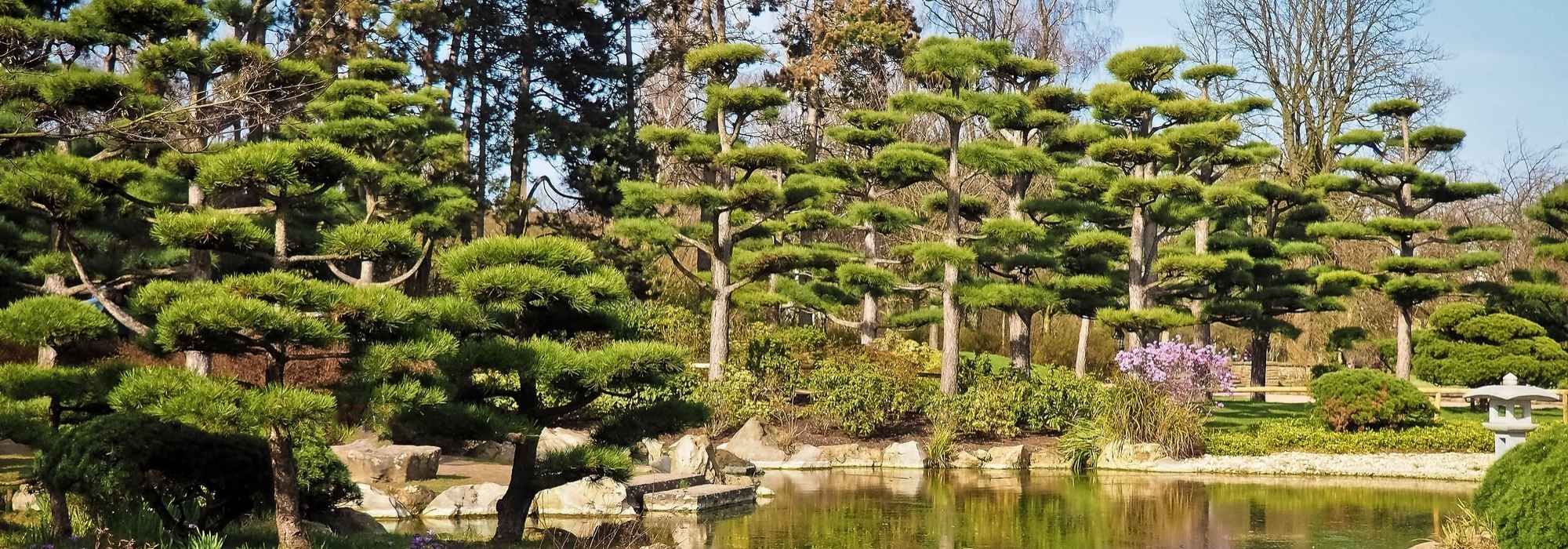
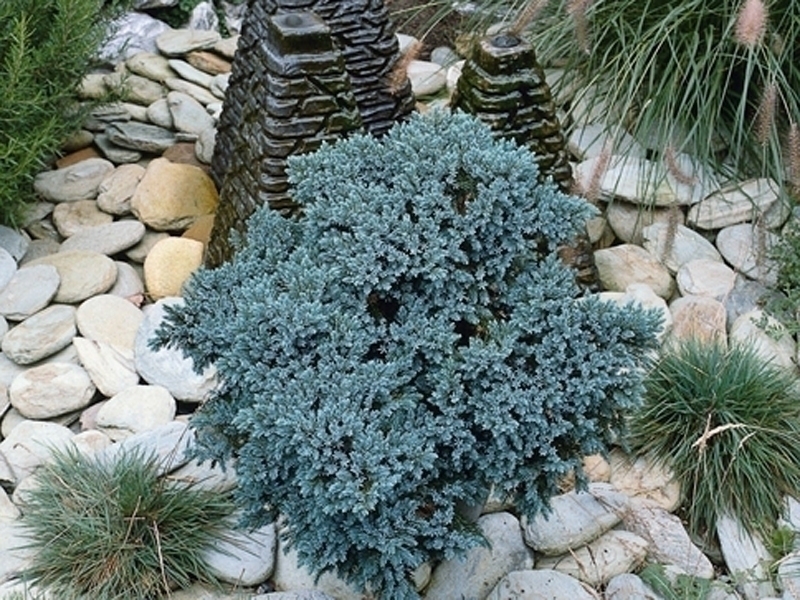
The 'Miky' variety has a compact and upright habit, forming over time a more or less regular small cone (about 1.50 m (4 ft 11 in) high). This dwarf conifer has a very interesting graphic aspect and deserves to be planted individually to admire its beautiful architecture. It has its place in a contemporary garden that favors assertive forms, and of course also in a rockery, in association with other compact conifers of different colours and forms. By planting a 'Ivory Tower' yew next to it, you will obtain an interesting mix of volumes, between the thuja cone and the yew column. The yew also changes colour in winter, its summer yellow colour contrasting with the dark green of the thuja, while in winter its cream colour perfectly matches the reddish-brown of 'Miky'. Far from the somewhat fixed image that is sometimes attributed to them, here is proof that conifers can surprise us throughout the seasons! In a larger rockery, this 'Miky' Thuja will happily accompany the 'Silberlocke' Korean fir, whose silver-backed foliage (Silber = silver in German) will provide a choice background... not to mention its magnificent violet cones!
Its excellent resistance to pollution also makes Thuja occidentalis 'Miky' suitable for growing in decorative containers or pots, on a balcony or terrace in urban environments. Its small dimensions make it a great asset in these conditions, just make sure not to expose it to drying winds in summer, which it does not appreciate.
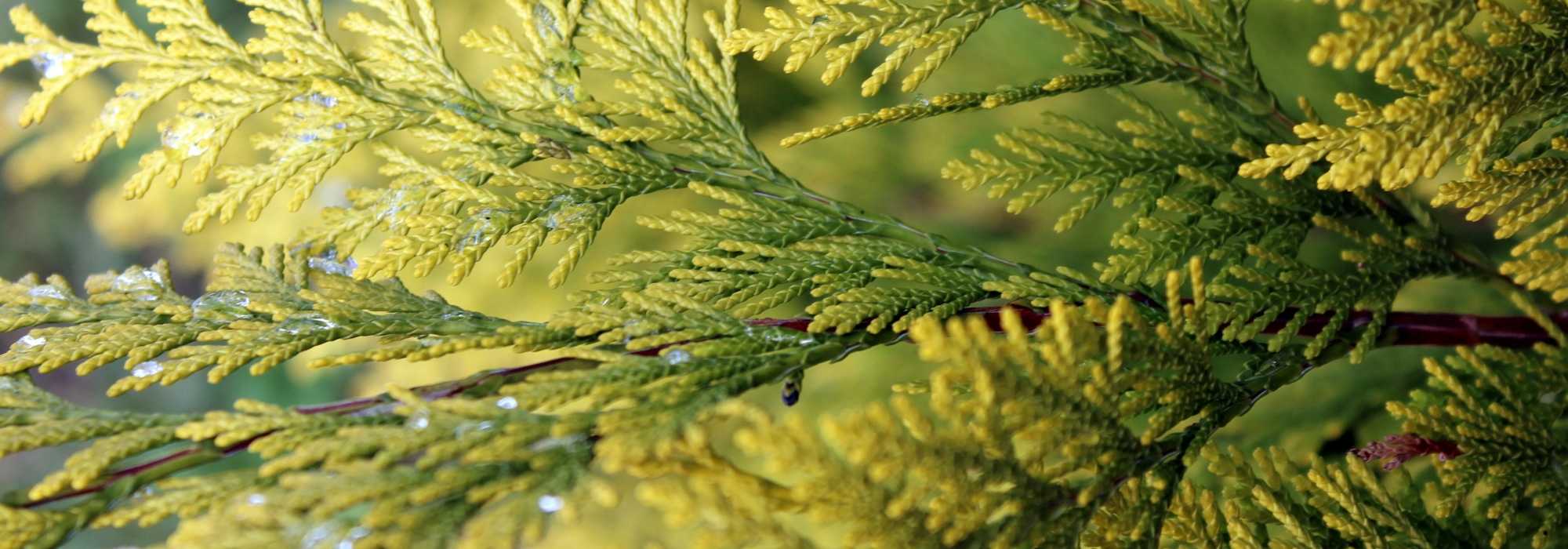
Thuja occidentalis Miky - Canadian Arborvitae in pictures
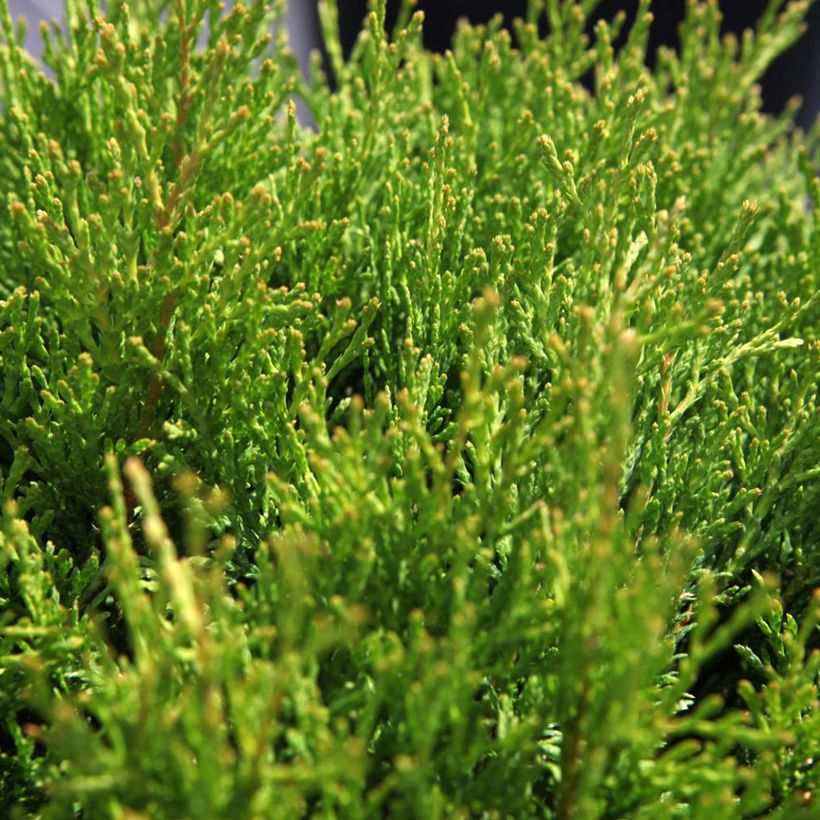
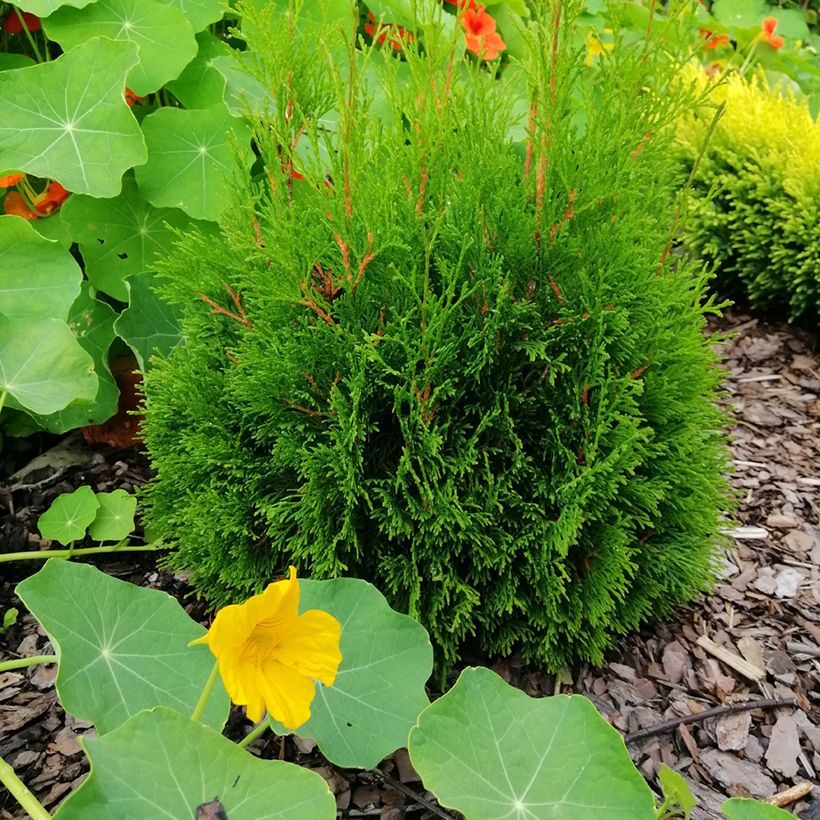
Plant habit
Foliage
Botanical data
Thuja
occidentalis
Miky
Cupressaceae
Eastern White Cedar, Northern White Cedar, American Arborvitae, Eastern Arborvitae
Cultivar or hybrid
Planting and care
The Thuja occidentalis 'Miky' is preferably planted from September to November, to take advantage of the autumn rains, or in February-March. It likes deep, ordinary soils, but loose, not too heavy. Highly adaptable, it accepts acidic, neutral or slightly calcareous soils, but not too arid in summer. Indeed, it only fears scorching temperatures and prolonged drought.
On the other hand, it requires a sunny or semi-shaded exposure to develop well. Soak the root balls well before planting. Optionally, add organic amendments at planting and water generously in the first few years, and in case of prolonged drought. In very poor soil, you can apply a special conifer fertilizer every year in April and cultivate the soil in summer. This hardy conifer (down to -25°C at least) does not require pruning.
If planted in a container, it needs regular watering, especially in summer, and should not be exposed to hot winds. So be careful on south-facing balconies!
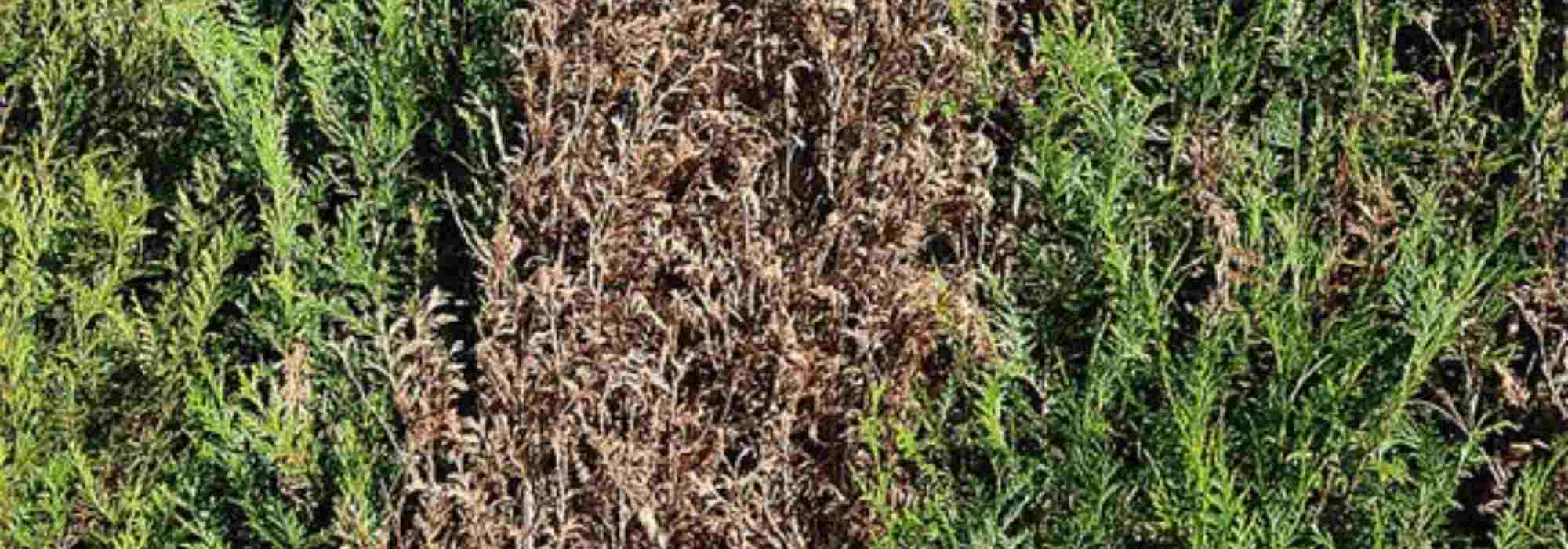
If cultivated under good conditions, the Thuya is rather resistant to diseases. The most dangerous one, Phytophthora or conifer mildew, is characterized by the browning of the foliage (not to be confused with the winter coat of our 'Miky'!). It is a root disease that can be observed in certain hedges, where it spreads from one tree to another, with the proximity of the roots favoring its spread. It is very rare in isolated plantings.
Planting period
Intended location
Care
Planting & care advice
-
-
-
-
-

-
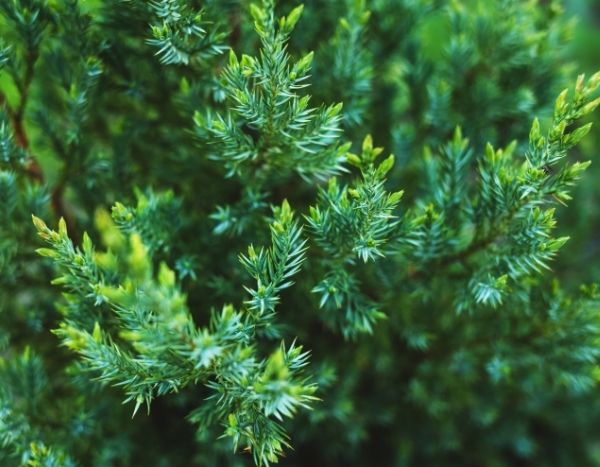
-
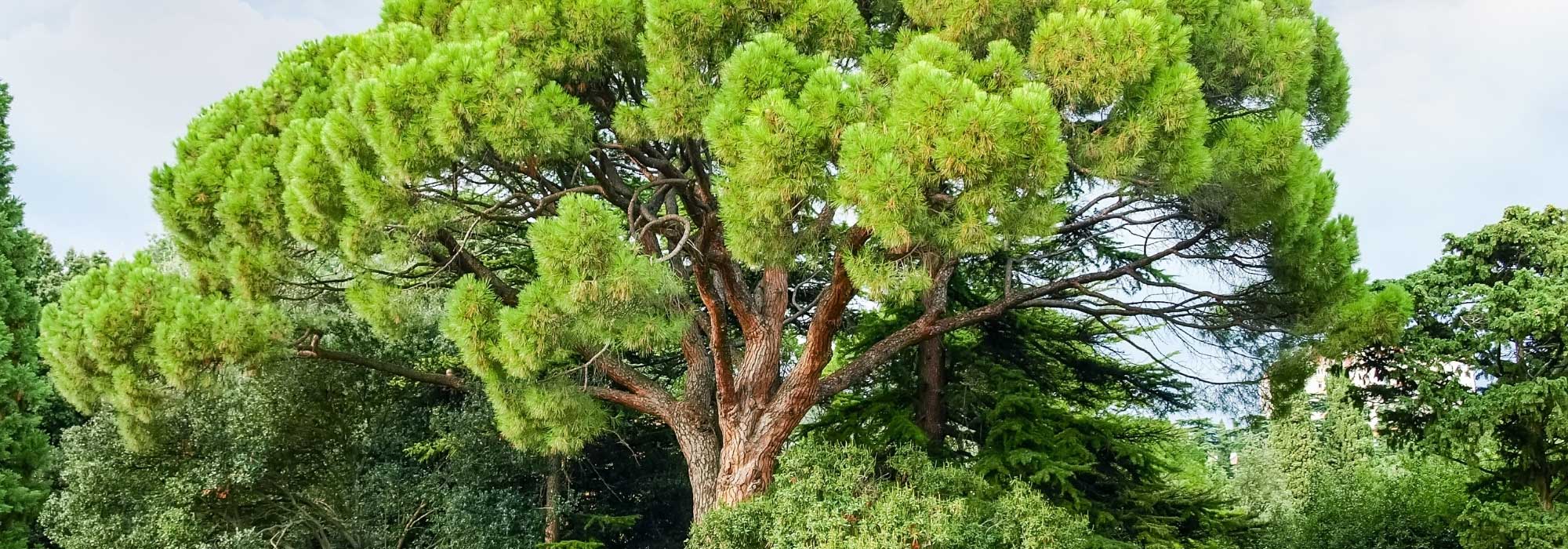
-

This item has not been reviewed yet - be the first to leave a review about it.
Recently viewed products
Haven't found what you were looking for?
Hardiness is the lowest winter temperature a plant can endure without suffering serious damage or even dying. However, hardiness is affected by location (a sheltered area, such as a patio), protection (winter cover) and soil type (hardiness is improved by well-drained soil).

The flowering period indicated on our website applies to countries and regions located in USDA zone 8 (France, the United Kingdom, Ireland, the Netherlands, etc.)
It will vary according to where you live:- In zones 9 to 10 (Italy, Spain, Greece, etc.), flowering will occur about 2 to 4 weeks earlier.
- In zones 6 to 7 (Germany, Poland, Slovenia, and lower mountainous regions), flowering will be delayed by 2 to 3 weeks.
- In zone 5 (Central Europe, Scandinavia), blooming will be delayed by 3 to 5 weeks.
In temperate climates, pruning of spring-flowering shrubs (forsythia, spireas, etc.) should be done just after flowering.
Pruning of summer-flowering shrubs (Indian Lilac, Perovskia, etc.) can be done in winter or spring.
In cold regions as well as with frost-sensitive plants, avoid pruning too early when severe frosts may still occur.
The planting period indicated on our website applies to countries and regions located in USDA zone 8 (France, United Kingdom, Ireland, Netherlands).
It will vary according to where you live:
- In Mediterranean zones (Marseille, Madrid, Milan, etc.), autumn and winter are the best planting periods.
- In continental zones (Strasbourg, Munich, Vienna, etc.), delay planting by 2 to 3 weeks in spring and bring it forward by 2 to 4 weeks in autumn.
- In mountainous regions (the Alps, Pyrenees, Carpathians, etc.), it is best to plant in late spring (May-June) or late summer (August-September).
The harvesting period indicated on our website applies to countries and regions in USDA zone 8 (France, England, Ireland, the Netherlands).
In colder areas (Scandinavia, Poland, Austria...) fruit and vegetable harvests are likely to be delayed by 3-4 weeks.
In warmer areas (Italy, Spain, Greece, etc.), harvesting will probably take place earlier, depending on weather conditions.
The sowing periods indicated on our website apply to countries and regions within USDA Zone 8 (France, UK, Ireland, Netherlands).
In colder areas (Scandinavia, Poland, Austria...), delay any outdoor sowing by 3-4 weeks, or sow under glass.
In warmer climes (Italy, Spain, Greece, etc.), bring outdoor sowing forward by a few weeks.
Shipping country and language
Your country of residence may be:
Your country of residence is:
For a better user experience on our website, you can select:
Your shipping country:
-
 Austria
-
 Belgium
-
 Bosnia & Herzegovina
-
 Bulgaria
-
 Croatia
-
 Cyprus
-
 Czechia
-
 Denmark
-
 Estonia
-
 Finland
-
 France
-
 Germany
-
 Greece
-
 Hungary
-
 Iceland
-
 Ireland
-
 Italy
Italy
-
 Latvia
-
 Liechtenstein
-
 Lithuania
-
 Luxembourg
-
 Malta
Malta
-
 Netherlands
-
 Poland
-
 Portugal
-
 Romania
-
 Serbia
-
 Slovakia
-
 Slovenia
-
 Spain
Spain
-
 Sweden
-
 Switzerland
Language:
-
French
-
 English
-
Spanish
-
Italian
-
German
-
Portuguese
-
Dutch
-
Finnish
My Account
Hello
My wish lists
My cart
Log in / Register
Existing customer?
This form is protected by reCAPTCHA - the Google Privacy Policy and Terms of Service apply.
New customer?
Create an account to track your orders, access our customer service and, if you wish, make the most of our upcoming offers.