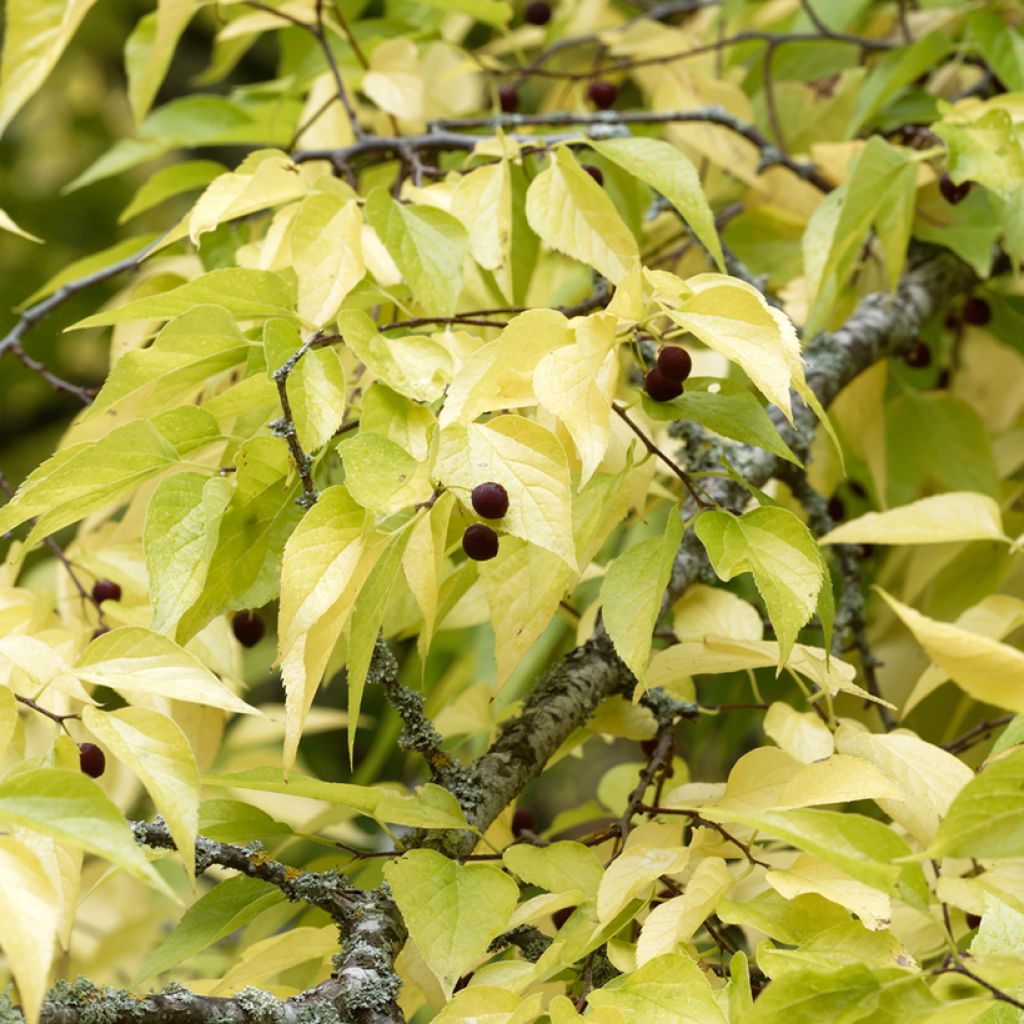
Celtis occidentalis - Hackberry
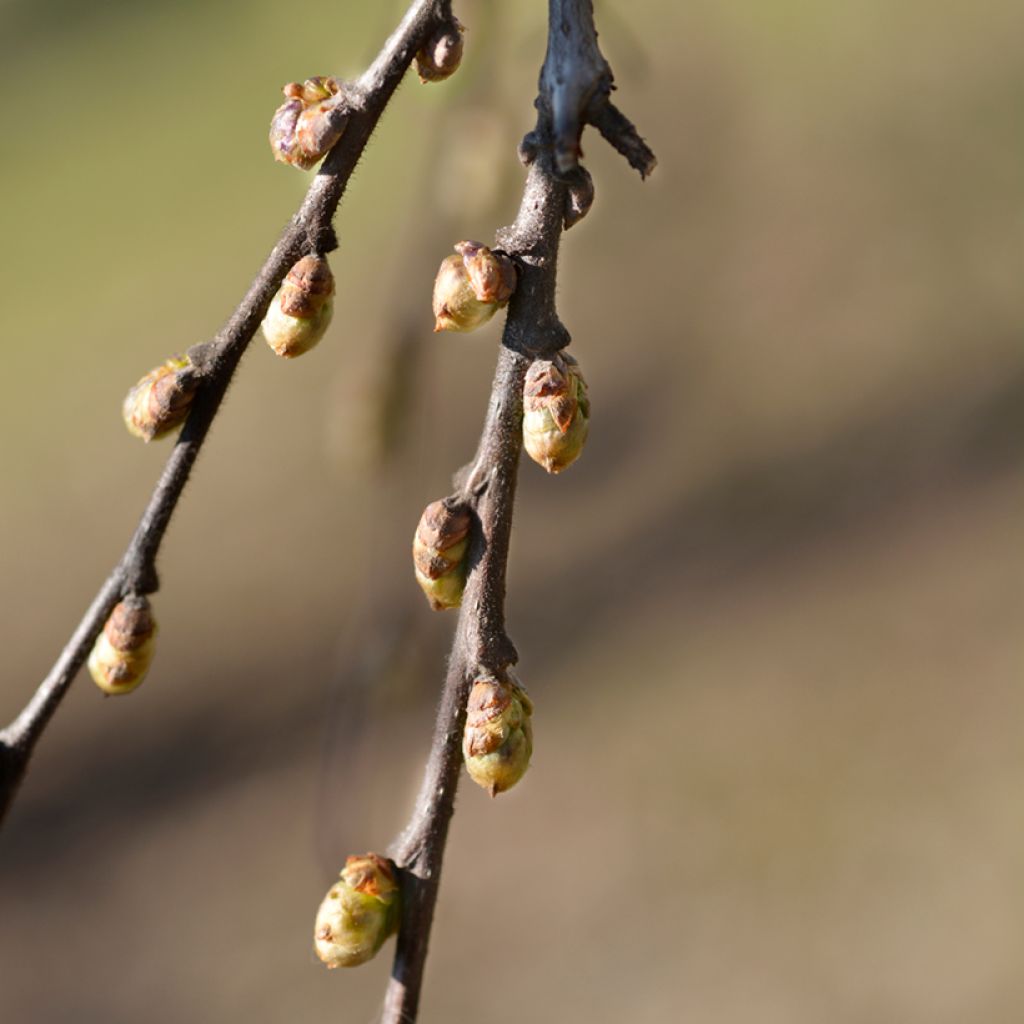
Celtis occidentalis - Hackberry
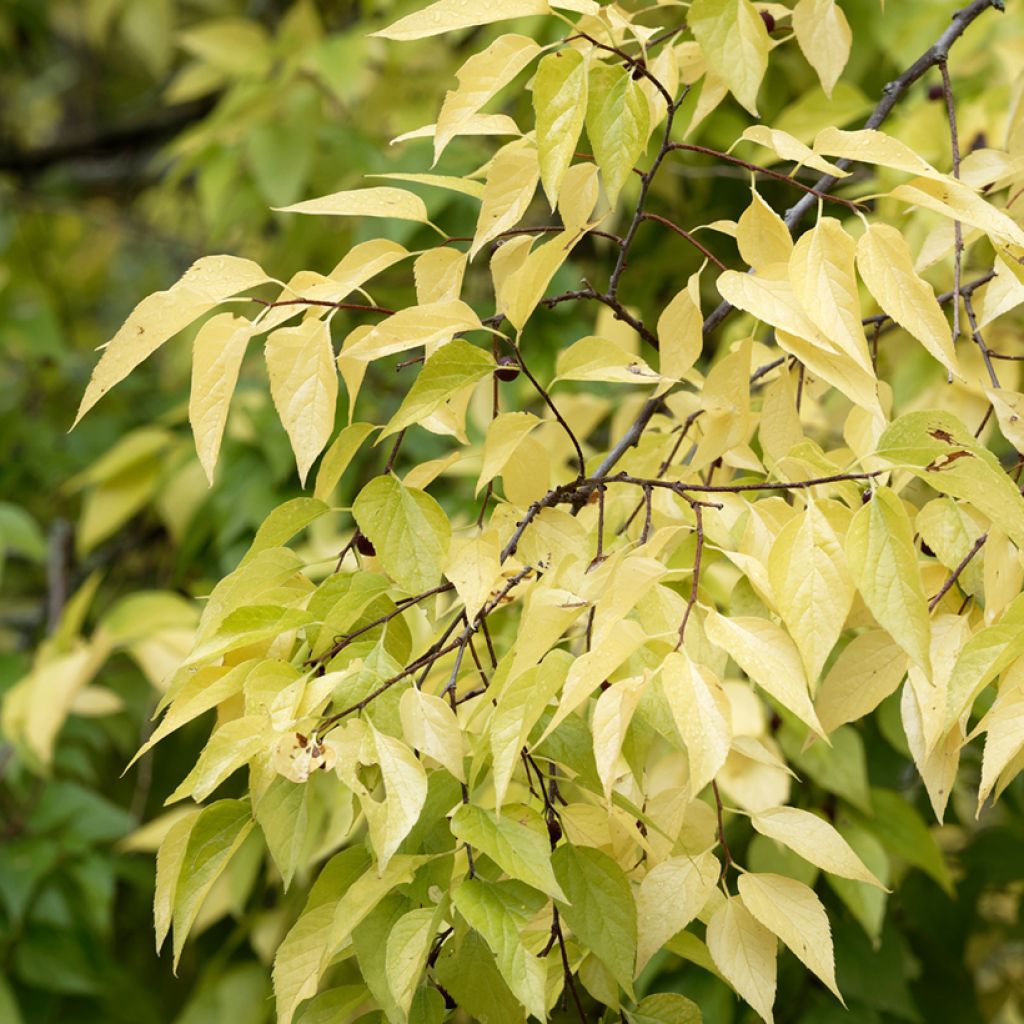
Celtis occidentalis - Hackberry
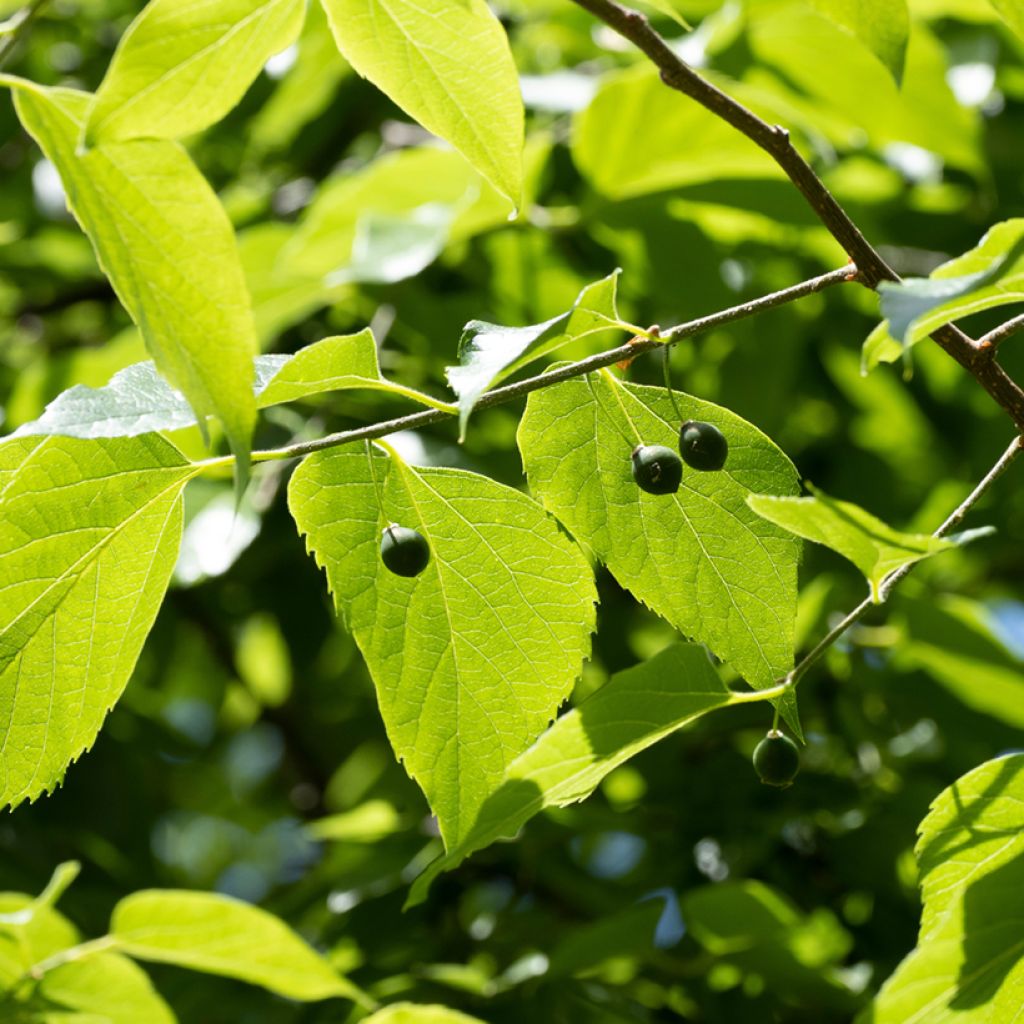
Celtis occidentalis - Hackberry
Celtis occidentalis - Hackberry
Celtis occidentalis - Hackberry
Celtis occidentalis - Hackberry
Celtis occidentalis - Hackberry
Celtis occidentalis - Hackberry
Celtis occidentalis - Hackberry
Celtis occidentalis - Hackberry
Celtis occidentalis - Hackberry
Celtis occidentalis - Hackberry
Celtis occidentalis
Common hackberry
Back-to-school special offer!
Get €10 off for every €50 you spend! And get up to €40 off on a single order.
How does it work?
1. Shop your favourites
Add your favourite plants to your basket. For every €50 you spend (excluding delivery charges, store credit and the plastic-free option), you’ll receive a €10 voucher.
€50 spent = €10 voucher
€100 spent = €20 voucher
€150 spent = €30 voucher
€200 spent = €40 voucher
2. Place your order
Once your basket reaches one of the spending thresholds, place your order. You can even choose your delivery date!
3. Receive your voucher
As soon as your order has been shipped, you’ll receive an email containing your personal voucher code and its value.
4. Use it on your next order
Your voucher is valid for 90 days from the date you receive it. It can be used once only, on a new order worth at least the value of the voucher, excluding delivery charges.
Please note: Vouchers can be combined with other offers, but cannot be split or refunded.
Why not try an alternative variety in stock?
View all →
Available in 1 sizes
Available in 1 sizes
Available in 1 sizes
Available in 1 sizes
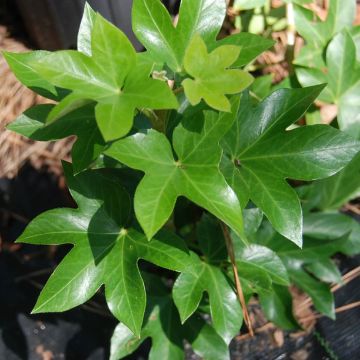
Available in 1 sizes
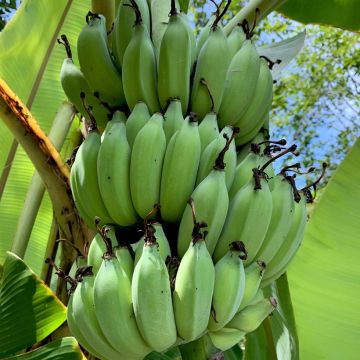
Available in 1 sizes
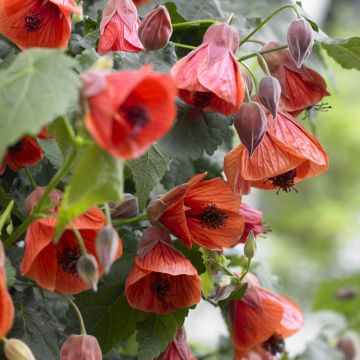
Available in 1 sizes
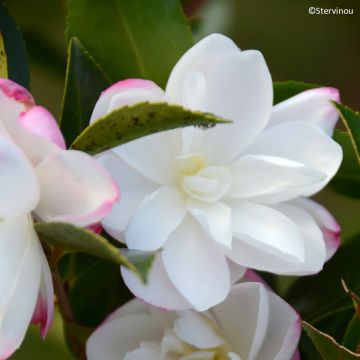
Available in 1 sizes
Available in 1 sizes
Available in 1 sizes
This plant carries a 24 months recovery warranty
More information
We guarantee the quality of our plants for a full growing cycle, and will replace at our expense any plant that fails to recover under normal climatic and planting conditions.
Would this plant suit my garden?
Set up your Plantfit profile →
Description
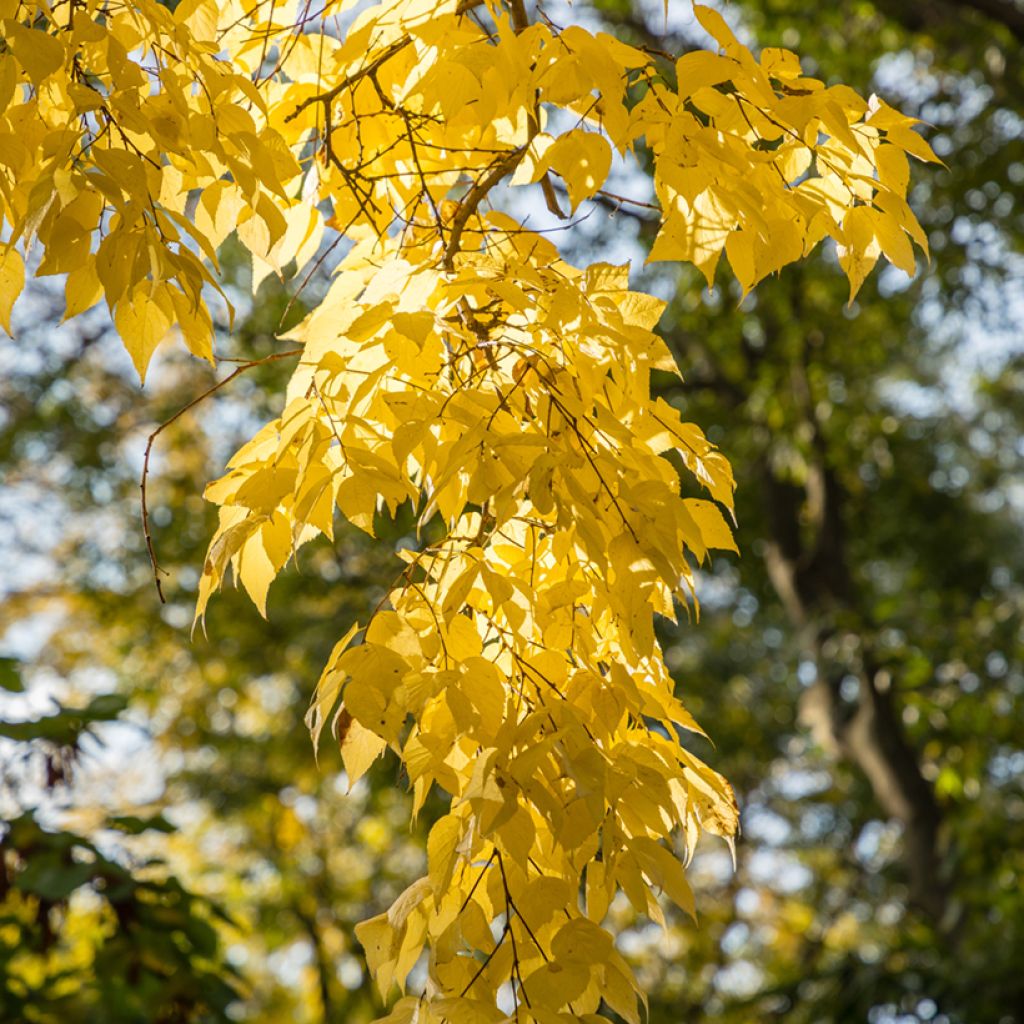
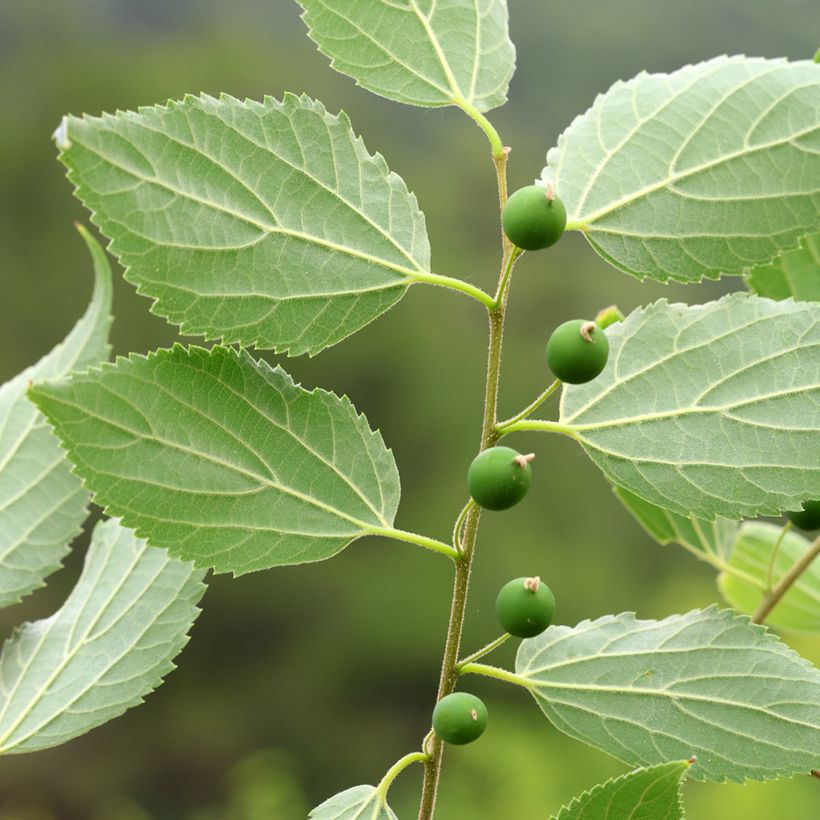
Celtis occidentalis, native to North America, nicknamed the Hackberry, is a cousin of the Provençal Hackberry but more hardy. This fast-growing tree forms one or several trunks that branch out quite low. Its irregular habit gives it a somewhat wild appearance, ideal for natural gardens. Its ovate, fairly small, medium-green leaves take on a beautiful yellow autumn colour. The discreet spring flowering gives way to small edible fruits in autumn. With age, the trunk becomes quite thick and its grey, very warty bark is undeniably charming. It is a very hardy plant, perfect for beginners, adapting to most soils.
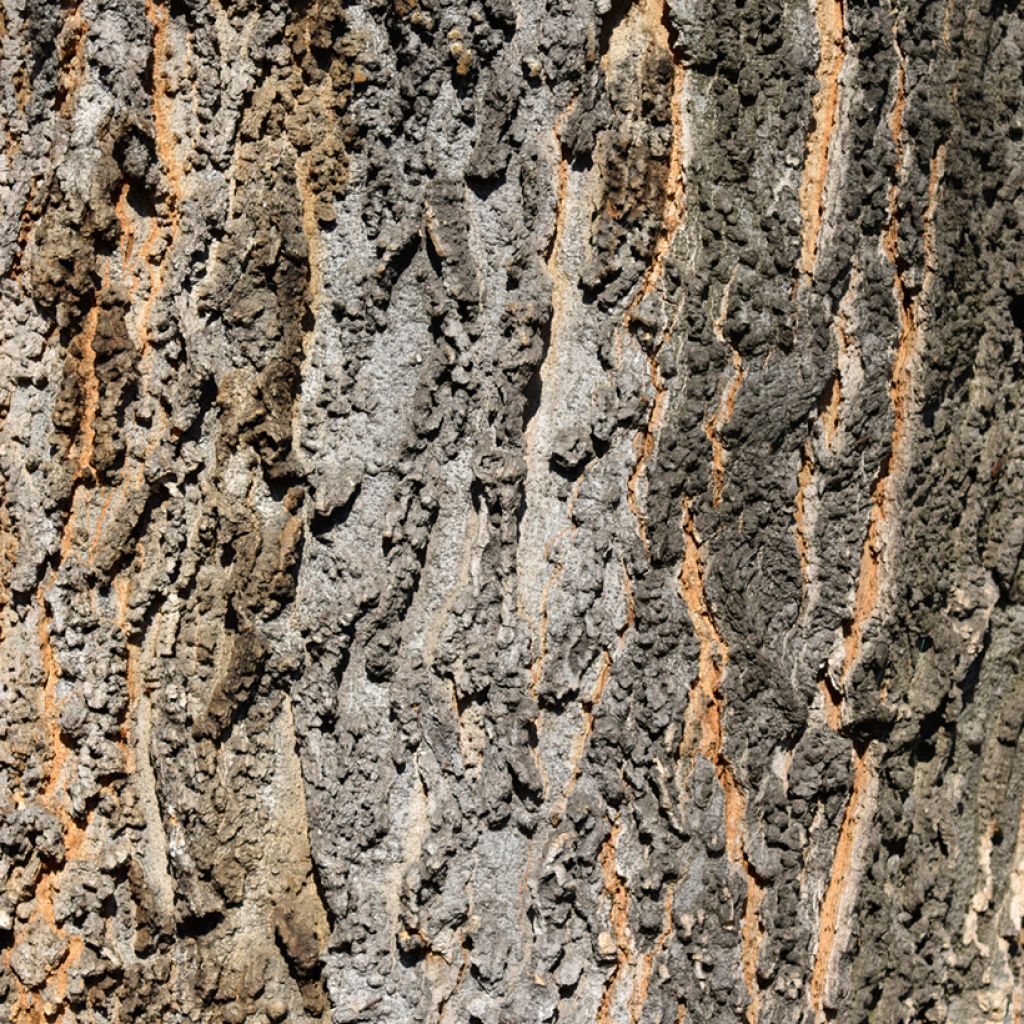
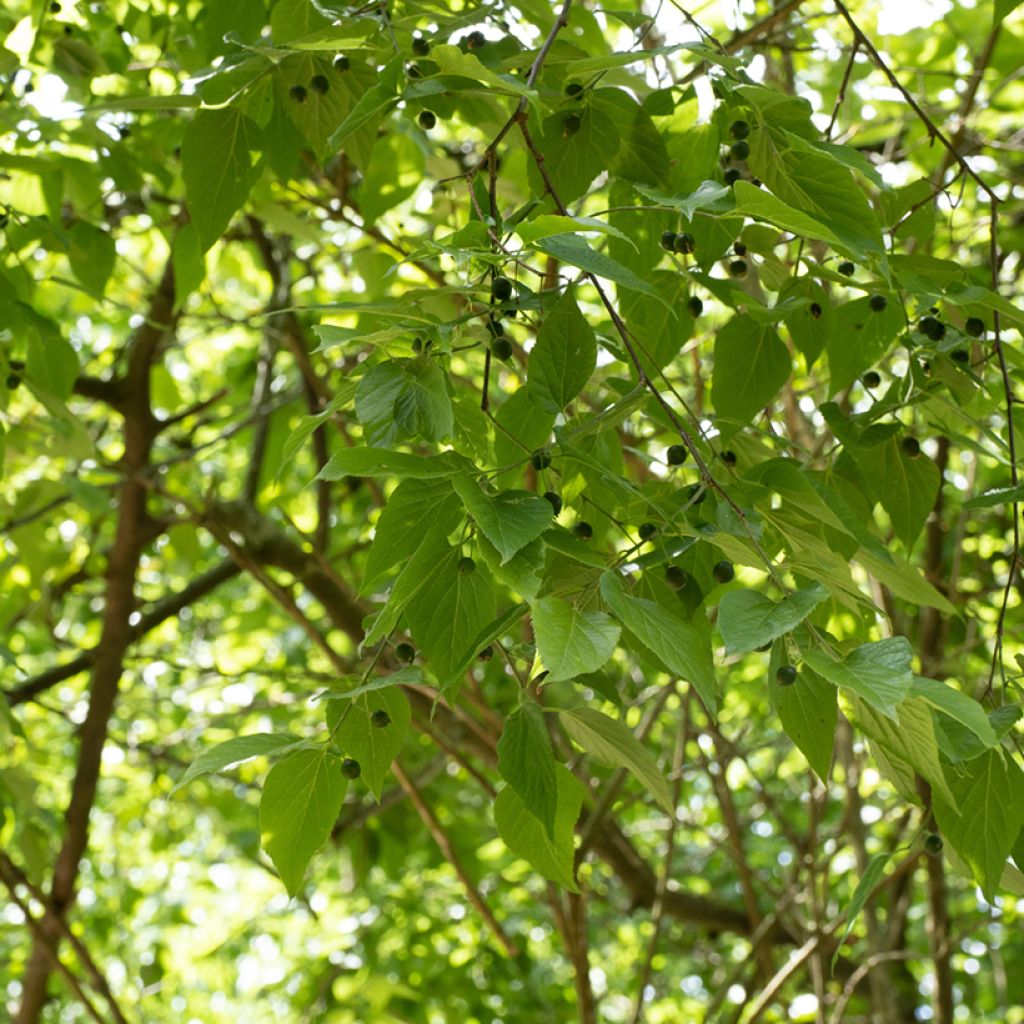
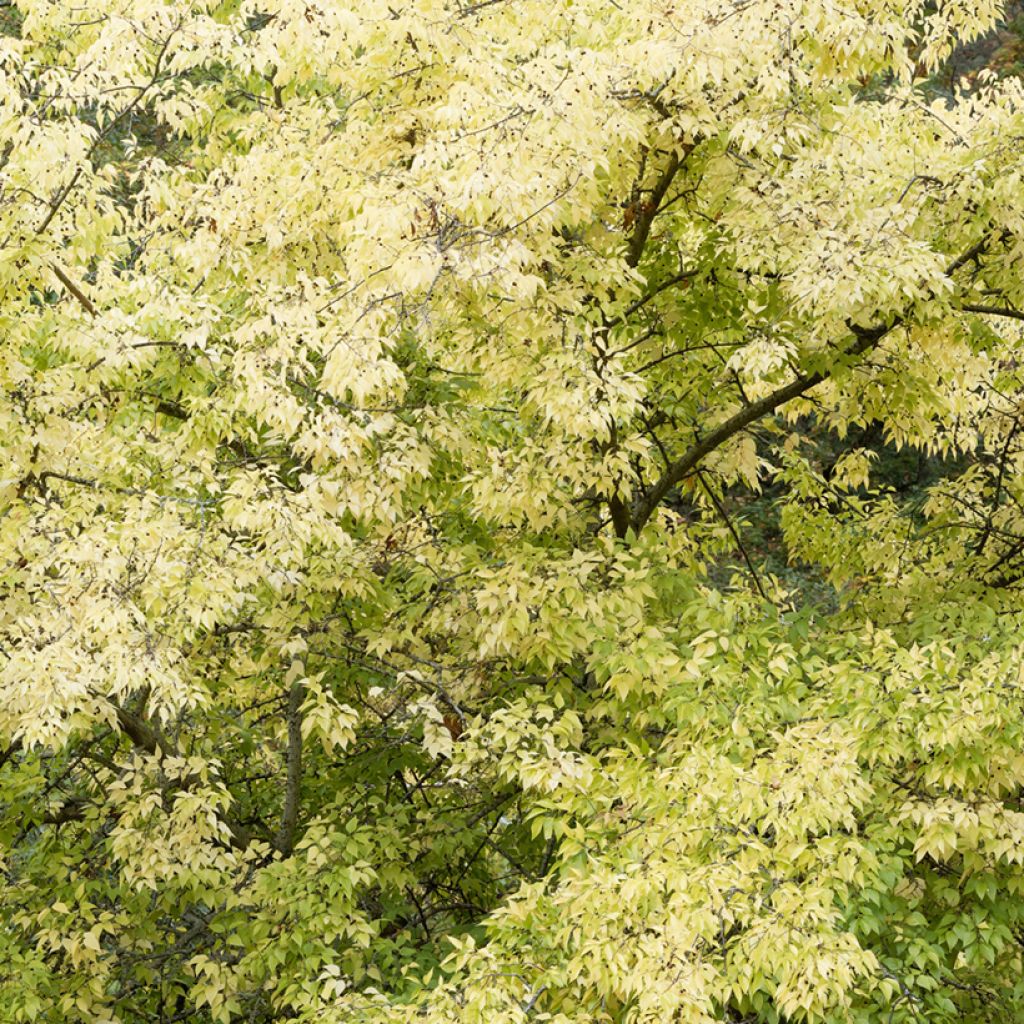
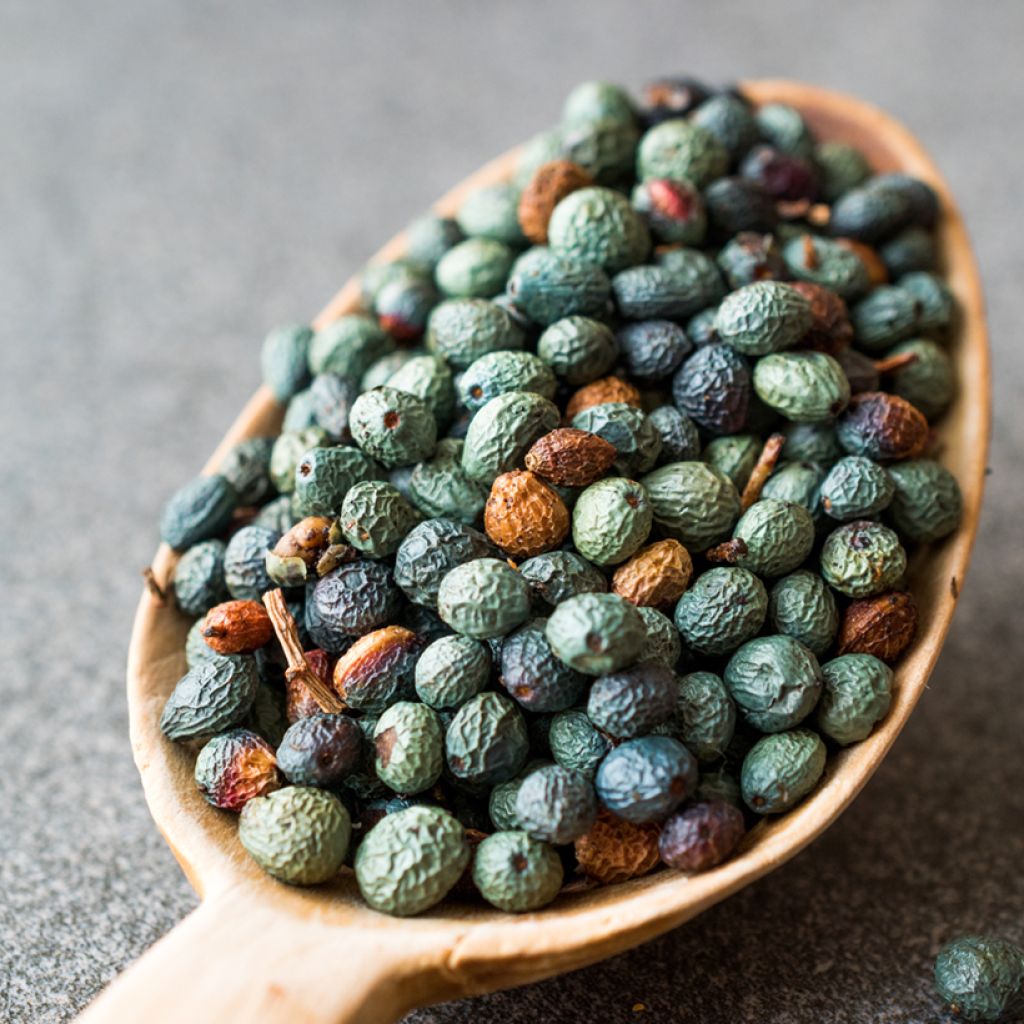
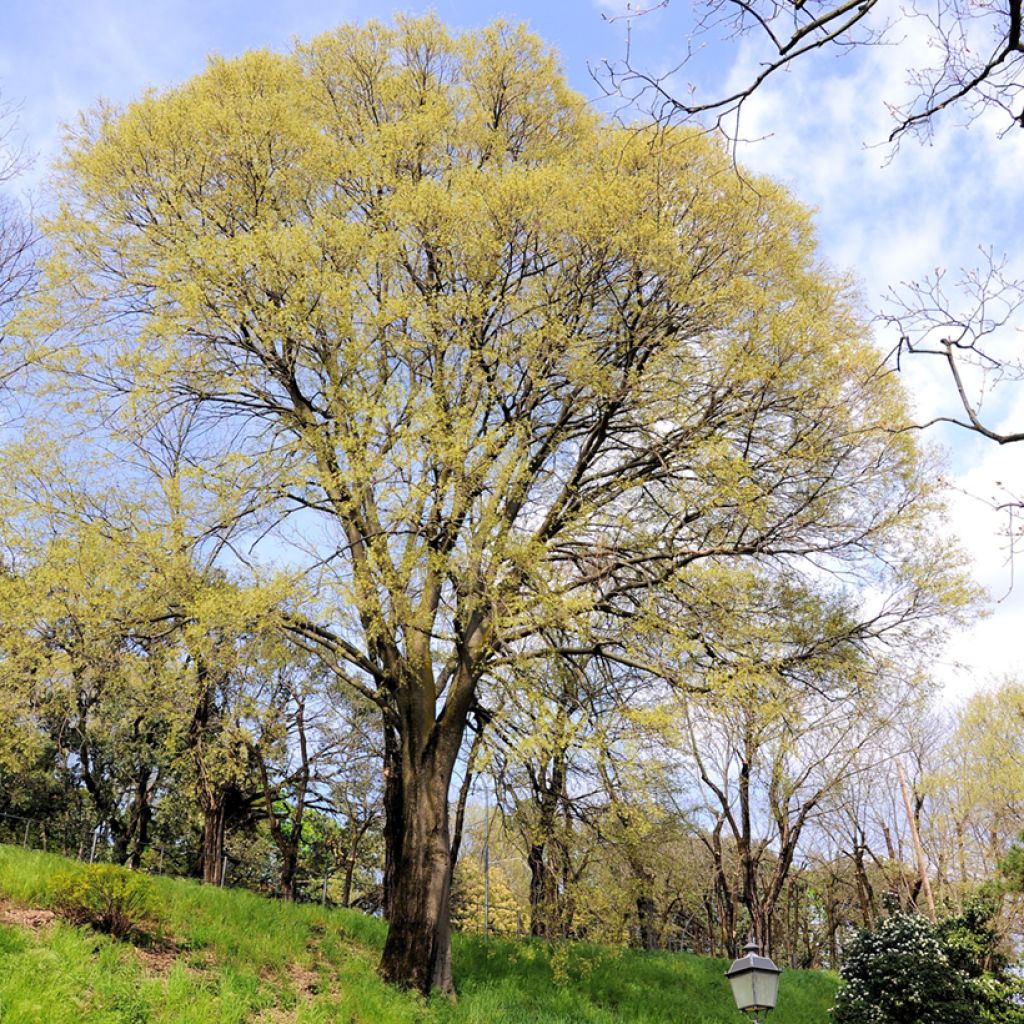
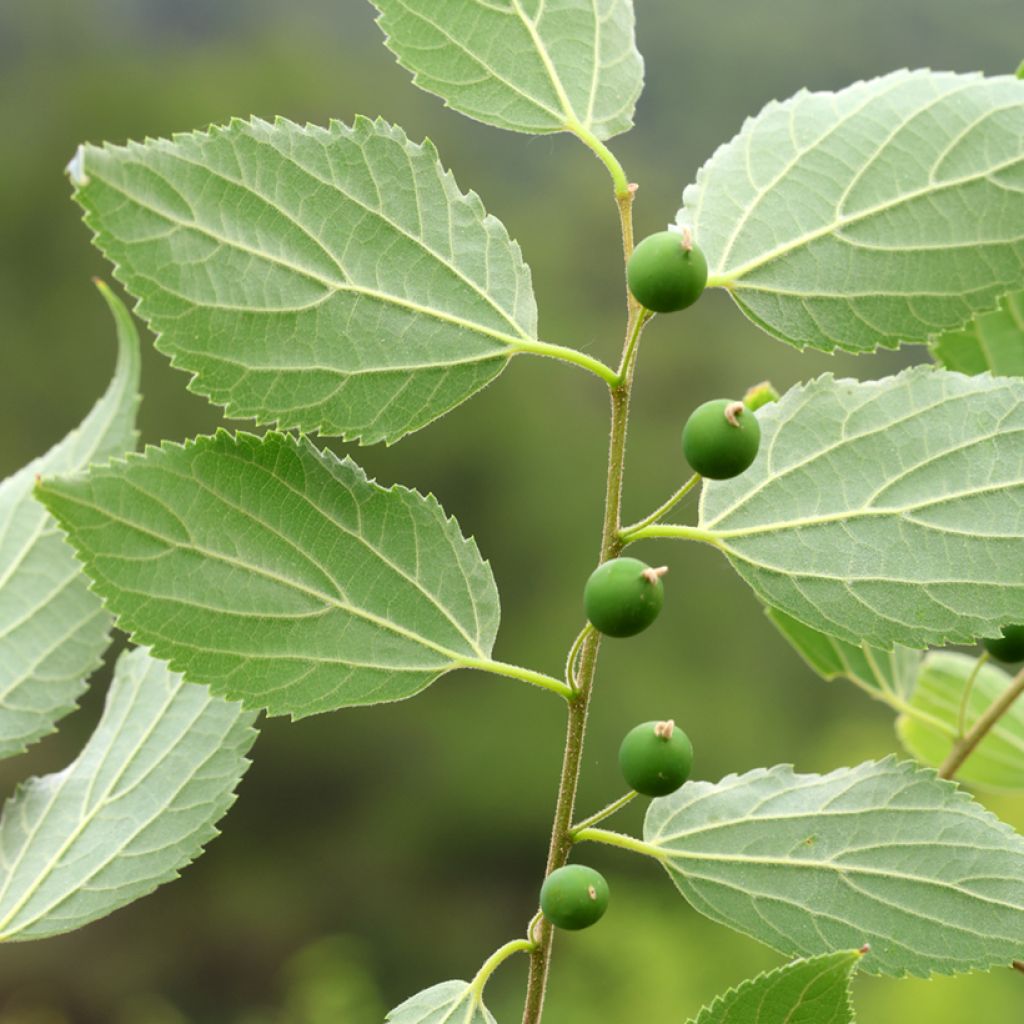
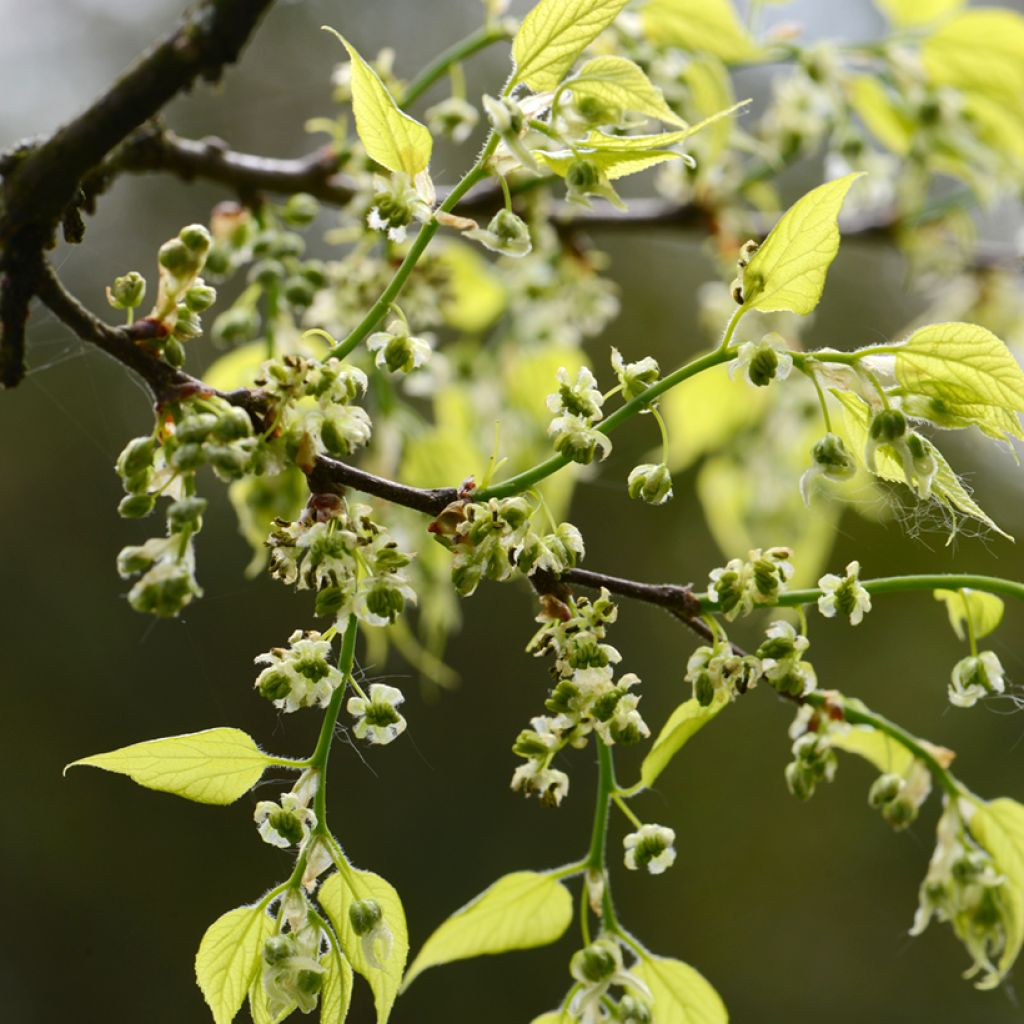
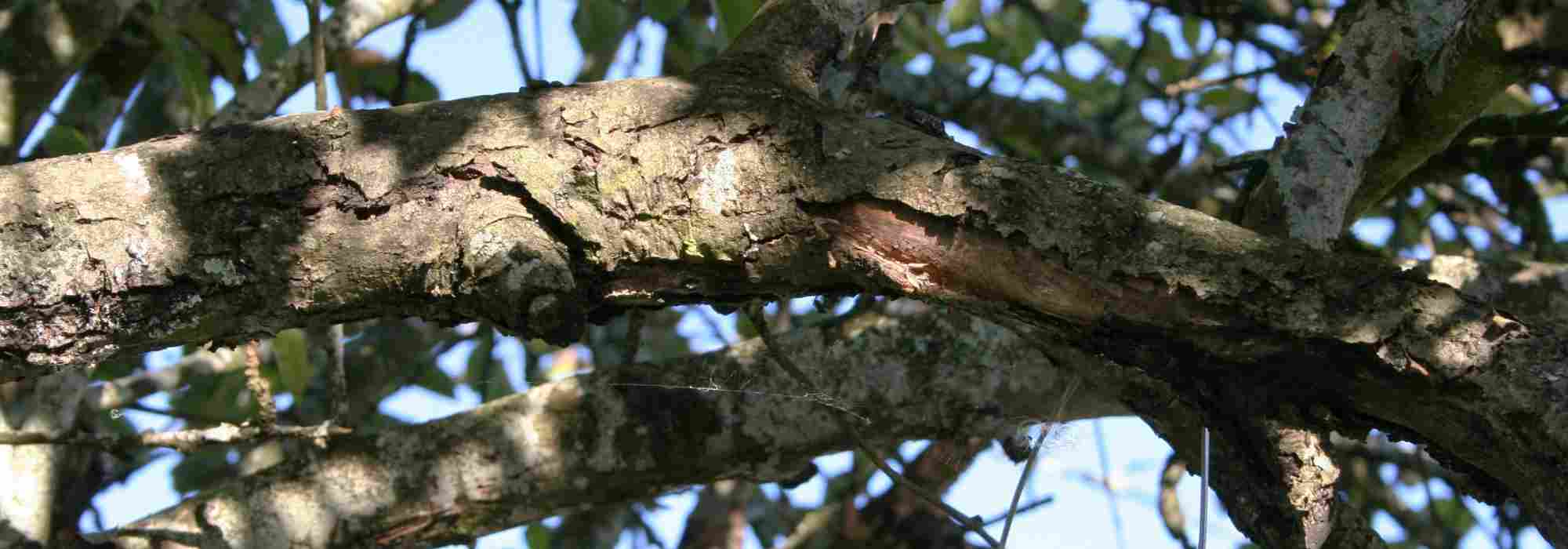
Once classified in the Ulmaceae family, Celtis moved to the Cannabaceae family in the early 2000s, alongside Cannabis and the Hops used in beer production. The Celtis genus includes around 70 species, mostly tropical and subtropical, with only about 15 being hardy in temperate climates. Celtis occidentalis is native to the United States, where it grows from the Appalachians to the Rocky Mountains, and Canada, explaining its great cold resistance, down to -34°C! However, insufficiently woody young shoots may freeze, causing lateral buds to sprout, giving a zigzag appearance. In its native regions, the tree can become very imposing, up to 30 m or more in height, but in our regions, it generally limits itself to around 15 m, with a spread of about 8 m. Fast-growing in its youth, it slows down later. Its growth is highly influenced by its growing conditions. It grows to its maximum in deep, moist soil and sunny locations, it will be smaller in sandy, dry, or partially shaded soils. Its habit is very irregular, and its silhouette varies between specimens, being more or less pyramidal, conical, or even slightly cylindrical as it ages. While its somewhat wild appearance is not very distinctive, this tree is more easily identified by its leaves. They are small, ovate, 5 to 12 cm long, borne on a short petiole of approximately 2 cm. Their base is slightly asymmetrical (like that of the Elm or Ulmus, a typical representative of the Ulmaceae family, the original family of the Hackberry). Intense green on the upper surface, slightly paler underneath, the surface is rough to the touch, another distinguishing feature. Similarly, the bark is easily identifiable on older specimens, as it is very warty, forming thick, rough, corky ridges, giving the trunk a particularly creviced appearance. Its grey colour and roughness make it an ornamental feature, especially in winter. The tree tends to develop multiple trunks, further enhancing its wild appearance. In April-May, small yellowish flowers appear, clustered in the axils of emerging young leaves. These small inflorescences have no ornamental value, but they are honey-producing and thus useful to pollinators. The tree is self-fertile, so these flowers produce small globose fruits, 1 cm in diameter, initially orange-red, turning to a dark purple, almost black at maturity. They are edible, with a sweet taste and persist on the plant for a long time in winter. When autumn and the first frosts arrive, the foliage gradually turns yellow before falling.
Hackberry is an interesting tree for its autumn colours, original bark, and very natural appearance. It is also, and above all, a species capable of thriving in almost all conditions. Accepting neutral, acidic, or calcareous soils, moist or even wet, but tolerating dryness once well-rooted, it is truly an "all-terrain" plant. Pair it with other free-form plants. Cornus mas (European Cornel) will be a perfect companion with its tousled habit, beautiful early yellow, fragrant and nectar-rich flowering, producing decorative and also edible red fruits. Plant it in front of your tree and in the third layer, place at its feet botanical roses, such as the charming Rosa glauca with its bluish foliage, enhanced by bright pink flowers followed by red berries, as well as Snowberries with their highly decorative winter fruits.
Report an error about the product description
Celtis occidentalis - Hackberry in pictures
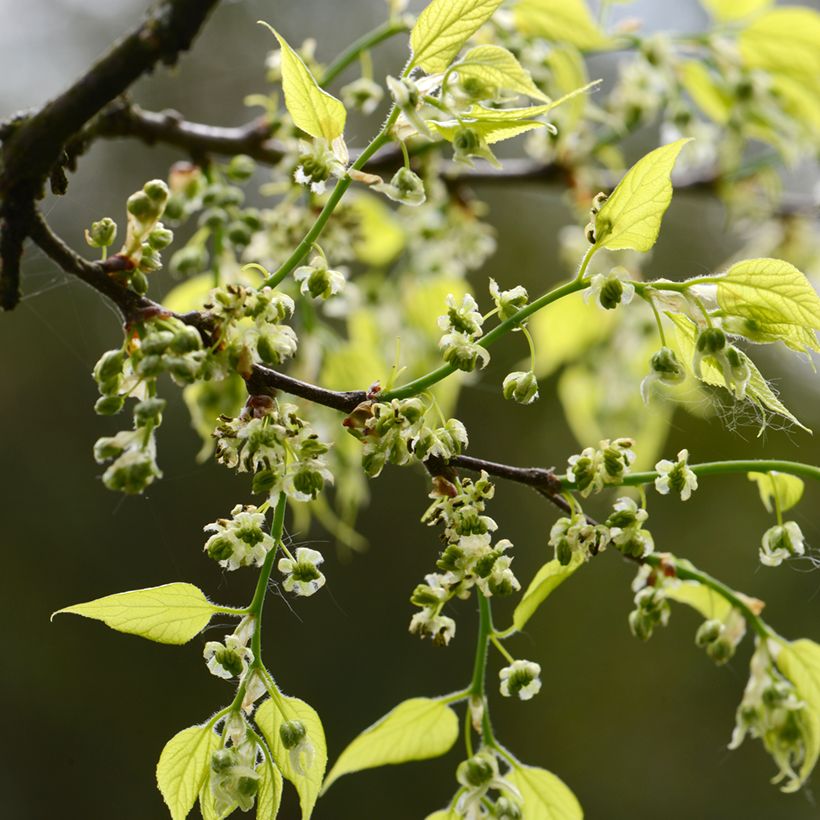
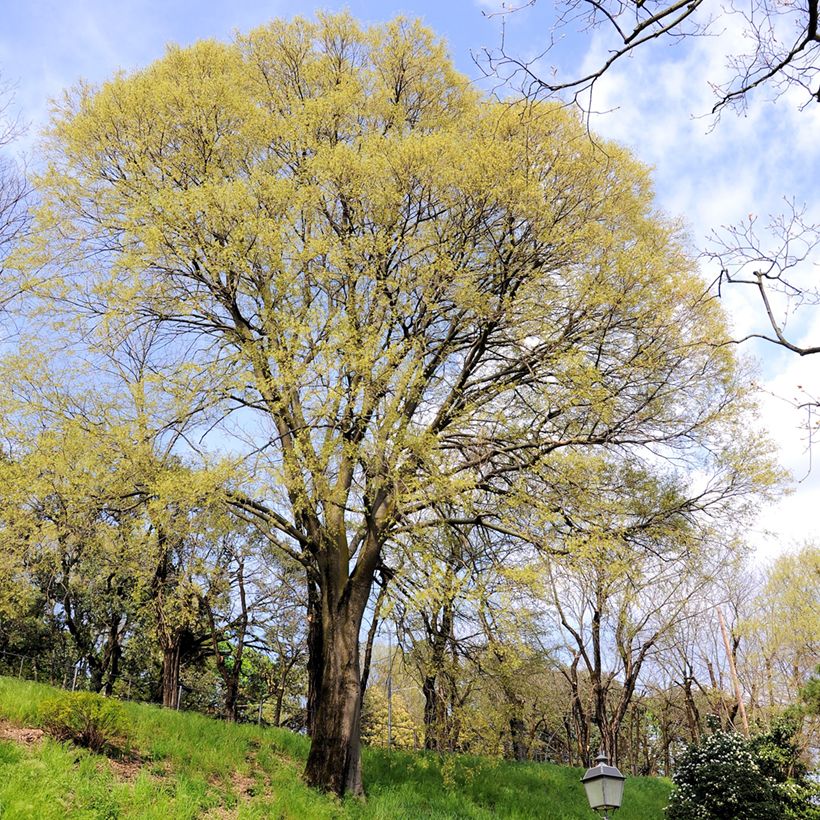
Plant habit
Flowering
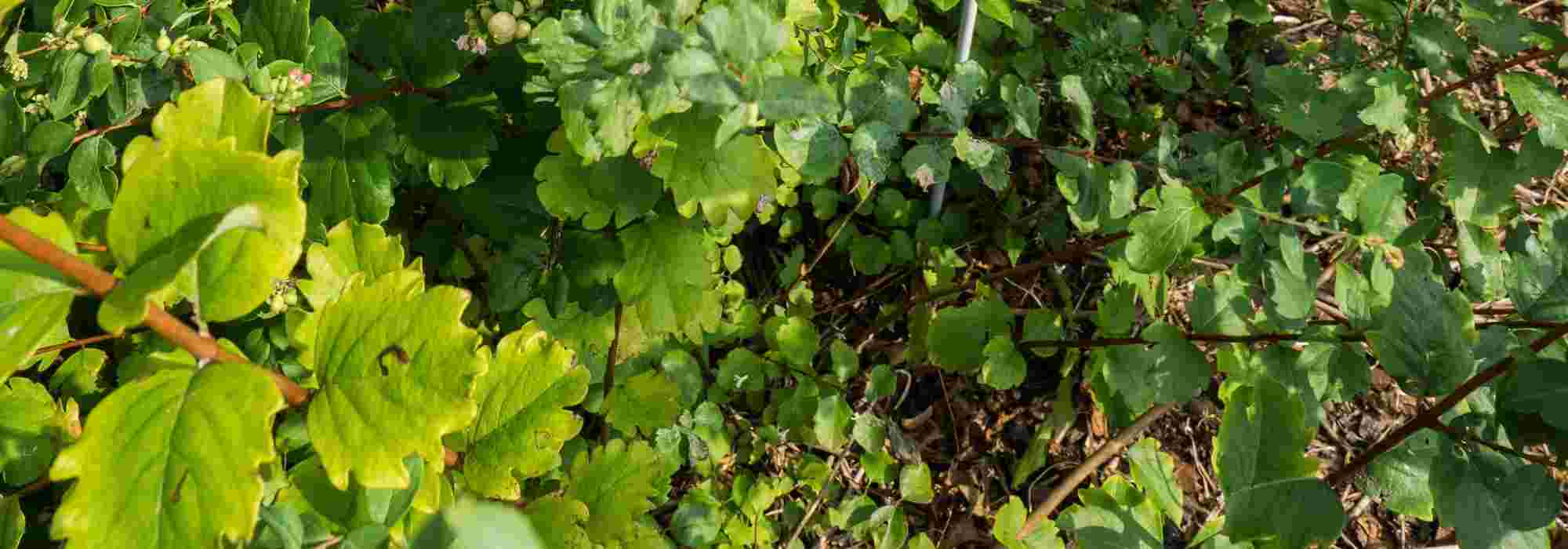
Foliage
Bark
Botanical data
Celtis
occidentalis
Cannabaceae
Common hackberry
Celtis pumila, Celtis occidentalis var. cordata, Celtis occidentalis var. crassifolia, Celtis crassifolia, Celtis occidentalis var. pumila, Celtis audibertiana, Celtis cordata
North America
Planting and care
Celtis occidentalis should be planted in spring or autumn in any deep and moist soil, even poor soil, in a sunny to partially shaded location. It tolerates the presence of limestone well but requires a sufficiently deep soil to accommodate its powerful root system. It is also capable of withstanding drier conditions once well-established. In summary, it adapts well to many conditions, making it a very easy tree to cultivate, especially since it is not affected by wind or urban pollution. Moreover, it can be pruned hard and can even regrow from the stump if cut back. Its only real requirement is to benefit from a few hours of sunlight per day, although it prefers full sun.
Planting period
Intended location
Care
Planting & care advice
-
-
-
-

-
-
-

-
This item has not been reviewed yet - be the first to leave a review about it.
Recently viewed products
Haven't found what you were looking for?
Hardiness is the lowest winter temperature a plant can endure without suffering serious damage or even dying. However, hardiness is affected by location (a sheltered area, such as a patio), protection (winter cover) and soil type (hardiness is improved by well-drained soil).

The flowering period indicated on our website applies to countries and regions located in USDA zone 8 (France, the United Kingdom, Ireland, the Netherlands, etc.)
It will vary according to where you live:- In zones 9 to 10 (Italy, Spain, Greece, etc.), flowering will occur about 2 to 4 weeks earlier.
- In zones 6 to 7 (Germany, Poland, Slovenia, and lower mountainous regions), flowering will be delayed by 2 to 3 weeks.
- In zone 5 (Central Europe, Scandinavia), blooming will be delayed by 3 to 5 weeks.
In temperate climates, pruning of spring-flowering shrubs (forsythia, spireas, etc.) should be done just after flowering.
Pruning of summer-flowering shrubs (Indian Lilac, Perovskia, etc.) can be done in winter or spring.
In cold regions as well as with frost-sensitive plants, avoid pruning too early when severe frosts may still occur.
The planting period indicated on our website applies to countries and regions located in USDA zone 8 (France, United Kingdom, Ireland, Netherlands).
It will vary according to where you live:
- In Mediterranean zones (Marseille, Madrid, Milan, etc.), autumn and winter are the best planting periods.
- In continental zones (Strasbourg, Munich, Vienna, etc.), delay planting by 2 to 3 weeks in spring and bring it forward by 2 to 4 weeks in autumn.
- In mountainous regions (the Alps, Pyrenees, Carpathians, etc.), it is best to plant in late spring (May-June) or late summer (August-September).
The harvesting period indicated on our website applies to countries and regions in USDA zone 8 (France, England, Ireland, the Netherlands).
In colder areas (Scandinavia, Poland, Austria...) fruit and vegetable harvests are likely to be delayed by 3-4 weeks.
In warmer areas (Italy, Spain, Greece, etc.), harvesting will probably take place earlier, depending on weather conditions.
The sowing periods indicated on our website apply to countries and regions within USDA Zone 8 (France, UK, Ireland, Netherlands).
In colder areas (Scandinavia, Poland, Austria...), delay any outdoor sowing by 3-4 weeks, or sow under glass.
In warmer climes (Italy, Spain, Greece, etc.), bring outdoor sowing forward by a few weeks.
Shipping country and language
Your country of residence may be:
Your country of residence is:
For a better user experience on our website, you can select:
Your shipping country:
-
 Austria
-
 Belgium
-
 Bosnia & Herzegovina
-
 Bulgaria
-
 Croatia
-
 Cyprus
-
 Czechia
-
 Denmark
-
 Estonia
-
 Finland
-
 France
-
 Germany
-
 Greece
-
 Hungary
-
 Iceland
-
 Ireland
-
 Italy
Italy
-
 Latvia
-
 Liechtenstein
-
 Lithuania
-
 Luxembourg
-
 Malta
Malta
-
 Netherlands
-
 Poland
-
 Portugal
-
 Romania
-
 Serbia
-
 Slovakia
-
 Slovenia
-
 Spain
Spain
-
 Sweden
-
 Switzerland
Language:
-
French
-
 English
-
Spanish
-
Italian
-
German
-
Portuguese
-
Dutch
-
Finnish
My Account
Hello
My wish lists
My cart
Log in / Register
Existing customer?
This form is protected by reCAPTCHA - the Google Privacy Policy and Terms of Service apply.
New customer?
Create an account to track your orders, access our customer service and, if you wish, make the most of our upcoming offers.