Eucalyptus cinerea
Eucalyptus cinerea
Eucalyptus cinerea
Eucalyptus cinerea
Eucalyptus cinerea
Argyle apple
Back-to-school special offer!
Get €10 off for every €50 you spend! And get up to €40 off on a single order.
How does it work?
1. Shop your favourites
Add your favourite plants to your basket. For every €50 you spend (excluding delivery charges, store credit and the plastic-free option), you’ll receive a €10 voucher.
€50 spent = €10 voucher
€100 spent = €20 voucher
€150 spent = €30 voucher
€200 spent = €40 voucher
2. Place your order
Once your basket reaches one of the spending thresholds, place your order. You can even choose your delivery date!
3. Receive your voucher
As soon as your order has been shipped, you’ll receive an email containing your personal voucher code and its value.
4. Use it on your next order
Your voucher is valid for 90 days from the date you receive it. It can be used once only, on a new order worth at least the value of the voucher, excluding delivery charges.
Please note: Vouchers can be combined with other offers, but cannot be split or refunded.
Why not try an alternative variety in stock?
View all →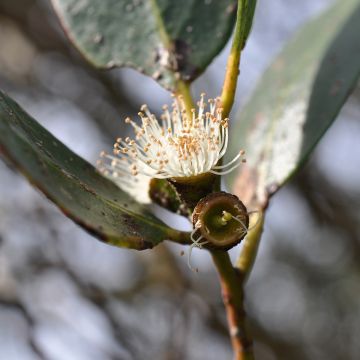
Available in 1 sizes
Available in 1 sizes
Available in 3 sizes
Available in 1 sizes
Available in 3 sizes
Available in 2 sizes

Available in 5 sizes
Available in 2 sizes
Available in 1 sizes
Available in 1 sizes
This plant carries a 24 months recovery warranty
More information
We guarantee the quality of our plants for a full growing cycle, and will replace at our expense any plant that fails to recover under normal climatic and planting conditions.
Would this plant suit my garden?
Set up your Plantfit profile →
Description
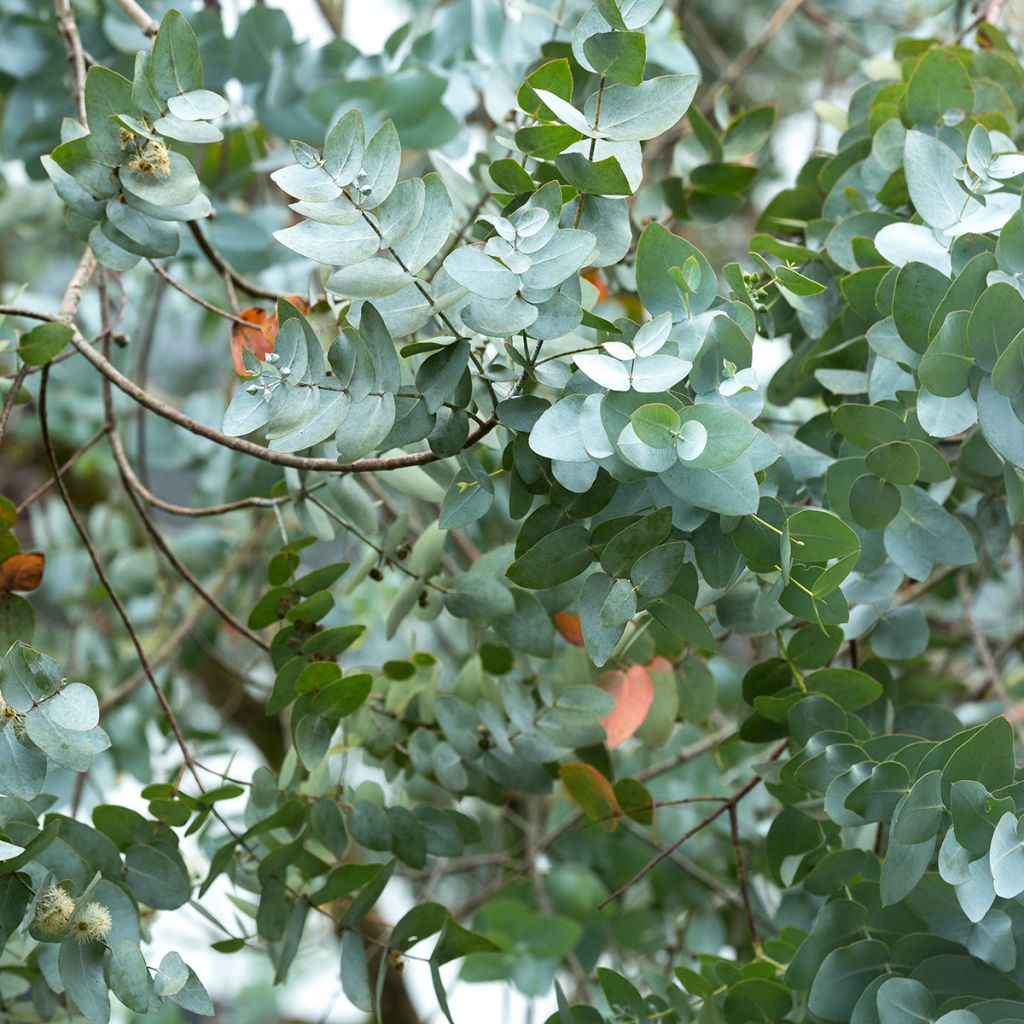
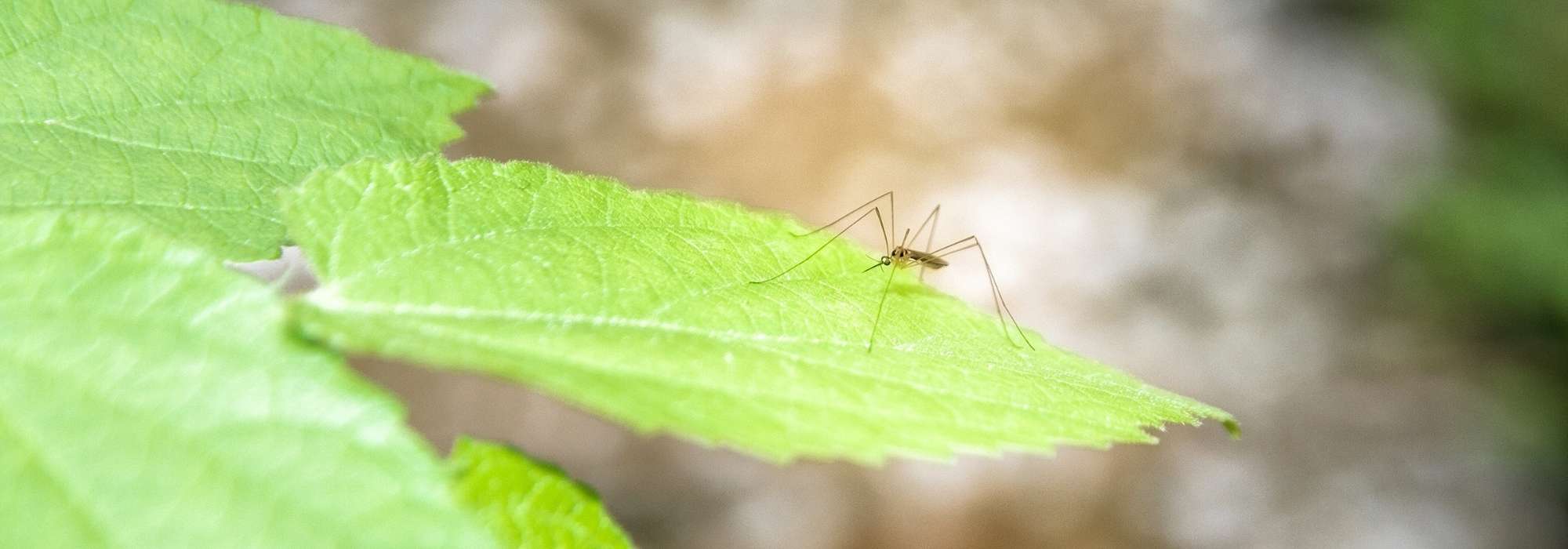
Eucalyptus cinerea, or ashy-leaved gum, is a species highly appreciated in floristry for the beauty of its juvenile foliage. Its round, bluish leaves blend beautifully with flowers in bouquets and arrangements. In the garden, this eucalyptus is interesting for its reasonable growth, relative hardiness, and tolerance to limestone. It quickly forms a small tree with a sometimes twisted habit, and picturesque bark that is decorative throughout the year. Its foliage is pleasantly aromatic and has a reputation for repelling mosquitoes, while its discreet flowering is attractive to bees. Growing in full sun, it adds a touch of exoticism to gardens in temperate climates.
Eucalyptus cinerea is a small tree of the Myrtaceae family, like the Feijoa, the Callistemon, or the Myrtle, with distinctive flowering. This species is native to the southeast of Australia (New South Wales and Victoria), where it can reach heights of up to 15-16 m (49 ft 2 in-52 ft 6 in), with a broad and spreading stature.
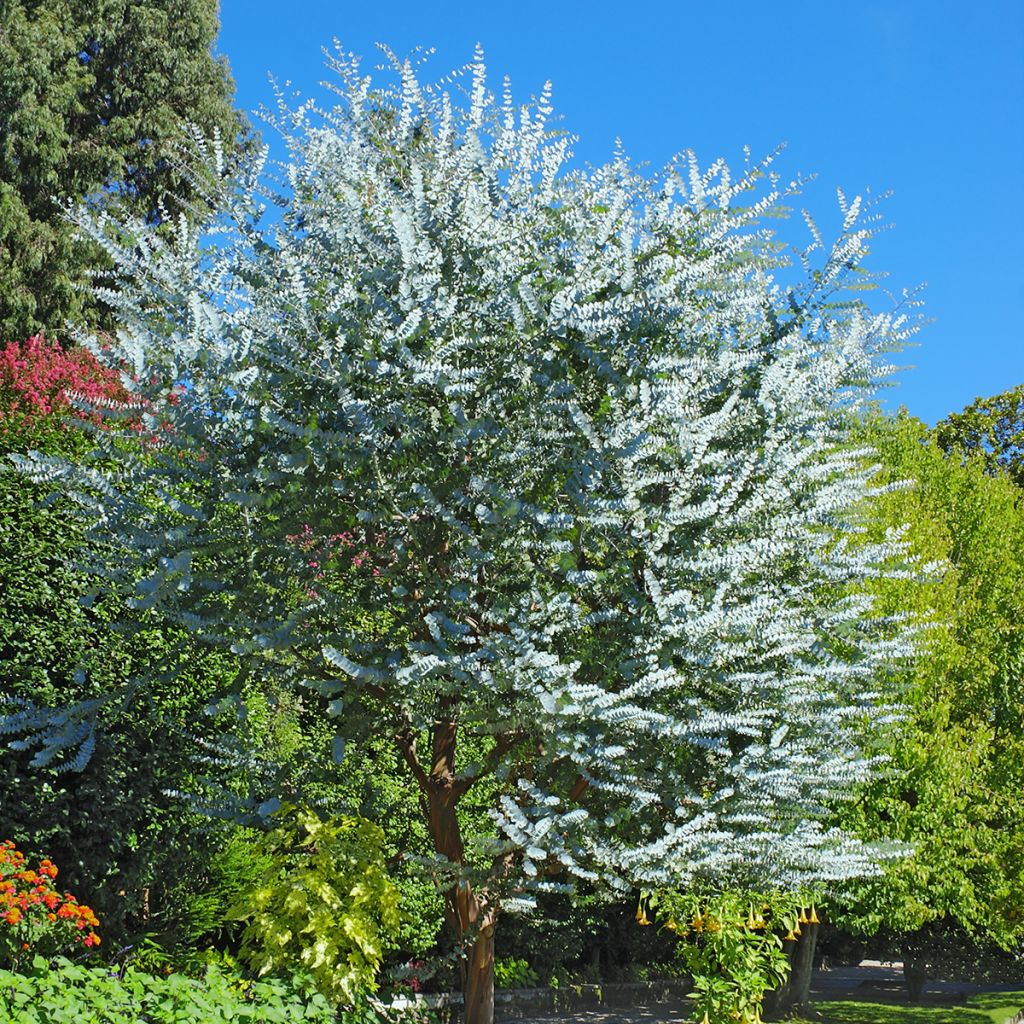
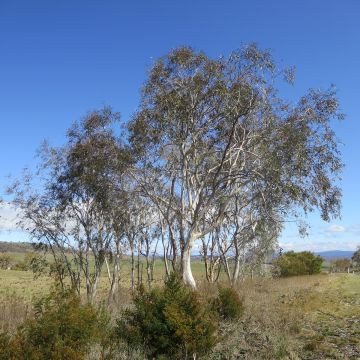
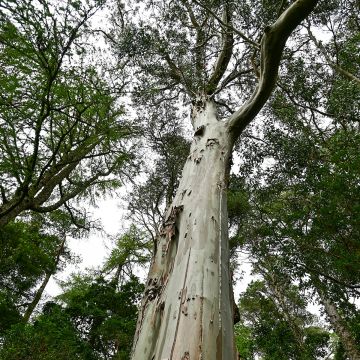
In cultivation it forms a small tree of 10-12 m (32 ft 10 in-39 ft 5 in) in height and 6 to 8 m (19 ft 8 in to 26 ft 2 in) in width in about ten years, with a naturally spreading habit and some branches trailing on the ground. The trunk can also take on a twisted shape, giving it a slightly wild appearance. Its bark is more persistent than that of the majority of eucalyptus species, peeling very little. Thick, fibrous, rough and channelled, it is a dull grey, becoming orange and mahogany-coloured depending on the season.
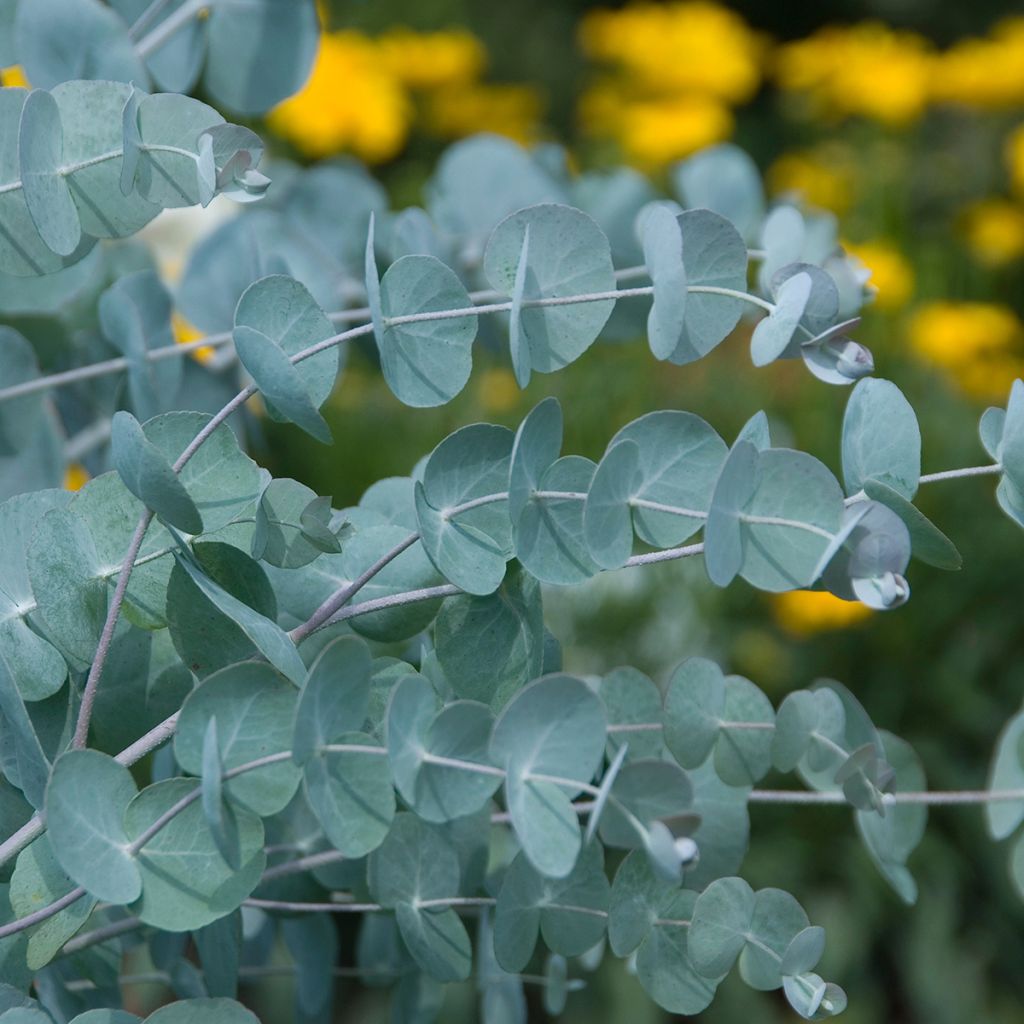
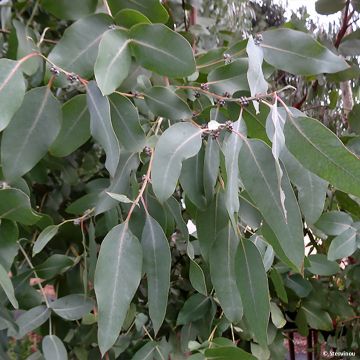
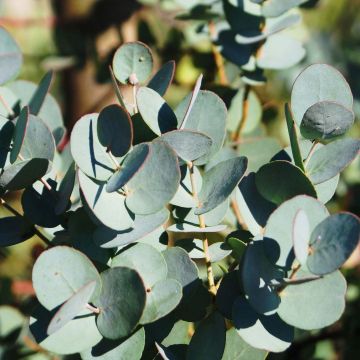
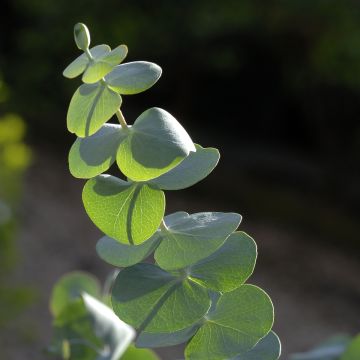
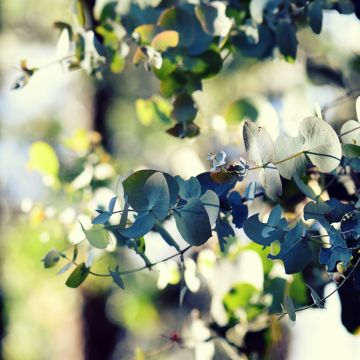
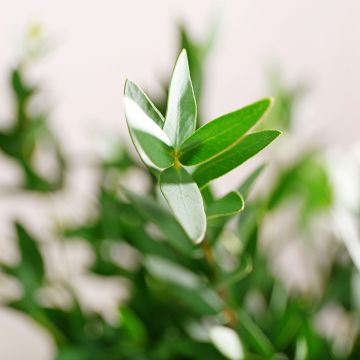
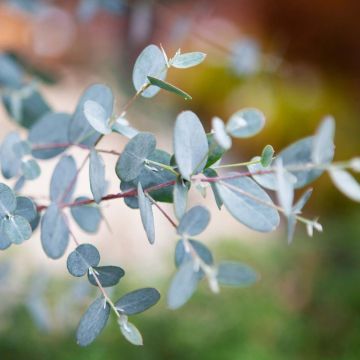
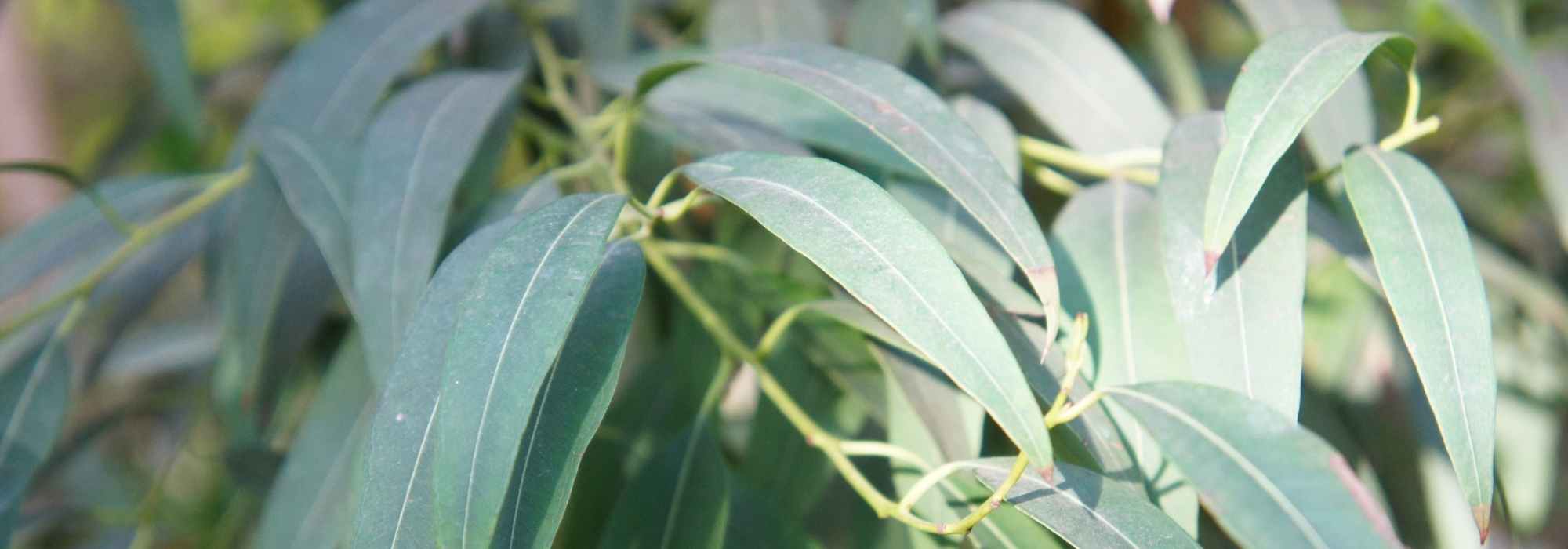
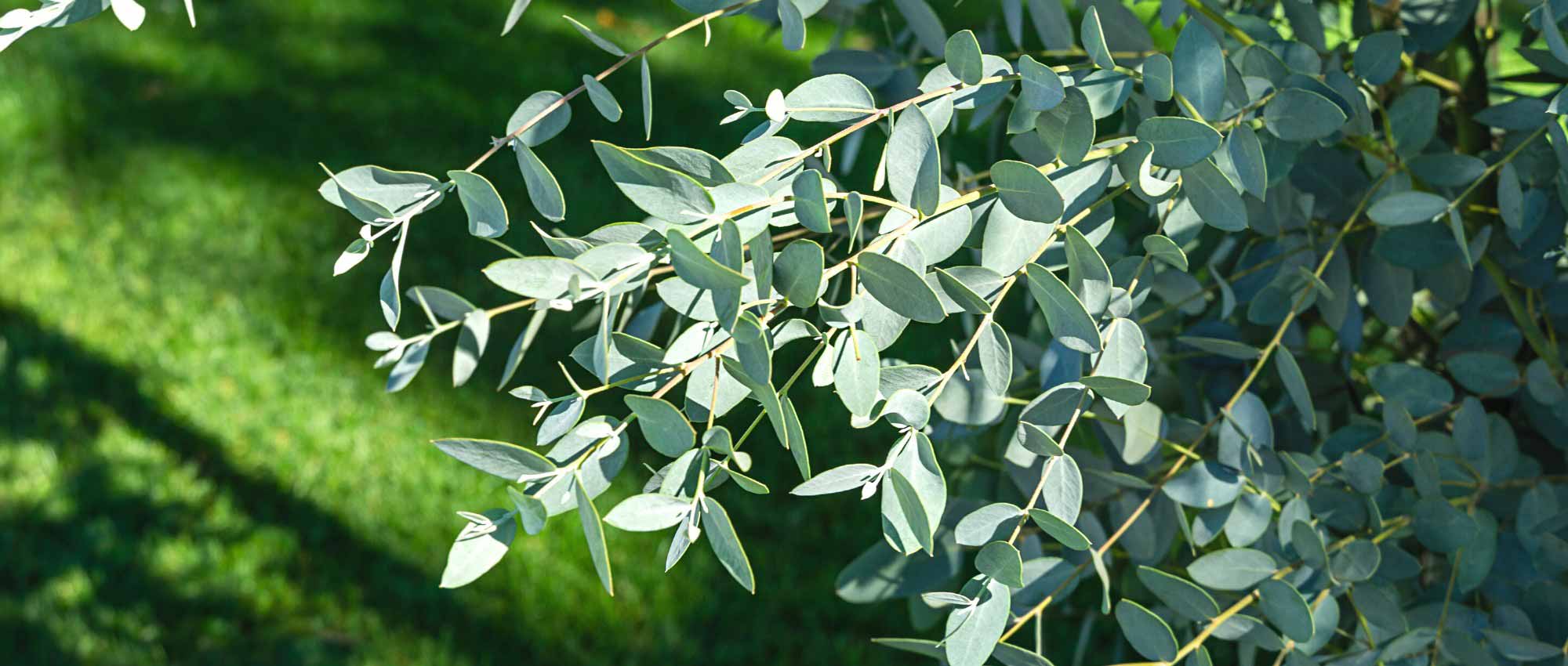
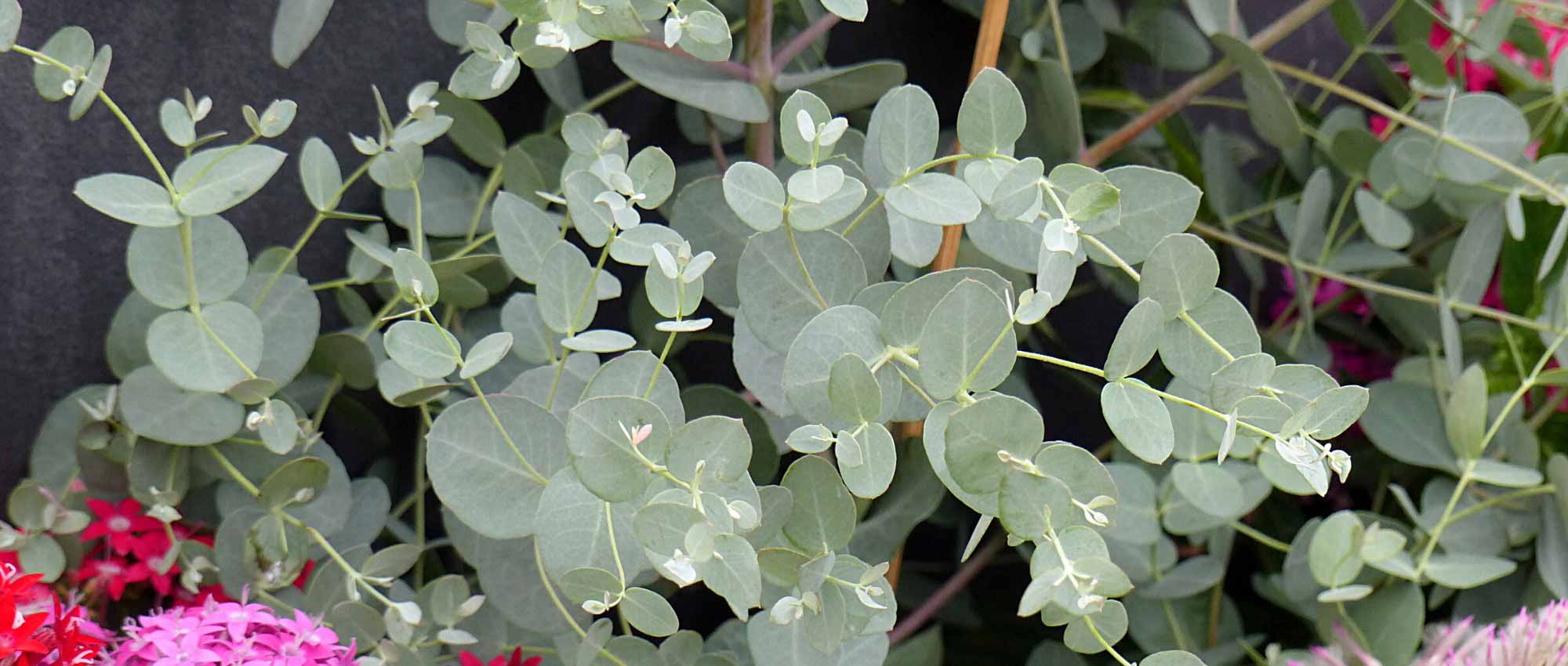
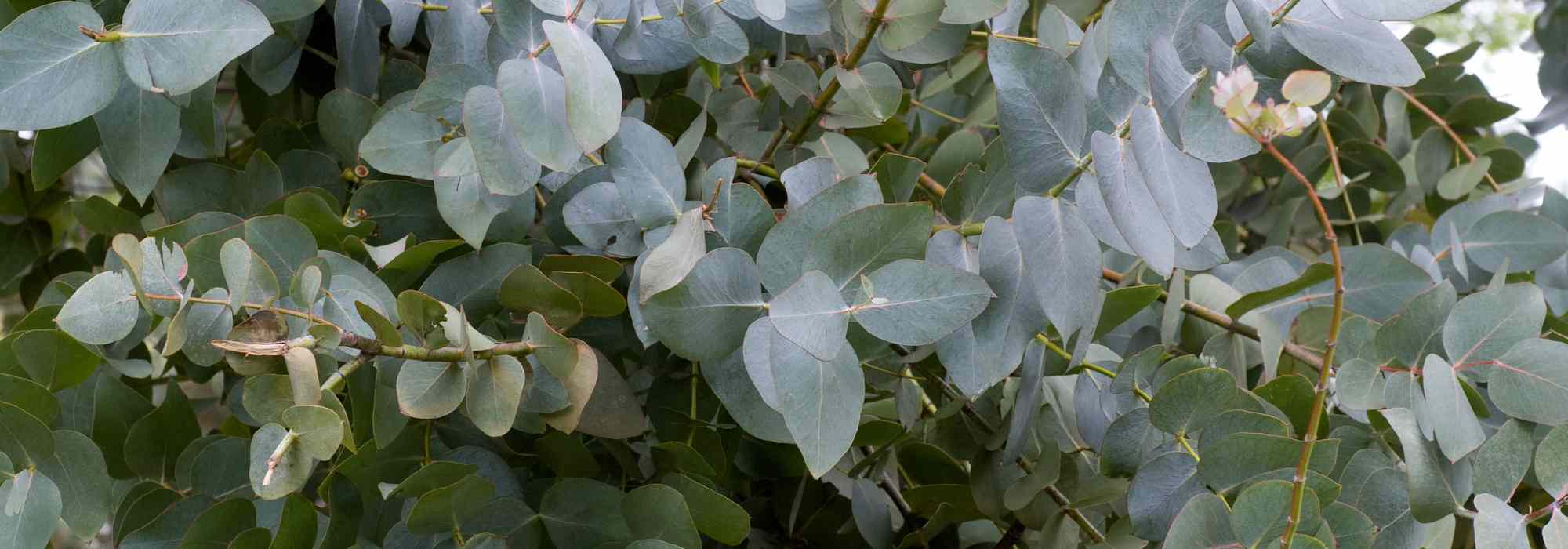
As in many species, E. cinerea has two types of foliage, juvenile and adult, which can coexist on the same plant. When it first appears, the young foliage is extremely decorative and highly prized for floral arrangements. The nearly round leaves, about 3.5 cm (1.4 in) in diameter, are sessile (without petioles) and opposite, offering remarkable visual appeal. Their second asset lies in their colour: a very glaucous grey-green, almost blue. Finally, they have a pleasant menthol scent, which repels mosquitoes. The adult leaves are silver-grey, elongated (lanceolate) in shape, approximately 11 cm (4.3 in) long and 3 cm (1.2 in) wide, or sickle-shaped. They have a short petiole about 1 cm (0.4 in) in length.
The insignificant, slightly perfumed flowering, takes place in May-June in the form of graceful small cream-white pompoms. They are formed by dozens of elongated stamens surrounding the central pistil and visited by insects. Highly attractive to bees, they are especially appreciated for honey production in Australia. Small capsule-shaped fruits then form.
Eucalyptus cinerea prefers clay or sandy soils, acidic to neutral, and tolerates some limestone. It does not like excessively dry soils but requires well-draining soil to avoid waterlogging. Its hardiness is rather good for a Eucalyptus, it can withstand brief frosts of around -10 to -12 °C, the foliage will suffer afterwards and the plant will die around -15°C (5 °F).
Eucalyptus cinerea works well in predominantly white or silvery scene. It brings a touch of exoticism to the garden and allows for the creation of themed scenes in the company of other plants with evocative silhouettes from distant lands. The Callistemon rigidus or Bottlebrush with its red flower spikes will be perfect in its company in mild climates. Also consider the Grevillea juniperina, with its dark green spiky foliage enhanced by superb red flowers.
You can also take advantage of its glaucous colours by combining it with purple foliage (Sambucus Black Lace, Cotinus Royal Purple), or golden foliage (Catalpa bignonioides Aurea, Golden Honey Locust).
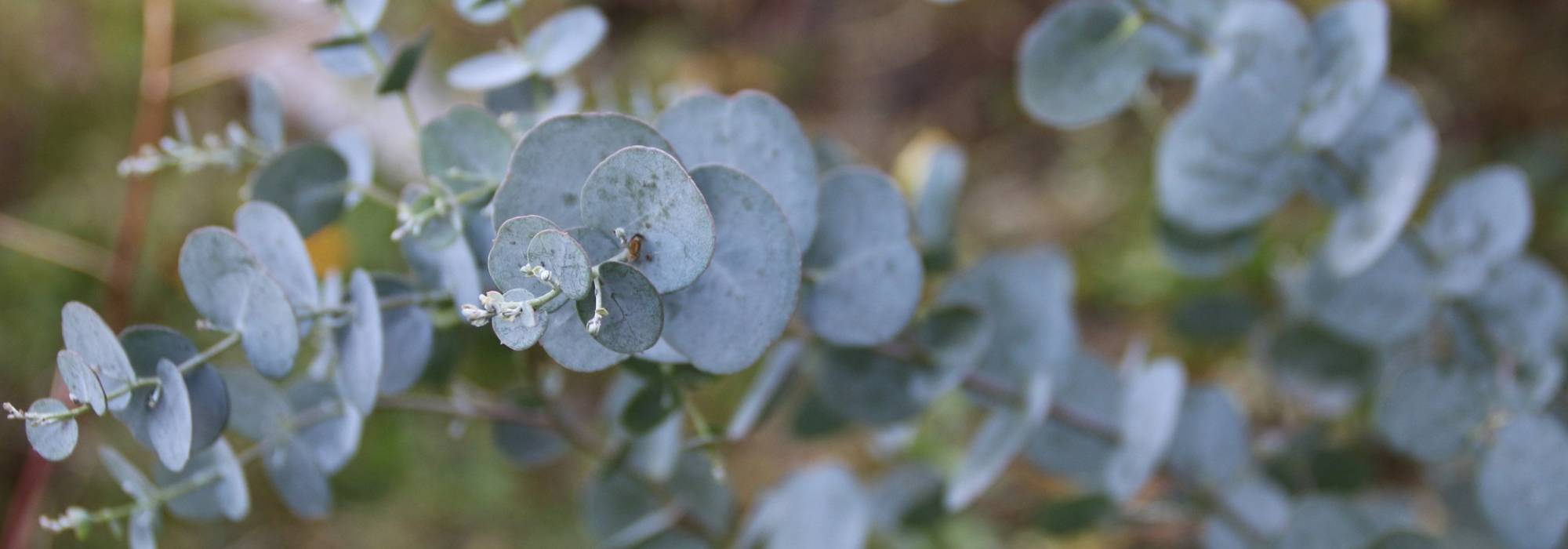
Eucalyptus cinerea in pictures
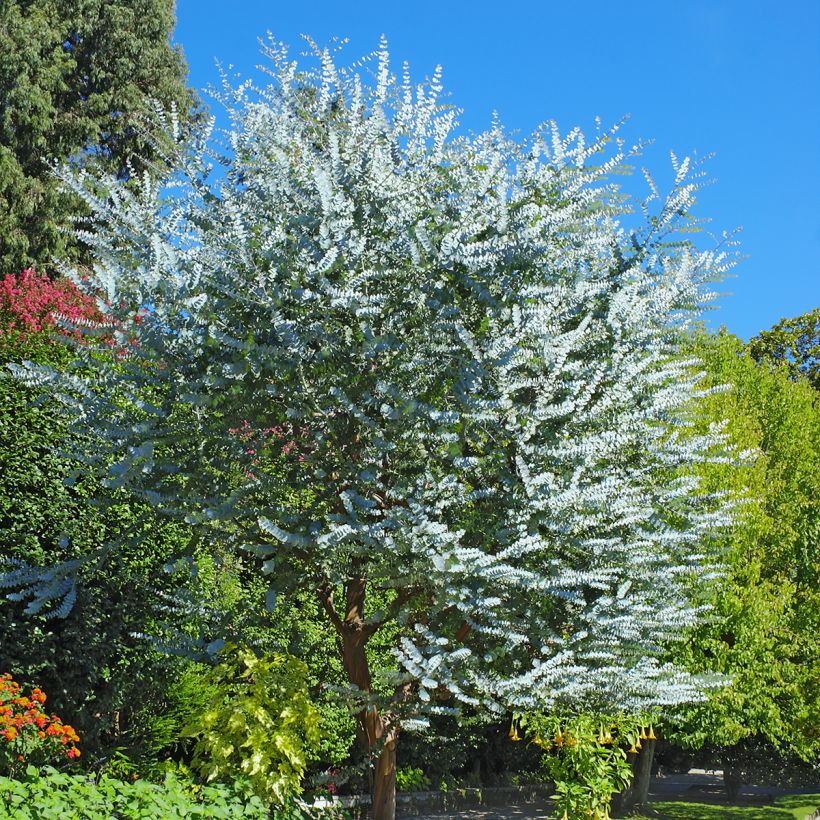
Plant habit
Flowering
Foliage
Botanical data
Eucalyptus
cinerea
Myrtaceae
Argyle apple
Australia
Planting and care
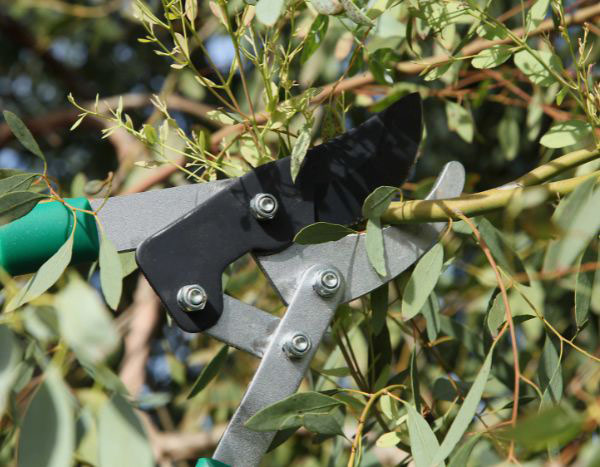
Eucalyptus cinerea is best planted in early spring, or in autumn in mild climates, in a well-drained soil, preferably neutral to acidic, but tolerant of some limestone. It even grows in slightly clayey or sandy soils, in a sunny position, but sheltered from strong and cold winds. Then let nature take its course, the growth is very rapid. Water regularly to help your eucalyptus settle, especially in dry summers. Pruning is not necessary, but it is perfectly tolerated in spring, which allows the plant to be kept to more modest dimensions. In March, you can occasionally cut it back to ground level to form a beautiful, dense bush, 2-3 m (6 ft 7 in-9 ft 10 in) tall, which will allow you to enjoy the juvenile foliage which is more decorative than the adult foliage.
Planting period
Intended location
Care
Planting & care advice


This item has not been reviewed yet - be the first to leave a review about it.
Recently viewed products
Haven't found what you were looking for?
Hardiness is the lowest winter temperature a plant can endure without suffering serious damage or even dying. However, hardiness is affected by location (a sheltered area, such as a patio), protection (winter cover) and soil type (hardiness is improved by well-drained soil).

The flowering period indicated on our website applies to countries and regions located in USDA zone 8 (France, the United Kingdom, Ireland, the Netherlands, etc.)
It will vary according to where you live:- In zones 9 to 10 (Italy, Spain, Greece, etc.), flowering will occur about 2 to 4 weeks earlier.
- In zones 6 to 7 (Germany, Poland, Slovenia, and lower mountainous regions), flowering will be delayed by 2 to 3 weeks.
- In zone 5 (Central Europe, Scandinavia), blooming will be delayed by 3 to 5 weeks.
In temperate climates, pruning of spring-flowering shrubs (forsythia, spireas, etc.) should be done just after flowering.
Pruning of summer-flowering shrubs (Indian Lilac, Perovskia, etc.) can be done in winter or spring.
In cold regions as well as with frost-sensitive plants, avoid pruning too early when severe frosts may still occur.
The planting period indicated on our website applies to countries and regions located in USDA zone 8 (France, United Kingdom, Ireland, Netherlands).
It will vary according to where you live:
- In Mediterranean zones (Marseille, Madrid, Milan, etc.), autumn and winter are the best planting periods.
- In continental zones (Strasbourg, Munich, Vienna, etc.), delay planting by 2 to 3 weeks in spring and bring it forward by 2 to 4 weeks in autumn.
- In mountainous regions (the Alps, Pyrenees, Carpathians, etc.), it is best to plant in late spring (May-June) or late summer (August-September).
The harvesting period indicated on our website applies to countries and regions in USDA zone 8 (France, England, Ireland, the Netherlands).
In colder areas (Scandinavia, Poland, Austria...) fruit and vegetable harvests are likely to be delayed by 3-4 weeks.
In warmer areas (Italy, Spain, Greece, etc.), harvesting will probably take place earlier, depending on weather conditions.
The sowing periods indicated on our website apply to countries and regions within USDA Zone 8 (France, UK, Ireland, Netherlands).
In colder areas (Scandinavia, Poland, Austria...), delay any outdoor sowing by 3-4 weeks, or sow under glass.
In warmer climes (Italy, Spain, Greece, etc.), bring outdoor sowing forward by a few weeks.
Shipping country and language
Your country of residence may be:
Your country of residence is:
For a better user experience on our website, you can select:
Your shipping country:
-
 Austria
-
 Belgium
-
 Bosnia & Herzegovina
-
 Bulgaria
-
 Croatia
-
 Cyprus
-
 Czechia
-
 Denmark
-
 Estonia
-
 Finland
-
 France
-
 Germany
-
 Greece
-
 Hungary
-
 Iceland
-
 Ireland
-
 Italy
Italy
-
 Latvia
-
 Liechtenstein
-
 Lithuania
-
 Luxembourg
-
 Malta
Malta
-
 Netherlands
-
 Poland
-
 Portugal
-
 Romania
-
 Serbia
-
 Slovakia
-
 Slovenia
-
 Spain
Spain
-
 Sweden
-
 Switzerland
Language:
-
French
-
 English
-
Spanish
-
Italian
-
German
-
Portuguese
-
Dutch
-
Finnish
My Account
Hello
My wish lists
My cart
Log in / Register
Existing customer?
This form is protected by reCAPTCHA - the Google Privacy Policy and Terms of Service apply.
New customer?
Create an account to track your orders, access our customer service and, if you wish, make the most of our upcoming offers.