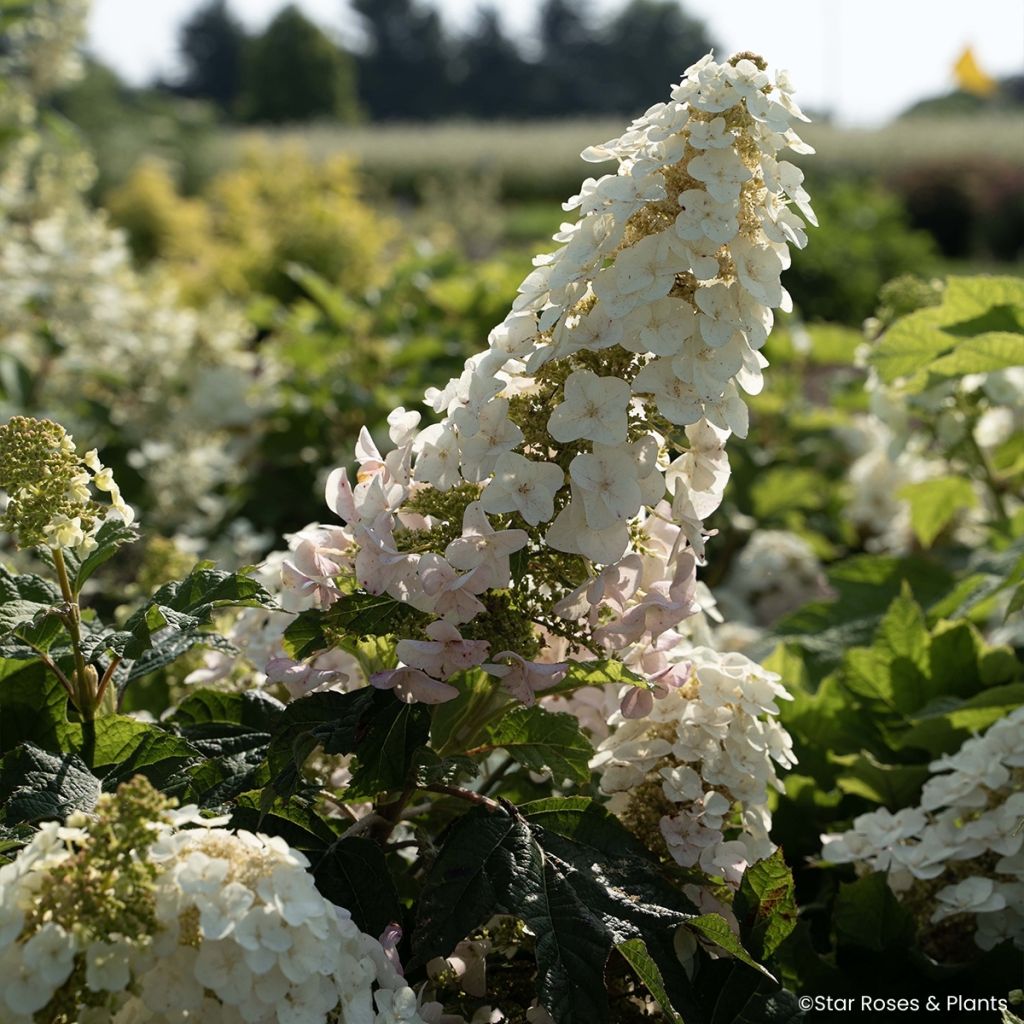
Hydrangea quercifolia Little Yeti®
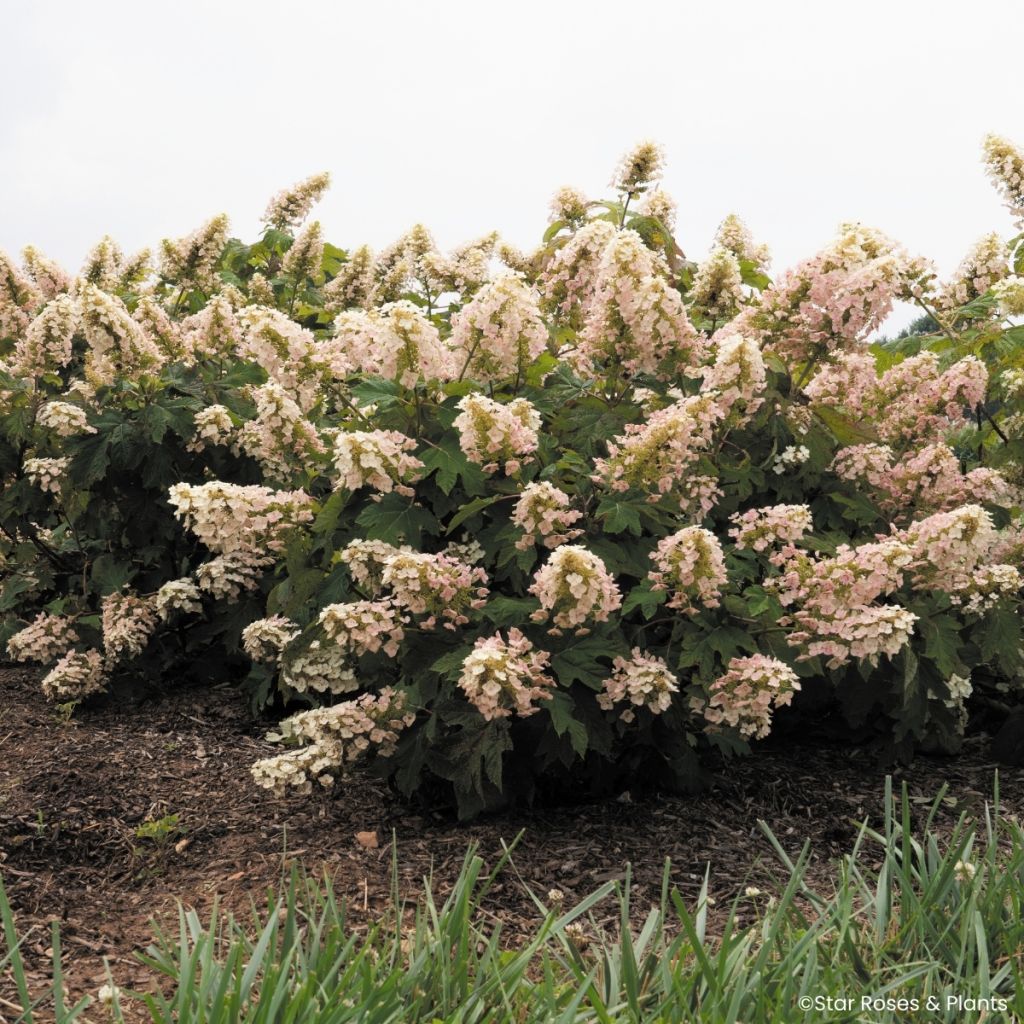
Hydrangea quercifolia Little Yeti®
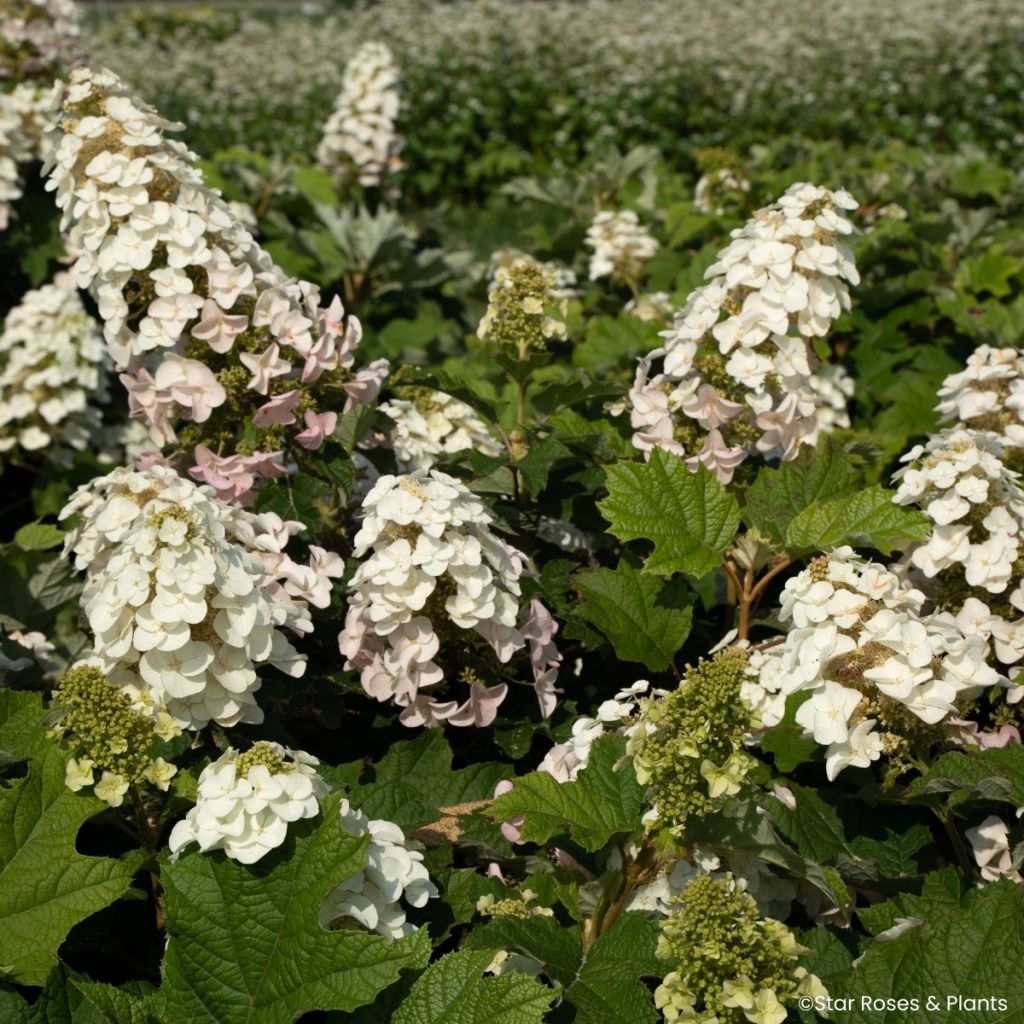
Hydrangea quercifolia Little Yeti®
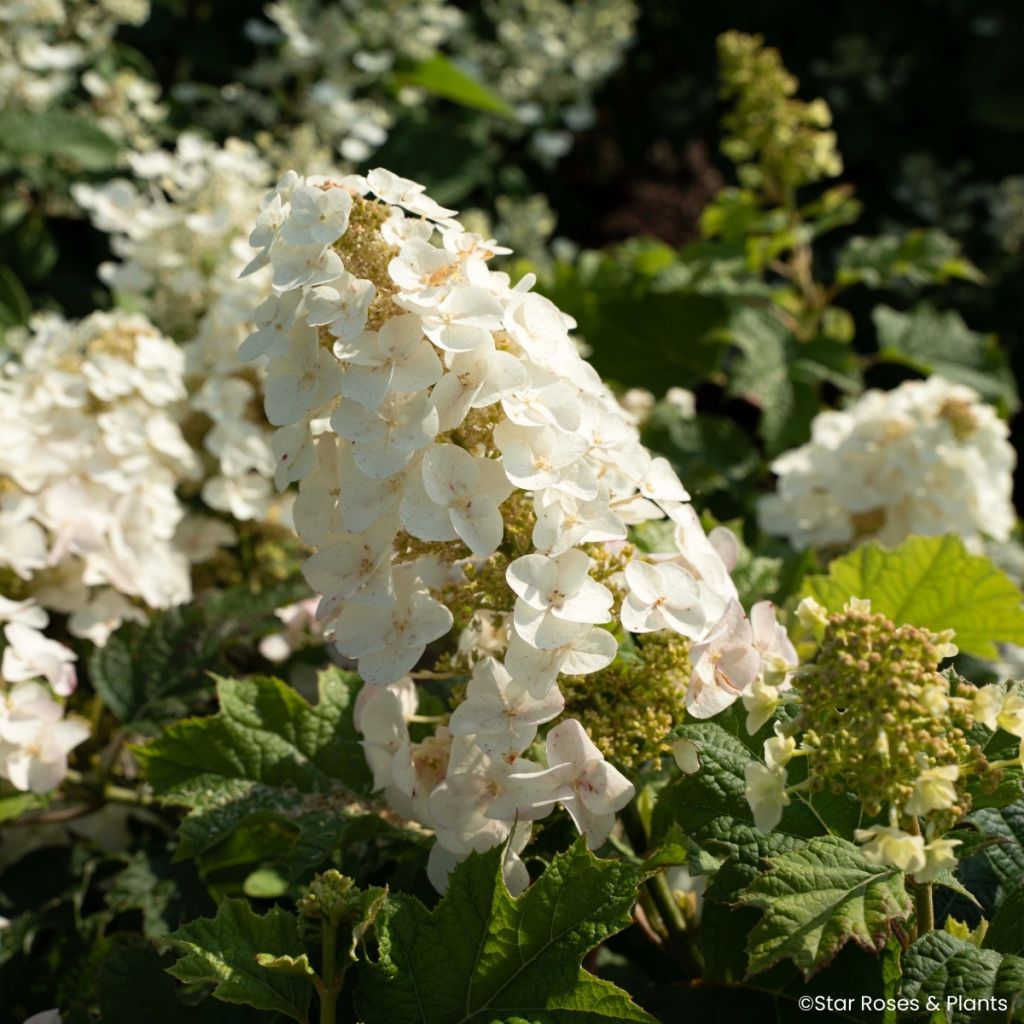
Hydrangea quercifolia Little Yeti®
Hydrangea quercifolia Little Yeti®
Hydrangea quercifolia 'Oakann1588' Little Yeti ®
Oakleaf Hydrangea, Oak-leaved Hydrangea
Back-to-school special offer!
Get €10 off for every €50 you spend! And get up to €40 off on a single order.
How does it work?
1. Shop your favourites
Add your favourite plants to your basket. For every €50 you spend (excluding delivery charges, store credit and the plastic-free option), you’ll receive a €10 voucher.
€50 spent = €10 voucher
€100 spent = €20 voucher
€150 spent = €30 voucher
€200 spent = €40 voucher
2. Place your order
Once your basket reaches one of the spending thresholds, place your order. You can even choose your delivery date!
3. Receive your voucher
As soon as your order has been shipped, you’ll receive an email containing your personal voucher code and its value.
4. Use it on your next order
Your voucher is valid for 90 days from the date you receive it. It can be used once only, on a new order worth at least the value of the voucher, excluding delivery charges.
Please note: Vouchers can be combined with other offers, but cannot be split or refunded.
Why not try an alternative variety in stock?
View all →
Available in 3 sizes
Available in 2 sizes
Available in 1 sizes

Available in 1 sizes

Available in 1 sizes
Available in 1 sizes
Available in 1 sizes

Available in 3 sizes

Available in 1 sizes
Available in 1 sizes
This plant carries a 24 months recovery warranty
More information
We guarantee the quality of our plants for a full growing cycle, and will replace at our expense any plant that fails to recover under normal climatic and planting conditions.
Would this plant suit my garden?
Set up your Plantfit profile →
Description
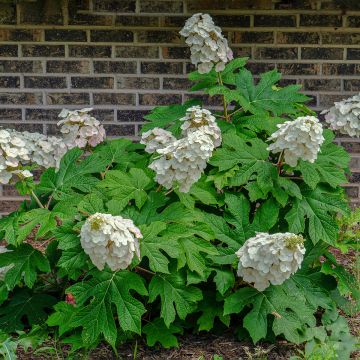
Hydrangea quercifolia ‘Oakann1588’ Little Yeti® is an oakleaf hydrangea distinguished by its naturally low and rounded, very branching habit, its white summer panicles turning pink, and its highly coloured autumn foliage. This shrub finds its place at the edge of woodland and in partially shaded areas, and it is perfectly suited for container cultivation. The plant has a beautiful presence, from its flowering to its burgundy autumn foliage and its bark that exfoliates in winter.
Belonging to the Hydrangeaceae family, the oakleaf hydrangea ‘Oakann1588’ is also marketed under the name Little Yeti® (sometimes Li’l Annie Oakleaf™). The species is native to the southeastern United States. The epithet quercifolia comes from Quercus (oak) and folium (leaf), referring to the deeply lobed leaves.
The cultivar Little Yeti® originates from a cross-pollination carried out in 2013 in Guadalupe, California; it was selected for its compactness, dense branching and floriferousness. Compared to similar cultivars (for example ‘Ruby Slippers’), it shows a lower and rounded stature, good inflorescence holding and low susceptibility to leaf diseases.
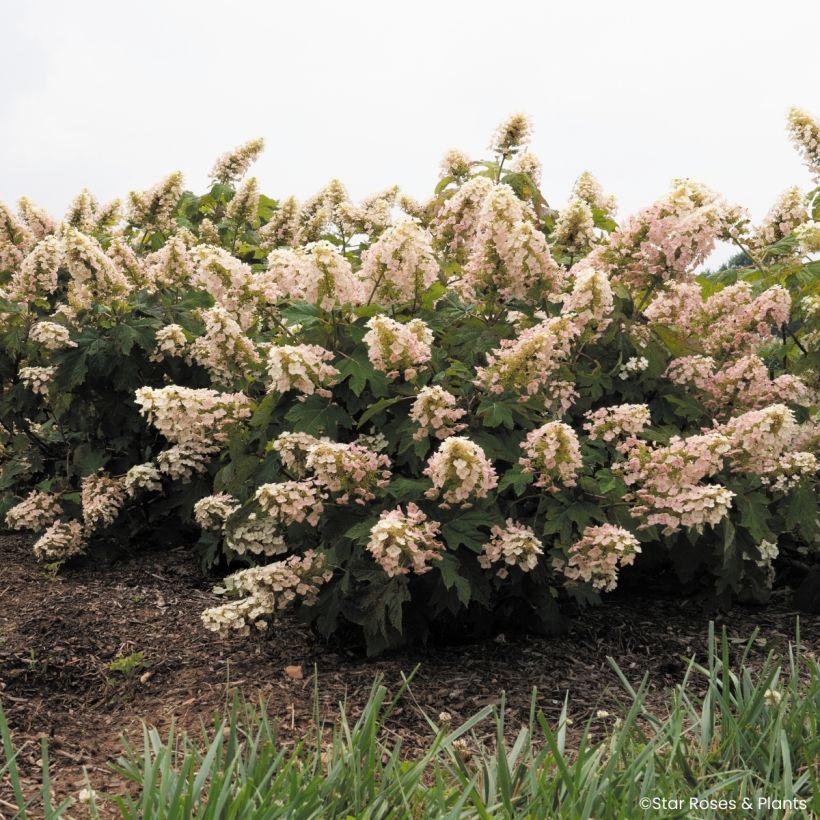
A deciduous shrub with a rounded-dome, well-branched habit, this hydrangea reaches 0.90m to 1.20m in height and 1.20to 1.50m in spread at maturity (around 8–10 years) in open ground. Its growth is more restrained in a large container (60–90cm tall for 80–100cm wide in a 40–60cm pot). The stems, initially hairy, become woody, orange-brown, and then display bark that exfoliates in decorative papery flakes; the terminal buds are conical and very visible. The root system is fibrous, relatively shallow, and well-branched; like the type species, this cultivar can produce a few offshoots from its base.
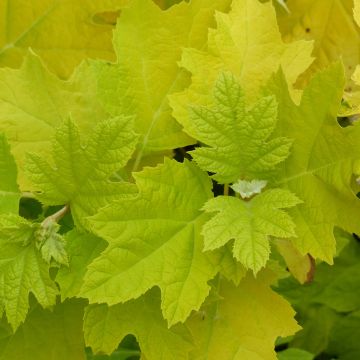
The foliage consists of lobed, 10–18cm long and 7–14cm wide leaves, of somewhat leathery texture, hairy when young; the medium green surface takes on purple to burgundy hues in autumn, depending on sun exposure. The leaves are deciduous.
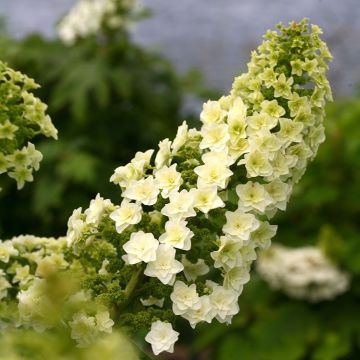
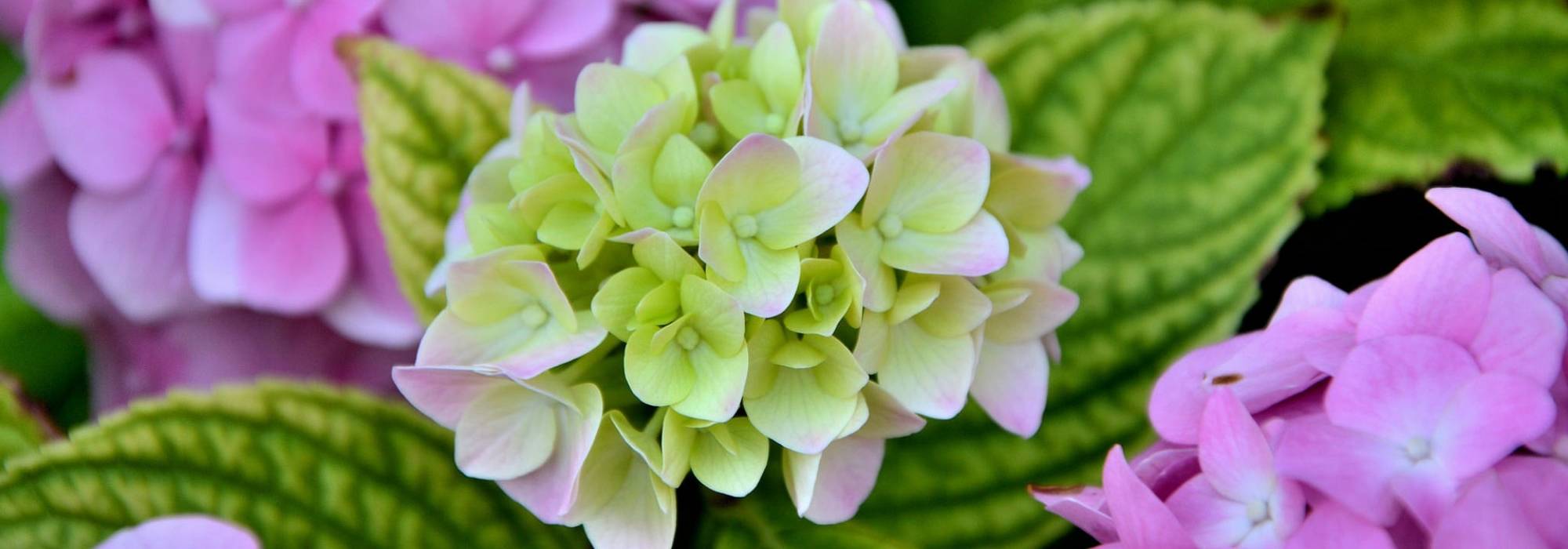
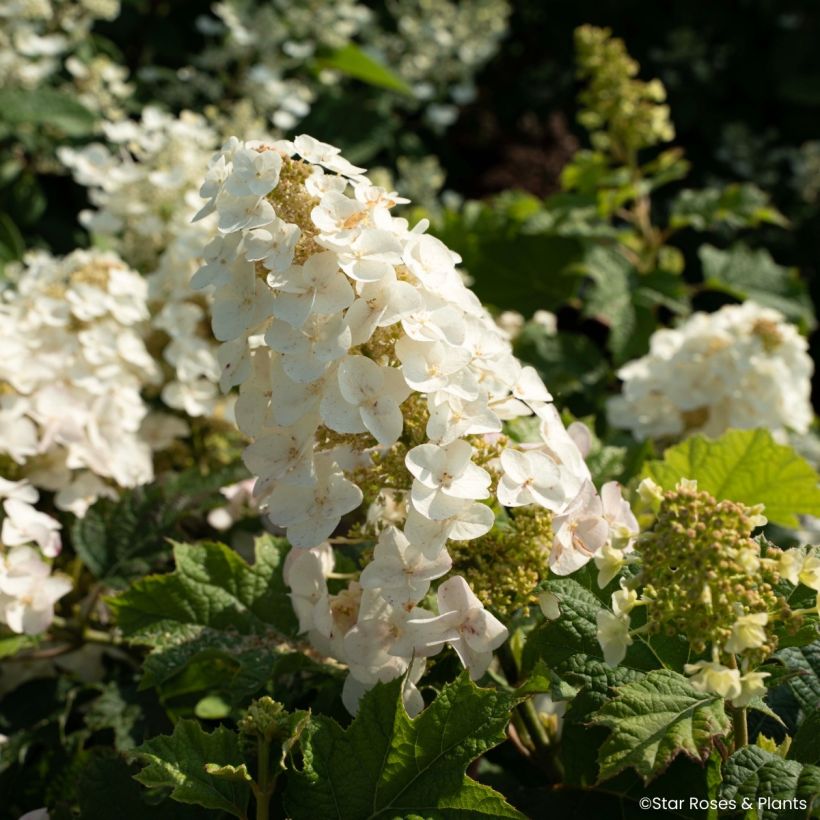
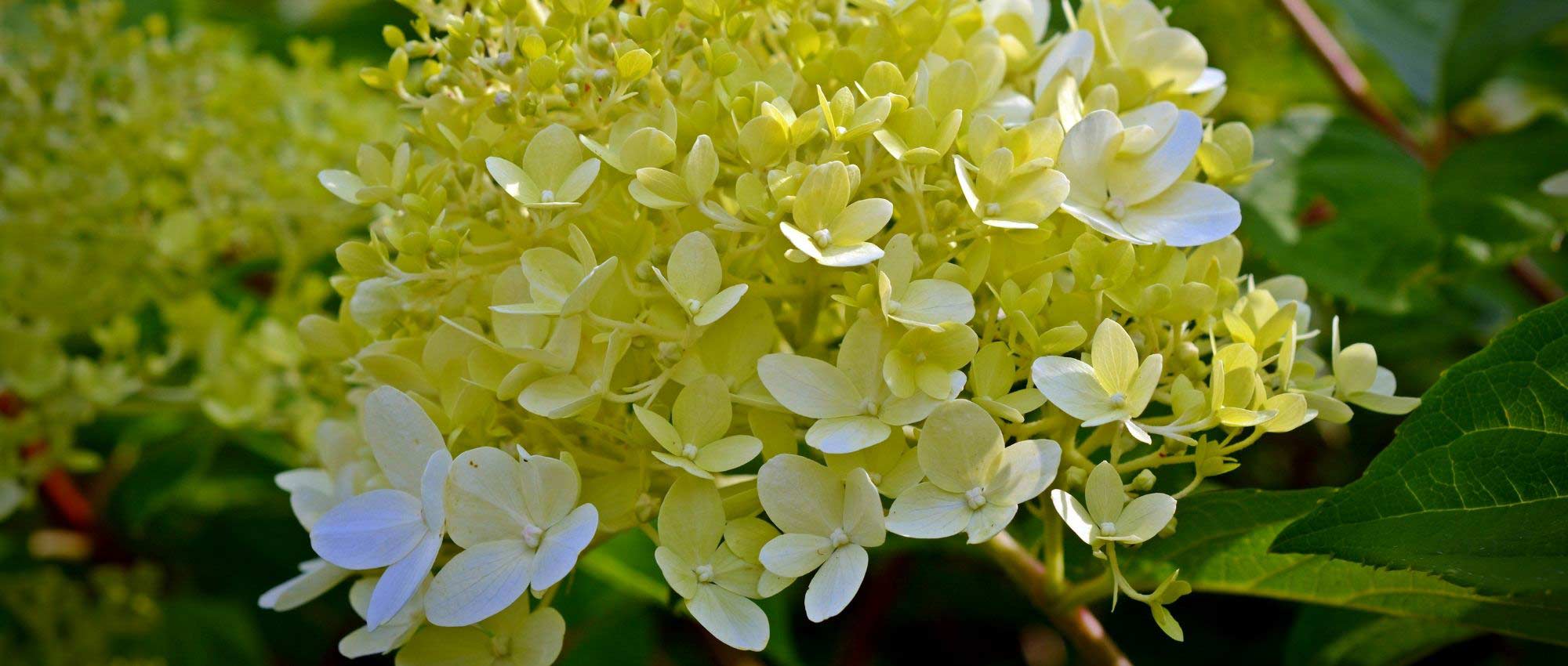
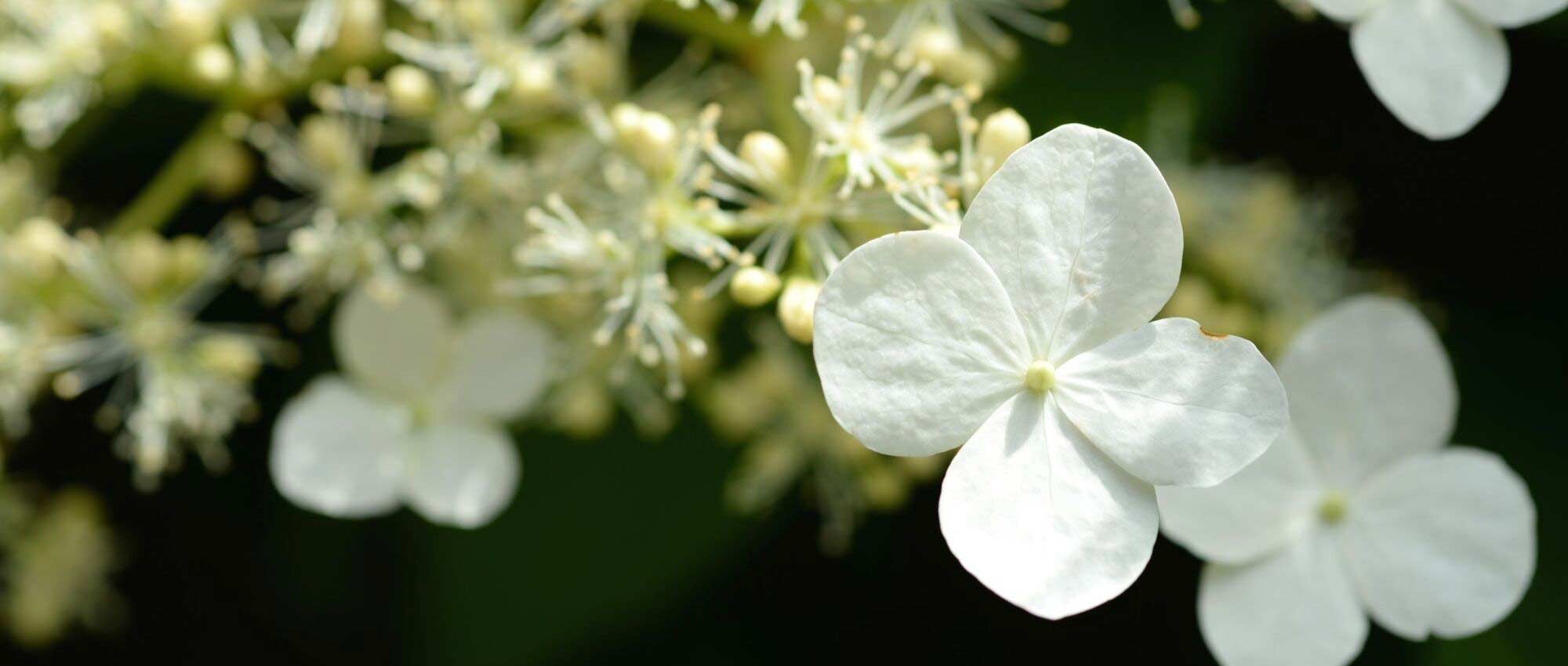
Flowering occurs from late May–June to August, depending on the region: it takes the form of conical terminal panicles, 12–15cm long and 8–10cm wide, composed of a centre of fertile flowers, surrounded by larger sterile flowers with four sepals. These white sepals turn pink over the course of summer. The flowers form on the previous year’s shoots.
Hydrangea ‘Oakann1588’ Little Yeti® forms a large decorative cushion in partially shaded areas or those exposed to morning sun. Place it in the foreground of a large shrub border or on either side of a pathway. To accompany it, play with textures: the powdery blue of Hosta ‘Halcyon’, the fragrant flower clusters and bluish foliage of Fothergilla ‘Blue Shadow’, and then the colourful cascades of Itea virginica ‘Henry’s Garnet’ will bring life to the garden until the end of the season. In a large container on a shaded terrace, combine this hydrangea with evergreen sedges or a heuchera 'Caramel', for example.
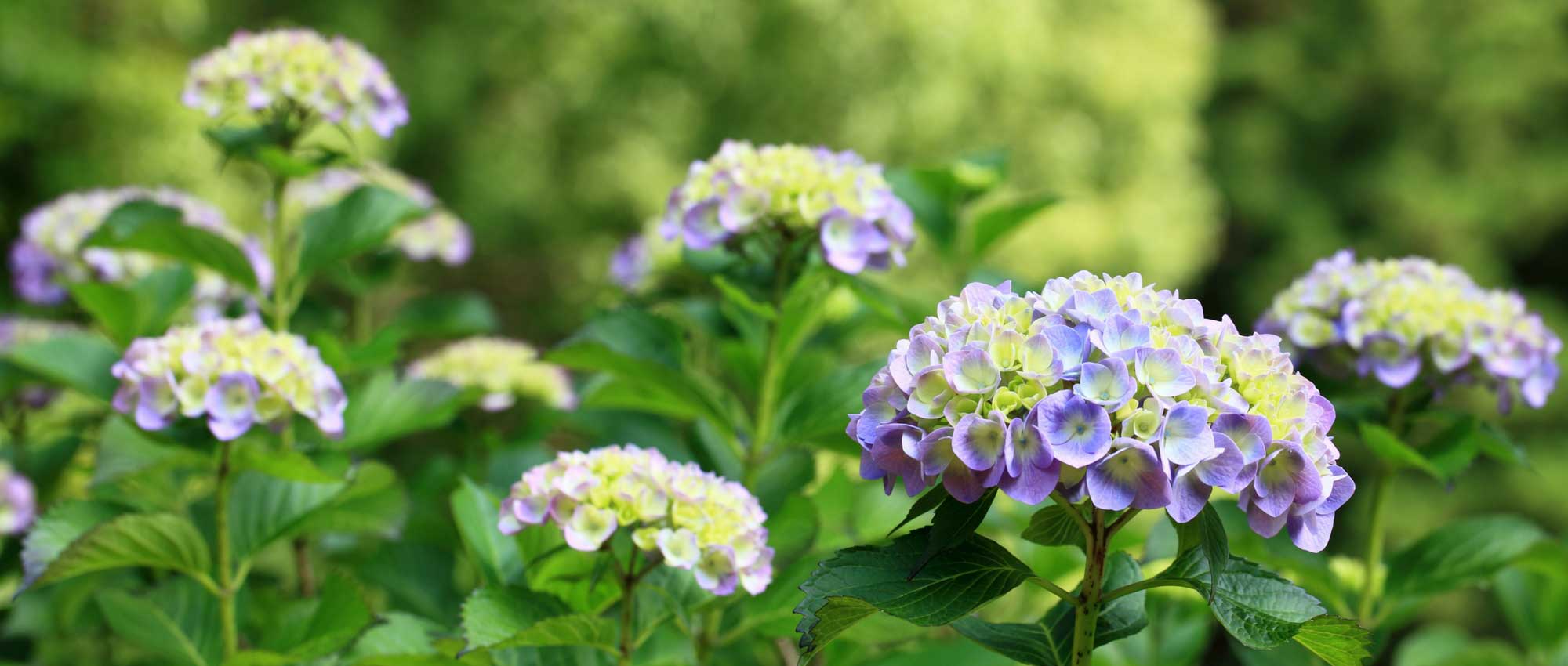
Hydrangea quercifolia Little Yeti® in pictures
Plant habit
Flowering
Foliage
Botanical data
Hydrangea
quercifolia
'Oakann1588' Little Yeti ®
Hydrangeaceae
Oakleaf Hydrangea, Oak-leaved Hydrangea
Hydrangea quercifolia 'Oakann1588', Hydrangea quercifolia Little Yeti ®
Cultivar or hybrid
Planting and care
Hydrangea Little Yeti requires a sunny position to enhance autumn colours, but dislikes excessively scorching exposures: morning sun or the shade of a large tree during the hottest hours are preferable, especially in very sunny and warm regions. It prefers a humus-bearing, neutral to acidic soil, but tolerates the presence of limestone in the soil better than other hydrangeas. On the other hand, it doesn't tolerate compacted and poorly drained soils well; they affect its hardiness and hinder the development of its roots, which can go deep into the soil.
Prepare a hole filled with a mixture of leaf mould and loose garden soil. When planting, place it in deeply worked soil. A good base fertiliser (horn or dehydrated blood) will encourage your plant to establish and feed it without risk of burning. If your soil tends to be very dry in summer, mix a water retainer into the soil when backfilling the planting hole and create a watering basin on the surface. Once well established, this Hydrangea requires no watering at all in summer, except possibly in southern regions, where it will appreciate weekly watering, or every two weeks, depending on the weather.
Planting period
Intended location
Care
Planting & care advice





This item has not been reviewed yet - be the first to leave a review about it.
Recently viewed products
Haven't found what you were looking for?
Hardiness is the lowest winter temperature a plant can endure without suffering serious damage or even dying. However, hardiness is affected by location (a sheltered area, such as a patio), protection (winter cover) and soil type (hardiness is improved by well-drained soil).

The flowering period indicated on our website applies to countries and regions located in USDA zone 8 (France, the United Kingdom, Ireland, the Netherlands, etc.)
It will vary according to where you live:- In zones 9 to 10 (Italy, Spain, Greece, etc.), flowering will occur about 2 to 4 weeks earlier.
- In zones 6 to 7 (Germany, Poland, Slovenia, and lower mountainous regions), flowering will be delayed by 2 to 3 weeks.
- In zone 5 (Central Europe, Scandinavia), blooming will be delayed by 3 to 5 weeks.
In temperate climates, pruning of spring-flowering shrubs (forsythia, spireas, etc.) should be done just after flowering.
Pruning of summer-flowering shrubs (Indian Lilac, Perovskia, etc.) can be done in winter or spring.
In cold regions as well as with frost-sensitive plants, avoid pruning too early when severe frosts may still occur.
The planting period indicated on our website applies to countries and regions located in USDA zone 8 (France, United Kingdom, Ireland, Netherlands).
It will vary according to where you live:
- In Mediterranean zones (Marseille, Madrid, Milan, etc.), autumn and winter are the best planting periods.
- In continental zones (Strasbourg, Munich, Vienna, etc.), delay planting by 2 to 3 weeks in spring and bring it forward by 2 to 4 weeks in autumn.
- In mountainous regions (the Alps, Pyrenees, Carpathians, etc.), it is best to plant in late spring (May-June) or late summer (August-September).
The harvesting period indicated on our website applies to countries and regions in USDA zone 8 (France, England, Ireland, the Netherlands).
In colder areas (Scandinavia, Poland, Austria...) fruit and vegetable harvests are likely to be delayed by 3-4 weeks.
In warmer areas (Italy, Spain, Greece, etc.), harvesting will probably take place earlier, depending on weather conditions.
The sowing periods indicated on our website apply to countries and regions within USDA Zone 8 (France, UK, Ireland, Netherlands).
In colder areas (Scandinavia, Poland, Austria...), delay any outdoor sowing by 3-4 weeks, or sow under glass.
In warmer climes (Italy, Spain, Greece, etc.), bring outdoor sowing forward by a few weeks.
Shipping country and language
Your country of residence may be:
Your country of residence is:
For a better user experience on our website, you can select:
Your shipping country:
-
 Austria
-
 Belgium
-
 Bosnia & Herzegovina
-
 Bulgaria
-
 Croatia
-
 Cyprus
-
 Czechia
-
 Denmark
-
 Estonia
-
 Finland
-
 France
-
 Germany
-
 Greece
-
 Hungary
-
 Iceland
-
 Ireland
-
 Italy
Italy
-
 Latvia
-
 Liechtenstein
-
 Lithuania
-
 Luxembourg
-
 Malta
Malta
-
 Netherlands
-
 Poland
-
 Portugal
-
 Romania
-
 Serbia
-
 Slovakia
-
 Slovenia
-
 Spain
Spain
-
 Sweden
-
 Switzerland
Language:
-
French
-
 English
-
Spanish
-
Italian
-
German
-
Portuguese
-
Dutch
-
Finnish
My Account
Hello
My wish lists
My cart
Log in / Register
Existing customer?
This form is protected by reCAPTCHA - the Google Privacy Policy and Terms of Service apply.
New customer?
Create an account to track your orders, access our customer service and, if you wish, make the most of our upcoming offers.