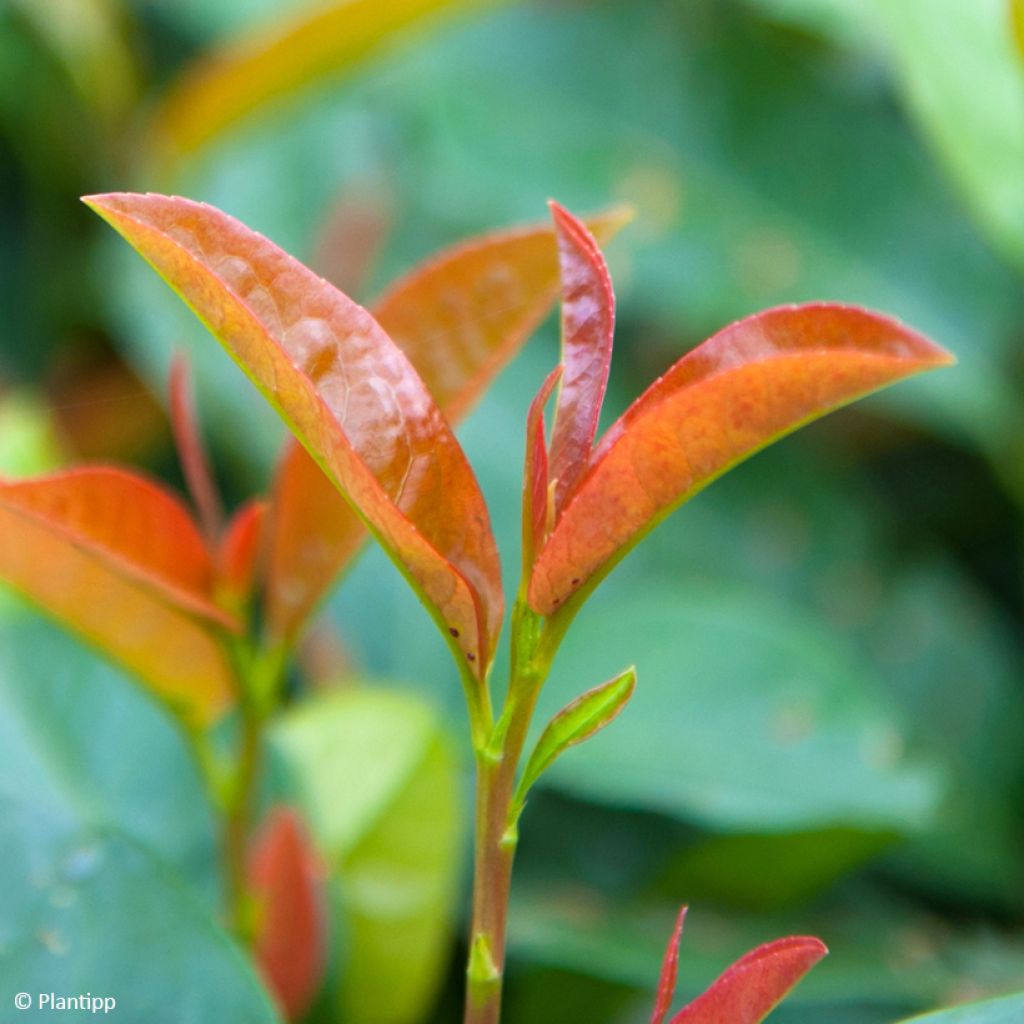
Prunus laurocerasus Copperbell - Cherry Laurel
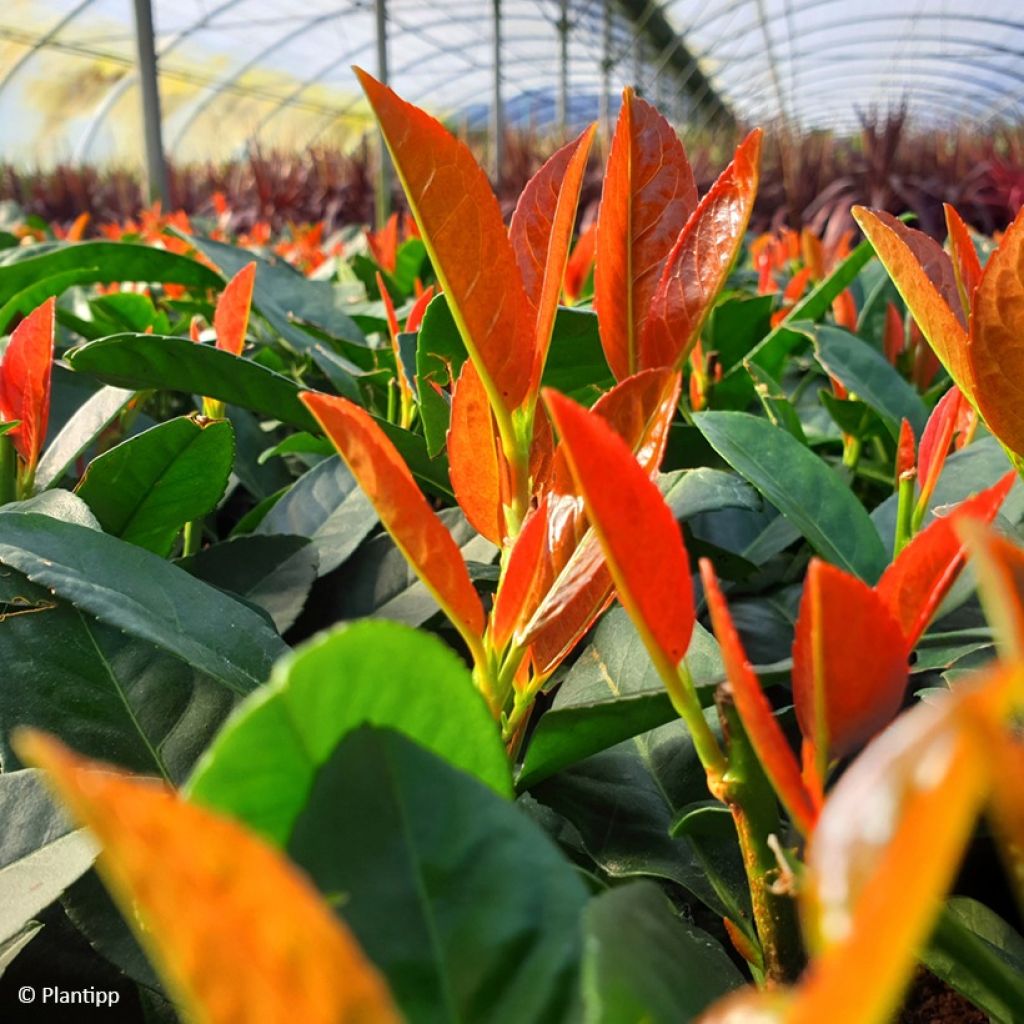
Prunus laurocerasus Copperbell - Cherry Laurel
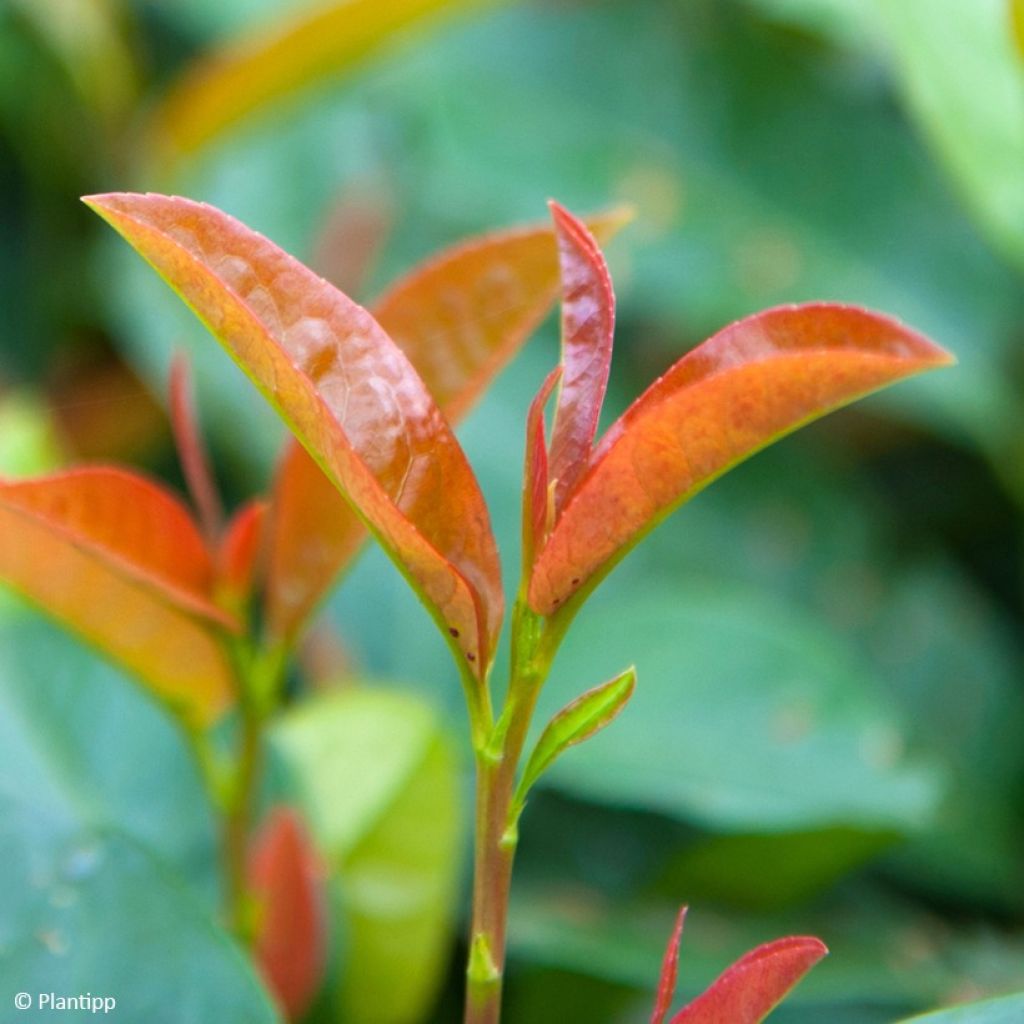
Prunus laurocerasus Copperbell - Cherry Laurel
Prunus laurocerasus Copperbell - Cherry Laurel
Prunus laurocerasus Copperbell ('Procup'PBR) EU 56339
Cherry Laurel, Common Laurel, English Laurel
Back-to-school special offer!
Get €10 off for every €50 you spend! And get up to €40 off on a single order.
How does it work?
1. Shop your favourites
Add your favourite plants to your basket. For every €50 you spend (excluding delivery charges, store credit and the plastic-free option), you’ll receive a €10 voucher.
€50 spent = €10 voucher
€100 spent = €20 voucher
€150 spent = €30 voucher
€200 spent = €40 voucher
2. Place your order
Once your basket reaches one of the spending thresholds, place your order. You can even choose your delivery date!
3. Receive your voucher
As soon as your order has been shipped, you’ll receive an email containing your personal voucher code and its value.
4. Use it on your next order
Your voucher is valid for 90 days from the date you receive it. It can be used once only, on a new order worth at least the value of the voucher, excluding delivery charges.
Please note: Vouchers can be combined with other offers, but cannot be split or refunded.
Why not try an alternative variety in stock?
View all →
Available in 5 sizes

Available in 1 sizes
Available in 4 sizes
Available in 5 sizes

Available in 1 sizes
Available in 1 sizes
Available in 1 sizes
Available in 1 sizes
Available in 1 sizes
Available in 1 sizes
This plant carries a 24 months recovery warranty
More information
We guarantee the quality of our plants for a full growing cycle, and will replace at our expense any plant that fails to recover under normal climatic and planting conditions.
Would this plant suit my garden?
Set up your Plantfit profile →
Description
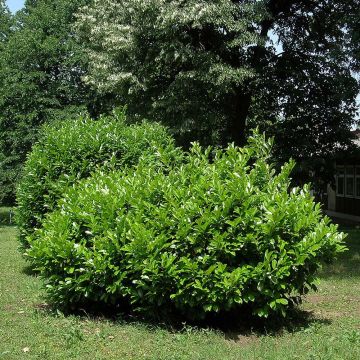
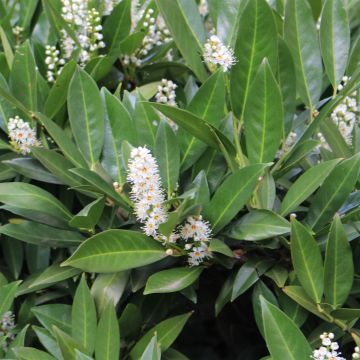
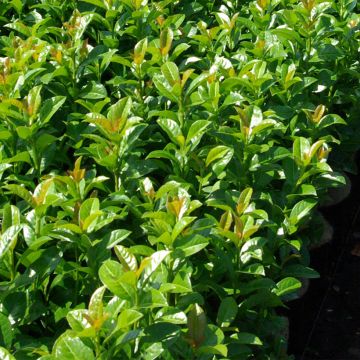
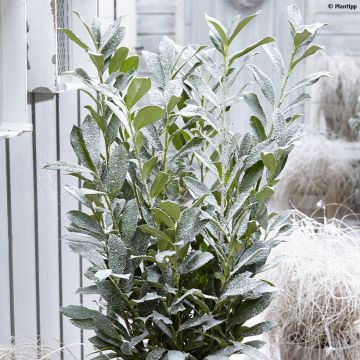
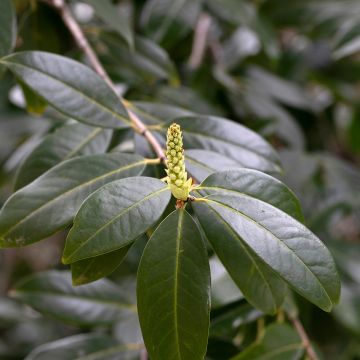
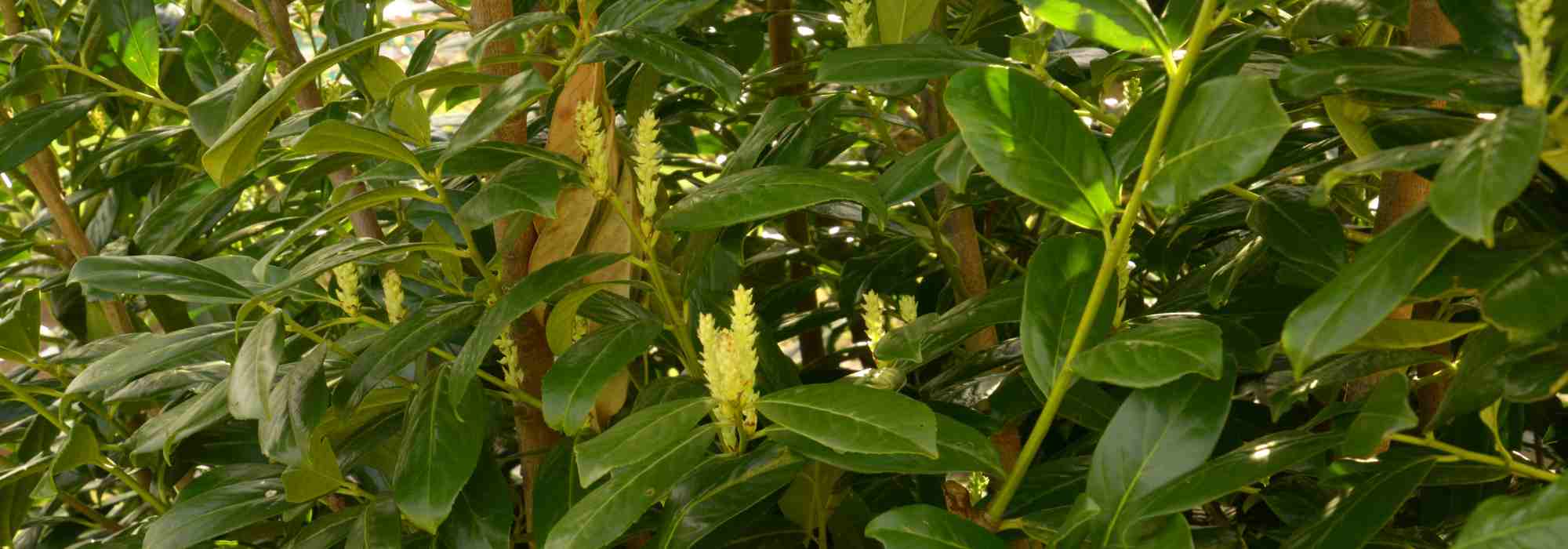
Prunus laurocerasus 'Copperbell' is a variety of cherry laurel that brings a welcome new touch to this species. Its beautiful, dark green, evergreen foliage comes to life with the emergence of beautiful coppery red young shoots. Its springtime cream-white flowering is fragrant and beneficial to pollinating insects. It then develops into black fruits that are appreciated by birds but toxic to humans. With good tolerance to pruning and easy cultivation, it is an ideal shrub for creating a windbreak hedge.
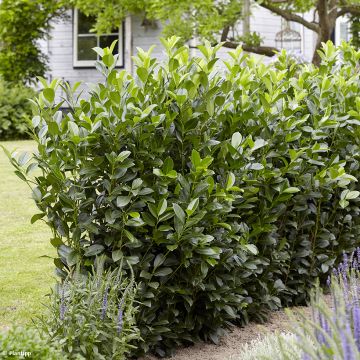
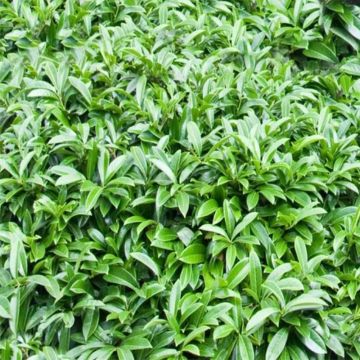
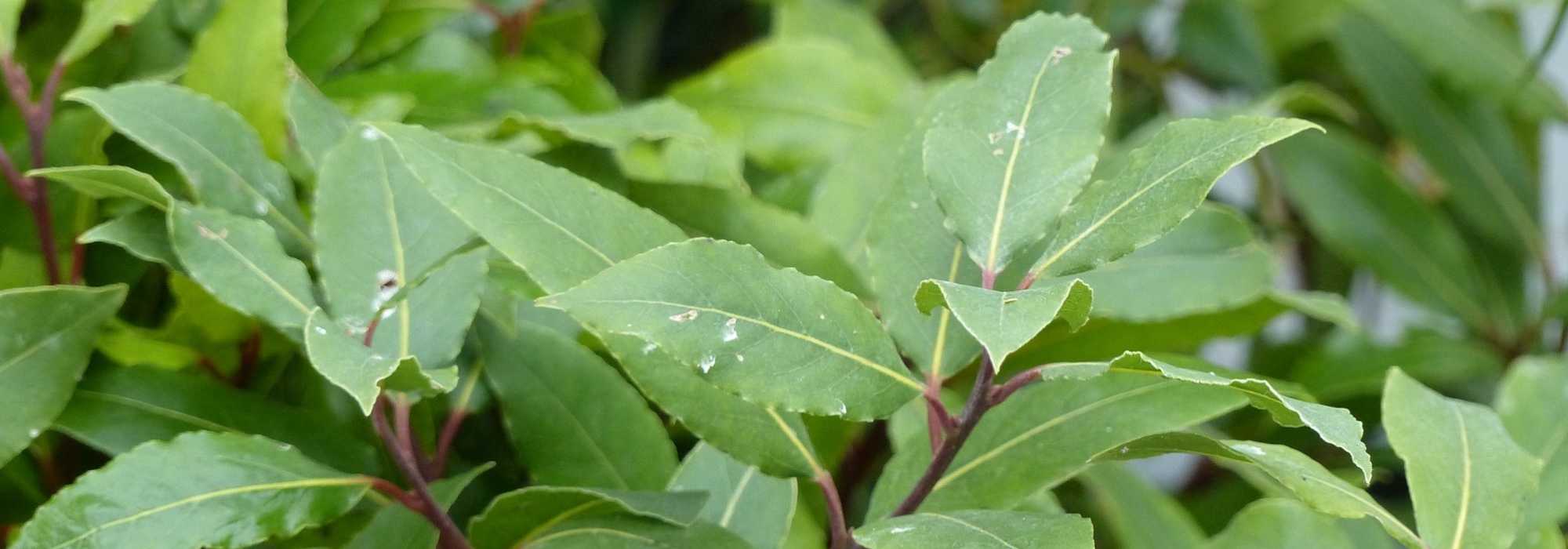
The Cherry Laurel, sometimes called the Cherry Almond or English Laurel, is an evergreen shrub from the large Rosaceae family. Native to southeastern Europe and Asia Minor, Prunus laurocerasus is an evergreen shrub that, if left unpruned, can reach a considerable height (up to 8 m) and even develop true trunks in older specimens. The species has produced many cultivars that are often used for hedges, such as 'Copperbell'. This variety possesses all the qualities of a good hedge plant, with an additional ornamental asset. Less imposing than the species, it can reach approximately 3.50 m in height, or even 4 m if left in its natural form, but it tolerates pruning very well, which will keep it at smaller dimensions. With a distinctly upright habit, the mature plant does not exceed 1.25 m in width, which limits pruning operations when used for hedges. This very dense shrub forms highly effective privacy screens, 2 to 3 m in height, perfect for ensuring the intimacy of a garden. Its elliptical to elongated foliage is leathery, dark green with a glossy surface, evergreen so decorative all year round. The particular appeal of this variety lies in its young shoots that emerge in unprecedented bright red tones, hitherto mainly known in the Photinia, another ornamental Rosaceae. This youthful colour gradually fades to green, and the mature dark foliage highlights the white flowering that occurs in May. The clusters of small, fragrant flowers are nectar-rich so beneficial to bees and other pollinating insects. They then develop into oval fruits, which darken when ripe and provide food for birds. Please note that they are not edible and are even toxic to humans (it is mainly the seed that is very dangerous, as it contains hydrocyanic acid). Hardy to approximately -20°C, this lovely English Laurel is very accommodating in terms of soil, growing in most moist or even wet soils, provided they are well-drained.
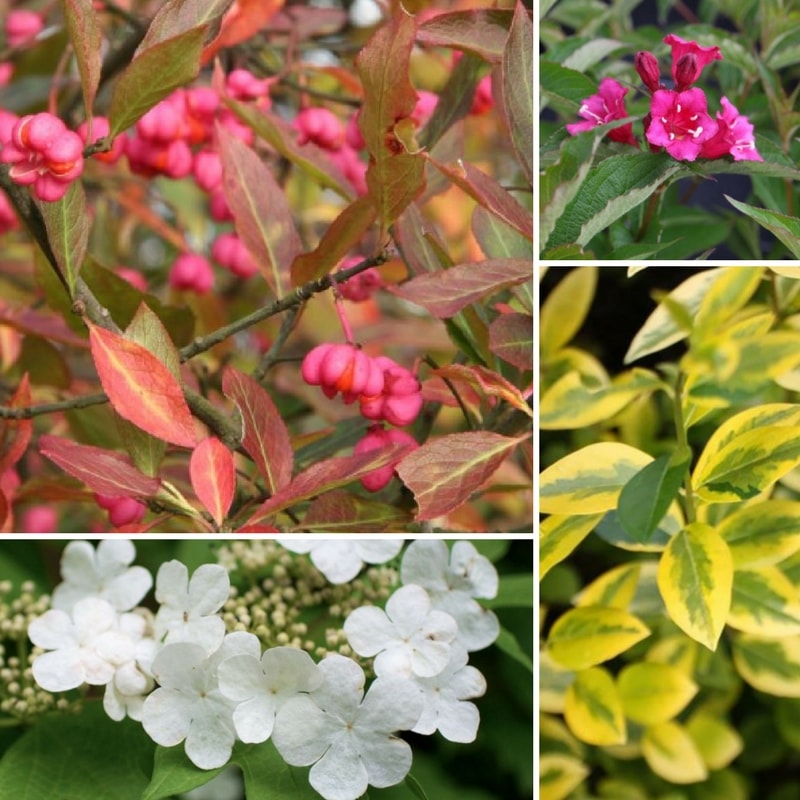
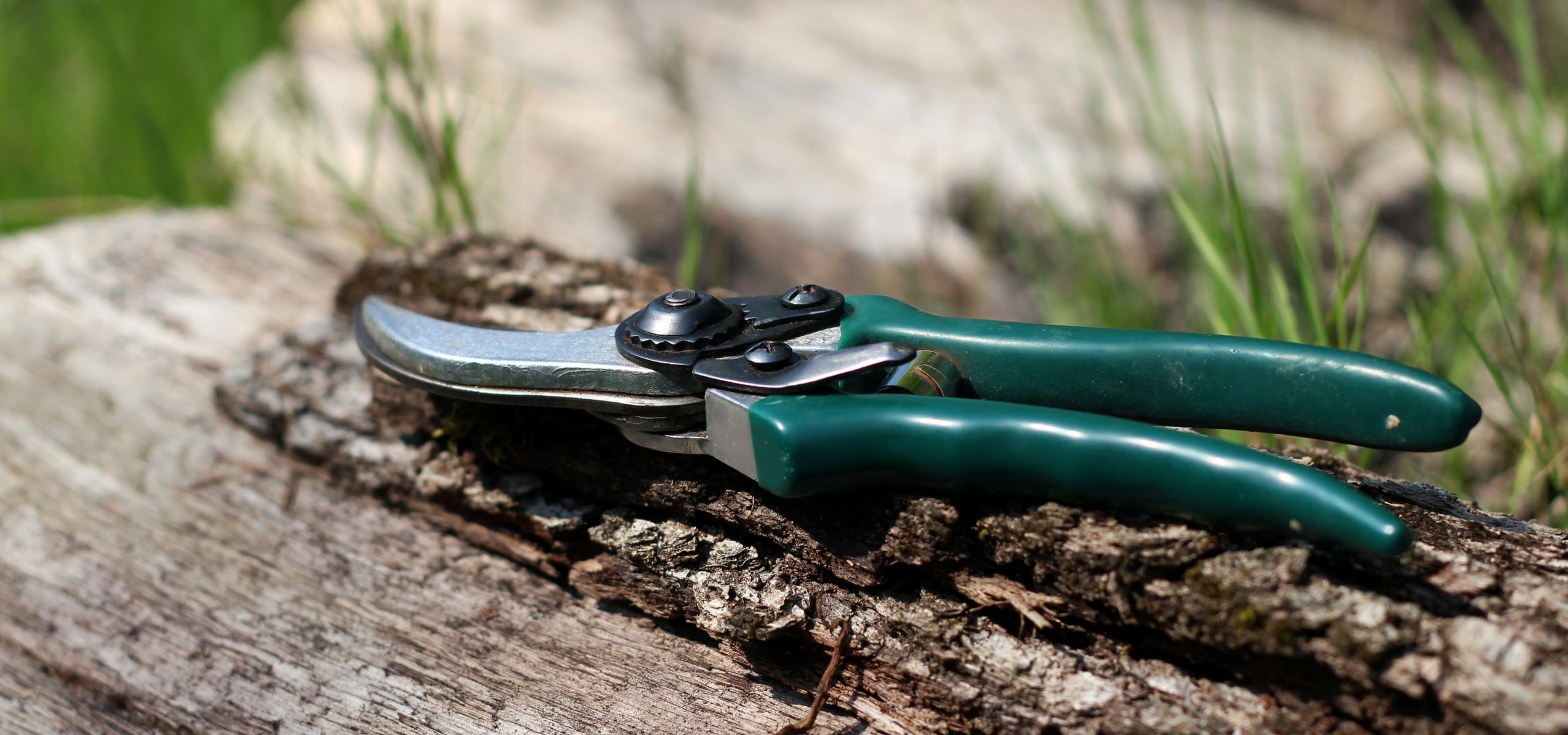
Prunus laurocerasus 'Copperbell' will form superb hedges, particularly attractive in the early season thanks to the red young shoots. For an even more ornamental result, use it in combination with other hedge plants and leave the hedge trimmer aside for the secateurs, which will achieve a much more attractive finish while respecting the overall shape of the shrubs. Laurustinus (Viburnum tinus, nothing to do with Cherry Laurels!) will offer you winter blooms that are staggered compared to the others. A few plants with variegated foliage here and there will brighten up your hedge in the most beautiful way. Consider Euonymus fortunei 'Président Gauthier', a Spindle tree with green leaves edged in white that are unparalleled in brightening up dark winter days. In temperate climates, Elaeagnus ebbingei 'Maryline' with its evergreen attire of light yellow edged in dark green will be just as good. And if you don't mind thorns, add one or two plants of Pyracantha, aptly named Firethorn, which is a toss-up between its bountiful white springtime flowering and its equally abundant and spectacular autumn fruiting, yellow, orange, or red depending on the variety.
Report an error about the product description
Plant habit
Flowering
Foliage
Botanical data
Prunus
laurocerasus
Copperbell ('Procup'PBR) EU 56339
Rosaceae
Cherry Laurel, Common Laurel, English Laurel
Cultivar or hybrid
Planting and care
Prunus laurocerasus 'Copperbell' is very accommodating and easy to grow, content with well-prepared ordinary, moderately dry to moist soil, and accepts limestone soils. It grows in sunny to semi-shady exposure and withstands low temperatures well (around -20°C). Even if its above-ground parts can be damaged by very severe frost, it produces vigorous shoots from the base. Long and intense periods of drought can destroy already mature plants. Planting is preferably done in autumn or early spring in cool regions. Dig a hole 50 cm in all directions and add a little planting compost mixed with the existing soil. Soak the root ball in a bucket of water for fifteen minutes before placing it in the planting hole. Fill in and water abundantly.
Water regularly for the first two years to facilitate root growth, and then only in hot periods.
Note: The decomposition of laurel leaves, which is very slow, releases substances in the litter layer that inhibit the germination and growth of other plants. It would therefore be best to dispose of pruning waste at a waste disposal facility and not to compost it.
Planting period
Intended location
Care
Planting & care advice
-
-
-

-
-
-

-
-
This item has not been reviewed yet - be the first to leave a review about it.
Recently viewed products
Haven't found what you were looking for?
Hardiness is the lowest winter temperature a plant can endure without suffering serious damage or even dying. However, hardiness is affected by location (a sheltered area, such as a patio), protection (winter cover) and soil type (hardiness is improved by well-drained soil).

The flowering period indicated on our website applies to countries and regions located in USDA zone 8 (France, the United Kingdom, Ireland, the Netherlands, etc.)
It will vary according to where you live:- In zones 9 to 10 (Italy, Spain, Greece, etc.), flowering will occur about 2 to 4 weeks earlier.
- In zones 6 to 7 (Germany, Poland, Slovenia, and lower mountainous regions), flowering will be delayed by 2 to 3 weeks.
- In zone 5 (Central Europe, Scandinavia), blooming will be delayed by 3 to 5 weeks.
In temperate climates, pruning of spring-flowering shrubs (forsythia, spireas, etc.) should be done just after flowering.
Pruning of summer-flowering shrubs (Indian Lilac, Perovskia, etc.) can be done in winter or spring.
In cold regions as well as with frost-sensitive plants, avoid pruning too early when severe frosts may still occur.
The planting period indicated on our website applies to countries and regions located in USDA zone 8 (France, United Kingdom, Ireland, Netherlands).
It will vary according to where you live:
- In Mediterranean zones (Marseille, Madrid, Milan, etc.), autumn and winter are the best planting periods.
- In continental zones (Strasbourg, Munich, Vienna, etc.), delay planting by 2 to 3 weeks in spring and bring it forward by 2 to 4 weeks in autumn.
- In mountainous regions (the Alps, Pyrenees, Carpathians, etc.), it is best to plant in late spring (May-June) or late summer (August-September).
The harvesting period indicated on our website applies to countries and regions in USDA zone 8 (France, England, Ireland, the Netherlands).
In colder areas (Scandinavia, Poland, Austria...) fruit and vegetable harvests are likely to be delayed by 3-4 weeks.
In warmer areas (Italy, Spain, Greece, etc.), harvesting will probably take place earlier, depending on weather conditions.
The sowing periods indicated on our website apply to countries and regions within USDA Zone 8 (France, UK, Ireland, Netherlands).
In colder areas (Scandinavia, Poland, Austria...), delay any outdoor sowing by 3-4 weeks, or sow under glass.
In warmer climes (Italy, Spain, Greece, etc.), bring outdoor sowing forward by a few weeks.
Shipping country and language
Your country of residence may be:
Your country of residence is:
For a better user experience on our website, you can select:
Your shipping country:
-
 Austria
-
 Belgium
-
 Bosnia & Herzegovina
-
 Bulgaria
-
 Croatia
-
 Cyprus
-
 Czechia
-
 Denmark
-
 Estonia
-
 Finland
-
 France
-
 Germany
-
 Greece
-
 Hungary
-
 Iceland
-
 Ireland
-
 Italy
Italy
-
 Latvia
-
 Liechtenstein
-
 Lithuania
-
 Luxembourg
-
 Malta
Malta
-
 Netherlands
-
 Poland
-
 Portugal
-
 Romania
-
 Serbia
-
 Slovakia
-
 Slovenia
-
 Spain
Spain
-
 Sweden
-
 Switzerland
Language:
-
French
-
 English
-
Spanish
-
Italian
-
German
-
Portuguese
-
Dutch
-
Finnish
My Account
Hello
My wish lists
My cart
Log in / Register
Existing customer?
This form is protected by reCAPTCHA - the Google Privacy Policy and Terms of Service apply.
New customer?
Create an account to track your orders, access our customer service and, if you wish, make the most of our upcoming offers.