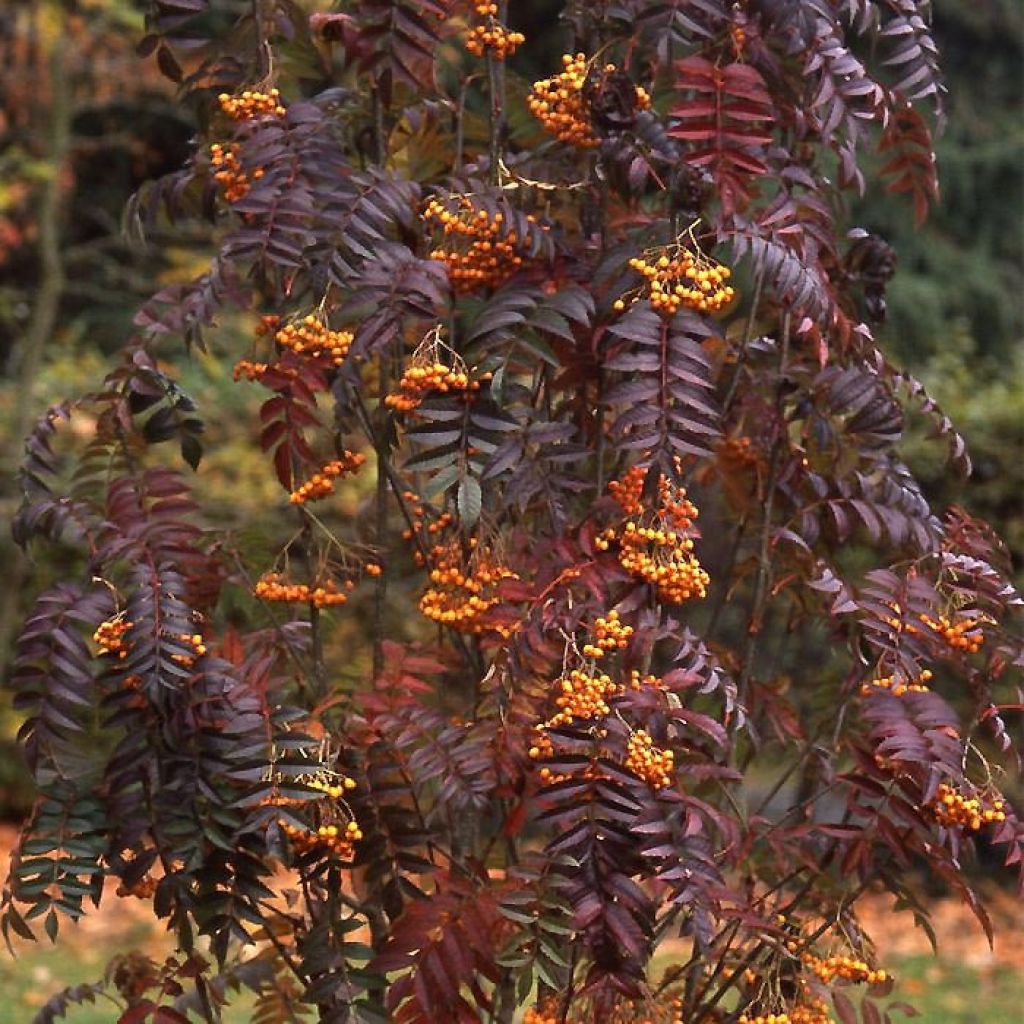
Sorbus aucuparia Autumn Spire
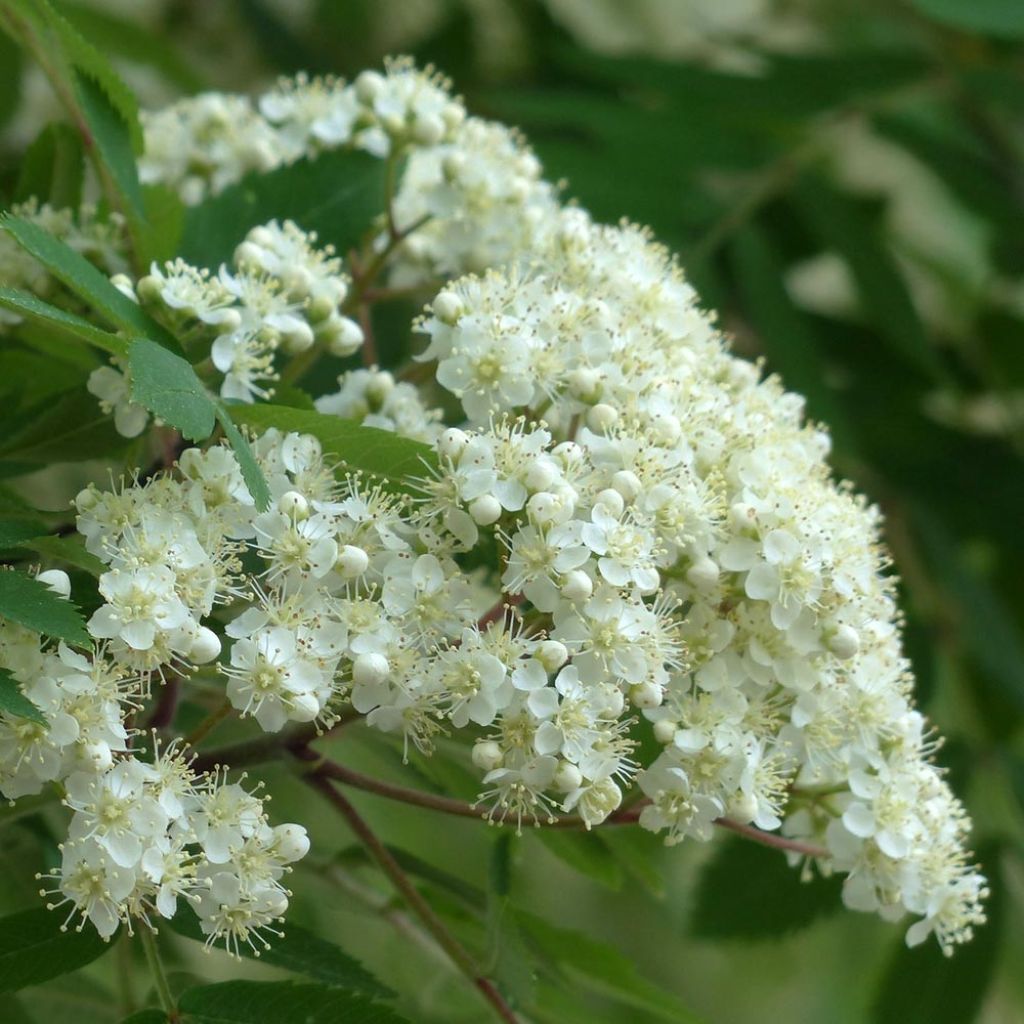
Sorbus aucuparia Autumn Spire
Sorbus aucuparia Autumn Spire
Sorbus aucuparia Autumn Spire
European mountain Ash, Mountain Ash, Quickbeam, Rantry, Rowan, Ranty, Rowanberry
Disappointed! Mediocre and weak, barely rooted at all, and the graft is really not pretty!!! When planting, I had the feeling it was a 9x9 pot that had been repotted into a 4/5 litre pot just before delivery.
Alexandre, 11/09/2025
Back-to-school special offer!
Get €10 off for every €50 you spend! And get up to €40 off on a single order.
How does it work?
1. Shop your favourites
Add your favourite plants to your basket. For every €50 you spend (excluding delivery charges, store credit and the plastic-free option), you’ll receive a €10 voucher.
€50 spent = €10 voucher
€100 spent = €20 voucher
€150 spent = €30 voucher
€200 spent = €40 voucher
2. Place your order
Once your basket reaches one of the spending thresholds, place your order. You can even choose your delivery date!
3. Receive your voucher
As soon as your order has been shipped, you’ll receive an email containing your personal voucher code and its value.
4. Use it on your next order
Your voucher is valid for 90 days from the date you receive it. It can be used once only, on a new order worth at least the value of the voucher, excluding delivery charges.
Please note: Vouchers can be combined with other offers, but cannot be split or refunded.
Why not try an alternative variety in stock?
View all →
Available in 1 sizes
Available in 3 sizes

Available in 1 sizes

Available in 1 sizes
Available in 1 sizes
Available in 1 sizes
Available in 1 sizes

Available in 1 sizes
Available in 1 sizes
Available in 1 sizes
This plant carries a 24 months recovery warranty
More information
We guarantee the quality of our plants for a full growing cycle, and will replace at our expense any plant that fails to recover under normal climatic and planting conditions.

Would this plant suit my garden?
Set up your Plantfit profile →
Description
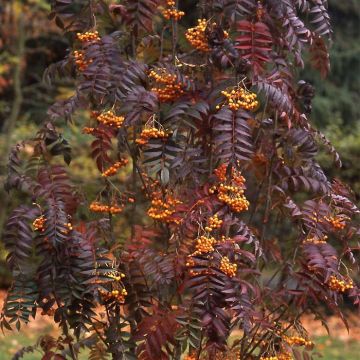
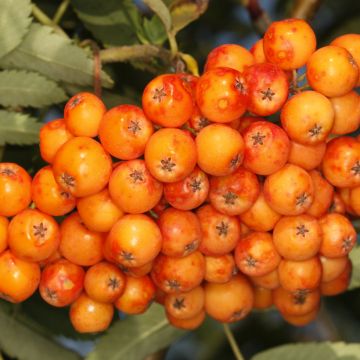
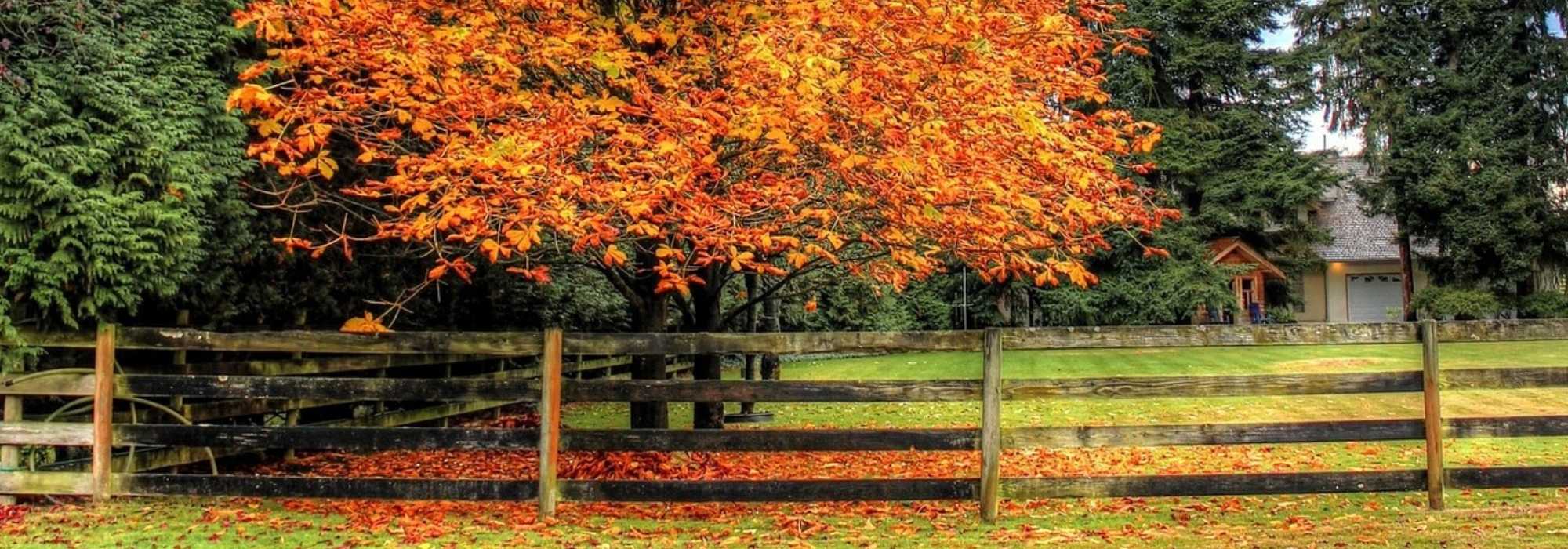
Sorbus aucuparia Autumn Spire is a small ornamental tree that enhances the garden from spring to autumn. Its beautiful slender silhouette is adorned with deciduous compound foliage, dark green turning to purple-red in autumn, passing through the most flamboyant shades. From May to June, it blooms with large silky white corymbs, followed by a profusion of small decorative yellow-orange berries, which remain on the tree for a long time. With its compact, columnar habit, it is a versatile cultivar suitable for planting individually, in hedges, or in alignment in small spaces. Extremely tolerant of soil types and exposure, it just needs to be avoided stagnant humidity and given some light. It can even tolerate poor, dry, acidic, or calcareous soils.
Sorbus aucuparia Autumn Spire is a primarily ornamental cultivar of Sorbus aucuparia or rowan tree. It is an extremely hardy species, quite common from Europe to Asia and rare in the Mediterranean, thriving in rather humid and temperate climates. It can live up to 150 years and reach a height of about ten metres. A light-loving species, it is often found at the edge of woods growing on light soils. It is an undemanding tree that tolerates all soils, even acidic or calcareous ones, as long as they are well-drained. Preferring coolness, it can nevertheless withstand occasional drought once established. Sorbus aucuparia Autumn Spire has a compact, columnar habit and reaches only 4 metres (13ft) in height and 1 metre (3ft 4in) in width after 20 years. It blooms from May to June with a profusion of typical single white flowers of the Rosaceae family, gathered in 12cm (4.7in) diameter corymbs. The 6-8mm (0.2 - 0.3in) flowers consist of 5 petals and 15 to 20 quite long stamens, far exceeding the corollas. At the end of summer, they give way to decorative light orange to yellow fruits, which persist until winter. The 1cm (0.4in) diameter berries are a delight for birds, especially thrushes, who love them. The delicate foliage of the rowan tree is deciduous and odd-pinnate, consisting of 9-15 oblong, lanceolate, finely dentate leaflets. They are glabrous and dark green on the upper side and pale, slightly pubescent underneath. In autumn, the leaves, which are 10 to 20cm (3.9 - 7.9in) long, turn purple-red, passing through orange and fiery red. The bark of Sorbus aucuparia is smooth and light grey in color. It becomes covered with white lenticels on old trees. It emits an unpleasant odour.
It is a decorative tree from spring to autumn and, due to its small size, it is increasingly used as an alignment tree, individually, or in informal hedges in parks and gardens. The small dimensions and narrow habit of the Autumn Spire variety make it suitable for even the smallest gardens, even when planted near entrances or facades. Use it to create medium-sized informal hedges by associating it with other wild, fruit-bearing, and honey-bearing species such as elderberries, hornbeams, privets, and dogwoods. It is a delightful species for aligning small garden paths or in flower beds accompanied by other species with fresh soil and purple, red, and acid green foliage (hazelnuts, Mexican orange, barberries, lady's mantle) and white and red flowering plants such as Astilbes, knotweeds, and Rodgersias.
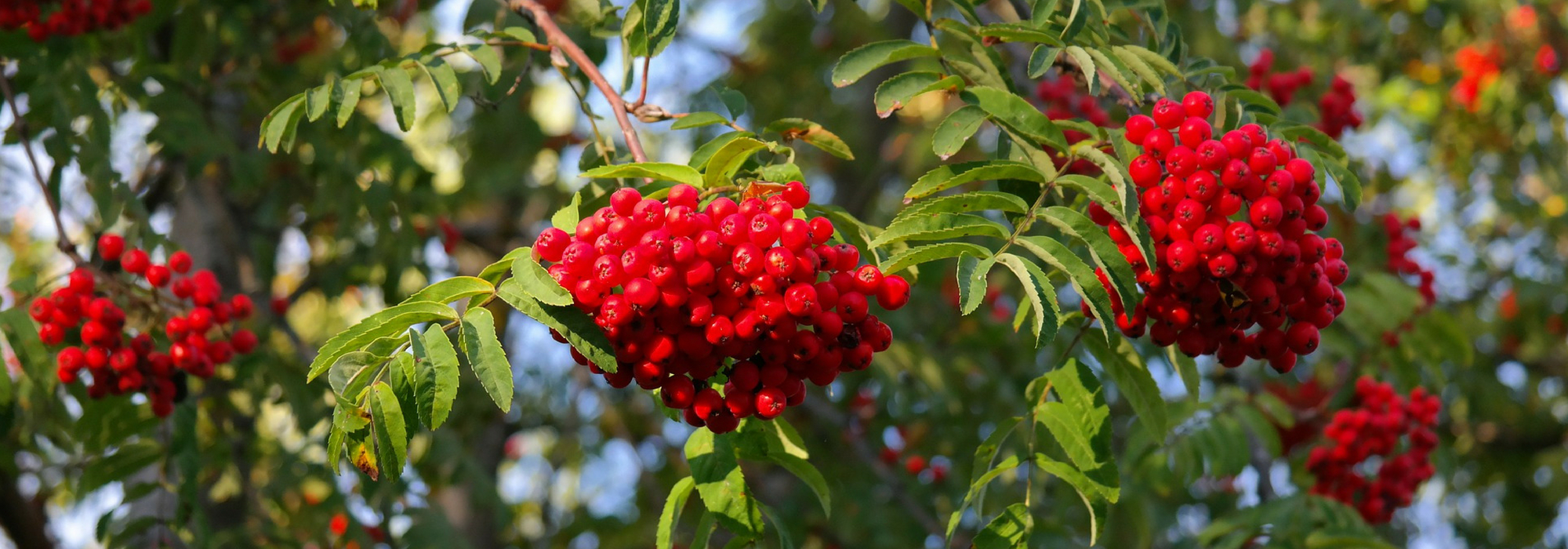
Sorbus aucuparia Autumn Spire in pictures
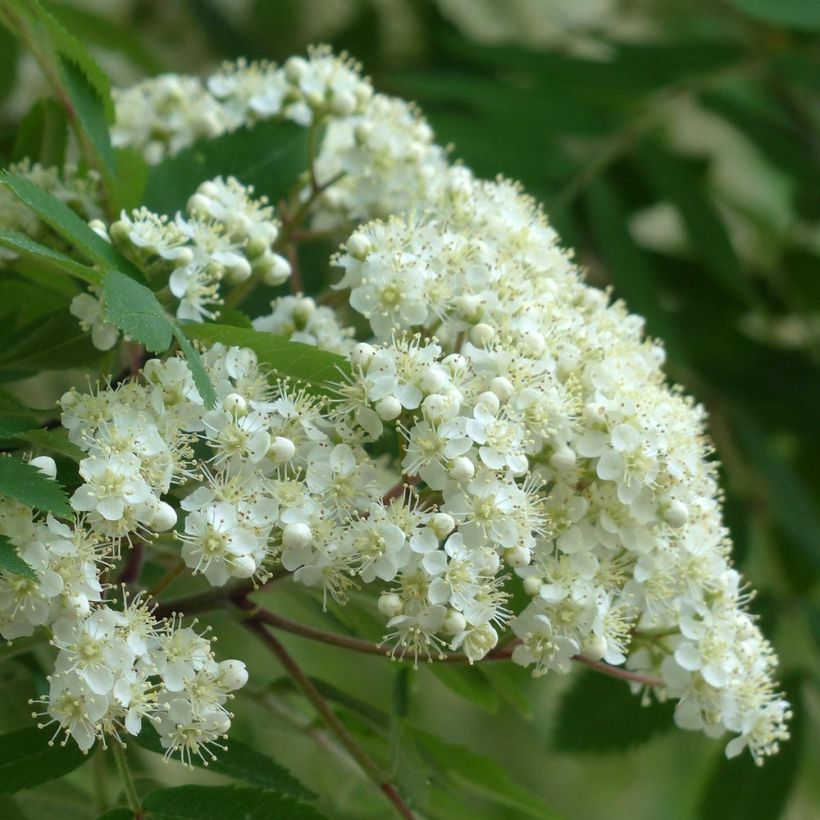
Plant habit
Flowering
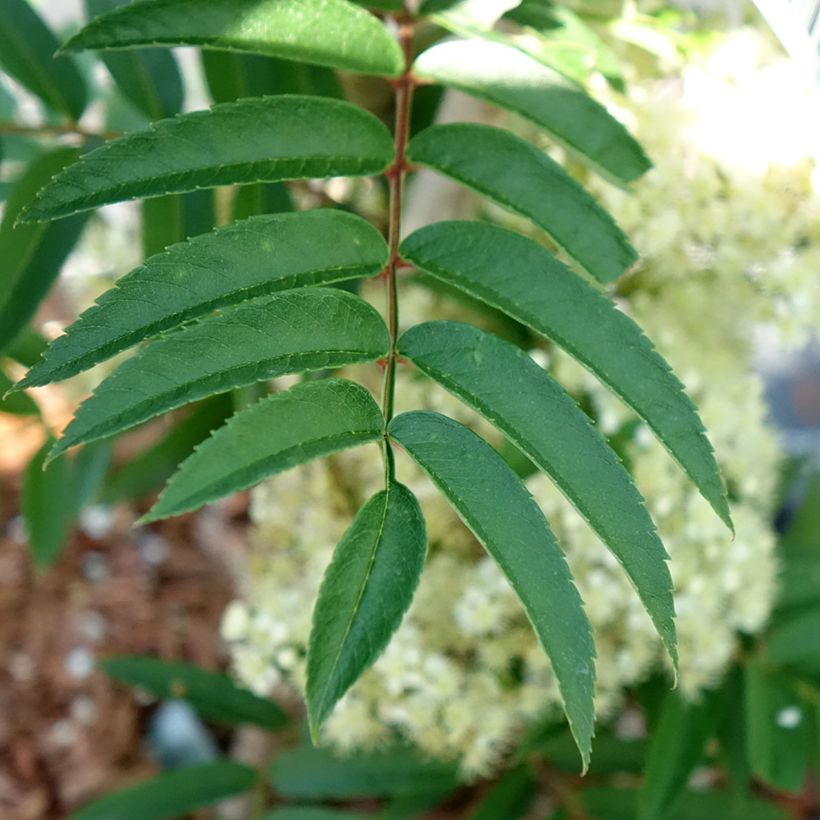
Foliage
Botanical data
Sorbus
aucuparia
Autumn Spire
Rosaceae
European mountain Ash, Mountain Ash, Quickbeam, Rantry, Rowan, Ranty, Rowanberry
Cultivar or hybrid
Planting and care
Sorbus aucuparia Autumn Spire thrives in the sun. It can be placed in partial shade for part of the day. It is a tree that does not like too much bright light and high temperatures. Place it sheltered from prevailing winds to prevent uprooting. It appreciates a rich, moist soil but requires a well-drained location, not too wet. It tolerates short periods of drought quite well. Water it during very dry periods, especially during the first few years.
Planting period
Intended location
Care
Planting & care advice
-

-
-
-
-
-
-

-
-
, onOrder confirmed
Reply from on Promesse de fleurs
Recently viewed products
Haven't found what you were looking for?
Hardiness is the lowest winter temperature a plant can endure without suffering serious damage or even dying. However, hardiness is affected by location (a sheltered area, such as a patio), protection (winter cover) and soil type (hardiness is improved by well-drained soil).

The flowering period indicated on our website applies to countries and regions located in USDA zone 8 (France, the United Kingdom, Ireland, the Netherlands, etc.)
It will vary according to where you live:- In zones 9 to 10 (Italy, Spain, Greece, etc.), flowering will occur about 2 to 4 weeks earlier.
- In zones 6 to 7 (Germany, Poland, Slovenia, and lower mountainous regions), flowering will be delayed by 2 to 3 weeks.
- In zone 5 (Central Europe, Scandinavia), blooming will be delayed by 3 to 5 weeks.
In temperate climates, pruning of spring-flowering shrubs (forsythia, spireas, etc.) should be done just after flowering.
Pruning of summer-flowering shrubs (Indian Lilac, Perovskia, etc.) can be done in winter or spring.
In cold regions as well as with frost-sensitive plants, avoid pruning too early when severe frosts may still occur.
The planting period indicated on our website applies to countries and regions located in USDA zone 8 (France, United Kingdom, Ireland, Netherlands).
It will vary according to where you live:
- In Mediterranean zones (Marseille, Madrid, Milan, etc.), autumn and winter are the best planting periods.
- In continental zones (Strasbourg, Munich, Vienna, etc.), delay planting by 2 to 3 weeks in spring and bring it forward by 2 to 4 weeks in autumn.
- In mountainous regions (the Alps, Pyrenees, Carpathians, etc.), it is best to plant in late spring (May-June) or late summer (August-September).
The harvesting period indicated on our website applies to countries and regions in USDA zone 8 (France, England, Ireland, the Netherlands).
In colder areas (Scandinavia, Poland, Austria...) fruit and vegetable harvests are likely to be delayed by 3-4 weeks.
In warmer areas (Italy, Spain, Greece, etc.), harvesting will probably take place earlier, depending on weather conditions.
The sowing periods indicated on our website apply to countries and regions within USDA Zone 8 (France, UK, Ireland, Netherlands).
In colder areas (Scandinavia, Poland, Austria...), delay any outdoor sowing by 3-4 weeks, or sow under glass.
In warmer climes (Italy, Spain, Greece, etc.), bring outdoor sowing forward by a few weeks.
Shipping country and language
Your country of residence may be:
Your country of residence is:
For a better user experience on our website, you can select:
Your shipping country:
-
 Austria
-
 Belgium
-
 Bosnia & Herzegovina
-
 Bulgaria
-
 Croatia
-
 Cyprus
-
 Czechia
-
 Denmark
-
 Estonia
-
 Finland
-
 France
-
 Germany
-
 Greece
-
 Hungary
-
 Iceland
-
 Ireland
-
 Italy
Italy
-
 Latvia
-
 Liechtenstein
-
 Lithuania
-
 Luxembourg
-
 Malta
Malta
-
 Netherlands
-
 Poland
-
 Portugal
-
 Romania
-
 Serbia
-
 Slovakia
-
 Slovenia
-
 Spain
Spain
-
 Sweden
-
 Switzerland
Language:
-
French
-
 English
-
Spanish
-
Italian
-
German
-
Portuguese
-
Dutch
-
Finnish
My Account
Hello
My wish lists
My cart
Log in / Register
Existing customer?
This form is protected by reCAPTCHA - the Google Privacy Policy and Terms of Service apply.
New customer?
Create an account to track your orders, access our customer service and, if you wish, make the most of our upcoming offers.