Alcea rosea Peaches N Dreams - Hollyhock
Alcea rosea Peaches N Dreams - Hollyhock
Alcea rosea Peaches N Dreams
Hollyhock
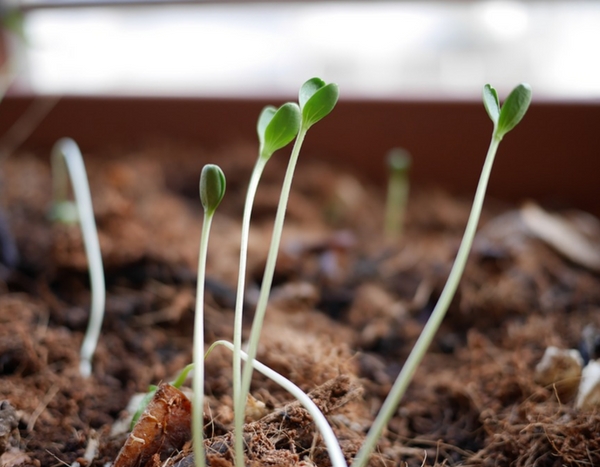
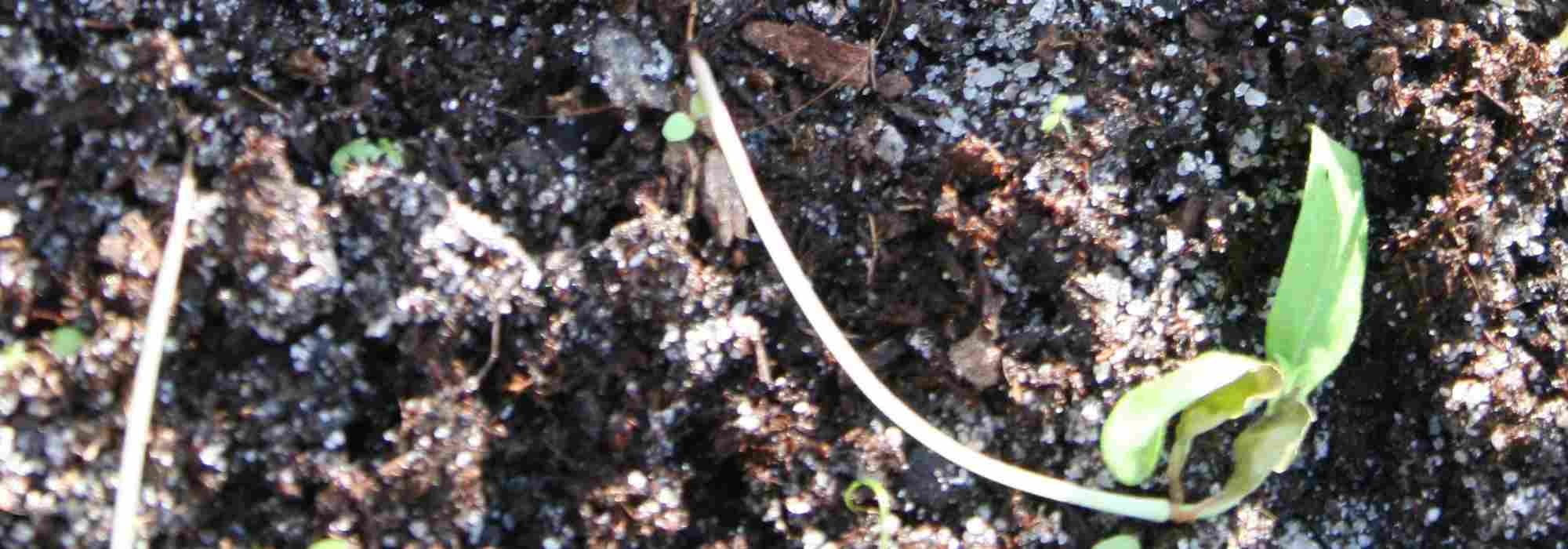
Sown in spring, I hope they will flower this summer as the young plants are not very big.
Plume, 27/07/2025
Back-to-school special offer!
Get €10 off for every €50 you spend! And get up to €40 off on a single order.
How does it work?
1. Shop your favourites
Add your favourite plants to your basket. For every €50 you spend (excluding delivery charges, store credit and the plastic-free option), you’ll receive a €10 voucher.
€50 spent = €10 voucher
€100 spent = €20 voucher
€150 spent = €30 voucher
€200 spent = €40 voucher
2. Place your order
Once your basket reaches one of the spending thresholds, place your order. You can even choose your delivery date!
3. Receive your voucher
As soon as your order has been shipped, you’ll receive an email containing your personal voucher code and its value.
4. Use it on your next order
Your voucher is valid for 90 days from the date you receive it. It can be used once only, on a new order worth at least the value of the voucher, excluding delivery charges.
Please note: Vouchers can be combined with other offers, but cannot be split or refunded.
Home or relay delivery (depending on size and destination)
Important: You may be charged customs duties by your country’s customs authorities upon delivery.
Schedule delivery date
and select date in basket
This plant carries a 6 months recovery warranty
More information
We guarantee the quality of our plants for a full growing cycle, and will replace at our expense any plant that fails to recover under normal climatic and planting conditions.
Would this plant suit my garden?
Set up your Plantfit profile →
Description
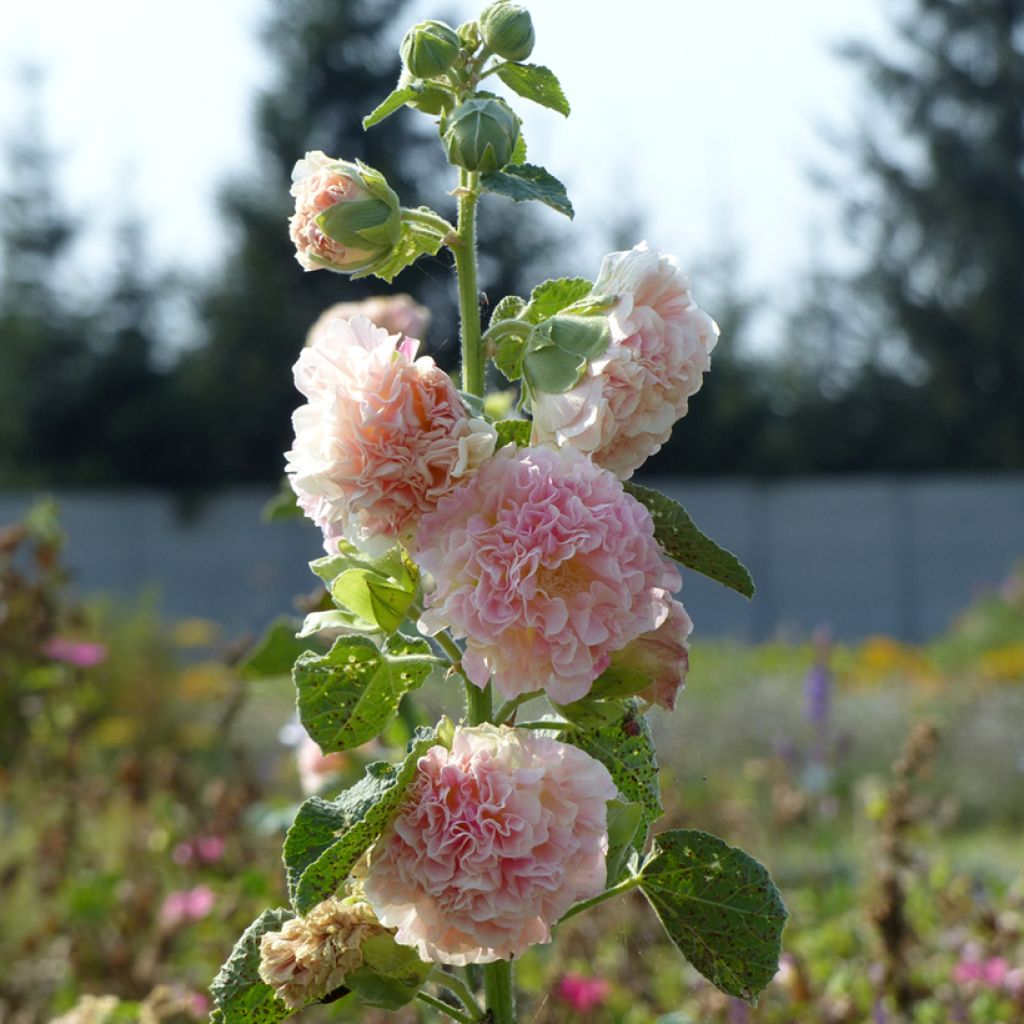
Hollyhock or Alcea rosea Peaches N Dreams is an exclusive and recent variety that is truly seductive. All summer long, it bears large floral spikes with very double pompom-shaped flowers, in a creamy yellow colour infused with peach, or raspberry pink depending on the flowers. This breathtaking perennial is often grown as a biennial and is fabulous at the back of flower beds or for lining the walls of an enclosed garden. It thrives in poor, stony soils, is drought-resistant and prefers warm, sheltered positions.
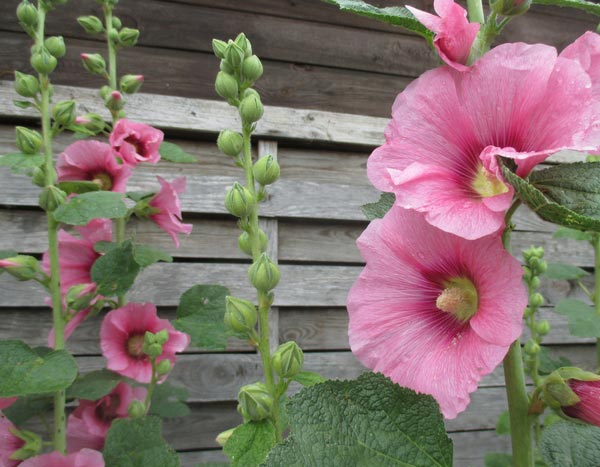
Hollyhock is also known by its Latin name of Althaea rosea or Alcea rosea. It also has many common names that have been adapted to the different accents of our French regions. Of the family Malvaceae, it is native to Asia Minor and often naturalizes in cottage gardens, wastelands, mounds of earth. ''Peaches N Dreams' is a variety with fully double blooms derived from this wildling. This unbranched, upright plant can reach 1.5 m to 2 m in height. It forms a branched rosette of stems covered with rough, rounded leaves, from which robust, fast-growing flower stems emerge. These spike-shaped inflorescences are covered with many large buds that bloom, from bottom to top, into big flowers with fully double corollas whose texture reflects the light marvellously. They are of a delicious shade of yellow or cream, tinged with peach or raspberry pink depending on the flower and the plant. Its flowering period is staggered from June to August. Their crinkled texture reflects the light beautifully. They are bi-coloured, pure white with dark maroon centres. Throughout this whole period, they will attract bees and butterflies to your garden. The flowers then give way to a large number of fruit, filled with seeds that spontaneously reseed in the most unexpected areas, which the plant seems to choose by itself: at the foot of walls, in poor and stony soil, in wall crevices, etc...
Widespread in abandoned gardens or in wastelands in our countryside, the hollyhock is often grown at the back of beds or placed against a wall to protect it from strong winds. The fresh look and heavy blooming nature of this variety will allow you to make superb associations with pink, red or white, single or double flowered varieties. This plant is supposedly tolerant of juglone, a substance secreted by the roots of the walnut tree. One could try sowing it at the foot of this tree, especially if there is enough light. Hollyhock is an edible plant: the flower buds can be eaten raw in salads and the young leaves can be eaten raw or cooked.
Hollyhock is both an ornamental and medicinal plant. Its seeds are used to produce a siccative oil. Rich in mucilages, it is a great demulcent, emollient, laxative, aperitif and it also relieves dry coughs. Its properties are nevertheless attenuated compared to those of its cousin the common marshmallow (Althea officinalis).

Flowering
Foliage
Plant habit
Botanical data
Alcea
rosea
Peaches N Dreams
Malvaceae
Hollyhock
Cultivar or hybrid
Planting and care
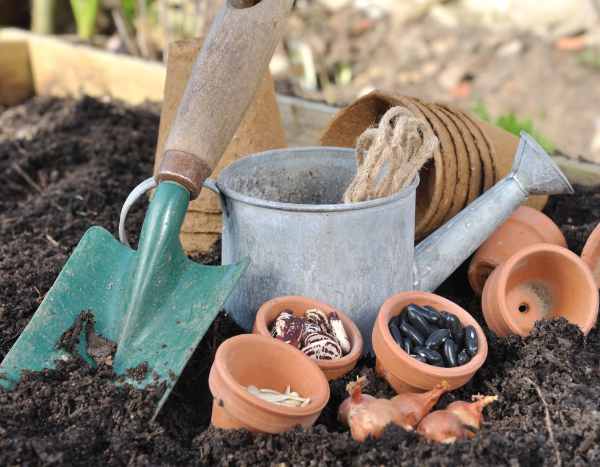
Sow hollyhocks from May to July. It takes 20 to 25 days for the young shoots to appear. Transplant the young plants when they have reached a height of 7 cm, 20 cm apart. In the following spring, place them in your beds, spacing them 40 to 50 cm apart. Staking is required if the area is not sheltered from winds.
Sowing directly in autumn is possible in areas where the winter is not too harsh. Hollyhock do not tolerate very cold weather combined with winter humidity. Plants sown with this technique will be more vigorous because their taproots sink deep into the soil during the winter, making them less susceptible to summer drought. There are references in ancient Finnish literature to perfectly perennial strains that would easily survive their harsh winters. One thing is for sure: there are no wild strains left in our regions. The plants that spring up spontaneously in our countryside and gardens are all derived from horticultural varieties, which are innumerable and hybridize very easily between each other.
These plants thrive in warm, sunny situations and can grow in any ordinary soil, even clay, chalky, poor or stony ones.
Avoid planting hollyhocks several years in a row in the same spot to prevent rust from appearing (a parasitic fungus in the form of orange powder) on the foliage.
Remove the wilted floral stems in October.
Sowing period
Intended location
Planting & care advice
-
-
-

-
-
-

-

-
-
, onOrder confirmed
Reply from on Promesse de fleurs
Recently viewed products
Haven't found what you were looking for?
Hardiness is the lowest winter temperature a plant can endure without suffering serious damage or even dying. However, hardiness is affected by location (a sheltered area, such as a patio), protection (winter cover) and soil type (hardiness is improved by well-drained soil).

The flowering period indicated on our website applies to countries and regions located in USDA zone 8 (France, the United Kingdom, Ireland, the Netherlands, etc.)
It will vary according to where you live:- In zones 9 to 10 (Italy, Spain, Greece, etc.), flowering will occur about 2 to 4 weeks earlier.
- In zones 6 to 7 (Germany, Poland, Slovenia, and lower mountainous regions), flowering will be delayed by 2 to 3 weeks.
- In zone 5 (Central Europe, Scandinavia), blooming will be delayed by 3 to 5 weeks.
In temperate climates, pruning of spring-flowering shrubs (forsythia, spireas, etc.) should be done just after flowering.
Pruning of summer-flowering shrubs (Indian Lilac, Perovskia, etc.) can be done in winter or spring.
In cold regions as well as with frost-sensitive plants, avoid pruning too early when severe frosts may still occur.
The planting period indicated on our website applies to countries and regions located in USDA zone 8 (France, United Kingdom, Ireland, Netherlands).
It will vary according to where you live:
- In Mediterranean zones (Marseille, Madrid, Milan, etc.), autumn and winter are the best planting periods.
- In continental zones (Strasbourg, Munich, Vienna, etc.), delay planting by 2 to 3 weeks in spring and bring it forward by 2 to 4 weeks in autumn.
- In mountainous regions (the Alps, Pyrenees, Carpathians, etc.), it is best to plant in late spring (May-June) or late summer (August-September).
The harvesting period indicated on our website applies to countries and regions in USDA zone 8 (France, England, Ireland, the Netherlands).
In colder areas (Scandinavia, Poland, Austria...) fruit and vegetable harvests are likely to be delayed by 3-4 weeks.
In warmer areas (Italy, Spain, Greece, etc.), harvesting will probably take place earlier, depending on weather conditions.
The sowing periods indicated on our website apply to countries and regions within USDA Zone 8 (France, UK, Ireland, Netherlands).
In colder areas (Scandinavia, Poland, Austria...), delay any outdoor sowing by 3-4 weeks, or sow under glass.
In warmer climes (Italy, Spain, Greece, etc.), bring outdoor sowing forward by a few weeks.
Shipping country and language
Your country of residence may be:
Your country of residence is:
For a better user experience on our website, you can select:
Your shipping country:
-
 Austria
-
 Belgium
-
 Bosnia & Herzegovina
-
 Bulgaria
-
 Croatia
-
 Cyprus
-
 Czechia
-
 Denmark
-
 Estonia
-
 Finland
-
 France
-
 Germany
-
 Greece
-
 Hungary
-
 Iceland
-
 Ireland
-
 Italy
Italy
-
 Latvia
-
 Liechtenstein
-
 Lithuania
-
 Luxembourg
-
 Malta
Malta
-
 Netherlands
-
 Poland
-
 Portugal
-
 Romania
-
 Serbia
-
 Slovakia
-
 Slovenia
-
 Spain
Spain
-
 Sweden
-
 Switzerland
Language:
-
French
-
 English
-
Spanish
-
Italian
-
German
-
Portuguese
-
Dutch
-
Finnish
My Account
Hello
My wish lists
My cart
Log in / Register
Existing customer?
This form is protected by reCAPTCHA - the Google Privacy Policy and Terms of Service apply.
New customer?
Create an account to track your orders, access our customer service and, if you wish, make the most of our upcoming offers.