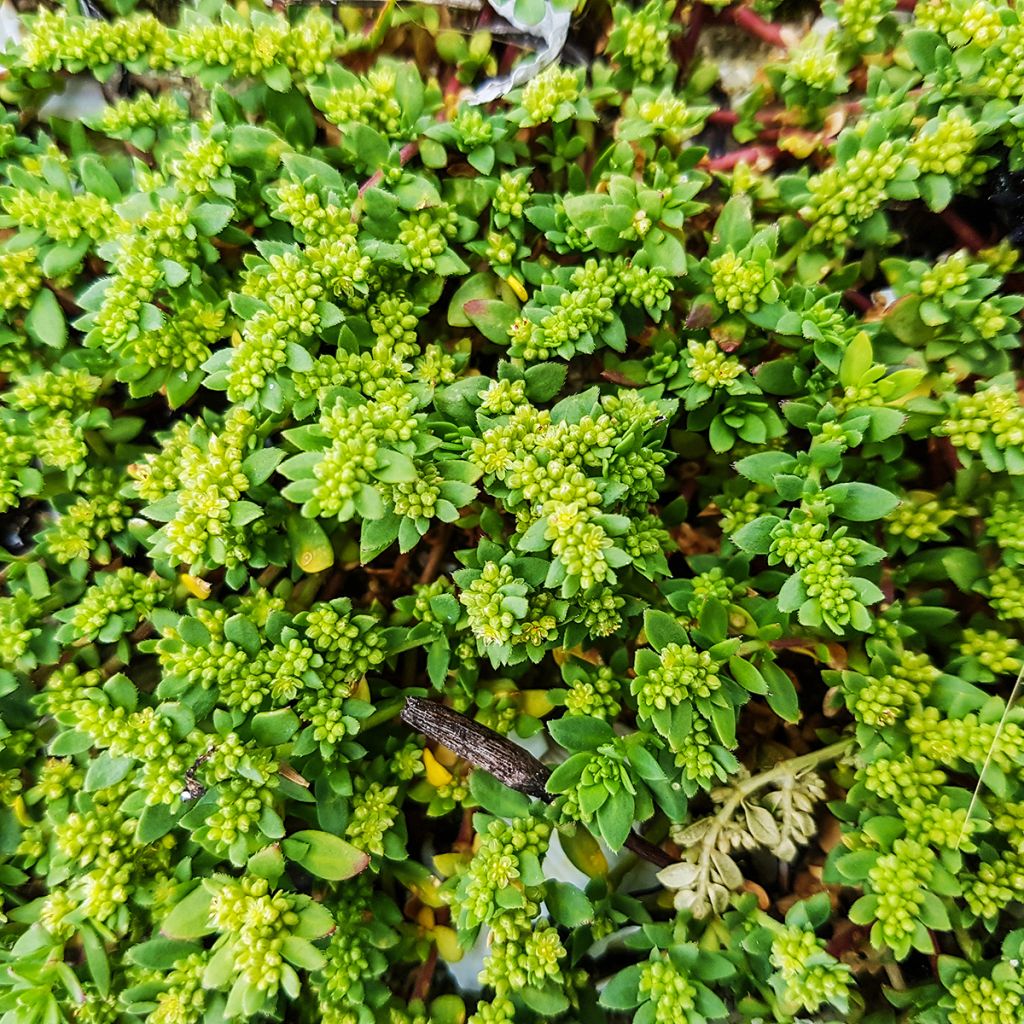
Herniari glabra - seeds
Herniari glabra - seeds
Herniari glabra
Smooth Rupturewort, burstwort
Back-to-school special offer!
Get €10 off for every €50 you spend! And get up to €40 off on a single order.
How does it work?
1. Shop your favourites
Add your favourite plants to your basket. For every €50 you spend (excluding delivery charges, store credit and the plastic-free option), you’ll receive a €10 voucher.
€50 spent = €10 voucher
€100 spent = €20 voucher
€150 spent = €30 voucher
€200 spent = €40 voucher
2. Place your order
Once your basket reaches one of the spending thresholds, place your order. You can even choose your delivery date!
3. Receive your voucher
As soon as your order has been shipped, you’ll receive an email containing your personal voucher code and its value.
4. Use it on your next order
Your voucher is valid for 90 days from the date you receive it. It can be used once only, on a new order worth at least the value of the voucher, excluding delivery charges.
Please note: Vouchers can be combined with other offers, but cannot be split or refunded.
Why not try an alternative variety in stock?
View all →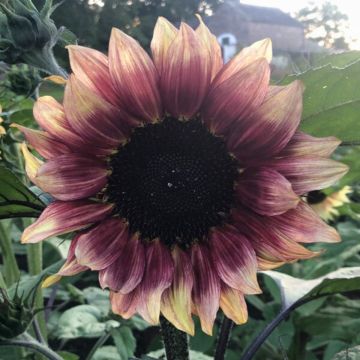
Available in 1 sizes

Available in 1 sizes
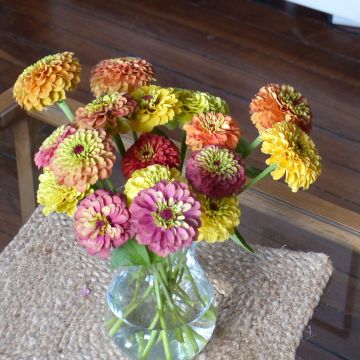
Available in 1 sizes
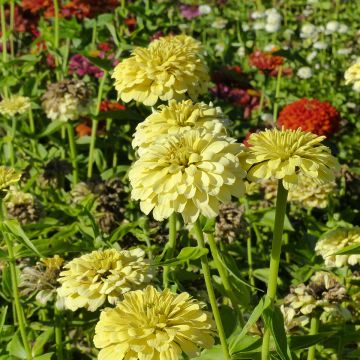
Available in 1 sizes
Available in 1 sizes
Available in 1 sizes
Available in 1 sizes
Available in 1 sizes
Available in 1 sizes
Available in 1 sizes
This plant carries a 6 months recovery warranty
More information
We guarantee the quality of our plants for a full growing cycle, and will replace at our expense any plant that fails to recover under normal climatic and planting conditions.
Would this plant suit my garden?
Set up your Plantfit profile →
Description
Hernaria glabra, also known as Turquette, stands out as a small, spreading perennial evergreen plant, specially adapted to difficult conditions and arid soils. It is one of the easiest hernarias to identify, being completely smooth. Renowned for its long-standing medicinal virtues, this plant is characterised by its simplicity rather than spectacular features. It forms a dense cushion, with prostrate stems carrying small green leaves and produces small clusters of tiny green flowers in summer. Transforming the landscape into a verdant carpet during summer, Hernaria takes on coppery hues in autumn. Incredibly robust and comfortable among stones, it thrives in shallow, rocky, poor, and dry soils.
Hernaria glabra (in Latin), commonly known as turquette, smooth herniary, millegraine, stonebreaker, or herniole, is a perennial plant of the caryophyllaceae family, native to almost all of Europe, western and boreal Asia, as well as North Africa. It develops from a branching crown, producing prostrate, slender stems 20 to 35 cm long. Its ovate or lanceolate, bright light green leaves are smooth, opposite, with the upper leaves arranged alternately, measuring 3 to 8 mm and without a petiole. Gradually, the turquette forms a low-growing cushion with a height of 3 to 5 cm, sometimes reaching a diameter of 50 to 70 cm. The stipules are membranous and measure about 1 mm. Insignificant flowering occurs from May to July depending on climatic conditions. The flowers, without peduncles, form clusters along the small branches. The 5 petals are often reduced or absent and the sepals are greenish and approximately 0.5 mm. This colour matching the foliage gives the plant a curly appearance. The fruit, which contains a single seed, is indehiscent, meaning it does not naturally open at maturity to release it.
Hernaria glabra proves to be a robust and versatile solution for covering difficult terrains. It is adapted to dry rockeries and can also be used as ground cover instead of grass as it is resistant to the most demanding conditions such as trampling and drought. This low-growing, easy to maintain plant, prefers a sunny exposure and poor soil, quickly forming a persistent green carpet that takes on coppery hues in autumn. A valuable asset for gardens with shallow soils, it pairs perfectly with plants that thrive in spartan conditions, such as: Frankenia laevis (Sea heath) with its reddish-purple flowering, Matricaria tchihatchewii (Dwarf chamomile) covered in small daisies from May to July, Teucrium ackermanii with its silver-grey foliage covered in pink-purple flowers, Thymus praecox Minor or Thymus longicaulis with highly fragrant foliage.
This plant adapts to various situations, from green roofs to gaps in stone walls, offering an ideal solution for gardens with limited soil. It can be harmoniously paired with dwarf asters with colourful flowers, grasses like Ophiopogon planiscapus Nigrescens with black foliage, Carex oshimensis Evergold with yellow and cream variegated foliage, or small shrubs like Helichrysum italicum (Curry plant) with a strong fragrance or Convolvulus cneorum with silver foliage. In summary, Hernaria glabra is a resilient plant that enhances and adapts to various conditions, adding a natural and charming touch to your garden.
Hernaria glabra, formerly used for medicinal purposes, is recognised for its diuretic properties. Its common name "casse-pierre" (stonebreaker) originates from its traditional use in treating gallstones. In addition to its diuretic virtues, this plant is also considered to promote the healing of wounds and injuries, as well as emollient, soothing the body's tissues.
Report an error about the product description
Flowering
Foliage
Plant habit
Botanical data
Herniari
glabra
Caryophyllaceae
Smooth Rupturewort, burstwort
Western Europe
Planting and care
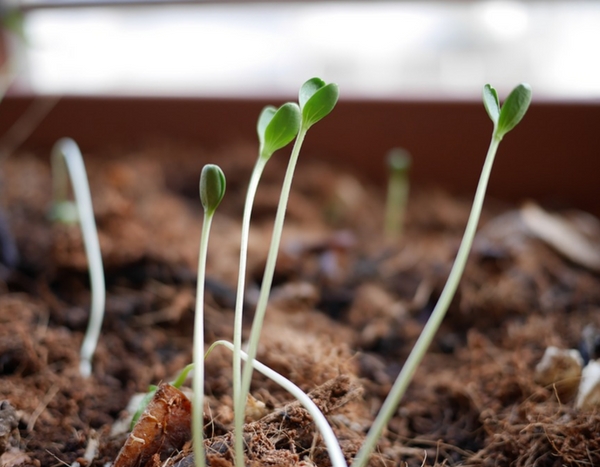
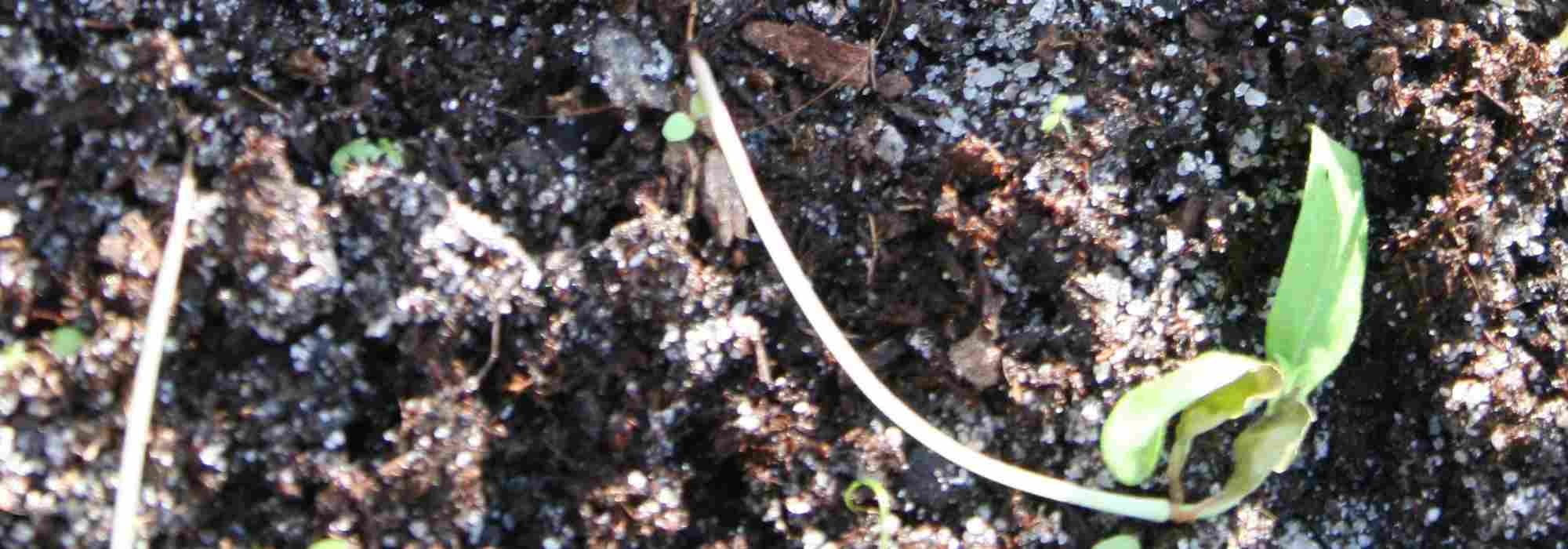
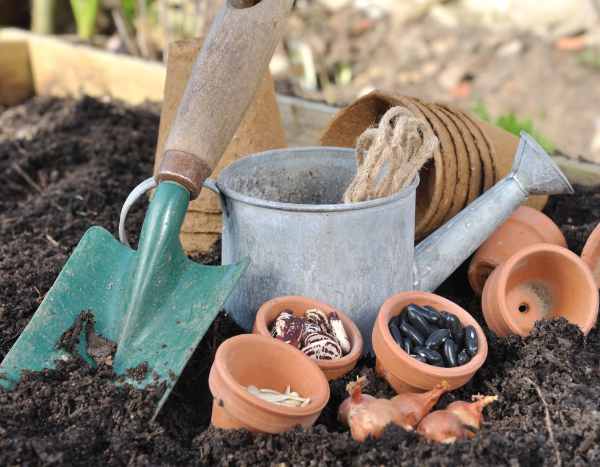
The seeds of Herniaria glabra are best sown from March to May, but also in September-October, if the climatic conditions are favourable (sufficiently high temperatures, not too much humidity). Broadcast sow directly in open ground.
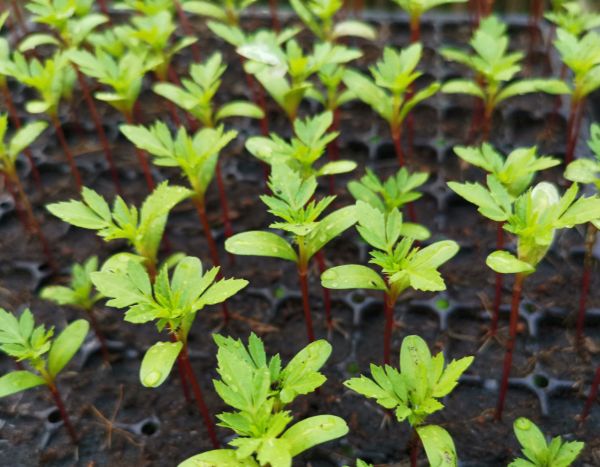
To ensure an even distribution of the seeds, you can mix them with fine sand before sowing. After lightly raking the soil, different sowing methods can be used depending on the area to be sown: sow by hand, with a spreader, or by throwing in large forward movements like a sower. Lightly firm the soil, then water moderately and keep it moist until germination. Regularly remove any weeds that appear. The seeds germinate in 1 to 2 weeks under warm conditions.
Herniaria thrives in light, shallow, and well-drained soil, preferably neutral to slightly acidic and of moderate fertility. It thrives in rocky environments, uncultivated land, gravelly or rocky terrain. Very hardy and drought-tolerant, it is a lover of intense sunlight.
Sowing period
Intended location
Planting & care advice
-
-
-
-
-

-
-
-
This item has not been reviewed yet - be the first to leave a review about it.
Recently viewed products
Haven't found what you were looking for?
Hardiness is the lowest winter temperature a plant can endure without suffering serious damage or even dying. However, hardiness is affected by location (a sheltered area, such as a patio), protection (winter cover) and soil type (hardiness is improved by well-drained soil).

The flowering period indicated on our website applies to countries and regions located in USDA zone 8 (France, the United Kingdom, Ireland, the Netherlands, etc.)
It will vary according to where you live:- In zones 9 to 10 (Italy, Spain, Greece, etc.), flowering will occur about 2 to 4 weeks earlier.
- In zones 6 to 7 (Germany, Poland, Slovenia, and lower mountainous regions), flowering will be delayed by 2 to 3 weeks.
- In zone 5 (Central Europe, Scandinavia), blooming will be delayed by 3 to 5 weeks.
In temperate climates, pruning of spring-flowering shrubs (forsythia, spireas, etc.) should be done just after flowering.
Pruning of summer-flowering shrubs (Indian Lilac, Perovskia, etc.) can be done in winter or spring.
In cold regions as well as with frost-sensitive plants, avoid pruning too early when severe frosts may still occur.
The planting period indicated on our website applies to countries and regions located in USDA zone 8 (France, United Kingdom, Ireland, Netherlands).
It will vary according to where you live:
- In Mediterranean zones (Marseille, Madrid, Milan, etc.), autumn and winter are the best planting periods.
- In continental zones (Strasbourg, Munich, Vienna, etc.), delay planting by 2 to 3 weeks in spring and bring it forward by 2 to 4 weeks in autumn.
- In mountainous regions (the Alps, Pyrenees, Carpathians, etc.), it is best to plant in late spring (May-June) or late summer (August-September).
The harvesting period indicated on our website applies to countries and regions in USDA zone 8 (France, England, Ireland, the Netherlands).
In colder areas (Scandinavia, Poland, Austria...) fruit and vegetable harvests are likely to be delayed by 3-4 weeks.
In warmer areas (Italy, Spain, Greece, etc.), harvesting will probably take place earlier, depending on weather conditions.
The sowing periods indicated on our website apply to countries and regions within USDA Zone 8 (France, UK, Ireland, Netherlands).
In colder areas (Scandinavia, Poland, Austria...), delay any outdoor sowing by 3-4 weeks, or sow under glass.
In warmer climes (Italy, Spain, Greece, etc.), bring outdoor sowing forward by a few weeks.
Shipping country and language
Your country of residence may be:
Your country of residence is:
For a better user experience on our website, you can select:
Your shipping country:
-
 Austria
-
 Belgium
-
 Bosnia & Herzegovina
-
 Bulgaria
-
 Croatia
-
 Cyprus
-
 Czechia
-
 Denmark
-
 Estonia
-
 Finland
-
 France
-
 Germany
-
 Greece
-
 Hungary
-
 Iceland
-
 Ireland
-
 Italy
Italy
-
 Latvia
-
 Liechtenstein
-
 Lithuania
-
 Luxembourg
-
 Malta
Malta
-
 Netherlands
-
 Poland
-
 Portugal
-
 Romania
-
 Serbia
-
 Slovakia
-
 Slovenia
-
 Spain
Spain
-
 Sweden
-
 Switzerland
Language:
-
French
-
 English
-
Spanish
-
Italian
-
German
-
Portuguese
-
Dutch
-
Finnish
My Account
Hello
My wish lists
My cart
Log in / Register
Existing customer?
This form is protected by reCAPTCHA - the Google Privacy Policy and Terms of Service apply.
New customer?
Create an account to track your orders, access our customer service and, if you wish, make the most of our upcoming offers.