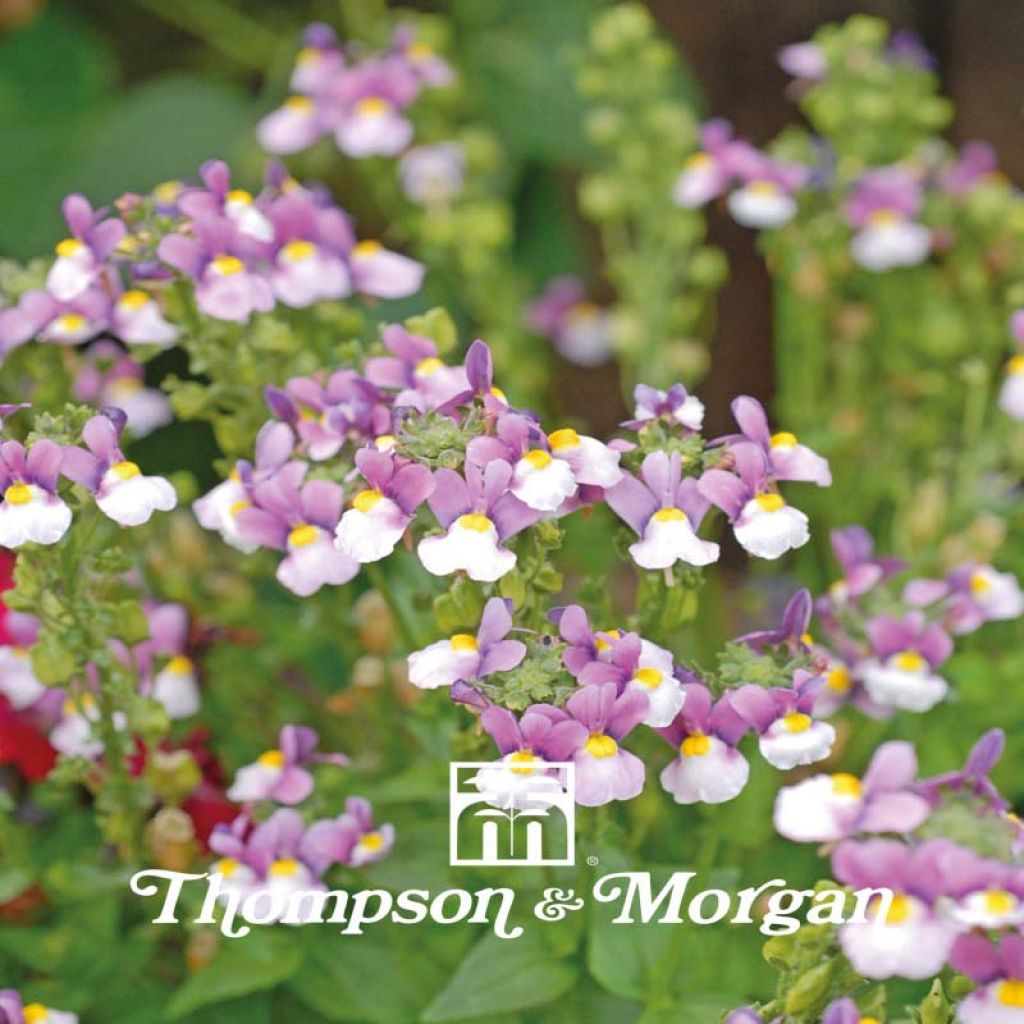
Nemesia Seventh Heaven Seeds
Nemesia Seventh Heaven Seeds
Nemesia Seventh Heaven
Cape Jewel
Cut back after the initial flowering and placed in a shadier spot, the flowers have started blooming again and now seem to withstand light frosts quite well. Therefore, it is advisable not to expose the nemesias to too much scorching sun like we experienced this summer.
Eric, 05/01/2020
Back-to-school special offer!
Get €10 off for every €50 you spend! And get up to €40 off on a single order.
How does it work?
1. Shop your favourites
Add your favourite plants to your basket. For every €50 you spend (excluding delivery charges, store credit and the plastic-free option), you’ll receive a €10 voucher.
€50 spent = €10 voucher
€100 spent = €20 voucher
€150 spent = €30 voucher
€200 spent = €40 voucher
2. Place your order
Once your basket reaches one of the spending thresholds, place your order. You can even choose your delivery date!
3. Receive your voucher
As soon as your order has been shipped, you’ll receive an email containing your personal voucher code and its value.
4. Use it on your next order
Your voucher is valid for 90 days from the date you receive it. It can be used once only, on a new order worth at least the value of the voucher, excluding delivery charges.
Please note: Vouchers can be combined with other offers, but cannot be split or refunded.
Home or relay delivery (depending on size and destination)
Important: You may be charged customs duties by your country’s customs authorities upon delivery.
Schedule delivery date
and select date in basket
This plant carries a 6 months recovery warranty
More information
We guarantee the quality of our plants for a full growing cycle, and will replace at our expense any plant that fails to recover under normal climatic and planting conditions.
Would this plant suit my garden?
Set up your Plantfit profile →
Description
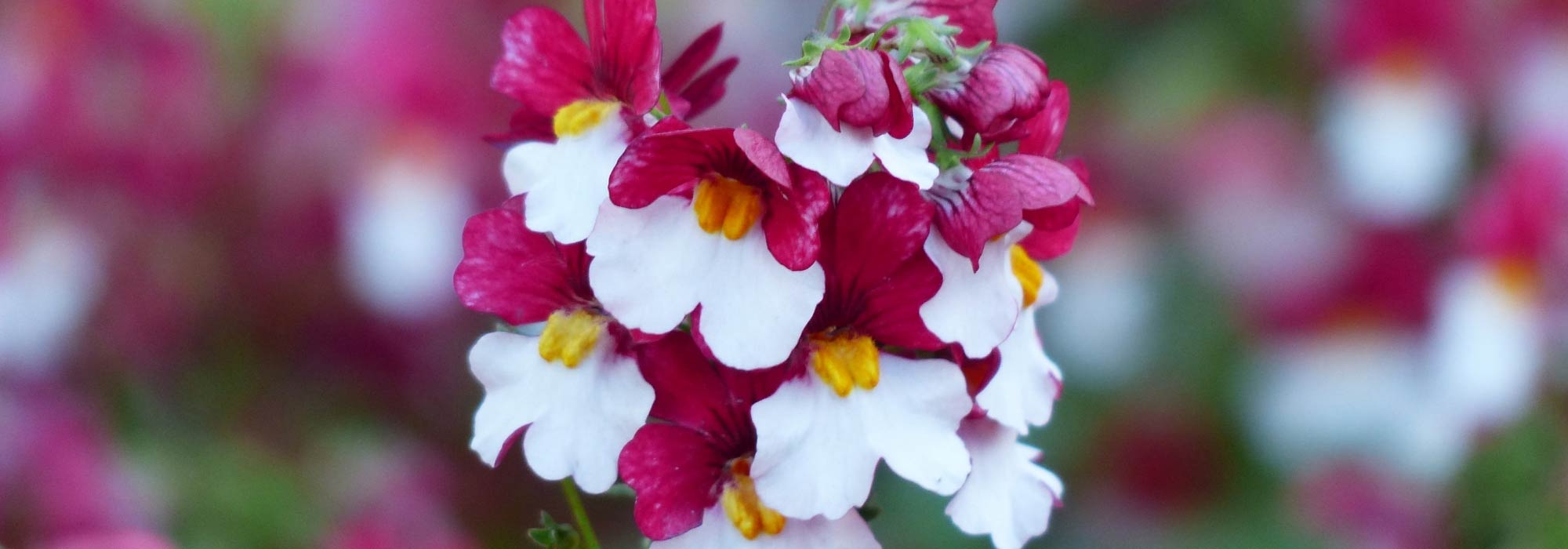
Nemesia Seventh Heaven is a beautiful cultivar of Nemesia, featuring for the first time varieties with sizable, bicoloured flowers grown from seed. In just a few months, this Nemesia forms small, bushy, compact, branched clumps, covered with scented flowers in a mixture of lavender, white, violet and purple with a little pale yellow centre. This remarkable annual plant which flowers almost continuously from June to October creates a prodigous visual and olfactory effect in hanging baskets and planters.
Nemesia is a tender perennial or annual plant of the Scrophulariaceae family, native to South Africa. Through crossbreeding between different species, this plant is at the origin of many horticultural varieties whose performance in terms of quantity, quality and durability is constantly being improved. The cultivars in the 'Seventh Heaven' mix, grown from seed, have recently been selected for their large, bicoloured, fragrant flowers. This rather fantastic creation offers an almost continuous, fragrant flowering from May to October on low, well-branched plants that grow up to 30 cm high and 35 cm in diameter.
These compact Nemesia produce a multitude of ravishing tiny symmetrical flowers, 1-2 cm in size and whose colour varies from plant to plant. White, mauve, lavender, violet or purplish, they are bicoloured and centred on a golden yellow throat that is noticeable from afar. This exuberant flowering exhales a very pleasant scent of honey and coconut that attracts pollinating insects. Gathered at the tips of robust, leafy stems, these flowers seem to float on graceful clumps with a dense, rounded and upright habit. The foliage is made up of small, lanceolate, finely serrated, greyish green leaves. Very resistant to wind and rain, these cape jewels are hardy down to -3°C.
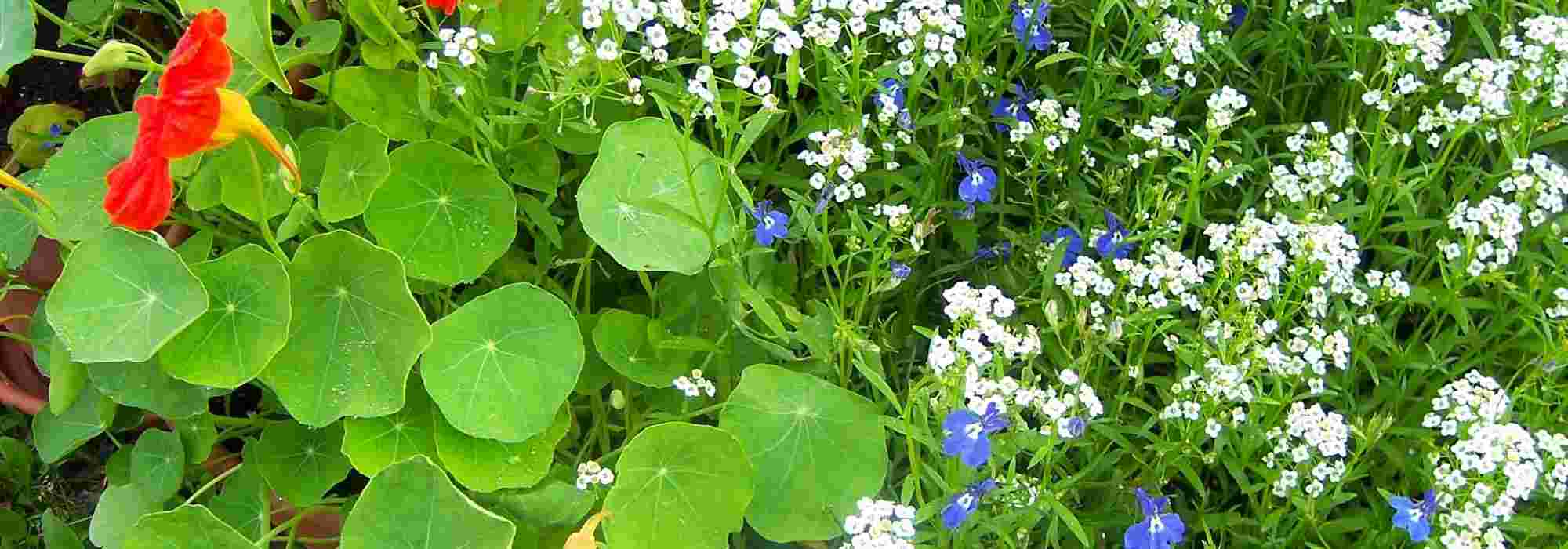
From the first days of spring, the radiant or pastel colours of Nemesia brighten the flowerbeds of our cities and villages. On our patios and in our gardens, these refreshing plants with their extremely graceful habit which is dense and light all at once, perfectly adorn hanging baskets, window boxes, all types of basins and even perennial beds, preferably in full sun. They are easy to grow in the garden and give spectacular results when they are planted in containers. Use them in borders, in a mix of different colours or in combination with geraniums, lobelias, annual Verbena and petunias etc... Reserve a spot for it near a passageway, on a patio or terrace, along the edges of paths or in any place where one can fully take advantage of its coconut fragrance. Nemesia combine particularly well with Dorotheanthe difformis with which they share the same origins and the same beautiful ground cover qualities.
Careful, seeds are reserved for very experienced gardeners that are used to sowing very fine seeds. These seeds are as fine as dust and are barely visible to the naked eye.
Flowering
Foliage
Plant habit
Botanical data
Nemesia
Seventh Heaven
Scrophulariaceae
Cape Jewel
Cultivar or hybrid
Planting and care
Sowing:
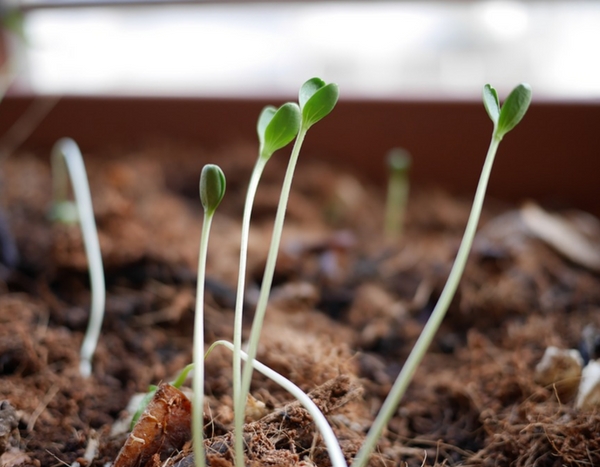
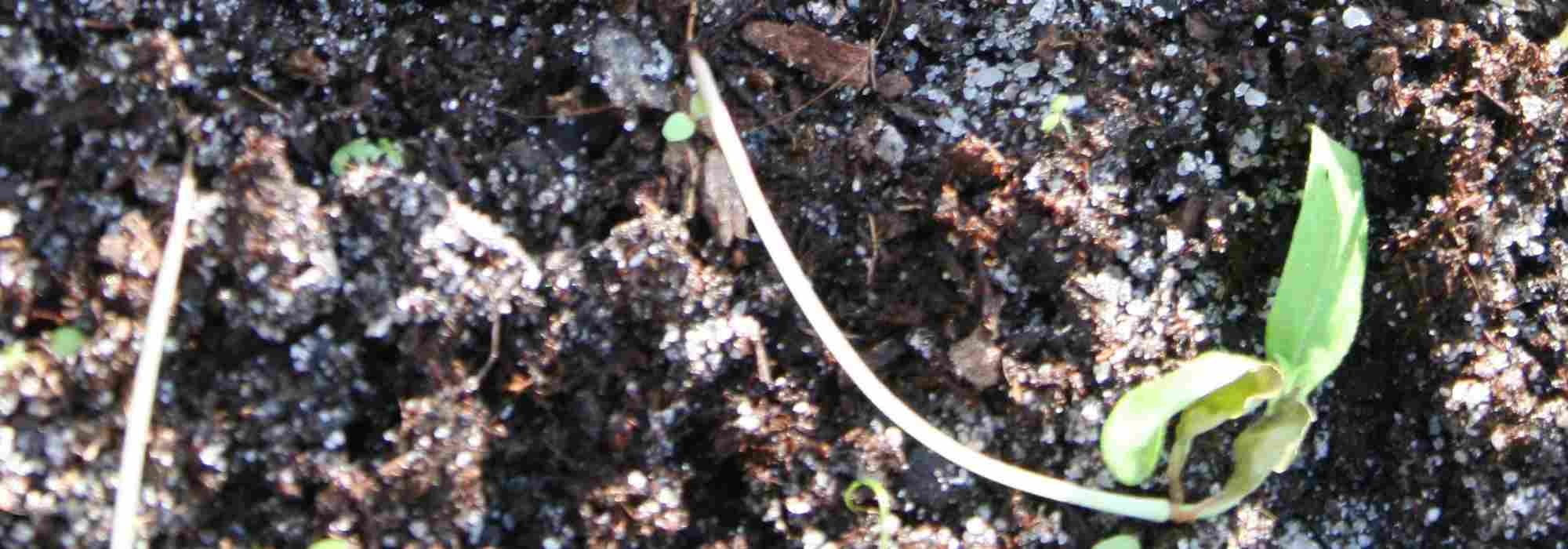
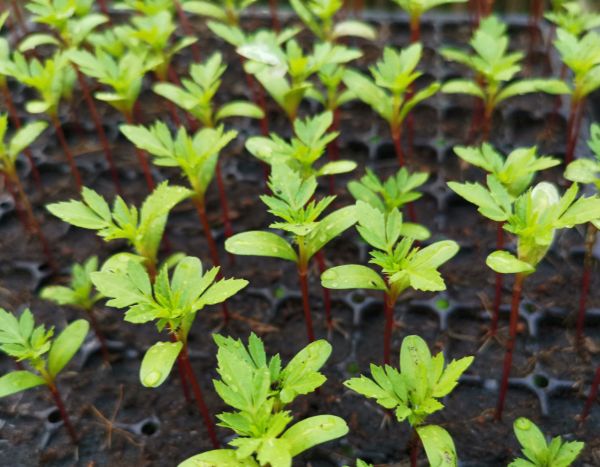
Sow the nemesia seeds from March to May. Sow thinly in the surface, in well-prepared, loose soil. Water regularly to maintain a certain moistness, especially throughout drier weather. You can also sow in pots or tubs filled with moistened special seed soil mix, by covering the seeds with a very small pinch of compost or vermiculite. Keep the seedlings between 20 and 25 °C. Light encourages germination. Keep the surface of the soil moist but not wet; germination takes 7 to 14 days. Transplant the seedlings into 7.5 cm pots or into tubs. Plant outdoors once there is no more risk of frost.
Culture:
Plant your nemesias in a sunny position or a partially shady one. They require a light, rich, humus-rich soil and appreciate being regularly fed. They don't tolerate well high temperatures combined with high humidity. You can plant your nemesias in flowerbeds or in pots. In a container, these plants have to be watered regularly. The planting is done as soon as the last frosts have passed, in the spring. In summer, during hot periods, do not hesitate to prune the plant severely (10 to 15 cm from the base) in between two waves of flowers in order to encourage the formation of new flowering shoots.
Sowing period
Intended location
Planting & care advice
-
-
-
-
-
-

-
-
-
, onOrder confirmed
Reply from on Promesse de fleurs
Recently viewed products
Haven't found what you were looking for?
Hardiness is the lowest winter temperature a plant can endure without suffering serious damage or even dying. However, hardiness is affected by location (a sheltered area, such as a patio), protection (winter cover) and soil type (hardiness is improved by well-drained soil).

The flowering period indicated on our website applies to countries and regions located in USDA zone 8 (France, the United Kingdom, Ireland, the Netherlands, etc.)
It will vary according to where you live:- In zones 9 to 10 (Italy, Spain, Greece, etc.), flowering will occur about 2 to 4 weeks earlier.
- In zones 6 to 7 (Germany, Poland, Slovenia, and lower mountainous regions), flowering will be delayed by 2 to 3 weeks.
- In zone 5 (Central Europe, Scandinavia), blooming will be delayed by 3 to 5 weeks.
In temperate climates, pruning of spring-flowering shrubs (forsythia, spireas, etc.) should be done just after flowering.
Pruning of summer-flowering shrubs (Indian Lilac, Perovskia, etc.) can be done in winter or spring.
In cold regions as well as with frost-sensitive plants, avoid pruning too early when severe frosts may still occur.
The planting period indicated on our website applies to countries and regions located in USDA zone 8 (France, United Kingdom, Ireland, Netherlands).
It will vary according to where you live:
- In Mediterranean zones (Marseille, Madrid, Milan, etc.), autumn and winter are the best planting periods.
- In continental zones (Strasbourg, Munich, Vienna, etc.), delay planting by 2 to 3 weeks in spring and bring it forward by 2 to 4 weeks in autumn.
- In mountainous regions (the Alps, Pyrenees, Carpathians, etc.), it is best to plant in late spring (May-June) or late summer (August-September).
The harvesting period indicated on our website applies to countries and regions in USDA zone 8 (France, England, Ireland, the Netherlands).
In colder areas (Scandinavia, Poland, Austria...) fruit and vegetable harvests are likely to be delayed by 3-4 weeks.
In warmer areas (Italy, Spain, Greece, etc.), harvesting will probably take place earlier, depending on weather conditions.
The sowing periods indicated on our website apply to countries and regions within USDA Zone 8 (France, UK, Ireland, Netherlands).
In colder areas (Scandinavia, Poland, Austria...), delay any outdoor sowing by 3-4 weeks, or sow under glass.
In warmer climes (Italy, Spain, Greece, etc.), bring outdoor sowing forward by a few weeks.
Shipping country and language
Your country of residence may be:
Your country of residence is:
For a better user experience on our website, you can select:
Your shipping country:
-
 Austria
-
 Belgium
-
 Bosnia & Herzegovina
-
 Bulgaria
-
 Croatia
-
 Cyprus
-
 Czechia
-
 Denmark
-
 Estonia
-
 Finland
-
 France
-
 Germany
-
 Greece
-
 Hungary
-
 Iceland
-
 Ireland
-
 Italy
Italy
-
 Latvia
-
 Liechtenstein
-
 Lithuania
-
 Luxembourg
-
 Malta
Malta
-
 Netherlands
-
 Poland
-
 Portugal
-
 Romania
-
 Serbia
-
 Slovakia
-
 Slovenia
-
 Spain
Spain
-
 Sweden
-
 Switzerland
Language:
-
French
-
 English
-
Spanish
-
Italian
-
German
-
Portuguese
-
Dutch
-
Finnish
My Account
Hello
My wish lists
My cart
Log in / Register
Existing customer?
This form is protected by reCAPTCHA - the Google Privacy Policy and Terms of Service apply.
New customer?
Create an account to track your orders, access our customer service and, if you wish, make the most of our upcoming offers.