Prunus persica Golden Caesar - Peach tree
Prunus persica Golden Caesar - Peach tree
Prunus persica Golden Caesar - Peach tree
Prunus persica Golden Caesar - Peach tree
Prunus persica Golden Caesar - Peach tree
Prunus persica Golden Caesar - Peach tree
Prunus persica 'Minpechfor' GOLDEN CAESAR®
Peach, Persian apple
Back-to-school special offer!
Get €10 off for every €50 you spend! And get up to €40 off on a single order.
How does it work?
1. Shop your favourites
Add your favourite plants to your basket. For every €50 you spend (excluding delivery charges, store credit and the plastic-free option), you’ll receive a €10 voucher.
€50 spent = €10 voucher
€100 spent = €20 voucher
€150 spent = €30 voucher
€200 spent = €40 voucher
2. Place your order
Once your basket reaches one of the spending thresholds, place your order. You can even choose your delivery date!
3. Receive your voucher
As soon as your order has been shipped, you’ll receive an email containing your personal voucher code and its value.
4. Use it on your next order
Your voucher is valid for 90 days from the date you receive it. It can be used once only, on a new order worth at least the value of the voucher, excluding delivery charges.
Please note: Vouchers can be combined with other offers, but cannot be split or refunded.
Why not try an alternative variety in stock?
View all →
Available in 1 sizes
Available in 4 sizes
Available in 2 sizes
Available in 2 sizes
Available in 1 sizes
Available in 1 sizes
Available in 2 sizes
Available in 2 sizes
Available in 1 sizes
Available in 3 sizes
This plant carries a 12 months recovery warranty
More information
We guarantee the quality of our plants for a full growing cycle, and will replace at our expense any plant that fails to recover under normal climatic and planting conditions.
Description
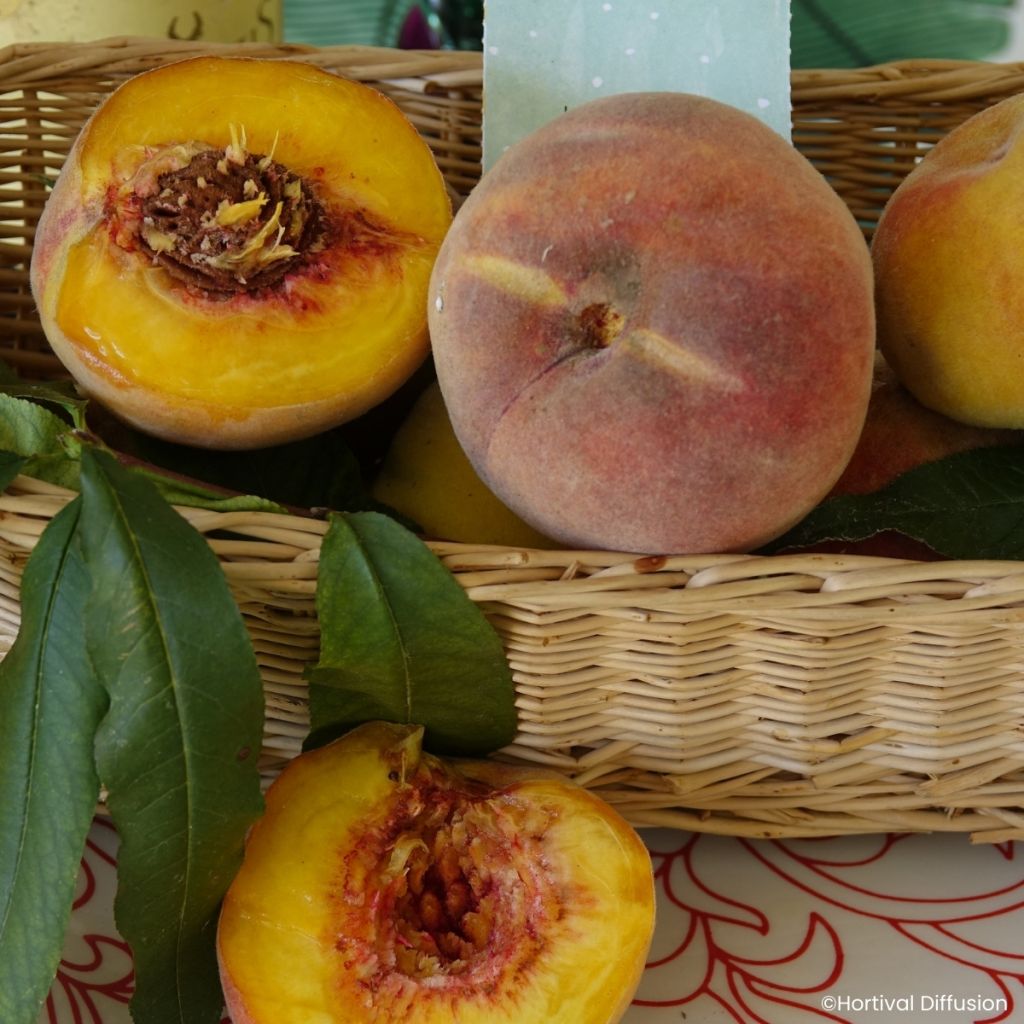
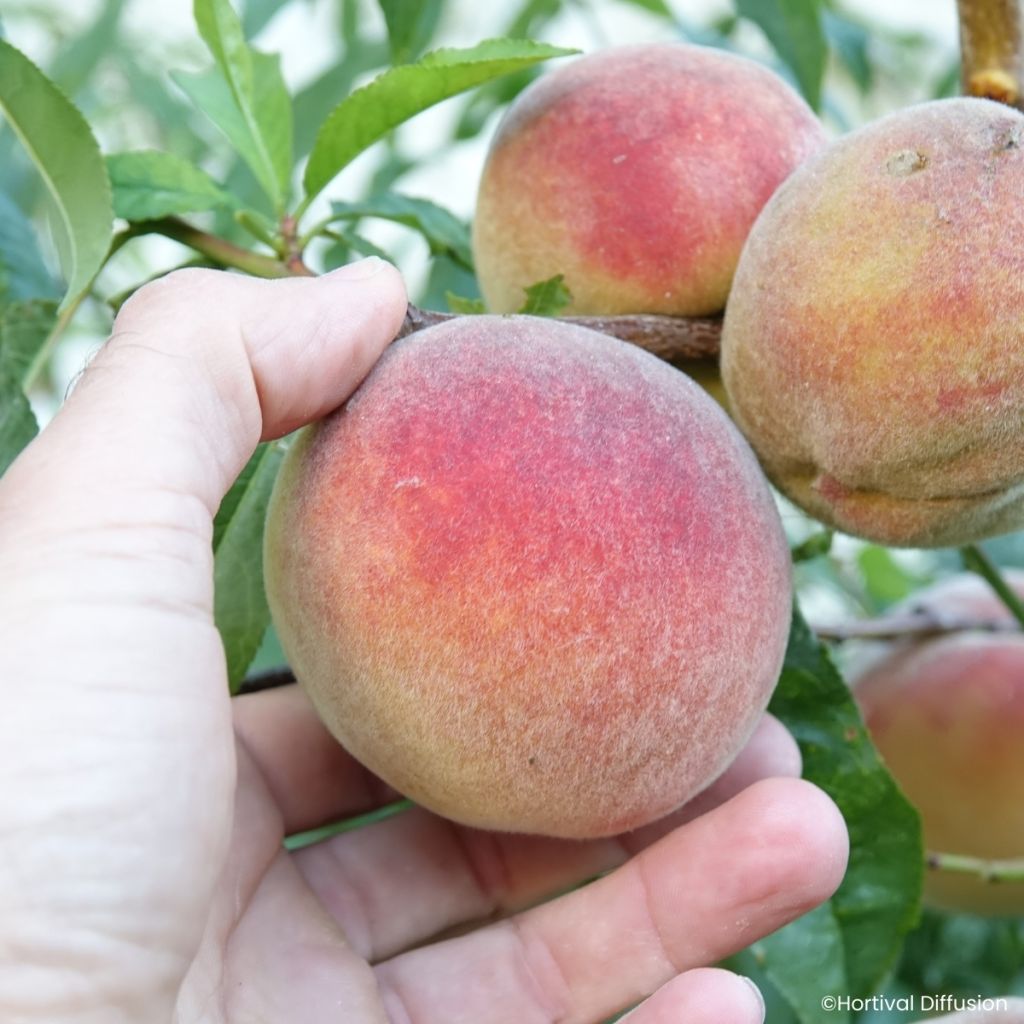
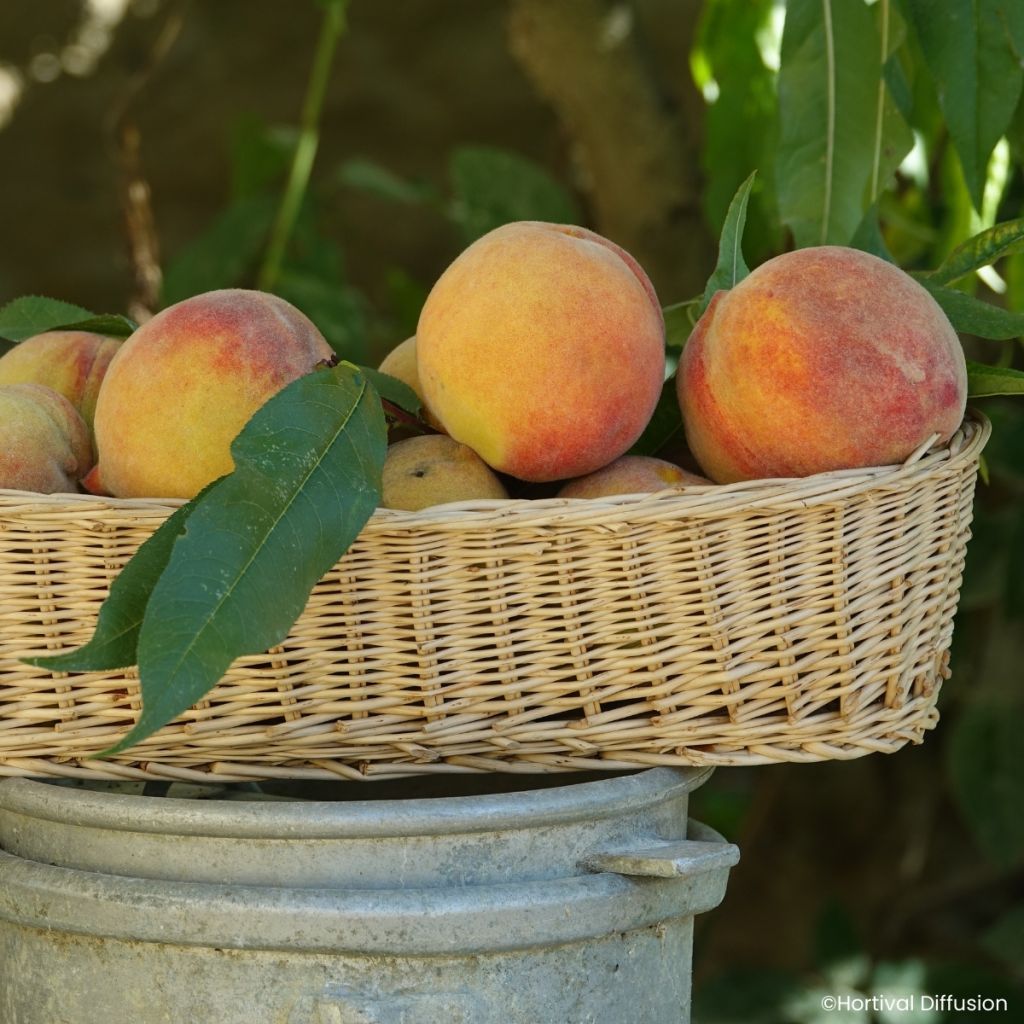
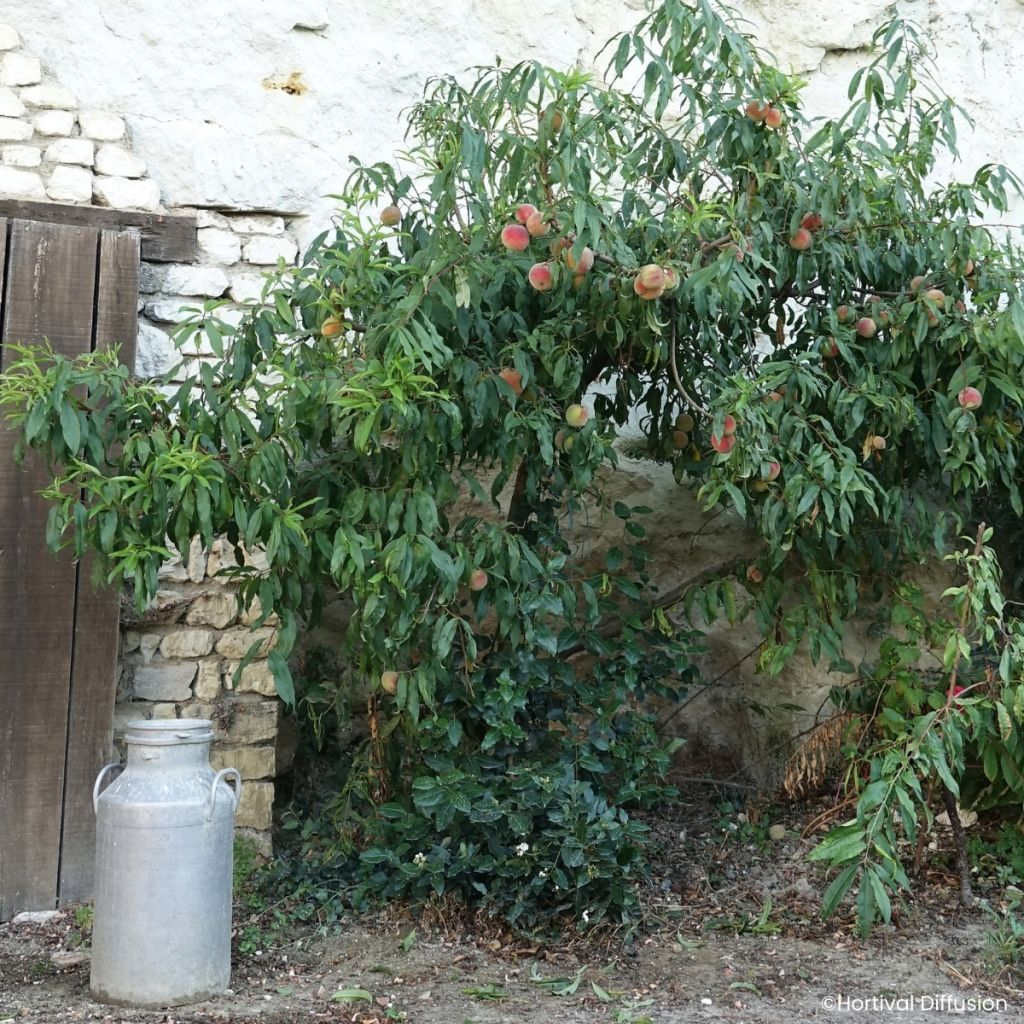
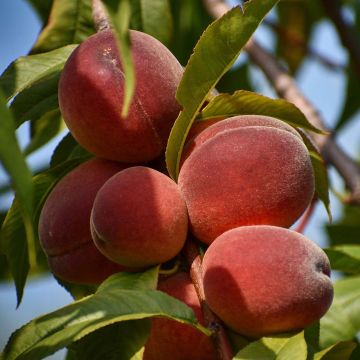
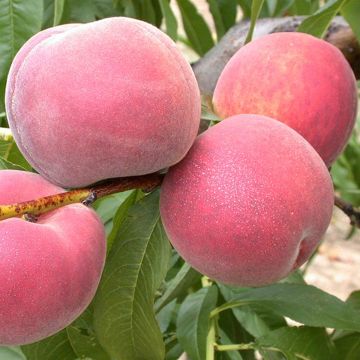
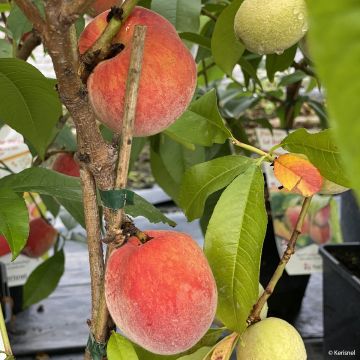
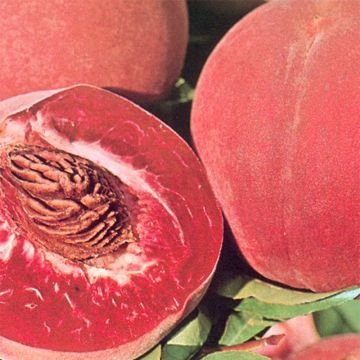
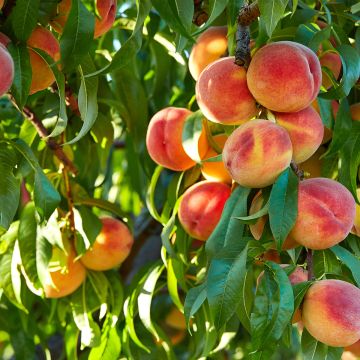
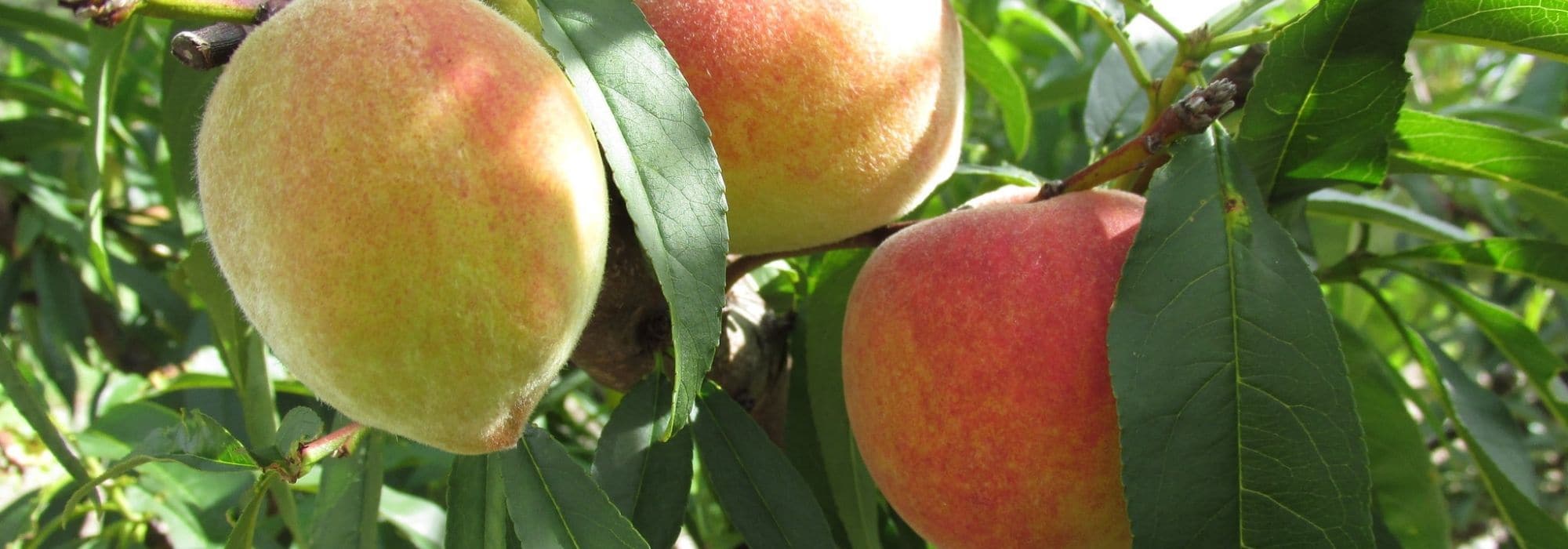
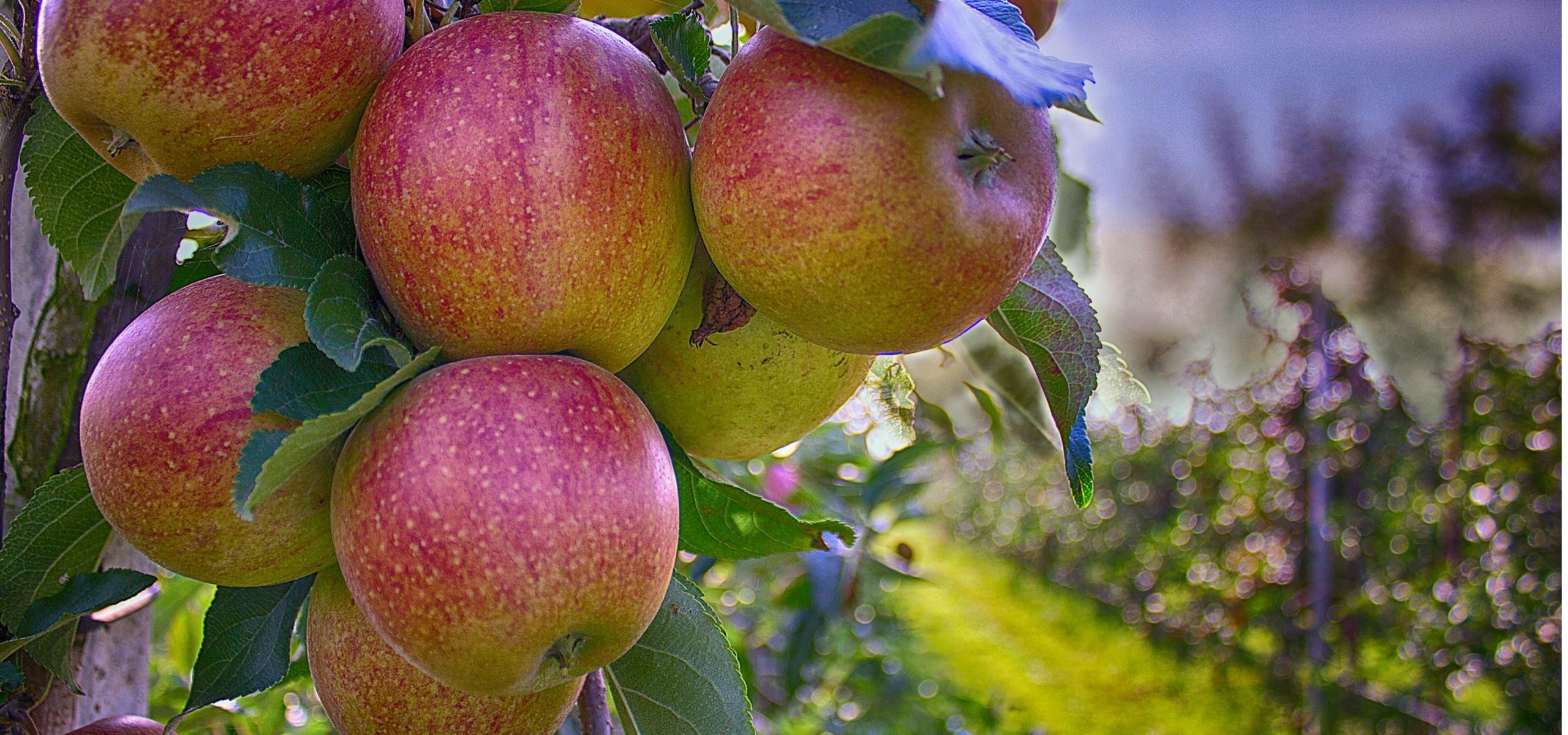
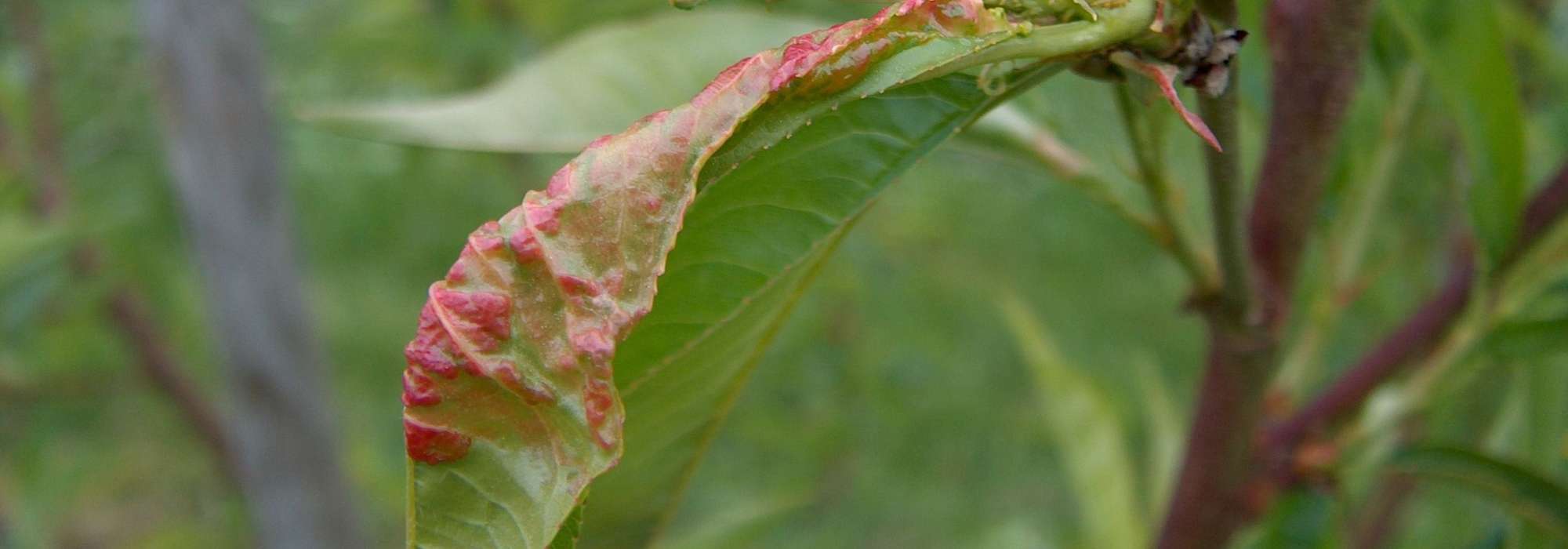
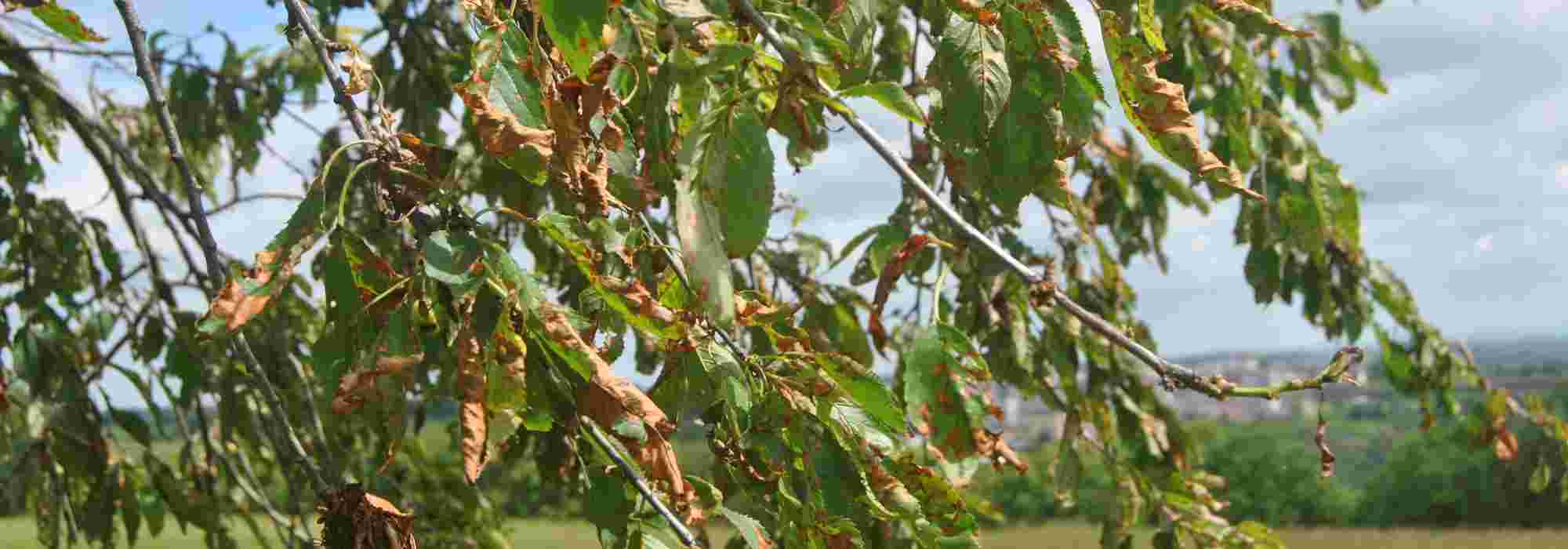
The Golden Caesar® Peach Tree is a vineyard peach that is self-fertile, vigorous and productive, with late fruiting. Its large, yellow-fleshed, juicy and sweet fruits have an intense, sweet and aromatic flavour, with a clingstone pit. They are round and downy, and their skin takes on an orange-yellow hue, blushed with red in the sun. Harvest begins around mid-September, when the fruits develop a good colour and detach easily. This variety is particularly tolerant to peach leaf curl and chlorosis, and shows good drought resistance once well established.
The species name "Persica" was given to the peach tree because it was believed to originate from Persia. In reality, all cultivated forms come from northern China, where the species was domesticated over 2,000 years ago. Introduced to Europe in the 6th century, the wild peach experienced a major boom in the 19th century, a period when many selections were made to improve its taste qualities.
The vineyard peach had a particular function: planted at the edge of rows, more susceptible to diseases than the vine itself, it served as a "sentry tree" to alert the winegrower to the risks of contamination and trigger treatments.
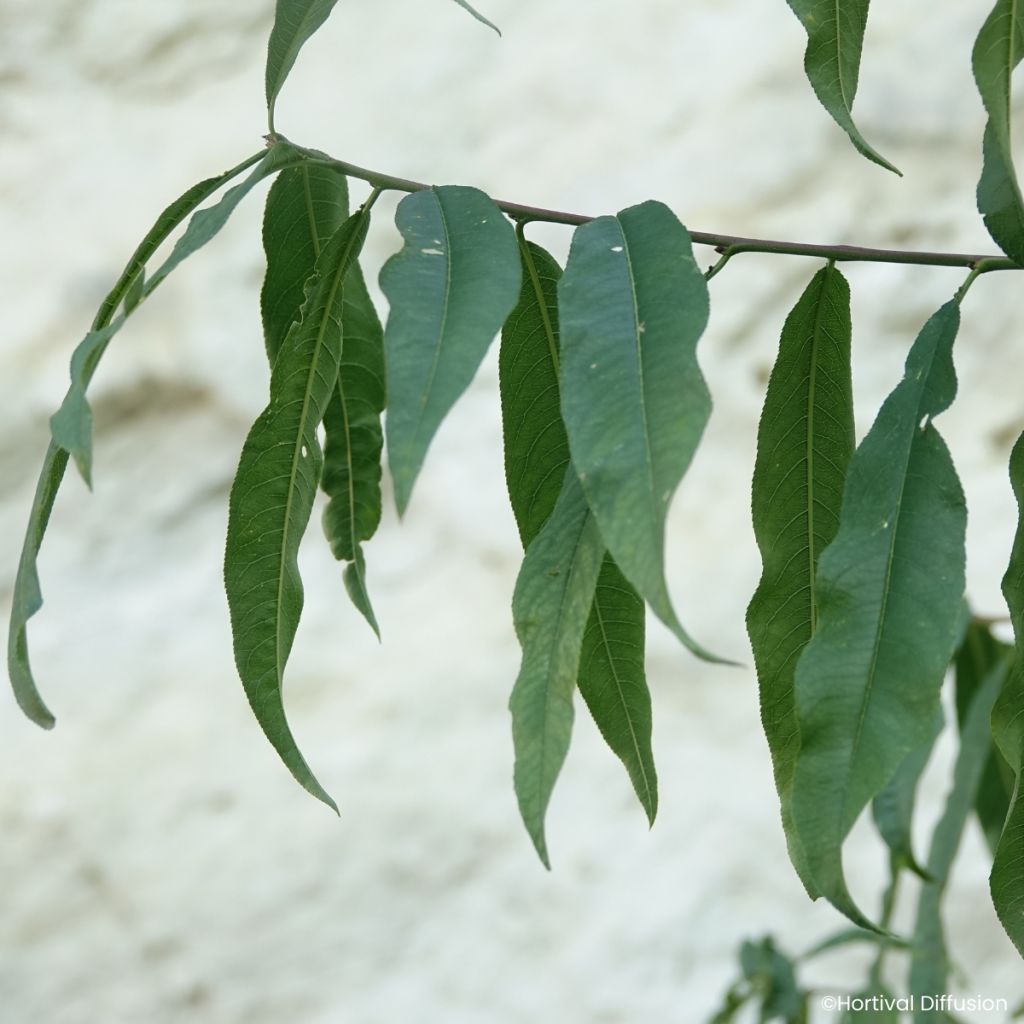
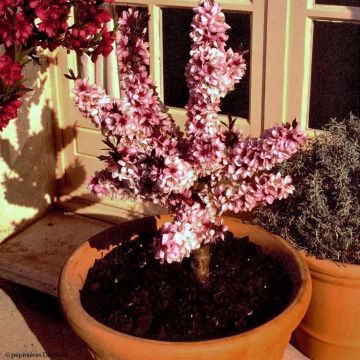
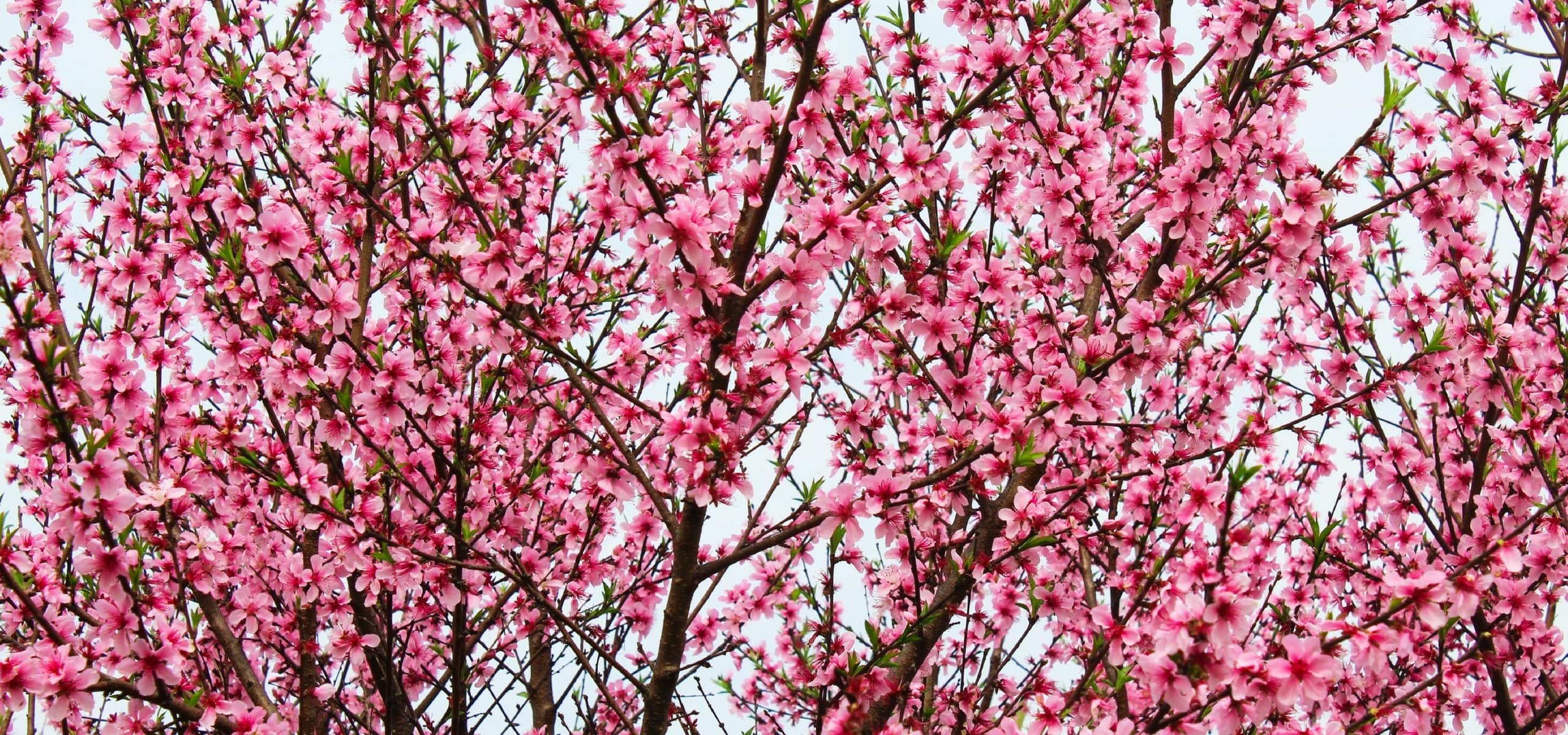
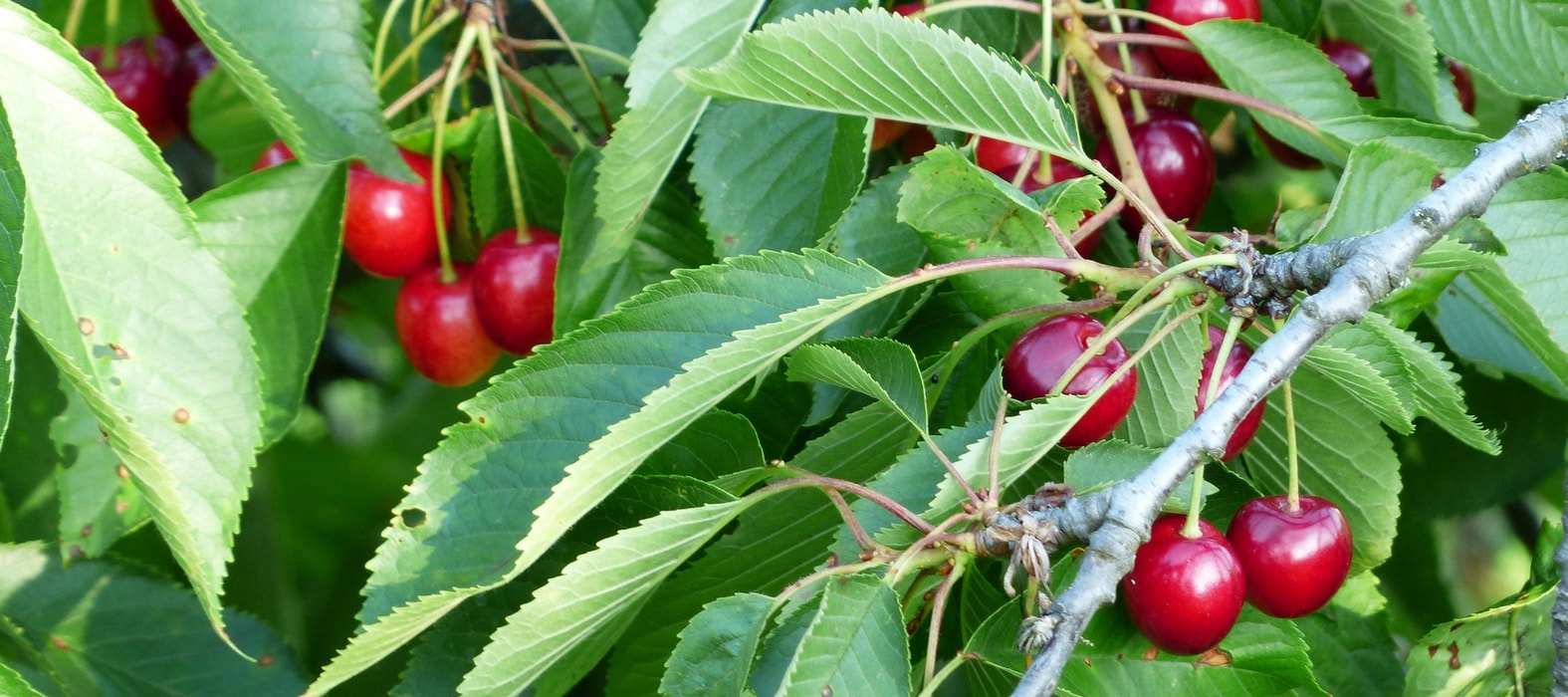
The cultivar Golden Caesar® ('Minpechfor') is a recent variety, selected in 2023 by the Pépinières Forest (Maine-et-Loire) and marketed from 2025. It received a bronze medal at Plantarium 2025 for its fruit and health qualities. It is a tree of medium vigour, reaching approximately 3 m in height and width at maturity, with a rounded and regular habit. Its deciduous, bright green foliage is composed of long, lanceolate leaves 8 to 15 cm by 3 to 4 cm wide, with a short petiole. Its abundant, light pink blossom occurs in March-April, often before the full bud burst. Hermaphroditic and self-fertile, its flowers produce fruit without needing a pollinator variety. However, the presence of other peach trees nearby can improve yield. The fruits of Golden Caesar® are round, fleshy, with orange-yellow skin blushed with red on the sun side. Their yellow, sweet, melting and very juicy flesh is particularly aromatic. The late harvest is in September; the fruits must be hand-picked, by gentle twisting, when they begin to soften under finger pressure and detach easily from the branch. They keep for a few days in the refrigerator, but have more flavour when consumed at room temperature.
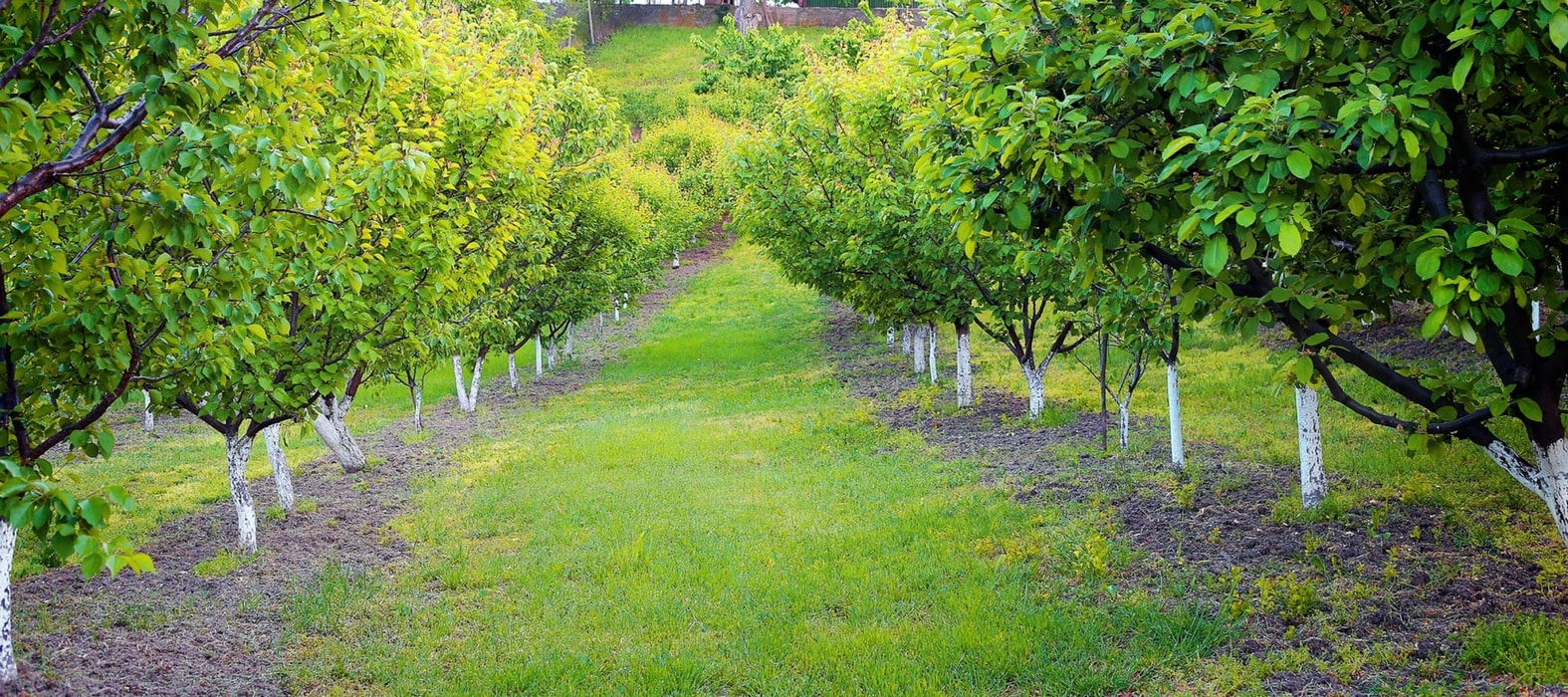
Like most peach trees, Golden Caesar® appreciates light, rich, deep and well-drained soils. However, it tolerates calcareous soils and dry spells better than many varieties. On the other hand, it doesn't like soils that are too compact or waterlogged. For optimal fruiting, it should be planted in full sun, in a warm location, sheltered from cold winds and late frosts.
The Golden Caesar® peach can be enjoyed both raw and cooked: plain, in salads, pastries, jams, compotes or preserves. It accompanies savoury dishes well, especially duck or pork, and can be flambéed, pan-fried, or incorporated into sweet and sour sauces. It is among the most useful vineyard peach varieties for combining ease of cultivation, robustness and taste.
Prunus persica Golden Caesar - Peach tree in pictures
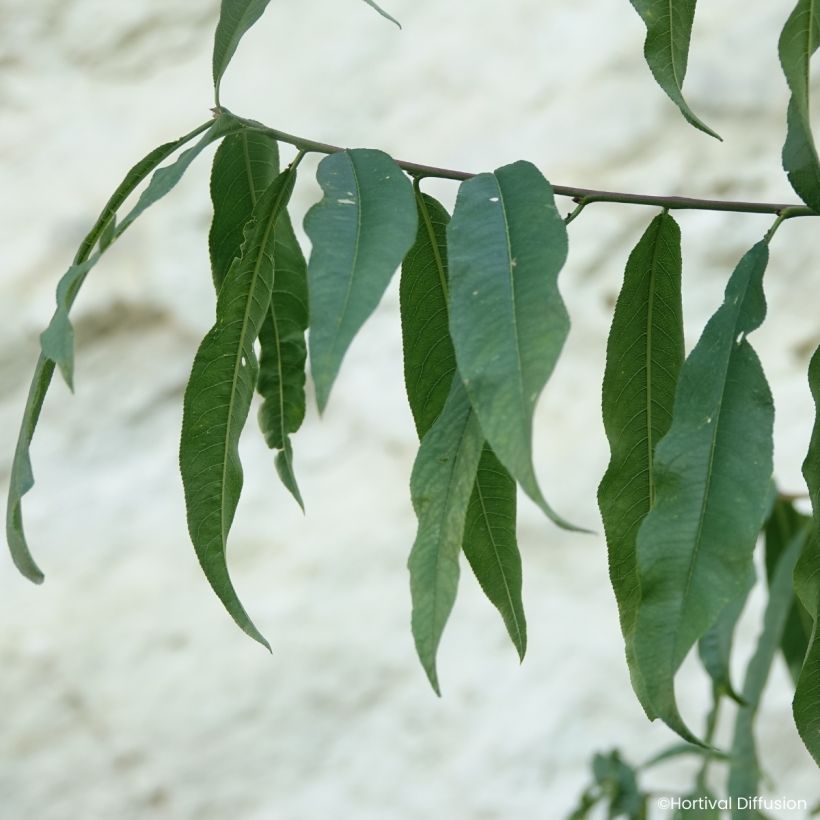
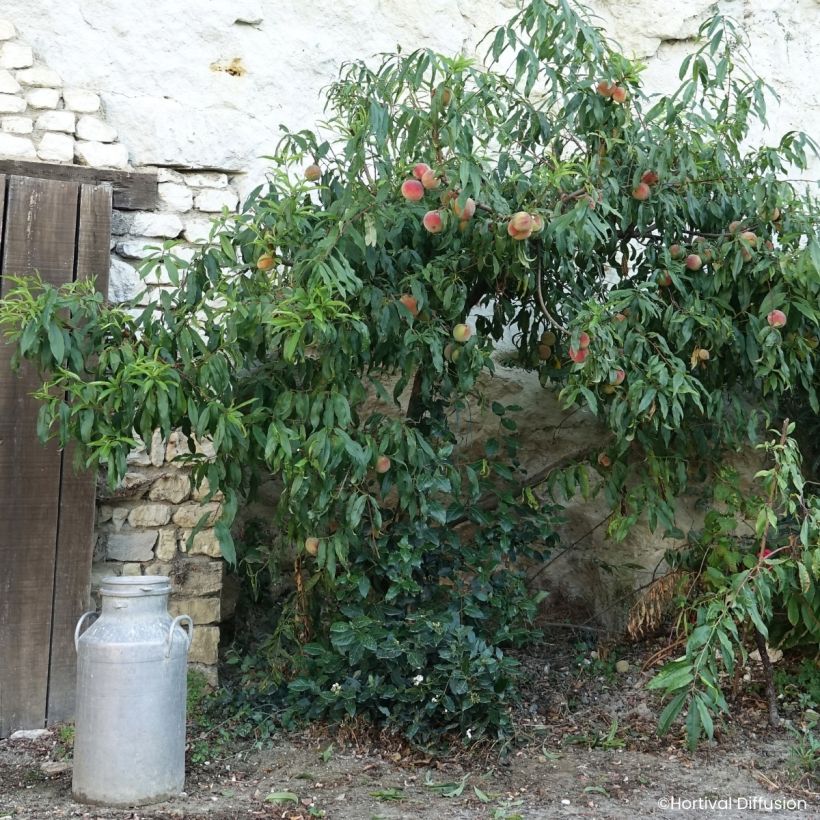
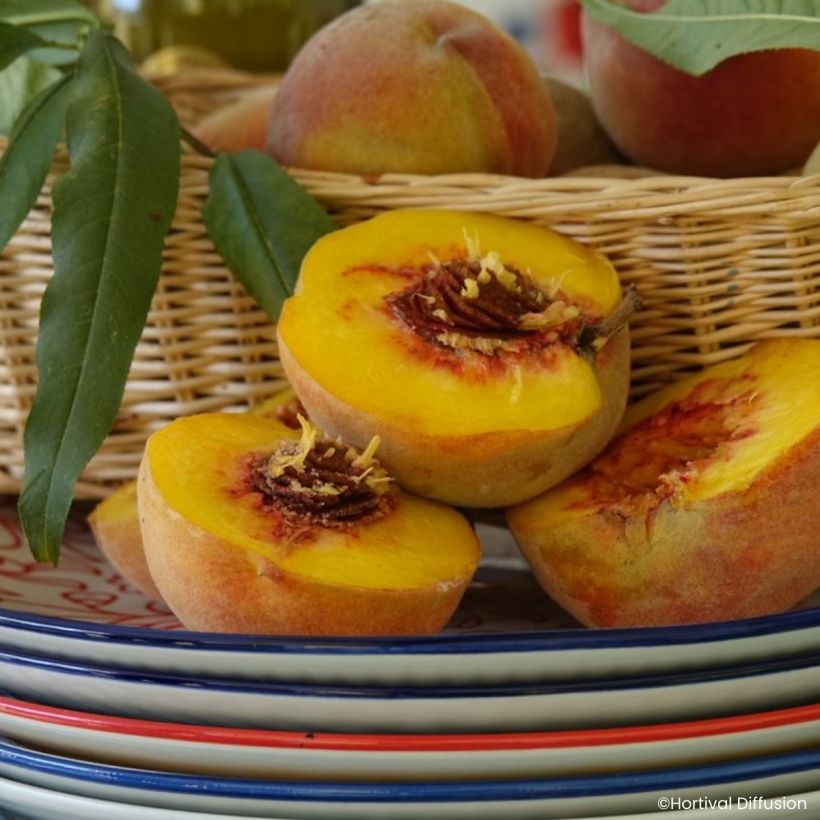
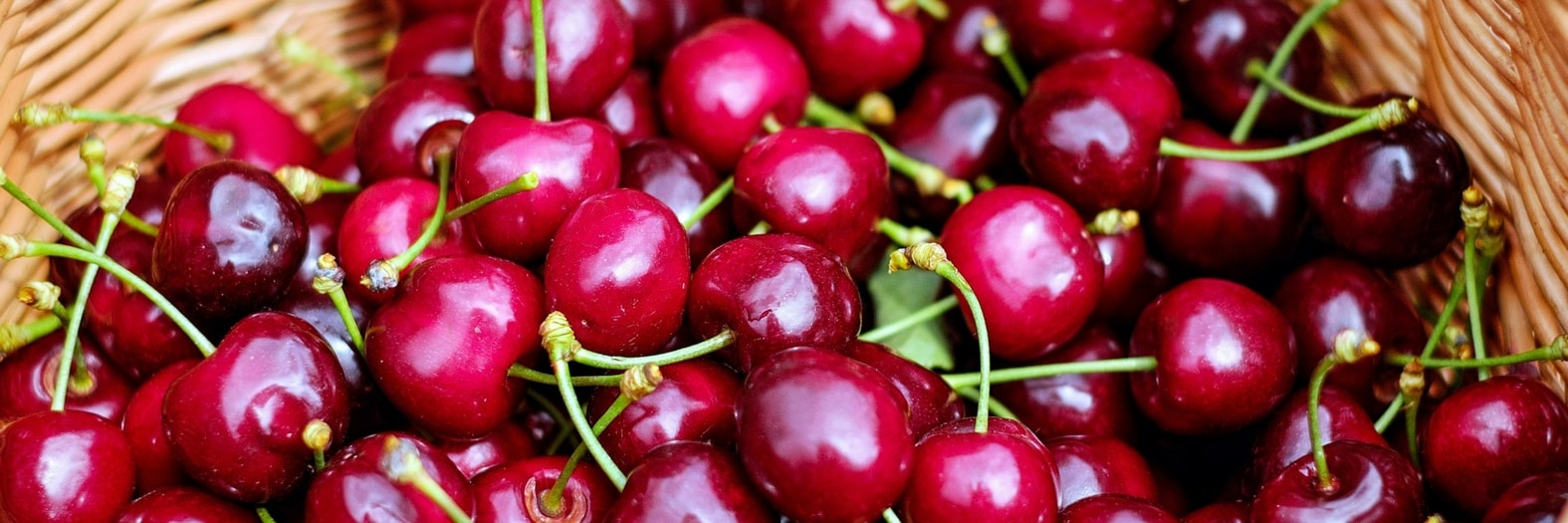
Plant habit
Fruit
Flowering
Foliage
Botanical data
Prunus
persica
'Minpechfor' GOLDEN CAESAR®
Rosaceae
Peach, Persian apple
Prunus persica 'Minpechfor', Prunus persica GOLDEN CAESAR®
Cultivar or hybrid, Western Europe
Planting and care
The Golden Caesar peach tree is best planted from October to December. Dig a hole two to three weeks before planting, twice as wide and deep as the pot. On the day, place the tree with its pot in a bucket of water, so as to wet the entire root ball by capillary action. Put compost at the bottom of the hole. Place the tree in the hole, fill with soil mixed with potting compost. Gently firm the soil around the base of the fruit tree as you fill, ensuring the roots are in close contact with the soil. The root ball must be completely covered. Water generously.
The vineyard peach tree has a semi-taproot system. It will thrive in fairly deep soils. It also prefers a fairly rich, light, and well-drained soil.
Planting period
Intended location
Care
Planting & care advice
-
-
-
-
-
-
-
-
This item has not been reviewed yet - be the first to leave a review about it.
Recently viewed products
Haven't found what you were looking for?
Hardiness is the lowest winter temperature a plant can endure without suffering serious damage or even dying. However, hardiness is affected by location (a sheltered area, such as a patio), protection (winter cover) and soil type (hardiness is improved by well-drained soil).

The flowering period indicated on our website applies to countries and regions located in USDA zone 8 (France, the United Kingdom, Ireland, the Netherlands, etc.)
It will vary according to where you live:- In zones 9 to 10 (Italy, Spain, Greece, etc.), flowering will occur about 2 to 4 weeks earlier.
- In zones 6 to 7 (Germany, Poland, Slovenia, and lower mountainous regions), flowering will be delayed by 2 to 3 weeks.
- In zone 5 (Central Europe, Scandinavia), blooming will be delayed by 3 to 5 weeks.
In temperate climates, pruning of spring-flowering shrubs (forsythia, spireas, etc.) should be done just after flowering.
Pruning of summer-flowering shrubs (Indian Lilac, Perovskia, etc.) can be done in winter or spring.
In cold regions as well as with frost-sensitive plants, avoid pruning too early when severe frosts may still occur.
The planting period indicated on our website applies to countries and regions located in USDA zone 8 (France, United Kingdom, Ireland, Netherlands).
It will vary according to where you live:
- In Mediterranean zones (Marseille, Madrid, Milan, etc.), autumn and winter are the best planting periods.
- In continental zones (Strasbourg, Munich, Vienna, etc.), delay planting by 2 to 3 weeks in spring and bring it forward by 2 to 4 weeks in autumn.
- In mountainous regions (the Alps, Pyrenees, Carpathians, etc.), it is best to plant in late spring (May-June) or late summer (August-September).
The harvesting period indicated on our website applies to countries and regions in USDA zone 8 (France, England, Ireland, the Netherlands).
In colder areas (Scandinavia, Poland, Austria...) fruit and vegetable harvests are likely to be delayed by 3-4 weeks.
In warmer areas (Italy, Spain, Greece, etc.), harvesting will probably take place earlier, depending on weather conditions.
The sowing periods indicated on our website apply to countries and regions within USDA Zone 8 (France, UK, Ireland, Netherlands).
In colder areas (Scandinavia, Poland, Austria...), delay any outdoor sowing by 3-4 weeks, or sow under glass.
In warmer climes (Italy, Spain, Greece, etc.), bring outdoor sowing forward by a few weeks.
Shipping country and language
Your country of residence may be:
Your country of residence is:
For a better user experience on our website, you can select:
Your shipping country:
-
 Austria
-
 Belgium
-
 Bosnia & Herzegovina
-
 Bulgaria
-
 Croatia
-
 Cyprus
-
 Czechia
-
 Denmark
-
 Estonia
-
 Finland
-
 France
-
 Germany
-
 Greece
-
 Hungary
-
 Iceland
-
 Ireland
-
 Italy
Italy
-
 Latvia
-
 Liechtenstein
-
 Lithuania
-
 Luxembourg
-
 Malta
Malta
-
 Netherlands
-
 Poland
-
 Portugal
-
 Romania
-
 Serbia
-
 Slovakia
-
 Slovenia
-
 Spain
Spain
-
 Sweden
-
 Switzerland
Language:
-
French
-
 English
-
Spanish
-
Italian
-
German
-
Portuguese
-
Dutch
-
Finnish
My Account
Hello
My wish lists
My cart
Log in / Register
Existing customer?
This form is protected by reCAPTCHA - the Google Privacy Policy and Terms of Service apply.
New customer?
Create an account to track your orders, access our customer service and, if you wish, make the most of our upcoming offers.