Cookies help us to offer you a personalised browsing experience and to measure our audience. You can configure them at any time and consult our privacy policy.
This website uses cookies to improve your experience when browsing the website. Of these, cookies classified as necessary are stored on your browser because they are essential for the basic functionality of the website to work. We also use third-party cookies to help us analyse and understand how you use this website. These cookies will only be stored on your browser with your consent. You also have the option of refusing these cookies. However, deactivating some of these cookies may have an effect on your browsing experience.
Marketing
These cookies may be used by third-party companies to establish a profile of your interests and offer you relevant advertising on other websites. They do not directly store personal data but are based on the unique identification of your browser and your Internet device. Rejecting these cookies will not necessarily mean you are less targeted by advertisements, only that they will be less targeted.
Name
Description
Lifetime
Essentials
These cookies are essential for the sound operation of our site and will make it unusable if deactivated. They do not store any personal identification information.
Name
Description
Lifetime
Analysis & Performance
These cookies enable us to monitor the number of visits and the source of enquiries in order to measure and improve the performance of our site. They also help us identify the most and least visited pages in order to improve our content. The data linked to these cookies is collated and anonymised.
white
231
yellow
5
green
2
pink
67
black
2
two-tone
1
insignificant
4
Green
302
Show more +Show less -
Show more +Show less -
Show more +Show less -
Show more +Show less -
Show more +Show less -
Show more +Show less -
Show more +Show less -
Show more +Show less -
Show more +Show less -
Show more +Show less -
Show more +Show less -
Show more +Show less -
More filters22
Fewer filters
Sort by:
302
results
Filter
Fruit colour
Show more +Show less -
Height at maturity
Min.
Max.
Recommended planting time
Show more +Show less -
Hardiness - Cold resistance
Show more +Show less -
Supplied in
Show more +Show less -
Shape
Show more +Show less -
Our selection
Show more +Show less -
Price
Min.
Max.
Bee-friendly
Show more +Show less -
Spread at maturity
Min.
Max.
Growth rate
Show more +Show less -
Habit
Show more +Show less -
Garden style
Show more +Show less -
Disease resistance
Show more +Show less -
Exposure
Show more +Show less -
Flower colour
white
231
yellow
5
green
2
pink
67
black
2
two-tone
1
insignificant
4
Foliage colour
Green
302
Foliage persistence
Show more +Show less -
Fragrance
Show more +Show less -
Organic
Show more +Show less -
Flowering time
Show more +Show less -
Harvest time
Show more +Show less -
Soil pH
Show more +Show less -
Moisture content of soil
Show more +Show less -
Soil type
Show more +Show less -
USDA Zone
Show more +Show less -
Ornamental interest
Show more +Show less -
Type of use
Show more +Show less -
Use
Show more +Show less -
Availability
More filters22
Fewer filters
Would this plant suit my garden?
Set up your Plantfit profile →
Filter
Sort by:
Display
302results
Loading previous products...
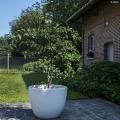
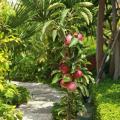
Maiden and goblet-trained fruit trees are two forms of trees to plant in the orchard. A maiden is a one or two-year-old grafted tree, which can be pruned after planting to give it shape. A goblet-trained tree, meanwhile, already bears several branches on a short trunk: it establishes easily in the orchard and produces its fruit within easy reach. These two forms are suitable for family gardens. Plant as specimen trees, in rows, or near the vegetable patch, in well-prepared soil and in full sun.
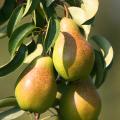
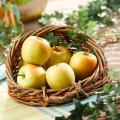
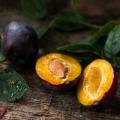
As maidens or goblet-trained trees, you can find, for example, the famous ‘Golden Delicious’ apple tree with its fine, juicy yellow apples, perfect for eating fresh or cooking, or ‘Reine des Reinettes’, a reliable choice for its fragrance and its good balance of sugar and acidity. As goblet-trained trees, we offer, for example, ‘Louise Bonne d’Avranches’ and ‘Conférence’ pear trees, which can pollinate each other to produce a fine harvest. The ‘Reine Claude de Chambourcy Organic’ plum tree produces late, sweet and fragrant plums. The choice between a maiden or a goblet-trained tree depends mainly on the time you wish to devote to training the tree.
Maiden and goblet-trained fruit trees are two forms of trees to plant in the orchard. A maiden is a one or two-year-old grafted tree, which can be pruned after planting to give it shape. A goblet-trained tree, meanwhile, already bears several branches on a short trunk: it establishes easily in the orchard and produces its fruit within easy reach. These two forms are suitable for family gardens. Plant as specimen trees, in rows, or near the vegetable patch, in well-prepared soil and in full sun.
As maidens or goblet-trained trees, you can find, for example, the famous ‘Golden Delicious’ apple tree with its fine, juicy yellow apples, perfect for eating fresh or cooking, or ‘Reine des Reinettes’, a reliable choice for its fragrance and its good balance of sugar and acidity. As goblet-trained trees, we offer, for example, ‘Louise Bonne d’Avranches’ and ‘Conférence’ pear trees, which can pollinate each other to produce a fine harvest. The ‘Reine Claude de Chambourcy Organic’ plum tree produces late, sweet and fragrant plums. The choice between a maiden or a goblet-trained tree depends mainly on the time you wish to devote to training the tree.
The flowering period indicated on our website applies to countries and regions located in USDA zone 8 (France, the United Kingdom, Ireland, the Netherlands, etc.)
It will vary according to where you live:
In zones 9 to 10 (Italy, Spain, Greece, etc.), flowering will occur about 2 to 4 weeks earlier.
In zones 6 to 7 (Germany, Poland, Slovenia, and lower mountainous regions), flowering will be delayed by 2 to 3 weeks.
In zone 5 (Central Europe, Scandinavia), blooming will be delayed by 3 to 5 weeks.
In temperate climates, pruning of spring-flowering shrubs (forsythia, spireas, etc.) should be done just after flowering.
Pruning of summer-flowering shrubs (Indian Lilac, Perovskia, etc.) can be done in winter or spring.
In cold regions as well as with frost-sensitive plants, avoid pruning too early when severe frosts may still occur.
The planting period indicated on our website applies to countries and regions located in USDA zone 8 (France, United Kingdom, Ireland, Netherlands).
It will vary according to where you live:
In Mediterranean zones (Marseille, Madrid, Milan, etc.), autumn and winter are the best planting periods.
In continental zones (Strasbourg, Munich, Vienna, etc.), delay planting by 2 to 3 weeks in spring and bring it forward by 2 to 4 weeks in autumn.
In mountainous regions (the Alps, Pyrenees, Carpathians, etc.), it is best to plant in late spring (May-June) or late summer (August-September).
The harvesting period indicated on our website applies to countries and regions in USDA zone 8 (France, England, Ireland, the Netherlands).
In colder areas (Scandinavia, Poland, Austria...) fruit and vegetable harvests are likely to be delayed by 3-4 weeks.
In warmer areas (Italy, Spain, Greece, etc.), harvesting will probably take place earlier, depending on weather conditions.
The sowing periods indicated on our website apply to countries and regions within USDA Zone 8 (France, UK, Ireland, Netherlands).
In colder areas (Scandinavia, Poland, Austria...), delay any outdoor sowing by 3-4 weeks, or sow under glass.
In warmer climes (Italy, Spain, Greece, etc.), bring outdoor sowing forward by a few weeks.