To reproduce, plants need their pollen to be transported from one flower to another. Some of them use the wind for this: for example, grasses and conifers. These plants do not require colourful or fragrant flowers, as they do not need to attract insects. However, this technique is not very effective… Pollen flies in all directions, and only a tiny fraction will reach another flower of the same species. There are also plants that use water to transport pollen, while others are pollinated by birds (hummingbirds in tropical regions), bats, and certain rodents…
However, in our latitudes, most plants rely on insects for pollination, as this is probably the most effective technique. They call upon a wide variety of insects: bees, butterflies, flies, bumblebees, ladybirds, beetles, ants… Without them, many plants would disappear!
Plants are immobile and cannot go out and fetch insects themselves… but as you will see, they are incredibly ingenious in attracting them!
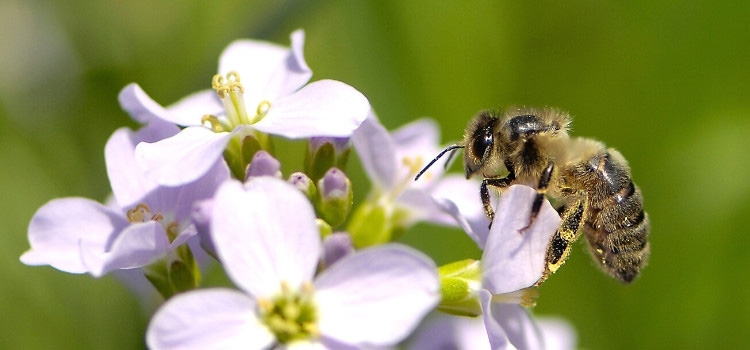
1- Scent and Nectar
Plants play on several fronts to attract insects: colours, scents, shapes… Their flowering stimulates the various senses of foraging insects.
Flowers attract insects from afar with their scents. Insects are very sensitive to smells, which they perceive through receptors on their antennae. These scents signal that the flower is ready to be pollinated and that nectar is available. The scent can also differ if the flower is young or old, providing insects with a clue about the amount of nectar. This way, they do not waste time visiting flowers that are not mature or are too old. Their goal is not to pollinate the flowers, but simply to feed! Pollen is an excellent source of nutrients for larvae, while nectar is rich in quick sugars.
Insects do not perceive scents in the same way we do. Some floral scents that escape our notice are very attractive to them. They quickly learn to associate the smell with the presence of nectar… But beware, some flowers are cunning and emit a scent without offering any nectar!
Flowers that bloom at night are often the most fragrant! At night, it is harder to see colours, so they rely on scent to be noticed. In fact, some flowers are more fragrant at night than during the day. The Four O'Clocks only open in the evening, releasing a pleasant fragrance and wilting in the morning, thus reserving their nectar for nocturnal insects.
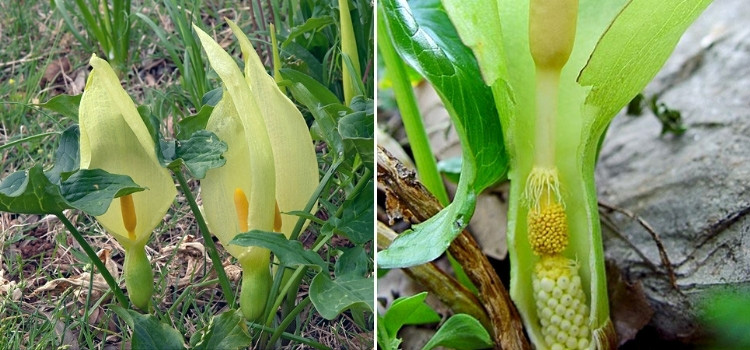
Not all floral scents are pleasant. For example, Araceae emit an unpleasant odour, reminiscent of a corpse or rotting meat, to attract the flies that pollinate them (by mimicking their laying site)!
Interestingly, flowers pollinated by wind or birds do not have scents.
→ Pascale explains the differences between melliferous and nectariferous plants.
2- Colours and Ultraviolet
Insects do not perceive colours as we do! Most of them cannot see red, which appears black to them. They primarily distinguish yellow, purple, and blue.
Many insects are attracted to the colour yellow! This is why there are many yellow flowers: dandelions, daffodils, brooms, mimosas, sunflowers, chamomiles, St. John's worts… Similarly, the centre of flowers is often yellow! This colour is particularly attractive to dipterans (flies), especially hoverflies.
Purple and blue also attract insects. These shades can be found in many plants, such as lavender, cornflowers, muscari, periwinkles, delphiniums or borage.
Red, pink, and purple particularly attract butterflies.
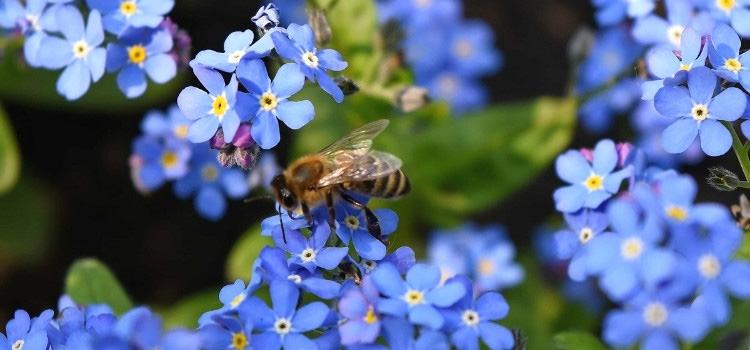
Flowers that open at night are most often white and fragrant to be more visible in the dark. Some of these flowers close during the day and open in the evening, in order to reserve their nectar for nocturnal insects!
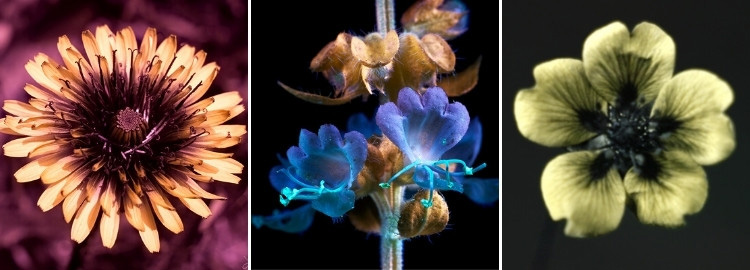
But beyond these colours, flowers bear ultraviolet patterns on their petals, near the centre of the flower. They are invisible to us, but not to insects like bees and bumblebees. These ultraviolet lines and spots act as signposts for them, helping them to find the centre of the flower more easily! This guides them to the nectar and pollen.
3- The Shape of Flowers and Their Arrangement
The shape of flowers varies greatly between species. Some plants have a few large, visible flowers, while others produce a multitude of small flowers grouped together.
Depending on their shape, they will attract different pollinators. For example, tubular flowers attract insects with long proboscises, like butterflies. They are capable of reaching the nectar that is deep within the flower's tube. Some flowers are even specially adapted to a single species of insect (which thus becomes their exclusive pollinator). Take the example of the Madagascar Star (Angraecum sesquipedale), which is an orchid with a very long floral tube (about 30 cm). When he discovered this flower, Darwin predicted the existence of a butterfly with a proboscis of that length… And he was right; 40 years later, this butterfly was indeed discovered!
Many flowers, like those in the Lamiaceae family, have a larger lower part that serves as a "landing strip" for insects, especially bees.
Finally, the clustering of flowers into inflorescences helps insects forage more efficiently. It is more convenient for them to quickly move from one flower to another when they are all close together.
4- Traps and Deceptions
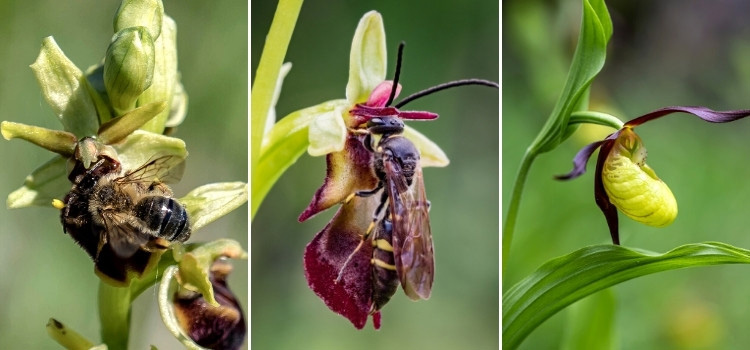
When it comes to reproduction, some plants are willing to go to great lengths, even deceiving insects! Orchids are particularly skilled at this.
Take the example of the Ophrys orchids, which can create a true sexual lure. Their flowers mimic the female of the insect that often pollinates them, such as a bee or a bumblebee. They simultaneously release pheromones… Thus, males are attracted and attempt to mate with the flower. They leave, of course, loaded with pollen!
The Lady's Slipper is another orchid that traps insects. The bee is attracted by the colour and scent of the flower (pheromones). Once inside, it finds itself trapped in the lower petal shaped like a slipper and must follow a narrow path to exit. In doing so, it rubs against the pollen and takes it with it to deposit on another flower.
Araceae are also trap plants. Generally, their flowers smell bad, like rotting meat, to attract flies. In Arums, the flowers even produce heat, which enhances the diffusion of odours. In the centre of the inflorescence, the temperature can be more than 20 °C higher than the ambient air! Their inflorescences form a "floral chamber," in which flies become trapped. Once covered in pollen, they are released and can then go pollinate another flower.
Thus, in the face of insects, plants are not as passive as they seem! Although immobile, they are full of ingenuity to trap them and have them carry their precious pollen.
To reproduce, plants need their pollen to be transported from one flower to another. Some of them use the wind for this: for example, grasses and conifers. These plants do not require colourful or fragrant flowers, as they do not need to attract insects. However, this technique is not very effective… Pollen flies in all […]
The French Observatory of Apidology is organising this year the fourth edition of the "Flowers for Bees" campaign, which runs from 20 May to 21 June 2022. Like Promesse de Fleurs, many plant professionals are committed to the preservation of bees, providing billions of flowers for these precious insects and raising awareness among the public about the issues of pollination.
For each of us must today realise that the future of humanity is linked to that of these irreplaceable pollinators.
Why are bees threatened with extinction?
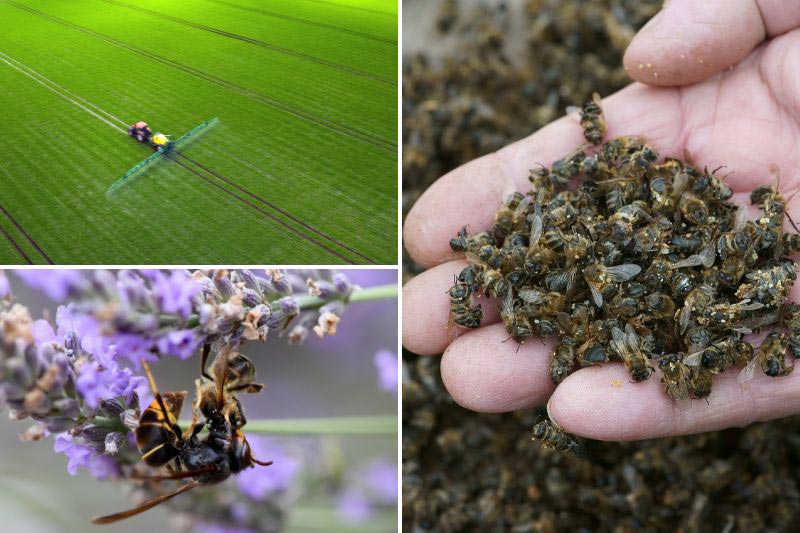
They have lived on Earth for 50 million years and through our actions, in just a few decades, they are now threatened with extinction to the point that their populations are collapsing worldwide, with a mortality rate of 30 to 80% depending on the regions of the globe. We are responsible for:
- pesticides spread over crops, poisoning insects,
- the destruction of biodiversity drastically reducing their habitat and food resources,
- the transport of parasites such as Varroa, a mite from Asia responsible for the collapse of honeybee colonies,
- bee-killing predators circulating due to globalisation such as the well-known Asian hornet...
It seems as if humanity is intent on bringing together all the elements leading to their eradication. However, their disappearance will lead to ours, as our fate is linked to that of these precious hymenopterans.
What are the consequences?
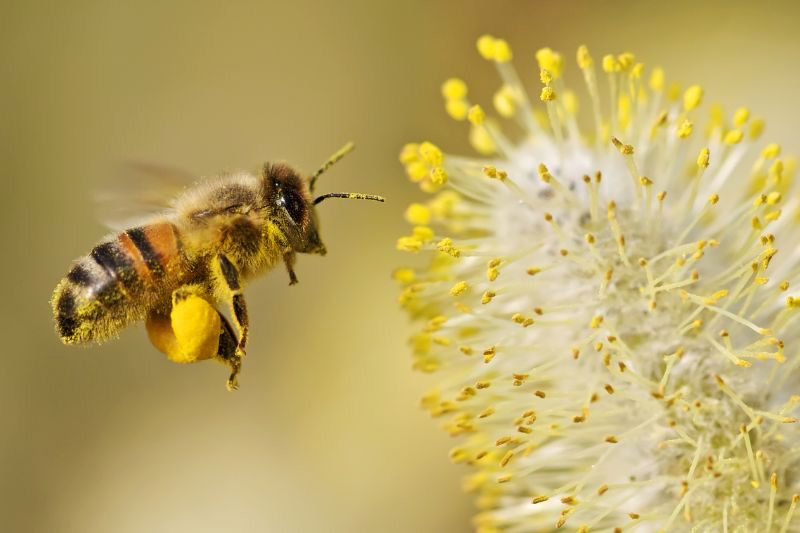
As the main pollinating insect (a bee can visit 250 flowers per hour), bees unknowingly bear the responsibility for the reproduction of 80% of plant species and the production of a third of our food. Whether wild or domestic, of 100 plant species that are part of our food resources, they pollinate more than 70 on their own... This makes one think, as we must go beyond the "simple" act of protecting an admirable species, a miracle of evolution and the most elaborate model of society among insects.
These organised societies, which have survived thanks to the adaptations they have developed and have traversed several glacial periods, work quietly to pollinate flowering plants and thus produce the fruits and vegetables we eat every day.
Simply put: without this essential function of transferring pollen from one flower to another, human life could not exist on Earth due to a lack of food resources. We are guilty and will be victims of their extinction; it is therefore doubly our duty to help them.
How to help bees?
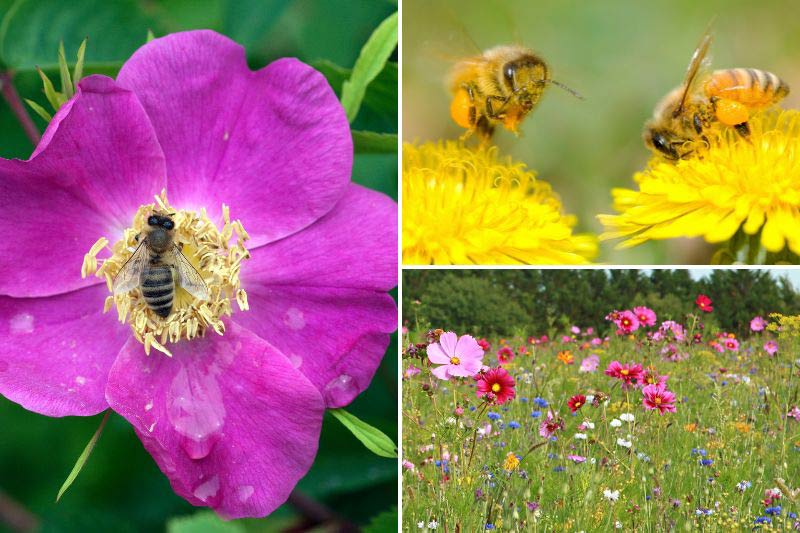
In the face of the diminishing food resources for pollinators, as biodiversity spaces shrink and concrete replaces the flowers of the fields, everyone can - and must! - plant and sow melliferous plants in their garden, on their balcony or terrace.
We have plenty of choices: from melliferous hedges to surround the garden, to bushes and melliferous perennials to insert in numbers into the flower beds, to melliferous climbing plants to adorn our walls.
→ Follow the advice in our article to help you select the best melliferous plants by season
And to replace the mown lawn which will turn yellow anyway this summer, let dandelions and wild herbs grow, and you will enjoy seeing bees, butterflies, and all kinds of insects reappear. Less chore for gardeners and abundant shelter and food for wildlife, what could be better?
I also recommend flowering fallows, some of which are composed of perennial or annual, nectariferous and melliferous flowers, to attract bees and other equally precious pollinating insects!
Also ban any use of pesticides in the garden as well as at home. Not only will you preserve your health, but you will also contribute to protecting bees.
Consider installing small shallow containers that you will fill with water in summer; we get thirsty, insects do too and can suffer from dehydration during dry periods.
Your garden can also become a refuge for biodiversity: plant, do not over-maintain, and install insect hotels wherever you can! This will be an opportunity to raise children's awareness of these issues that will soon concern them closely.
The French Observatory of Apidology is organising this year the fourth edition of the “Flowers for Bees” campaign, which runs from 20 May to 21 June 2022. Like Promesse de Fleurs, many plant professionals are committed to the preservation of bees, providing billions of flowers for these precious insects and raising awareness among the public […]