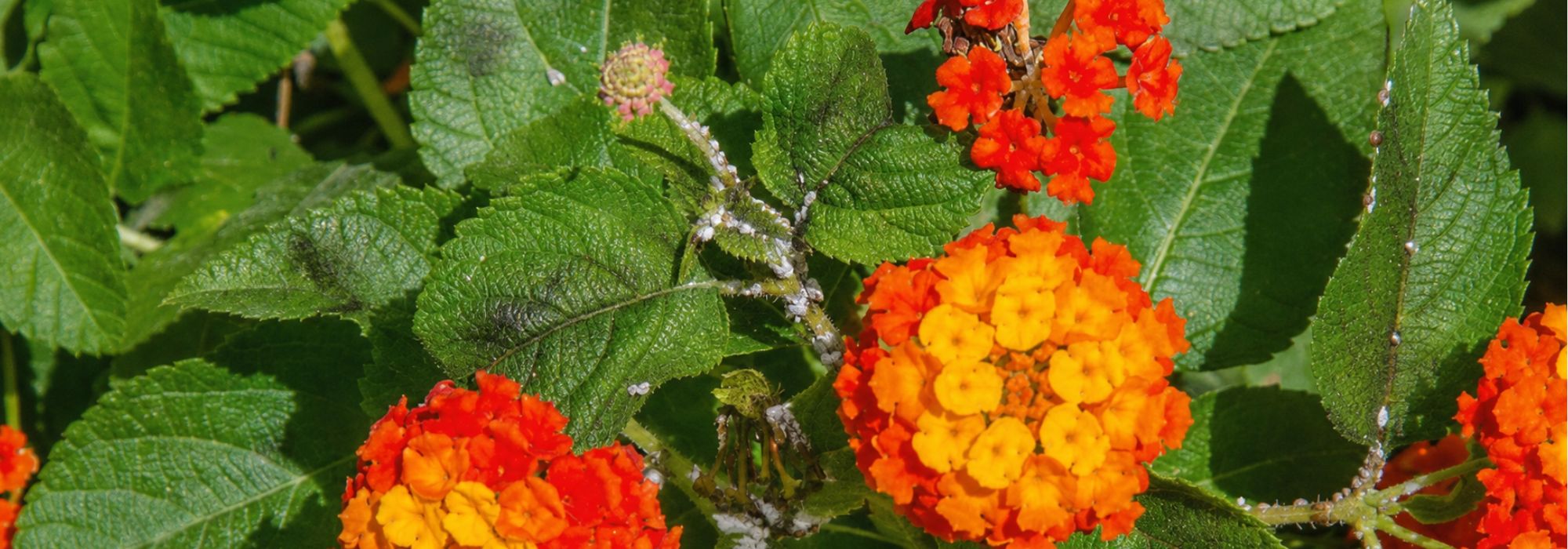
Lantana diseases and pests: how to recognise and treat them?
Tips for keeping lantana healthy
Contents
lantana is a robust floriferous shrub, rarely affected by disease when grown in sun in well-drained soil. Problems mainly occur with excess moisture or when overwintering under cover. The main diseases are powdery mildew, Botrytis and root rot. As for pests, aphids, whiteflies, red spider mites and scale insects are the most common. A good diagnosis enables rapid action and limits damage. Discover the most common diseases and pests of lantana, their symptoms and how to prevent or treat them.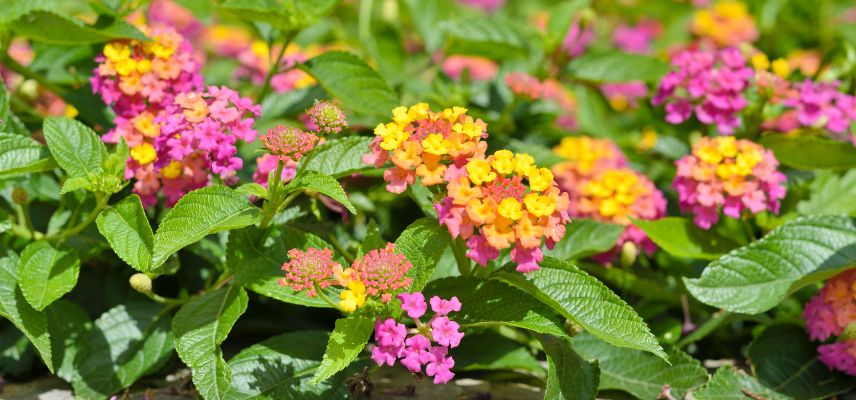

Quick diagnosis: diseases and pests of lantana
| Problem | Symptoms | Prevention / treatment |
|---|---|---|
| Powdery mildew | White powdery coating on leaves | Improve ventilation, water at soil level, remove affected parts, sulphur if necessary |
| Botrytis | Browned flowers, grey mould | Remove affected flowers, reduce humidity |
| Root rot | Yellowing, wilting | Well-draining soil, moderate watering |
| Aphids | Distorted young shoots, honeydew | Blast with water, beneficial insects, black soap |
| Whiteflies | Small white flies | Improve ventilation, yellow sticky traps, black soap |
| Red spider mites | Yellowing leaves, fine webs | Increase humidity, shower foliage with water |
| Mealybugs | White cottony masses or brown shells | Manual removal, black soap or white oil |
Lantana diseases
Powdery mildew
Description
This fungal disease appears mainly in warm, humid conditions when air movement is insufficient. Powdery mildew mainly affects lantana grown in pots or overwintered under cover.
Symptoms
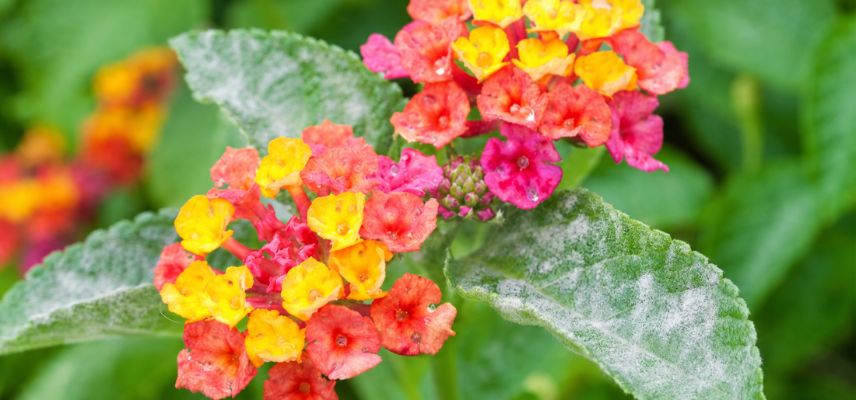
A white, floury coating covers leaves and young shoots. Leaves become distorted, yellow then gradually dry out.
Prevention and treatment
- Grow lantana in full sun and space plants to improve air circulation.
- Avoid excess nitrogenous fertiliser and watering foliage.
- Remove affected parts at first symptoms.
- For severe or recurrent attacks, spray a sulphur-based fungicide. A horsetail decoction can also be used as a preventative.
Botrytis (grey mould)
Description
Botrytis is a fungus favoured by high humidity and poor ventilation, especially during overwintering or in rainy weather.
Symptoms
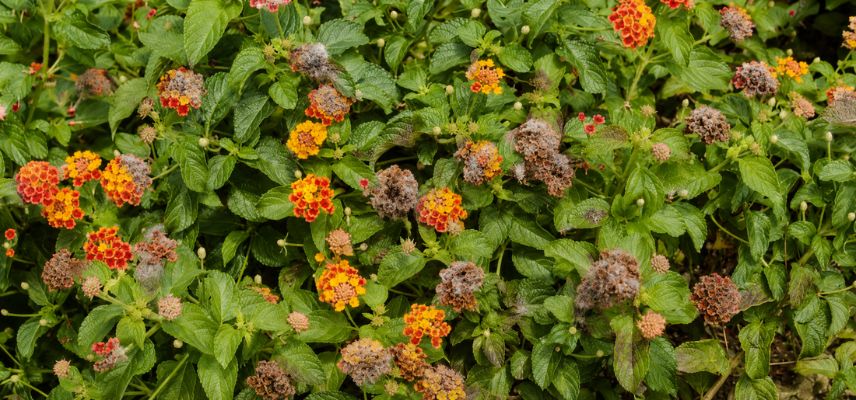
Flowers turn brown, wilt then become covered in characteristic grey fuzz. Young shoots can also be affected.
Prevention and treatment
- Regularly remove spent flowers.
- Avoid overwatering and ensure good ventilation for plants under cover.
- Quickly remove affected parts to limit spread. Treatments are rarely necessary.
- Spray a horsetail decoction curatively or preventatively
Root rot
Description
This disease is caused by fungi that develop in constantly wet or poorly drained soil.
Symptoms
Foliage yellows then wilts despite moist soil. Roots brown or blacken before rotting.
Prevention and treatment
- Plant lantana in light, well-drained soil.
- In pots, allow potting mix to dry out slightly between waterings.
- If plant is slightly affected, repot into healthy potting compost after removing damaged roots. Severely affected specimens are often difficult to save.
Parasitic pests of lantana
Aphids
Description
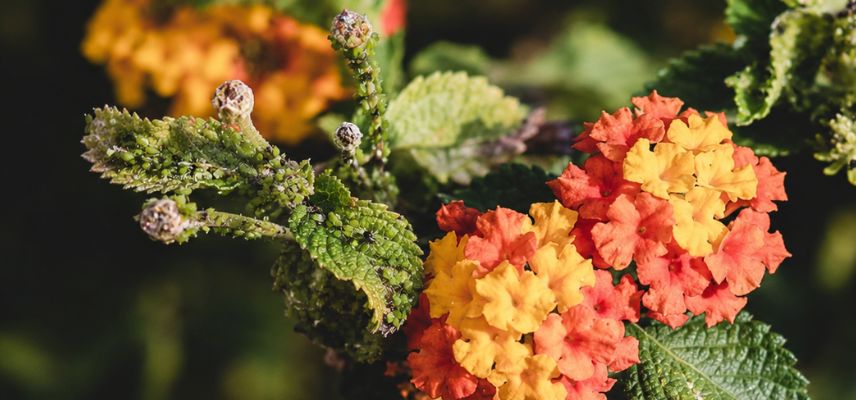
Aphids are sap-sucking insects that settle mainly in spring on young shoots and flower buds. Aphid identification and treatment
Symptoms
Young leaves become deformed, growth slows and sticky honeydew appears, which can favour sooty mould.
Prevention and treatment
- Encourage natural predators, especially ladybirds.
- Avoid excessive applications of nitrogen-rich fertiliser.
- In case of infestation, remove aphids with a jet of water or spray a solution of black soap.
Whiteflies
Description
Whiteflies are especially present on Lantana grown under glass, in a conservatory or during overwintering.
Symptoms
Small white insects take flight when plant is touched. Leaves become sticky, turn yellow and then weaken.
Prevention and treatment
- Ventilate plants grown under cover regularly.
- Install yellow sticky traps to monitor populations.
- If populations are high, spray foliage with liquid black soap.
- In a greenhouse or under cover, biocontrol can also be used by introducing the predatory bug Macrolophus pygmaeus (Calpop® device). Very effective against whiteflies, this beneficial also attacks other pests such as aphids, mites and thrips. Introduce it preventively or at first signs of infestation.
Red spider mites
Description
These mites proliferate when air is warm and dry, notably indoors or under glass.
Symptoms
Leaves show fine yellow speckling, lose their sheen and then dry out. Fine webs may be visible.
Prevention and treatment
- Increase humidity slightly by regularly misting the foliage.
- Remove the most affected leaves.
- Spray in advance a nettle manure or a horsetail decoction.
Mealybugs
Description
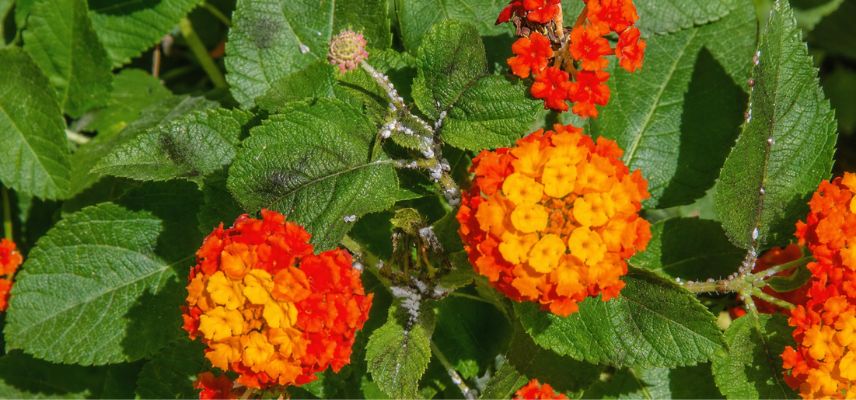
Mealybugs often appear during overwintering and feed on plant sap. Mealybug identification and treatment
Symptoms
Cottony white masses or small brown shells attach to stems and under leaves. Plant weakens and produces honeydew.
Prevention and treatment
- Inspect overwintered plants regularly.
- Remove mealybugs by hand or with a cloth soaked in 70% alcohol.
- In case of heavy infestation, apply a spray of black soap or white oil.
- It is possible to use biological control by introducing other predatory species, beneficial insects: ladybirds and lacewings are natural predators of mealybugs.
For more information, read our articles: “Repellent plants to use in manure and decoctions to protect crops” and “Natural insecticidal agents to use in manure teas and decoctions”.
- Subscribe!
- Contents
This form is protected by reCAPTCHA - the Google Privacy Policy and Terms of Service apply.

































Comments