Why plant marigolds in the vegetable garden?
Discover their benefits for the garden
Contents
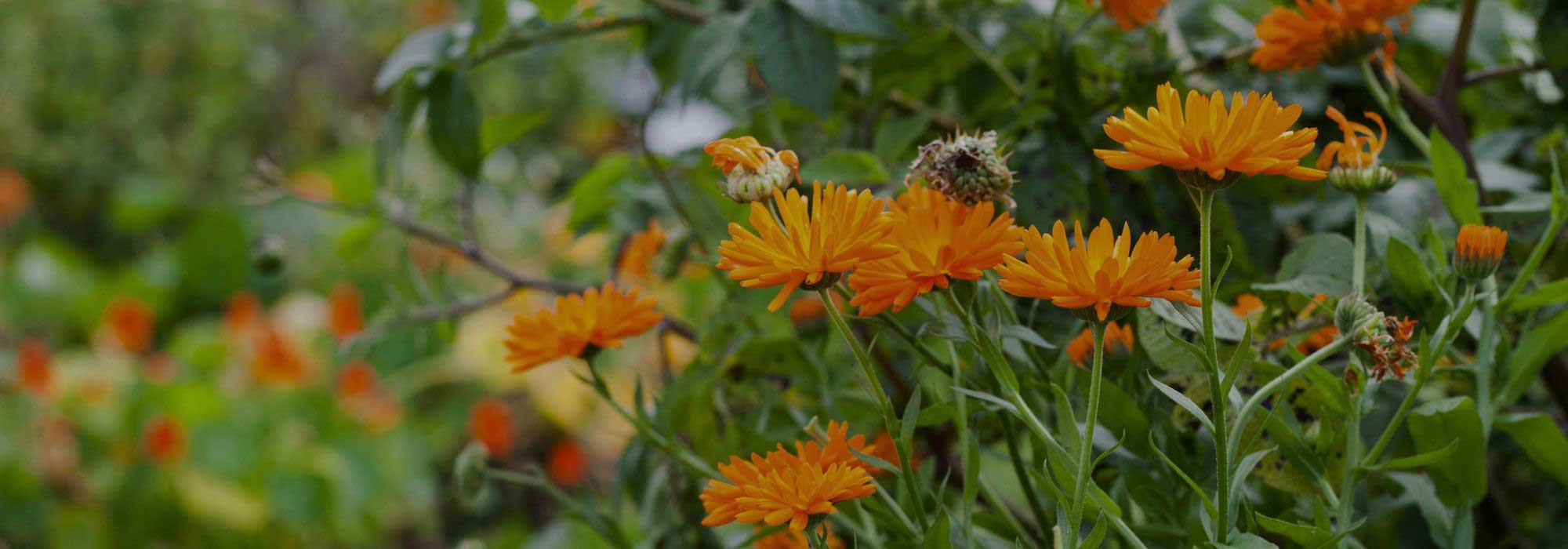
With their yellow or orange flowers, pot marigolds, or Calendula add a lovely splash of colour to the vegetable garden. But this annual plant is not merely decorative: it can also help attract pollinators, promote biodiversity and provide a home for some beneficial insects. Easy to sow and undemanding, it fits readily between vegetables or along the edges of crops. So why plant pot marigolds in the vegetable garden? Discover the good reasons to grow them, along with our advice on how to establish them successfully in the garden.
Pot Marigold, a Flower with Many Benefits in the Garden
The pot marigold (Calendula officinalis) is a herbaceous annual plant in the daisy family, native to the Mediterranean basin. Its bright orange or vivid yellow flowers bloom generously from spring until the first frosts.
Undemanding, pot marigold grows in most ordinary soils, provided it has a sufficiently sunny position. It is very easy to propagate by sowing and can even self-seed from one year to the next.
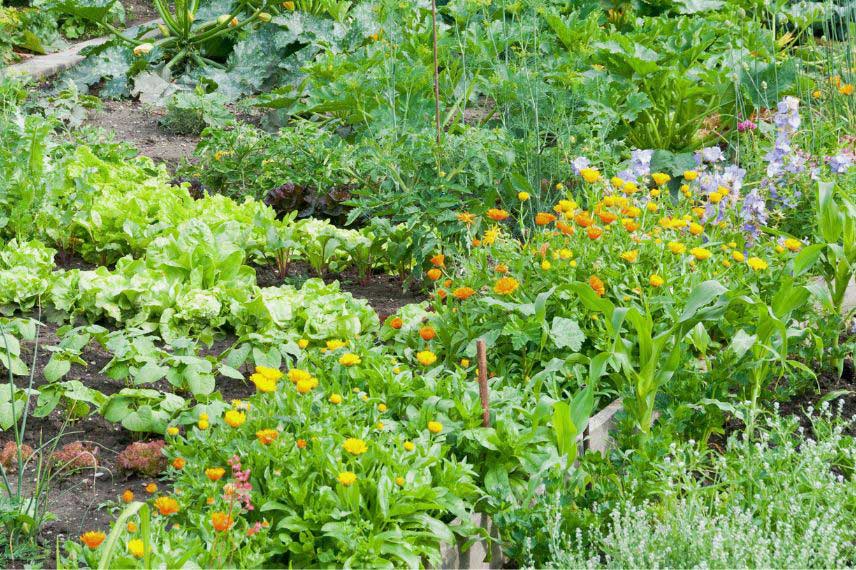
Grown for centuries in cottage gardens and apothecary gardens, it has always had a place between rows of vegetables, alongside marigolds and French marigolds, which are also commonly found in kitchen gardens.
Why plant marigolds in the vegetable garden?
To attract pollinators
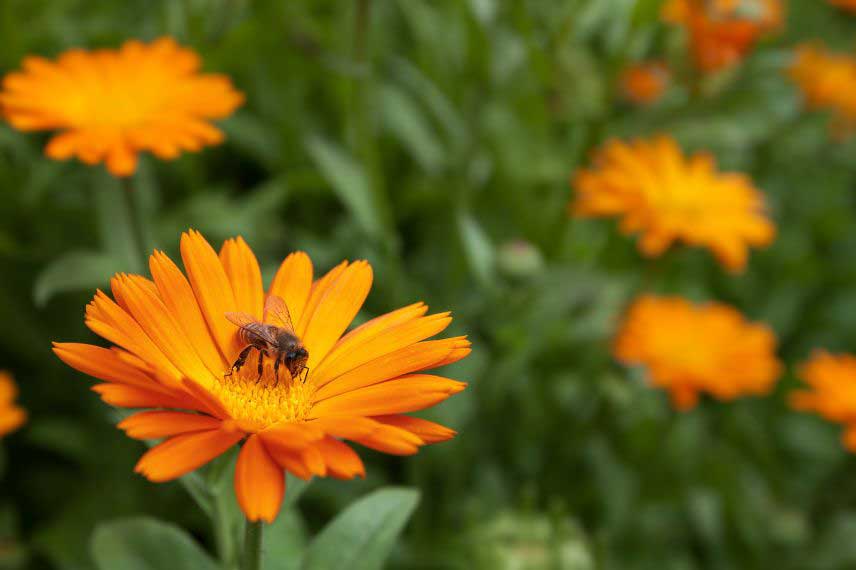
With its open flower heads rich in nectar and pollen, marigold is highly valued by honey bees, bumblebees, wild bees and butterflies. Its long, continuous flowering period is a major advantage: it allows insects to forage from May to November, including when other flowers are becoming scarce.
For your crops, this is a direct benefit: more pollinators means better fertilisation of courgettes, squash, French beans, tomatoes and strawberries, and therefore better yields.
To encourage biodiversity
Planting marigolds provides a habitat and a food source for the small wildlife in the garden. Beyond pollinators, their stems and foliage shelter numerous insects, while their seeds can provide food for birds at the end of the season. By allowing a few plants to set seed, you strengthen the ecological network in your vegetable garden.
The main benefit is to multiply the habitats and resources available. A plot made up exclusively of vegetables offers less diversity than a space where vegetables, flowers and herbs grow alongside one another. A diverse vegetable garden is also more resilient: the more species it accommodates, the more natural balances become established, and the less often imbalances occur, such as pest outbreaks.
Marigolds can therefore play a part in biodiversity-friendly gardening, especially when combined with other flowering plants that bloom in succession throughout the season.
To enjoy its edible flowers
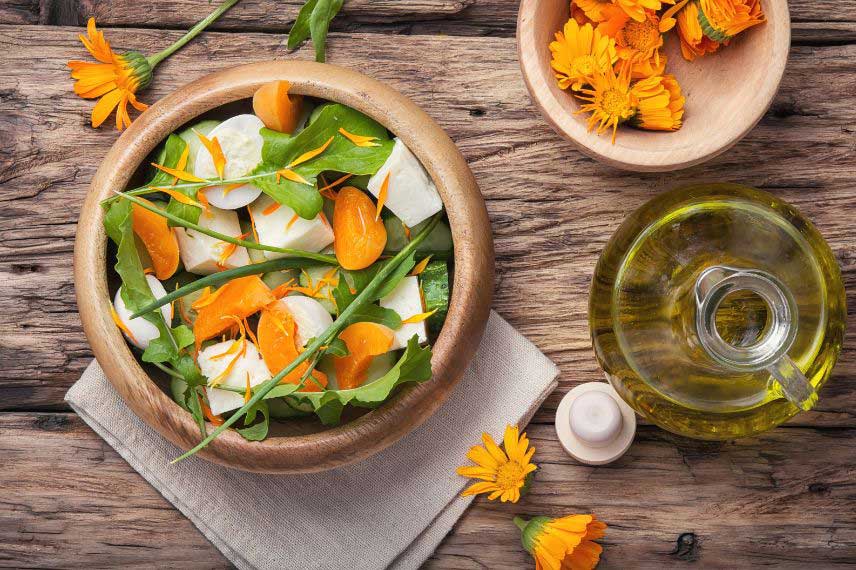
Another advantage of marigold is that its flowers can be used in cooking. The petals have a slightly peppery, somewhat bitter flavour that lifts dishes beautifully, while their bright colour enhances the plate:
- in salads: scatter the petals over a green salad, tomato salad or pasta salad;
- in baking: add them to cakes, biscuits or creams for a guaranteed visual effect;
- as a saffron substitute: when dried, they colour dishes golden yellow (they are sometimes known as ‘poor man’s saffron’).
For culinary use, it is obviously best to harvest flowers grown without plant protection products. The petals or fresh flowers are generally picked when they are fully open.
To encourage beneficial insects
Marigolds attract hoverflies, ladybirds, lacewings and certain small parasitic wasps. These insects are the gardener’s best allies: their larvae, or the adults themselves, feed on aphids, scale insects and other pests.
By attracting and feeding different insects, flowering plants can help create an environment that is more favourable to this wildlife. This is particularly useful in a vegetable garden where the aim is to limit interventions and encourage natural regulation.
Adding marigolds to the vegetable garden therefore means putting natural biological control in place, without treatment products, right beside your crops. However, avoid jumping to conclusions: planting marigolds does not guarantee the absence of aphids or other pests. Their value lies more in their contribution to a diverse ecosystem than in any direct insecticidal action.
To add colour and structure to the vegetable garden
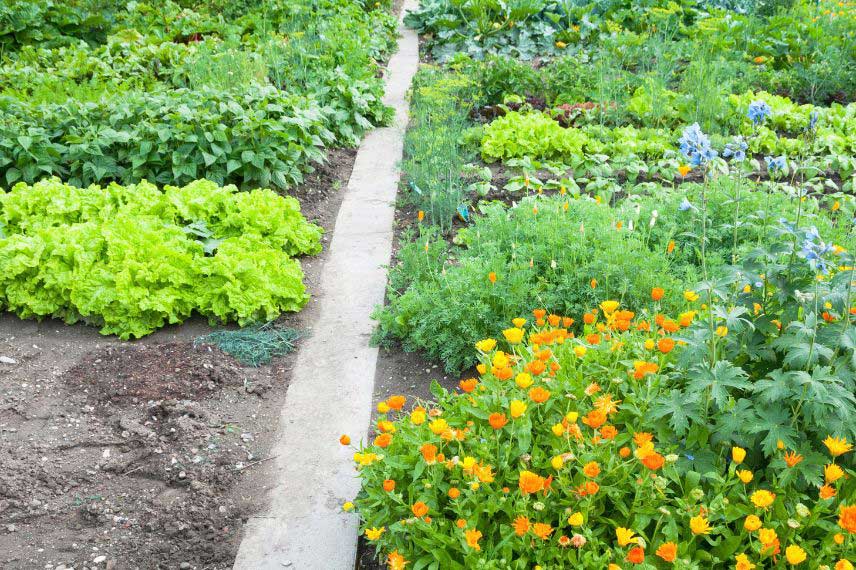
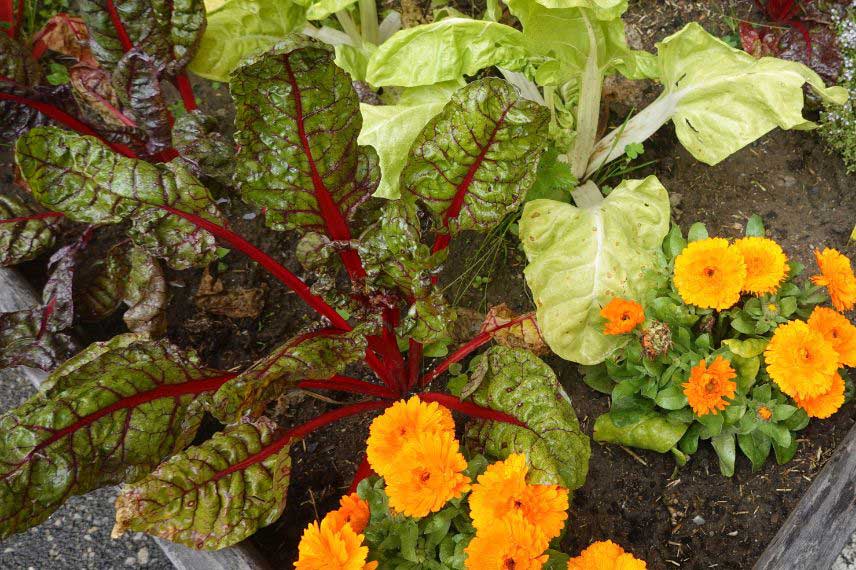
Beyond its usefulness, marigold also helps to beautify the vegetable garden. With its bright flowers, it makes it easy to add splashes of colour between rows of vegetables.
Marigolds can be used to form a small border around a plot, punctuate a growing bed or fill an empty space. Their generous flowering adds depth to the garden and helps to structure the different areas visually.
It is also a good way to combine useful plants and ornamental plants, without restricting flowers to the garden’s borders alone.
Does calendula really protect vegetables from pests?
Marigold is often presented as a plant capable of keeping certain vegetable garden pests away. However, this reputation needs to be put into perspective.
There are many plant combinations traditionally recommended in the garden, but you should not conclude that the mere presence of marigolds is enough to protect vegetables from aphids, caterpillars or other unwanted insects.
Marigold has indirect value, notably by contributing to plant diversity and by providing resources for certain beneficial insects, which help regulate pests. Its effect remains modest in the face of a severe attack: it complements an overall approach (crop rotation, mulching and regular observation), but does not replace it.
Read also
How to collect and store marigold seeds?An easy-to-grow, undemanding plant
One of the great advantages of the pot marigold is how easy it is to grow. Sowing can be carried out directly in the open ground, generally in spring, when conditions are favourable enough. The seeds are easy to handle and germination is usually quick when the soil is sufficiently moist and temperatures are suitable.
Pot marigold thrives in a sunny position, although it can tolerate a slightly less bright site. It is happy in ordinary garden soil, provided it is not constantly waterlogged.
Once established, it needs relatively little care. Watering may be necessary during dry periods, especially after sowing and while the young plants are becoming established. After that, you can generally space out watering when conditions allow.
To prolong flowering, remove faded flowers regularly. However, if you wish to collect seeds or encourage natural self-seeding, leave a few flowers to reach maturity.
Pot marigold also tends to self-seed spontaneously in gardens where it thrives. It can therefore reappear the following year without the need to repeat sowing every time.
Where to plant marigolds in the vegetable garden?
Marigolds fit in anywhere, but a few positions are particularly well chosen:
- along the edges of beds, to border vegetables and attract beneficial insects among the crops;
- at the base of tomatoes, aubergines and peppers: these crops, which are susceptible to aphids, benefit from the presence of ladybirds and hoverflies;
- near cucurbits (courgettes, squash and cucumbers), which need pollinators;
- near cabbages and French beans, to attract beneficial insects and divert some of the aphids;
- in patches throughout the vegetable garden, to distribute nectar and pollen resources evenly rather than concentrating them in one place;
- in pots or window boxes, for small vegetable gardens, balconies and terraces.
Our growing tips:
- space the plants about 25 to 30cm apart so that they can thrive;
- avoid planting them too close to delicate young plants, which they could smother;
- sow them several times during the season to extend the flowering period.
- Subscribe!
- Contents
This form is protected by reCAPTCHA - the Google Privacy Policy and Terms of Service apply.

































Comments