Pairing Itea
Plant this remarkable shrub in your garden
Contents
Itea is an appealing shrub with an interesting habit, highly ornamental and with unusual flowers. To grow well, it needs moist soil and a little shade, without too much lime. Essentially two species are grown. The most common is Itea virginica, native to the south-eastern United States. It is a deciduous shrub with summer flowering, made up of fragrant white spikes. Two cultivars from this species are well known among enthusiasts. The first, ‘Henry’s Garnet’, is bushy; its foliage takes on a pinkish hue in summer and turns purple in autumn. The second, ‘Little Henry’, is, as its name suggests, the dwarf version of the first. It reaches 1 m in height at maturity, whereas Itea virginica generally grows to around 2 m.
The other is Itea ilicifolia, native to temperate and tropical Asia. In September, it produces spectacular flowers that give it striking architectural and aesthetic qualities. These flowers consist of pendulous catkins measuring 30 to 50 cm long, with the colour and scent of honey. It is evergreen, with leathery foliage and spiny margins, resembling holly. It can be more imposing than Itea virginica, both in height and width.
Their growing conditions differ and affect how you will use them in the garden. Discover how to establish them in luxuriant, exotic or more restrained planting schemes.

Around water features
A damp position is chosen for Itea virginica; pond banks and edges are therefore a natural choice for it. Its upright habit and mature size of 2m tall and 1.50m wide make it a good companion for large perennials and shrubs, as found in the damp conditions that frequently create lush scenes. In partial shade, its soft green leaves bring light. In midsummer, you can pair its catkins of white flowers with other white flowers and striking foliage.
You can also make the most of its fiery autumn foliage by pairing it with brown foliage. For example, consider Rodgersia pinnata ‘Bronze Peacok’, Lysimachia ciliata ‘Firecracker’ and Bergenias.
For a more modest version of a lush scene in a smaller space, you can choose to plant a cultivar such as Itea virginica ‘Little Henry’ with other compact cultivars, such as small Ligularias and loosestrifes.
Here, Itea virginica is planted alongside Rodgersia pinnata, meadowsweet (Filipendula ulmaria), Astilboides tabularis and burnet, Sanguisorba tenuifolia ‘Alba’.
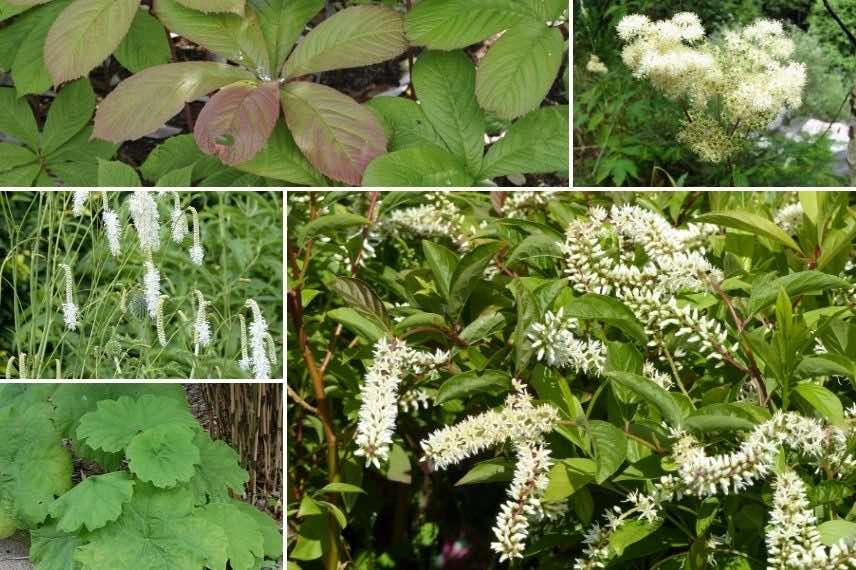
Rodgersia pinnata, Filipendula ulmaria, Itea virginica, Astilboides tabularis, Sanguisorba tenuifolia ‘Alba’
Read also
Itea: planting, pruning and careIn woodland
Itea virginica also appreciates the cool, light and well-drained soils of woodland. Plant it at the foot of a large deciduous tree with deep roots, in loose, cool soil, where it will benefit from the cover provided by its leaves. You can also plant it simply in any partially shaded setting, in cool to moist soil. In moist soil, it tolerates full sun better and tends to sucker and spread more than it does in cool soil.
It is planted here beneath the shade of a pin oak (which, despite what its name suggests, does not like having its feet in water). A fern, Dryopteris erythrosora, and a spurge, Euphorbia amygdaloides ‘Purpurea’, accompany it with their changing, shimmering colours.
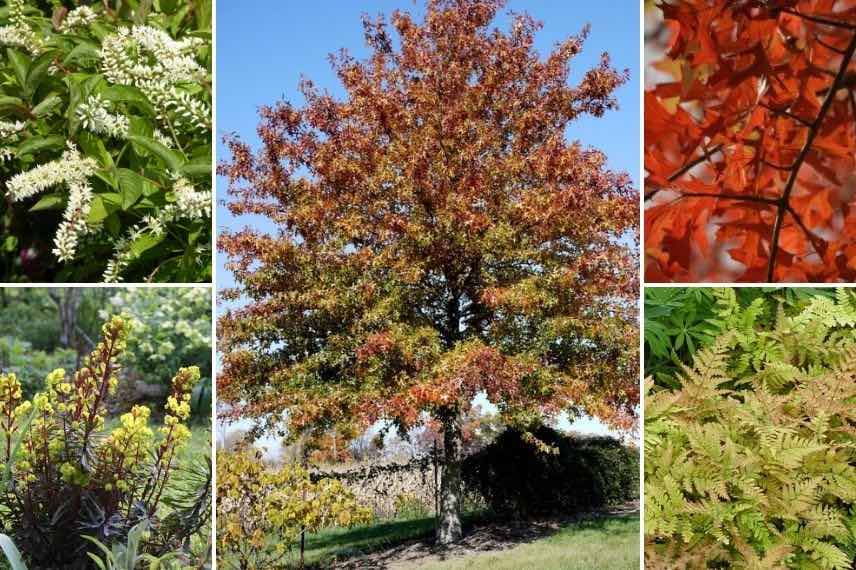
Itea virginica, Quercus palustris with its glowing red foliage in the inset, Euphorbia amygdaloides ‘Purpurea’ and Dryopteris erythrosora
Discover other Itea
View all →
Available in 1 sizes
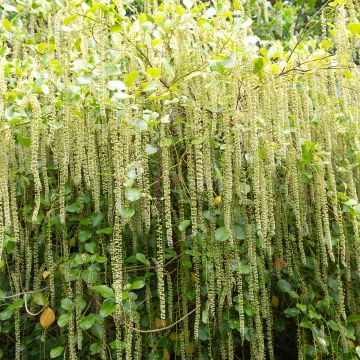
Available in 2 sizes
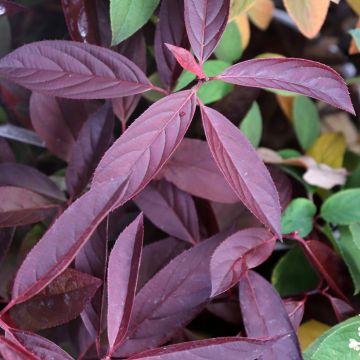
Available in 2 sizes
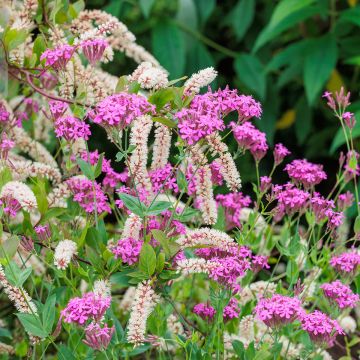
Available in 2 sizes
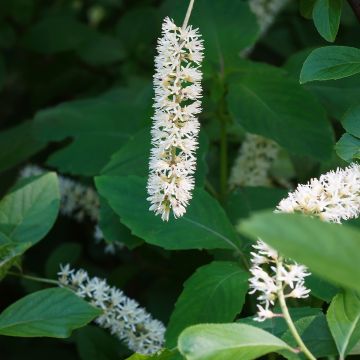
Available in 1 sizes
Available in 1 sizes
In a bed of heather soil
The soil conditions that Itea appreciates are suitable for planting heather soil shrubs and perennials. Take the opportunity to create an acid or neutral-soil bed that is light, humus-bearing, well drained yet moisture-retentive. It is therefore happy to join Camellias, Heathers, Pieris, Hydrangeas, Japanese Maples, Japanese Flowering Cherries and Magnolias.
It is the cultivar ‘Henry’s Garnet’, which turns pink in summer and deep red in autumn, that has found its place alongside an Aconitum-leaved Japanese Maple, Acer japonicum ‘Aconitifolium’, a Hydrangea aspera ‘Rosemary Foster’, a Pieris japonica ‘Katsura’ and a fernAthyrium filix-femina ‘Victoriae’.

Acer japonicum ‘Aconitifolium’, Athyrium filix-femina ‘Victoriae’, Itea virginica ‘Henry’s Garnet’, Pieris japonica ‘Katsura’ and Hydrangea aspera ‘Rosemary Foster’
Read also
How to prune Itea?In isolation
All Itea plants look beautiful when grown as solitary specimens: they provide structure, have an architectural habit and a distinctive quality that allows them to take centre stage on their own. This is even more true of the large botanical species Itea virginica and Itea ilicifolia, which we have not yet discussed enough considering their visual qualities. They require a few different conditions to grow, which we explain in the following chapter.
Here is Virginia sweetspire in situ.

Itea virginica
Now here is Itea ilicifolia in flower, alone and impressive. In the following paragraph, we will look at how to care for it.

Itea ilicifolia in all its glory against a red brick wall
In a warm position, alongside cacti and succulents
Itea ilicifolia does not have the same origins or growing requirements as Itea virginica. It is wise to shelter it from cold winds and severe frosts. This is why it is often recommended to plant it against a wall, in a sheltered position, and mulch around its base in winter. However, it should not be placed in full sun, especially in southern regions, where it needs to be protected from the scorching sun during the hottest part of the day. Partial shade is therefore preferable. Once well established, it tolerates heat and dry soil better, as well as frosts down to around -15 °C. One solution is to protect it when young with taller plants, while paying close attention to watering. Then, once it has grown larger, it can be exposed to sunlight.
An idea inspired by the garden at Great Dixter in England: Itea ilicifolia is planted here alongside succulents and cacti, including Agave parryi var. huachucensis, Agave parryi var. neomexicana, a Opuntia microdasys hardy down to -5 °C, and a Erigeron karvinskianus with daisy-like flowers.
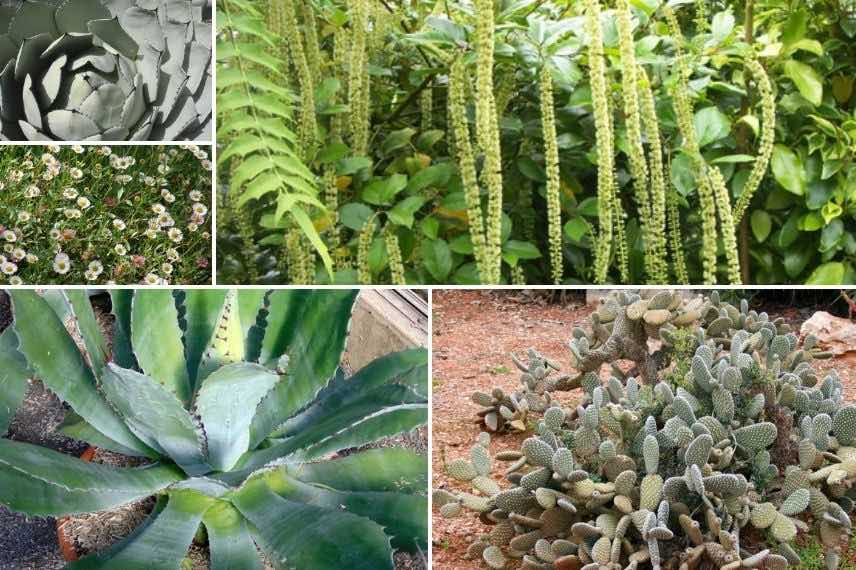
Agave parryi huachucensis, Erigeron karvinskianus, Itea ilicifolia, Agave parryi neomexicana and Opuntia microdasys
On the patio or balcony
Itea virginica ‘Little Henry’, given its small size, is well suited to growing in a pot. It has the same qualities and characteristics as Itea virginica ‘Henry’s Garnet’, while only reaching half its size. Find it a spot in partial shade or shade to minimise evaporation from the potting compost and therefore space out watering. This will allow you to enjoy its fragrant flowering and foliage that changes with the seasons. It is a shrub with many attractions for a balcony or terrace. If accompanied by a few evergreens, its bare winter appearance is not a problem, especially as it loses its leaves late in the season. It requires little care, but you will need to make sure you do not forget to water it.
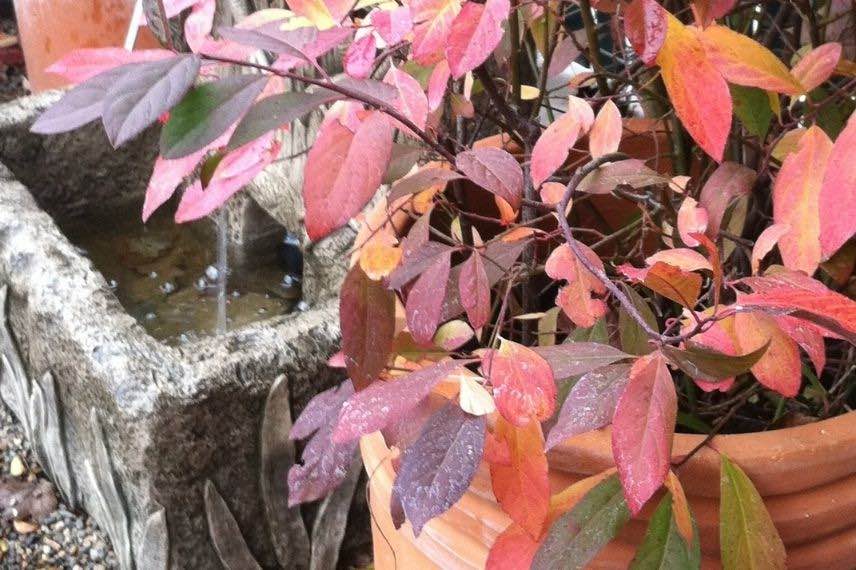
Itea virginica ‘Little Henry’ in a pot
Compose a winter scene
Itea virginica ‘Henry’s Garnet’ and its leafy branches, which take on an attractive red-purple colour late in the season, make this a shrub of interest in autumn. This is the season when we turn our attention to colourful branches, remarkable foliage and well-structured habits.
Plant it with a golden conifer, here Thuja occidentalis ‘Yellow Ribbon’, alongside the famous red winter branches of Cornus alba ‘Baton Rouge’, or, for a softer colour scheme, another Cornus alba with purple branches: ‘Kesselringii’.
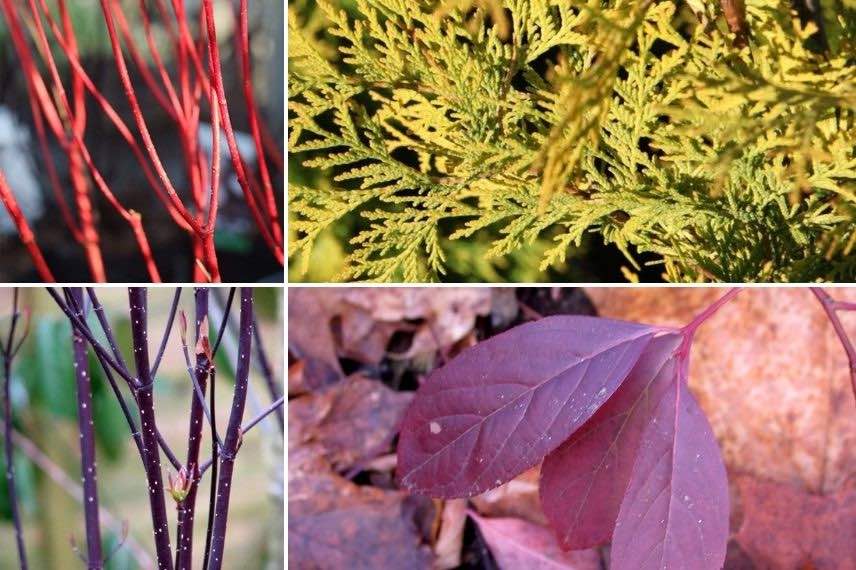
Cornus alba ‘Baton Rouge’, Thuja occidentalis ‘Yellow Ribbon’, Cornus alba ‘Kesselringii’ and Itea virginica ‘Henry’s Garnet’
With climbing plants
Here with a Rose ‘Rhapsody In Blue’, Chinese wisteria Wisteria sinensis ‘Alba’, Persicaria polymorpha and Viburnum opulus.
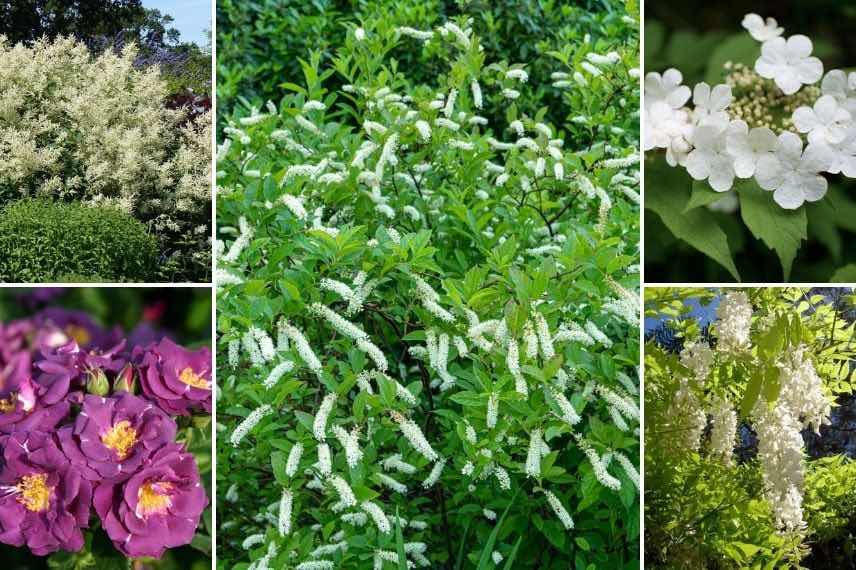
Persicaria polymorpha, Itea virginica, Viburnum opulus, Rose ‘Rhapsody In Blue’ and Chinese wisteria Wisteria sinensis ‘Alba’,
As a cut flower arrangement
The spectacular catkin-bearing branches of Itea ilicifolia are prized by florists. Cut a few in September to make a pretty homemade cut flower arrangement with seasonal flowers such as asters, Japanese anemones, a few grass stems and anything else flowering in your garden!
- Subscribe!
- Contents
This form is protected by reCAPTCHA - the Google Privacy Policy and Terms of Service apply.
![[plant_autocomplete plant_name="Virginia sweetspire"]](https://en.promessedefleurs.eu/blogwp/wp-content/uploads/2022/03/Associer-itea.jpg "[plantes nom=\"Itea\"]")

































Comments