Narcissus Golden Echo - Narcisse trompette, Jonquille trompette
Narcissus Golden Echo - Narcisse trompette, Jonquille trompette
Narcissus Golden Echo - Narcisse trompette, Jonquille trompette
Narcissus Golden Echo
beautiful multiflorous daffodils
j.max, 28/03/2025
Back-to-school special offer!
Get €10 off for every €50 you spend! And get up to €40 off on a single order.
How does it work?
1. Shop your favourites
Add your favourite plants to your basket. For every €50 you spend (excluding delivery charges, store credit and the plastic-free option), you’ll receive a €10 voucher.
€50 spent = €10 voucher
€100 spent = €20 voucher
€150 spent = €30 voucher
€200 spent = €40 voucher
2. Place your order
Once your basket reaches one of the spending thresholds, place your order. You can even choose your delivery date!
3. Receive your voucher
As soon as your order has been shipped, you’ll receive an email containing your personal voucher code and its value.
4. Use it on your next order
Your voucher is valid for 90 days from the date you receive it. It can be used once only, on a new order worth at least the value of the voucher, excluding delivery charges.
Please note: Vouchers can be combined with other offers, but cannot be split or refunded.
Home or relay delivery (depending on size and destination)
Important: You may be charged customs duties by your country’s customs authorities upon delivery.
Schedule delivery date,
and select date in basket
This plant carries a 6 months recovery warranty
More information
We guarantee the quality of our plants for a full growing cycle, and will replace at our expense any plant that fails to recover under normal climatic and planting conditions.

Would this plant suit my garden?
Set up your Plantfit profile →
Description
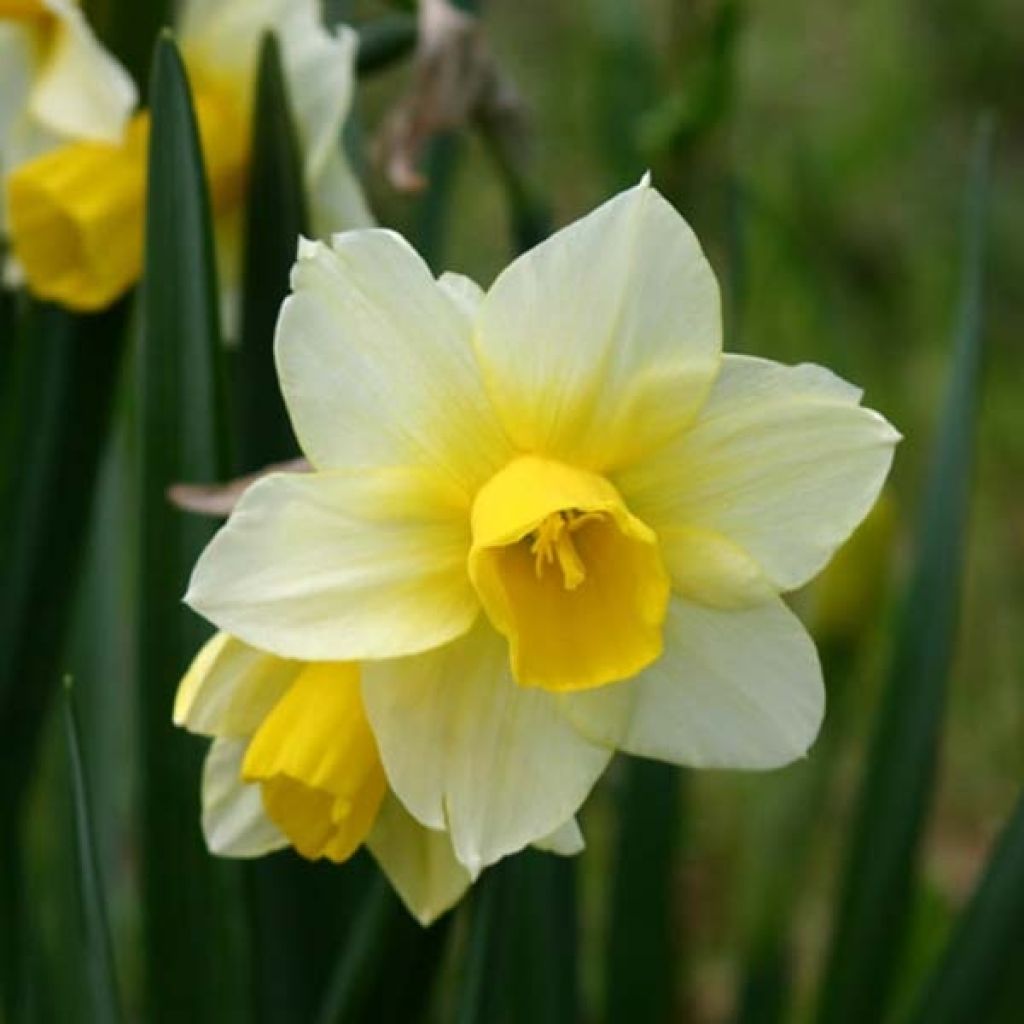
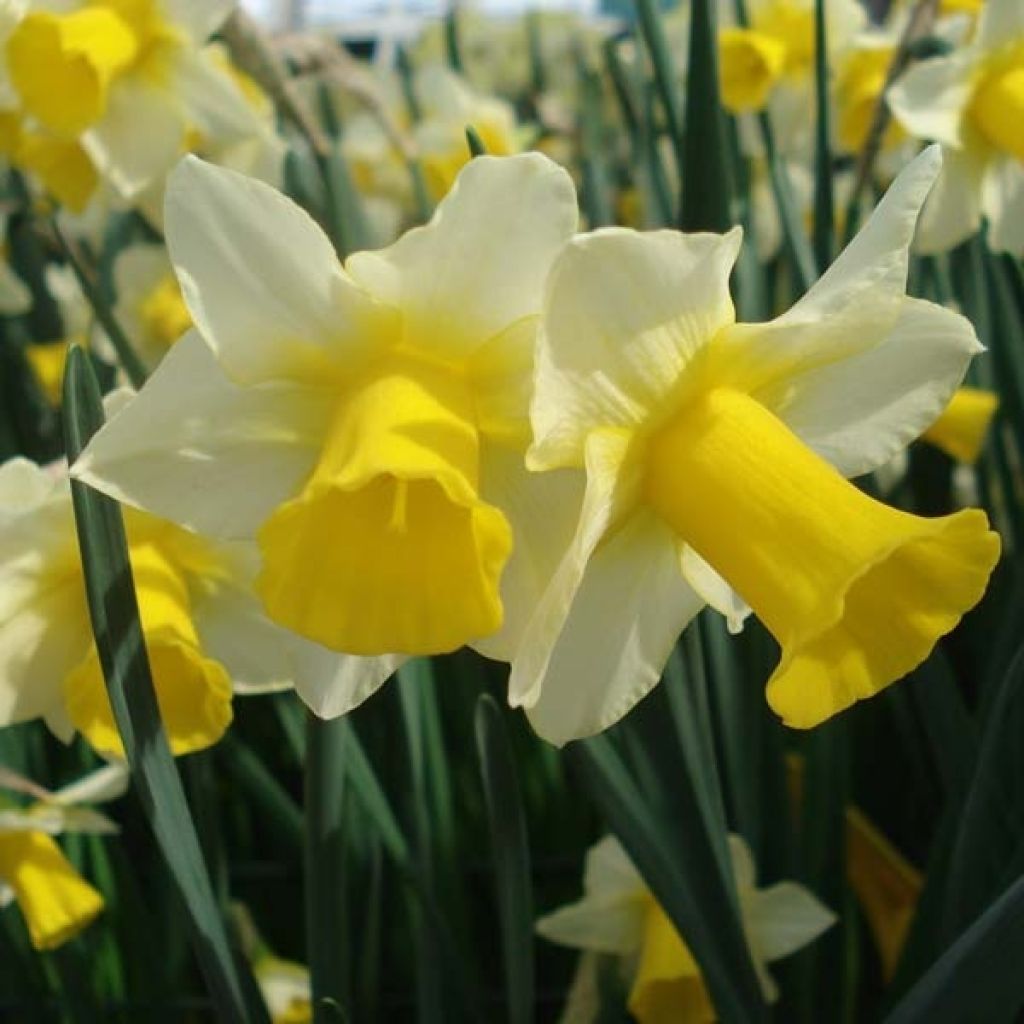
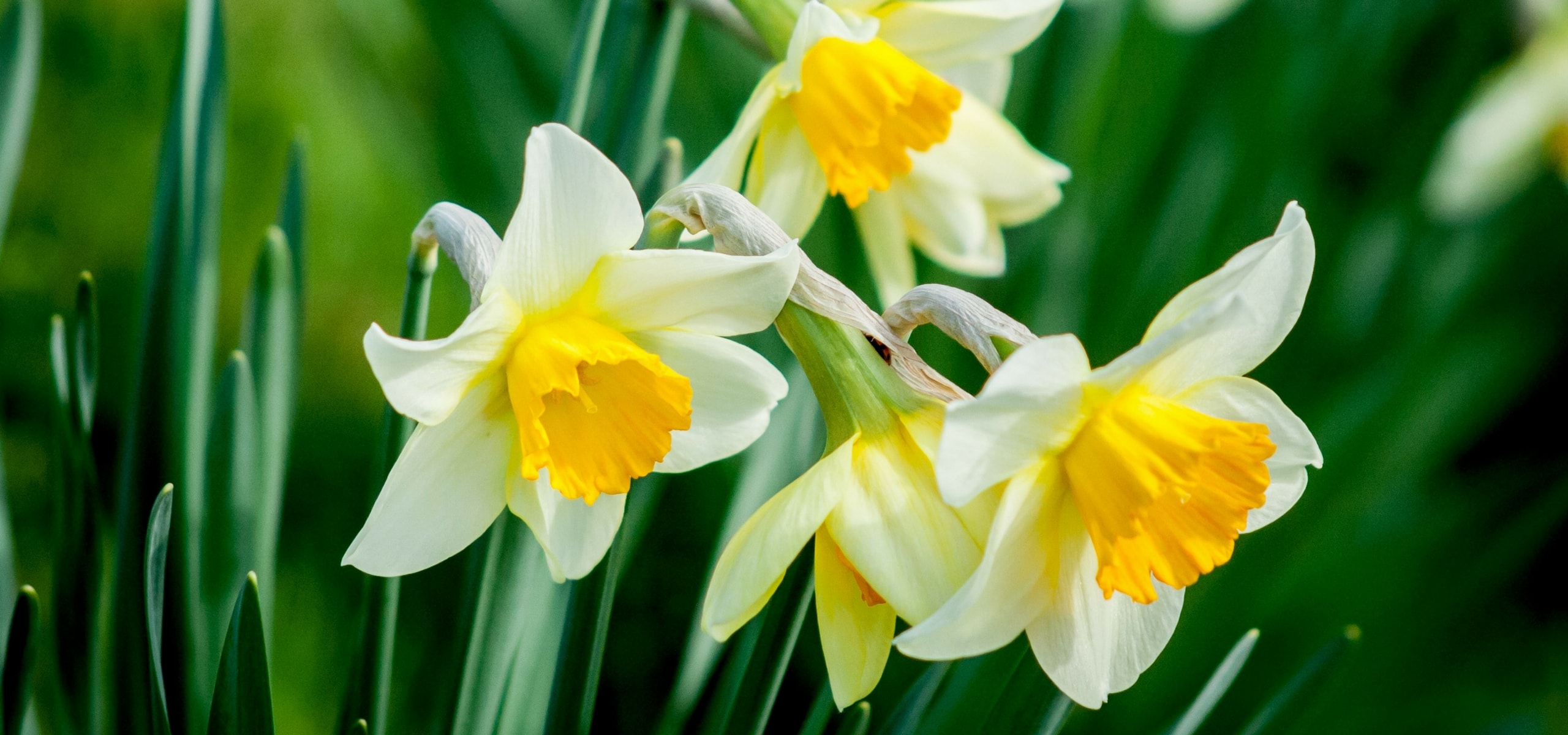
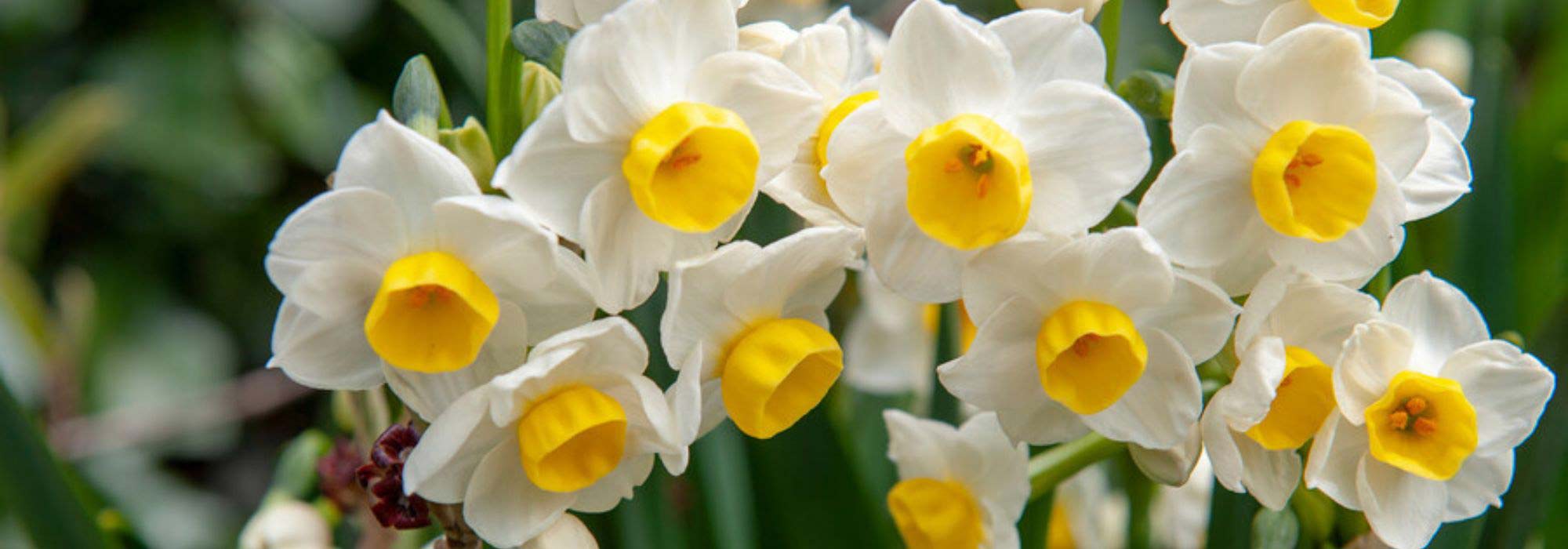
The ‘Golden Echo’ narcissus is a variety of fragrant jonquil, recognisable by its white flowers with a golden-yellow trumpet and its fine foliage. Each stem bears one to three corollas that last several days before fading. The bulbs are planted in autumn, in a border, in a rock garden, in a flowering lawn or in a pot. A mid-season variety, it flowers in April.
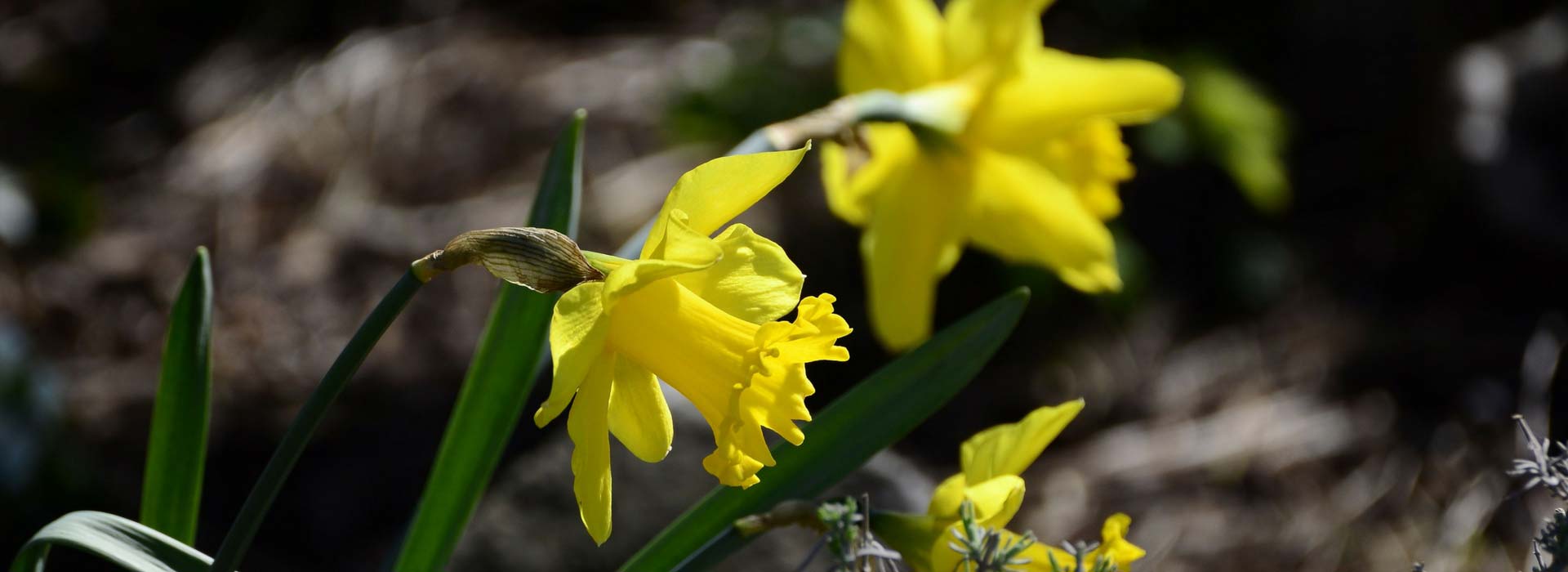
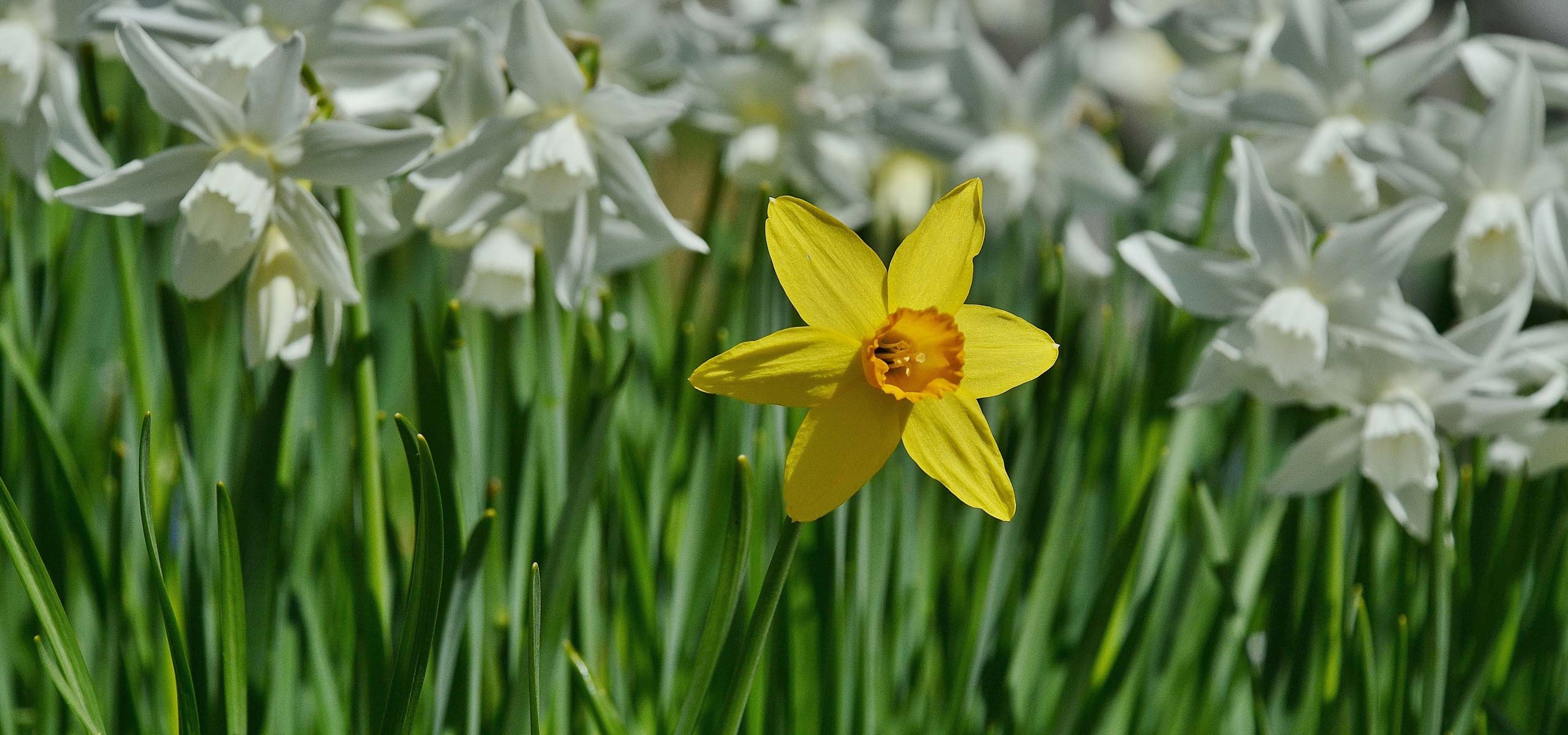
‘Golden Echo’ belongs to the Amaryllidaceae family. This bulbous perennial develops its vegetation during winter and spring, then enters dormancy before summer, after its leaves have dried out. It was bred in the United States by Brent C. Heath from a cross between ‘Ballygarvey’ and the wild species Narcissus jonquilla. The plant flowered before 2003, then was registered in 2014 by Brent & Becky’s Bulbs. Its parent Narcissus jonquilla, native to the Iberian Peninsula, passed on its narrow foliage, its fragrance and its ability to withstand a hot, dry summer once its vegetative cycle is complete. This cultivar is classified among the Jonquilla and Apodanthus narcissi, division 7. The plant produces an upright clump of dark green to slightly glaucous leaves, very narrow and almost cylindrical. The flower stems rise to 30 or 40 cm and bear one to three flowers measuring 4 to 5 cm in diameter. The six ovate tepals, fairly thick and slightly overlapping, end in a small point. Their base is broadly coloured yellow, as if the shade of the crown were repeated on the perianth, which earned it the name ‘Golden Echo’. The crown, longer than in many horticultural jonquils, is narrow at the base then slightly flared, with a regular edge. The flowers emit a sweet, clearly perceptible fragrance. They open in spring, usually in April, sometimes as early as late March in mild climates. Vigorous, the bulb gradually produces bulblets and forms groups that establish themselves permanently. Its qualities as a good garden plant earned it the John and Gertrude Wister Award in 2015, an accolade given by the American Daffodil Society to narcissi that are reliable and ornamental in a range of conditions. ‘Golden Echo’ tolerates chalky soils as well as slightly clayey ones, provided they do not remain waterlogged. It ranks among the narcissi best suited to Mediterranean climates: winter and spring rainfall accompanies its growth, while summer drought corresponds to the bulb's dormant period. Watering will nevertheless be necessary if the spring is dry.
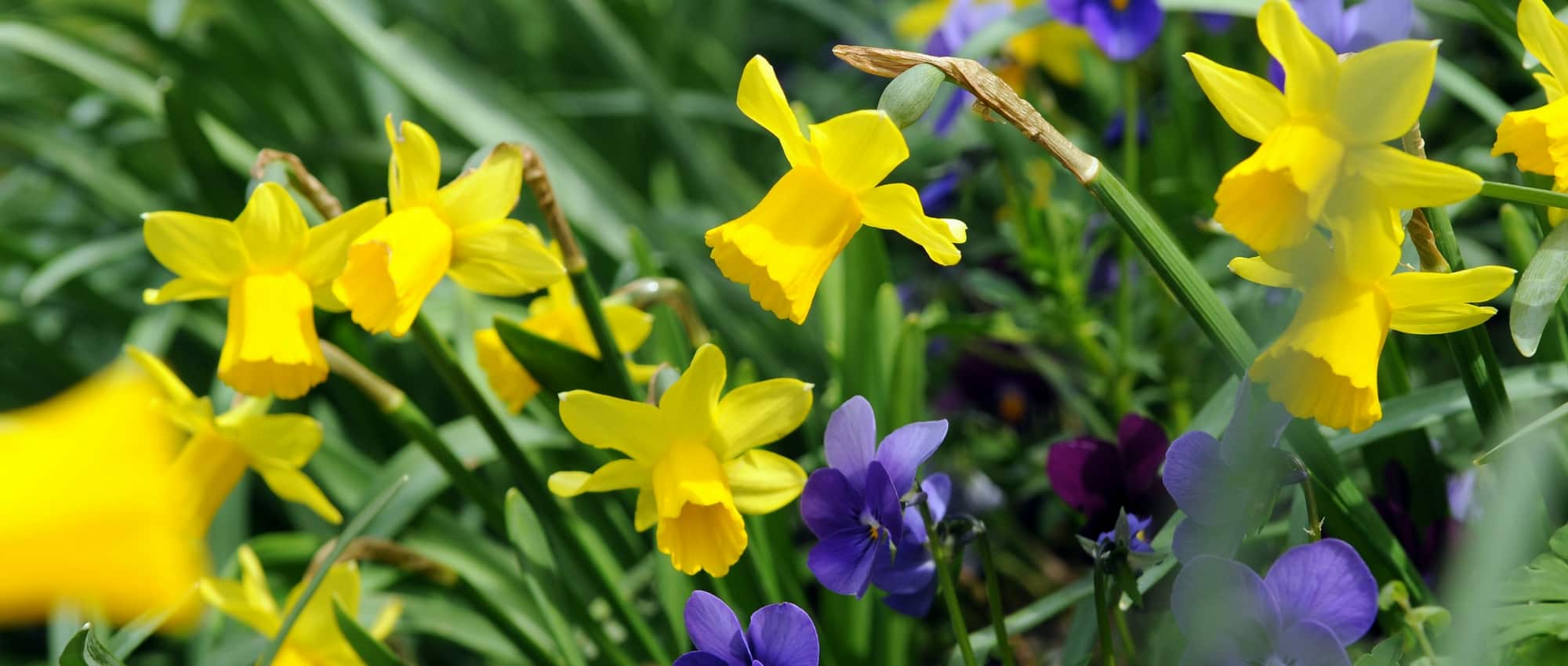
This ‘Golden Echo’ variety settles into a sunny border, in a good pocket of soil between the stones of a rock garden, or in a lawn that is not mown too early. Its flowering pairs well with the lilac stars of the Ipheion uniflorum ‘Wisley Blue’, and with the small daisies of the Anemone blanda ‘Blue Shades’ ; these bulbous plants naturalise among the narcissi and flower at the same time. The small Tulipa humilis ‘Persian Pearl’ opens a little earlier, but can still accompany them in April. To mask the absence of the bulbs in summer, small perennials are usually planted that will not risk smothering them. For example, the Geranium cinereum ‘Ballerina’, which gradually covers the ground and takes over with its pink flowers veined with purple. All these plants tolerate dry summers.
Photo courtesy of Laurent Lieser, tulipe-botanique.com
Plant habit
Flowering
Foliage
Botanical data
Narcissus
Golden Echo
Amaryllidaceae
Cultivar or hybrid
Planting and care
Plant narcissus 'Golden Echo' bulbs from September to November, in full sun or partial shade, 10 to 12 cm deep and about ten centimetres apart. Ordinary soil is suitable provided it drains well in winter. In heavy soil, loosen the area generously and incorporate fine gravel as well as some well-rotted organic matter. This narcissus tolerates lime. Water after planting, then let the winter rains do their work. In spring, the soil should retain some moisture until the foliage yellows. In Mediterranean gardens, water if the rains stop early, then cease all watering once the leaves have dried. In pots, place the bulbs in a deep container with drainage holes, filled with a mix of potting compost, garden soil and drainage material. Deadhead the faded flowers, but keep the leaves until they have completely withered. Clumps that have become less floriferous can be divided in early summer and replanted without delay.
Planting period
Intended location
Care
Planting & care advice
-
-
-
-
-
-
-
-
-
, onOrder confirmed
Reply from on Promesse de fleurs
Recently viewed products
Haven't found what you were looking for?
Hardiness is the lowest winter temperature a plant can endure without suffering serious damage or even dying. However, hardiness is affected by location (a sheltered area, such as a patio), protection (winter cover) and soil type (hardiness is improved by well-drained soil).

The flowering period indicated on our website applies to countries and regions located in USDA zone 8 (France, the United Kingdom, Ireland, the Netherlands, etc.)
It will vary according to where you live:- In zones 9 to 10 (Italy, Spain, Greece, etc.), flowering will occur about 2 to 4 weeks earlier.
- In zones 6 to 7 (Germany, Poland, Slovenia, and lower mountainous regions), flowering will be delayed by 2 to 3 weeks.
- In zone 5 (Central Europe, Scandinavia), blooming will be delayed by 3 to 5 weeks.
In temperate climates, pruning of spring-flowering shrubs (forsythia, spireas, etc.) should be done just after flowering.
Pruning of summer-flowering shrubs (Indian Lilac, Perovskia, etc.) can be done in winter or spring.
In cold regions as well as with frost-sensitive plants, avoid pruning too early when severe frosts may still occur.
The planting period indicated on our website applies to countries and regions located in USDA zone 8 (France, United Kingdom, Ireland, Netherlands).
It will vary according to where you live:
- In Mediterranean zones (Marseille, Madrid, Milan, etc.), autumn and winter are the best planting periods.
- In continental zones (Strasbourg, Munich, Vienna, etc.), delay planting by 2 to 3 weeks in spring and bring it forward by 2 to 4 weeks in autumn.
- In mountainous regions (the Alps, Pyrenees, Carpathians, etc.), it is best to plant in late spring (May-June) or late summer (August-September).
The harvesting period indicated on our website applies to countries and regions in USDA zone 8 (France, England, Ireland, the Netherlands).
In colder areas (Scandinavia, Poland, Austria...) fruit and vegetable harvests are likely to be delayed by 3-4 weeks.
In warmer areas (Italy, Spain, Greece, etc.), harvesting will probably take place earlier, depending on weather conditions.
The sowing periods indicated on our website apply to countries and regions within USDA Zone 8 (France, UK, Ireland, Netherlands).
In colder areas (Scandinavia, Poland, Austria...), delay any outdoor sowing by 3-4 weeks, or sow under glass.
In warmer climes (Italy, Spain, Greece, etc.), bring outdoor sowing forward by a few weeks.
Shipping country and language
Your country of residence may be:
Your country of residence is:
For a better user experience on our website, you can select:
Your shipping country:
-
 Austria
-
 Belgium
-
 Bosnia & Herzegovina
-
 Bulgaria
-
 Croatia
-
 Cyprus
-
 Czechia
-
 Denmark
-
 Estonia
-
 Finland
-
 France
-
 Germany
-
 Greece
-
 Hungary
-
 Iceland
-
 Ireland
-
 Italy
Italy
-
 Latvia
-
 Liechtenstein
-
 Lithuania
-
 Luxembourg
-
 Malta
Malta
-
 Netherlands
-
 Poland
-
 Portugal
-
 Romania
-
 Serbia
-
 Slovakia
-
 Slovenia
-
 Spain
Spain
-
 Sweden
-
 Switzerland
Language:
-
French
-
 English
-
Spanish
-
Italian
-
German
-
Portuguese
-
Dutch
-
Finnish
My Account
Hello
My wish lists
My cart
Log in / Register
Existing customer?
This form is protected by reCAPTCHA - the Google Privacy Policy and Terms of Service apply.
New customer?
Create an account to track your orders, access our customer service and, if you wish, make the most of our upcoming offers.