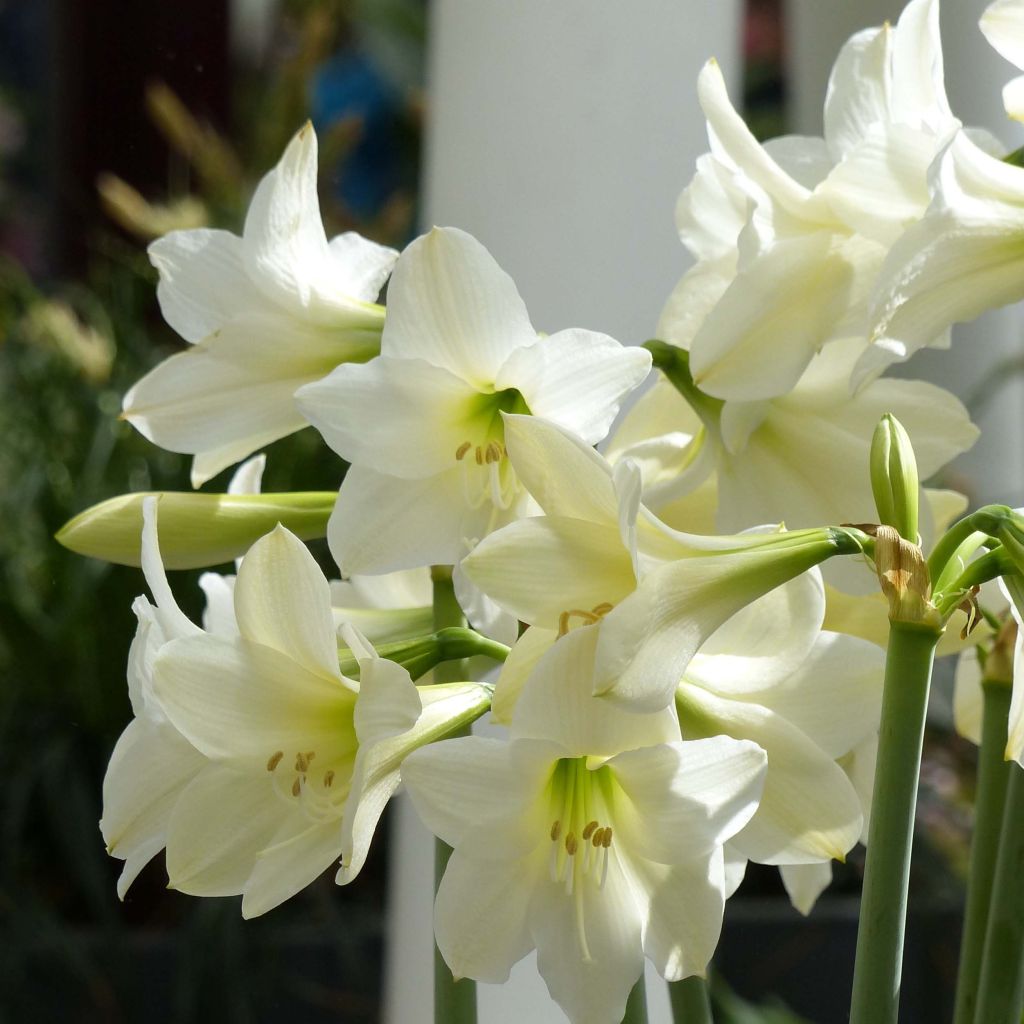
Hippeastrum sonatini White Rascal
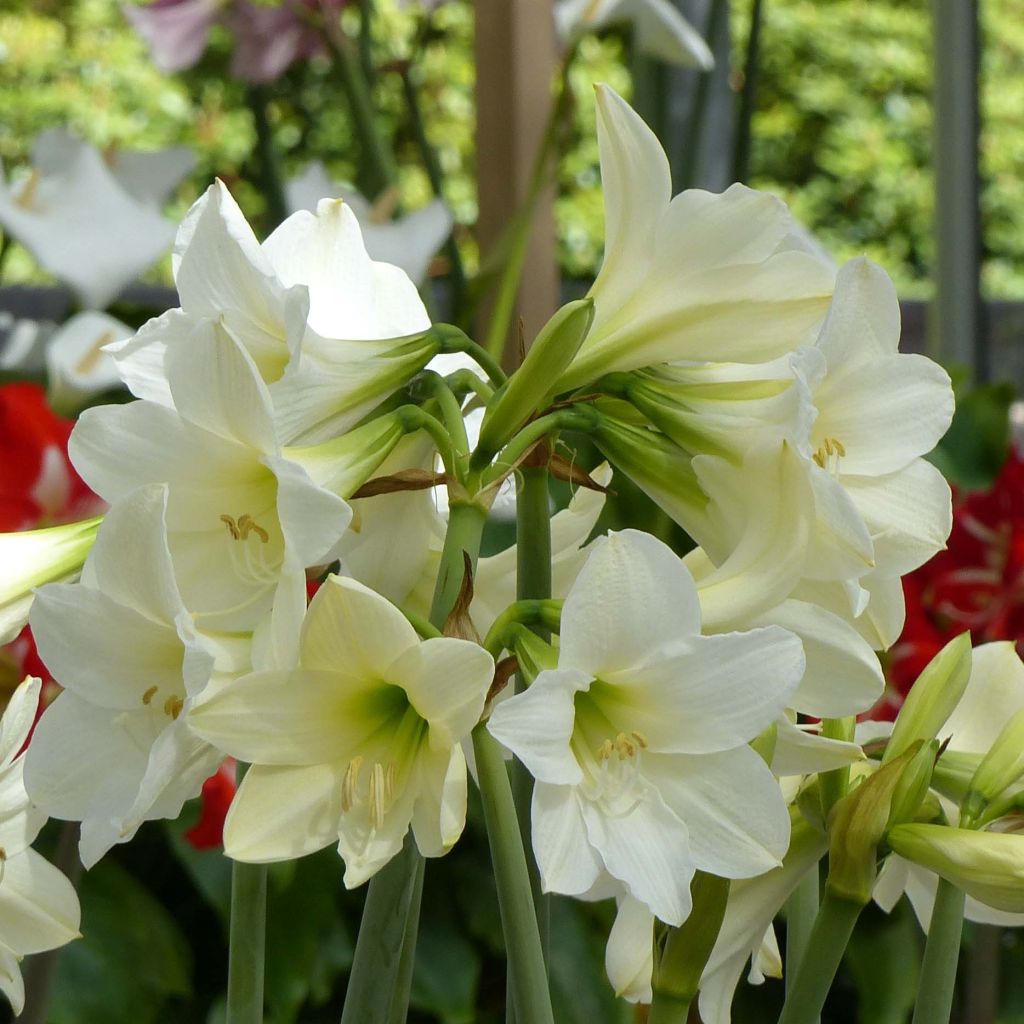
Hippeastrum sonatini White Rascal
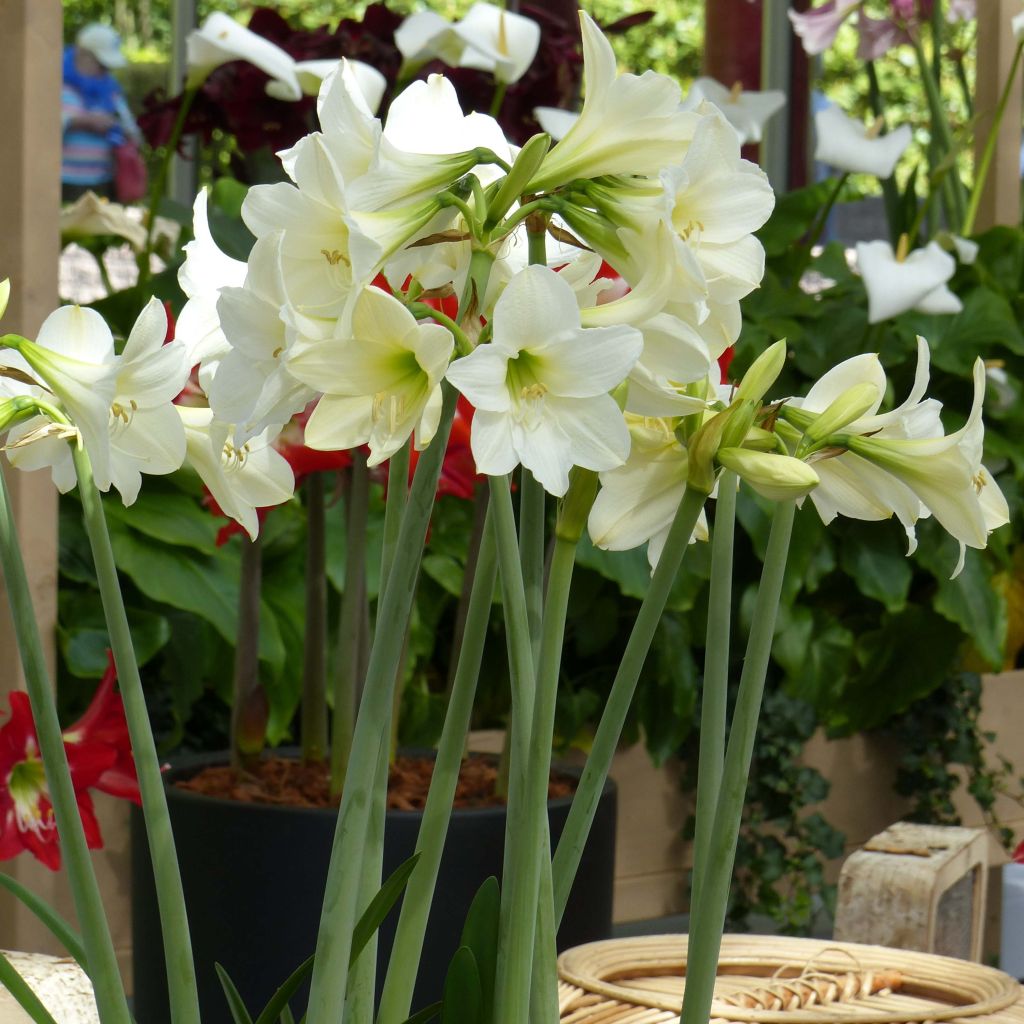
Hippeastrum sonatini White Rascal
Hippeastrum sonatini White Rascal
Hippeastrum sonatini Sonatini White Rascal
Amaryllis, Hippeastrum
It never showed any sign of life.
Astrid , 24/08/2025
Back-to-school special offer!
Get €10 off for every €50 you spend! And get up to €40 off on a single order.
How does it work?
1. Shop your favourites
Add your favourite plants to your basket. For every €50 you spend (excluding delivery charges, store credit and the plastic-free option), you’ll receive a €10 voucher.
€50 spent = €10 voucher
€100 spent = €20 voucher
€150 spent = €30 voucher
€200 spent = €40 voucher
2. Place your order
Once your basket reaches one of the spending thresholds, place your order. You can even choose your delivery date!
3. Receive your voucher
As soon as your order has been shipped, you’ll receive an email containing your personal voucher code and its value.
4. Use it on your next order
Your voucher is valid for 90 days from the date you receive it. It can be used once only, on a new order worth at least the value of the voucher, excluding delivery charges.
Please note: Vouchers can be combined with other offers, but cannot be split or refunded.
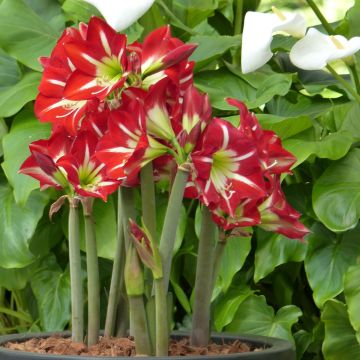
Why not try an alternative variety in stock?
View all →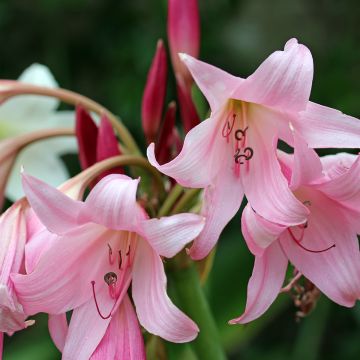
Available in 2 sizes
Available in 1 sizes
This plant carries a 6 months recovery warranty
More information
We guarantee the quality of our plants for a full growing cycle, and will replace at our expense any plant that fails to recover under normal climatic and planting conditions.
Would this plant suit my garden?
Set up your Plantfit profile →
Description
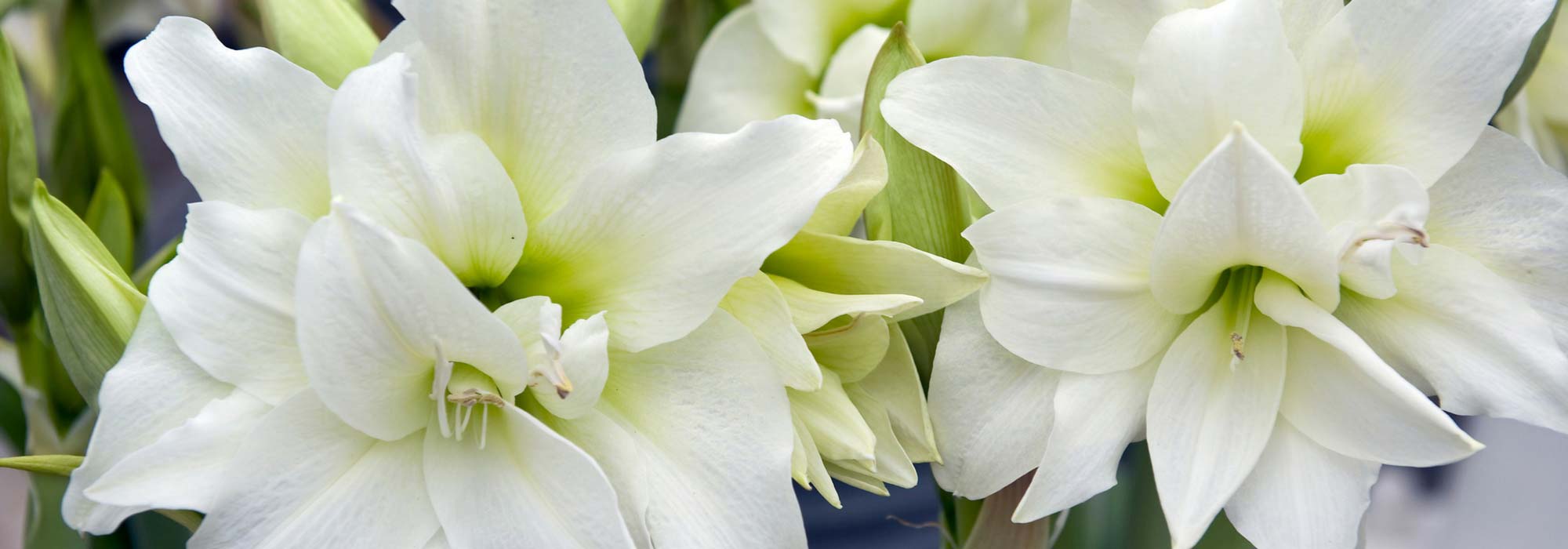
Hippeastrum sonatini 'White Rascal'® is a quite fantastic Amaryllis, resistant to very short freezes, which can be grown in the ground in many regions, without the need to dig up the bulbs in autumn. Its funnel-shaped flowers, pure white with a green throat, bloom abundantly in summer. Its bulb, smaller than the Amaryllis that is forced to bloom for Christmas, also produces smaller but much more abundant flowers! It can produce up to 4 flower stalks, each carrying 3 to 5 flowers. The floral stems, sturdy and stocky, withstand wind well. Plant them in small groups in a sunny but not scorching exposure or in partial shade. It is also a lovely plant to adorn the terrace or balcony.
From the Amaryllidaceae family, Hippeastrums are native to South and Central America. They are generally grown in pots in our latitudes and flower indoors during Christmas. Hippeastrum sonatini is a variety developed in the past twenty years by the Dutch company Barnhoorn Hippeastrum, with the aim of obtaining a hardy Amaryllis that can be grown outdoors, even in cold climates. The result is a smaller, more floriferous Amaryllis, capable of withstanding temperatures as low as -8°C (17.6°F) for a short period. The vegetation emerges from the ground in spring and disappears in late summer.
In full bloom, the 'White Rascal' variety forms a clump 30 to 40cm (12 to 16in) in height in full sun and 30cm (12in) in width. In partial shade, the stems can reach 50cm (20in) in height. The plant blooms in June-July. The 6 to 12cm (2 to 5in) wide flowers are funnel-shaped and slightly flared. Each flower is composed of 6 pointed, slightly undulating, veined, thick and iridescent petals. The heart of the flower releases long white stamens. 4 to 5 flowers positioned back to back gracefully rise above 3 to 4 hollow stalks. The leaves are linear, ribbon-like, and dark green and glossy. They dry up and disappear a few weeks after flowering, when the bulb enters its dormant period.
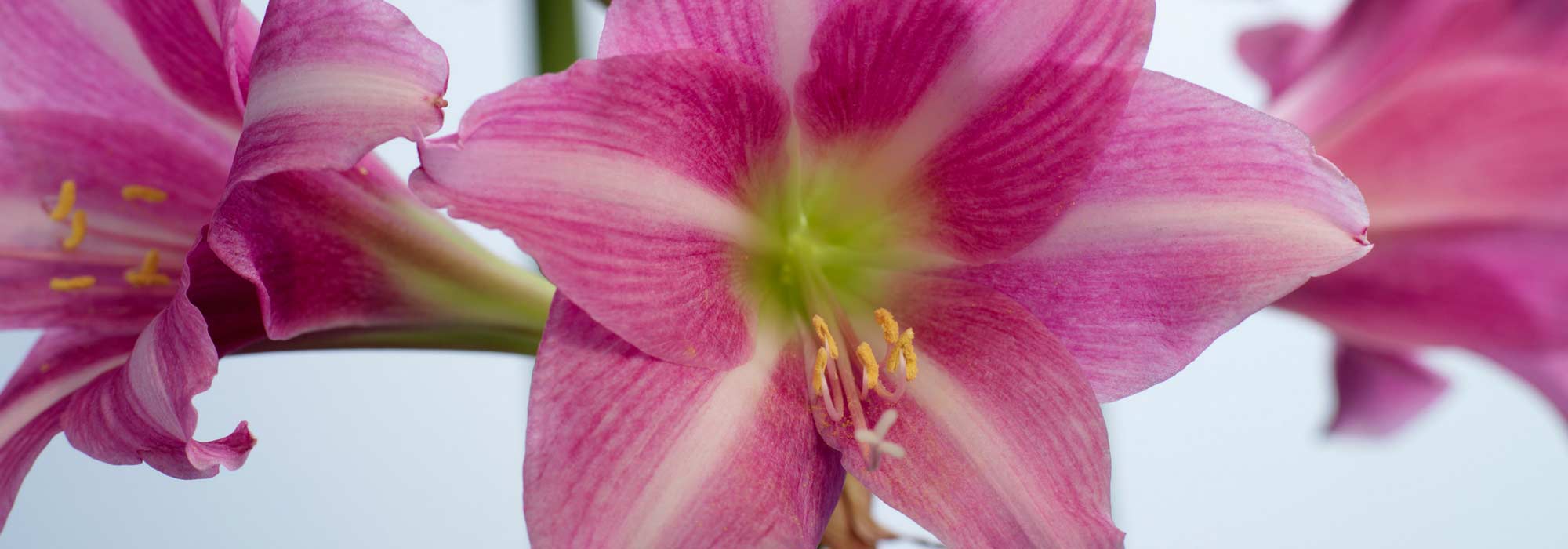
Planting a garden Amaryllis sonatini is very rewarding, and there is now a beautiful range available in various colours and forms. This plant is very easy to grow and grows very quickly. This 'White Rascal' variety, with its bright white flowers, naturally complements all other plants in the garden. Plant it in small groups, and it will work wonders in a flower bed, as a border, or in a beautiful enamelled terracotta pot, on the terrace or balcony. Planted in well-drained soil, Amaryllis sonatini will multiply and come back every year, provided they are well protected under a thick layer of mulch in regions where the temperature drops below -10°C (14°F). They also make excellent cut flowers, with a long vase life.
Speaking of Amaryllis is actually a misnomer directly related to an error made in the 18th century. It was Linneus himself who used it to name the American species. However, the name was already used for another beautiful flower, this time from South Africa. Conventionally, the denomination Amaryllis has been retained for both. And to distinguish them, the mention Hippeastrum is added for the first and Belladona for the second. It must be said that both deserve this name: Amaryllis means "sparkling" and, in classical Greek literature, the plant was the subject of a pastoral poem in which the beautiful shepherdess Amaryllis dies of unrequited love, which will only be accessible to her after a terrible wound. From her blood, gorgeous bouquets of red flowers will emerge. Since then, the term has become synonymous with lofty beauty.
Report an error about the product description
Hippeastrum sonatini White Rascal in pictures
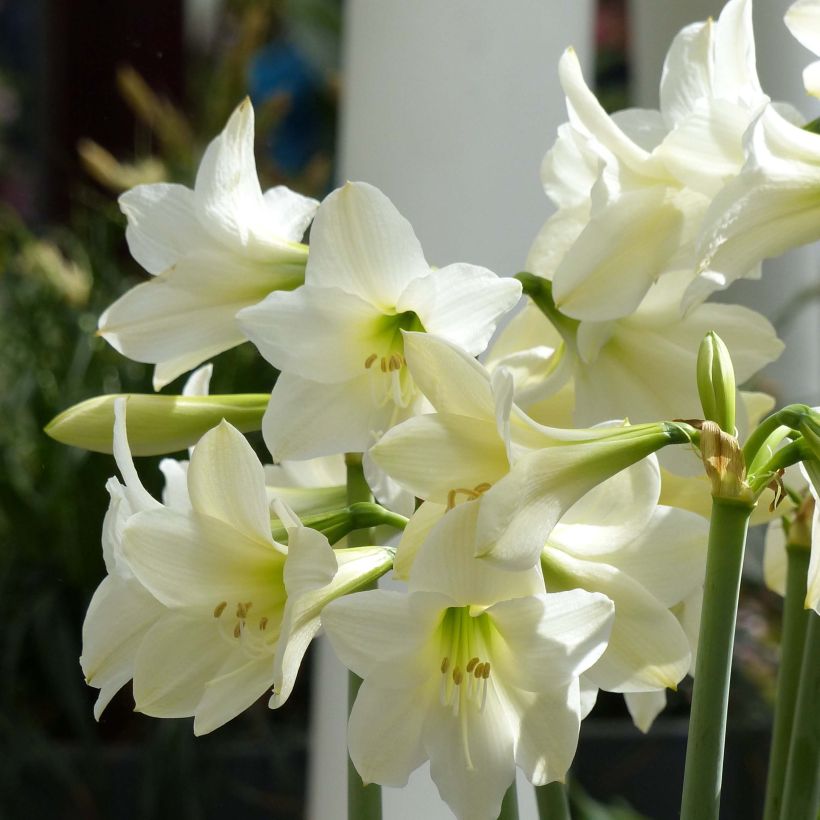
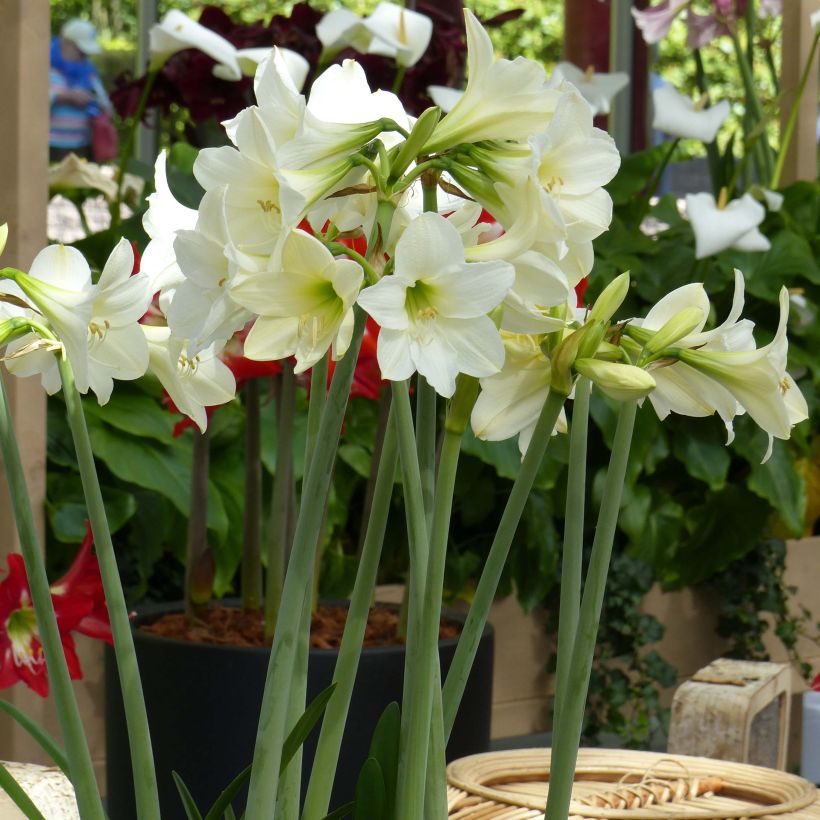
Plant habit
Flowering
Foliage
Botanical data
Hippeastrum
sonatini
Sonatini White Rascal
Amaryllidaceae
Amaryllis, Hippeastrum
Cultivar or hybrid
Planting and care
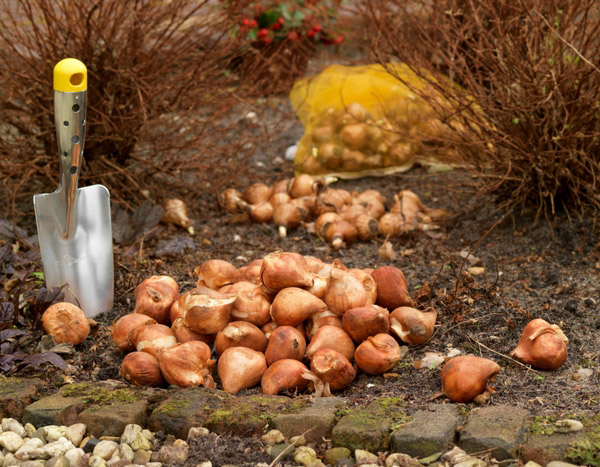
How do I plant my Amaryllis? You can plant Amaryllis sonatini bulbs from October to the end of April. For pot cultivation, choose a pot that is not too large (one or two cm larger than the size of the bulb). Place a layer of drainage at the bottom for proper water flow. Mix half potting soil, half garden soil. Only bury the bulb halfway. Place the pot in a warm and bright location. Water sparingly until the stem appears. Then water daily.
Planting in the ground is entirely possible in any well-amended garden soil, both rich and well-drained. In heavy soil, add coarse sand or small gravel to your mix, and plant in a slightly raised bed (20cm (8in) is sufficient). The plant should not lack water throughout the entire growth and flowering period. Hardy up to -8 °C, make sure to plant the bulbs deeply and cover them with a thick layer of mulch before the first frost, as this will protect them from both freezing and excess water.
Planting period
Intended location
Care
Planting & care advice
-
-
-
-

-
-
-
-
-
, onOrder confirmed
Reply from on Promesse de fleurs
Recently viewed products
Haven't found what you were looking for?
Hardiness is the lowest winter temperature a plant can endure without suffering serious damage or even dying. However, hardiness is affected by location (a sheltered area, such as a patio), protection (winter cover) and soil type (hardiness is improved by well-drained soil).

The flowering period indicated on our website applies to countries and regions located in USDA zone 8 (France, the United Kingdom, Ireland, the Netherlands, etc.)
It will vary according to where you live:- In zones 9 to 10 (Italy, Spain, Greece, etc.), flowering will occur about 2 to 4 weeks earlier.
- In zones 6 to 7 (Germany, Poland, Slovenia, and lower mountainous regions), flowering will be delayed by 2 to 3 weeks.
- In zone 5 (Central Europe, Scandinavia), blooming will be delayed by 3 to 5 weeks.
In temperate climates, pruning of spring-flowering shrubs (forsythia, spireas, etc.) should be done just after flowering.
Pruning of summer-flowering shrubs (Indian Lilac, Perovskia, etc.) can be done in winter or spring.
In cold regions as well as with frost-sensitive plants, avoid pruning too early when severe frosts may still occur.
The planting period indicated on our website applies to countries and regions located in USDA zone 8 (France, United Kingdom, Ireland, Netherlands).
It will vary according to where you live:
- In Mediterranean zones (Marseille, Madrid, Milan, etc.), autumn and winter are the best planting periods.
- In continental zones (Strasbourg, Munich, Vienna, etc.), delay planting by 2 to 3 weeks in spring and bring it forward by 2 to 4 weeks in autumn.
- In mountainous regions (the Alps, Pyrenees, Carpathians, etc.), it is best to plant in late spring (May-June) or late summer (August-September).
The harvesting period indicated on our website applies to countries and regions in USDA zone 8 (France, England, Ireland, the Netherlands).
In colder areas (Scandinavia, Poland, Austria...) fruit and vegetable harvests are likely to be delayed by 3-4 weeks.
In warmer areas (Italy, Spain, Greece, etc.), harvesting will probably take place earlier, depending on weather conditions.
The sowing periods indicated on our website apply to countries and regions within USDA Zone 8 (France, UK, Ireland, Netherlands).
In colder areas (Scandinavia, Poland, Austria...), delay any outdoor sowing by 3-4 weeks, or sow under glass.
In warmer climes (Italy, Spain, Greece, etc.), bring outdoor sowing forward by a few weeks.
Shipping country and language
Your country of residence may be:
Your country of residence is:
For a better user experience on our website, you can select:
Your shipping country:
-
 Austria
-
 Belgium
-
 Bosnia & Herzegovina
-
 Bulgaria
-
 Croatia
-
 Cyprus
-
 Czechia
-
 Denmark
-
 Estonia
-
 Finland
-
 France
-
 Germany
-
 Greece
-
 Hungary
-
 Iceland
-
 Ireland
-
 Italy
Italy
-
 Latvia
-
 Liechtenstein
-
 Lithuania
-
 Luxembourg
-
 Malta
Malta
-
 Netherlands
-
 Poland
-
 Portugal
-
 Romania
-
 Serbia
-
 Slovakia
-
 Slovenia
-
 Spain
Spain
-
 Sweden
-
 Switzerland
Language:
-
French
-
 English
-
Spanish
-
Italian
-
German
-
Portuguese
-
Dutch
-
Finnish
My Account
Hello
My wish lists
My cart
Log in / Register
Existing customer?
This form is protected by reCAPTCHA - the Google Privacy Policy and Terms of Service apply.
New customer?
Create an account to track your orders, access our customer service and, if you wish, make the most of our upcoming offers.