Green to cut Swiss Chard organic seeds
Green to cut Swiss Chard organic seeds
Beta vulgaris subsp. vulgaris Verte à couper
Swiss Chard
Back-to-school special offer!
Get €10 off for every €50 you spend! And get up to €40 off on a single order.
How does it work?
1. Shop your favourites
Add your favourite plants to your basket. For every €50 you spend (excluding delivery charges, store credit and the plastic-free option), you’ll receive a €10 voucher.
€50 spent = €10 voucher
€100 spent = €20 voucher
€150 spent = €30 voucher
€200 spent = €40 voucher
2. Place your order
Once your basket reaches one of the spending thresholds, place your order. You can even choose your delivery date!
3. Receive your voucher
As soon as your order has been shipped, you’ll receive an email containing your personal voucher code and its value.
4. Use it on your next order
Your voucher is valid for 90 days from the date you receive it. It can be used once only, on a new order worth at least the value of the voucher, excluding delivery charges.
Please note: Vouchers can be combined with other offers, but cannot be split or refunded.
Home or relay delivery (depending on size and destination)
Important: You may be charged customs duties by your country’s customs authorities upon delivery.
Schedule delivery date
and select date in basket
This plant carries a 6 months recovery warranty
More information
We guarantee the quality of our plants for a full growing cycle, and will replace at our expense any plant that fails to recover under normal climatic and planting conditions.
Description
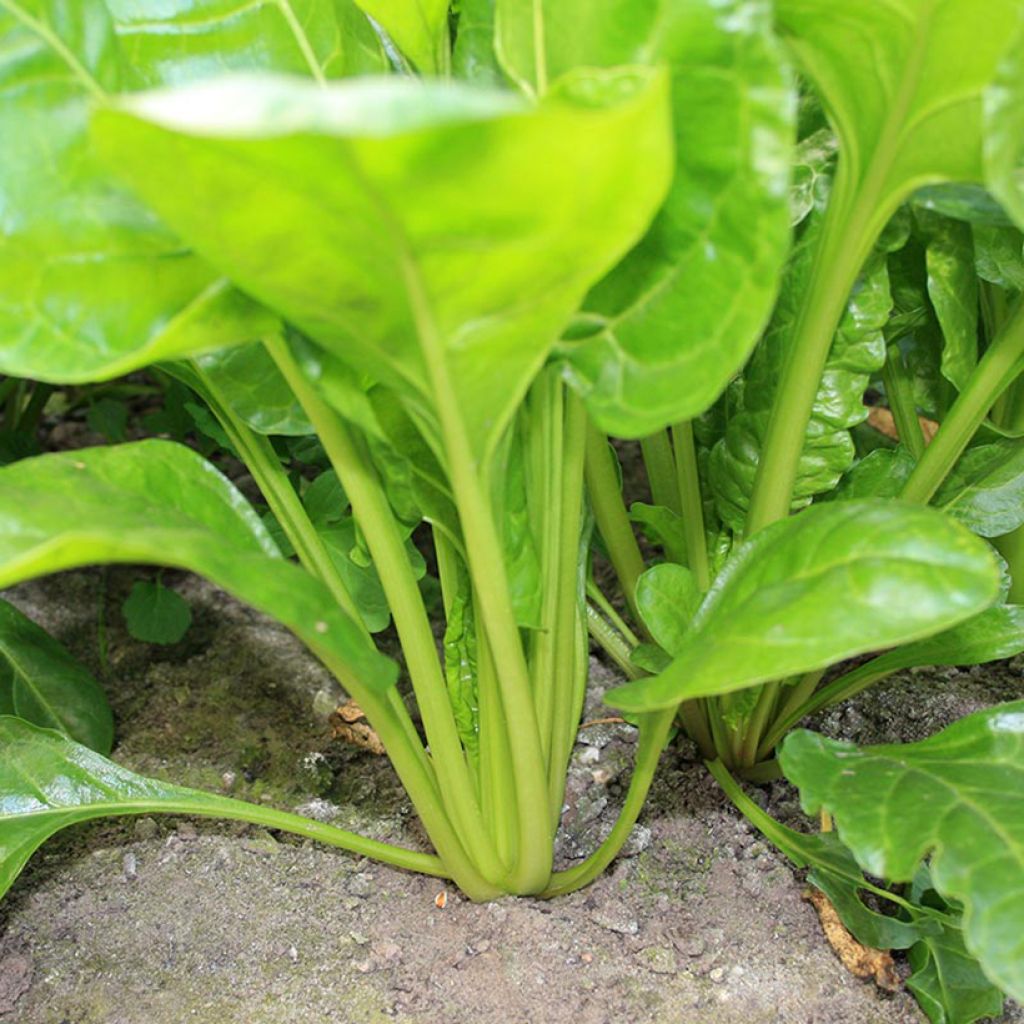
The 'Verte à couper' Swiss Chard is a traditional leaf vegetable, grown for its tender dark green leaves which are picked as needed. Our organic seeds, which are open-pollinated, produce vigorous plants capable of yielding all summer and then into the late season, as long as the cold remains moderate. This cut-and-come-again chard forms a compact rosette that easily finds its place in a kitchen garden square, a large container, or an edible border.
The 'Verte à couper' Swiss chard belongs to the species Beta vulgaris subsp. vulgaris var. cicla, from the Amaranth family. It is known by many common names: Swiss chard, silverbeet, perpetual spinach, cut-and-come-again chard, or leaf beet. All forms of Swiss chard and beetroot derive from the sea beet of the Atlantic and Mediterranean coasts of Europe, North Africa, and the Near East, naturalised far beyond and cultivated since antiquity for food. It is a biennial herbaceous plant, usually grown as an annual for its leaves.
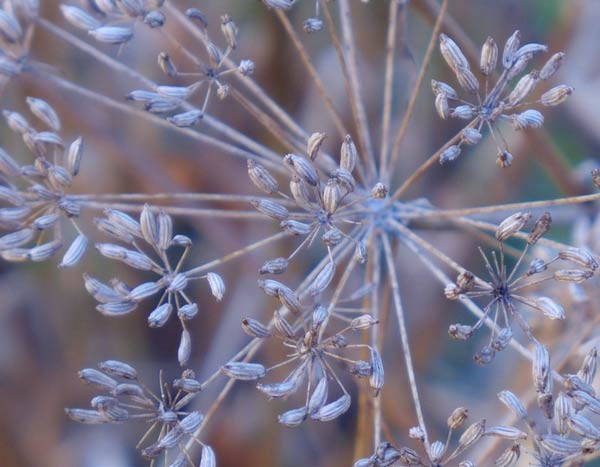
The 'Verte à couper' variety forms a compact rosette 30 to 40 cm tall and 30 to 40 cm wide. The leaves are elongated, rather narrow, dark green, slightly blistered, borne on thin, fleshy, light green petioles, distinctly narrower than those of large-ribbed chard. The foliage is deciduous: in mild climates, if the stump is left in place, the plant may regrow the following spring, but it is most often renewed each year. Leaf harvest begins two to three months after sowing. If allowed to complete its full biennial cycle, the plant sends up an erect, glabrous, and angular flower stem, which can exceed 1 m in height. Small, inconspicuous greenish flowers, gathered in long panicles, appear in summer and are mainly wind-pollinated. The fruits form corky glomerules containing several shiny brown seeds: these are the small, irregular "grains" sown in the vegetable garden.
An heirloom variety, close to the "beet-spinach" of old treatises, cut-and-come-again chard was already used in the Middle Ages in porée, a green leaf soup that gave Swiss chard its name. In some regions of Italy, similar forms are still cultivated under the name 'erbette' and are used to fill pies, tarts, and rustic stuffings.
In the kitchen: 'Verte à couper' Swiss chard is cooked exactly like spinach. Young leaves can be mixed raw into a salad, while more mature leaves are simply sautéed in a pan with a little garlic, olive oil, or cream. It is readily used to fill quiches, savoury tarts, gratins, "green" lasagnas, omelettes, or stuffings for ravioli and vegetables. The thin midribs are cooked at the same time as the lamina, or separately, cut into small pieces.
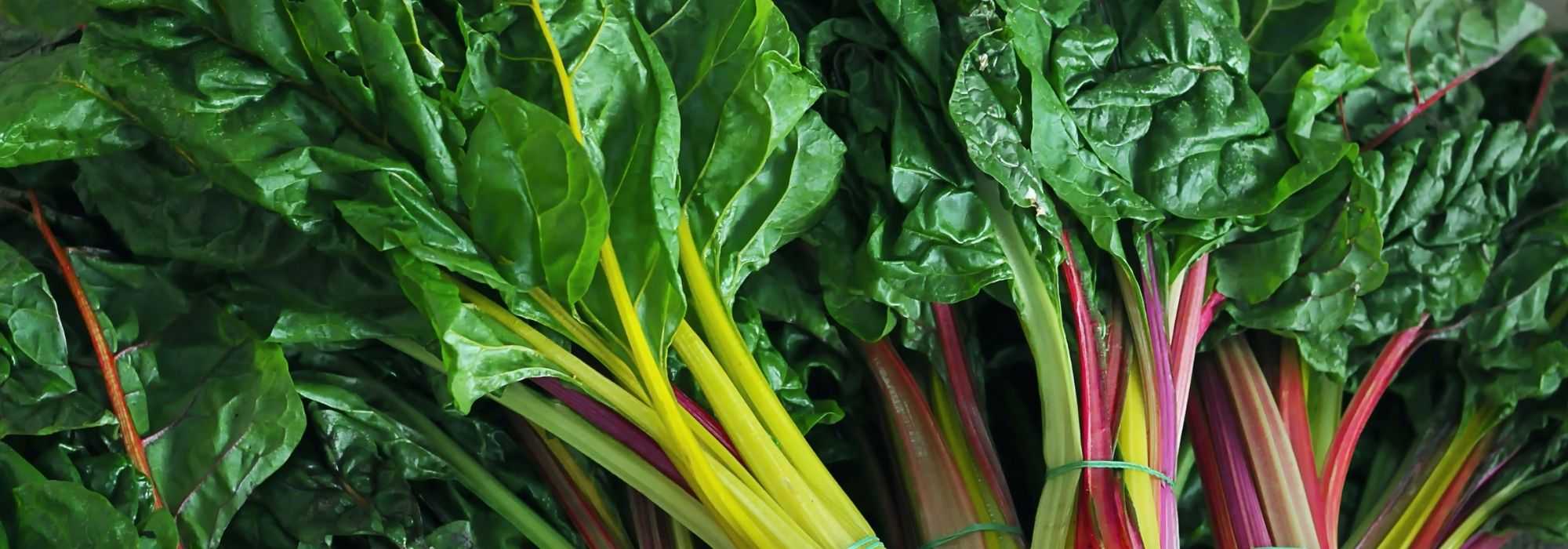
Harvest: Leaves are harvested as needed. Cut only the outer leaves, leaving the heart intact; the plant will regrow more quickly.
Storage: It keeps for a few days in a cool place after harvest. Blanched for a few minutes and then well-drained, Swiss chard freezes very well.
The gardener's tip: Sow every fortnight, in a small row rather than all at once: you will always have tender young leaves at hand. A good mulch (dry grass, straw, shredded leaves) keeps the soil cool, reduces watering, and delays bolting in summer. And if a plant starts to bolt, don't hesitate: pull it up, replace it with a young seedling, and production continues uninterrupted.
Harvest
Plant habit
Foliage
Botanical data
Beta
vulgaris subsp. vulgaris
Verte à couper
Amaranthaceae
Swiss Chard
Cultivar or hybrid
Biennial
Planting and care
Sowing Organic Green Cut Chard:
From March to June-July.
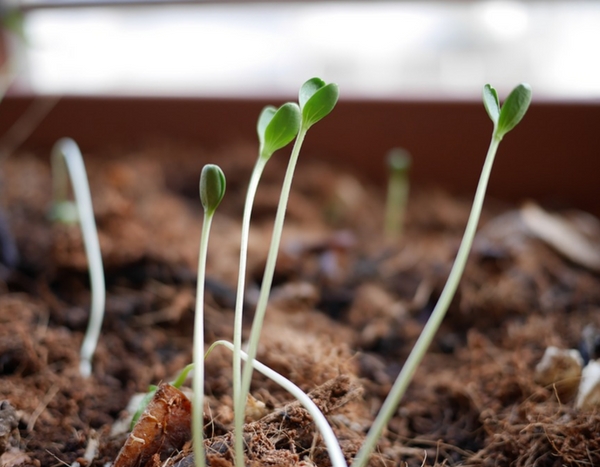
Around 15–20 °C, the seeds germinate in 7–10 days, sometimes a little faster in well-moistened, finely prepared soil.
Sow in soil previously amended (rich but without fresh manure) and prepared very finely with a rake.
Directly in place, as transplanting can sometimes cause premature bolting.
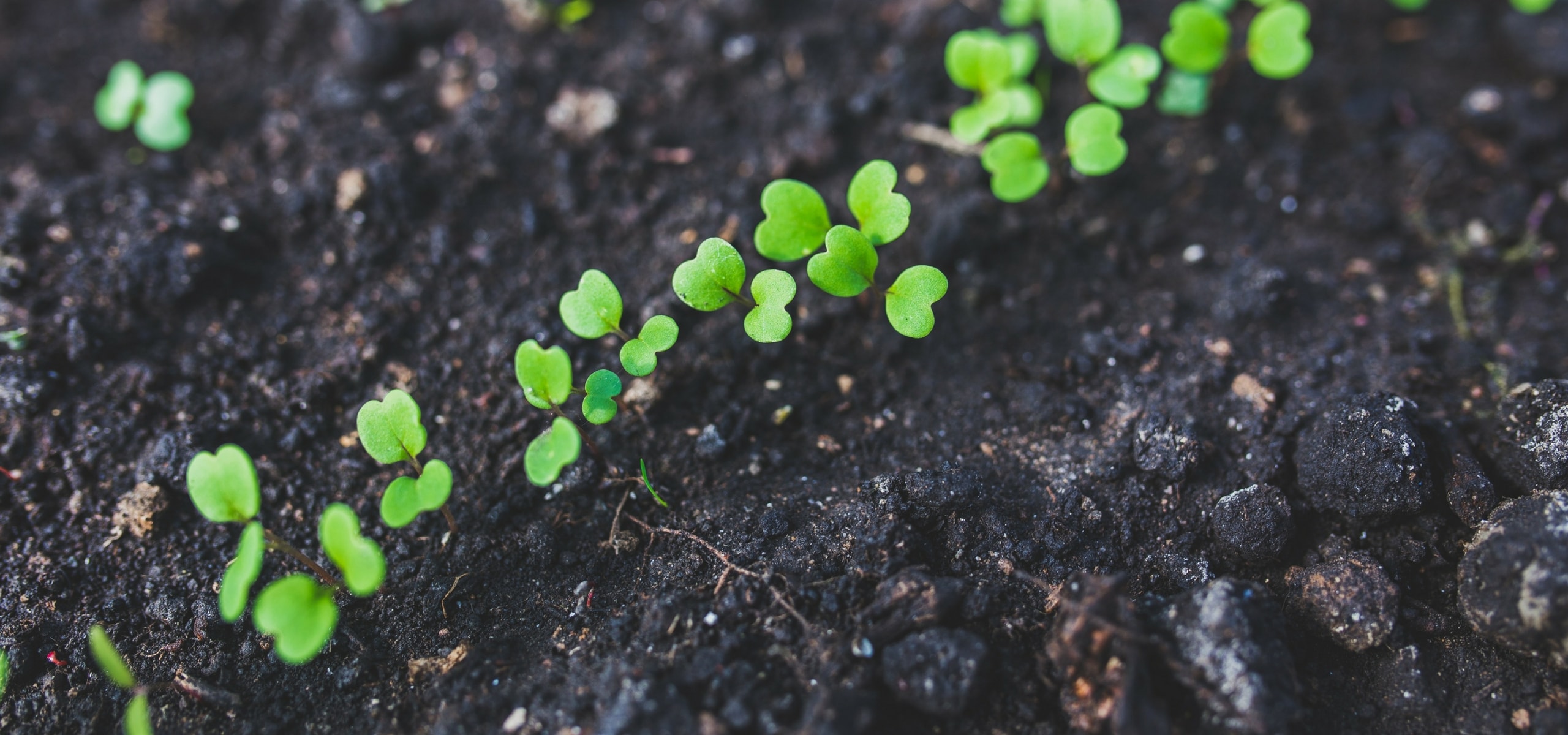
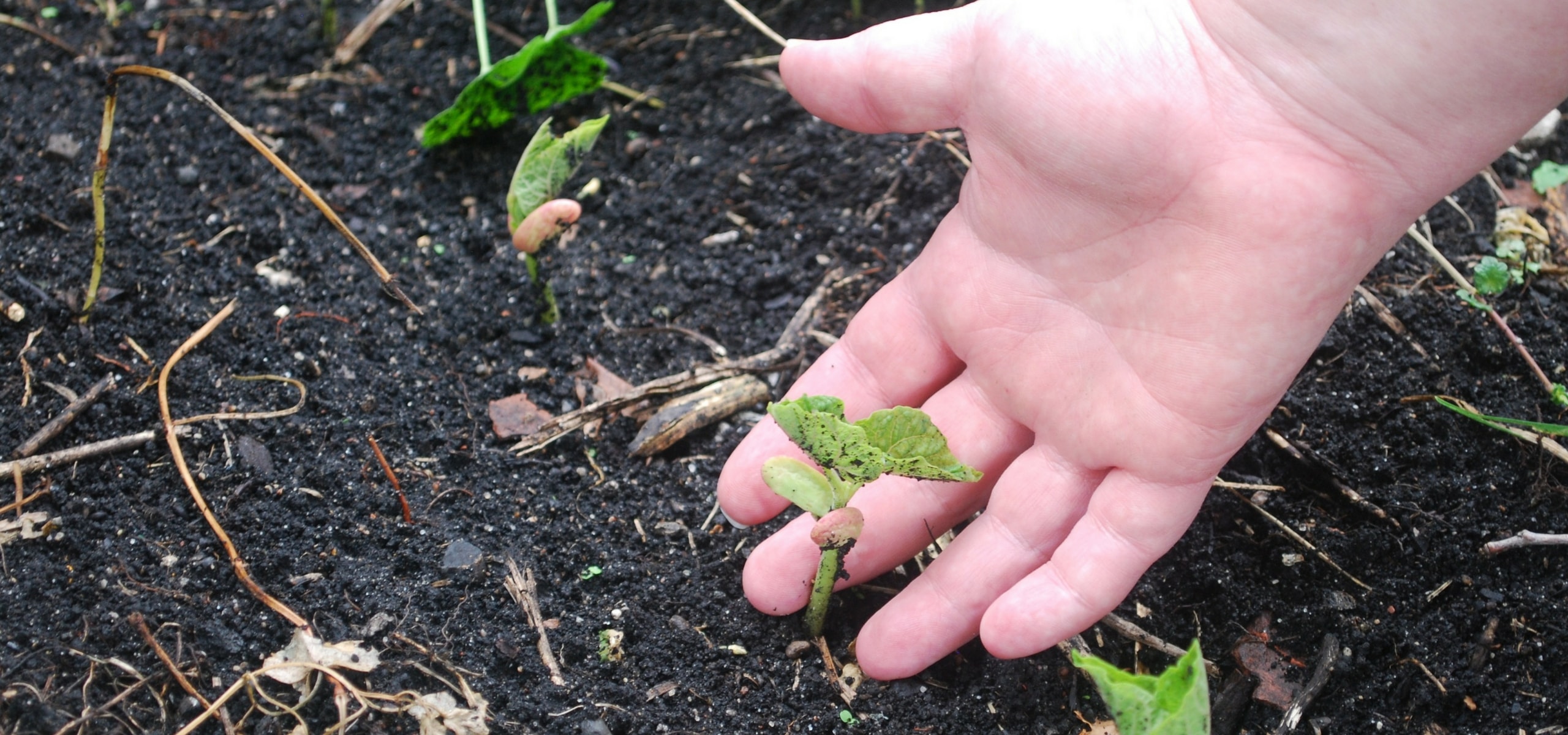
Either in stations of 3 seeds every 40 cm, covered with a small centimetre of fine soil. Then regular waterings until germination. Keep the strongest young plant at the 3-4 leaf stage.
Or in a shallow furrow, in rows spaced 40 cm apart, covered with a small centimetre of fine soil. Then regular waterings until germination. At the 3-4 leaf stage, thin out to leave only one young plant every 40 cm.
Maintenance:
Carry out regular hoeing and weeding.
Waterings should be plentiful and frequent. A soil cover (mulching) is beneficial.
-
The root tolerates –10 to –15 °C in well-drained soil.
-
The foliage, however, is more sensitive and can be damaged from –5 / –7 °C.
In certain climates, chard can overwinter in the ground by taking care to mulch them generously. They can also be stored in a trench.
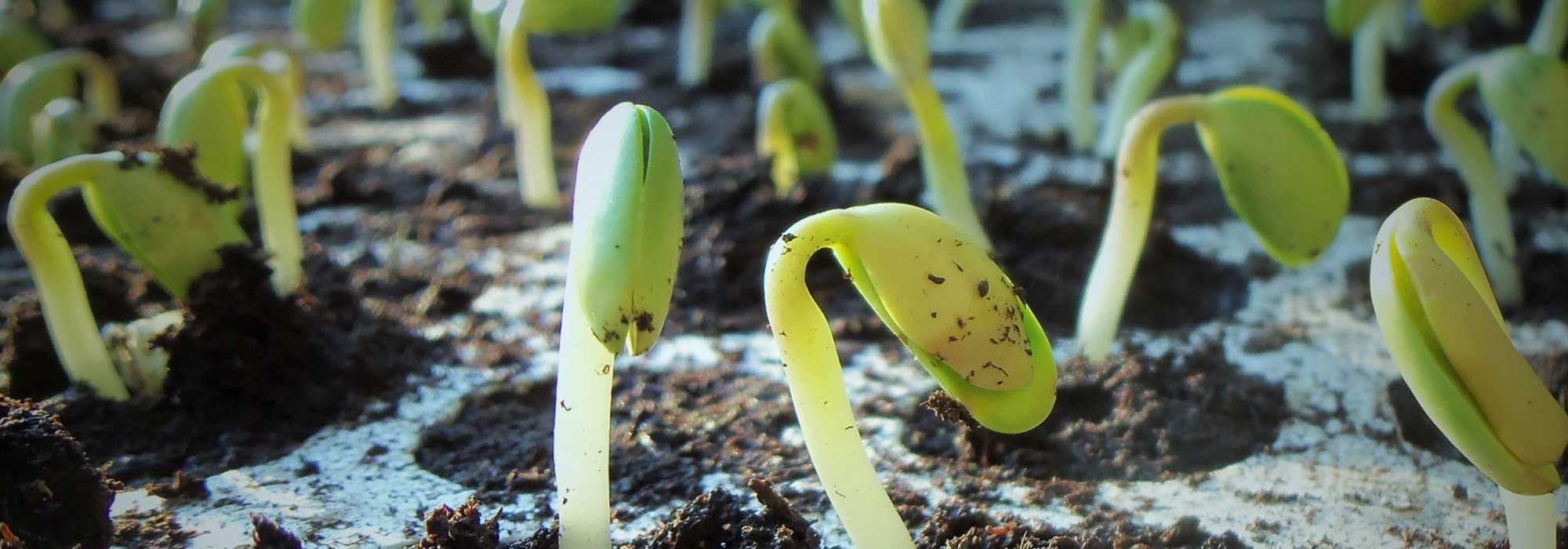
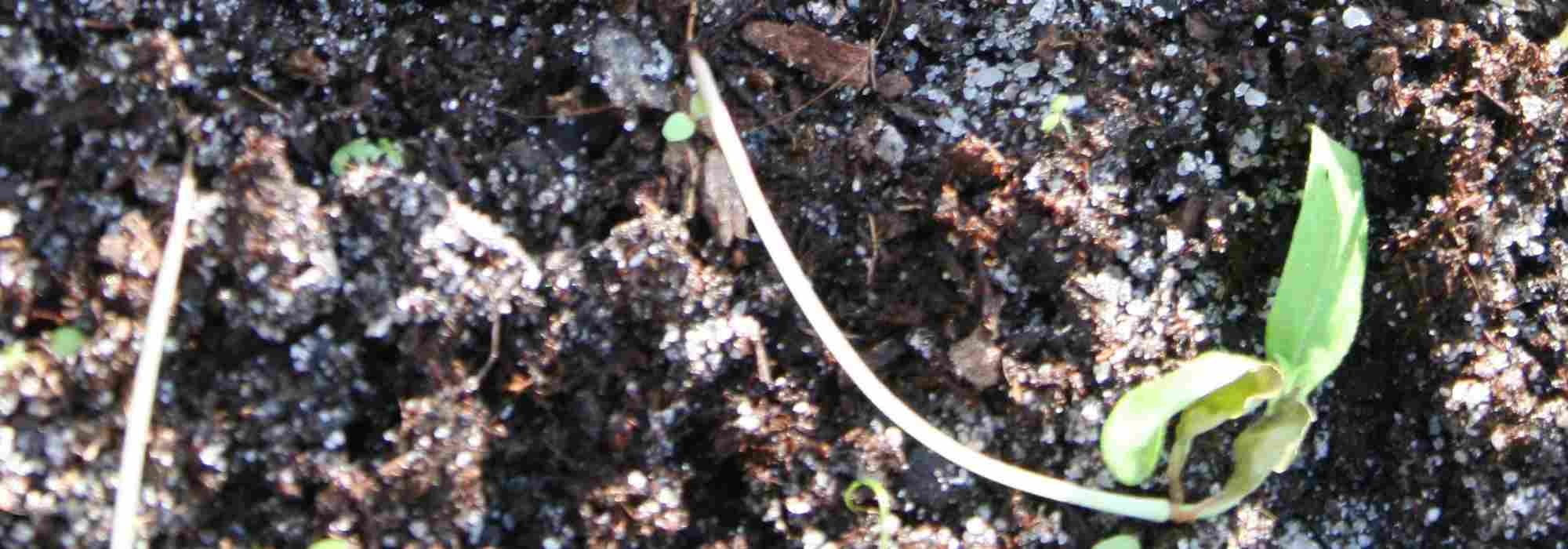
Seedlings
Care
Intended location
Planting & care advice
-
-
-
-
-
-
-
-
This item has not been reviewed yet - be the first to leave a review about it.
Recently viewed products
Haven't found what you were looking for?
Hardiness is the lowest winter temperature a plant can endure without suffering serious damage or even dying. However, hardiness is affected by location (a sheltered area, such as a patio), protection (winter cover) and soil type (hardiness is improved by well-drained soil).

The flowering period indicated on our website applies to countries and regions located in USDA zone 8 (France, the United Kingdom, Ireland, the Netherlands, etc.)
It will vary according to where you live:- In zones 9 to 10 (Italy, Spain, Greece, etc.), flowering will occur about 2 to 4 weeks earlier.
- In zones 6 to 7 (Germany, Poland, Slovenia, and lower mountainous regions), flowering will be delayed by 2 to 3 weeks.
- In zone 5 (Central Europe, Scandinavia), blooming will be delayed by 3 to 5 weeks.
In temperate climates, pruning of spring-flowering shrubs (forsythia, spireas, etc.) should be done just after flowering.
Pruning of summer-flowering shrubs (Indian Lilac, Perovskia, etc.) can be done in winter or spring.
In cold regions as well as with frost-sensitive plants, avoid pruning too early when severe frosts may still occur.
The planting period indicated on our website applies to countries and regions located in USDA zone 8 (France, United Kingdom, Ireland, Netherlands).
It will vary according to where you live:
- In Mediterranean zones (Marseille, Madrid, Milan, etc.), autumn and winter are the best planting periods.
- In continental zones (Strasbourg, Munich, Vienna, etc.), delay planting by 2 to 3 weeks in spring and bring it forward by 2 to 4 weeks in autumn.
- In mountainous regions (the Alps, Pyrenees, Carpathians, etc.), it is best to plant in late spring (May-June) or late summer (August-September).
The harvesting period indicated on our website applies to countries and regions in USDA zone 8 (France, England, Ireland, the Netherlands).
In colder areas (Scandinavia, Poland, Austria...) fruit and vegetable harvests are likely to be delayed by 3-4 weeks.
In warmer areas (Italy, Spain, Greece, etc.), harvesting will probably take place earlier, depending on weather conditions.
The sowing periods indicated on our website apply to countries and regions within USDA Zone 8 (France, UK, Ireland, Netherlands).
In colder areas (Scandinavia, Poland, Austria...), delay any outdoor sowing by 3-4 weeks, or sow under glass.
In warmer climes (Italy, Spain, Greece, etc.), bring outdoor sowing forward by a few weeks.
Shipping country and language
Your country of residence may be:
Your country of residence is:
For a better user experience on our website, you can select:
Your shipping country:
-
 Austria
-
 Belgium
-
 Bosnia & Herzegovina
-
 Bulgaria
-
 Croatia
-
 Cyprus
-
 Czechia
-
 Denmark
-
 Estonia
-
 Finland
-
 France
-
 Germany
-
 Greece
-
 Hungary
-
 Iceland
-
 Ireland
-
 Italy
Italy
-
 Latvia
-
 Liechtenstein
-
 Lithuania
-
 Luxembourg
-
 Malta
Malta
-
 Netherlands
-
 Poland
-
 Portugal
-
 Romania
-
 Serbia
-
 Slovakia
-
 Slovenia
-
 Spain
Spain
-
 Sweden
-
 Switzerland
Language:
-
French
-
 English
-
Spanish
-
Italian
-
German
-
Portuguese
-
Dutch
-
Finnish
My Account
Hello
My wish lists
My cart
Log in / Register
Existing customer?
This form is protected by reCAPTCHA - the Google Privacy Policy and Terms of Service apply.
New customer?
Create an account to track your orders, access our customer service and, if you wish, make the most of our upcoming offers.