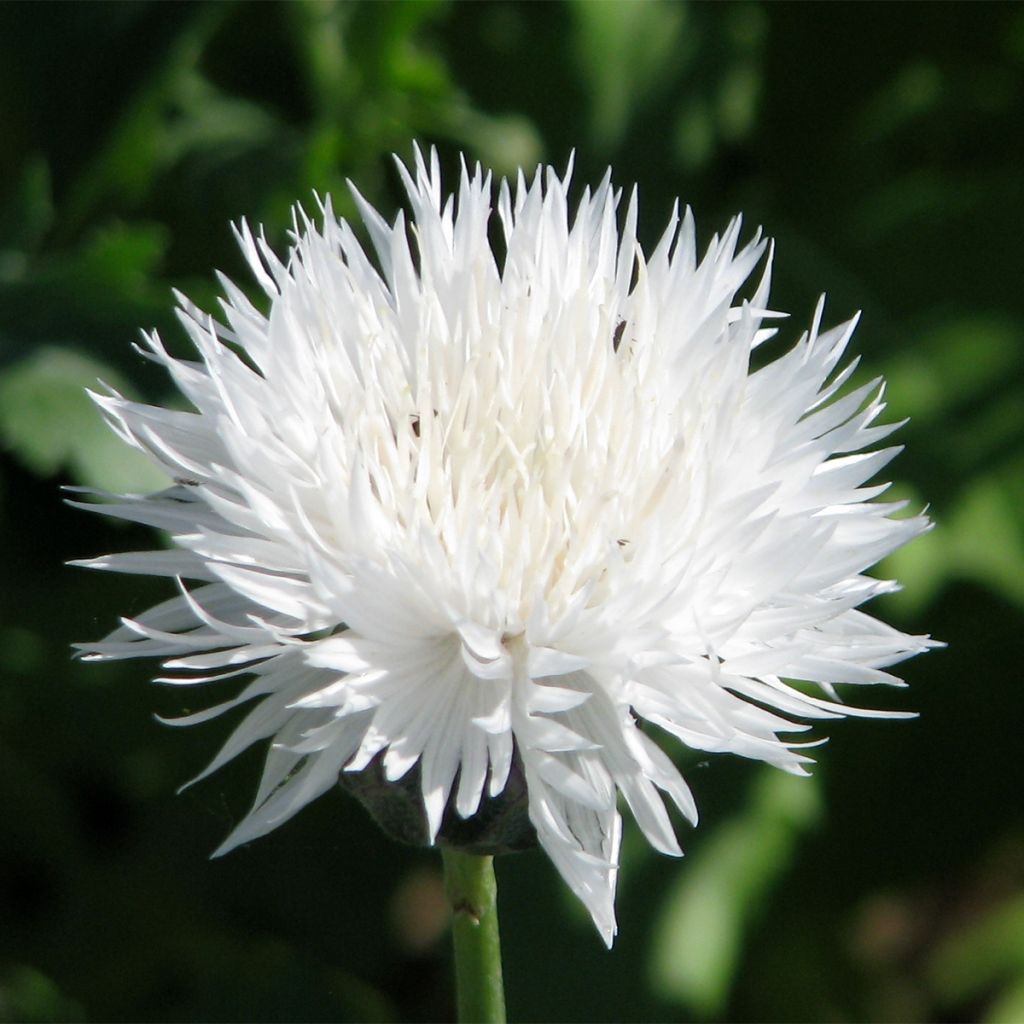
Cornflower The Bride Seeds - Centaurea moschata
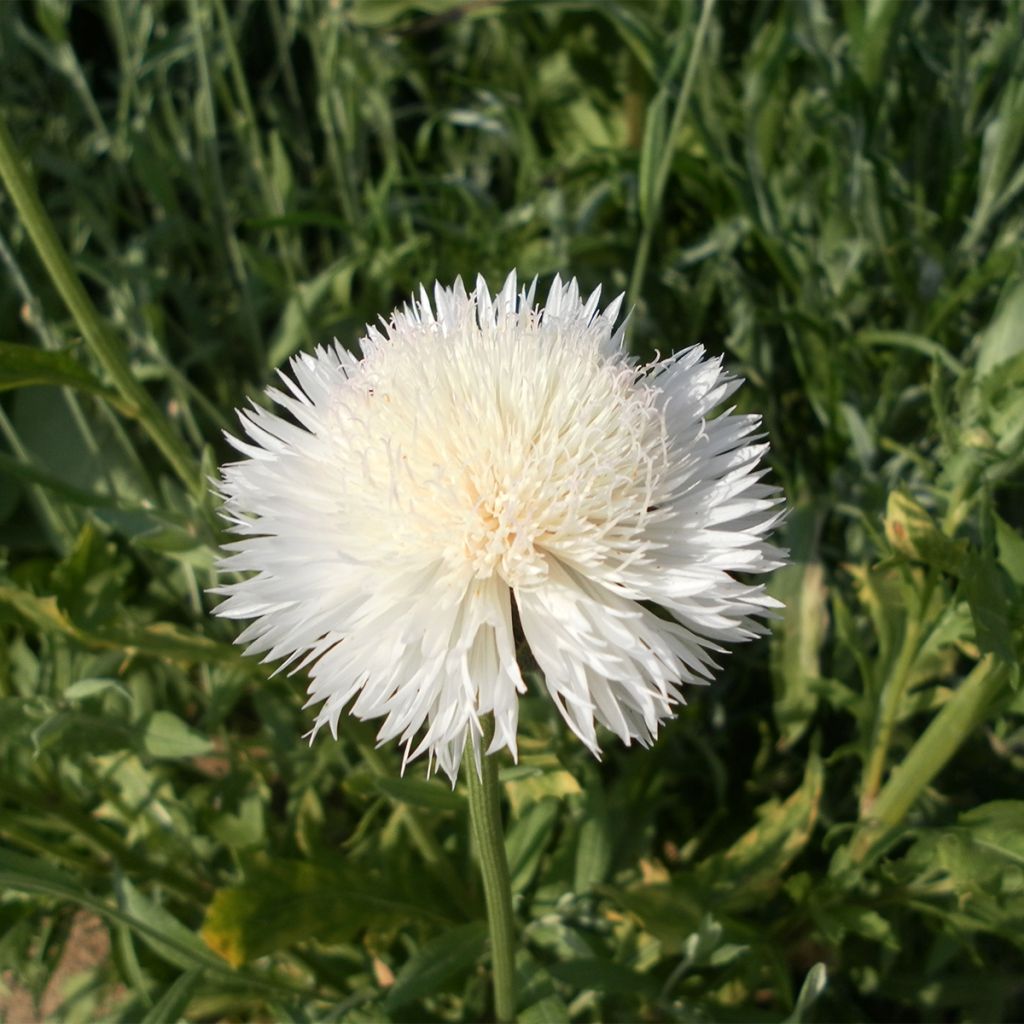
Cornflower The Bride Seeds - Centaurea moschata
Cornflower The Bride Seeds - Centaurea moschata
Centaurea moschata The Bride
Sweet Sultan
I am a devoted fan of Promesses de Fleurs. However, this is the first time I am ordering seeds. I find it unfortunate that certain packages, including this one, are exclusively in English, without a production or expiration date, and without a photo (not easy to recognize the package among dozens of packages that are often kept for several years).
Eliane, 29/02/2020
Back-to-school special offer!
Get €10 off for every €50 you spend! And get up to €40 off on a single order.
How does it work?
1. Shop your favourites
Add your favourite plants to your basket. For every €50 you spend (excluding delivery charges, store credit and the plastic-free option), you’ll receive a €10 voucher.
€50 spent = €10 voucher
€100 spent = €20 voucher
€150 spent = €30 voucher
€200 spent = €40 voucher
2. Place your order
Once your basket reaches one of the spending thresholds, place your order. You can even choose your delivery date!
3. Receive your voucher
As soon as your order has been shipped, you’ll receive an email containing your personal voucher code and its value.
4. Use it on your next order
Your voucher is valid for 90 days from the date you receive it. It can be used once only, on a new order worth at least the value of the voucher, excluding delivery charges.
Please note: Vouchers can be combined with other offers, but cannot be split or refunded.
Home or relay delivery (depending on size and destination)
Important: You may be charged customs duties by your country’s customs authorities upon delivery.
Schedule delivery date,
and select date in basket
This plant carries a 6 months recovery warranty
More information
We guarantee the quality of our plants for a full growing cycle, and will replace at our expense any plant that fails to recover under normal climatic and planting conditions.
Would this plant suit my garden?
Set up your Plantfit profile →
Description
Centaurea moschata The Bride, with its beautifully scented, white, pompom-shaped flowers deserves to be planted more often in our gardens. Derived from sweet sultan, an annual species native to Iran, this variety flowers lengthily in summer in sunny beds and will allow you to create pretty wildflower bouquets, either fresh or dried. This magnificent white cornflower is perfect for filling gaps in flowerbeds. It can be directly sown in its final position, in spring or late summer, and is easy to grow in ordinary, moist to dry soil.
Originally from Western Asia, more precisely the Caucasus, Iran, Iraq and Turkey, Centaurea moschata (synonym Amberboa moschata), is not the best known of the genus. This annual or biennial plant is also known as 'Sweet Sultan' and contains aromatic substances reminiscent of amber in its flowers and seeds. It belongs to the family Asteraceae, as shown by the arrangement of its flowers into capitula.
The cultivar 'The Bride' was selected for its white flowers. This plant reaches 50-60 cm high when in bloom and grows into an erect clump of thin, leafy stems emerging from a mound of basal leaves. The latter are grey-green, fairly large, cut, lyre-shaped, 10 to 25 cm long, with serrated margins. The leaves on the stems are smaller and are divided into densely toothed, linear segments. Flowering takes place from July to September. The flower heads appear at the end of the stems and resemble fully double cornflowers, in the form of 5 to 8 cm wide pompons. They open from beautiful, scaly buds and are composed of a multitude of fertile and sterile florets that are cream-coloured in the centre and pure white at the edges. The mildly scented, nectar-rich and melliferous blooms attract many foraging insects. This plant is hardy down to -12 °C. In milder climates, you can sow them at the end of summer which allows for earlier flowering.
This sweet sultan, once found in many monastic gardens, has been cultivated for over 350 years, but is now mostly neglected by modern day gardeners. This medium-sized plant is particularly well suited to perennial borders and works wonders when sown randomly among other plants. Its airy, bright blooms will look good in a white garden or a wildflower meadow, making a good companion for other flowers. To this end, mix cornflower, grasses, sainfoin, ornamental onion, borage, common motherwort, corn marigold, Eschscholzia californica, cosmos and love-in-a-mist. It is easily sown in container displays. It is also an excellent cut flower for dried flower or fresh bouquets.

Cornflower The Bride Seeds - Centaurea moschata in pictures
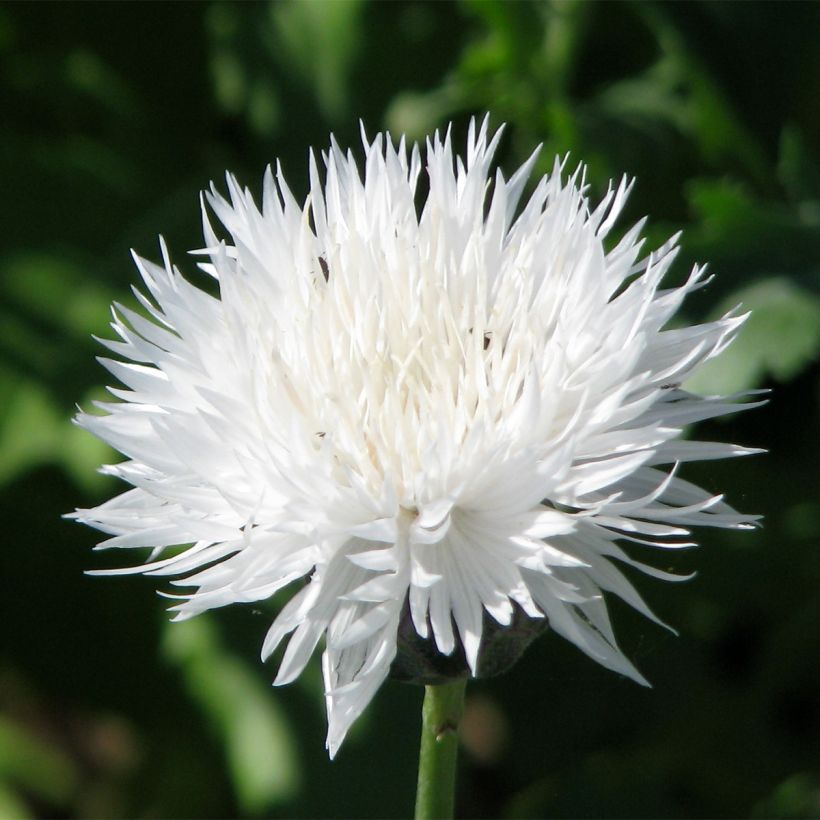
Flowering
Foliage
Plant habit
Botanical data
Centaurea
moschata
The Bride
Asteraceae
Sweet Sultan
Cultivar or hybrid
Planting and care
Sowing instructions:
Sow sweet sultan from March to April or from August to September, preferably directly in their final positions since their roots resent being disturbed.
Choose a very sunny position with well-drained soil. Prepare the soil by raking it to a fine tilth and removing all weeds. Sow at a depth of 6 mm, in hole 30 cm apart. Water regularly with a watering can, especially during dry periods. Germination usually takes 14-21 days. When the seedlings are large enough to be handled, thin them out and plant out to 30 cm apart.
Growing instructions:
Centaurea moschata prefers light, even sandy, well-drained soil and full sun. This plant thrives in moist to moderately dry soil and doesn't tolerate excessive moisture in winter and heavy soils. It is very adaptable and tolerates short periods of drought and limestone quite well. Remove the wilted inflorescences to encourage the renewal of blooms. Robust and hardy, this annual plant will thrive in all types of regions.
Sowing period
Intended location
Planting & care advice
-

-

-

-

-

-

-

-

-
, onOrder confirmed
Reply from on Promesse de fleurs
Recently viewed products
Haven't found what you were looking for?
Hardiness is the lowest winter temperature a plant can endure without suffering serious damage or even dying. However, hardiness is affected by location (a sheltered area, such as a patio), protection (winter cover) and soil type (hardiness is improved by well-drained soil).

The flowering period indicated on our website applies to countries and regions located in USDA zone 8 (France, the United Kingdom, Ireland, the Netherlands, etc.)
It will vary according to where you live:- In zones 9 to 10 (Italy, Spain, Greece, etc.), flowering will occur about 2 to 4 weeks earlier.
- In zones 6 to 7 (Germany, Poland, Slovenia, and lower mountainous regions), flowering will be delayed by 2 to 3 weeks.
- In zone 5 (Central Europe, Scandinavia), blooming will be delayed by 3 to 5 weeks.
In temperate climates, pruning of spring-flowering shrubs (forsythia, spireas, etc.) should be done just after flowering.
Pruning of summer-flowering shrubs (Indian Lilac, Perovskia, etc.) can be done in winter or spring.
In cold regions as well as with frost-sensitive plants, avoid pruning too early when severe frosts may still occur.
The planting period indicated on our website applies to countries and regions located in USDA zone 8 (France, United Kingdom, Ireland, Netherlands).
It will vary according to where you live:
- In Mediterranean zones (Marseille, Madrid, Milan, etc.), autumn and winter are the best planting periods.
- In continental zones (Strasbourg, Munich, Vienna, etc.), delay planting by 2 to 3 weeks in spring and bring it forward by 2 to 4 weeks in autumn.
- In mountainous regions (the Alps, Pyrenees, Carpathians, etc.), it is best to plant in late spring (May-June) or late summer (August-September).
The harvesting period indicated on our website applies to countries and regions in USDA zone 8 (France, England, Ireland, the Netherlands).
In colder areas (Scandinavia, Poland, Austria...) fruit and vegetable harvests are likely to be delayed by 3-4 weeks.
In warmer areas (Italy, Spain, Greece, etc.), harvesting will probably take place earlier, depending on weather conditions.
The sowing periods indicated on our website apply to countries and regions within USDA Zone 8 (France, UK, Ireland, Netherlands).
In colder areas (Scandinavia, Poland, Austria...), delay any outdoor sowing by 3-4 weeks, or sow under glass.
In warmer climes (Italy, Spain, Greece, etc.), bring outdoor sowing forward by a few weeks.
Shipping country and language
Your country of residence may be:
Your country of residence is:
For a better user experience on our website, you can select:
Your shipping country:
-
 Austria
-
 Belgium
-
 Bosnia & Herzegovina
-
 Bulgaria
-
 Croatia
-
 Cyprus
-
 Czechia
-
 Denmark
-
 Estonia
-
 Finland
-
 France
-
 Germany
-
 Greece
-
 Hungary
-
 Iceland
-
 Ireland
-
 Italy
Italy
-
 Latvia
-
 Liechtenstein
-
 Lithuania
-
 Luxembourg
-
 Malta
Malta
-
 Netherlands
-
 Poland
-
 Portugal
-
 Romania
-
 Serbia
-
 Slovakia
-
 Slovenia
-
 Spain
Spain
-
 Sweden
-
 Switzerland
Language:
-
French
-
 English
-
Spanish
-
Italian
-
German
-
Portuguese
-
Dutch
-
Finnish
My Account
Hello
My wish lists
My cart
Log in / Register
Existing customer?
This form is protected by reCAPTCHA - the Google Privacy Policy and Terms of Service apply.
New customer?
Create an account to track your orders, access our customer service and, if you wish, make the most of our upcoming offers.