Datura metel Belle Blanche seeds - Brugmansia
Datura metel Belle Blanche seeds - Brugmansia
Datura metel Belle Blanche
Thornapple, Jimsonweed, Moonflower, Devil's weed, Hell's Bells
Back-to-school special offer!
Get €10 off for every €50 you spend! And get up to €40 off on a single order.
How does it work?
1. Shop your favourites
Add your favourite plants to your basket. For every €50 you spend (excluding delivery charges, store credit and the plastic-free option), you’ll receive a €10 voucher.
€50 spent = €10 voucher
€100 spent = €20 voucher
€150 spent = €30 voucher
€200 spent = €40 voucher
2. Place your order
Once your basket reaches one of the spending thresholds, place your order. You can even choose your delivery date!
3. Receive your voucher
As soon as your order has been shipped, you’ll receive an email containing your personal voucher code and its value.
4. Use it on your next order
Your voucher is valid for 90 days from the date you receive it. It can be used once only, on a new order worth at least the value of the voucher, excluding delivery charges.
Please note: Vouchers can be combined with other offers, but cannot be split or refunded.
Home or relay delivery (depending on size and destination)
Important: You may be charged customs duties by your country’s customs authorities upon delivery.
Schedule delivery date
and select date in basket
This plant carries a 6 months recovery warranty
More information
We guarantee the quality of our plants for a full growing cycle, and will replace at our expense any plant that fails to recover under normal climatic and planting conditions.
Would this plant suit my garden?
Set up your Plantfit profile →
Description
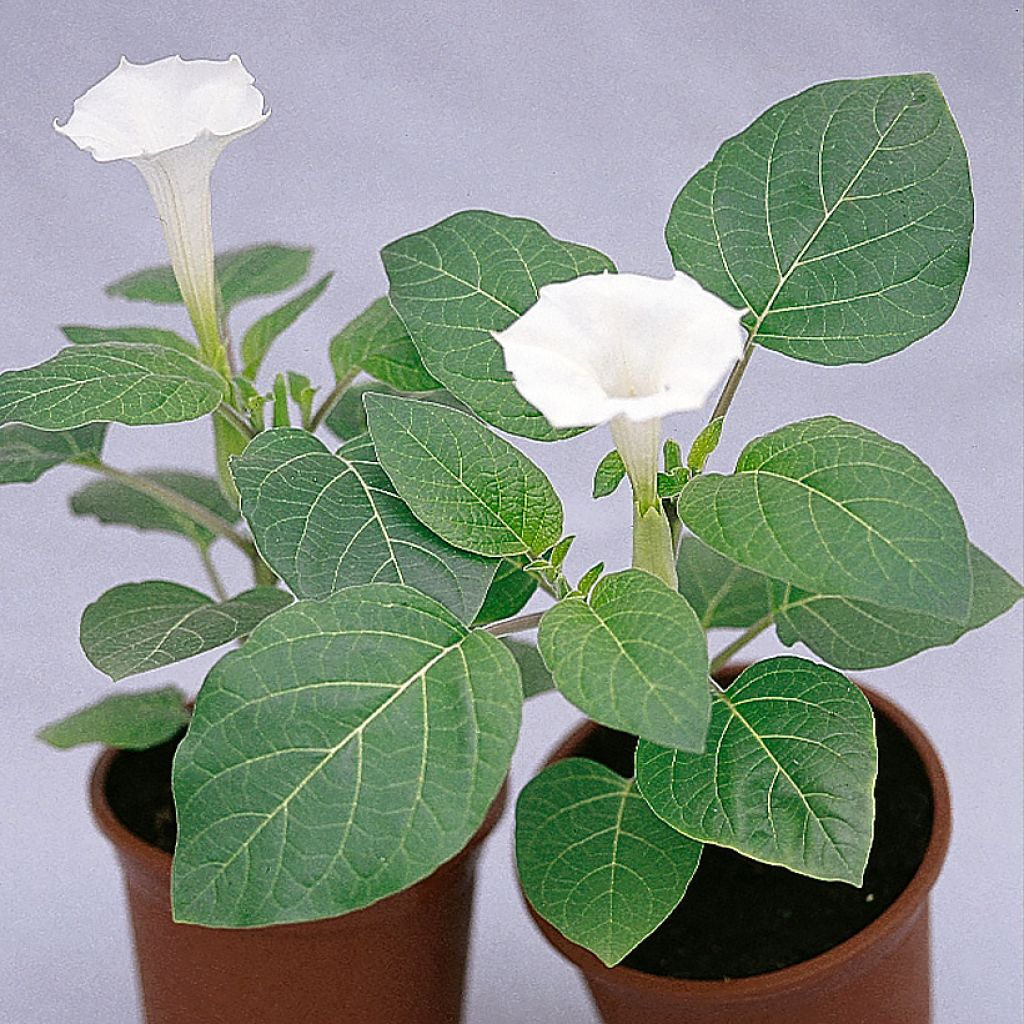
Datura metel 'Belle Blanche' is a beautiful selection of Brugmansia meteloides with large, upright white flowers, a tender perennial species often grown as an annual. This variety forms a very beautiful clump in one season, its beautiful bluish-green leaves serving as a backdrop to its bright white flowers. In a pot on the terrace, it will perfume the summer evenings.
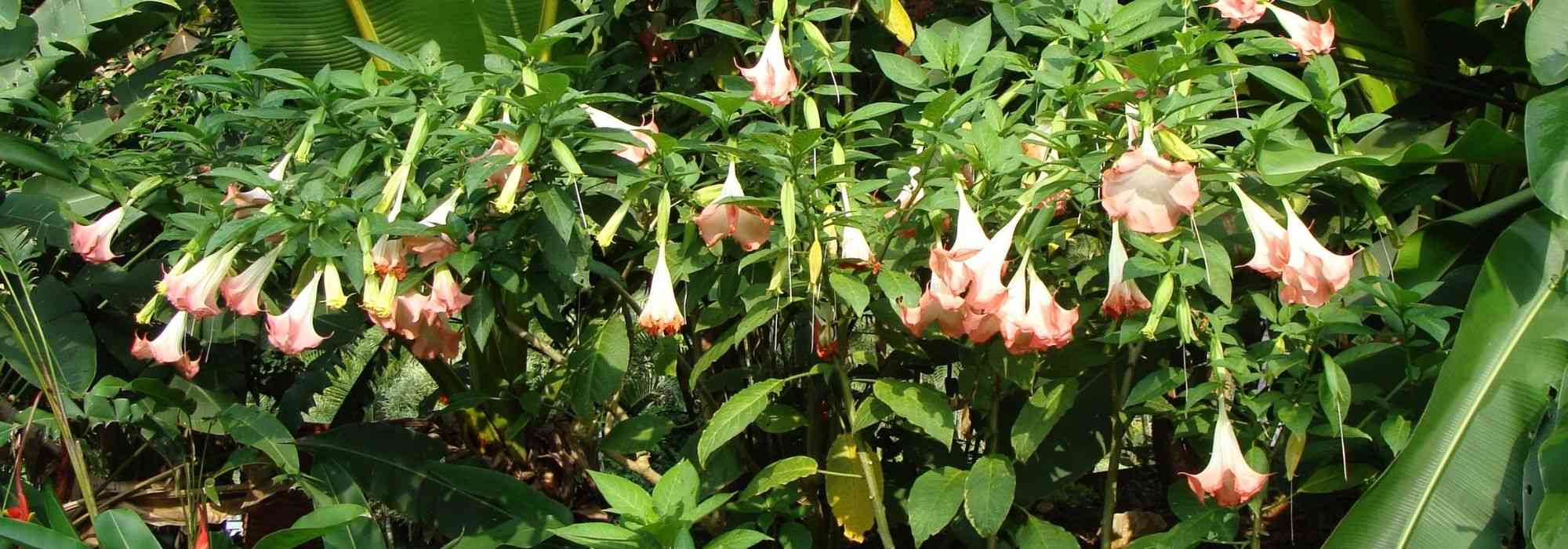
There are about fifteen species of Datura cultivated for terrace and garden decoration. Datura metel belongs to the Solanaceae family and is probably native to Central America. The numerous common names given to this plant have contributed to its reputation as a poisonous plant: Devil's Herb, Angel's Trumpets, Trumpets of the Last Judgment, Mad Trumpet, Thorny Apple. While all parts of the plant are toxic, it seems that Datura receives a special "media" treatment, unlike foxgloves, oleanders, or aconites, which are equally dangerous. This is probably due to the somewhat malevolent appearance of its horned trumpet-like flower. This plant has been cultivated for a long time in southern China before spreading to the rest of Asia and eventually reaching Europe. In the wild, Datura metel grows in fallow lands and along roadsides. Datura is a perennial in the ground in very mild regions if its crown is protected from frost and moisture with a thick mulch.
The 'Belle Blanche' Datura is a herbaceous perennial plant that grows from a tuberous root sensitive to frost and excess water. Within 4 to 5 months after seed germination, this datura forms a spreading bushy clump, reaching, depending on growing conditions, 60 cm to 1 m in all directions. The stems are branched, not hairy except on young shoots, often tinged with purplish or reddish-black. They bear entire or angular-edged, elliptical to broadly ovate, asymmetrical, membranous leaves, 5 to 20 cm long and 4 to 15 cm wide. Their colour is a dark bluish-green. Flowering occurs from July to October. It produces solitary, upright flowers in the form of elongated trumpets, measuring up to 20 cm long. The flower emits a pleasant fragrance especially in the evening and at night, attracting pollinating insects. Each flower does not live more than 24 hours. After pollination, round fruits measuring 3-4 cm in diameter, adorned with short spines, form. The base of the fruit rests on the calyx, forming a sort of collar.
The 'Belle Blanche' Datura thrives in a pot on the terrace or in a sunny exotic bed. During the long summer evenings, its fragrance will spread as the night's coolness sets in. This plant is often placed alone, near the house or a walkway to enjoy its scent. To enhance its strange beauty, it can be paired with canna 'Red Wine' or Ricinus (Ricinus communis 'Impala'), adding a tropical charm. To lighten the ensemble, opt for ornamental grasses like Pennisetum. 'Belle Blanche' Datura can also be combined with agapanthus 'Blue Heaven', whose blue flowers create a harmonious and contrasting display with the Datura trumpets.
Flowering
Foliage
Plant habit
Safety measures
Botanical data
Datura
metel
Belle Blanche
Solanaceae
Thornapple, Jimsonweed, Moonflower, Devil's weed, Hell's Bells
Datura alba, Datura metel var. fastuosa, Datura chlorantha, Datura fastuosa
Cultivar or hybrid
ingestion
Cette plante est toxique si elle est ingérée volontairement ou involontairement.
Ne la plantez pas là où de jeunes enfants peuvent évoluer, et lavez-vous les mains après l'avoir manipulée.
Pensez à conserver l'étiquette de la plante, à la photographier ou à noter son nom, afin de faciliter le travail des professionnels de santé.
Davantage d'informations sur https://plantes-risque.info
Planting and care
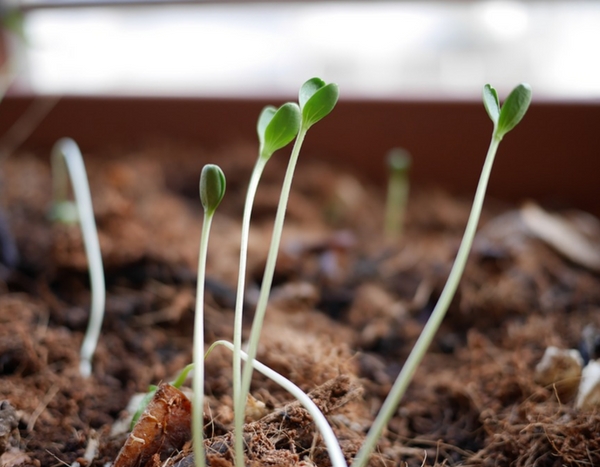
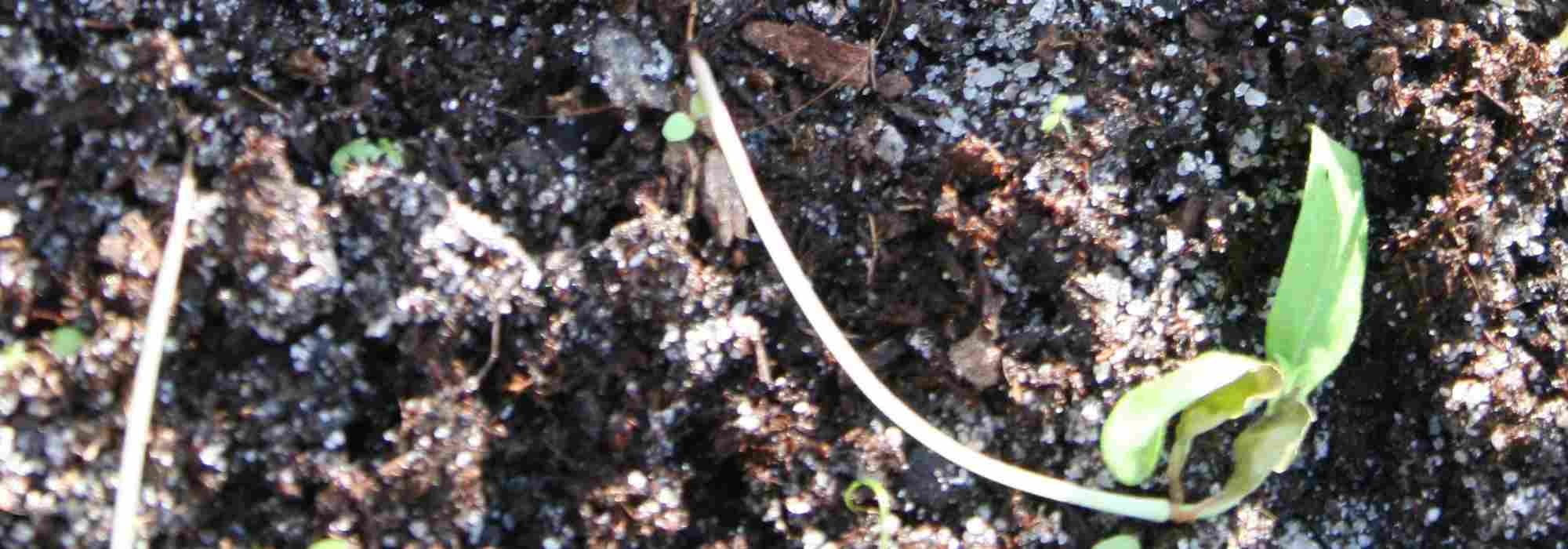
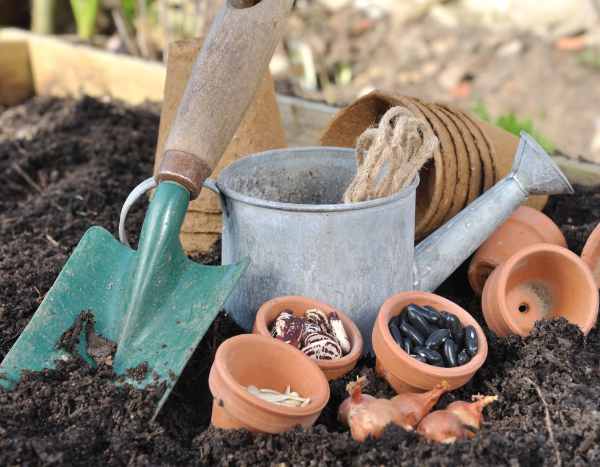
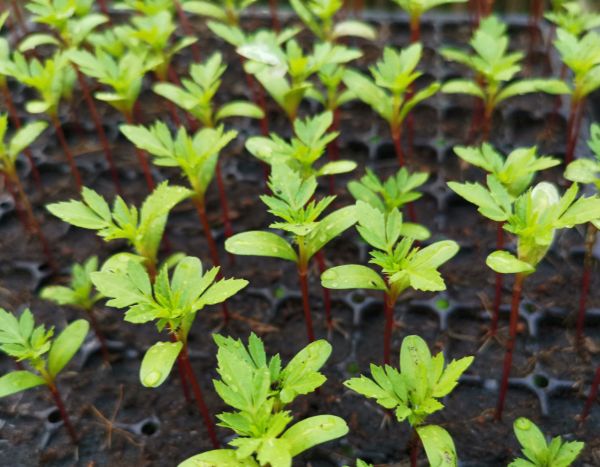
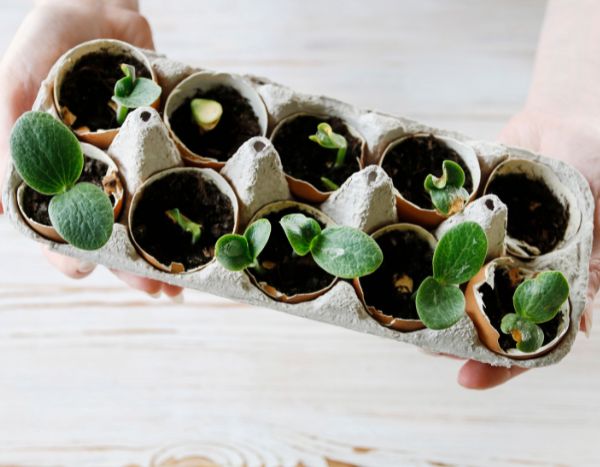
Before sowing your Daturas, soak the seeds in a bowl of lukewarm water for 24 hours. Sow them in February-March in moist soil at a rate of one seed every 5 cm. Cover and lightly press the soil over the seeds. Keep your sowing at a temperature of 15 to 20°C and in a bright location. Germination will take between 21 and 60 days. Growth will be faster afterwards. Transplant your plants into pots when they reach a height of +/-10cm. Throughout their growth, ensure each plant is watered without allowing stagnant water in the saucers placed under the pots.
Cultivation: provide Datura metel with fertile, well-drained soil. Limestone is not a problem. Unlike large shrubby Brugmansia, it is not very water-demanding when grown as a perennial. It will tolerate dry soils in summer if they are deep enough. In less sunny regions, it requires full sun and a warm location. Further south, it will appreciate some afternoon shade. This plant is hardy in zone 9 and can be grown as a perennial there by protecting its crown well in winter with a thick mulch that will shield it from cold and moisture. Its root is sensitive to excess water.
Sowing period
Intended location
Planting & care advice
-
-
-
-
-

-
-
-
This item has not been reviewed yet - be the first to leave a review about it.
Recently viewed products
Haven't found what you were looking for?
Hardiness is the lowest winter temperature a plant can endure without suffering serious damage or even dying. However, hardiness is affected by location (a sheltered area, such as a patio), protection (winter cover) and soil type (hardiness is improved by well-drained soil).

The flowering period indicated on our website applies to countries and regions located in USDA zone 8 (France, the United Kingdom, Ireland, the Netherlands, etc.)
It will vary according to where you live:- In zones 9 to 10 (Italy, Spain, Greece, etc.), flowering will occur about 2 to 4 weeks earlier.
- In zones 6 to 7 (Germany, Poland, Slovenia, and lower mountainous regions), flowering will be delayed by 2 to 3 weeks.
- In zone 5 (Central Europe, Scandinavia), blooming will be delayed by 3 to 5 weeks.
In temperate climates, pruning of spring-flowering shrubs (forsythia, spireas, etc.) should be done just after flowering.
Pruning of summer-flowering shrubs (Indian Lilac, Perovskia, etc.) can be done in winter or spring.
In cold regions as well as with frost-sensitive plants, avoid pruning too early when severe frosts may still occur.
The planting period indicated on our website applies to countries and regions located in USDA zone 8 (France, United Kingdom, Ireland, Netherlands).
It will vary according to where you live:
- In Mediterranean zones (Marseille, Madrid, Milan, etc.), autumn and winter are the best planting periods.
- In continental zones (Strasbourg, Munich, Vienna, etc.), delay planting by 2 to 3 weeks in spring and bring it forward by 2 to 4 weeks in autumn.
- In mountainous regions (the Alps, Pyrenees, Carpathians, etc.), it is best to plant in late spring (May-June) or late summer (August-September).
The harvesting period indicated on our website applies to countries and regions in USDA zone 8 (France, England, Ireland, the Netherlands).
In colder areas (Scandinavia, Poland, Austria...) fruit and vegetable harvests are likely to be delayed by 3-4 weeks.
In warmer areas (Italy, Spain, Greece, etc.), harvesting will probably take place earlier, depending on weather conditions.
The sowing periods indicated on our website apply to countries and regions within USDA Zone 8 (France, UK, Ireland, Netherlands).
In colder areas (Scandinavia, Poland, Austria...), delay any outdoor sowing by 3-4 weeks, or sow under glass.
In warmer climes (Italy, Spain, Greece, etc.), bring outdoor sowing forward by a few weeks.
Shipping country and language
Your country of residence may be:
Your country of residence is:
For a better user experience on our website, you can select:
Your shipping country:
-
 Austria
-
 Belgium
-
 Bosnia & Herzegovina
-
 Bulgaria
-
 Croatia
-
 Cyprus
-
 Czechia
-
 Denmark
-
 Estonia
-
 Finland
-
 France
-
 Germany
-
 Greece
-
 Hungary
-
 Iceland
-
 Ireland
-
 Italy
Italy
-
 Latvia
-
 Liechtenstein
-
 Lithuania
-
 Luxembourg
-
 Malta
Malta
-
 Netherlands
-
 Poland
-
 Portugal
-
 Romania
-
 Serbia
-
 Slovakia
-
 Slovenia
-
 Spain
Spain
-
 Sweden
-
 Switzerland
Language:
-
French
-
 English
-
Spanish
-
Italian
-
German
-
Portuguese
-
Dutch
-
Finnish
My Account
Hello
My wish lists
My cart
Log in / Register
Existing customer?
This form is protected by reCAPTCHA - the Google Privacy Policy and Terms of Service apply.
New customer?
Create an account to track your orders, access our customer service and, if you wish, make the most of our upcoming offers.