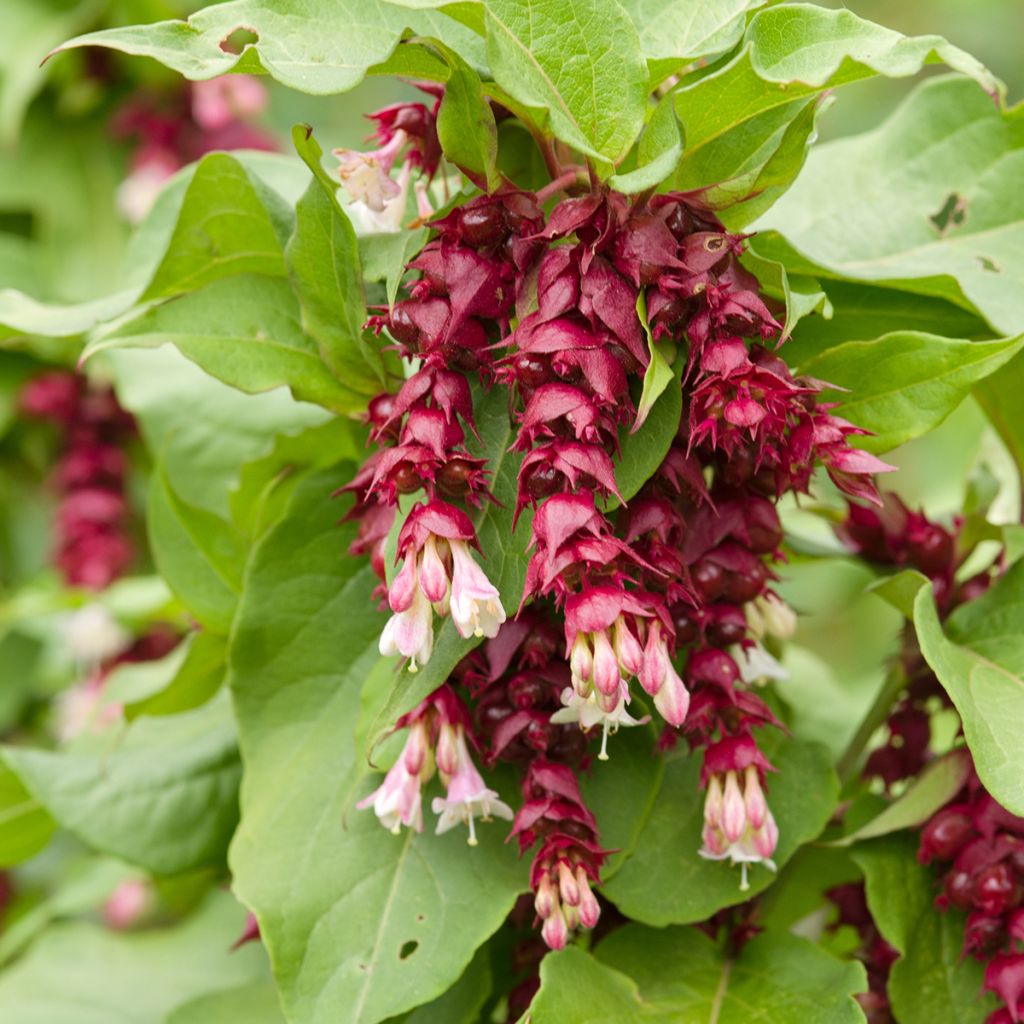
Leycesteria formosa seeds
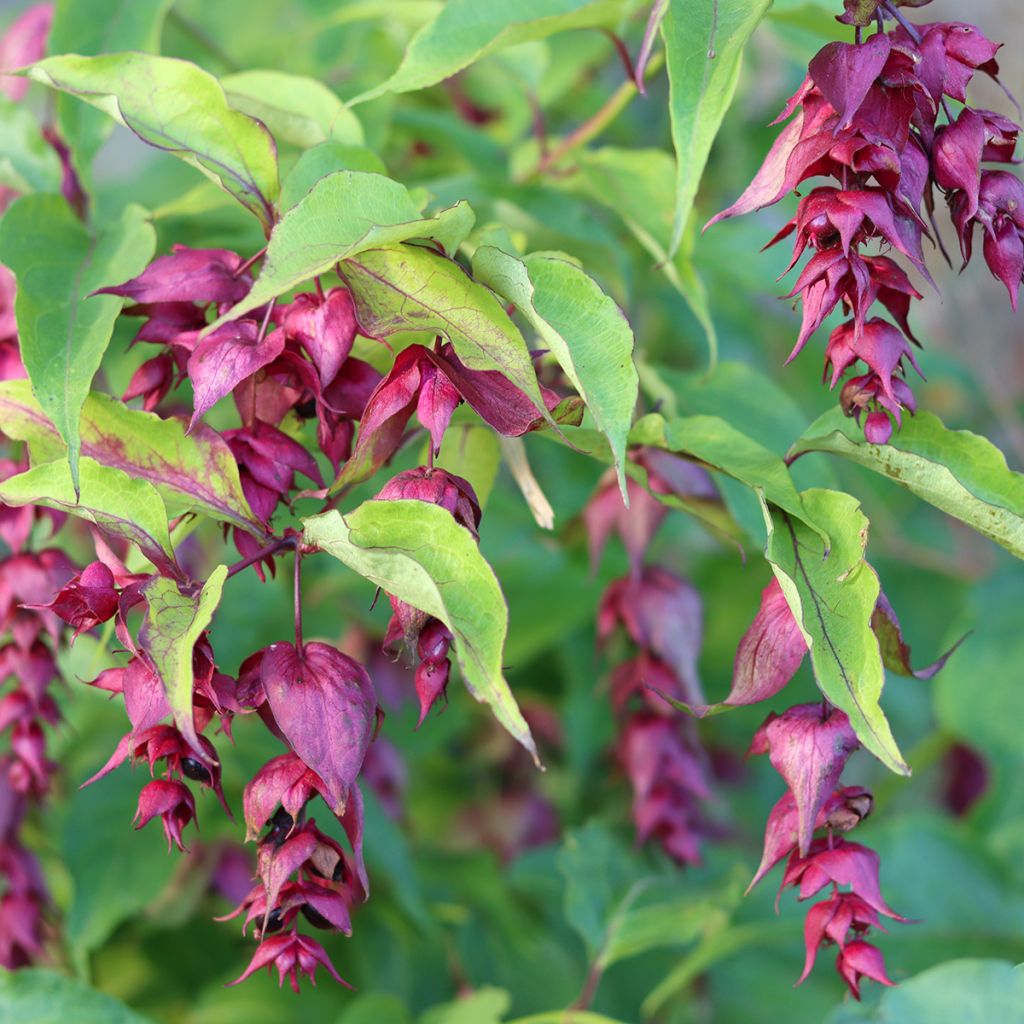
Leycesteria formosa seeds
Leycesteria formosa seeds
Leycesteria formosa
Himalayan Honeysuckle, Flowering Nutmeg, Pheasant Berry, Granny's Curls
Back-to-school special offer!
Get €10 off for every €50 you spend! And get up to €40 off on a single order.
How does it work?
1. Shop your favourites
Add your favourite plants to your basket. For every €50 you spend (excluding delivery charges, store credit and the plastic-free option), you’ll receive a €10 voucher.
€50 spent = €10 voucher
€100 spent = €20 voucher
€150 spent = €30 voucher
€200 spent = €40 voucher
2. Place your order
Once your basket reaches one of the spending thresholds, place your order. You can even choose your delivery date!
3. Receive your voucher
As soon as your order has been shipped, you’ll receive an email containing your personal voucher code and its value.
4. Use it on your next order
Your voucher is valid for 90 days from the date you receive it. It can be used once only, on a new order worth at least the value of the voucher, excluding delivery charges.
Please note: Vouchers can be combined with other offers, but cannot be split or refunded.
Why not try an alternative variety in stock?
View all →
Available in 1 sizes

Available in 1 sizes
Available in 1 sizes

Available in 1 sizes
Available in 1 sizes
Available in 1 sizes
Available in 1 sizes
Available in 1 sizes

Available in 1 sizes

Available in 1 sizes
This plant carries a 6 months recovery warranty
More information
We guarantee the quality of our plants for a full growing cycle, and will replace at our expense any plant that fails to recover under normal climatic and planting conditions.
Would this plant suit my garden?
Set up your Plantfit profile →
Description
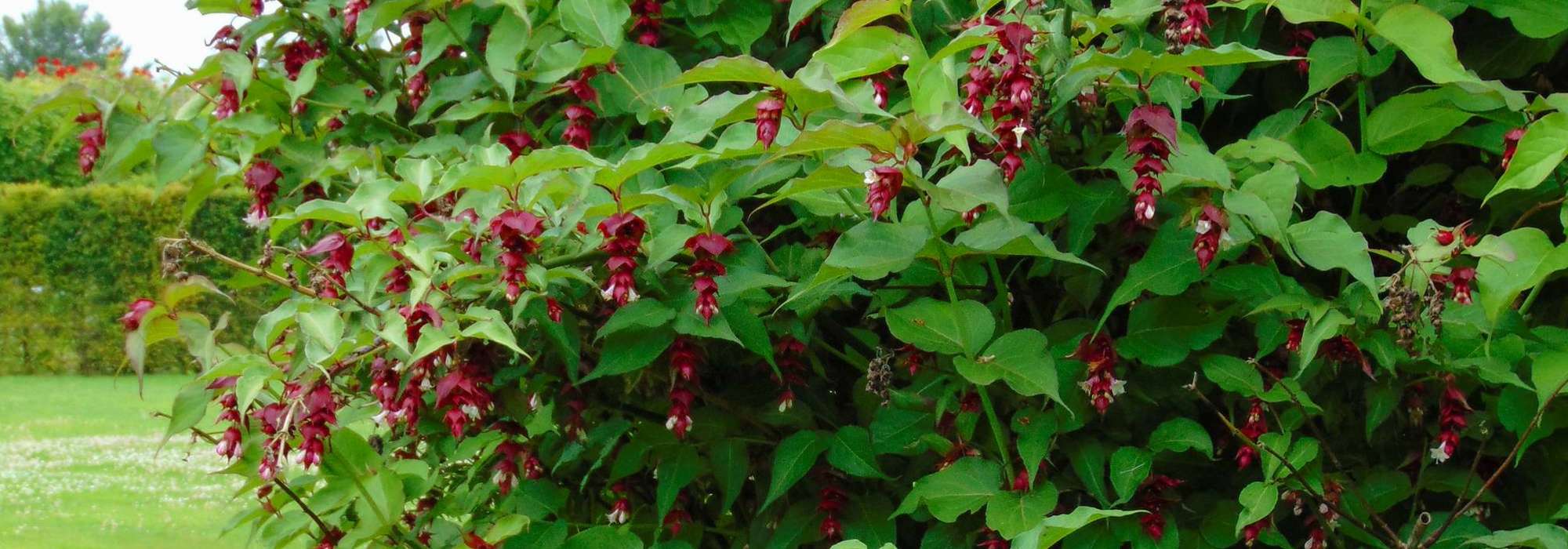
Leycesteria formosa is a shrub with the evocative nickname Pheasant Berry, because its seeds are loved by these birds. It is fast-growing, forming a dense, upright clump, 2m in height. Its beautiful, bright green foliage has superb autumn colours. In summer, the shrub flowers for a long time in the form of long, pendulous cymes, consisting of purple-red bracts that encircle white flowers. The berries that follow are equally ornamental and persist until the frosts. Propagation is possible by seed, but the result can sometimes be unreliable and may require several months of waiting. It is therefore more often propagated by cuttings.
Leycesteria formosa, occasionally called Himalayan Honeysuckle, is a shrub belonging to the Caprifoliaceae family. Following an evolution in botanical systematics, this family now contains only five genera, the most common in our gardens being Honeysuckle, with its often powerfully fragrant flowers, and Snowberries, valued for their highly decorative small fruits. The Leycesteria genus includes only six Asian species, including L. formosa, which, despite its name, is not native to Formosa (the former name of Taiwan), but to a large Himalayan area, stretching from Kashmir to Yunnan and western Sichuan in China. In these regions, it grows in thickets and forests near watercourses, at altitudes of 2000 to 3000m. Its name honours William Leycester, a British magistrate with a keen interest in botany.
This shrub with an upright and bushy habit quickly reaches medium dimensions, around 2 metres in height and 1.5 metres in spread at maturity. Its green, rigid, hollow stems, slightly arching with age, are decorative, even in winter when the foliage has fallen. The elliptical leaves are elongated and pointed, measuring 5 to 18cm in length. The leaves are a beautiful bright green, darker depending on the exposure, enhanced by slightly reddish veins. The flowering appears on the current year's growth from June-July until September. During this period, the plant is adorned with small white flowers, surrounded and highlighted by purple-red bracts, giving the whole an architectural and colourful aesthetic. After flowering, round, shiny, purple berries appear from August to November. It is not uncommon to see both flowers and fruits on the same cluster, the former at the top, the latter at the base. In autumn, the foliage turns orange-yellow to end the season beautifully.
Undemanding Pheasant Berry appreciates partial shade or gentle sun, in ordinary soil, but ideally rich and well-drained. It doesn't like lime, preferring neutral to slightly acidic soil, remaining moist in summer. When these conditions are not met, its lifespan will be shorter, with new shoots becoming less abundant each spring. With good hardiness (-15°C to -18°C), it tolerates pollution well and shows little susceptibility to disease. Pruning is optional; however, hard pruning at the end of winter stimulates growth and encourages abundant flowering, as this develops on the current year's shoots. Despite its exotic origin, its natural habit and slightly wild appearance allow it to integrate quite easily into a rustic, informal hedge. Plant it alongside a Euonymus europaeus 'Red Cascade', a horticultural variety of European Spindle, to achieve a colour contrast. The dark green leaves of the latter will contrast with the lighter tones of the Leycesteria, and its intense red autumn colours will ideally accompany those of your Pheasant Berry. Even the pink and orange fruits of the Spindle will prolong this celebration of colour. Amelanchier canadensis will also be a good companion, offering brilliant white spring flowering, followed by red, then black, decorative and edible fruits and finally a firework display of autumn colours.
Leycesteria formosa seeds in pictures
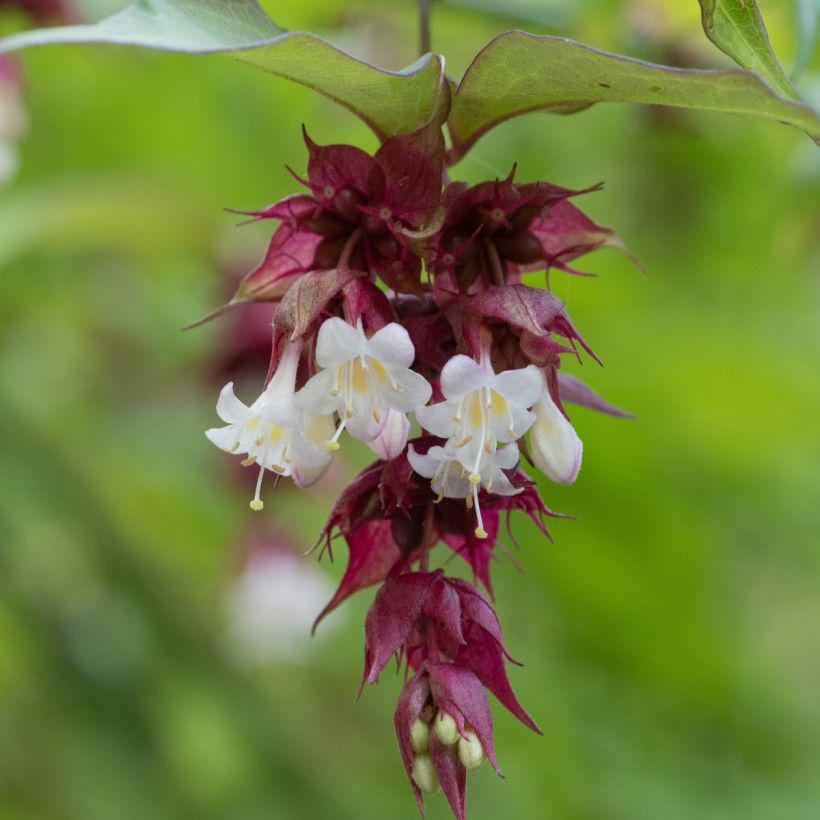
Flowering
Foliage
Plant habit
Botanical data
Leycesteria
formosa
Caprifoliaceae
Himalayan Honeysuckle, Flowering Nutmeg, Pheasant Berry, Granny's Curls
Leycesteria limprichtii, Leycesteria sinensis, Leycesteria formosa var. stenosepala
Himalayas, China
Planting and care
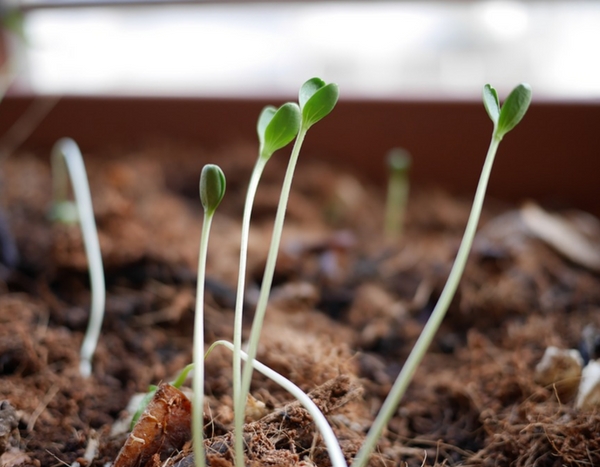
Leycesteria formosa seeds can be sown directly, but the success rate will then be low, and germination may take several months after sowing. Therefore, to break seed dormancy, it is advisable to carry out cold stratification. Simply place the seeds in a bag filled with moist perlite and leave it in the refrigerator for 4 to 6 weeks.
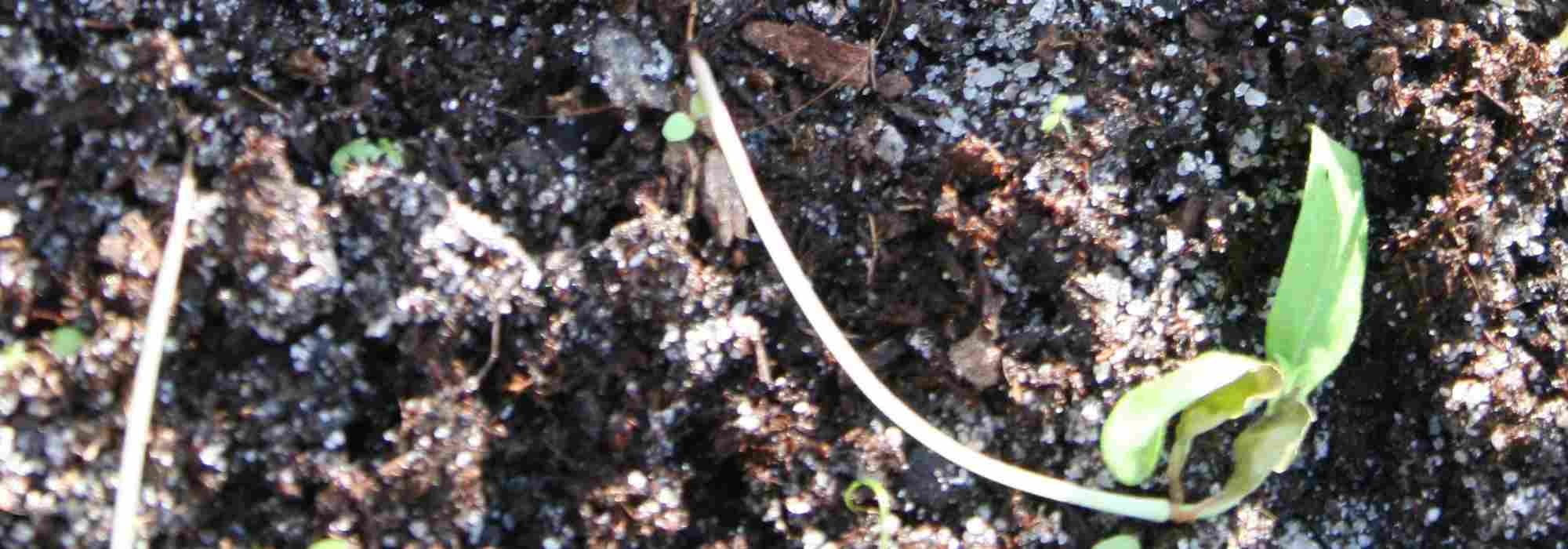
Then sow either indoors in warmth, or directly in place in spring on warmed soil. Indoors, prepare a seed tray or sowing container and fill it with a light, well-draining mix (such as potting compost plus sand). Sow superficially without covering the seeds, as they need light to germinate. Place the tray in a propagator, or cover it with a sheet of glass or plastic film, maintaining a temperature of 15-20°C. The substrate must remain moist, but not waterlogged, and it is advisable to air it a little each day to prevent excessive humidity.
Be patient, as germination can take from 30 days to several months! The success rate after stratification ranges between 30 and 50%; without stratification, it can drop significantly. Allow the seedlings to develop 3 to 4 true leaves before pricking them out into pots to strengthen them. When the young plants reach 15- 20 cm in height, plant them in the garden in a sunny to partially shaded position, in neutral to slightly acidic (non-lime-bearing) soil that is moist. In hot climates, the shade of trees can be beneficial.
Sowing period
Intended location
Planting & care advice
-

-
-
-
-

-

-

-

This item has not been reviewed yet - be the first to leave a review about it.
Recently viewed products
Haven't found what you were looking for?
Hardiness is the lowest winter temperature a plant can endure without suffering serious damage or even dying. However, hardiness is affected by location (a sheltered area, such as a patio), protection (winter cover) and soil type (hardiness is improved by well-drained soil).

The flowering period indicated on our website applies to countries and regions located in USDA zone 8 (France, the United Kingdom, Ireland, the Netherlands, etc.)
It will vary according to where you live:- In zones 9 to 10 (Italy, Spain, Greece, etc.), flowering will occur about 2 to 4 weeks earlier.
- In zones 6 to 7 (Germany, Poland, Slovenia, and lower mountainous regions), flowering will be delayed by 2 to 3 weeks.
- In zone 5 (Central Europe, Scandinavia), blooming will be delayed by 3 to 5 weeks.
In temperate climates, pruning of spring-flowering shrubs (forsythia, spireas, etc.) should be done just after flowering.
Pruning of summer-flowering shrubs (Indian Lilac, Perovskia, etc.) can be done in winter or spring.
In cold regions as well as with frost-sensitive plants, avoid pruning too early when severe frosts may still occur.
The planting period indicated on our website applies to countries and regions located in USDA zone 8 (France, United Kingdom, Ireland, Netherlands).
It will vary according to where you live:
- In Mediterranean zones (Marseille, Madrid, Milan, etc.), autumn and winter are the best planting periods.
- In continental zones (Strasbourg, Munich, Vienna, etc.), delay planting by 2 to 3 weeks in spring and bring it forward by 2 to 4 weeks in autumn.
- In mountainous regions (the Alps, Pyrenees, Carpathians, etc.), it is best to plant in late spring (May-June) or late summer (August-September).
The harvesting period indicated on our website applies to countries and regions in USDA zone 8 (France, England, Ireland, the Netherlands).
In colder areas (Scandinavia, Poland, Austria...) fruit and vegetable harvests are likely to be delayed by 3-4 weeks.
In warmer areas (Italy, Spain, Greece, etc.), harvesting will probably take place earlier, depending on weather conditions.
The sowing periods indicated on our website apply to countries and regions within USDA Zone 8 (France, UK, Ireland, Netherlands).
In colder areas (Scandinavia, Poland, Austria...), delay any outdoor sowing by 3-4 weeks, or sow under glass.
In warmer climes (Italy, Spain, Greece, etc.), bring outdoor sowing forward by a few weeks.
Shipping country and language
Your country of residence may be:
Your country of residence is:
For a better user experience on our website, you can select:
Your shipping country:
-
 Austria
-
 Belgium
-
 Bosnia & Herzegovina
-
 Bulgaria
-
 Croatia
-
 Cyprus
-
 Czechia
-
 Denmark
-
 Estonia
-
 Finland
-
 France
-
 Germany
-
 Greece
-
 Hungary
-
 Iceland
-
 Ireland
-
 Italy
Italy
-
 Latvia
-
 Liechtenstein
-
 Lithuania
-
 Luxembourg
-
 Malta
Malta
-
 Netherlands
-
 Poland
-
 Portugal
-
 Romania
-
 Serbia
-
 Slovakia
-
 Slovenia
-
 Spain
Spain
-
 Sweden
-
 Switzerland
Language:
-
French
-
 English
-
Spanish
-
Italian
-
German
-
Portuguese
-
Dutch
-
Finnish
My Account
Hello
My wish lists
My cart
Log in / Register
Existing customer?
This form is protected by reCAPTCHA - the Google Privacy Policy and Terms of Service apply.
New customer?
Create an account to track your orders, access our customer service and, if you wish, make the most of our upcoming offers.