A bank is, by definition, a sloped terrain exposed to the harshness of the elements where rain and wind weaken and erode the soil. If the soil remains bare, runoff can cause significant damage: flooding, landslides, and sometimes even mudslides. Fortunately, some groundcover plants thrive in these challenging conditions and manage to stabilise banks quickly and sustainably, thus limiting erosion. Discover the 5 best essential groundcover bushes for landscaping a bank!
On a rocky bank - Lavender (Lavandula angustifolia Hidcote)
Known primarily for its medicinal and melliferous properties, lavender is an outstanding plant for stabilising AND beautifying a bank. It withstands wind, sun, and drought, and its roots penetrate rocky and calcareous soils, stabilising them sustainably. It is the perfect plant for a stony, steep bank exposed to the sun.
Plant it at the top of the slope, which corresponds to the driest part. Count at least 3 plants per m² for dense and rapid coverage. While lavender lives long, it requires annual pruning to maintain a compact and sturdy habit, so don’t forget to shear it back by a third once the flowers have faded.
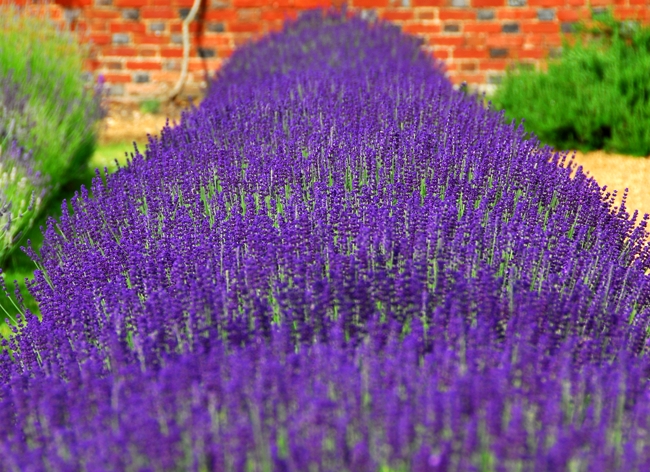 Lavender 'Hidcote Blue'
On an unmaintained bank - St. John's Wort (Hypericum calycinum)
St. John's Wort is a good soil stabiliser that tolerates all soil conditions but requires relative moisture to grow and spread quickly. You either love or hate its large golden flowers that bloom all summer, but one must acknowledge that it is one of the few groundcover bushes that spreads quickly and with great ease.
Plant it preferably at the bottom of a slope in full sun or partial shade. Count between 3 to 5 plants per m² (3 plants for 3L pots and 5 plants for young plants) for rapid coverage. By the following year after planting, its stump will form a network of stoloniferous roots and the plant will spread quickly. There’s no need to plant on a membrane; St. John's Wort covers and smothers everything in its path.
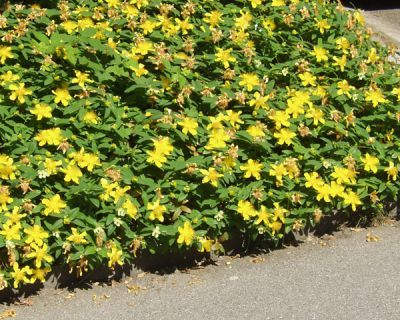 Hypericum calycinum (Source Pinterest)
On a shady bank - Bush Honeysuckle (Lonicera pileata)
Bush honeysuckles (Lonicera pileata and L. nitida) are creeping shrubs that possess a very effective root system for consolidating banks in shade and partial shade. Lonicera pileata has the advantage of growing quickly and laterally, thus hugging the ground and layering itself from time to time. It resists cold and drought as long as it is planted in partial shade.
Plant it from the bottom to the top of a shaded bank. Count 1 to 3 plants per m², or even 4 plants per m² if they are in pots for very rapid coverage. As it ages, its branches will tend to rise, so be sure to shear it back annually with hedge trimmers.
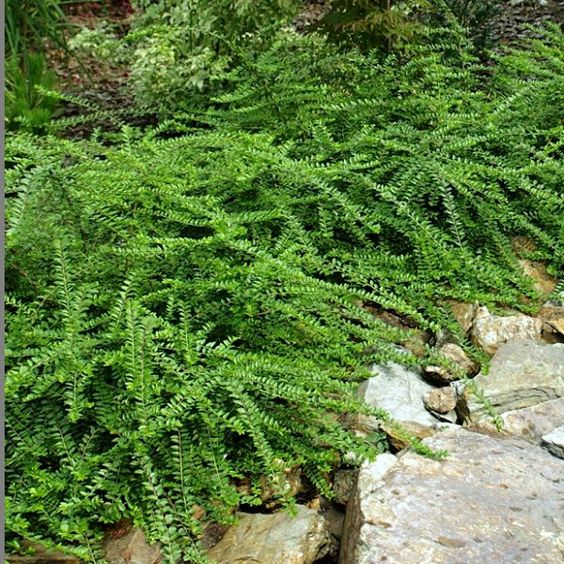 Lonicera pileata (Source Pinterest)
On a heavy and wet bank - Dogwood (Cornus stolonifera Flaviramea)
In heavy, sticky soil like freshly excavated clay from a construction site, decorative dogwoods (Cornus stolonifera, C. sericea, or C. Alba) thrive particularly well. They grow in all waterlogged soils and do not fear clay soils, unlike many groundcover shrubs.
Plant it at the bottom of a partially shaded or sunny bank. Count 1 to 3 plants per m² maximum for rapid coverage. After 3 years of planting, shear it back to 30 cm above the ground at the end of winter, both to obtain beautiful branches that will turn yellow the following winter and to prevent it from growing too tall. With age, Cornus stolonifera takes on a bushy form and loses its groundcover character that it exhibits when young.
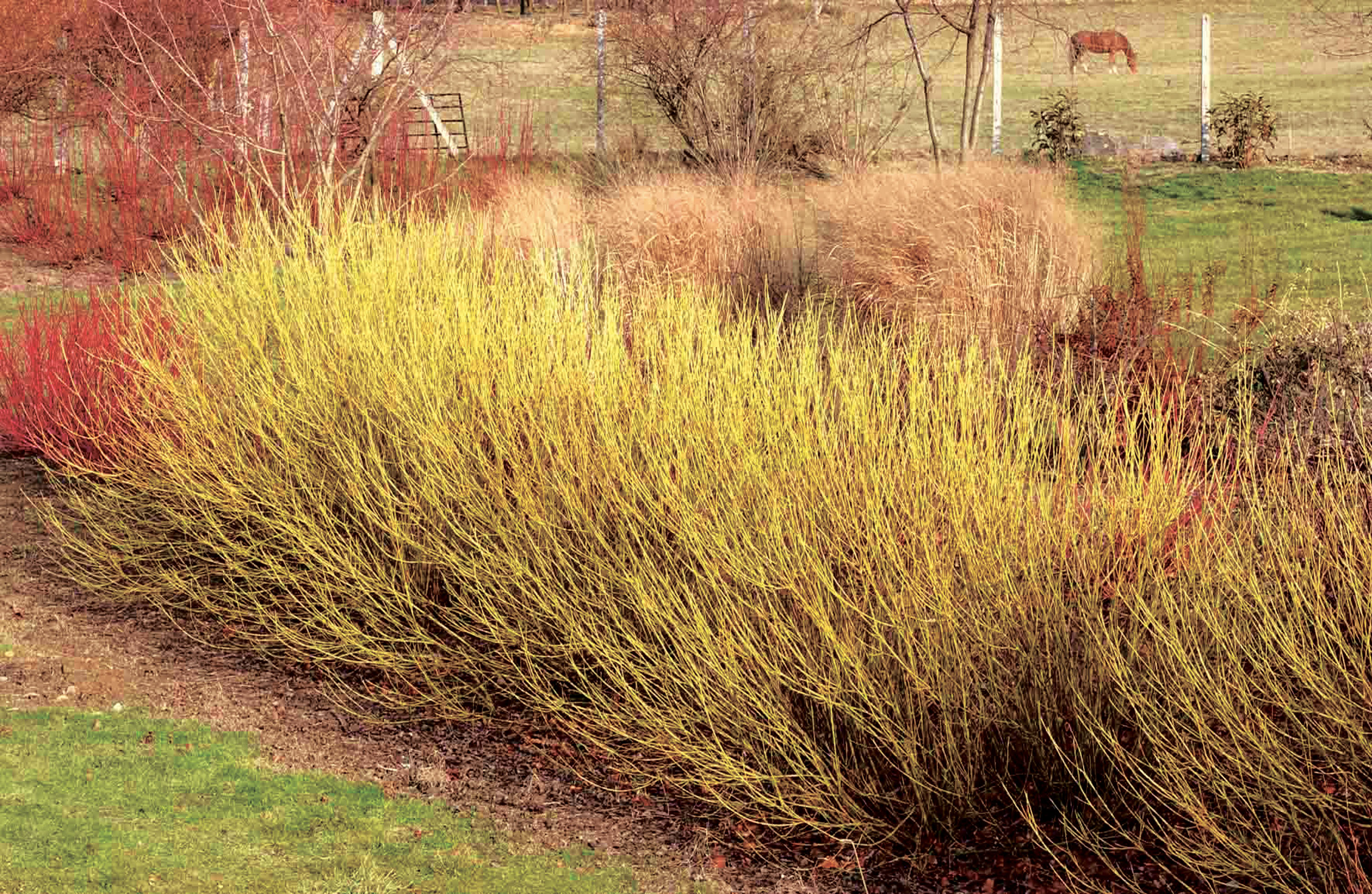 Cornus stolonifera Flaviramea
On a very steep bank - Groundcover Rose Emera
They are thought to be fragile and delicate, but roses have powerful roots that go deep into the ground and stabilise the terrain perfectly. Groundcover roses are favourites, particularly the Emera rose, for quickly covering a very steep terrain. This rose, both fast-growing, sturdy, and highly floriferous, can cover 1 m² within the first year of planting.
Plant it from the bottom to the top of a bank and count 1 to 2 plants per m² on average. During the first year of planting, monitor watering, especially in summer. While it grows quickly, the Emera rose requires water in its first year, particularly in summer, to establish its root system. Installing a membrane (preferably biodegradable) is essential on a very steep bank and will help the rose settle in more quickly.
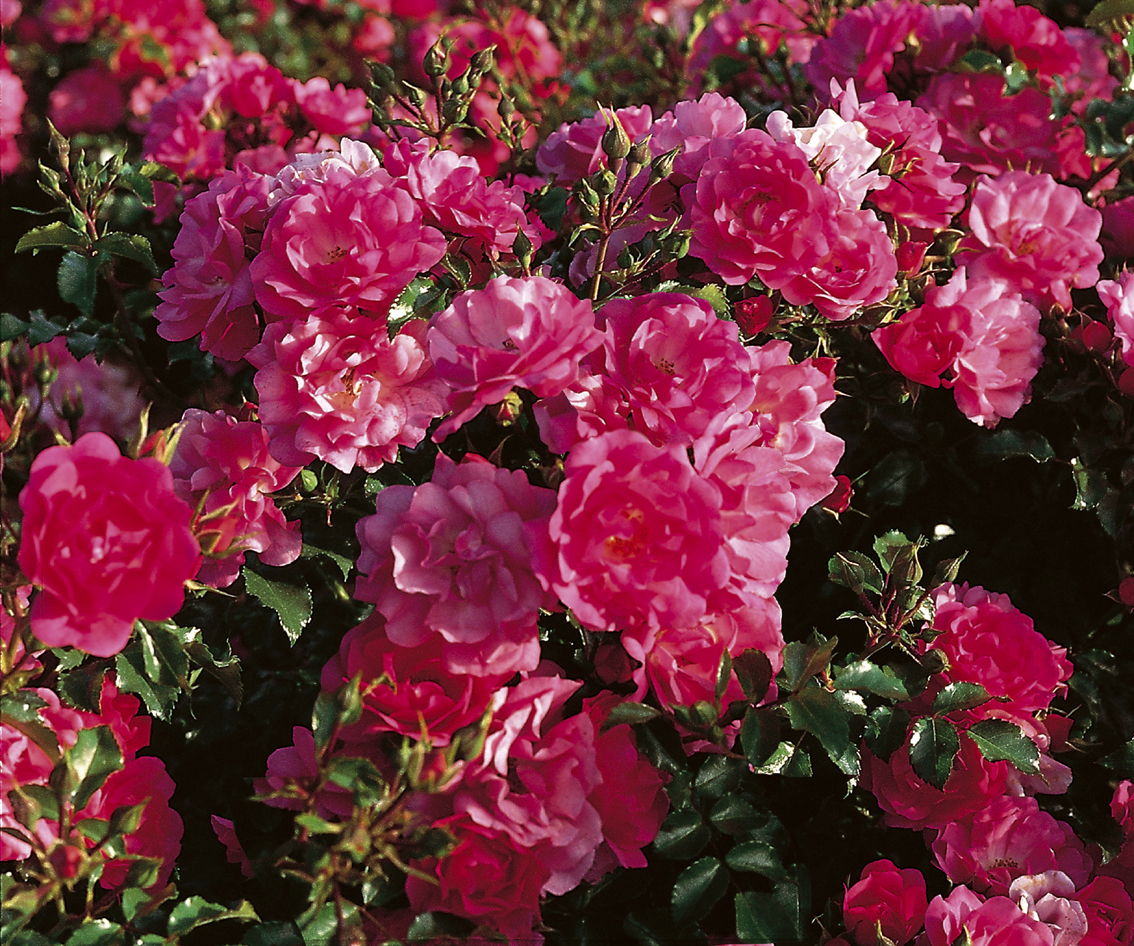 Rose Emera
A bank is, by definition, a sloped terrain exposed to the harshness of the elements where rain and wind weaken and erode the soil. If the soil remains bare, runoff can cause significant damage: flooding, landslides, and sometimes even mudslides. Fortunately, some groundcover plants thrive in these challenging conditions and manage to stabilise banks quickly […]
Evergreen groundcovers are a valuable aid in the garden. They help combat adventive plants, reduce soil dehydration, and fight erosion. Besides these proven functional qualities, these plants cover a wide range of uses in the garden. And since functional doesn't have to mean ugly, here are the 10 best evergreen groundcovers to have in your garden.
1 - For shade: Pachysandra terminalis
Yes, I could have mentioned ivy, epimediums, Chrysospleniums, Ophiopogons... But if I had to name just one for shade, Pachysandra terminalis is an excellent candidate. While it grows very slowly in the first few years, it's only to establish its root system and develop at an astonishing speed in the following years. It doesn't run; it gallops. Its glossy foliage, perfect all year round, and its white flowers make it an excellent perennial for cool woodlands, let's be clear!
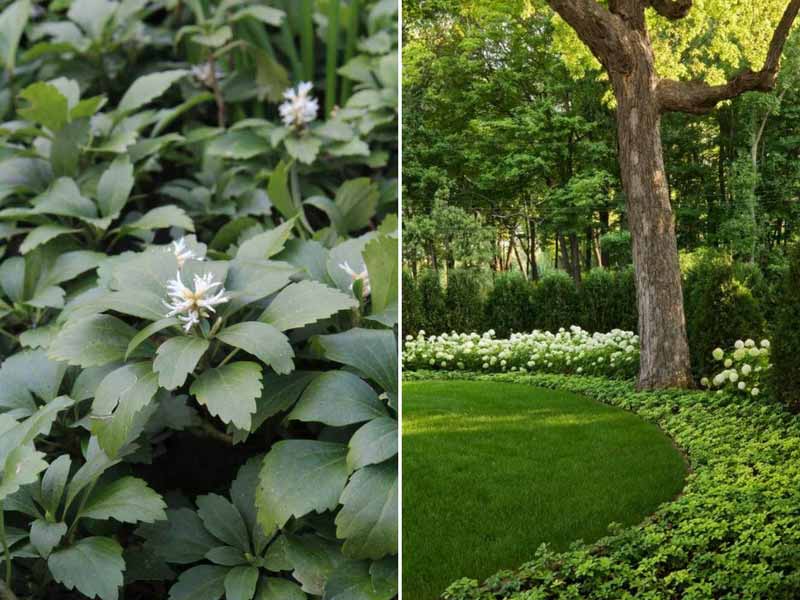
Pachysandra in bloom in spring / Pachysandra terminalis growing at the edge of a tree (source: Pinterest)
2 - For clay soils: Ajuga reptans Catlin's Giant
Ajuga reptans (or "creeping bugle") is one of those perennials that withstand Siberian winters and grow without issue with their feet in the clay, which shows just how tough it is. Its only flaw is that it loves moisture. Heavy soils, yes, but cool or even damp. When it gets what it desires, its stems form stolons like a strawberry plant and quickly colonise.
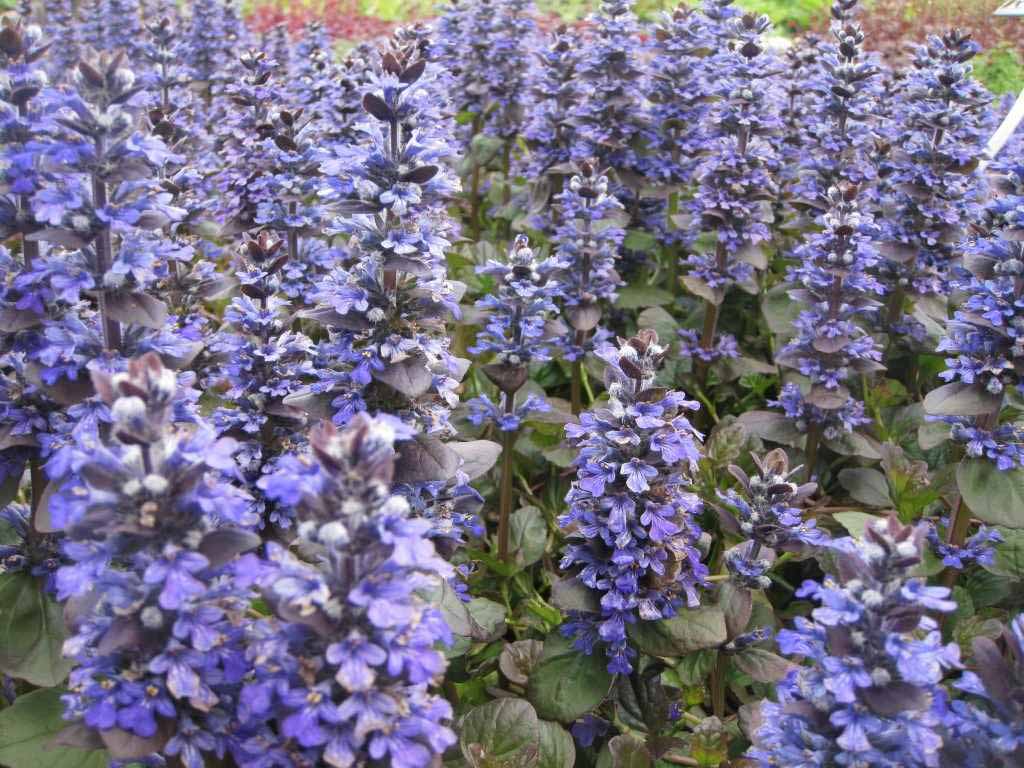
Ajuga reptans Catlin's Giant with its superb bronze foliage and blue spikes.
3 - For arid corners: Stachys byzantina
Have you always wanted to pet a bear's ears but never could? Close your eyes and stroke the velvety foliage of Stachys byzantina. You'll feel like you're petting a bear... or a rabbit, depending on your perspective. Behind this undeniably soft foliage lies a tenacious perennial that grows without flinching under blazing sun and colonises surfaces thanks to creeping stems that root themselves. Use it at the edge or in rockeries with Armeria, euphorbias, lavenders, or carnations.
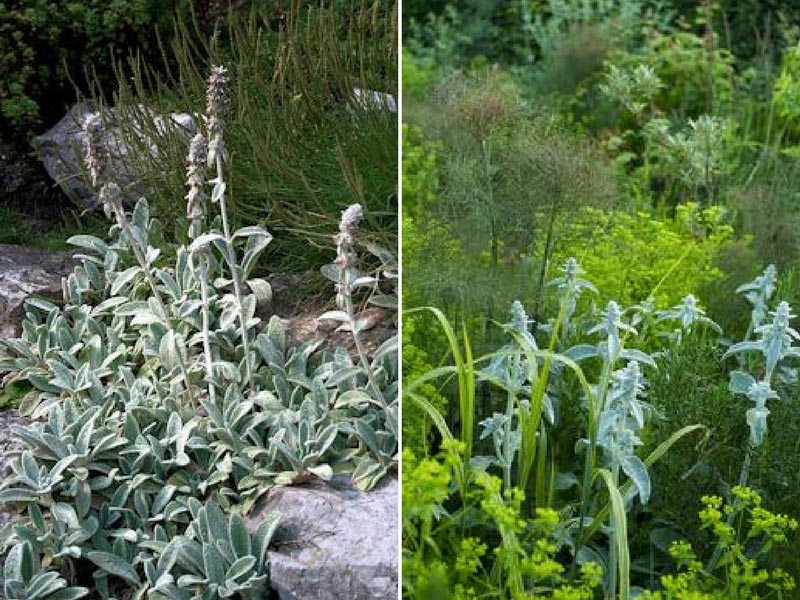
Stachys byzantina / Stachys in bloom, mixed with purple fennel, euphorbia, and rosemary - source: Pinterest
4 - For growth speed: Lesser Periwinkle (Vinca minor Atropurpurea)
I'm not talking about the greater periwinkle (Vinca major) with its bland foliage and chaotic growth, but its smaller sister, Vinca minor Atropurpurea, which is more refined. With finer leaves, it produces a string of small flowers whose often paler centre gives it a bicoloured appearance. As vigorous as its larger sister, it dresses semi-shaded borders with great class and restraint. Its stems elongate and root themselves here and there, so one single plant can spread and cover several square metres in just 2-3 years.
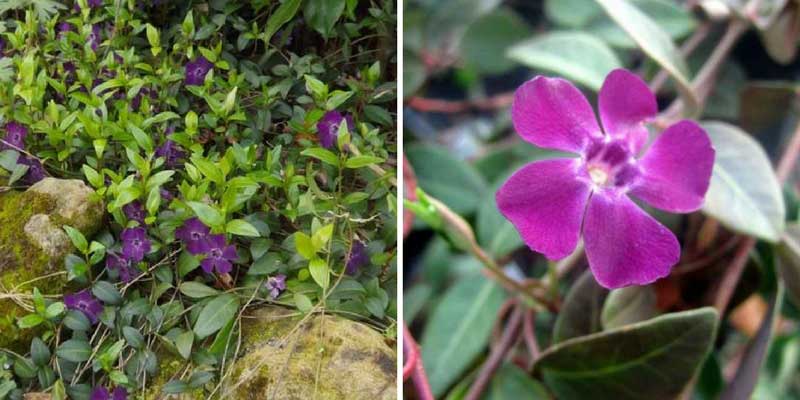
Vinca minor atropurpurea (Source: Pinterest)
5 - For calcareous soils: Thyme
No, Thyme is not just an herb confined to the edges of the vegetable garden. It is also, and above all, an excellent groundcover plant for calcareous and dry soils. It is used at the edge of a mineral path in gravel or on rocky slopes. However, not all are evergreen; opt for Thymus serpyllum or, for something more original, the stunning semi-evergreen Thymus pseudolanuginosus.
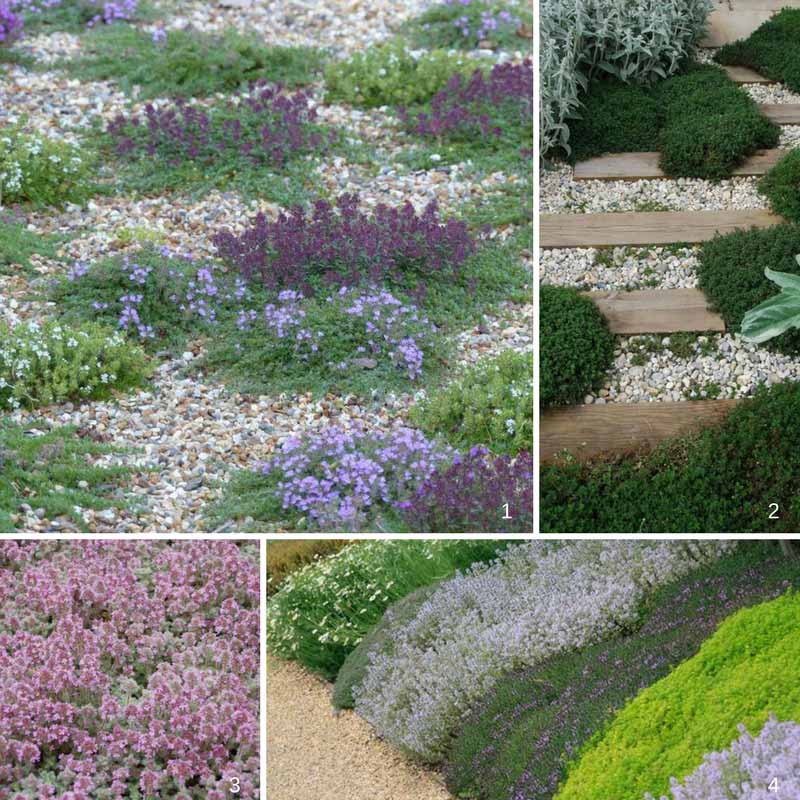
1) Thyme in bloom in early summer / 2) Thyme bordering a mineral path alongside Stachys byzantina (source: Pinterest) - 3) Thymus pseudolanuginosus - 4) Carpet of thyme on a calcareous slope (source: Pinterest)
6 - For early flowering: heather (Erica x darleyensis)
The advantage of heathers is that they thrive in challenging regions, in arid heaths swept by winds, on limestone cliffs, or at the edge of woodlands, so it's impossible to say, "Oh no, I gave up on heather; it won't grow in my garden!" Therefore, you can plant it almost anywhere in your garden, and it will grow at varying speeds. But its main asset lies in its early winter flowering, and neither frost nor a bit of snow will stop it from blooming.
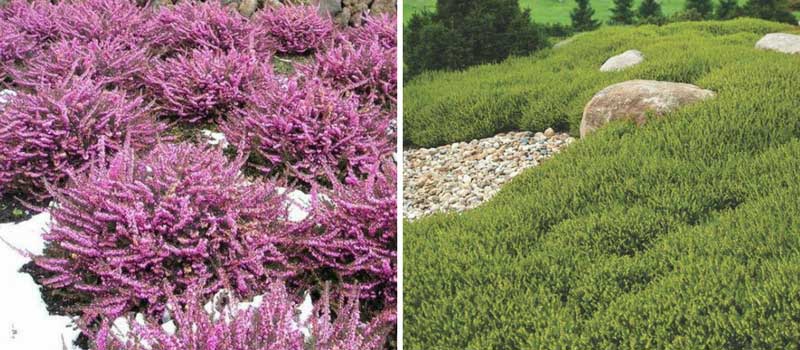
Erica darleyensis Red October in bloom despite the snow - Erica darleyensis forming an impenetrable carpet, no need to plant it on a tarp! (Source: Pinterest)
7 - For its fragrance: Sarcococca hookeriana humilis
At first glance, it's not the size of the flowers that impresses in Sarcococca, as they are insignificant, but rather its sweet fragrance with floral and citrus notes that lasts a good part of winter. Then, it's its lovely glossy foliage and ability to grow in shade, even under trees, that appeals. Finally, this small groundcover shrub slips along the edge of a shaded path and suckers to form lovely colonies over time.
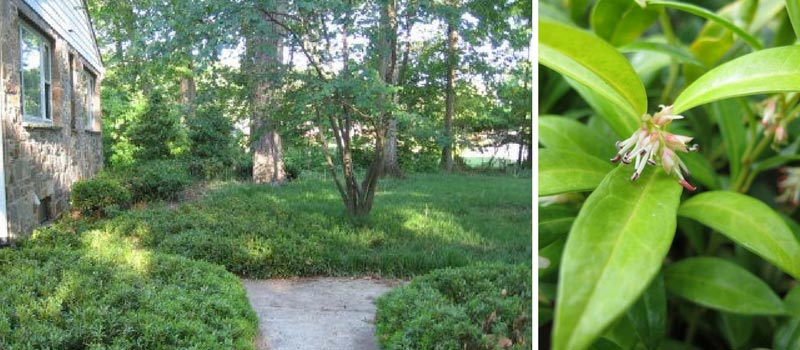
Sarcococca hookeriana humilis in bloom. How can such small flowers exude such a fragrance? A mystery! / Sarcococca hookeriana var. humilis at the edge of woodlands (Source: Pinterest)
8 - For its abundant flowering: Phlox subulata
When thinking of flowering groundcovers, Phlox doesn't immediately come to mind. And when thinking of Phlox, one primarily thinks of Phlox paniculata known for its beautiful coloured panicles in summer. However, Phlox subulata deserves to be better known and planted because its flowering is simply stunning. This small groundcover transforms into a colourful mass from early spring. It literally becomes covered in flowers, to the point that when exposed to full light, in well-drained, rich soil, the foliage disappears beneath the flowers for three solid weeks.
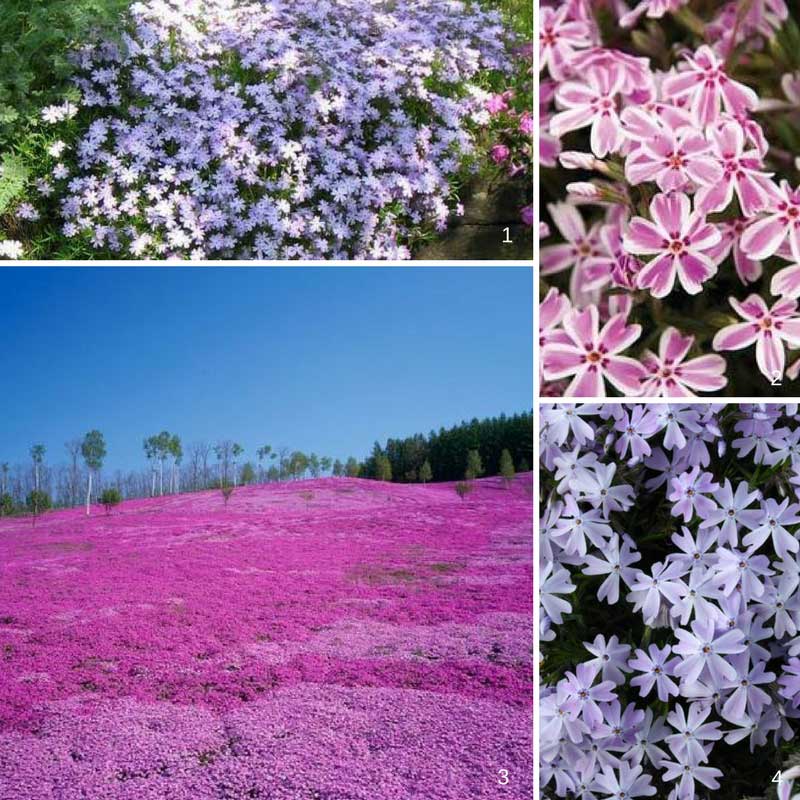
1 and 4) Phlox subulata Emerald Cushion - 2) Phlox subulata Candy Stripe - 3) The Japanese have appreciated Phlox subulata for a long time and plant it in masses on hillside slopes. You either love it or hate it, but after a dreary winter, it wakes you up! (Source: Pinterest)
9 - For decorative fruit in winter: Cotoneaster Coral Beauty
It's not that I'm a huge fan of cotoneasters, but one must acknowledge at least one thing: they are the kings of fruiting. When winter comes and the light intensity decreases, the small orange-red berries take on intense colours, making winter seem less dreary. Moreover, birds feast on their providential berries in winter, so keep that in mind!
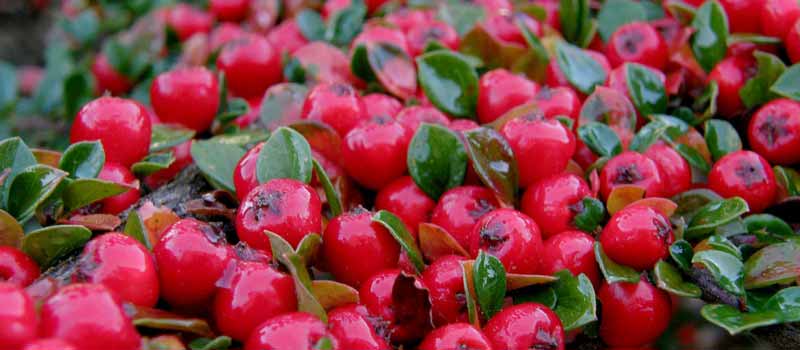 Cotoneaster suecicus Coral Beauty in fruit in autumn[/caption>
10 - For all the reasons: Geranium macrorrhizum Spessart
It was nearly impossible to finish a top 10 of the best evergreen groundcovers without mentioning Geranium macrorrhizum Spessart. It is the ultimate groundcover that grows everywhere, in sun or shade, in clay or clay-limestone soils. It is one of the few that grows in dry shade, on slopes, along paths, at the foot of trees or roses. It spreads its rhizomes across the ground and suffocates everything in its path, even ivy, which speaks to its robustness. It grows slowly but surely, has foliage with a questionable scent but blooms profusely and for a long time in spring. And when the cold arrives, its foliage turns copper and red, it may wither but does not disappear, revealing its dense network of rhizomes. It’s the best, and it’s my favourite (objectively speaking!).
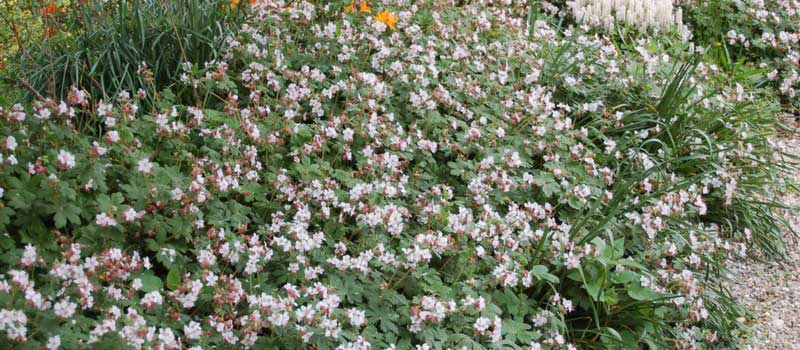 Geranium macrorrhizum 'Spessart' on my slope in spring.[/caption>
And you, which is your best evergreen groundcover? Tell us why!
Evergreen groundcovers are a valuable aid in the garden. They help combat adventive plants, reduce soil dehydration, and fight erosion. Besides these proven functional qualities, these plants cover a wide range of uses in the garden. And since functional doesn’t have to mean ugly, here are the 10 best evergreen groundcovers to have in your […]