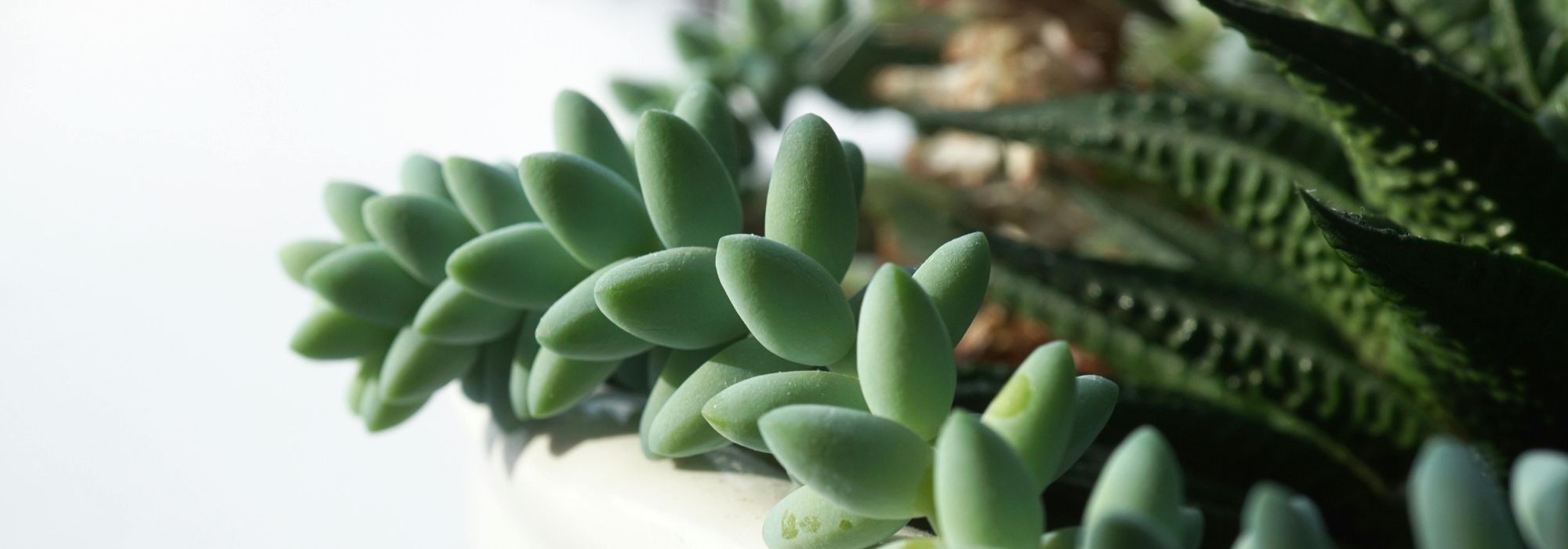
Haworthia: growing, propagating and care
Contents
All about Haworthia
- Haworthia is a small succulent much prized for its compact, graphic rosettes.
- Easy to care for, it mainly requires plenty of indirect light and infrequent watering.
- Many species have translucent leaves, streaked or dotted with white raised markings, particularly decorative.
- Compact and fairly slow-growing, it does well in a bright office, a light-filled hallway or in the living room by a window.
- Non-toxic to cats and dogs, it is suitable for homes with pets.
- An excellent succulent for beginners!
A word from our expert
With its small graphic rosettes and fleshy, sometimes almost translucent leaves, Haworthia is a small succulent plant particularly easy to grow indoors. Some forms with dark green leaves marked by white raised patterns are commonly nicknamed “zebra plants”.
Compact and slow-growing, it easily finds a place on a windowsill, a shelf or a desk, and also in a dry, open terrarium.
Less demanding of light than many succulent plants, it appreciates bright but filtered light. Care is simple: the main point is to moderate watering and to allow the substrate to dry out between waterings, as its roots dislike persistent moisture.
Robust, undemanding and space-saving, Haworthia makes an excellent choice to start a houseplant collection!
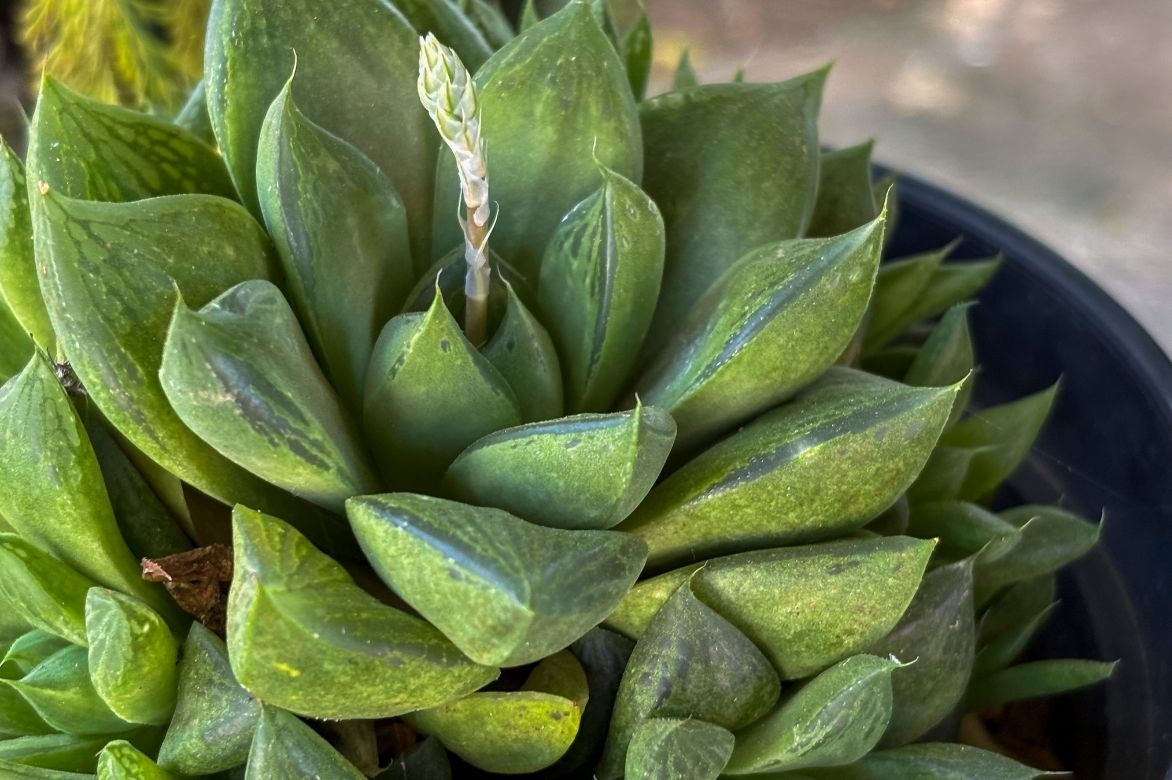
Haworthia retusa

Haworthia cultivation requirements
| Needs | Recommendation |
|---|---|
| Exposure | Bright indirect light, gentle sun possible |
| Watering | Let substrate dry out completely between waterings |
| Humidity | Low to normal, no misting |
| Ideal temperature | 18 to 25 °C |
| Substrate | Very well-draining, cactus and succulent mix |
| Feeding | Light, once a month in spring and summer |
Read also
How to take cuttings from indoor plants?Botanical description of Haworthia
Botanical data
- Latin name Haworthia
- Family Asphodelaceae
- Common name Haworthia, zebra plant
- Flowering May to August
- Height 5 to 20 cm
- Exposure Bright indirect light
- Soil type Cactus compost
- Hardiness Frost tender
LHaworthia belongs to family Asphodelaceae like Aloes and Gasterias. Native to southern Africa, particularly South Africa, it naturally grows in often dry, rocky habitats on very free-draining soils. Depending on species, it occurs in varied habitats, sometimes sheltered by rocks, grasses or other vegetation that protect it from intense sun.
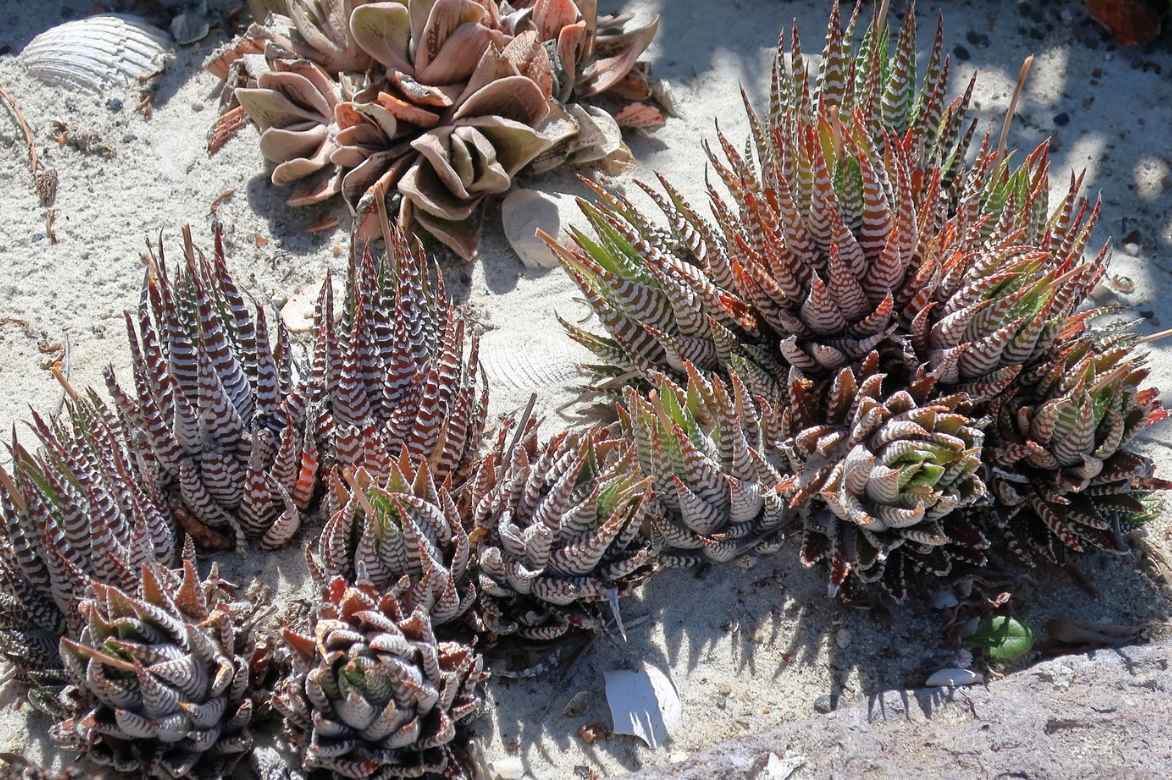
Haworthia attenuata et Gasteria (© K M, Flickr)
In these habitats, Haworthia is adapted to periods of drought thanks to its thick, fleshy leaves capable of storing water. Its small size and compact habit also allow it to develop in rock crevices and partially shaded spaces.
Genus Haworthia includes about 60 species. Among the species most commonly grown indoors are Haworthia cooperi, H. cymbiformis, H. retusa and H. truncata, prized for their compact rosettes and fleshy leaves in very varied shapes.
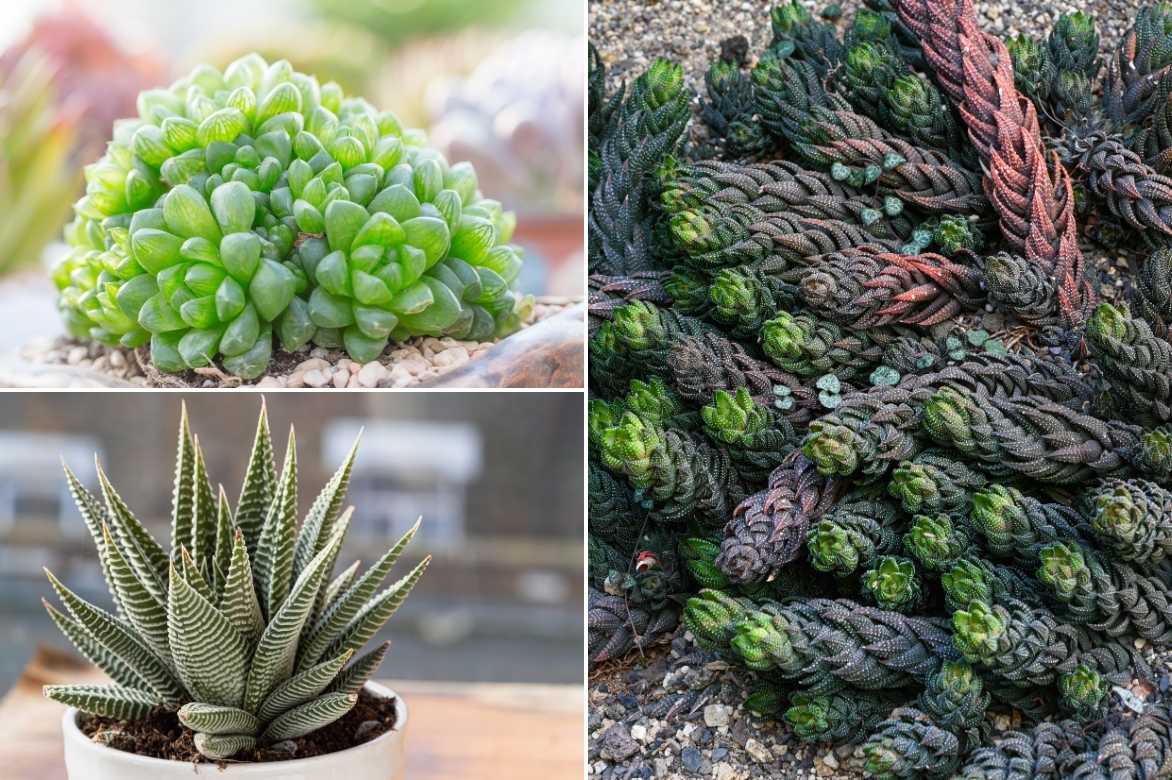
Haworthia cooperi var pilifera, Haworthia limifolia ‘Spider White’ et à droite Haworthia reinwardtii
Some plants still commonly sold under the name « Haworthia » now belong to genus Haworthiopsis. This is the case for example of Haworthiopsis attenuata, H. fasciata and H. limifolia. The first two are known as “zebra plants” or “zebra Haworthias”, because of their dark green leaves marked with white raised patterns. This change in classification explains why older names remain common in trade. Hybrids such as Gasworthia, horticultural hybrids from crosses between Gasteria and Haworthia, are also encountered in cultivation. All these plants have similar cultural needs, which explains why they are often grouped under the name Haworthia in commerce.
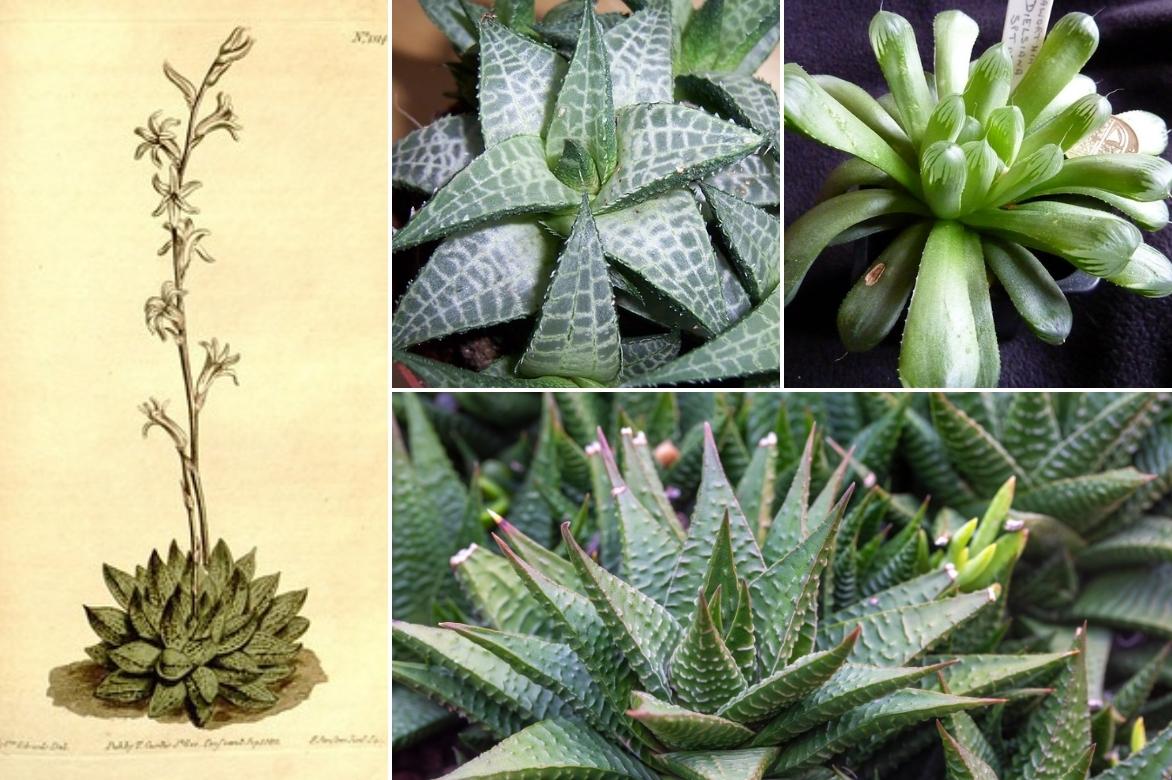
Botanical plate, top Haworthia tessellata and Haworthia dieseliana (©Flickr stephen boisvert) and bottom right Haworthia limifolia
Haworthia generally forms a low, compact rosette, 5 to 20 cm high depending on species. Over time, some produce offshoots around the base and form small clumps.
Foliage is its main decorative feature. Leaves, thick and fleshy, take very varied shapes: triangular, rounded, elongated or truncated. They can be smooth, striate, punctate or marked by raised textures.
In some species, such as Haworthia cooperi, leaf tips show translucent areas, called “windows”, which let light into tissues, giving the rosette an almost mineral appearance. In Haworthia truncata, leaves look as if cut off cleanly at the tip.
Flowering is inconspicuous. From May to August, long, slender flower stalks rise above the rosette and bear small whitish flowers, sometimes slightly greenish or pinkish.
Another appreciated feature for homes with pets: Haworthias are listed as non-toxic to cats and dogs by the ASPCA (American Society for the Prevention of Cruelty to Animals).
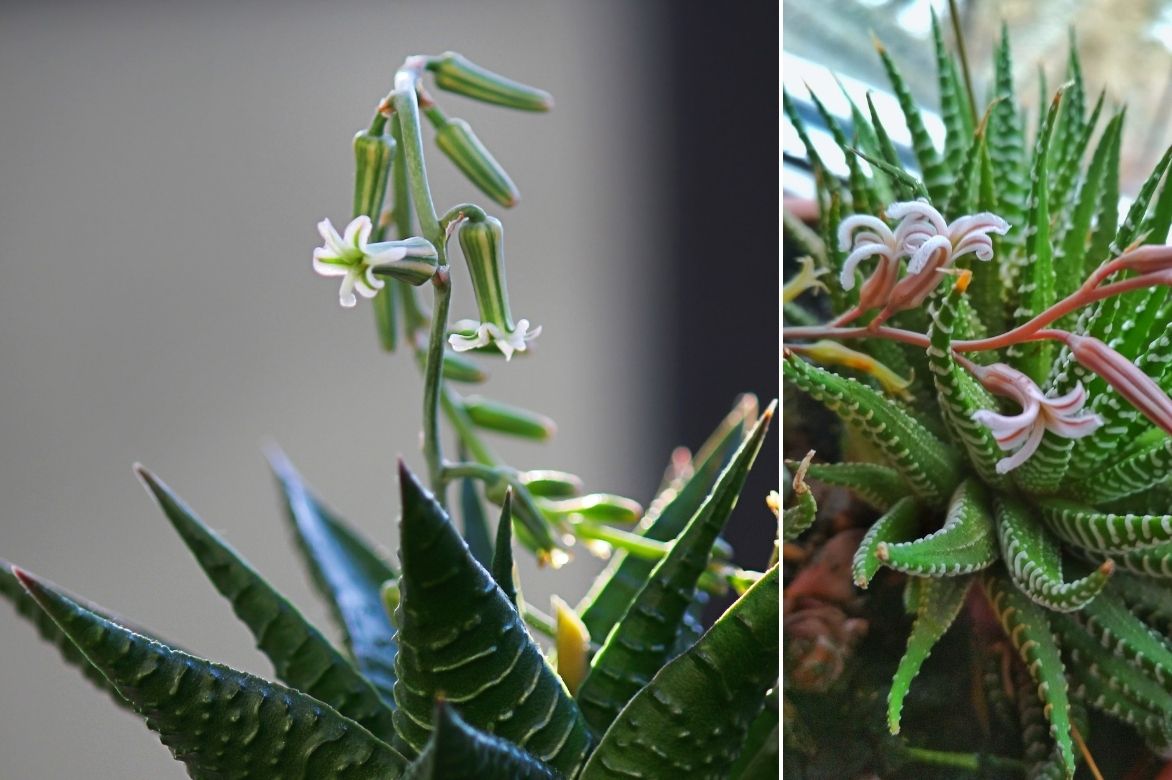
Inconspicuous flowering of Haworthia
Varieties of Haworthia
Haworthia Gasworthia
- Flowering time June to September
- Height at maturity 12 cm
Haworthia fasciata 'Concolor' - Plante zèbre
- Flowering time June to September
- Height at maturity 12 cm
Haworthia fasciata 'Big Band' - Plante zèbre Big Band
- Flowering time June to September
- Height at maturity 10 cm
Planting Haworthia in a pot
When to pot it?
Haworthia can be potted up all year indoors, but spring is the most favourable time for repotting. Plants re-establish more easily with increased light and milder temperatures.
Which pot to choose for planting a Haworthia?
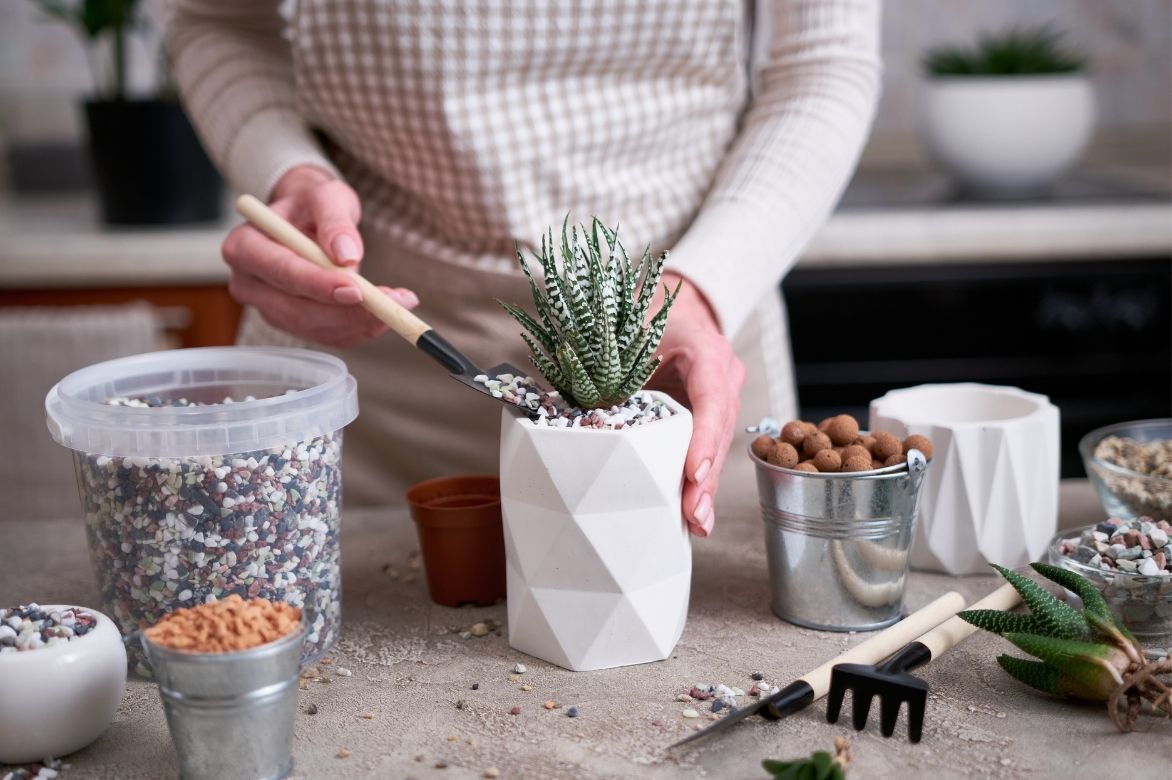
Our mini plants or plug plants are ideal for growing in pots. On receipt, pot them into a container 7 to 10 cm in diameter, slightly wider than the rootball and always with drainage holes. Choose a pot only a few centimetres larger than the rosette or rootball. Avoid oversized containers: a large volume of potting compost stays moist for longer and increases risk of rot.
A terracotta pot is particularly suitable: porous, it promotes evaporation of excess moisture and allows substrate to dry more quickly between waterings. A plastic container is also suitable, provided waterings are spaced sufficiently.
You can then slip the plant pot into a decorative cachepot, taking care to never let water pool in the base.
Where and how to place it?
Place Haworthia in a bright room, ideally near an east- or west-facing window, or slightly set back from a very exposed window.
Haworthia prefers bright but indirect light. A little gentle sun, especially in the morning or late afternoon, is fine, but avoid direct, scorching sun through glass. Strong summer sun through a window can cause leaf scorch or excessive reddening and browning of foliage.
Conversely, a plant placed too far from a window may lose its compact habit: leaves elongate and the rosette opens up as it searches for more light.
Haworthia thrives at temperatures between 18 and 25 °C. In winter it tolerates a cooler environment provided substrate remains almost dry. Protect from cold draughts and frost.
Tip: rotate the pot regularly so the rosette receives light evenly and retains a compact, balanced habit.
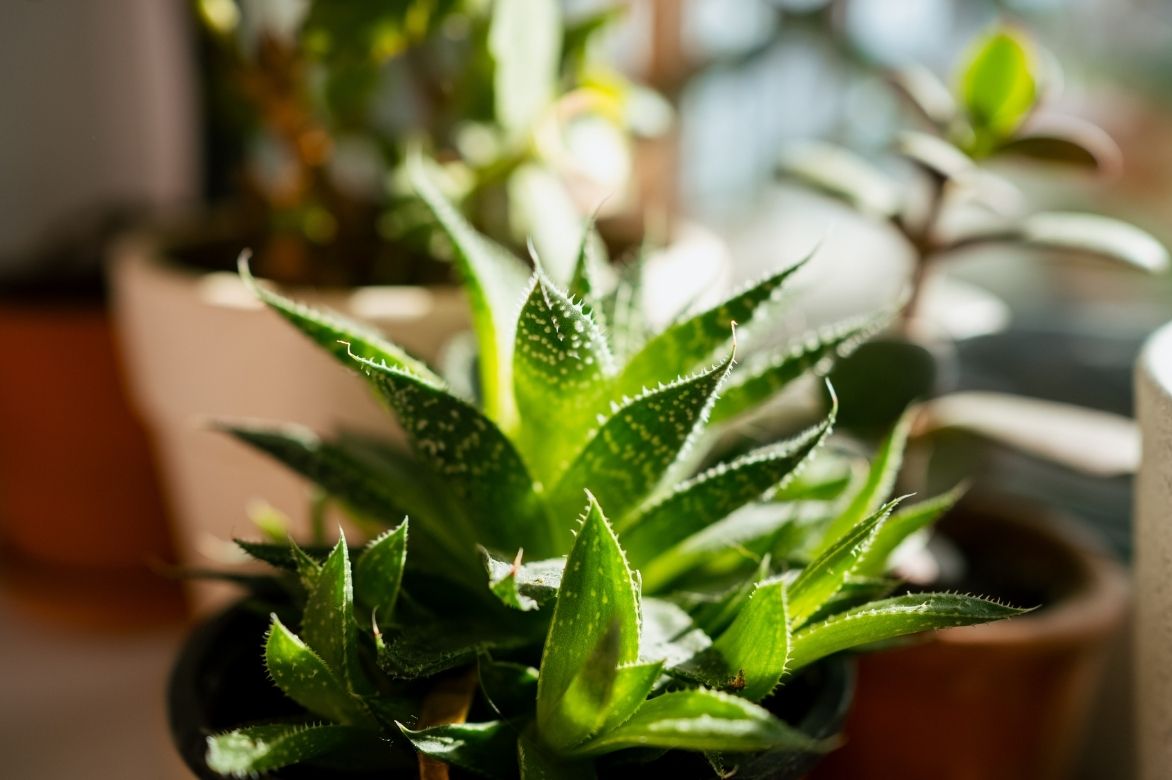
Bright but indirect light suits Haworthia
Recommended substrate
Key point is drainage. Use a potting compost for cacti and succulent plants or prepare a very airy homemade mix, for example:
- 60 % potting compost for cacti and succulent plants
- 20 % perlite
- 20 % coarse horticultural sand
Exact proportions matter less than the result: after watering, substrate must be able to drain excess water quickly.
Planting steps
- Choose a pot with drainage holes, slightly larger than the rootball.
- Prepare a very free-draining substrate.
- Gently remove Haworthia from its container.
- Check roots and remove any that are dead, soft or rotten.
- Position plant without burying the heart of the rosette deeply.
- Add substrate around the roots without compacting it excessively.
- After repotting that has injured roots, wait a few days before watering thoroughly.
My tip: do not place Haworthia directly into a cachepot without drainage. Keep it in a perforated plant pot which you can slip into the decorative cachepot. After each watering, carefully empty any water collected in the base.
Discover our tutorial on this topic: How to repot my indoor plug plants without making mistakes?
Growing Haworthia in a dry terrarium
Thanks to its small size, Haworthia is well suited to a dry, open terrarium, alone or combined with other small succulents with similar needs. Avoid closed terrariums, which are too humid and poorly ventilated.
Choose a wide-open glass container, place a layer of gravel or clay pebbles at the bottom, then add a very free-draining substrate made up of 60 % potting compost for cacti and succulents, 20 % perlite and 20 % coarse horticultural sand. Plant the plug plants without burying the heart of the rosettes and optionally finish with a thin layer of decorative gravel.
Place the terrarium in a very bright spot, without strong direct sun, and water very sparingly, only when substrate is completely dry.
Cultivation and care of indoor Haworthia
Watering
Haworthia is a succulent plant that stores water in its fleshy leaves and copes far better with lack of water than with excess. Allow potting mix to dry out completely between waterings, then water thoroughly to moisten the entire root ball, allowing excess water to drain away through the drainage holes.
From spring to autumn, water generally every 10 to 15 days, always adjusting frequency according to temperature, light and how quickly the potting mix dries. In winter, space waterings further apart, often every 3 to 4 weeks if the plant is kept cool.
Never let water stand in the saucer or cachepot and avoid pouring water into the centre of the rosette, where persistent moisture can encourage rot.
Normal indoor humidity suits it perfectly. It is unnecessary to mist the foliage, as this can maintain excessive moisture between the leaves.
Feeding
Haworthia’s needs are modest. During the growing season, from May–June to September, apply a ‘cactus/succulent’ liquid fertiliser, diluted to half strength, about once a month, as recommended for all cacti and succulents, especially when grown in pots.
In autumn and winter, stop feeding once growth slows.
Pruning
Haworthia does not require any special pruning. Simply remove dry or damaged leaves at the base of the rosette when they come away easily.
After flowering, the long flower stalk can be cut back to its base once the flowers have faded, using clean scissors.
Repotting Haworthia
Repot Haworthia every 2 to 3 years, preferably in spring, or when its roots and offshoots fill the pot.
Choose a pot with drainage holes only slightly larger than the previous one and use a very well-draining potting mix.
Use repotting as an opportunity to check root health and remove any roots that are dry, soft or damaged. If Haworthia has produced many offshoots, you can also separate them from the parent plant to replant individually.
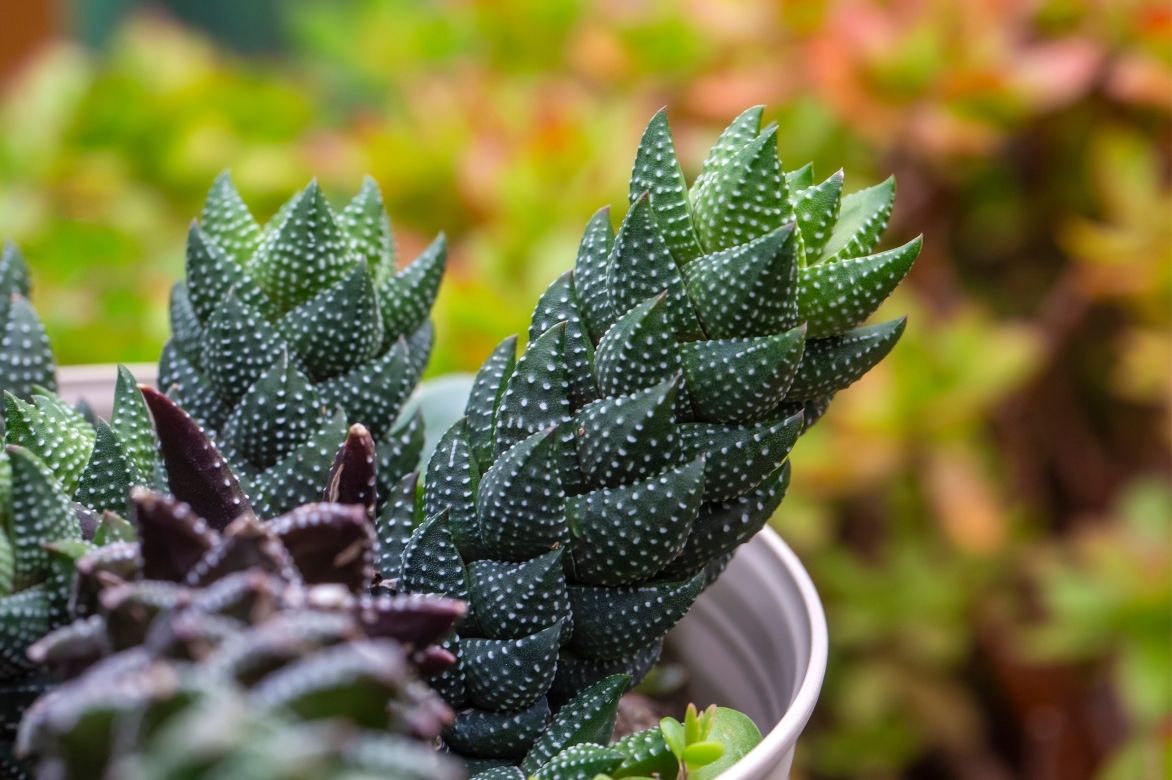
Haworthia coarctata
Haworthia diseases and pests
Haworthia is a hardy plant, rarely troubled by disease when it benefits from a well-draining substrate and appropriate watering. Overwatering is its main enemy, as it quickly favours root and crown rot. Some pests, notably mealybugs, can also appear indoors.
| Problem | Symptoms | Solution |
|---|---|---|
| Mealybugs | White, cottony masses; plant weakened | Remove pests and treat with black soap |
| Root rot | Soft or yellowing leaves; base softened | Stop watering, remove affected parts and repot |
| Sunburn | Dry, brown or discoloured spots | Keep out of direct sun and acclimatise gradually |
For more information: Mealybugs: identification and natural treatments.
Preventing diseases and pests of Haworthia
A few precautions are enough to keep Haworthia healthy:
- Allow substrate to dry out completely between waterings and never let water stagnate in the cachepot.
- Avoid regularly wetting the centre of the rosette.
- Inspect base and leaf axils from time to time, where mealybugs may hide.
- Isolate new plants for a while before placing them among other houseplants.
How to take a Haworthia cutting?
The simplest way to multiply Haworthia is to remove the offshoots that naturally appear around the parent plant. This technique is easier and faster than propagation by leaf cuttings.
- Wait until the offshoot is sufficiently developed and, if possible, already has a few roots.
- Gently unpot the plant and clear the substrate from around the offshoot.
- Separate the offshoot from the parent plant by hand or with a clean, sharp blade.
- If separation causes a wound, allow it to dry and heal for a few days.
- Replant the offshoot in a small pot with drainage holes containing a very well-draining substrate.
- Place it in a bright spot, avoiding scorching direct sun.
- Wait a few days before the first watering, then water sparingly until established.
Haworthia leaf cutting
Leaf cutting is also possible for some species, but it is slower and more delicate. Take a healthy whole leaf, ensuring you keep its base, then allow the wound to dry for a few days.
Then place the leaf base in a very well-draining substrate. Keep the mix almost dry until roots and a new rosette appear. Establishment usually takes several weeks, even several months.
Note: separation of offshoots remains the simplest and most reliable method to multiply Haworthia at home.
Plant combinations and décor
With its small graphic rosette, Haworthia naturally finds its place in contemporary, minimalist interiors or those inspired by Japandi and wabi-sabi. It is ideal for bringing greenery to a windowsill, a shelf or a desk without taking up much space. It lends itself particularly well to creating a collection of small terracotta, ceramic or stoneware pots.
To compose a small succulent garden, pair it with Echeveria derenbergii, Crassula ovata ‘Hobbit’ and Aloe rauhii ‘Cleopatra’. You will bring together plants that appreciate bright light, a well-draining substrate and infrequent watering.
In a mid-century or studio-style setting, emphasise varying heights. Place Haworthia in the foreground, suspend a Ceropegia woodii ‘Variegata’ or position it on a high shelf, then give the arrangement structure with a Crassula ovata ‘Minor’ with a more upright habit.
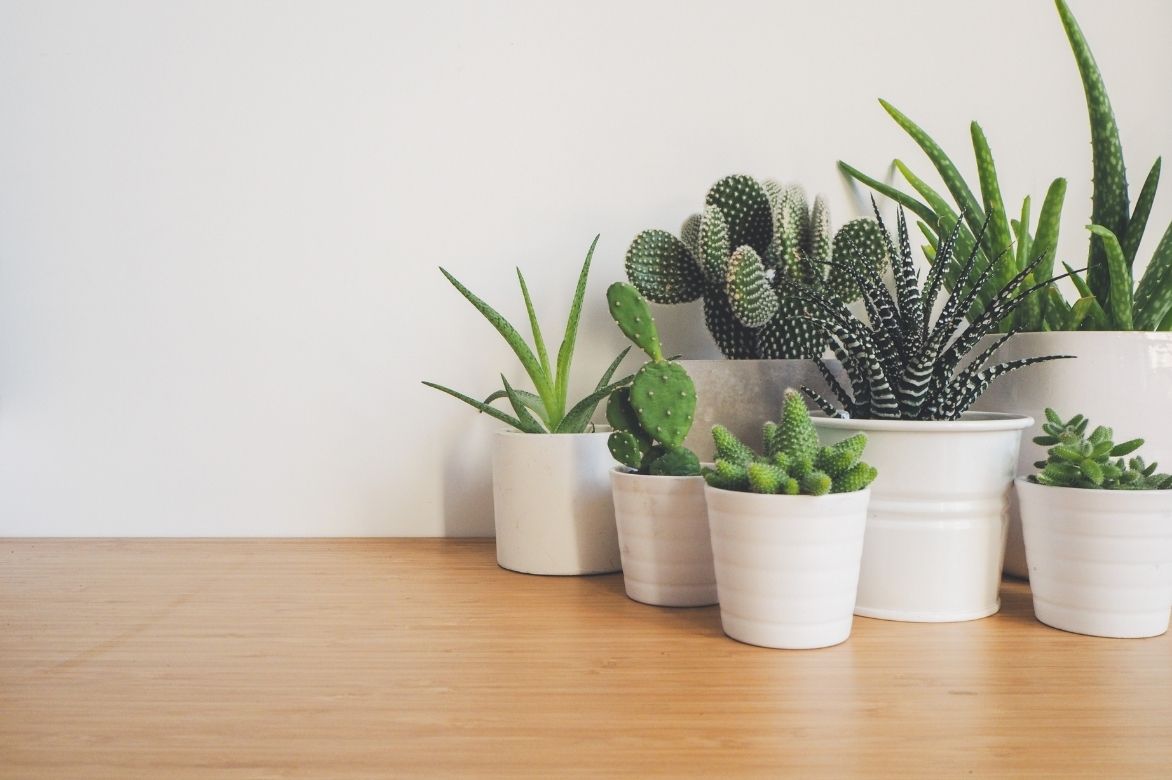
Place your Haworthia alongside other succulents
For a more generous composition, add a Senecio herreianus, whose trailing stems bring movement. The result is a graphic, long-lasting and water-wise display, ideal on a bright shelf, a piece of furniture or in a temperate conservatory.
See also
→ Discover our wide range of indoor plants.
→ Our indoor plants with decorative foliage and our indoor flowering plants.
→ Our many books on indoor plants.
Frequently asked questions
-
Why is my Haworthia turning brown?
Leaves browning may indicate too much sun, especially behind glass. Place plant in bright but filtered light.
-
Why are the leaves of my Haworthia turning soft?
Soft, translucent leaves often indicate overwatering. Allow potting mix to dry out completely and check pot drains well.
-
At what frequency should you water a Haworthia?
Water when the substrate is completely dry, usually every 10 to 15 days during growth, and much less in winter.
- Subscribe!
- Contents
This form is protected by reCAPTCHA - the Google Privacy Policy and Terms of Service apply.

































Comments