Fancy strong contrasts in garden? Against pastel harmonies of Unicorn, saturated crimsons of Dark Acadomia, or teal blues of Transformative Teal, primary colour trend plays with cyan, magenta and yellow, a striking trio of the three base colours of the colour wheel. Elementary, almost childish, this colour mix divides opinion, but can fit into different styles. Judge for yourself with these pairing ideas!
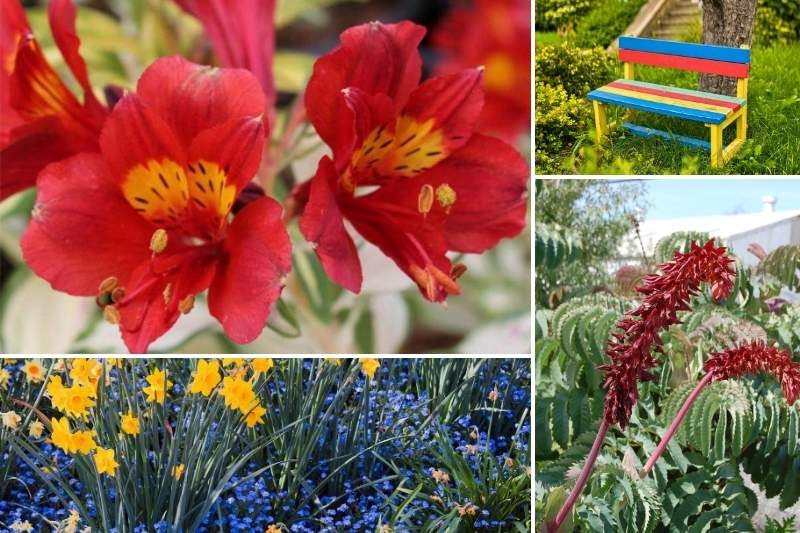
Primary colours: how to use them well ?
Red, blue and yellow flowerings are among most common in garden. Combining them is quite rare, most gardeners preferring harmonies, tonal ranges or colour gradients, or complementary pairings between two colours.
To avoid gaudy, unflattering and slightly cold combinations, finesse is required, pairing vermilion to crimson reds, very pale yellows to more orangey golds, gentian blues to periwinkle blues.
Surround these vivid colours with golden, bluish or purplish foliage. All variegated foliage or bicolour flowerings will help diffuse these strong-contrast tones. Finally, <strong:white, added in small touches in flowers or on foliage also helps attenuate this primary trio, as does play of green flowerings…
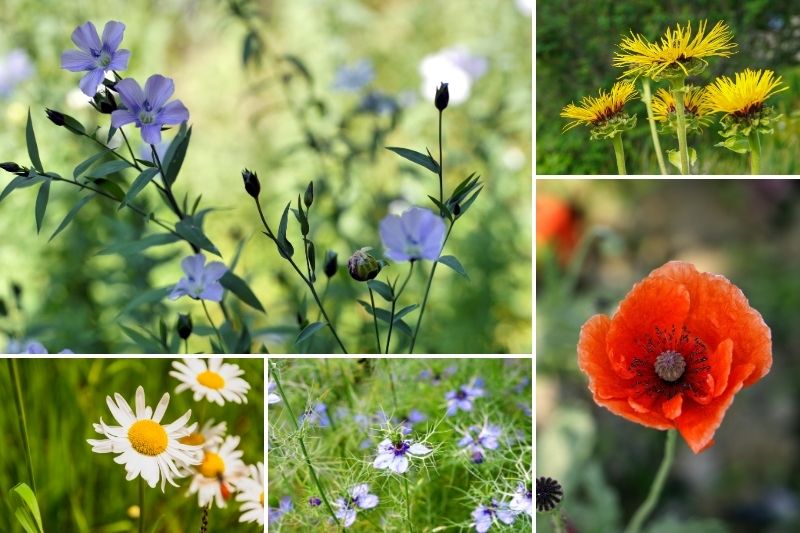
Freshness in the country garden
A cottage garden is a place where all colours often meet in a joyful jumble.
In this example, we bring together simple plants that will produce a very natural, refreshing effect in a country border. We will combine wildflowers, grandmother’s garden plants and cottage-garden plants.
For blues, try cornflower, flax, nigella, chicory, forget-me-nots, campanulas, heliotropic for its fragrance, and China aster 'King Size Mid Blue' for late season. All these plants are delightful and very effective.
Yellows here are provided by generous perennials such as Leucanthemum (large daisy) combining whiteness, mullein with grey‑green foliage, and inulas with more golden tones. One can equally seek paler yellows from charming hollyhocks, or bicolours with Anthemis.
For the red wave, opt for poppies and oriental poppies, spring tulips, sweet williams, peonies and cosmos.
Surround them with a few plants of wild fennel, very airy with greenish flowers, and a few white thalictrums to blur the effect.
A surprising trio in an exotic garden
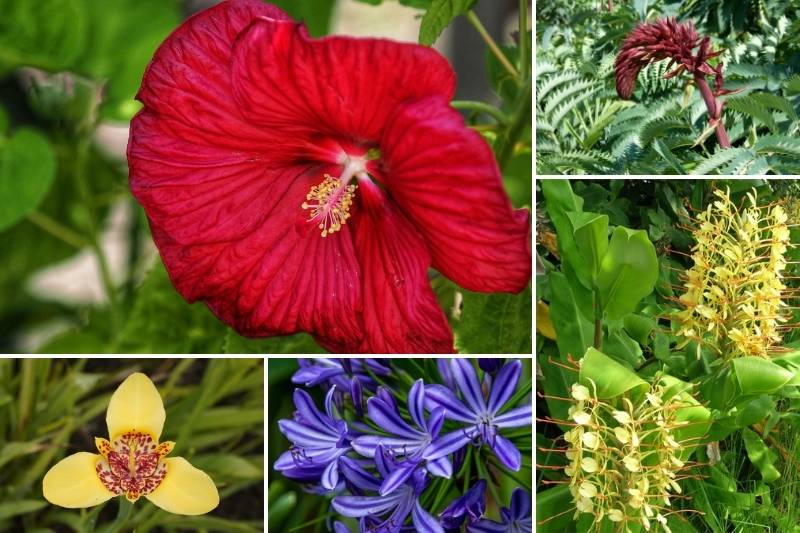
Yellow and red, warm colours, are musts in exotic or tropical gardens. Putting them near blue tempers them, while keeping spirit of that foreign garden alive.
Think of Protea 'Clark's Red' or Leucadendron 'Devil's Bush' for magenta notes in mild‑winter regions, elsewhere yellow or red Alstroemerias and Kniphofias for the yellow.
Plant together, as in example illustrated below, a common Rose mallow, agapanthus, a fine Hedychium gardenarium, yellow and red Tigridia, a Melianthus with strange reddish‑brown inflorescences. Blue will be represented, besides agapanthus, by a beautiful passion flower, an Abutilon vitifolium or some Canary viper's buglosses with giant spikes.
To avoid leaving area bare once summer season has passed, plant among these exotic beauties some evergreen foliage, perennials, grasses and a few shrubs: Taiwan Schefflera, evergreen ferns, and a Daphniphyllum, perfect in semi‑shade. A Pennisetum setaceum 'Rubrum' or an Uncinia rubra 'Everflame' are best placed in full sun.
Colour explosion in the cutting garden
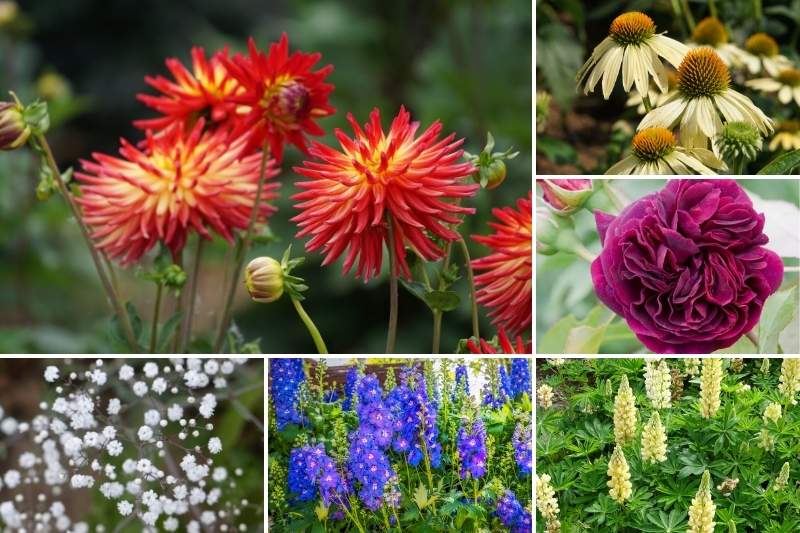
It’s easy to compose a cutting garden with countless plants in blue, yellow and red shades.
Depending on bouquet preferences, place summer perennials side by side with dahlias, blue delphiniums and yellow lupins. Don’t hesitate to combine very different plants here: old roses, eccentric love lies bleeding, capge gooseberry, a few annuals such as zinnias and antirrhinums, all‑yellow solidagos and greenish alchemillas, graceful sweet peas, thistles, narcissi and tulips for spring bouquets, Cosmos 'Lemonade' and 'Rubenza'… choices are endless!
A joyfully colourful area around the play zone
Blue, red, yellow… a little like Rubik’s Cube or building blocks, don’t you think?
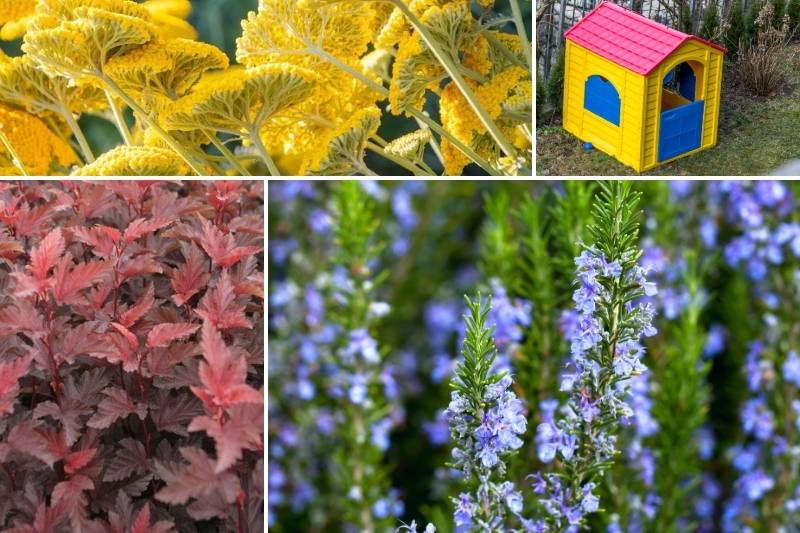
Near swing, pétanque pitch, children’s den or tipi, the play area can be designed around these three colours they love. Recreate their naïve, playful world, again based on yellow, red and blue as ultra‑cheerful emblems.
Choose robust plants able to withstand children’s rough play… and of course that won’t hurt or tempt them (avoid ornamental red berries that are toxic, such as those of heavenly bamboo or holly).
Physocarpus, blue hibiscus like Hibiscus syriacus 'Azurii', plumbago as climbing, herbaceous salvias, rosemary… Brooms and St John’s wort are also tough and will resist occasional ball throws. Some sunny achilleas with flat flowerheads, such as 'Golden Plate' or paler 'Desert Eve Yellow' are musts to bring cheer to the play area.
Finally add a few fluffy plants so children can play safely during summer such as Lagurus ovatus, those soft childhood ears, or simply lavender they will enjoy touching and smelling!
Find inspiration on the "Primary Shock" in our trend booklet!
All major garden trends for 2026 are here: Garden: What are five major trends for 2026?
See our tips on Colour Inspiration page for many more pairing ideas.
Attracted to yellow, blue and red flowers? Here are some of our articles on the finest representatives:
- Red hydrangea: best varieties
- Most beautiful passion flowers with red blooms
- 6 red‑flowered peonies
- 10 essential spring bulbs with yellow flowers
- 5 yellow‑flowered oleanders for bright garden
- 7 yellow‑flowered Alstroemerias
- Blue Ceanothus: most beautiful varieties
- 7 blue salvias to adopt in garden
- 8 climbing flowers you must have in garden


































Comments