Acer pseudoplatanus Sunshine - Sycamore Maple
Acer pseudoplatanus Sunshine - Sycamore Maple
Acer pseudoplatanus Sunshine - Sycamore Maple
Acer pseudoplatanus Sunshine
Sycamore, Planetree, False plane.
Back-to-school special offer!
Get €10 off for every €50 you spend! And get up to €40 off on a single order.
How does it work?
1. Shop your favourites
Add your favourite plants to your basket. For every €50 you spend (excluding delivery charges, store credit and the plastic-free option), you’ll receive a €10 voucher.
€50 spent = €10 voucher
€100 spent = €20 voucher
€150 spent = €30 voucher
€200 spent = €40 voucher
2. Place your order
Once your basket reaches one of the spending thresholds, place your order. You can even choose your delivery date!
3. Receive your voucher
As soon as your order has been shipped, you’ll receive an email containing your personal voucher code and its value.
4. Use it on your next order
Your voucher is valid for 90 days from the date you receive it. It can be used once only, on a new order worth at least the value of the voucher, excluding delivery charges.
Please note: Vouchers can be combined with other offers, but cannot be split or refunded.
Why not try an alternative variety in stock?
View all →
Available in 1 sizes
Available in 4 sizes
Available in 1 sizes
Available in 3 sizes
Available in 2 sizes
Available in 3 sizes
Available in 1 sizes
Available in 1 sizes

Available in 6 sizes
Available in 2 sizes
This plant carries a 24 months recovery warranty
More information
We guarantee the quality of our plants for a full growing cycle, and will replace at our expense any plant that fails to recover under normal climatic and planting conditions.
Would this plant suit my garden?
Set up your Plantfit profile →
Description
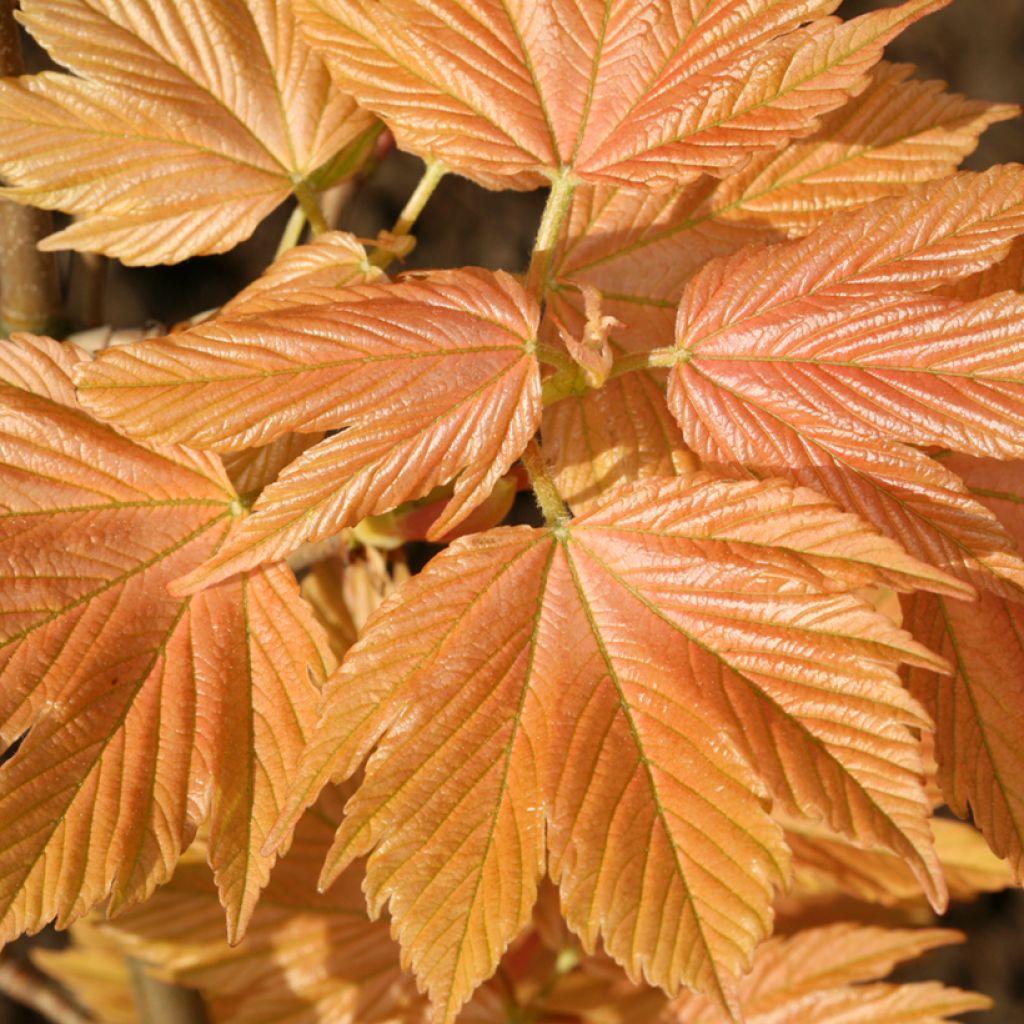
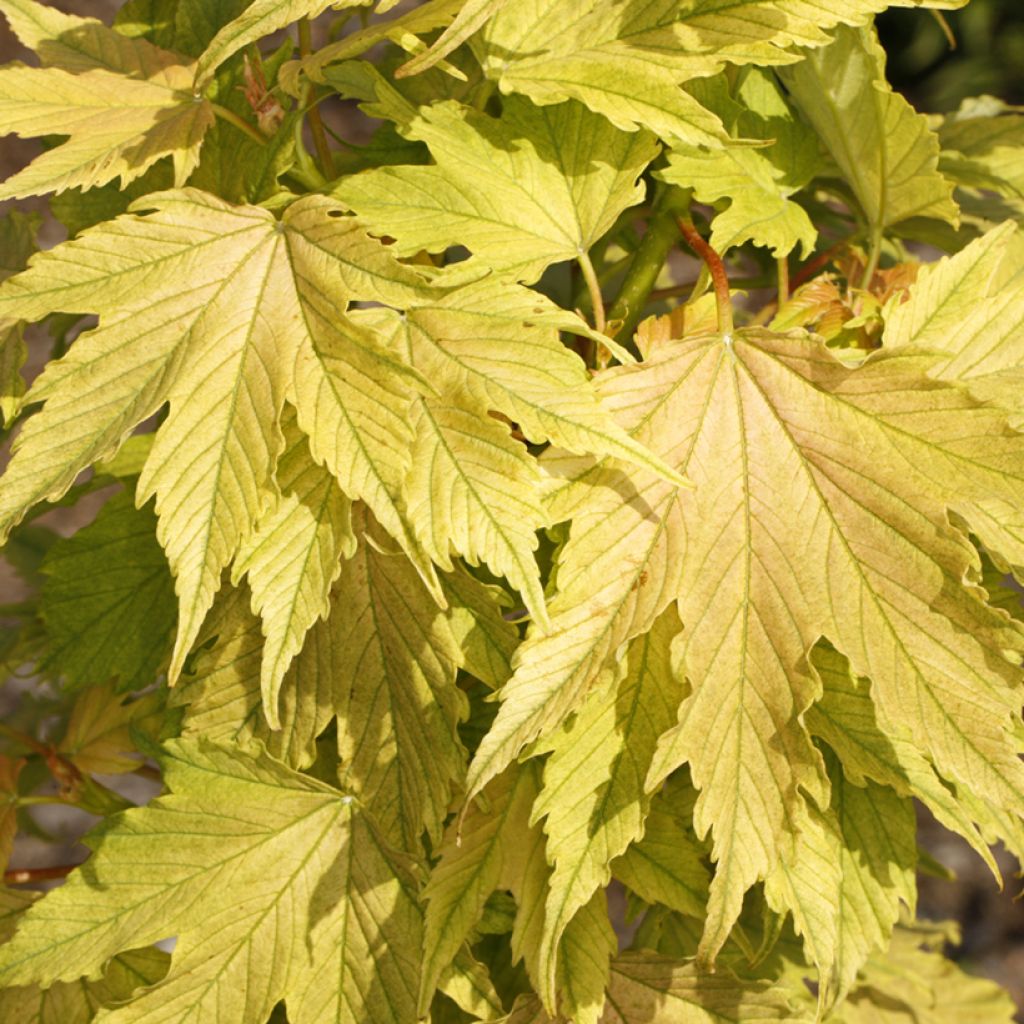
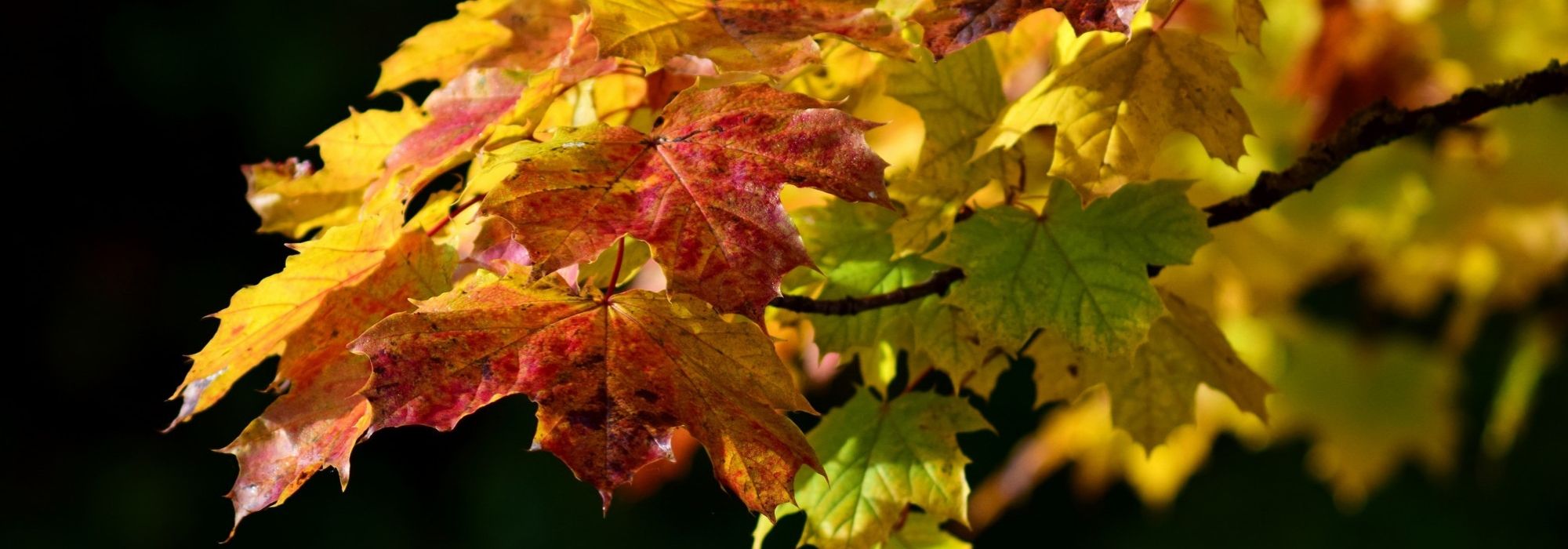
Acer pseudoplatanus 'Sunshine' is one of the most attractive varieties of sycamore maple. In spring, the young foliage emerges in delightful shrimp pink tones and gradually evolves into a chartreuse green that beautifully highlights the palmate shape of the leaf blades. When autumn arrives, the leaves change colour again, becoming yellow-orange before eventually falling to the ground. With a slow growth rate and limited adult size, this maple is suitable for small gardens. It is very hardy and requires soil that retains moisture and a semi-shaded exposure in bright climates, as it is sensitive to heat and intense sunlight.
The Maple belongs to the rather exclusive family of Aceraceae, which is named after it and only includes one other genus (Dipteronia). The Acer genus, on the other hand, is prolific with at least 150 species, originating from the entire northern hemisphere (America, Europe, and Asia). Most maples are deciduous trees, but sometimes shrubs, like the famous Japanese Maples, with Acer sempervirens being the exception. This group of trees is characterised by their opposite leaves and their double samara fruits, the "helicopters" of our childhood.
The wild Acer pseudoplatanus is a large European species with palmate leaves, reaching up to 30m in height and living up to 500 years. It is found up to 1500m altitude in the Alps, growing in fertile and cool soils. While it can develop in sunny exposure, it appreciates the semi-shade provided by forest edges.
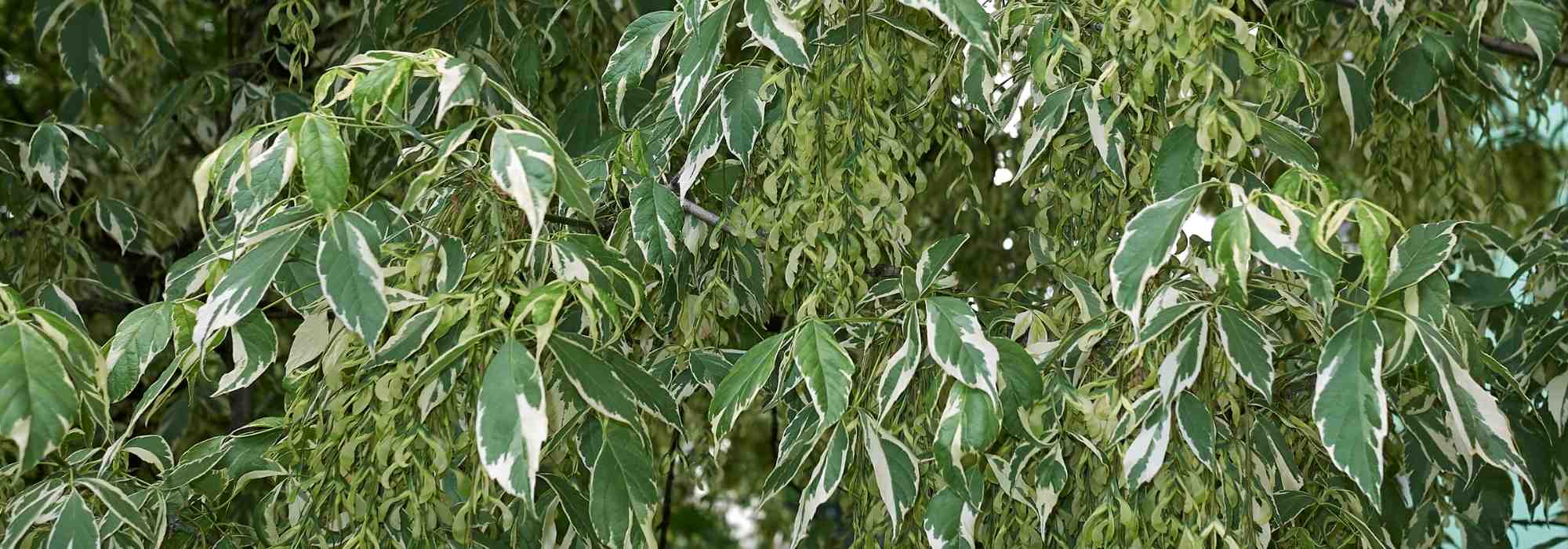
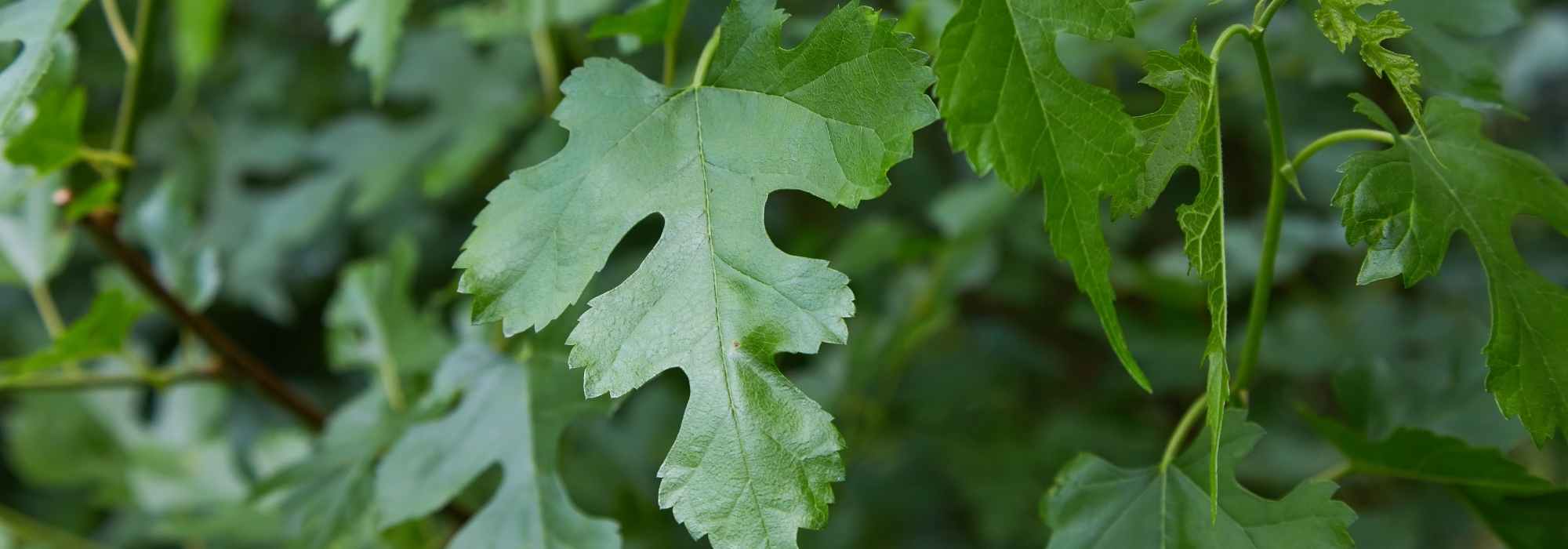
'Sunshine' is a horticultural variety introduced to the market by Notcutts nurseries, active for five generations in England. It is an improvement of the famous variety 'Prinz Handjery' that was very popular in the 80s. This small slow-growing maple reaches a height of 4 to 5m at maturity, developing a crown about 2.50m wide. The ovoid head, carried by a trunk with dark grey bark, is dense and roughly as wide as it is tall. The young leaves that appear in spring are adorned with a charming shrimp pink colour. They gradually evolve into a yellow-green hue, with lingering pale pink shades, before turning chartreuse green in summer. The undersides of the leaves are light green. The palmate leaves have a highly ornamental shape and measure 8 to 12cm in length. They are divided into five lobes, with a tapered tip and irregularly toothed edges. The veins are clearly visible with their darker green colour compared to the chartreuse of the blade, highlighting its sculptural pattern. The numerous leaves are opposite, like all maples, carried by petioles of approximately 5cm in length and tend to overlap due to the limited size of the tree's crown.
The insignificant flowering takes place in May. The flowers are small, with a diameter of 8mm, and a greenish colour that blends with the abundant vegetation. They are gathered in long pendulous panicles, without any aesthetic interest. They then develop into double-winged fruits, called samaras, measuring 3 to 6cm, which appear in August. When detached by the wind, they fall whirling like the blades of a helicopter, amusing children.
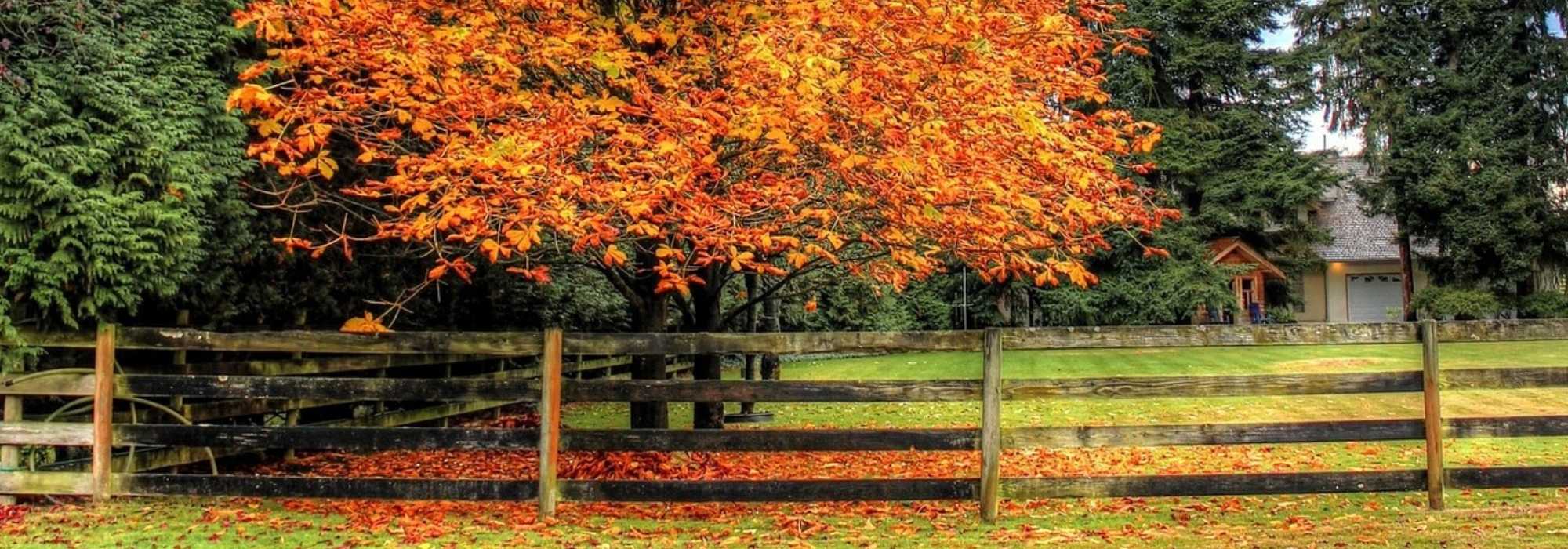
As the plant is deciduous, the leaves fall in autumn, creating a beautiful aesthetic effect with their yellow-orange colour.
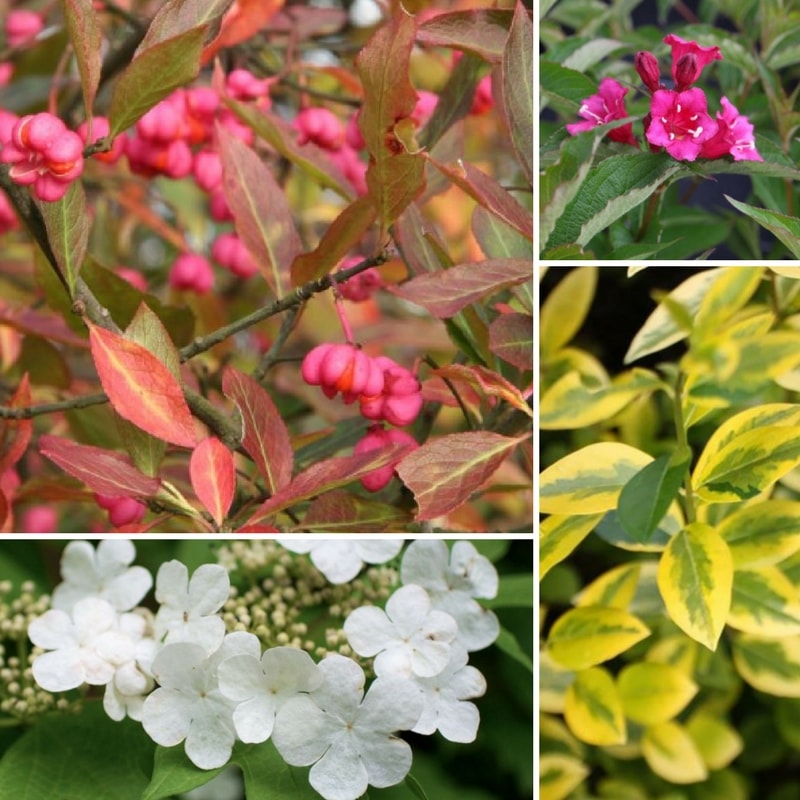
Acer pseudoplatanus 'Sunshine' is a small tree that will find a place in even the smallest garden. Careful consideration should be given to its placement, protecting it from intense sunlight and ensuring a certain level of soil and atmospheric moisture. It can be planted alone in a corner of the lawn to admire its evolving colourful foliage, or integrated into a small bed or at the edge of taller trees. Plant Cotinus 'Grace' next to it, a large fast-growing shrub that can protect it from the sun on that side. Its oval foliage will create ever-changing colour effects, culminating in a spectacular autumn display when it turns bright red, contrasting with the yellow-orange of your small maple. You can also create a breathtaking scene by planting the small Euonymus alatus 'Ciliatodentatus' at its base, a compact Winged Spindle with one of the most vibrant autumn colours in the plant kingdom, ranging from bright pink to a unique purple-red. It also produces abundant bicoloured, red-purple and orange fruit, which is particularly decorative (but also toxic, so be careful...).
Plant habit
Flowering
Foliage
Botanical data
Acer
pseudoplatanus
Sunshine
Sapindaceae
Sycamore, Planetree, False plane.
Cultivar or hybrid
Planting and care
Acer pseudoplatanus 'Sunshine' should be planted in the spring or autumn in moist, fertile soil, even a little heavy, neutral or preferably with a limestone tendency. Except in less sunny regions, it is advisable to choose a semi-shaded location to protect its foliage from too intense sun rays. It is perfectly hardy, down to -25°C or even a little less, and withstands wind well, but dislikes heat and intense sun. Keep the soil moist during the first two summers after planting. Mulching can be beneficial to maintain good soil moisture, depending on the climate. Pruning is not necessary, simply remove dead wood in the spring.
Planting period
Intended location
Care
Planting & care advice
-
-
-

-
-
-
-
-
This item has not been reviewed yet - be the first to leave a review about it.
Recently viewed products
Haven't found what you were looking for?
Hardiness is the lowest winter temperature a plant can endure without suffering serious damage or even dying. However, hardiness is affected by location (a sheltered area, such as a patio), protection (winter cover) and soil type (hardiness is improved by well-drained soil).

The flowering period indicated on our website applies to countries and regions located in USDA zone 8 (France, the United Kingdom, Ireland, the Netherlands, etc.)
It will vary according to where you live:- In zones 9 to 10 (Italy, Spain, Greece, etc.), flowering will occur about 2 to 4 weeks earlier.
- In zones 6 to 7 (Germany, Poland, Slovenia, and lower mountainous regions), flowering will be delayed by 2 to 3 weeks.
- In zone 5 (Central Europe, Scandinavia), blooming will be delayed by 3 to 5 weeks.
In temperate climates, pruning of spring-flowering shrubs (forsythia, spireas, etc.) should be done just after flowering.
Pruning of summer-flowering shrubs (Indian Lilac, Perovskia, etc.) can be done in winter or spring.
In cold regions as well as with frost-sensitive plants, avoid pruning too early when severe frosts may still occur.
The planting period indicated on our website applies to countries and regions located in USDA zone 8 (France, United Kingdom, Ireland, Netherlands).
It will vary according to where you live:
- In Mediterranean zones (Marseille, Madrid, Milan, etc.), autumn and winter are the best planting periods.
- In continental zones (Strasbourg, Munich, Vienna, etc.), delay planting by 2 to 3 weeks in spring and bring it forward by 2 to 4 weeks in autumn.
- In mountainous regions (the Alps, Pyrenees, Carpathians, etc.), it is best to plant in late spring (May-June) or late summer (August-September).
The harvesting period indicated on our website applies to countries and regions in USDA zone 8 (France, England, Ireland, the Netherlands).
In colder areas (Scandinavia, Poland, Austria...) fruit and vegetable harvests are likely to be delayed by 3-4 weeks.
In warmer areas (Italy, Spain, Greece, etc.), harvesting will probably take place earlier, depending on weather conditions.
The sowing periods indicated on our website apply to countries and regions within USDA Zone 8 (France, UK, Ireland, Netherlands).
In colder areas (Scandinavia, Poland, Austria...), delay any outdoor sowing by 3-4 weeks, or sow under glass.
In warmer climes (Italy, Spain, Greece, etc.), bring outdoor sowing forward by a few weeks.
Shipping country and language
Your country of residence may be:
Your country of residence is:
For a better user experience on our website, you can select:
Your shipping country:
-
 Austria
-
 Belgium
-
 Bosnia & Herzegovina
-
 Bulgaria
-
 Croatia
-
 Cyprus
-
 Czechia
-
 Denmark
-
 Estonia
-
 Finland
-
 France
-
 Germany
-
 Greece
-
 Hungary
-
 Iceland
-
 Ireland
-
 Italy
Italy
-
 Latvia
-
 Liechtenstein
-
 Lithuania
-
 Luxembourg
-
 Malta
Malta
-
 Netherlands
-
 Poland
-
 Portugal
-
 Romania
-
 Serbia
-
 Slovakia
-
 Slovenia
-
 Spain
Spain
-
 Sweden
-
 Switzerland
Language:
-
French
-
 English
-
Spanish
-
Italian
-
German
-
Portuguese
-
Dutch
-
Finnish
My Account
Hello
My wish lists
My cart
Log in / Register
Existing customer?
This form is protected by reCAPTCHA - the Google Privacy Policy and Terms of Service apply.
New customer?
Create an account to track your orders, access our customer service and, if you wish, make the most of our upcoming offers.