Daphne odora Sweet Amethyst
Daphne odora Sweet Amethyst
Daphne odora Sweet Amethyst
Daphne odora Sweet Amethyst
View more pictures
Hide images
Maryam O.
Daphne odora Sweet Amethyst
Maryam O. • 45 FR
Daphne odora Sweet Amethyst
Daphne odora Sweet Amethyst PBR EU 52705
Winter Daphne, Fragrant Daphne
A splendid afternoon
Maryam, 08/01/2023
Back-to-school special offer!
Get €10 off for every €50 you spend! And get up to €40 off on a single order.
How does it work?
1. Shop your favourites
Add your favourite plants to your basket. For every €50 you spend (excluding delivery charges, store credit and the plastic-free option), you’ll receive a €10 voucher.
€50 spent = €10 voucher
€100 spent = €20 voucher
€150 spent = €30 voucher
€200 spent = €40 voucher
2. Place your order
Once your basket reaches one of the spending thresholds, place your order. You can even choose your delivery date!
3. Receive your voucher
As soon as your order has been shipped, you’ll receive an email containing your personal voucher code and its value.
4. Use it on your next order
Your voucher is valid for 90 days from the date you receive it. It can be used once only, on a new order worth at least the value of the voucher, excluding delivery charges.
Please note: Vouchers can be combined with other offers, but cannot be split or refunded.
Why not try an alternative variety in stock?
View all →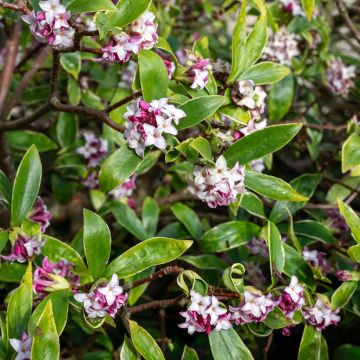
Available in 3 sizes
Available in 0 sizes
Available in 2 sizes
Available in 2 sizes
Available in 2 sizes
Available in 1 sizes
Available in 1 sizes
Available in 1 sizes
This plant carries a 24 months recovery warranty
More information
We guarantee the quality of our plants for a full growing cycle, and will replace at our expense any plant that fails to recover under normal climatic and planting conditions.
Would this plant suit my garden?
Set up your Plantfit profile →
Description
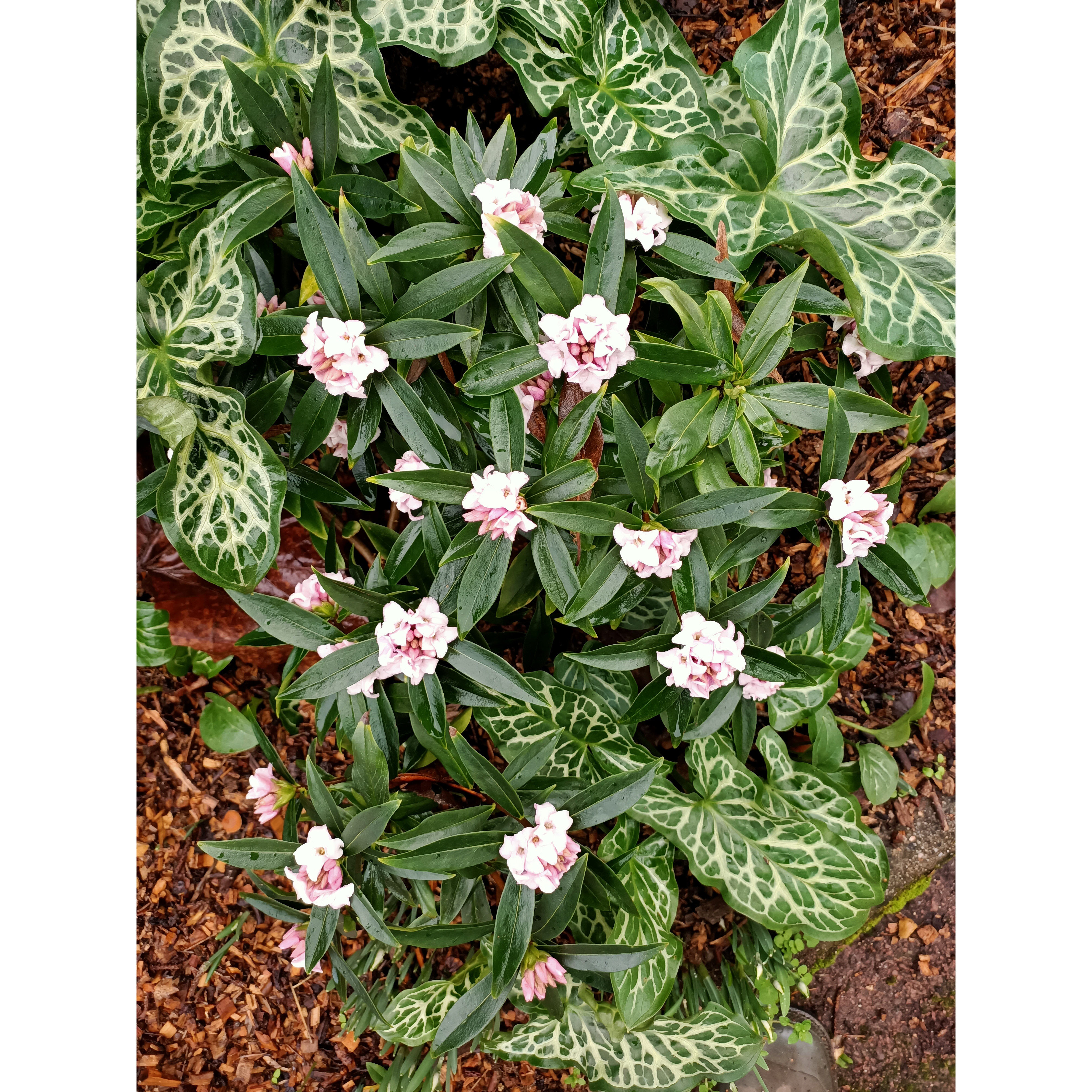
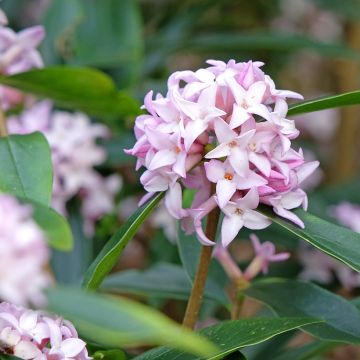
The Daphne odora 'Sweet Amethyst' is a delightful variety of Fragrant Daphne recently obtained in New Zealand. It is distinguished by the purplish colour of its flower buds, the soft pink of its flowers, but also by the abundance, duration, and intense jasmine fragrance of its flowering. The bush blooms in late winter and early spring, at the end of branches adorned with beautiful foliage that remains decorative all year round, even outside of flowering. It is a hardy, rare, and precious plant for adding colour to shaded areas of the garden or rockery in winter. Offer it a very well-drained, dry soil in summer, poor, neutral to acidic, and a gently sunny exposure.
The Daphne odora, also known as 'Winter Daphne', is an evergreen bush of the thyme family native to Asia, mainly China and Japan. While this beautiful shrub is sensitive to frost, it has generated many cultivars that are much more cold-resistant, easier to grow, and with enhanced ornamental qualities.
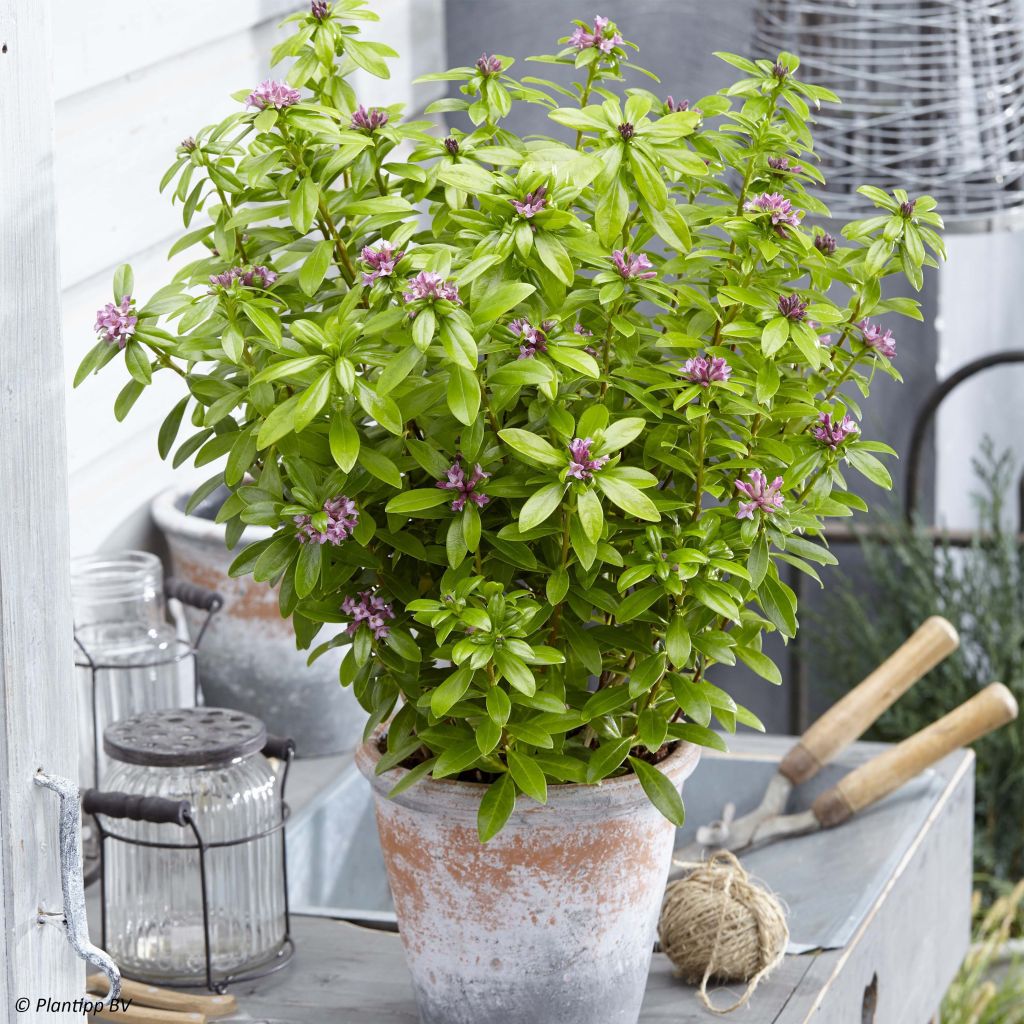
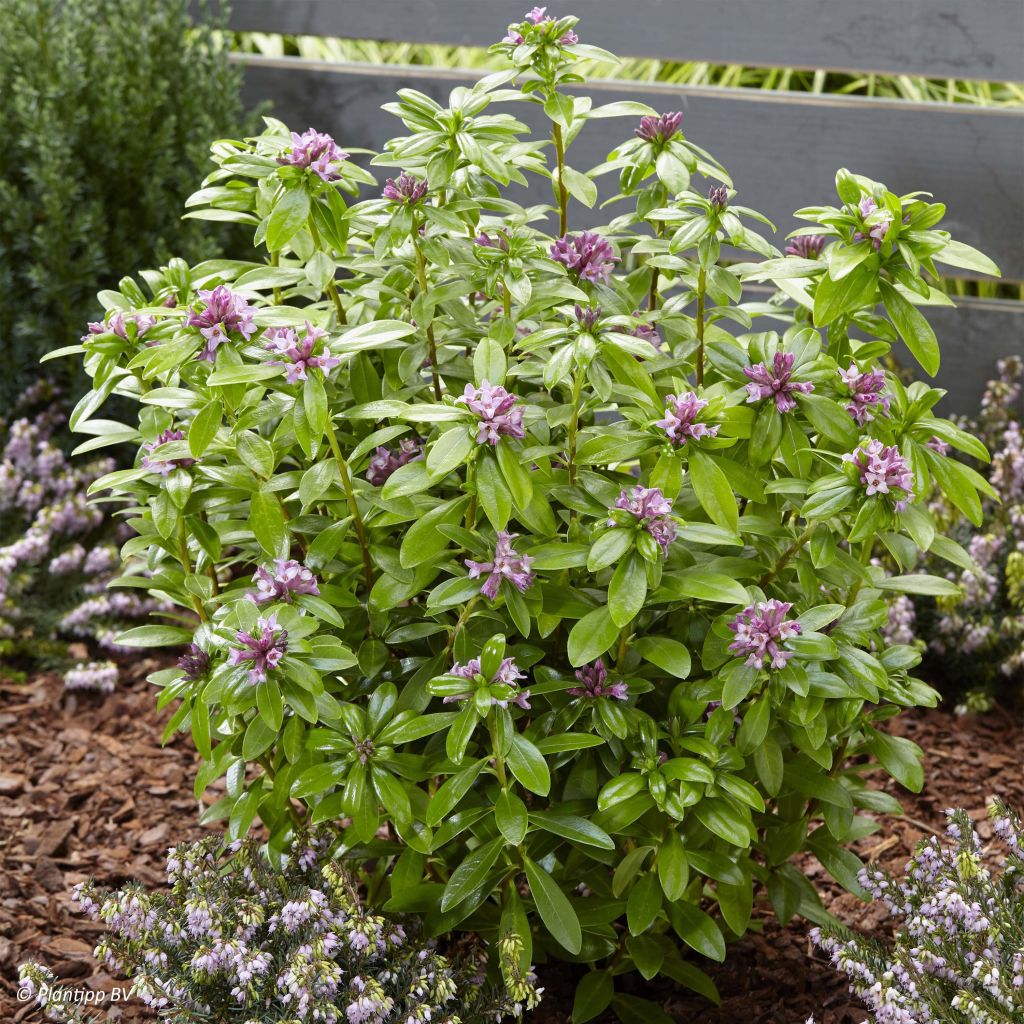
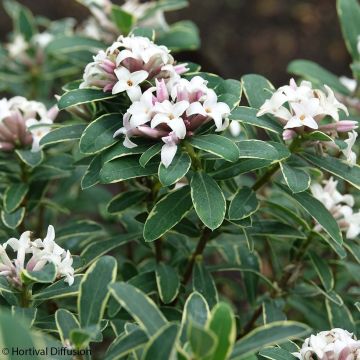
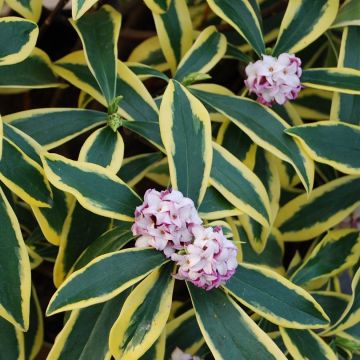
The sweet-scented Daphne 'Sweet Amethyst' was discovered in 2009 as a mutation of branches that appeared on a plant of Daphne odora 'Cameo'. The bush has a fairly slow growth and a bushy, spreading, semi-dwarf habit. At maturity, it will reach about 1m (3 ft 4 in) in height and 1.20m (3 ft 11 in) in spread. Its upright 'candelabra' branches are composed of smooth, bare, grey lower branches, and upright branches carrying evergreen foliage. The entire leaves are elliptical-ovate in shape, they are thick, glossy, and measure 8cm (3.1 in) in length by 2cm (0.8 in) in width. Their colour is a very bright light green, almost acid at bud burst.
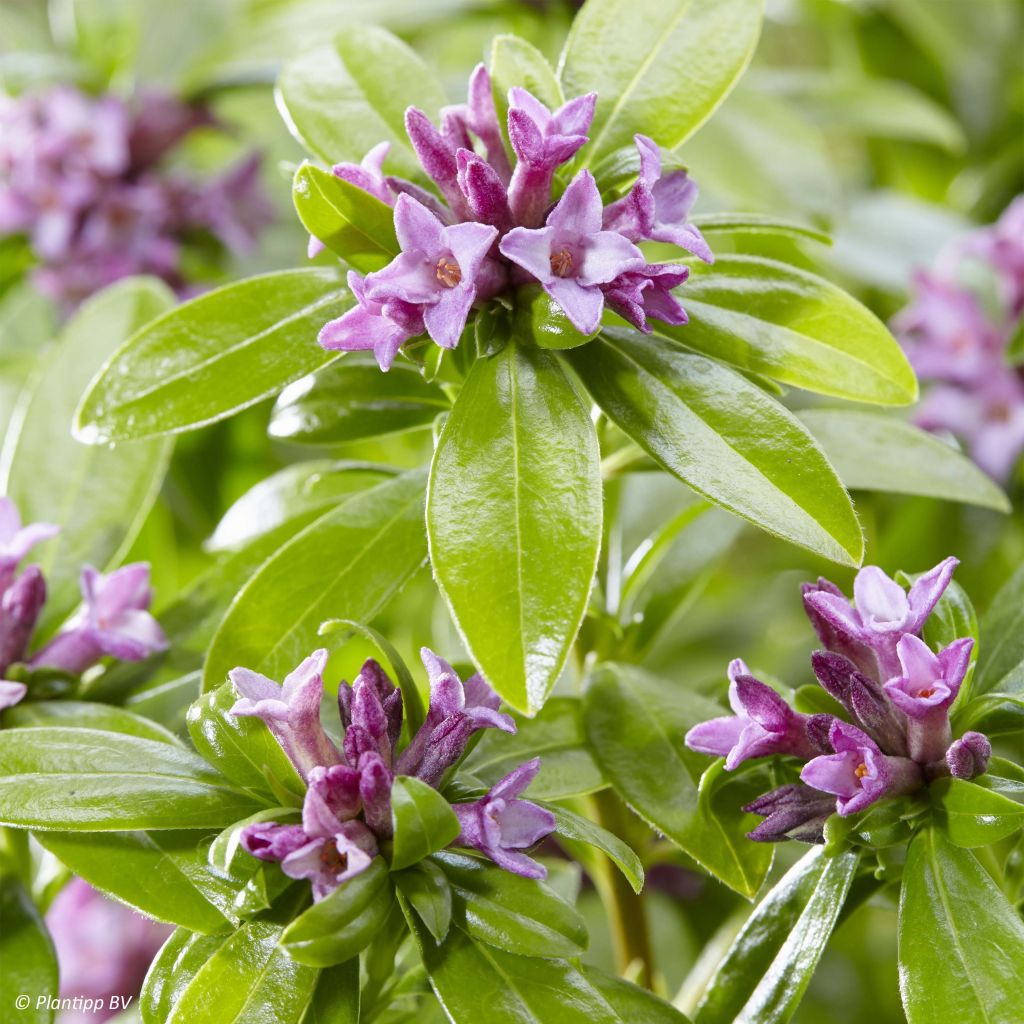
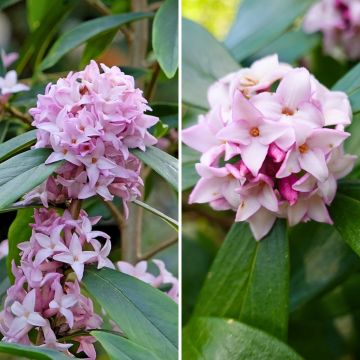
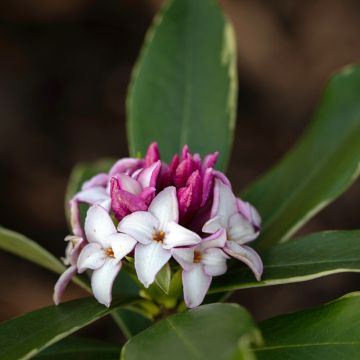
Flowering takes place from March to April, for about 6 weeks. The small waxy-looking flowers are grouped in clusters of 7 to 12 units, in inflorescences measuring 18cm (7.1 in) in length by 25cm (9.8 in) in width, at the end of branches. Each one, arising from a pointed bud of dark reddish-purple, opens into a tubular corolla with 4 petals of a soft mauve-pink. Their fragrance is both very powerful and intoxicating, capable of perfuming the garden within a radius of 20m (65 ft 7 in)! This fragrance, complex, both sweet and rustic, reminiscent of carnation, jasmine, hyacinth, enhanced with a spicy hint of cloves and lemon.
Whether in the ground or in a container, place the Daphne odora Sweet Amethyst near a walkway to enjoy its intoxicating fragrance, in shade or partial shade, in an acidic soil rich in humus. This bush does not tolerate heatwaves but is fine with dry soil in summer. Perfect in a semi-shaded rockery, it blends well with ericaceous plants such as Kalmia, dwarf Rhododendrons, Japanese maples, Chinese azaleas, autumn or Japanese camellias. You can also pair it with heathers as well as winter aconites, daffodils, or crocuses.
Note: Daphnes can be high-maintenance and difficult to cultivate. They are best suited for experienced gardeners.
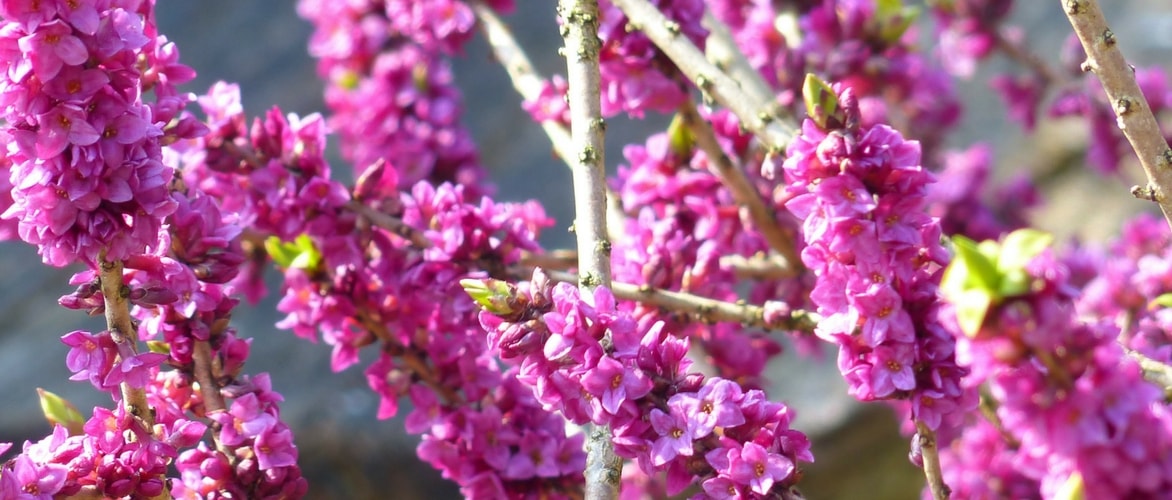
Daphne odora Sweet Amethyst in pictures
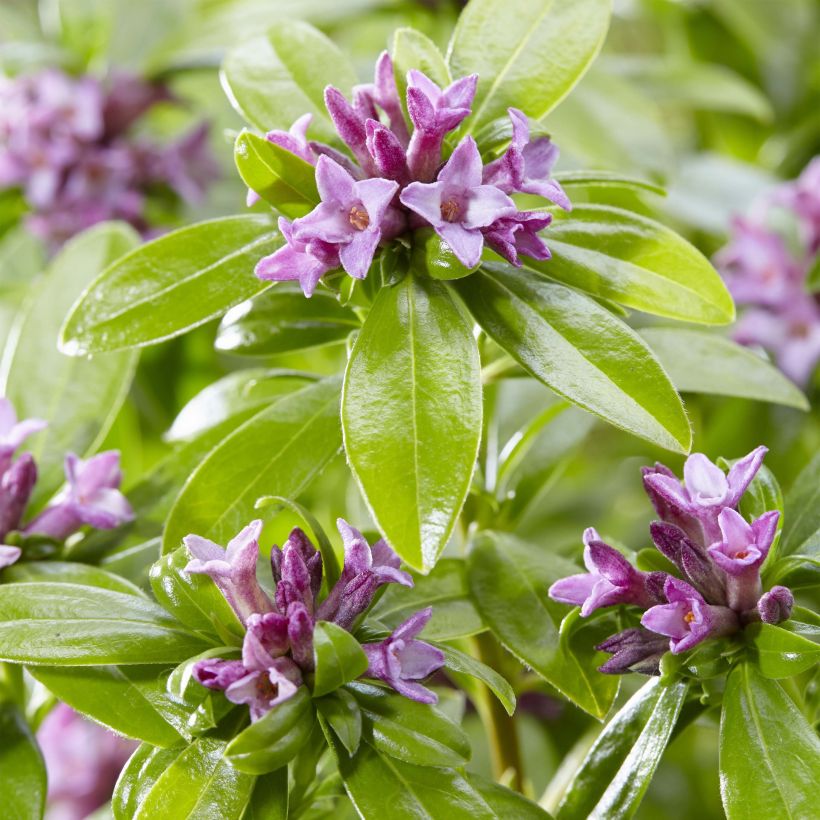
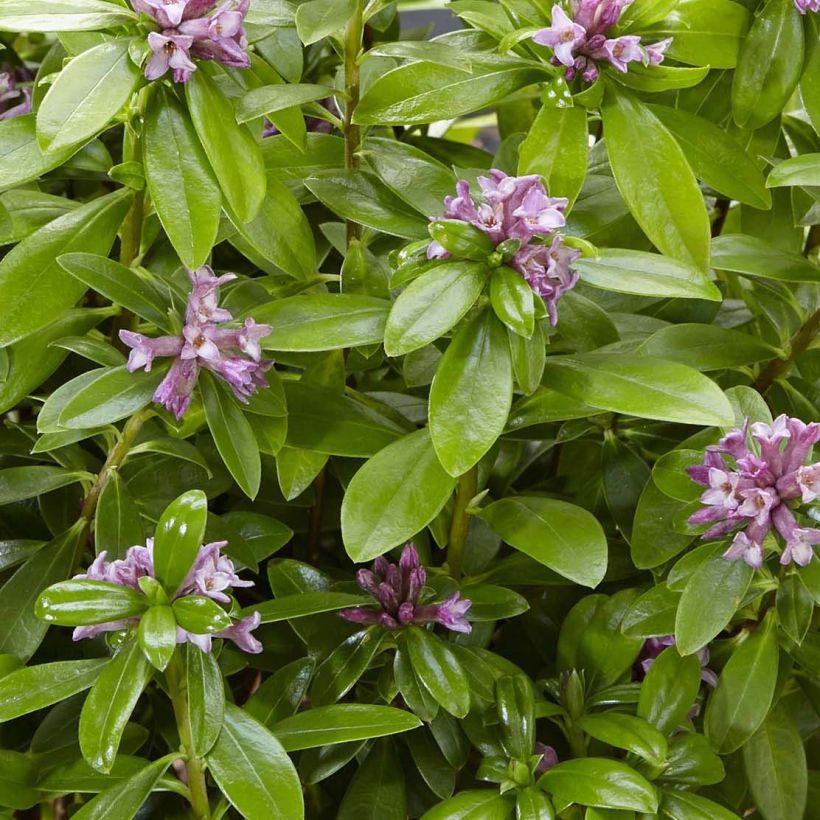
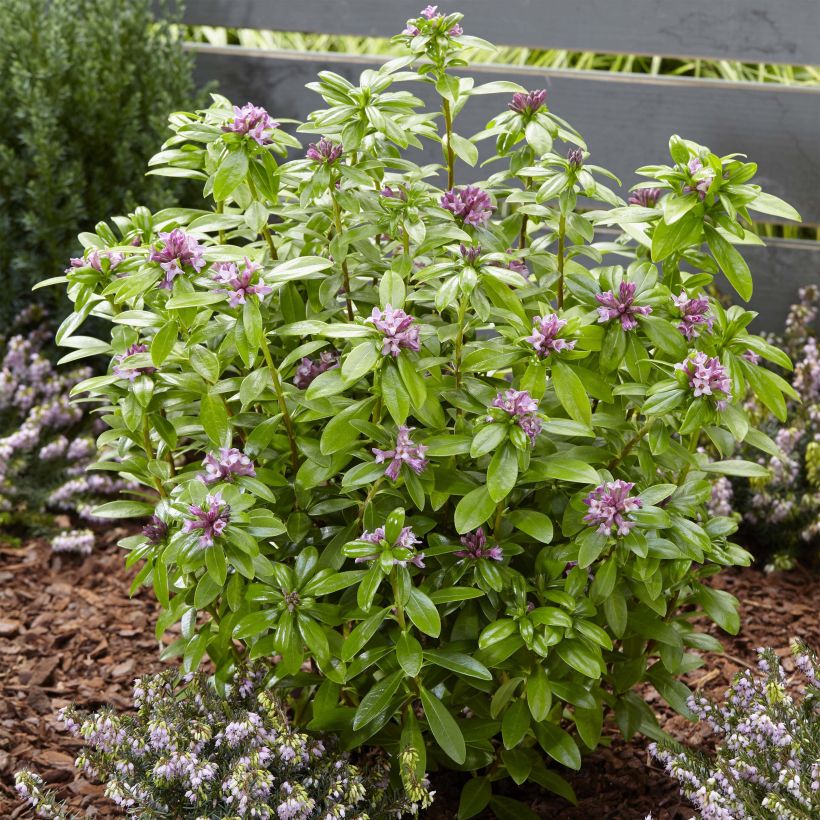
Plant habit
Flowering
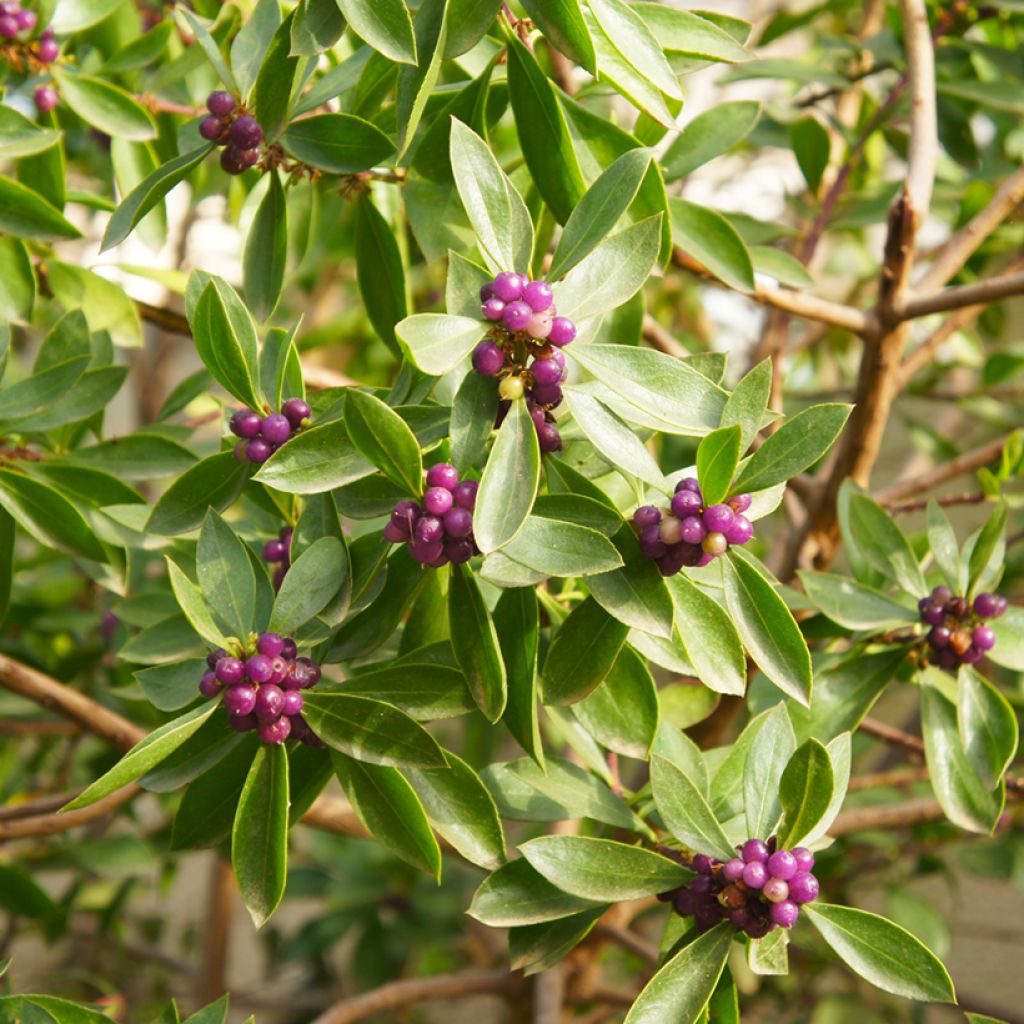
Foliage
Safety measures
Botanical data
Daphne
odora
Sweet Amethyst PBR EU 52705
Thymelaceae
Winter Daphne, Fragrant Daphne
Cultivar or hybrid
ingestion
Cette plante est toxique si elle est ingérée volontairement ou involontairement.
Ne la plantez pas là où de jeunes enfants peuvent évoluer, et lavez-vous les mains après l'avoir manipulée.
Pensez à conserver l'étiquette de la plante, à la photographier ou à noter son nom, afin de faciliter le travail des professionnels de santé.
Davantage d'informations sur https://plantes-risque.info
Planting and care
The Daphne Odora Sweet Amethyst plant prefers shaded or semi-shaded areas with non-burning sunlight and well-drained, light, and slightly moist acidic soil. Avoid heavy, clayey, or water-saturated soils. Once established, it can tolerate dry spells during summer. Apply compost every two years in the spring. The plant does not require pruning, but wear gloves when handling it to avoid skin irritation from its sap. Daphnes can be susceptible to fungus, which can be prevented by treating it with fungicide in the spring.
Use a large container with a drainage layer made of pebbles, pottery shards, or non-limestone gravel for pot cultivation. Use a mix of potting soil and heather soil enriched with well-rotted compost. Monitor watering and apply a fertiliser for ericaceous plants regularly.
Planting period
Intended location
Care
Planting & care advice
-
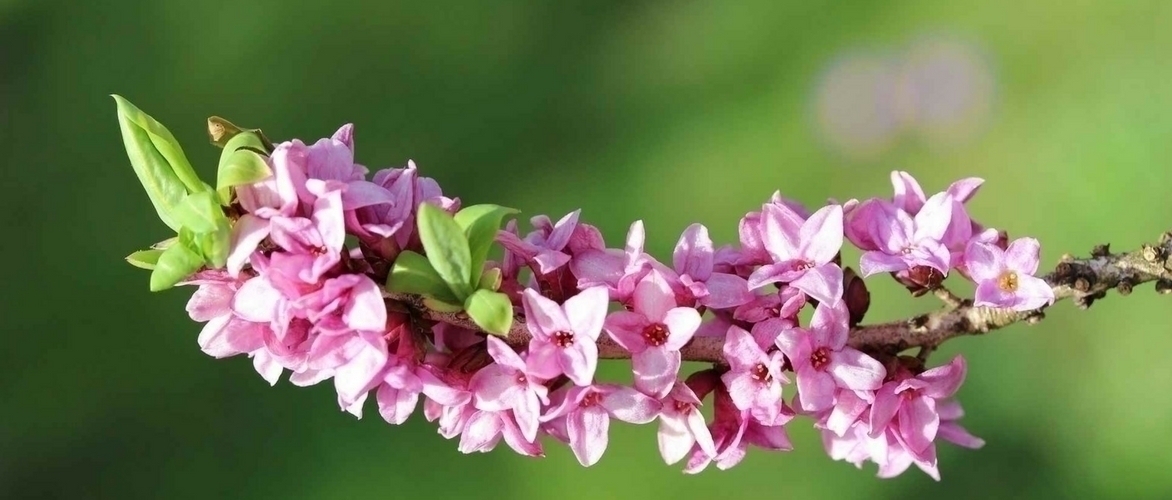
-
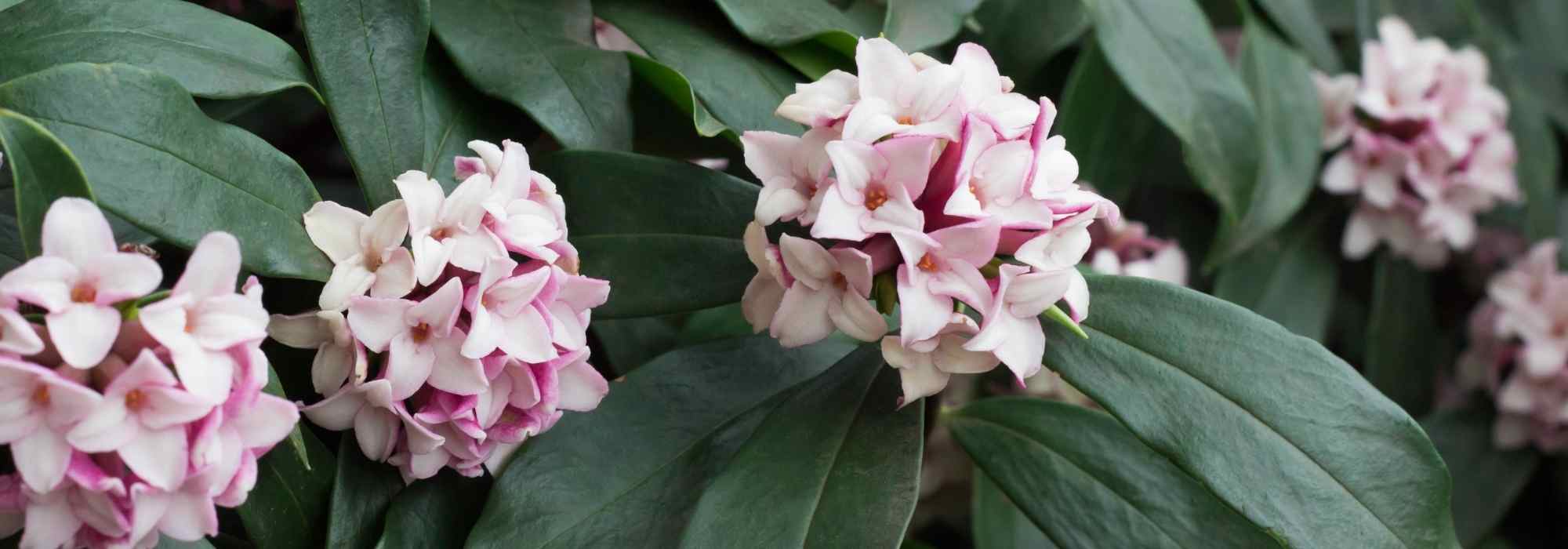
-
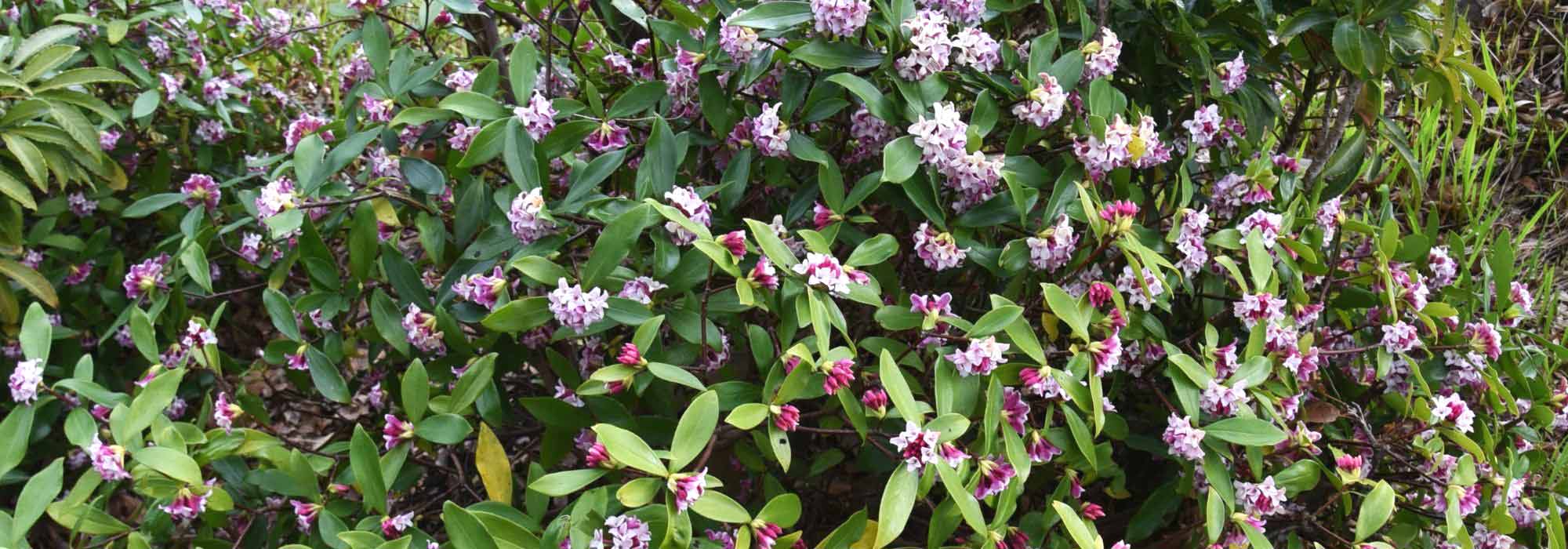
-

-
-

-

-
-
, onOrder confirmed
Reply from on Promesse de fleurs
Recently viewed products
Haven't found what you were looking for?
Hardiness is the lowest winter temperature a plant can endure without suffering serious damage or even dying. However, hardiness is affected by location (a sheltered area, such as a patio), protection (winter cover) and soil type (hardiness is improved by well-drained soil).

The flowering period indicated on our website applies to countries and regions located in USDA zone 8 (France, the United Kingdom, Ireland, the Netherlands, etc.)
It will vary according to where you live:- In zones 9 to 10 (Italy, Spain, Greece, etc.), flowering will occur about 2 to 4 weeks earlier.
- In zones 6 to 7 (Germany, Poland, Slovenia, and lower mountainous regions), flowering will be delayed by 2 to 3 weeks.
- In zone 5 (Central Europe, Scandinavia), blooming will be delayed by 3 to 5 weeks.
In temperate climates, pruning of spring-flowering shrubs (forsythia, spireas, etc.) should be done just after flowering.
Pruning of summer-flowering shrubs (Indian Lilac, Perovskia, etc.) can be done in winter or spring.
In cold regions as well as with frost-sensitive plants, avoid pruning too early when severe frosts may still occur.
The planting period indicated on our website applies to countries and regions located in USDA zone 8 (France, United Kingdom, Ireland, Netherlands).
It will vary according to where you live:
- In Mediterranean zones (Marseille, Madrid, Milan, etc.), autumn and winter are the best planting periods.
- In continental zones (Strasbourg, Munich, Vienna, etc.), delay planting by 2 to 3 weeks in spring and bring it forward by 2 to 4 weeks in autumn.
- In mountainous regions (the Alps, Pyrenees, Carpathians, etc.), it is best to plant in late spring (May-June) or late summer (August-September).
The harvesting period indicated on our website applies to countries and regions in USDA zone 8 (France, England, Ireland, the Netherlands).
In colder areas (Scandinavia, Poland, Austria...) fruit and vegetable harvests are likely to be delayed by 3-4 weeks.
In warmer areas (Italy, Spain, Greece, etc.), harvesting will probably take place earlier, depending on weather conditions.
The sowing periods indicated on our website apply to countries and regions within USDA Zone 8 (France, UK, Ireland, Netherlands).
In colder areas (Scandinavia, Poland, Austria...), delay any outdoor sowing by 3-4 weeks, or sow under glass.
In warmer climes (Italy, Spain, Greece, etc.), bring outdoor sowing forward by a few weeks.
Shipping country and language
Your country of residence may be:
Your country of residence is:
For a better user experience on our website, you can select:
Your shipping country:
-
 Austria
-
 Belgium
-
 Bosnia & Herzegovina
-
 Bulgaria
-
 Croatia
-
 Cyprus
-
 Czechia
-
 Denmark
-
 Estonia
-
 Finland
-
 France
-
 Germany
-
 Greece
-
 Hungary
-
 Iceland
-
 Ireland
-
 Italy
Italy
-
 Latvia
-
 Liechtenstein
-
 Lithuania
-
 Luxembourg
-
 Malta
Malta
-
 Netherlands
-
 Poland
-
 Portugal
-
 Romania
-
 Serbia
-
 Slovakia
-
 Slovenia
-
 Spain
Spain
-
 Sweden
-
 Switzerland
Language:
-
French
-
 English
-
Spanish
-
Italian
-
German
-
Portuguese
-
Dutch
-
Finnish
My Account
Hello
My wish lists
My cart
Log in / Register
Existing customer?
This form is protected by reCAPTCHA - the Google Privacy Policy and Terms of Service apply.
New customer?
Create an account to track your orders, access our customer service and, if you wish, make the most of our upcoming offers.