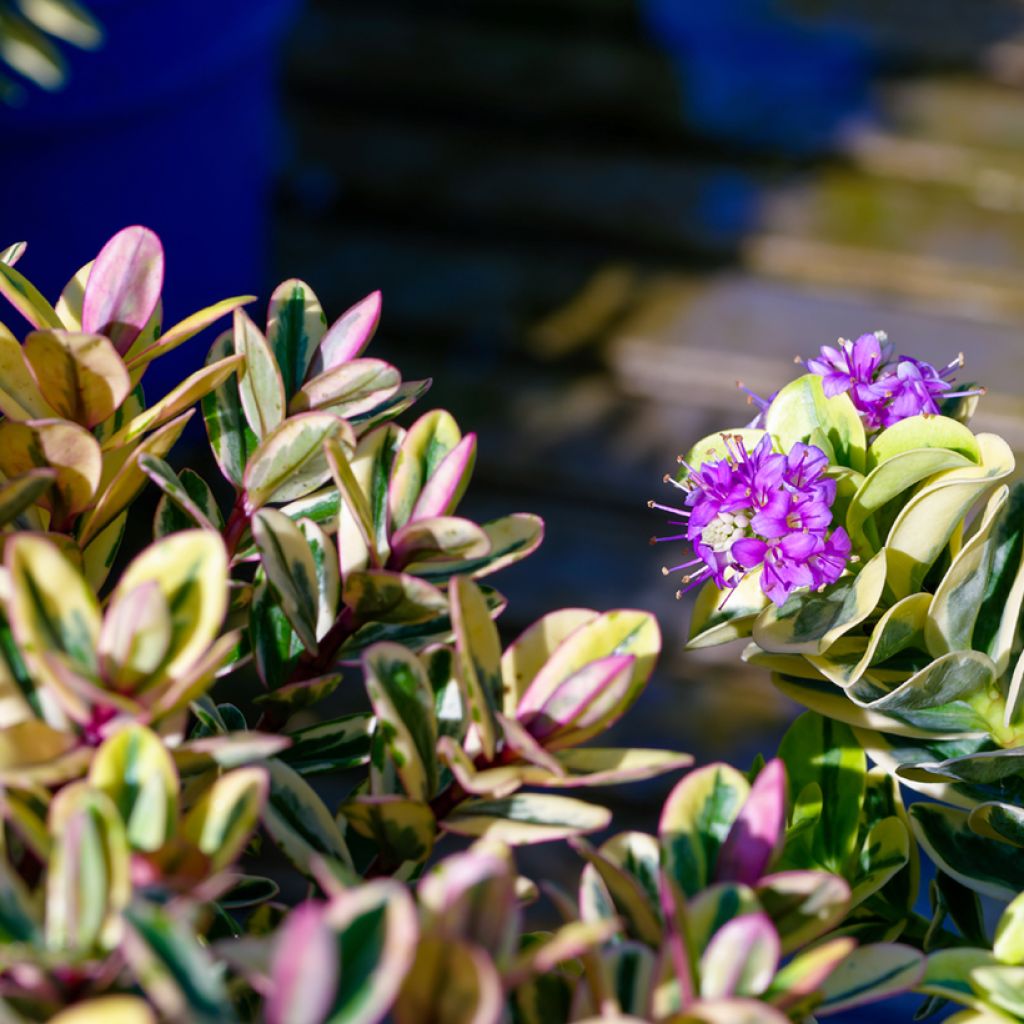
Hebe speciosa Tricolor - Shrubby Veronica
Hebe speciosa Tricolor - Shrubby Veronica
Hebe speciosa Tricolor
Shrubby Veronica, Speedwell shrub, Varnished Hebe
Back-to-school special offer!
Get €10 off for every €50 you spend! And get up to €40 off on a single order.
How does it work?
1. Shop your favourites
Add your favourite plants to your basket. For every €50 you spend (excluding delivery charges, store credit and the plastic-free option), you’ll receive a €10 voucher.
€50 spent = €10 voucher
€100 spent = €20 voucher
€150 spent = €30 voucher
€200 spent = €40 voucher
2. Place your order
Once your basket reaches one of the spending thresholds, place your order. You can even choose your delivery date!
3. Receive your voucher
As soon as your order has been shipped, you’ll receive an email containing your personal voucher code and its value.
4. Use it on your next order
Your voucher is valid for 90 days from the date you receive it. It can be used once only, on a new order worth at least the value of the voucher, excluding delivery charges.
Please note: Vouchers can be combined with other offers, but cannot be split or refunded.
Why not try an alternative variety in stock?
View all →
Available in 1 sizes

Available in 1 sizes
Available in 1 sizes
Available in 1 sizes
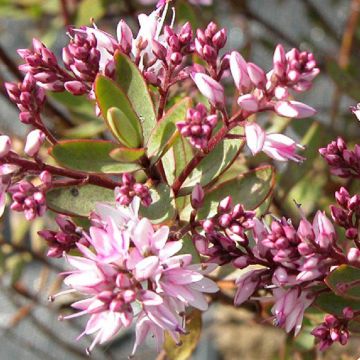
Available in 1 sizes
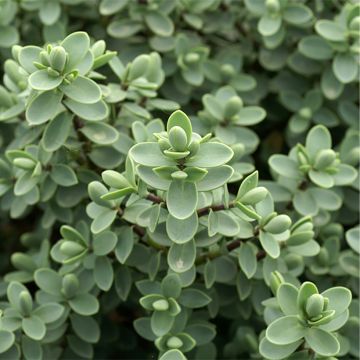
Available in 1 sizes
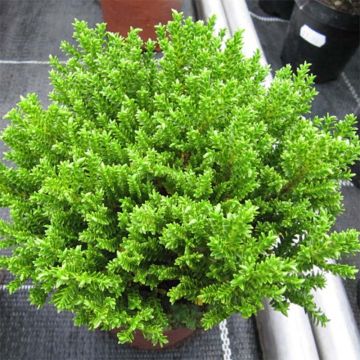
Available in 1 sizes
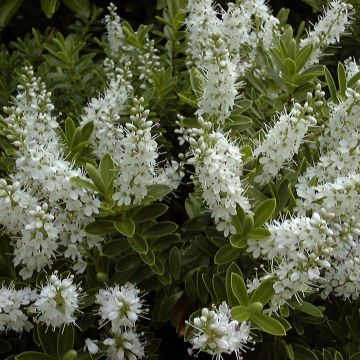
Available in 1 sizes
Available in 1 sizes
Available in 1 sizes
This plant carries a 24 months recovery warranty
More information
We guarantee the quality of our plants for a full growing cycle, and will replace at our expense any plant that fails to recover under normal climatic and planting conditions.
Would this plant suit my garden?
Set up your Plantfit profile →
Description
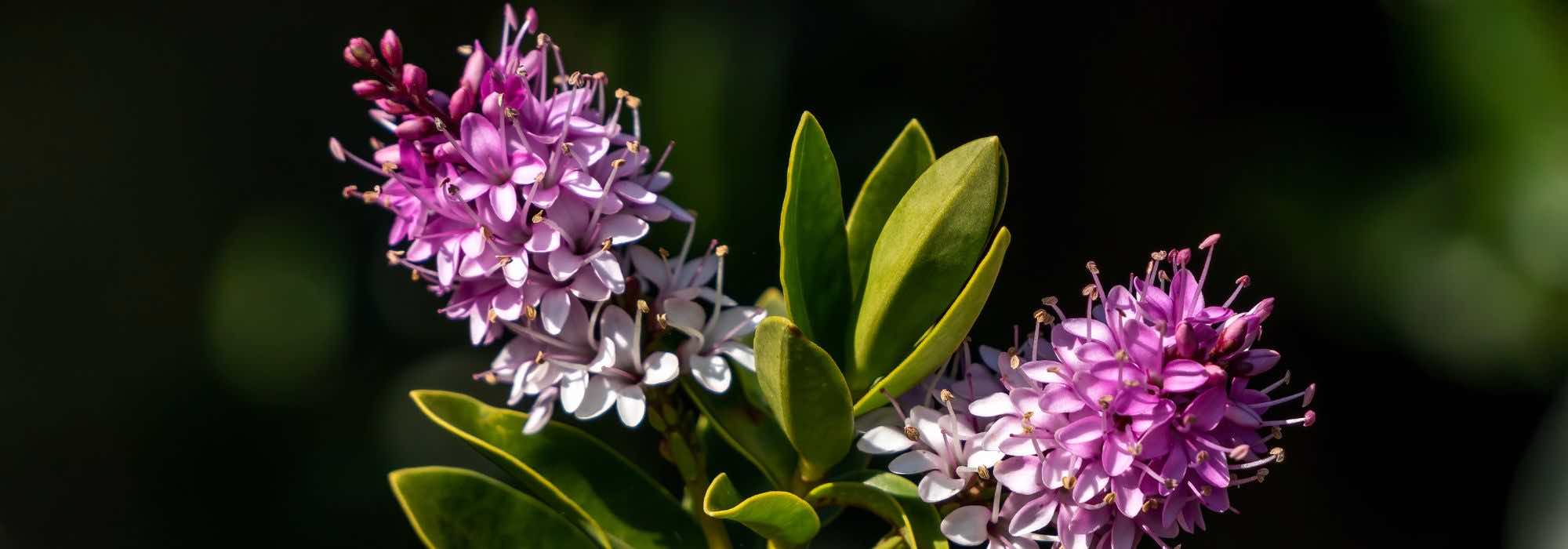
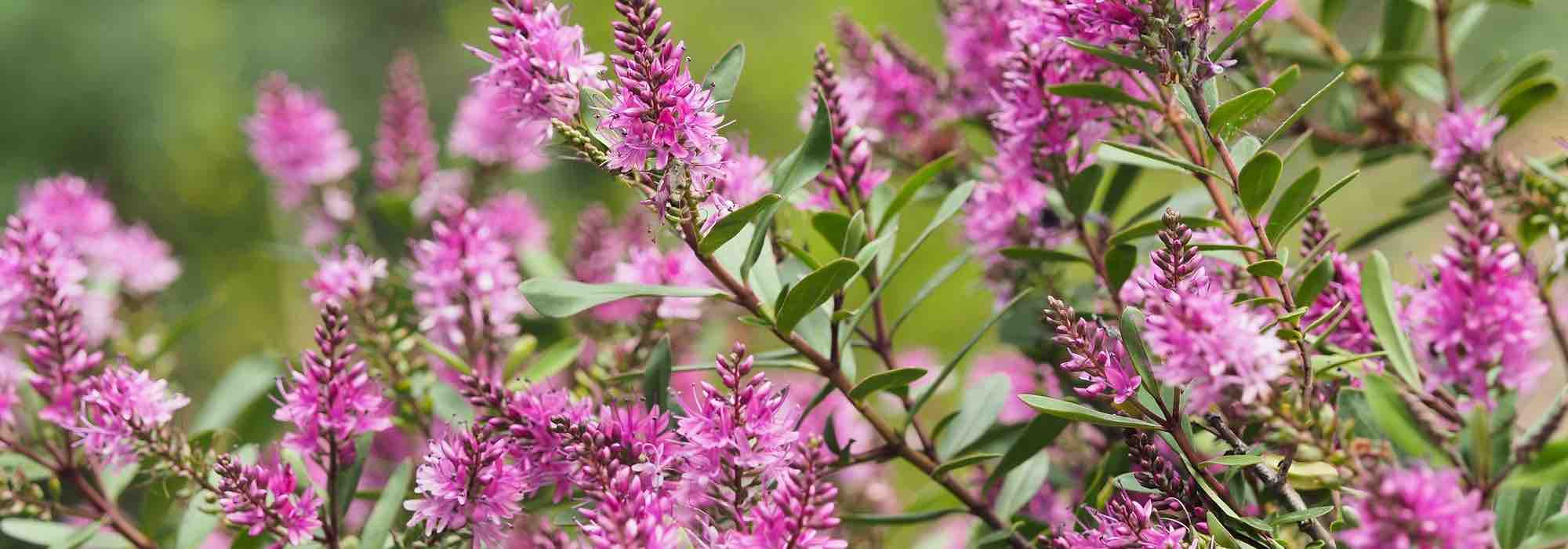
Hebe speciosa 'Tricolor' is a superb shrubby Veronica with a compact and bushy habit, ornamental throughout the year. Its evergreen foliage, variegated with olive green and creamy white, takes on shades of pinkish purple when new leaves emerge. In early summer, the bush is adorned with spikes of purple-violet flowers, creating a beautiful contrast against the variegated foliage. Only hardy in mild climates, it can be planted in most moist, well-drained soils, in full sun or partial shade in the south. Elsewhere, its compact growth makes it easy to grow in a container to protect it during winter.
Historically classified among the Scrophulariaceae, the Hebe genus has been transferred to the Plantaginaceae family alongside about a hundred others, such as the Ruin-of-Rome or Cymbalaria muralis, a charming little perennial ideal for covering an old wall. Commonly known as shrubby Veronica, Hebe is woody and not herbaceous like true Speedwells. Dozens of species are known, mainly native to New Zealand, Australia, and to a lesser extent, South America. The first introduction to Europe dates back to 1775 when George Forster brought back a Hebe elliptica from a famous Captain Cook expedition.
Hebe speciosa was collected in New Zealand by Allan Cunningham around 1820. In its country of origin, it forms a shrub that can reach up to 1.50 m or even 2 m in height. In summer, it is particularly attractive when covered for almost two months with dark purple-red flower spikes that then bloom in bluish-mauve tones. The lateral inflorescences measure 3 to 7 cm and are almost vertically erect, giving the plant a proud appearance (speciosa meaning beautiful or remarkable in Latin). In Europe we mainly encounter the numerous hybrids it has given rise to.
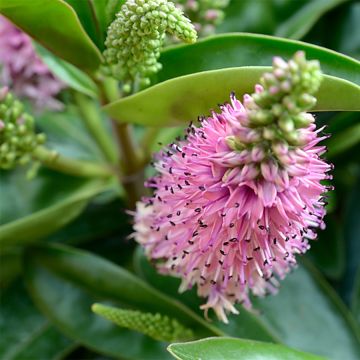
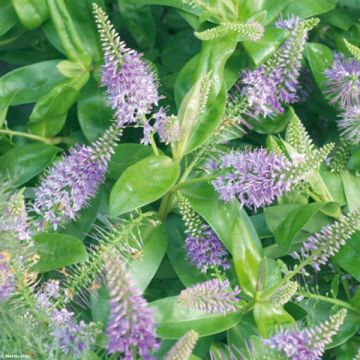
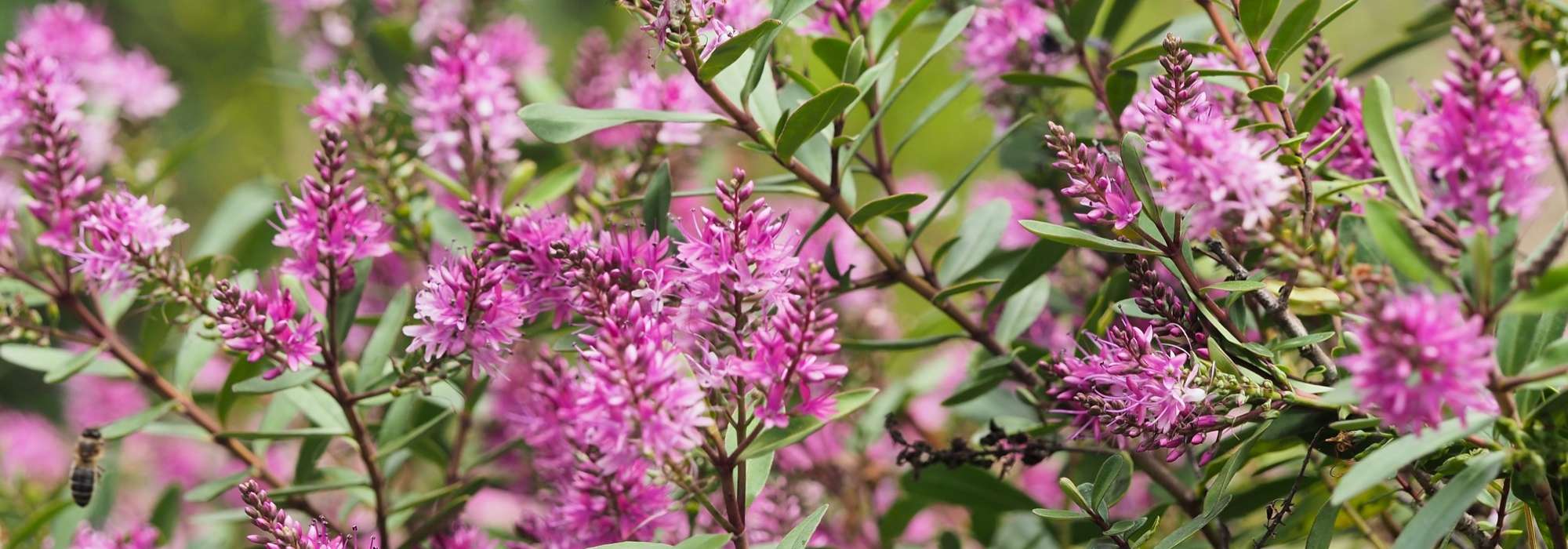
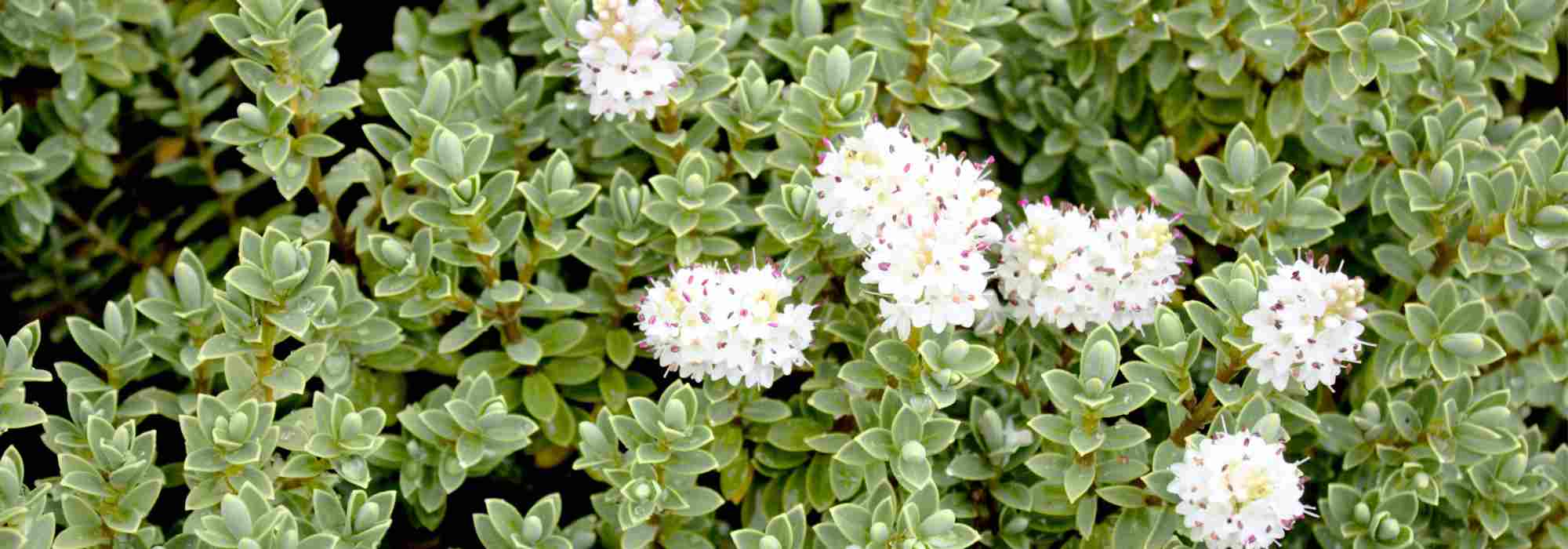
'Tricolor' is a variegated form, with significantly more modest growth, reaching around 80 cm in height and width (from 60 to 100 cm depending on the conditions). The compact bush easily branches out quite low, with many slender upright stems that give it a very bushy appearance. The gradually turning woody, purple-brown stems bear opposite decussate leaves, meaning each level is shifted by 90° from the next, thus forming a cross when viewed from the front. The evergreen leaves are elliptical to slightly obovate (the widest part being in the upper third of the lamina). They are leathery with a glossy surface and are often tinted with pinkish purple when they appear at the end of a branch, creating a stunning visual effect against the variegated foliage. Adult leaves are irregularly margined with a creamy white band, creating a pleasant contrast with the olive green midrib. During summer, the low bush produces a very decorative flowering, in the form of 6 to 7 cm long spikes, made up of small dark purple flowers that harmonise perfectly with the bicoloured foliage.
Hebe speciosa 'Tricolor' is a very beautiful decorative plant all year round, which will easily find a place in gardens in a mild climate. It will be great in mild regions, planted as a low hedge or at the front of a varied plant bed. It is well-suited to seaside locations that protect it from extreme frost and will blend in nicely in a bed, where you can plant a 'Tuxedo' Ceanothus in the background, with its dark purple foliage that will enhance its variegated white and creamy foliage. Escallonias will also be very good companions with their showy summer blooms, as well as a Callistemon bush, the famous bottlebrush plant with its brush-like flowers that bloom in spring, often flowering again later in the season. Thanks to its small size, which can easily be maintained if necessary by annual pruning, you can also use it as a superb flowering pot plant in cold regions, which you can shelter in a bright frost-free room during winter.
Plant habit
Flowering
Foliage
Botanical data
Hebe
speciosa
Tricolor
Plantaginaceae
Shrubby Veronica, Speedwell shrub, Varnished Hebe
Hebe speciosa 'Variegata'
Cultivar or hybrid
Planting and care
Hebe speciosa 'Tricolor' is a plant for mild climates that is sensitive to frost from -6°C/-7°C onwards and should therefore be grown in a pot in cold regions, in order to overwinter it in a conservatory or a cool, frost-free and bright room. In mild coastal or Mediterranean climates, it will appreciate well-drained soil, but not excessively dry, especially at the beginning before it has had a chance to root properly. It is quite tolerant regarding soil type, accepting a fairly wide pH range. Plant it in full sun or possibly in partial shade in the south, sheltered from cold winter winds. As it grows, light pruning with hedge shears can be useful to maintain a dense and compact habit.
Planting period
Intended location
Care
Planting & care advice


This item has not been reviewed yet - be the first to leave a review about it.
Recently viewed products
Haven't found what you were looking for?
Hardiness is the lowest winter temperature a plant can endure without suffering serious damage or even dying. However, hardiness is affected by location (a sheltered area, such as a patio), protection (winter cover) and soil type (hardiness is improved by well-drained soil).

The flowering period indicated on our website applies to countries and regions located in USDA zone 8 (France, the United Kingdom, Ireland, the Netherlands, etc.)
It will vary according to where you live:- In zones 9 to 10 (Italy, Spain, Greece, etc.), flowering will occur about 2 to 4 weeks earlier.
- In zones 6 to 7 (Germany, Poland, Slovenia, and lower mountainous regions), flowering will be delayed by 2 to 3 weeks.
- In zone 5 (Central Europe, Scandinavia), blooming will be delayed by 3 to 5 weeks.
In temperate climates, pruning of spring-flowering shrubs (forsythia, spireas, etc.) should be done just after flowering.
Pruning of summer-flowering shrubs (Indian Lilac, Perovskia, etc.) can be done in winter or spring.
In cold regions as well as with frost-sensitive plants, avoid pruning too early when severe frosts may still occur.
The planting period indicated on our website applies to countries and regions located in USDA zone 8 (France, United Kingdom, Ireland, Netherlands).
It will vary according to where you live:
- In Mediterranean zones (Marseille, Madrid, Milan, etc.), autumn and winter are the best planting periods.
- In continental zones (Strasbourg, Munich, Vienna, etc.), delay planting by 2 to 3 weeks in spring and bring it forward by 2 to 4 weeks in autumn.
- In mountainous regions (the Alps, Pyrenees, Carpathians, etc.), it is best to plant in late spring (May-June) or late summer (August-September).
The harvesting period indicated on our website applies to countries and regions in USDA zone 8 (France, England, Ireland, the Netherlands).
In colder areas (Scandinavia, Poland, Austria...) fruit and vegetable harvests are likely to be delayed by 3-4 weeks.
In warmer areas (Italy, Spain, Greece, etc.), harvesting will probably take place earlier, depending on weather conditions.
The sowing periods indicated on our website apply to countries and regions within USDA Zone 8 (France, UK, Ireland, Netherlands).
In colder areas (Scandinavia, Poland, Austria...), delay any outdoor sowing by 3-4 weeks, or sow under glass.
In warmer climes (Italy, Spain, Greece, etc.), bring outdoor sowing forward by a few weeks.
Shipping country and language
Your country of residence may be:
Your country of residence is:
For a better user experience on our website, you can select:
Your shipping country:
-
 Austria
-
 Belgium
-
 Bosnia & Herzegovina
-
 Bulgaria
-
 Croatia
-
 Cyprus
-
 Czechia
-
 Denmark
-
 Estonia
-
 Finland
-
 France
-
 Germany
-
 Greece
-
 Hungary
-
 Iceland
-
 Ireland
-
 Italy
Italy
-
 Latvia
-
 Liechtenstein
-
 Lithuania
-
 Luxembourg
-
 Malta
Malta
-
 Netherlands
-
 Poland
-
 Portugal
-
 Romania
-
 Serbia
-
 Slovakia
-
 Slovenia
-
 Spain
Spain
-
 Sweden
-
 Switzerland
Language:
-
French
-
 English
-
Spanish
-
Italian
-
German
-
Portuguese
-
Dutch
-
Finnish
My Account
Hello
My wish lists
My cart
Log in / Register
Existing customer?
This form is protected by reCAPTCHA - the Google Privacy Policy and Terms of Service apply.
New customer?
Create an account to track your orders, access our customer service and, if you wish, make the most of our upcoming offers.