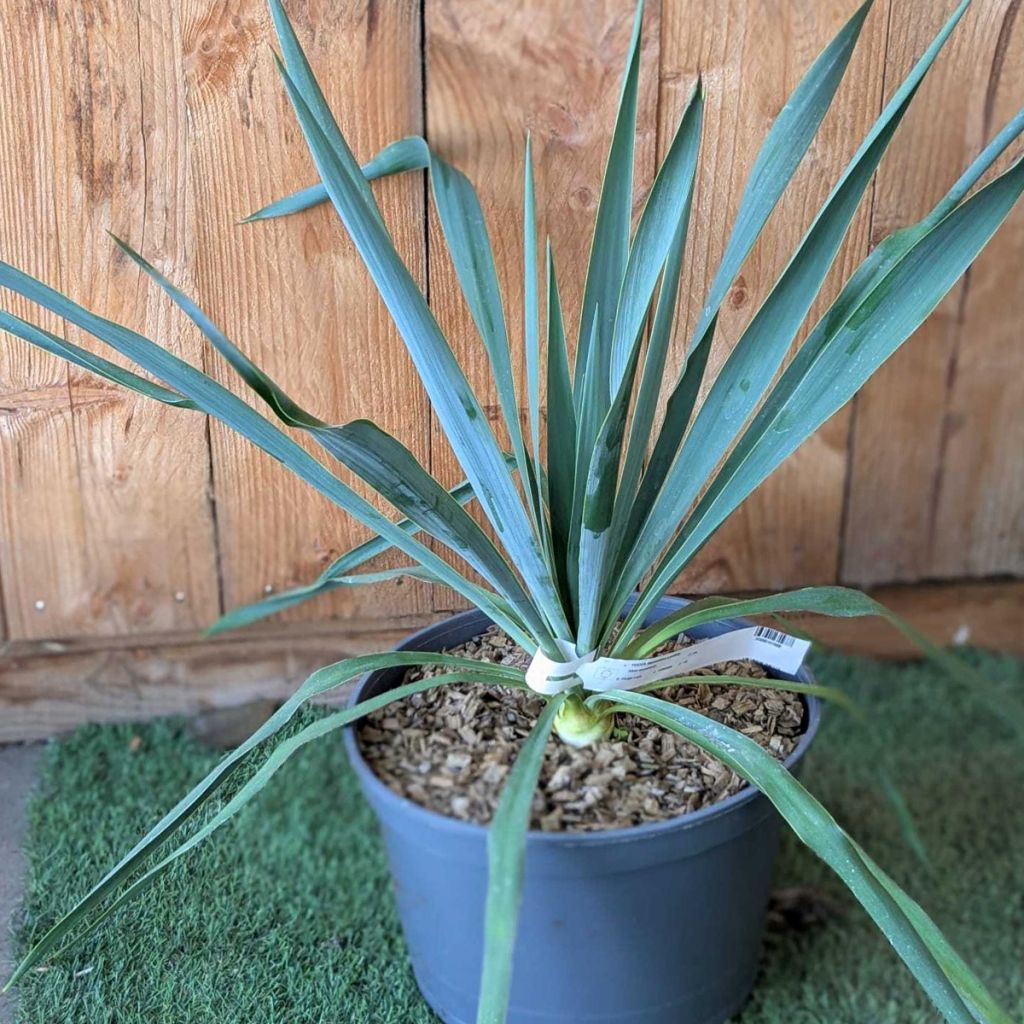
Yucca filamentosa × pallida Silver Anniversary
Yucca filamentosa × pallida Silver Anniversary
Yucca filamentosa × pallida Silver Anniversary
Needle Palm, Adam's Needle and Thread, Spanish Bayonet, Bear-Grass, Carolina Silk Grass, Our Lord's Candle, Spoonleaf Yucca
Back-to-school special offer!
Get €10 off for every €50 you spend! And get up to €40 off on a single order.
How does it work?
1. Shop your favourites
Add your favourite plants to your basket. For every €50 you spend (excluding delivery charges, store credit and the plastic-free option), you’ll receive a €10 voucher.
€50 spent = €10 voucher
€100 spent = €20 voucher
€150 spent = €30 voucher
€200 spent = €40 voucher
2. Place your order
Once your basket reaches one of the spending thresholds, place your order. You can even choose your delivery date!
3. Receive your voucher
As soon as your order has been shipped, you’ll receive an email containing your personal voucher code and its value.
4. Use it on your next order
Your voucher is valid for 90 days from the date you receive it. It can be used once only, on a new order worth at least the value of the voucher, excluding delivery charges.
Please note: Vouchers can be combined with other offers, but cannot be split or refunded.
Why not try an alternative variety in stock?
View all →
Available in 3 sizes
Available in 2 sizes
Available in 4 sizes
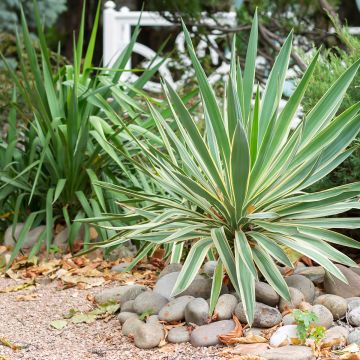
Available in 2 sizes
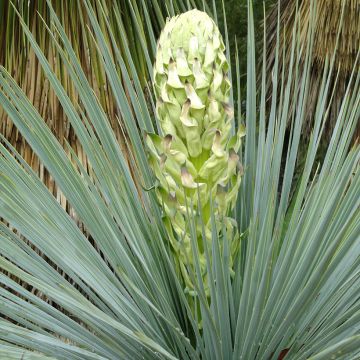
Available in 1 sizes
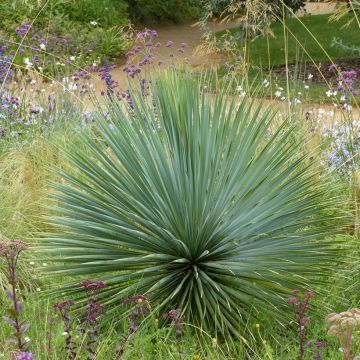
Available in 1 sizes
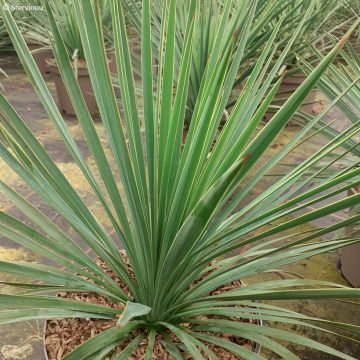
Available in 1 sizes
Available in 1 sizes
Available in 1 sizes
Available in 1 sizes
This plant carries a 24 months recovery warranty
More information
We guarantee the quality of our plants for a full growing cycle, and will replace at our expense any plant that fails to recover under normal climatic and planting conditions.
Would this plant suit my garden?
Set up your Plantfit profile →
Description
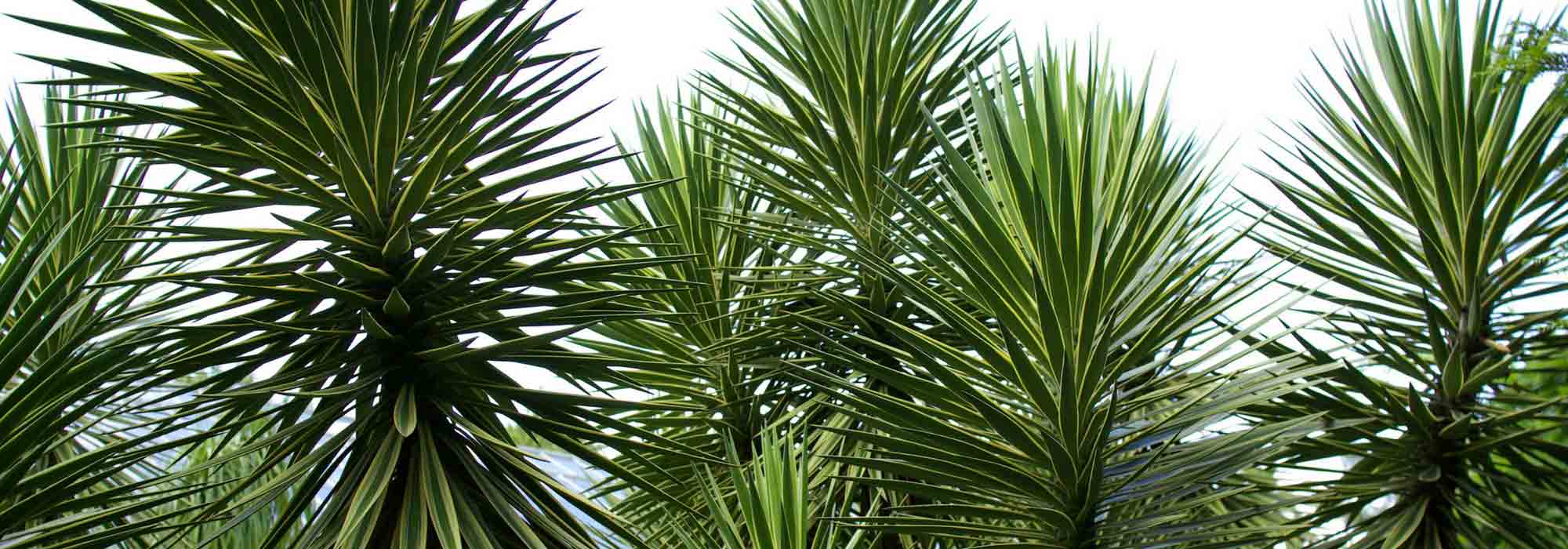
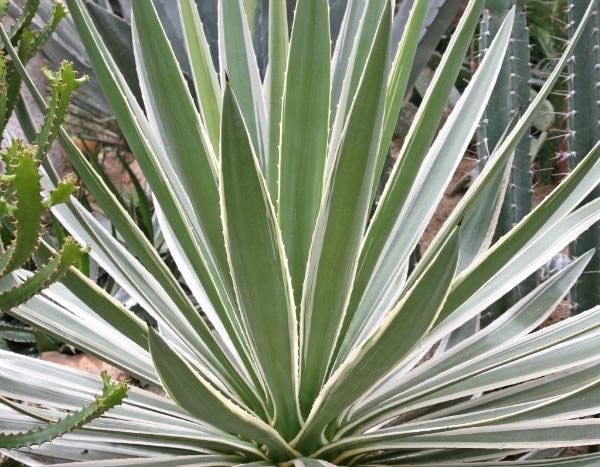
Yucca filamentosa × pallida Silver Anniversary is distinguished by its very neat blue-grey foliage and its spring flowering borne on tall burgundy scapes. This compact yet vigorous perennial structures dry beds, rockeries, and large pots. It requires little water and boasts excellent hardiness. This is a reliable plant that will add texture and architectural interest to the garden all year round, even in winter.
Belonging to the Asparagaceae family, Silver Anniversary is a hybrid between Yucca filamentosa (native to the sands and heathlands of the southeastern United States) and Y. pallida (endemic to the limestone prairies of north-central Texas). It was developed in the U.S.A. by Tony Avent (Plant Delights/JLBG) and introduced in 2018; this yucca combines the vigour and suckering ability of its first parent with the powdery blue hue of the second.
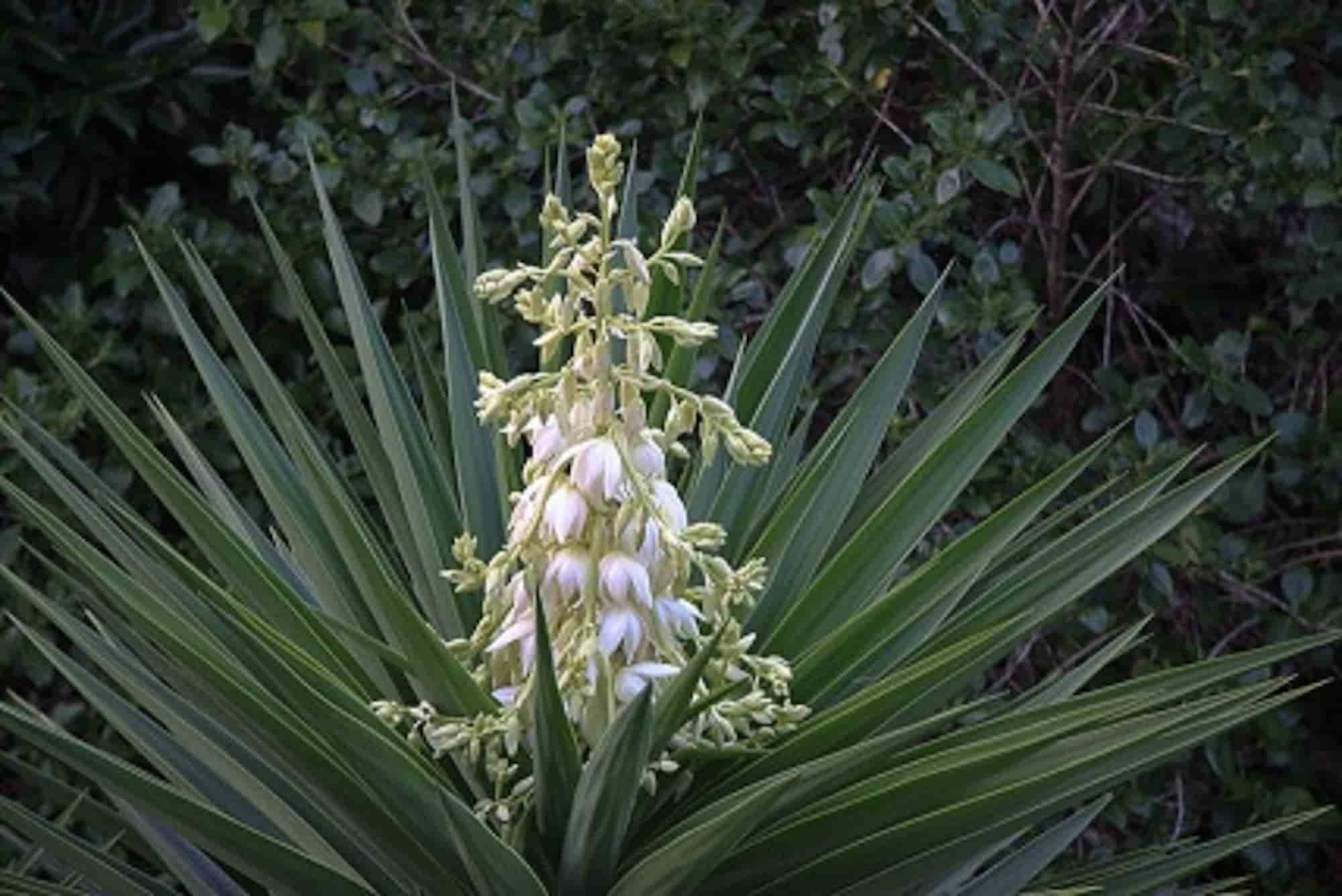
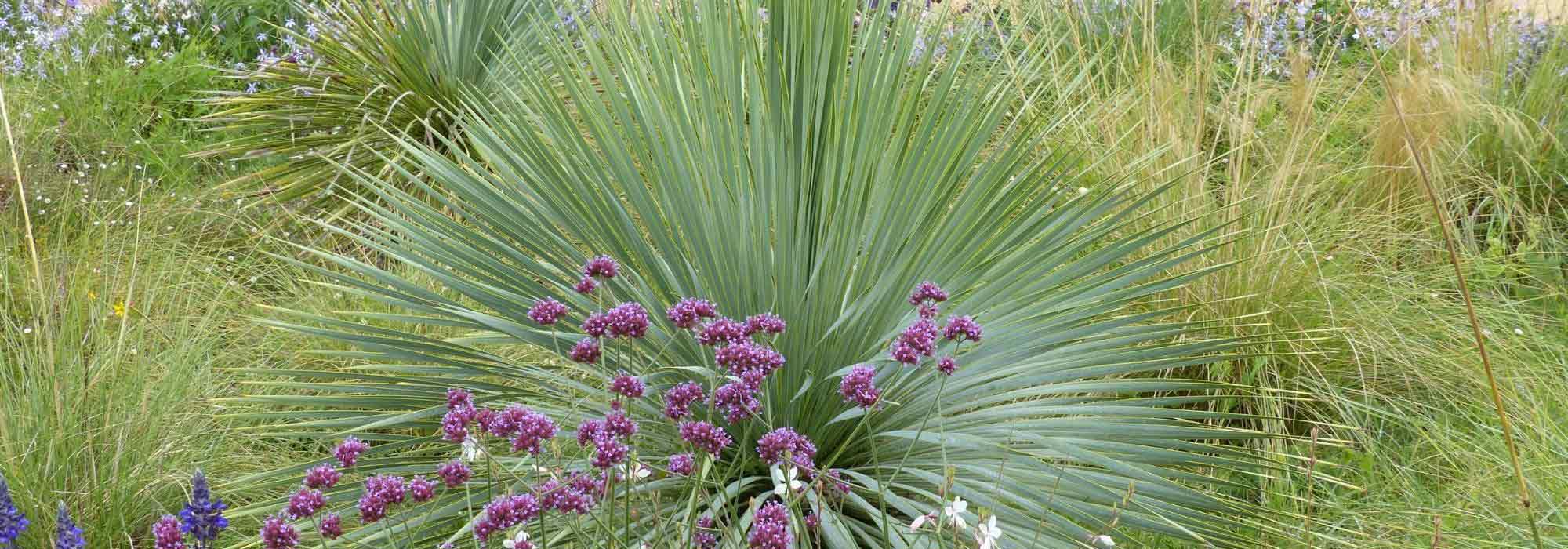
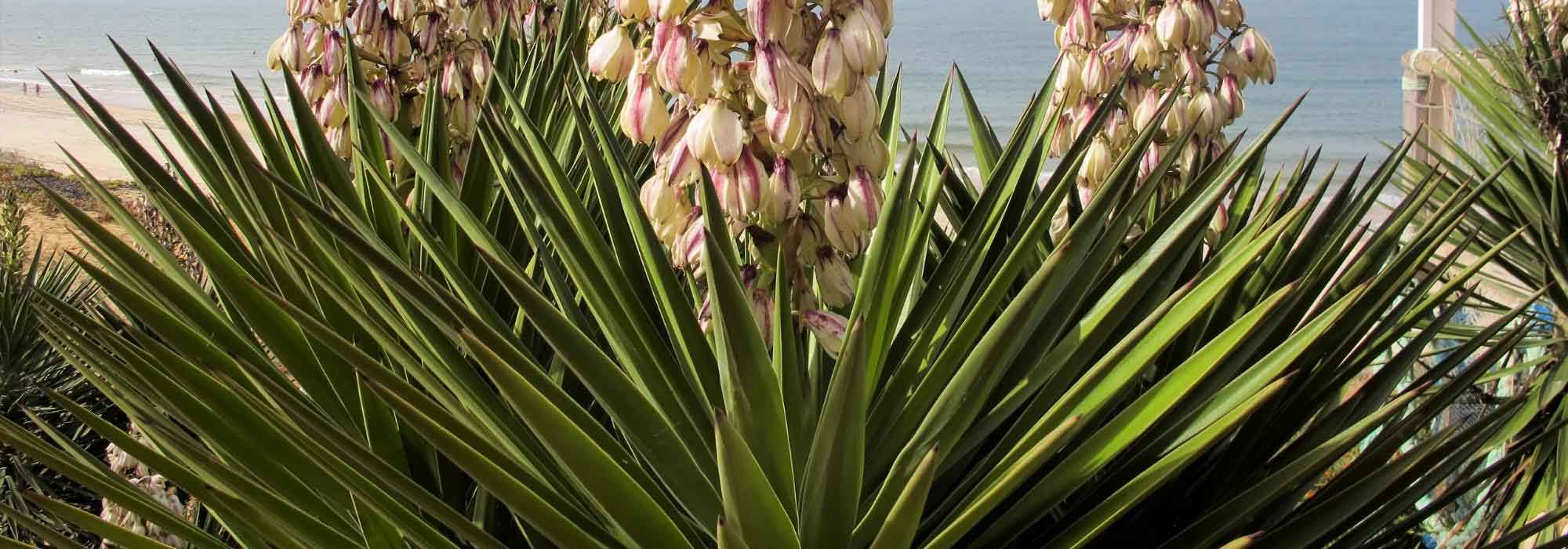
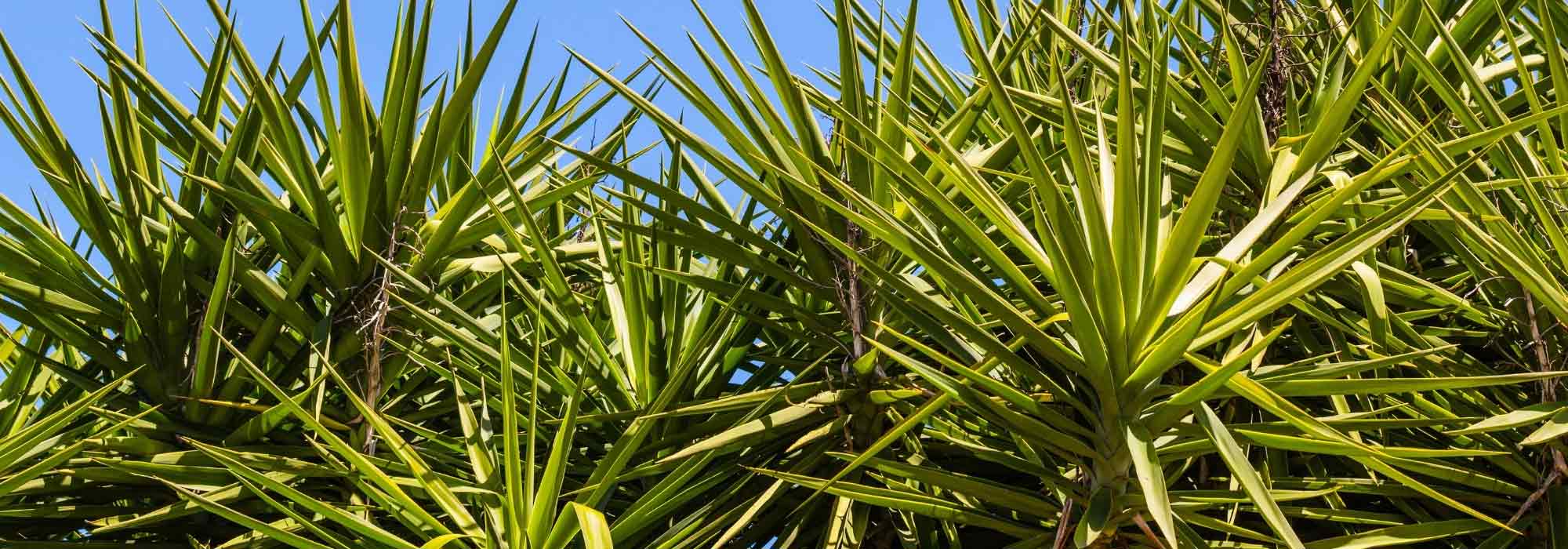
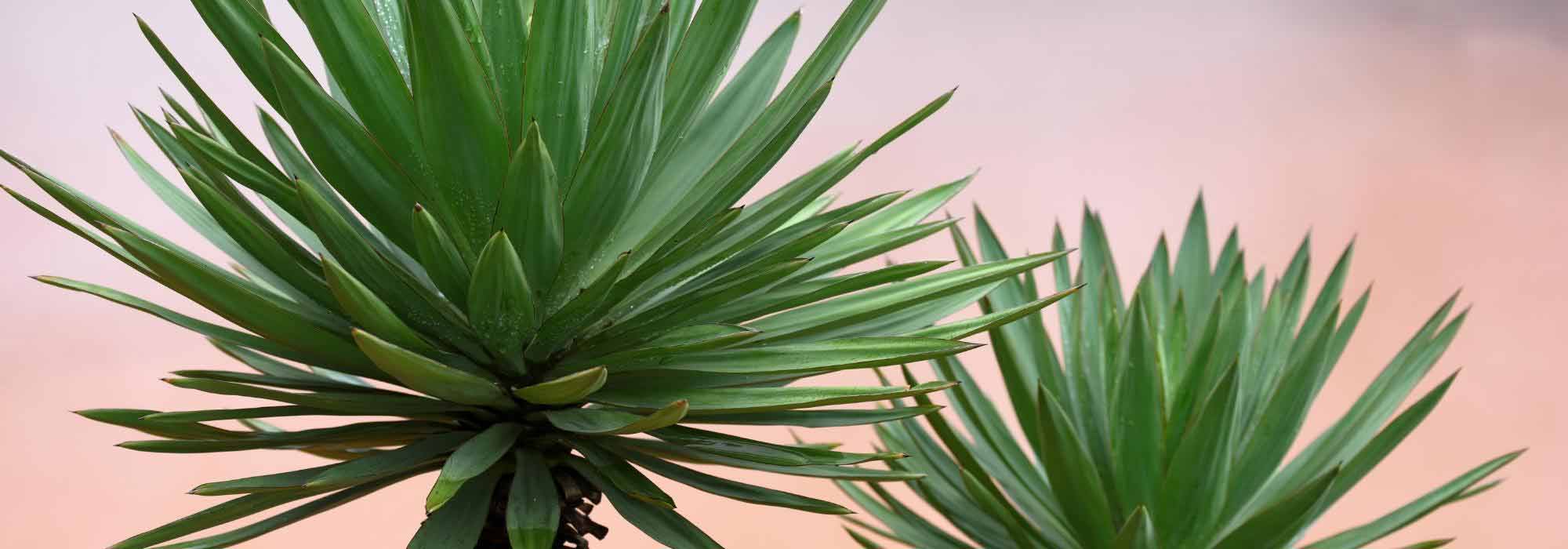
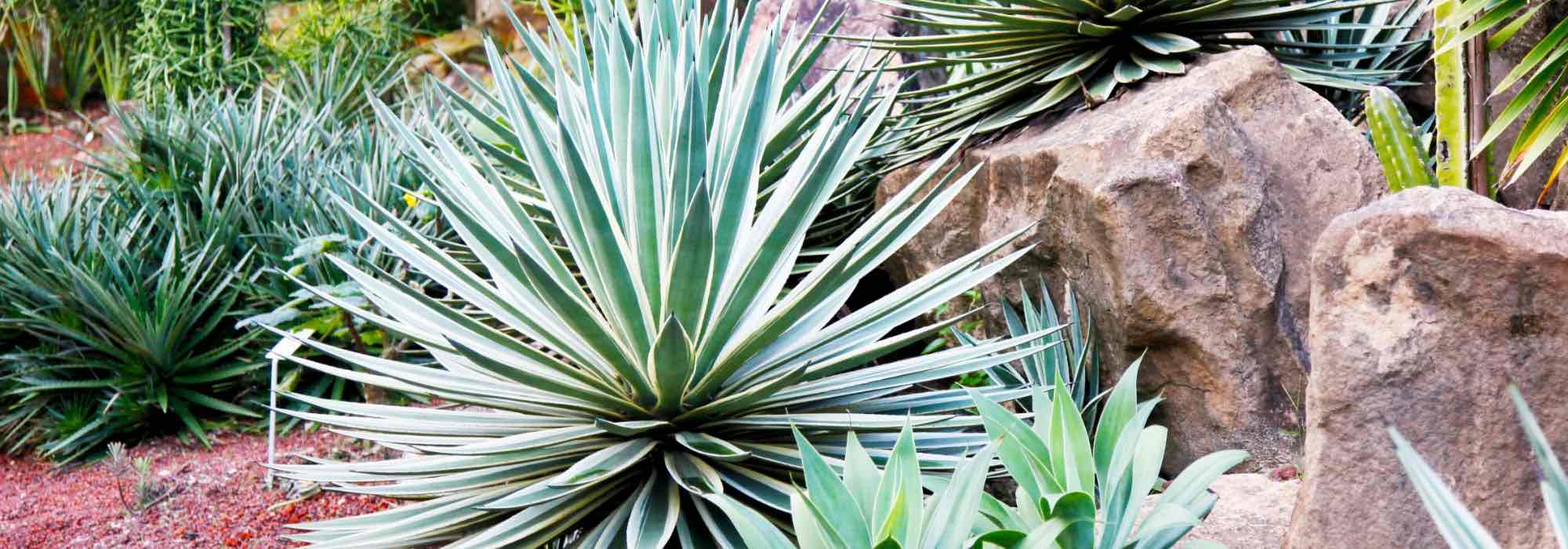
It is a stemless perennial plant that forms a clump of compact rosettes and spreads through the production of suckers over time; its growth is rather rapid for a yucca. In the ground, it will reach approximately 60 cm in height (for the foliage) with a spread of 1.20 m. Mature specimens can form large cushions 1.50 m tall and 1 m wide. The evergreen, powdery blue-grey leaves are initially slightly curved, becoming straighter with age; fine filaments may appear on their margins. Flowering occurs from late May to June-July, depending on the climate. The inflorescence, a panicle 75 cm to 1 m tall, rises above the foliage, borne on a purplish scape 1.80 m to 2.10 m high. The panicle bears numerous large, slightly fragrant, cream-white campanulate flowers; each flower lasts up to 4 days and the inflorescence lasts approximately one month.
This Silver Anniversary yucca has excellent hardiness: -20 °C minimum, even down to -23 to -26 °C in very dry soil; it tolerates humid heat, drought once established, and sea spray. This plant is perfect for structuring a large rockery, or for occupying the centre of an exotic, "desert"-style bed. It can be planted as a specimen or associated on a dry slope with puyas, agaves and other dasylirions. In a contemporary garden, in well drained soil, pair it with pink Delosperma and groundcover Sedums to accentuate its blue foliage.
North American yuccas maintain a unique bond with moths of the Tegeticula genus, which ensure their pollination. The saponin-rich roots of Y. filamentosa were traditionally used as soap or to stun fish. In the past, it was locally considered a "Pride of India" plant.
Plant habit
Flowering
Foliage
Botanical data
Yucca
filamentosa × pallida
Silver Anniversary
Asparagaceae
Needle Palm, Adam's Needle and Thread, Spanish Bayonet, Bear-Grass, Carolina Silk Grass, Our Lord's Candle, Spoonleaf Yucca
Yucca filamentosa × pallida Silver Anniversary
Cultivar or hybrid, North America
Planting and care
Plant Yucca Silver Anniversary in spring, in a very sunny position. A mature specimen will withstand brief frosts of around -20°C, or even a little less. In mild climates, plant in autumn, especially in hot and dry summer climates. Plant in very well-drained soil, ideally in a large rockery, a raised bed where the soil has been enriched with gravel, or a rocky slope. It is not very particular about soil pH, which can be slightly acidic, sandy, stony, or even slightly calcareous. It tolerates poor soil, but its growth will be somewhat faster in soil that is a bit more fertile. Water for the first 2 years, especially during hot and dry periods. Remove spent flower stems.
Your Yucca is superb, but it doesn't flower? It is probably too young, or has only been planted in your garden for 3 or 4 years. This plant takes time to establish and only flowers after around 8 years. Then, depending on sunlight and climate, it will flower every year, or perhaps every two or three years.
Planting period
Intended location
Care
Planting & care advice

This item has not been reviewed yet - be the first to leave a review about it.
Recently viewed products
Haven't found what you were looking for?
Hardiness is the lowest winter temperature a plant can endure without suffering serious damage or even dying. However, hardiness is affected by location (a sheltered area, such as a patio), protection (winter cover) and soil type (hardiness is improved by well-drained soil).

The flowering period indicated on our website applies to countries and regions located in USDA zone 8 (France, the United Kingdom, Ireland, the Netherlands, etc.)
It will vary according to where you live:- In zones 9 to 10 (Italy, Spain, Greece, etc.), flowering will occur about 2 to 4 weeks earlier.
- In zones 6 to 7 (Germany, Poland, Slovenia, and lower mountainous regions), flowering will be delayed by 2 to 3 weeks.
- In zone 5 (Central Europe, Scandinavia), blooming will be delayed by 3 to 5 weeks.
In temperate climates, pruning of spring-flowering shrubs (forsythia, spireas, etc.) should be done just after flowering.
Pruning of summer-flowering shrubs (Indian Lilac, Perovskia, etc.) can be done in winter or spring.
In cold regions as well as with frost-sensitive plants, avoid pruning too early when severe frosts may still occur.
The planting period indicated on our website applies to countries and regions located in USDA zone 8 (France, United Kingdom, Ireland, Netherlands).
It will vary according to where you live:
- In Mediterranean zones (Marseille, Madrid, Milan, etc.), autumn and winter are the best planting periods.
- In continental zones (Strasbourg, Munich, Vienna, etc.), delay planting by 2 to 3 weeks in spring and bring it forward by 2 to 4 weeks in autumn.
- In mountainous regions (the Alps, Pyrenees, Carpathians, etc.), it is best to plant in late spring (May-June) or late summer (August-September).
The harvesting period indicated on our website applies to countries and regions in USDA zone 8 (France, England, Ireland, the Netherlands).
In colder areas (Scandinavia, Poland, Austria...) fruit and vegetable harvests are likely to be delayed by 3-4 weeks.
In warmer areas (Italy, Spain, Greece, etc.), harvesting will probably take place earlier, depending on weather conditions.
The sowing periods indicated on our website apply to countries and regions within USDA Zone 8 (France, UK, Ireland, Netherlands).
In colder areas (Scandinavia, Poland, Austria...), delay any outdoor sowing by 3-4 weeks, or sow under glass.
In warmer climes (Italy, Spain, Greece, etc.), bring outdoor sowing forward by a few weeks.
Shipping country and language
Your country of residence may be:
Your country of residence is:
For a better user experience on our website, you can select:
Your shipping country:
-
 Austria
-
 Belgium
-
 Bosnia & Herzegovina
-
 Bulgaria
-
 Croatia
-
 Cyprus
-
 Czechia
-
 Denmark
-
 Estonia
-
 Finland
-
 France
-
 Germany
-
 Greece
-
 Hungary
-
 Iceland
-
 Ireland
-
 Italy
Italy
-
 Latvia
-
 Liechtenstein
-
 Lithuania
-
 Luxembourg
-
 Malta
Malta
-
 Netherlands
-
 Poland
-
 Portugal
-
 Romania
-
 Serbia
-
 Slovakia
-
 Slovenia
-
 Spain
Spain
-
 Sweden
-
 Switzerland
Language:
-
French
-
 English
-
Spanish
-
Italian
-
German
-
Portuguese
-
Dutch
-
Finnish
My Account
Hello
My wish lists
My cart
Log in / Register
Existing customer?
This form is protected by reCAPTCHA - the Google Privacy Policy and Terms of Service apply.
New customer?
Create an account to track your orders, access our customer service and, if you wish, make the most of our upcoming offers.