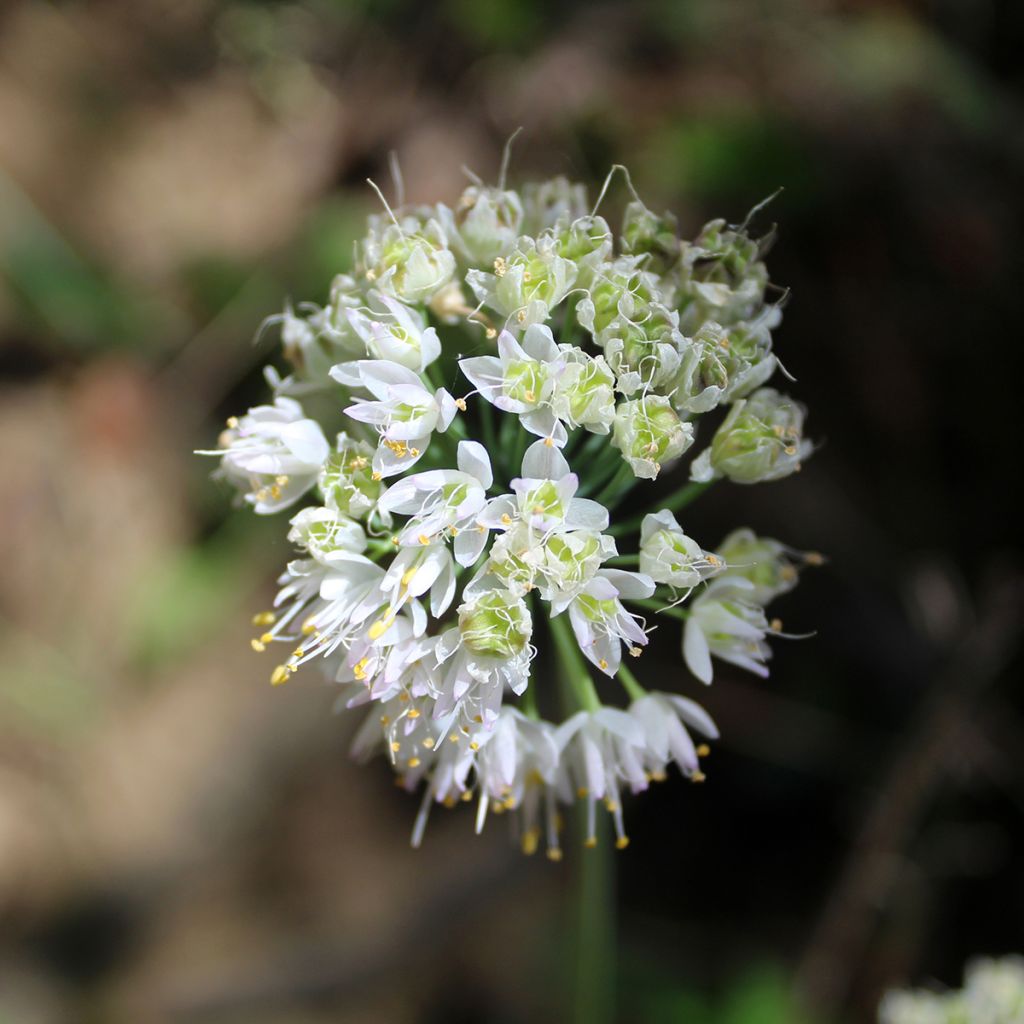
Allium cernuum White Dwarf
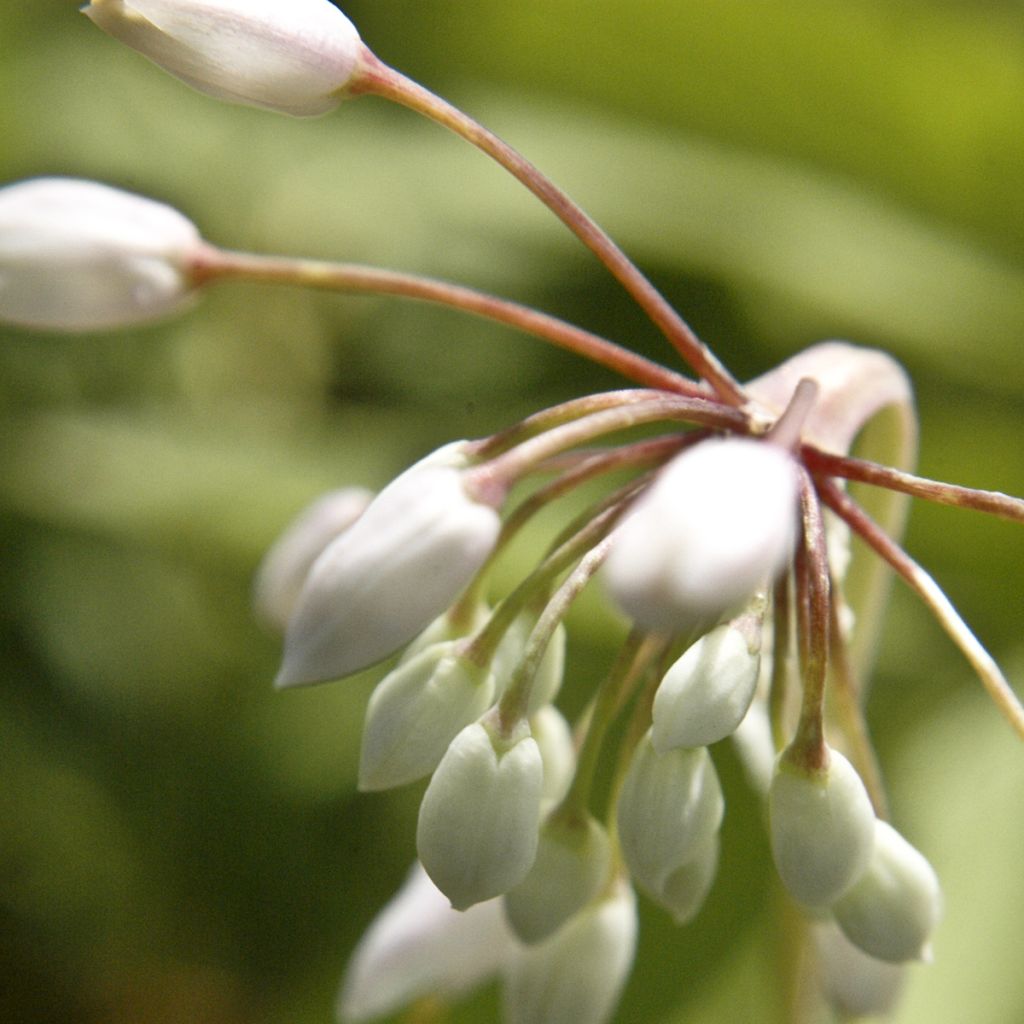
Allium cernuum White Dwarf
Allium cernuum White Dwarf
Allium cernuum White Dwarf
Lady's leek, Nodding onion, Ornamental Onion
Bulbs received don't look too promising, we'll see how they fare in time!
Domi, 24/10/2025
Back-to-school special offer!
Get €10 off for every €50 you spend! And get up to €40 off on a single order.
How does it work?
1. Shop your favourites
Add your favourite plants to your basket. For every €50 you spend (excluding delivery charges, store credit and the plastic-free option), you’ll receive a €10 voucher.
€50 spent = €10 voucher
€100 spent = €20 voucher
€150 spent = €30 voucher
€200 spent = €40 voucher
2. Place your order
Once your basket reaches one of the spending thresholds, place your order. You can even choose your delivery date!
3. Receive your voucher
As soon as your order has been shipped, you’ll receive an email containing your personal voucher code and its value.
4. Use it on your next order
Your voucher is valid for 90 days from the date you receive it. It can be used once only, on a new order worth at least the value of the voucher, excluding delivery charges.
Please note: Vouchers can be combined with other offers, but cannot be split or refunded.
Home or relay delivery (depending on size and destination)
Important: You may be charged customs duties by your country’s customs authorities upon delivery.
Schedule delivery date,
and select date in basket
This plant carries a 6 months recovery warranty
More information
We guarantee the quality of our plants for a full growing cycle, and will replace at our expense any plant that fails to recover under normal climatic and planting conditions.
Would this plant suit my garden?
Set up your Plantfit profile →
Description
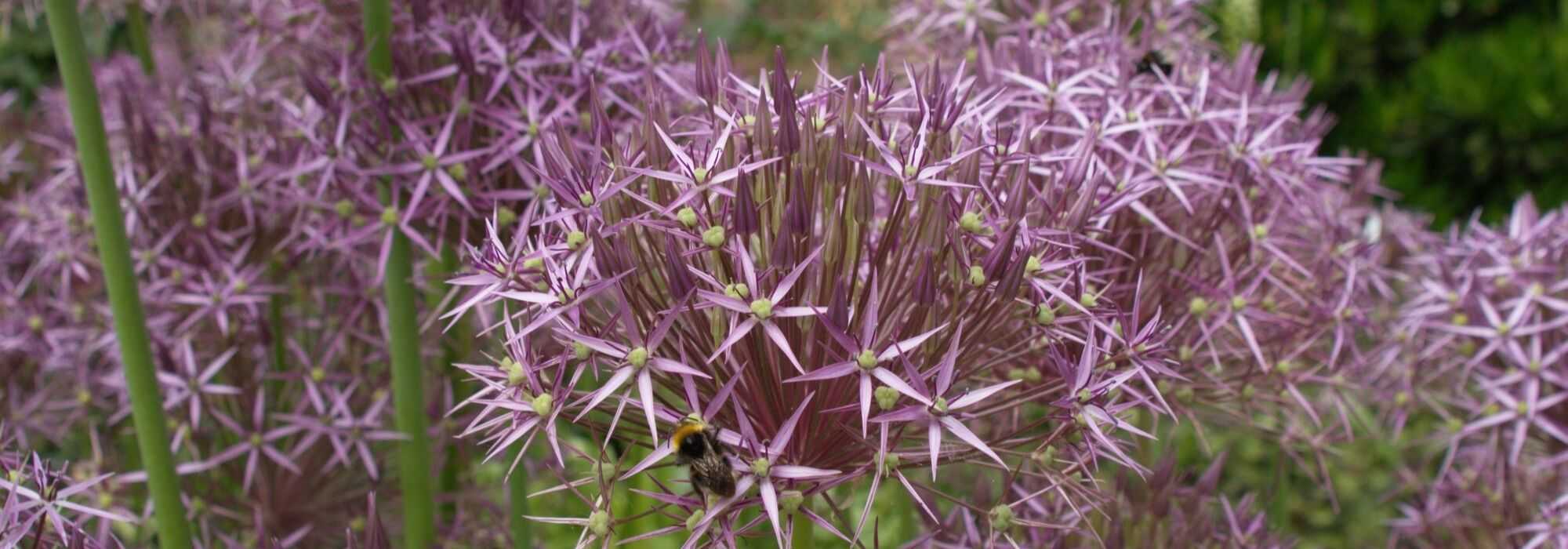
Nodding Onion or Allium cernuum ‘White Dwarf’ is a compact and graceful variety of ornamental onion, prized for its flexible habit and its umbels of delicately inclined white flowers. This bulbous perennial forms a light clump of ribbon-like foliage from which arched flowering stems of 25 to 40 cm emerge from early summer. Easy to grow in well-drained soil, even poor or stony, it loves full sun, but also adapts to light partial shade. Perfect in pots, rockeries or at the edge of borders, it attracts pollinators and tolerates drought well. It just needs to be kept away from waterlogged soils, which compromise its hardiness and longevity.
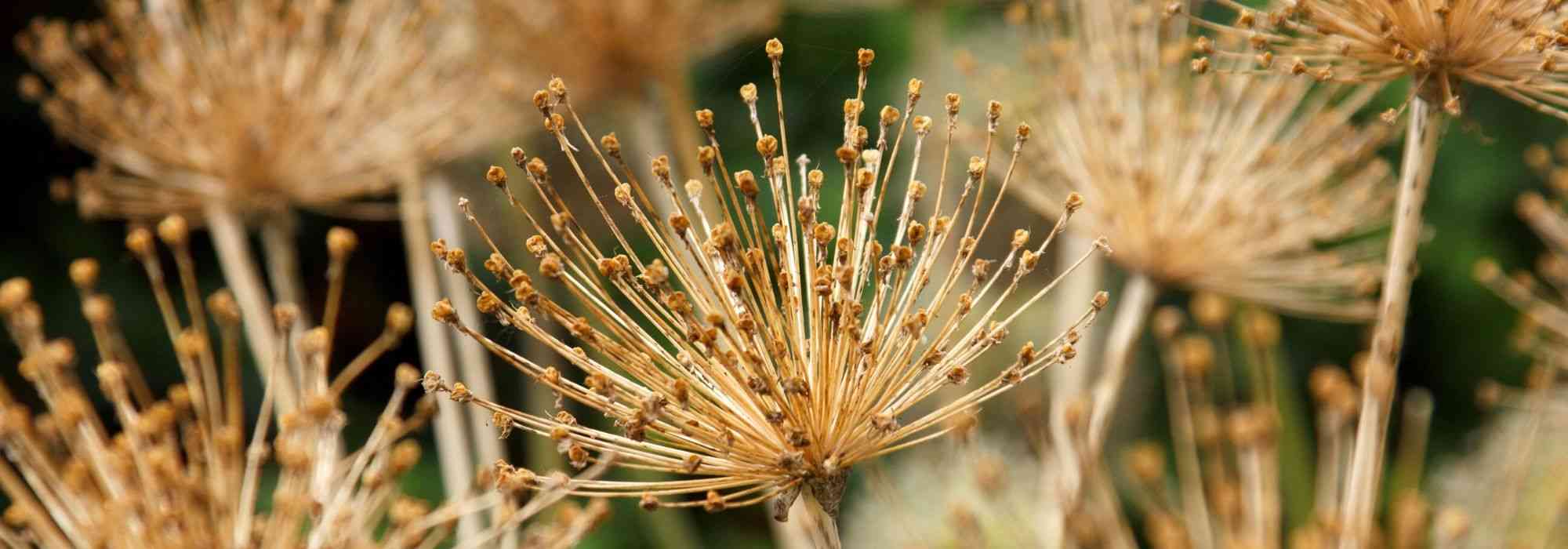
The Allium cernuum ‘White Dwarf’ or Dwarf White Nodding Onion, from the Amaryllidaceae family, is a compact cultivar of the Allium cernuum species. Native to North America, it is found naturally from eastern Canada to British Columbia and from Michigan to the mountains of the Southwest (Arizona, Georgia), in dry meadows, rocky slopes or open woodlands. This cultivar, with its typically nodding habit, is distinguished by its more compact size, 25–40 cm in height, and has established itself in ornamental cultivation for its delicacy and controlled form. It gradually forms clumps 20 cm wide in the ground, reaching its final height in 1 to 2 years. It multiplies both by bulblets and by self-sowing, producing a few offsets visible after flowering when established in optimal conditions. The umbels composed of 10 to 30 small bell-shaped flowers measure on average 1 cm long. Pendulous, white, sometimes tinged with cream, they appear from June to July in temperate climates, attracting bees, butterflies and other pollinating insects. After flowering, spherical capsules, 2–3 mm, form, releasing shiny black seeds. The foliage is deciduous, composed of 3 to 6 linear leaves, persistent until summer, 10–30 cm long and 2–4 mm wide, of a slightly glaucous green and possessing a delicate alliaceous scent when bruised. The flowering stems are smooth, cylindrical, erect, but bent at the top to carry the pendulous umbels. The primary bulb, ovoid to conical, measures 1–1.5 cm in diameter and is surrounded by brown-red tunics, with a superficial fasciculate root system adapted to well-drained soils and tolerant of drought. It is a very hardy and perennial plant in very well-drained, even stony soils, where it will form beautiful clumps over time.
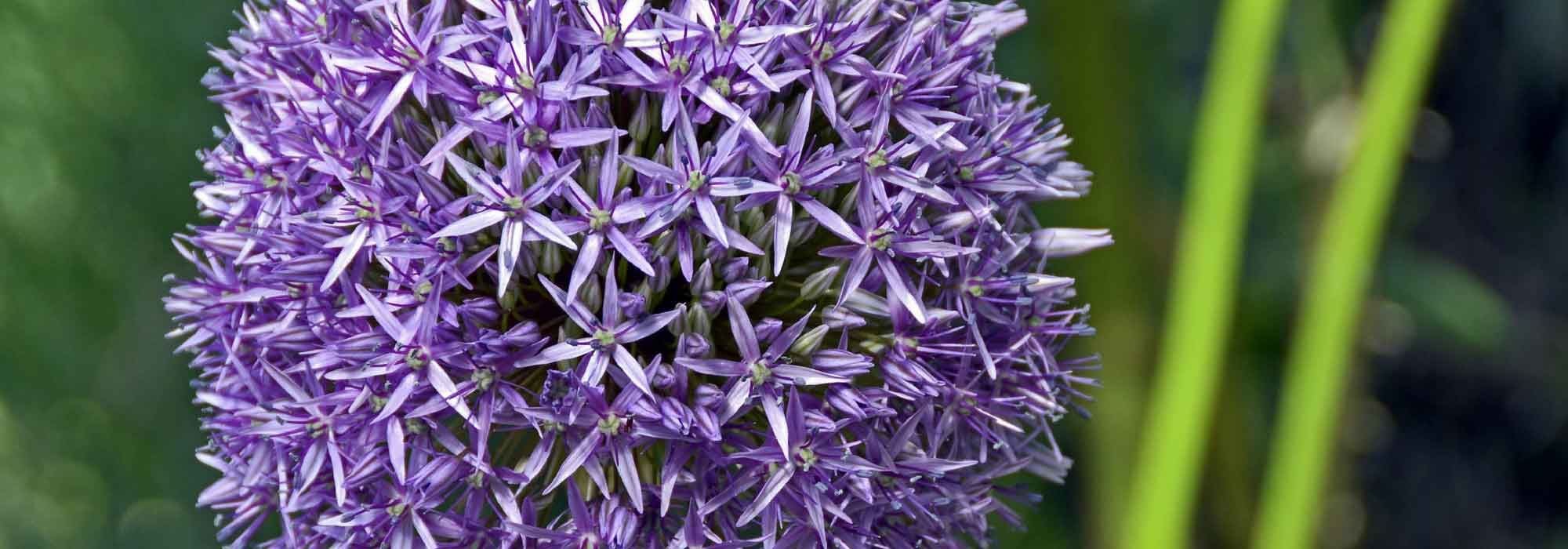
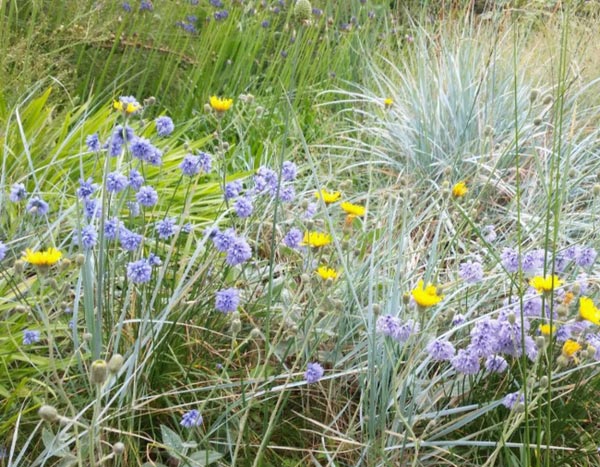
In a bright corner of the garden, where stone outcrops between fine grasses, the Nodding Onion ‘White Dwarf’ instils a discreet grace into naturalistic borders and airy rockeries. Its light silhouette complements the soft textures of blue fescues or the fine spikes of Stipa tenuissima, while its pearly white provides a visual breath between denser flowerings. In a pot on a warm terrace, it integrates elegantly into dry and light scenes, alongside Erysimum ‘Bowles’s Mauve’ and Allium ‘Millenium’, with which it converses in refined simplicity. Its airy flowering, suspended above ribbon-like foliage, gives the illusion of a spontaneous garden.
In the kitchen: the species-type Allium cernuum is edible and although ‘White Dwarf’ is very closely related, it remains primarily used as an ornamental; no specific culinary use is documented for this particular cultivar. The leaves of the species-type Allium cernuum possess a subtle onion flavour; they should be added at the last moment, finely chopped, to cooked dishes, salads, compound butters, or as a garnish for vegetables. The flowers are eaten fresh in salads; they can also be macerated in vinegar. The closed flower buds are highly prized in Asian cuisine.
Plant habit
Flowering
Foliage
Botanical data
Allium
cernuum
White Dwarf
Amaryllidaceae
Lady's leek, Nodding onion, Ornamental Onion
Cultivar or hybrid
Planting and care
Allium cernuum White Dwarf is an ornamental onion that is easy to cultivate in any well-drained, light soil, preferably limestone, and in a sunny position. It is best not to water it during its dormant period. Plant it preferably before the end of October so it has time to establish well. Alliums dislike winter moisture and waterlogged soil, both in winter and summer. Provide them with well-drained, rocky or sandy soil, enriched with leaf mould, even when dry in summer once the foliage has withered. Bury them 10 to 15 cm deep, spaced 20 cm apart.
Planting period
Intended location
Care
Planting & care advice
-
-
-
-
-
-

-
-
-
, onOrder confirmed
Reply from on Promesse de fleurs
Recently viewed products
Haven't found what you were looking for?
Hardiness is the lowest winter temperature a plant can endure without suffering serious damage or even dying. However, hardiness is affected by location (a sheltered area, such as a patio), protection (winter cover) and soil type (hardiness is improved by well-drained soil).

The flowering period indicated on our website applies to countries and regions located in USDA zone 8 (France, the United Kingdom, Ireland, the Netherlands, etc.)
It will vary according to where you live:- In zones 9 to 10 (Italy, Spain, Greece, etc.), flowering will occur about 2 to 4 weeks earlier.
- In zones 6 to 7 (Germany, Poland, Slovenia, and lower mountainous regions), flowering will be delayed by 2 to 3 weeks.
- In zone 5 (Central Europe, Scandinavia), blooming will be delayed by 3 to 5 weeks.
In temperate climates, pruning of spring-flowering shrubs (forsythia, spireas, etc.) should be done just after flowering.
Pruning of summer-flowering shrubs (Indian Lilac, Perovskia, etc.) can be done in winter or spring.
In cold regions as well as with frost-sensitive plants, avoid pruning too early when severe frosts may still occur.
The planting period indicated on our website applies to countries and regions located in USDA zone 8 (France, United Kingdom, Ireland, Netherlands).
It will vary according to where you live:
- In Mediterranean zones (Marseille, Madrid, Milan, etc.), autumn and winter are the best planting periods.
- In continental zones (Strasbourg, Munich, Vienna, etc.), delay planting by 2 to 3 weeks in spring and bring it forward by 2 to 4 weeks in autumn.
- In mountainous regions (the Alps, Pyrenees, Carpathians, etc.), it is best to plant in late spring (May-June) or late summer (August-September).
The harvesting period indicated on our website applies to countries and regions in USDA zone 8 (France, England, Ireland, the Netherlands).
In colder areas (Scandinavia, Poland, Austria...) fruit and vegetable harvests are likely to be delayed by 3-4 weeks.
In warmer areas (Italy, Spain, Greece, etc.), harvesting will probably take place earlier, depending on weather conditions.
The sowing periods indicated on our website apply to countries and regions within USDA Zone 8 (France, UK, Ireland, Netherlands).
In colder areas (Scandinavia, Poland, Austria...), delay any outdoor sowing by 3-4 weeks, or sow under glass.
In warmer climes (Italy, Spain, Greece, etc.), bring outdoor sowing forward by a few weeks.
Shipping country and language
Your country of residence may be:
Your country of residence is:
For a better user experience on our website, you can select:
Your shipping country:
-
 Austria
-
 Belgium
-
 Bosnia & Herzegovina
-
 Bulgaria
-
 Croatia
-
 Cyprus
-
 Czechia
-
 Denmark
-
 Estonia
-
 Finland
-
 France
-
 Germany
-
 Greece
-
 Hungary
-
 Iceland
-
 Ireland
-
 Italy
Italy
-
 Latvia
-
 Liechtenstein
-
 Lithuania
-
 Luxembourg
-
 Malta
Malta
-
 Netherlands
-
 Poland
-
 Portugal
-
 Romania
-
 Serbia
-
 Slovakia
-
 Slovenia
-
 Spain
Spain
-
 Sweden
-
 Switzerland
Language:
-
French
-
 English
-
Spanish
-
Italian
-
German
-
Portuguese
-
Dutch
-
Finnish
My Account
Hello
My wish lists
My cart
Log in / Register
Existing customer?
This form is protected by reCAPTCHA - the Google Privacy Policy and Terms of Service apply.
New customer?
Create an account to track your orders, access our customer service and, if you wish, make the most of our upcoming offers.