Tulipa Parrot Prince - Parrot Tulip
Tulipa Parrot Prince - Parrot Tulip
Tulipa Parrot Prince - Parrot Tulip

Tulipa Parrot Prince - Parrot Tulip
Tulipa Parrot Prince - Parrot Tulip
View more pictures
Hide images
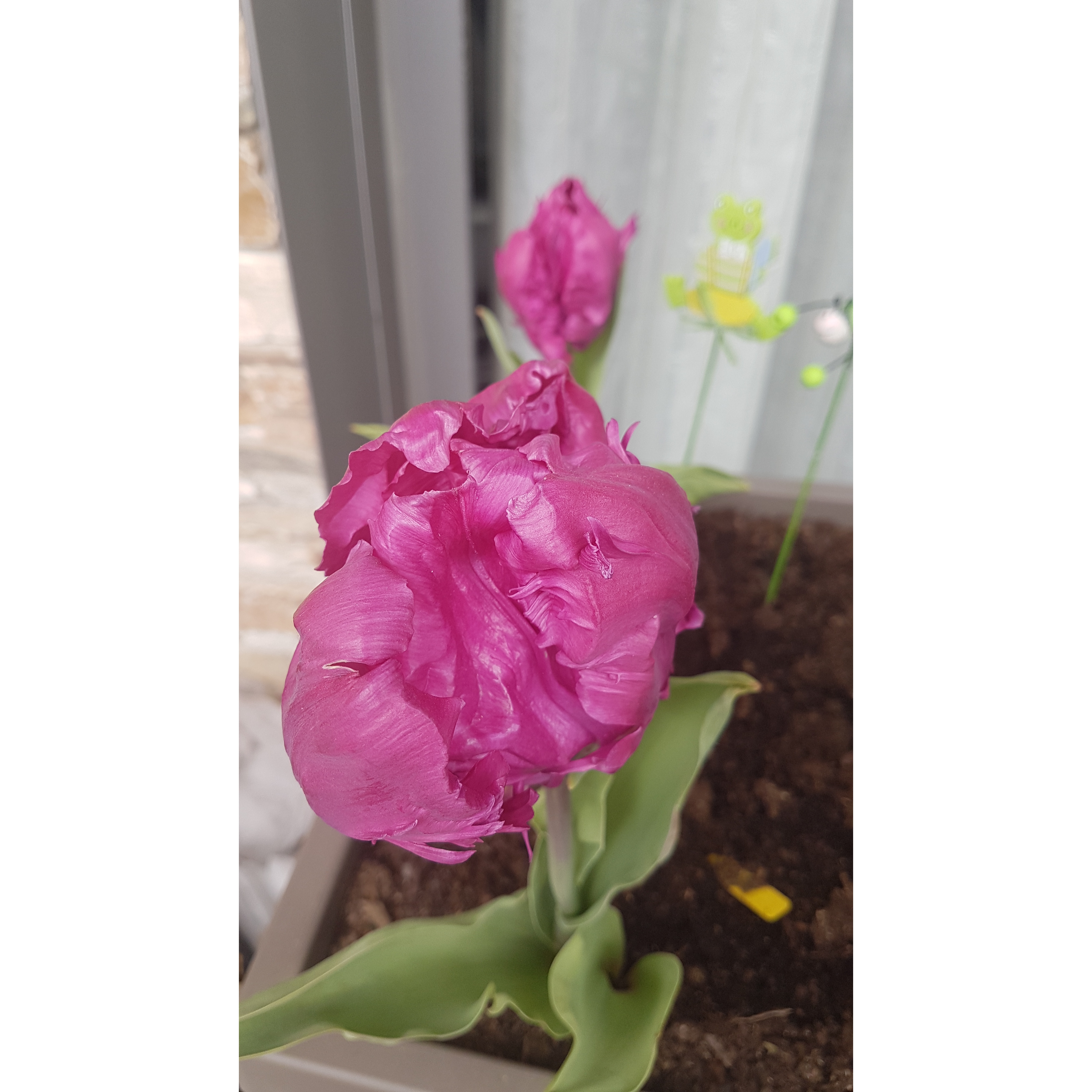
Ellen R.
Tulipa Parrot Prince - Parrot Tulip
Ellen R. • 94 FR
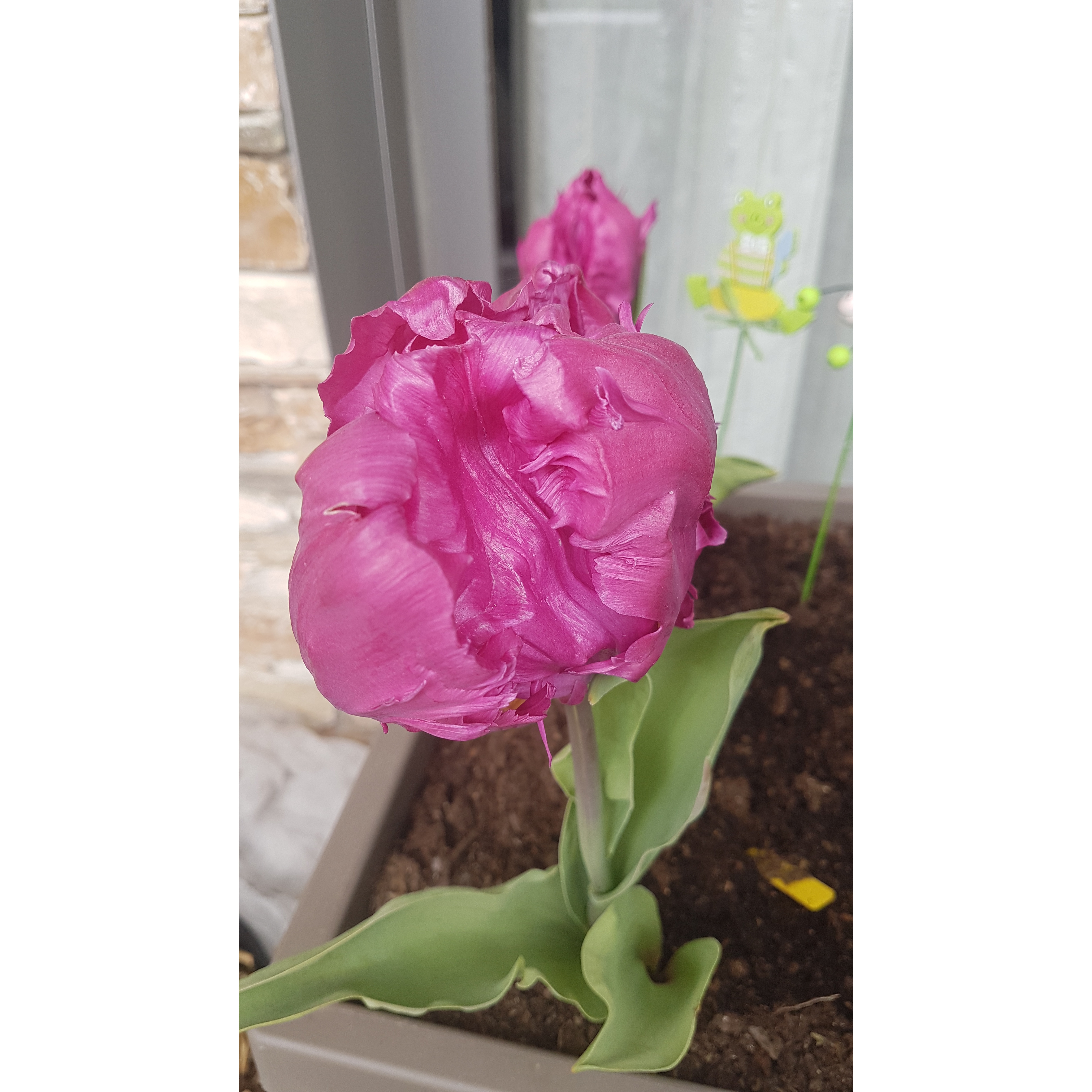
Ellen R.
Tulipa Parrot Prince - Parrot Tulip
Ellen R. • 94 FR
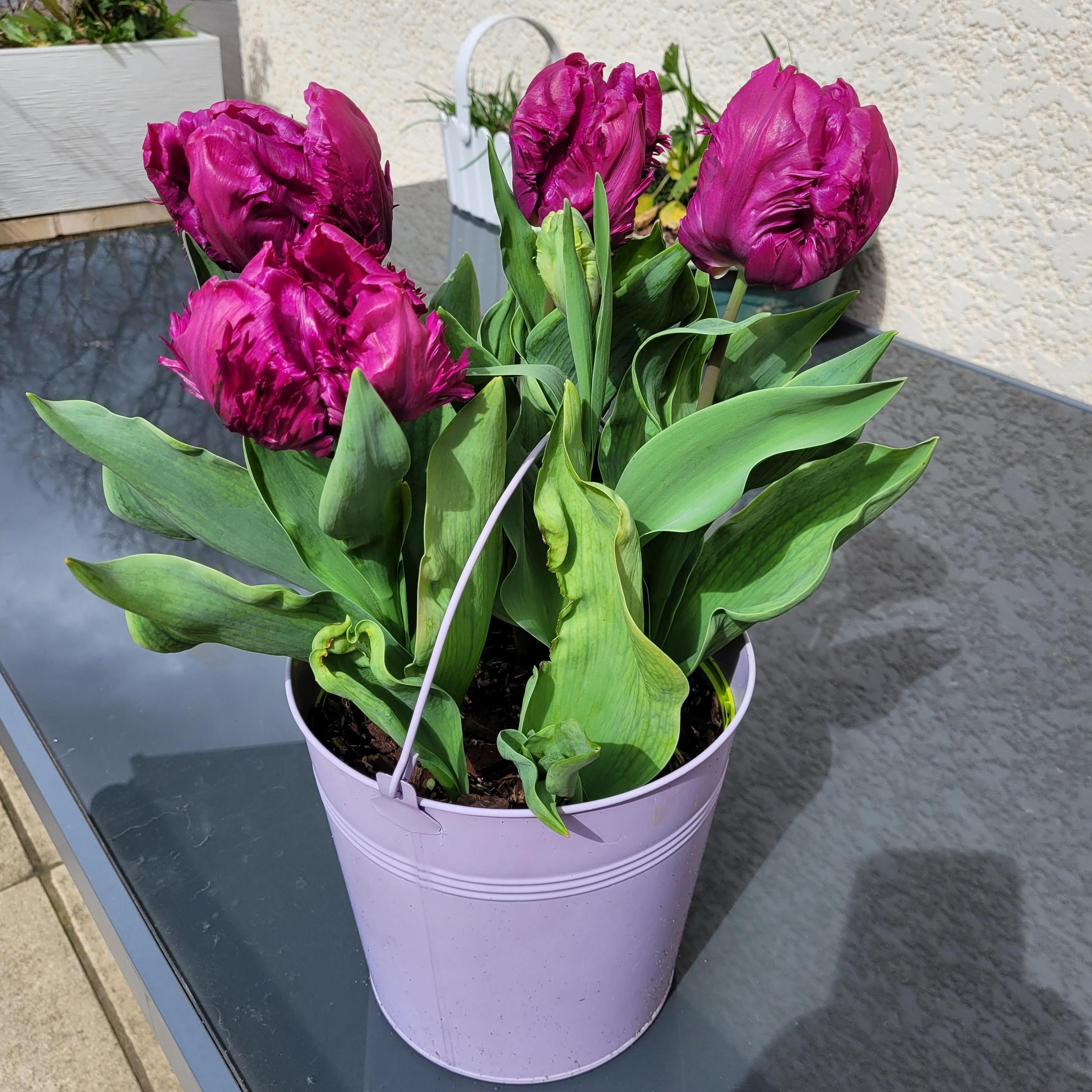
Annie M.
Tulipa Parrot Prince - Parrot Tulip
Annie M. • 69 FR
Tulipa Parrot Prince - Parrot Tulip
Tulipa Perroquet Parrot Prince
Parrot Tulip
Very pretty, match the photo, but they don’t like heatwaves......
Simone , 11/04/2026
Back-to-school special offer!
Get €10 off for every €50 you spend! And get up to €40 off on a single order.
How does it work?
1. Shop your favourites
Add your favourite plants to your basket. For every €50 you spend (excluding delivery charges, store credit and the plastic-free option), you’ll receive a €10 voucher.
€50 spent = €10 voucher
€100 spent = €20 voucher
€150 spent = €30 voucher
€200 spent = €40 voucher
2. Place your order
Once your basket reaches one of the spending thresholds, place your order. You can even choose your delivery date!
3. Receive your voucher
As soon as your order has been shipped, you’ll receive an email containing your personal voucher code and its value.
4. Use it on your next order
Your voucher is valid for 90 days from the date you receive it. It can be used once only, on a new order worth at least the value of the voucher, excluding delivery charges.
Please note: Vouchers can be combined with other offers, but cannot be split or refunded.
Home or relay delivery (depending on size and destination)
Important: You may be charged customs duties by your country’s customs authorities upon delivery.
Schedule delivery date,
and select date in basket
This plant carries a 6 months recovery warranty
More information
We guarantee the quality of our plants for a full growing cycle, and will replace at our expense any plant that fails to recover under normal climatic and planting conditions.

Would this plant suit my garden?
Set up your Plantfit profile →
Description
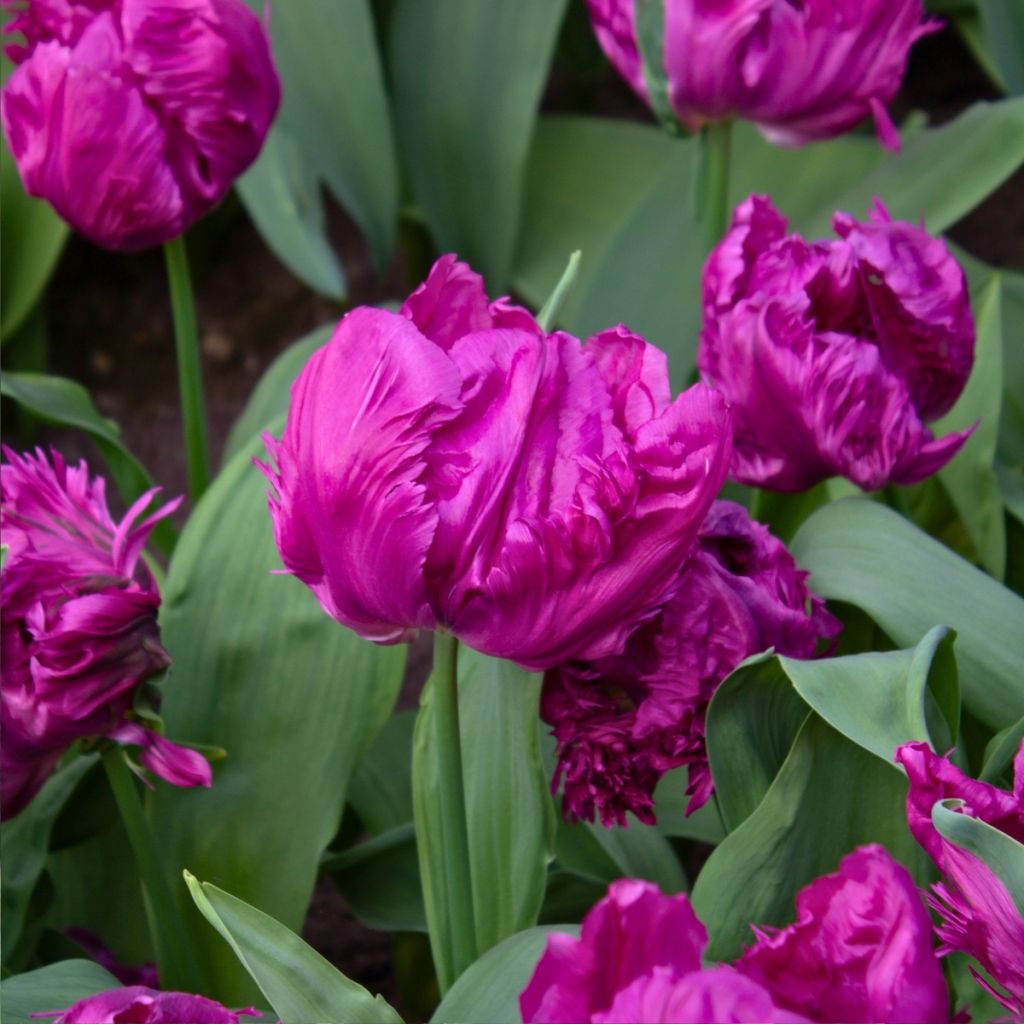
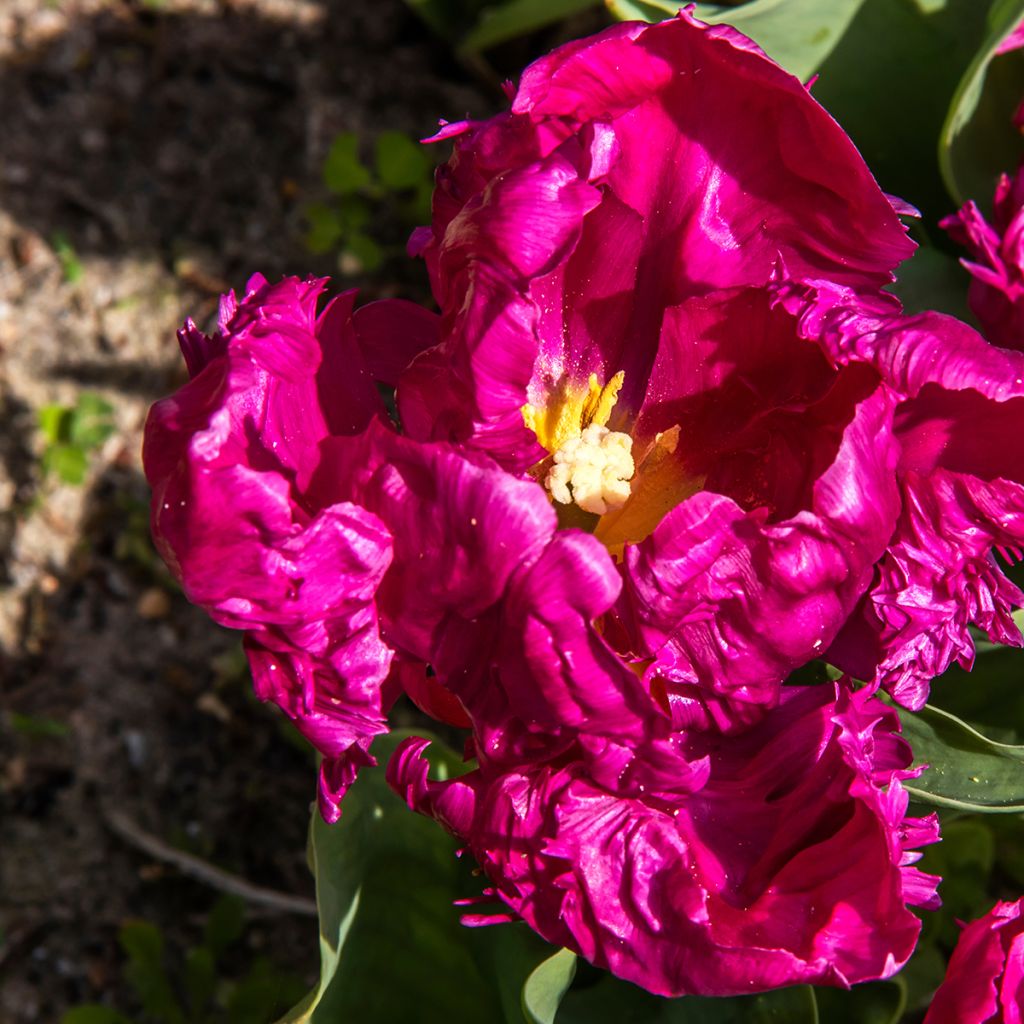
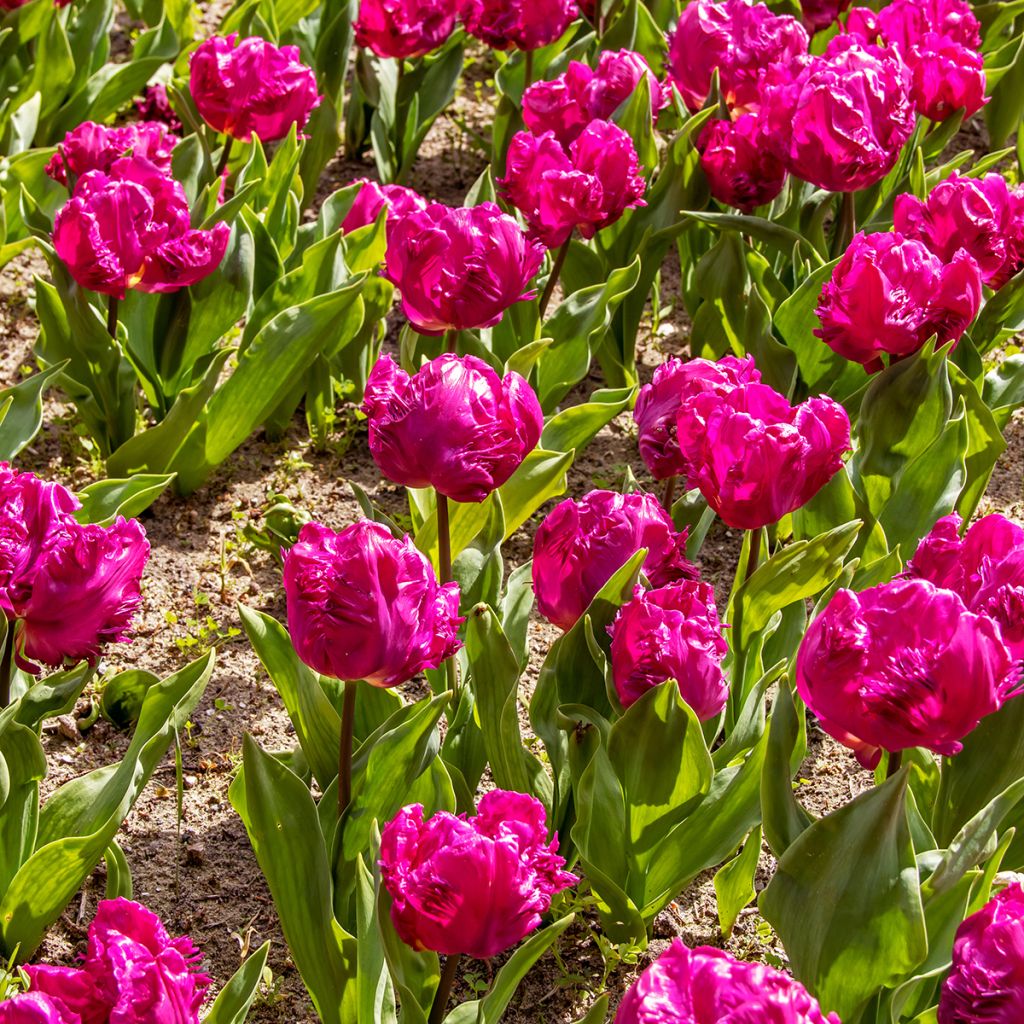
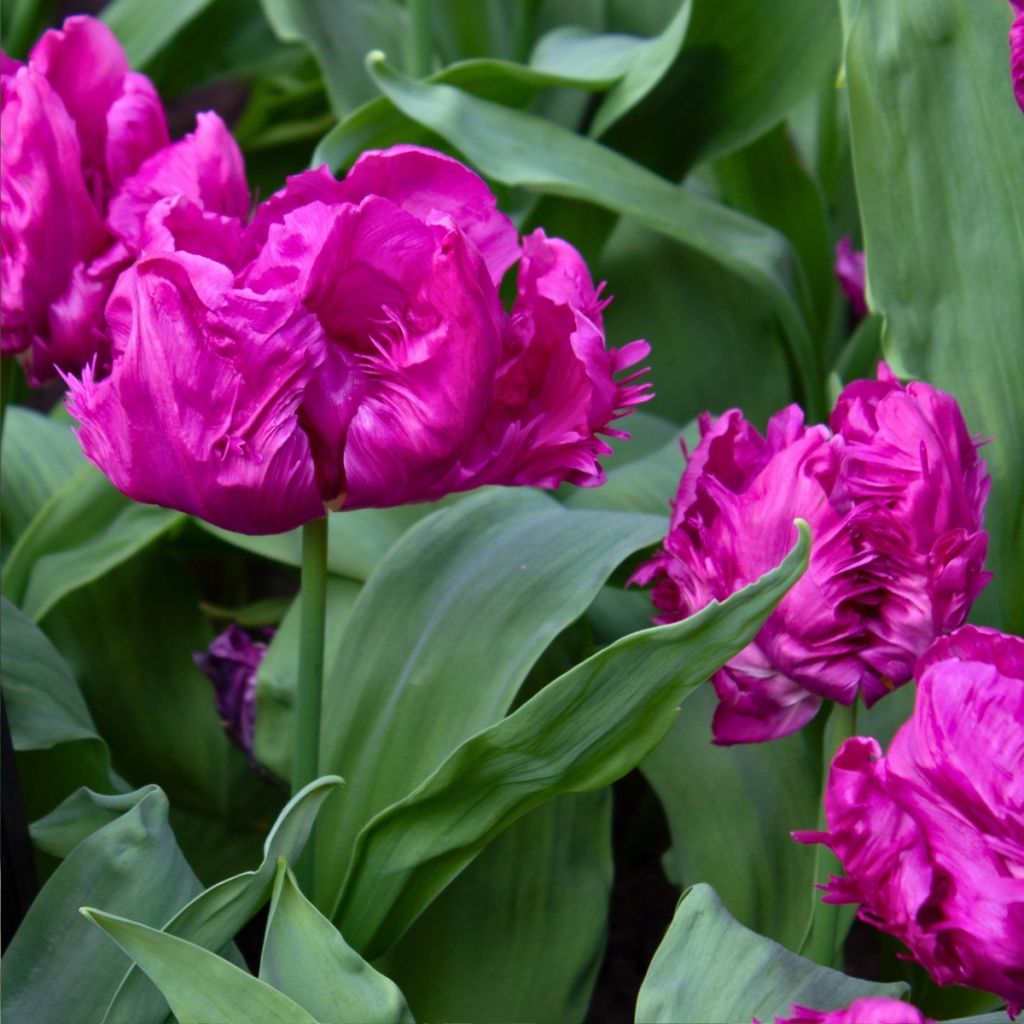
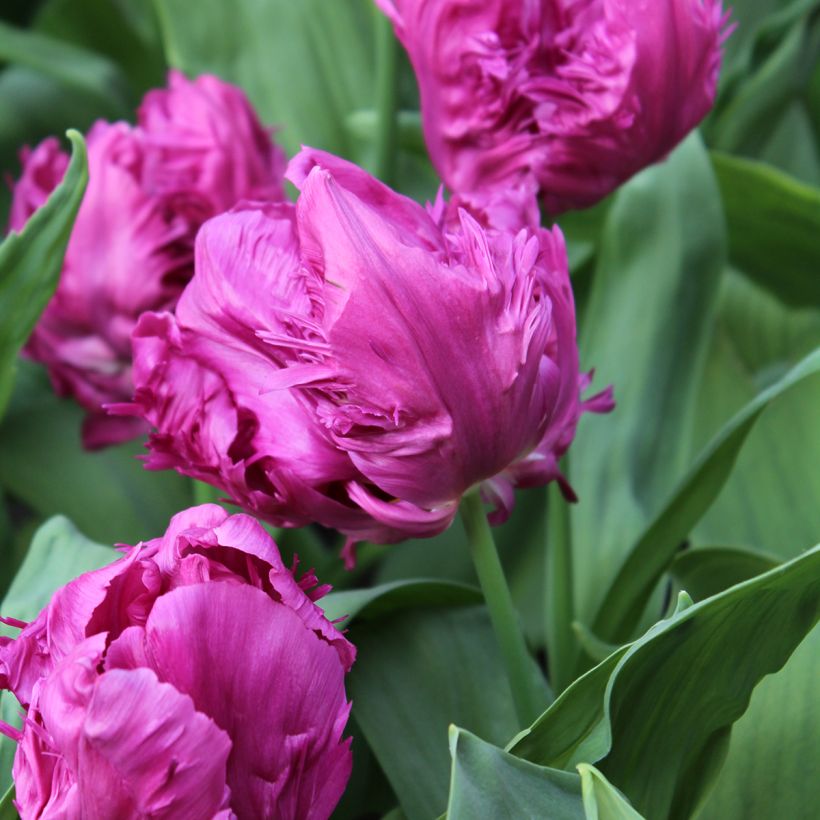
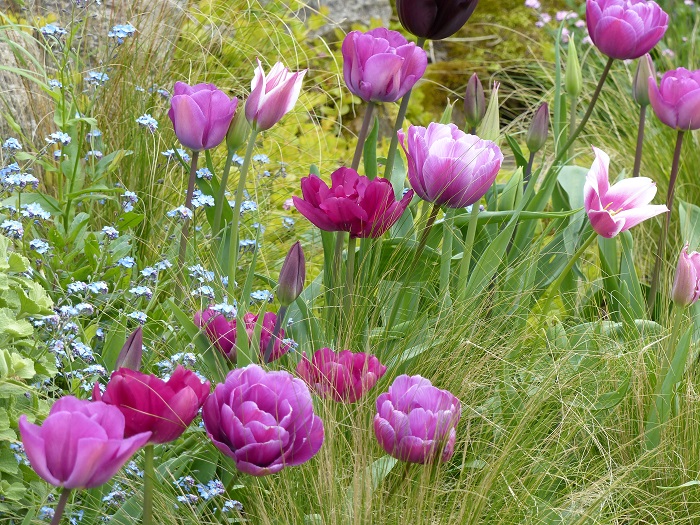
Fringed, twisted petals in a very chic purplish pink, with a glossy texture that reflects the light beautifully, characterise the flowers of this new Parrot Prince parrot tulip. Perched on sturdy stems, its late flowering in a flattering colour perfectly complements that of perennials. It also makes an excellent cut flower, to include in a baroque-inspired bouquet.
Tulip 'Prince Parrot' belongs to the Liliaceae family. Of horticultural origin, it is currently classified in the 'Parrot Tulips' group, whose main characteristic is to produce enormous flowers with twisted, swollen, ruffled and irregularly fringed petals. 'Prince parrot' was also obtained through mutation (the sudden appearance of new characteristics that persist through subsequent generations). It is fairly tall (50 cm), and its flower is a good size. It stands out for its ability to reflect light, bringing its purplish pink petals to life beneath a unique glaze. The original form of the parrot tulip adds further charm, making this tulip anything but monotonous, particularly when its buds slowly open in a vase, almost ceremoniously. Flowering takes place in May, celebrating the end of the tulip season in grand style.
A wealth of colours, breathtaking and variegated flowers, equally suitable for beds and for enhancing your bouquets: the reputation of parrot tulips is well established. In the 18th century, they were described as 'monstrose'; this group developed considerably in the 1930s, when it was discovered that irradiating bulbs with X-rays caused this mutation. They are already among the most widely planted varieties. Unrivalled for bringing a touch of whimsy to pots or sunny gardens, remember to consider the height and flowering period when planning your beds, as these characteristics vary considerably from one cultivar to another. It is wise to plant a few extra bulbs for cutting, as they make superb cut flowers that last a long time in a vase.
About botanical species: tulip species occur across most of the Old World, from Western Europe to China and Japan, via Eastern Europe, Asia Minor and Central Asia. Their range also extends across North Africa and the Indian subcontinent. The centre of diversity of the genus lies in the Pamir and Hindu Kush mountains and in the steppes of Kazakhstan.
Several wild species occur in France, many of which are threatened. These include either large tulips that grow as weeds in cultivated land, the best known being the Agen tulip (Tulipa agenensis), or small tulips found in wooded areas or among mountain rocks. In cultivation, they are called "species tulips", and one of the most common is the wild tulip (Tulipa sylvestris), which once often grew sheltered by vineyards and whose subspecies australis is known as the southern tulip.

Tulipa Parrot Prince - Parrot Tulip in pictures
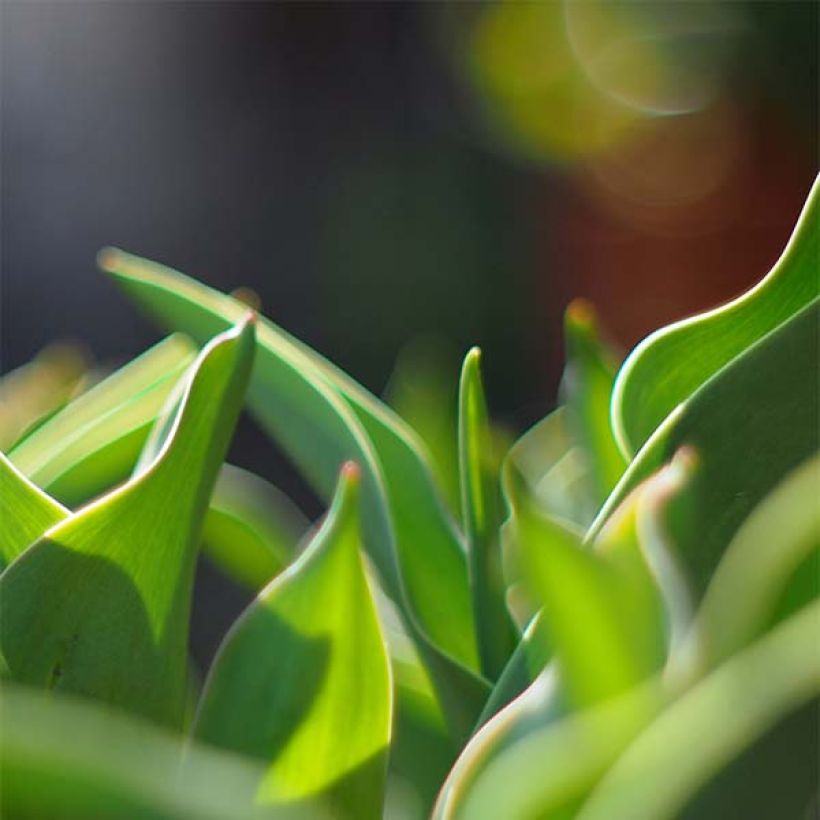
Plant habit
Flowering
Foliage
Botanical data
Tulipa
Perroquet
Parrot Prince
Liliaceae
Parrot Tulip
Cultivar or hybrid
Planting and care
Plant the bulbs in autumn, from September to December, 15 cm deep and 10 cm apart. Plant them in ordinary, slightly acidic, neutral or slightly alkaline, loose, well-prepared and well-drained soil. Never add manure or poorly decomposed compost to the planting soil, as this could cause the bulbs to rot. Tulip 'Synaeda Amor' will grow well in soil that is moist to dry in summer. Place it in a suitable position, in full sun or partial shade. Once flowering has finished, it is best to remove the fruits so that they do not exhaust the plant.
Planting period
Intended location
Care
Planting & care advice
-
-

-

-

-

-

-

-

-
, onOrder confirmed
Reply from on Promesse de fleurs
Recently viewed products
Haven't found what you were looking for?
Hardiness is the lowest winter temperature a plant can endure without suffering serious damage or even dying. However, hardiness is affected by location (a sheltered area, such as a patio), protection (winter cover) and soil type (hardiness is improved by well-drained soil).

The flowering period indicated on our website applies to countries and regions located in USDA zone 8 (France, the United Kingdom, Ireland, the Netherlands, etc.)
It will vary according to where you live:- In zones 9 to 10 (Italy, Spain, Greece, etc.), flowering will occur about 2 to 4 weeks earlier.
- In zones 6 to 7 (Germany, Poland, Slovenia, and lower mountainous regions), flowering will be delayed by 2 to 3 weeks.
- In zone 5 (Central Europe, Scandinavia), blooming will be delayed by 3 to 5 weeks.
In temperate climates, pruning of spring-flowering shrubs (forsythia, spireas, etc.) should be done just after flowering.
Pruning of summer-flowering shrubs (Indian Lilac, Perovskia, etc.) can be done in winter or spring.
In cold regions as well as with frost-sensitive plants, avoid pruning too early when severe frosts may still occur.
The planting period indicated on our website applies to countries and regions located in USDA zone 8 (France, United Kingdom, Ireland, Netherlands).
It will vary according to where you live:
- In Mediterranean zones (Marseille, Madrid, Milan, etc.), autumn and winter are the best planting periods.
- In continental zones (Strasbourg, Munich, Vienna, etc.), delay planting by 2 to 3 weeks in spring and bring it forward by 2 to 4 weeks in autumn.
- In mountainous regions (the Alps, Pyrenees, Carpathians, etc.), it is best to plant in late spring (May-June) or late summer (August-September).
The harvesting period indicated on our website applies to countries and regions in USDA zone 8 (France, England, Ireland, the Netherlands).
In colder areas (Scandinavia, Poland, Austria...) fruit and vegetable harvests are likely to be delayed by 3-4 weeks.
In warmer areas (Italy, Spain, Greece, etc.), harvesting will probably take place earlier, depending on weather conditions.
The sowing periods indicated on our website apply to countries and regions within USDA Zone 8 (France, UK, Ireland, Netherlands).
In colder areas (Scandinavia, Poland, Austria...), delay any outdoor sowing by 3-4 weeks, or sow under glass.
In warmer climes (Italy, Spain, Greece, etc.), bring outdoor sowing forward by a few weeks.
Shipping country and language
Your country of residence may be:
Your country of residence is:
For a better user experience on our website, you can select:
Your shipping country:
-
 Austria
-
 Belgium
-
 Bosnia & Herzegovina
-
 Bulgaria
-
 Croatia
-
 Cyprus
-
 Czechia
-
 Denmark
-
 Estonia
-
 Finland
-
 France
-
 Germany
-
 Greece
-
 Hungary
-
 Iceland
-
 Ireland
-
 Italy
Italy
-
 Latvia
-
 Liechtenstein
-
 Lithuania
-
 Luxembourg
-
 Malta
Malta
-
 Netherlands
-
 Poland
-
 Portugal
-
 Romania
-
 Serbia
-
 Slovakia
-
 Slovenia
-
 Spain
Spain
-
 Sweden
-
 Switzerland
Language:
-
French
-
 English
-
Spanish
-
Italian
-
German
-
Portuguese
-
Dutch
-
Finnish
My Account
Hello
My wish lists
My cart
Log in / Register
Existing customer?
This form is protected by reCAPTCHA - the Google Privacy Policy and Terms of Service apply.
New customer?
Create an account to track your orders, access our customer service and, if you wish, make the most of our upcoming offers.