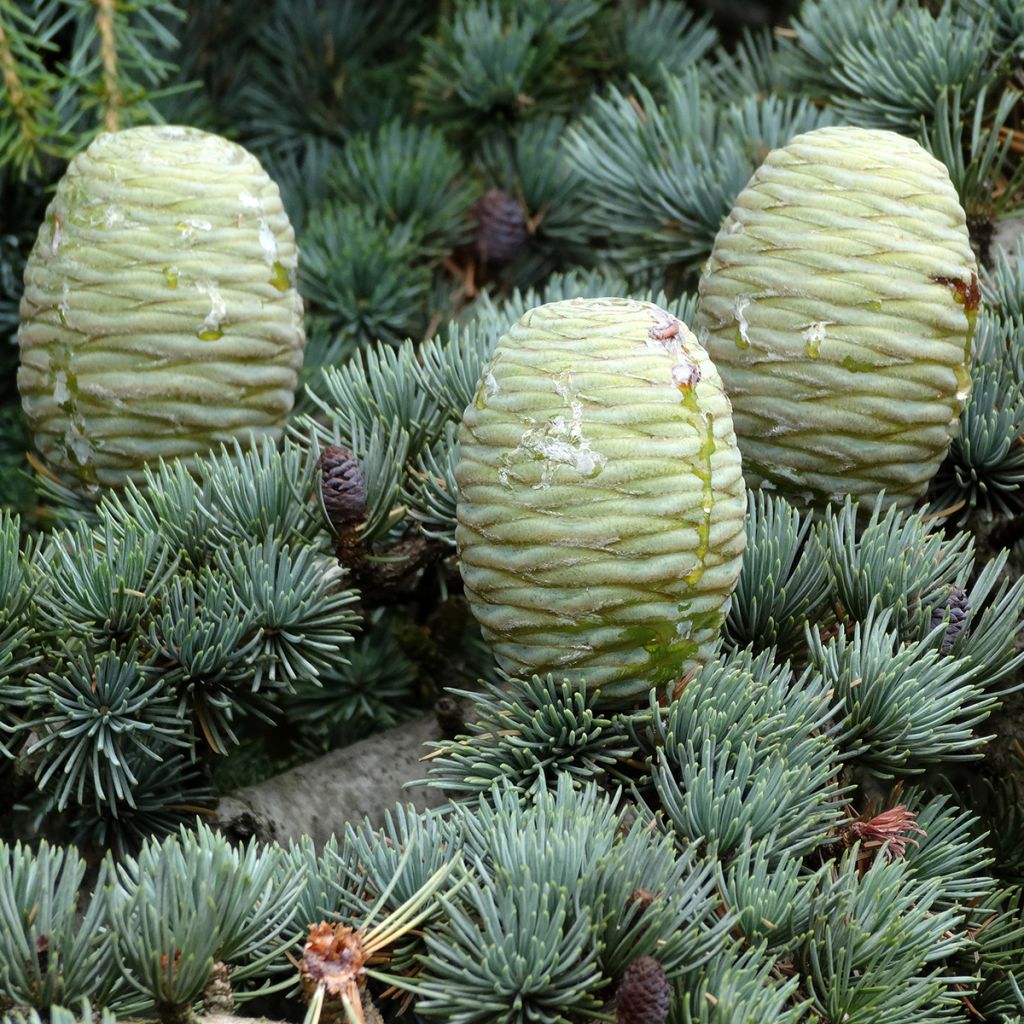
Cedrus deodara seeds - Himalayan Cedar
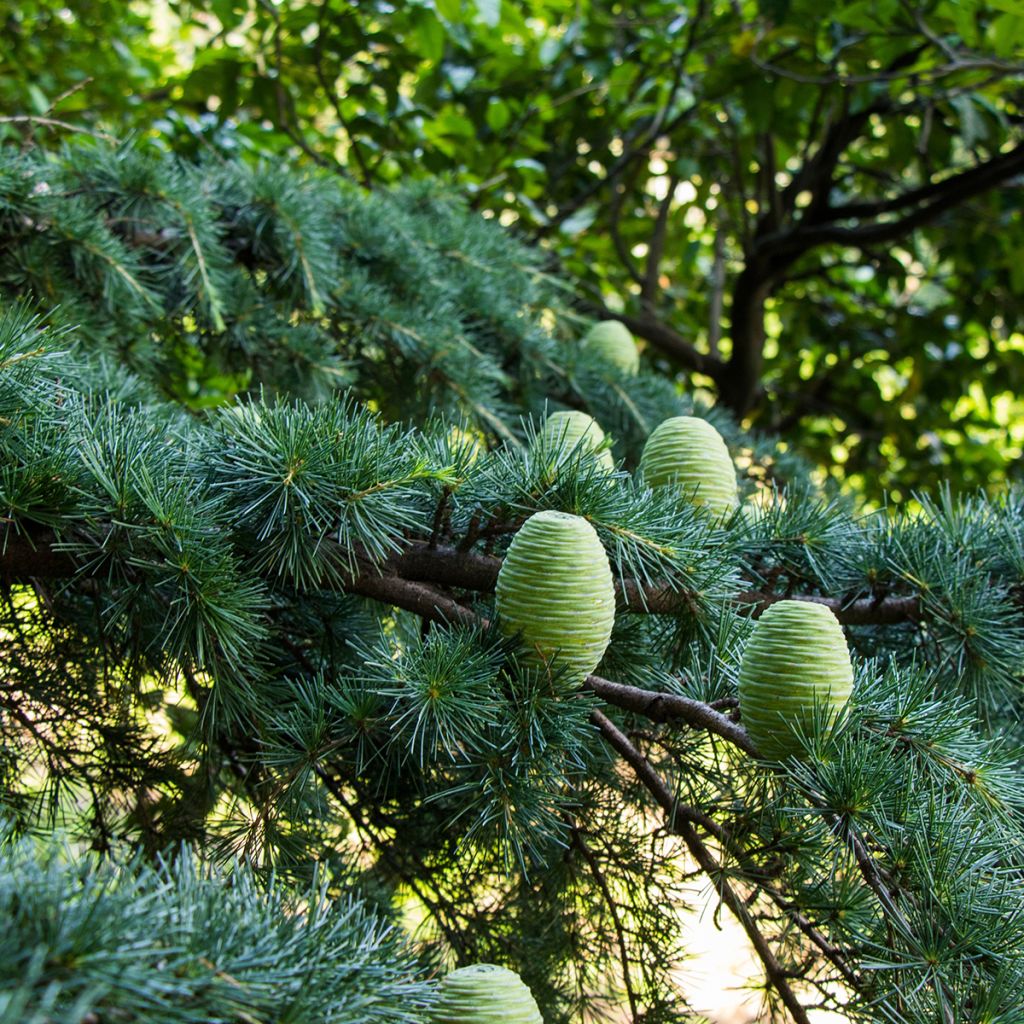
Cedrus deodara seeds - Himalayan Cedar
Cedrus deodara seeds - Himalayan Cedar
Cedrus deodara
Deodar Cedar, Himalayan Cedar
Back-to-school special offer!
Get €10 off for every €50 you spend! And get up to €40 off on a single order.
How does it work?
1. Shop your favourites
Add your favourite plants to your basket. For every €50 you spend (excluding delivery charges, store credit and the plastic-free option), you’ll receive a €10 voucher.
€50 spent = €10 voucher
€100 spent = €20 voucher
€150 spent = €30 voucher
€200 spent = €40 voucher
2. Place your order
Once your basket reaches one of the spending thresholds, place your order. You can even choose your delivery date!
3. Receive your voucher
As soon as your order has been shipped, you’ll receive an email containing your personal voucher code and its value.
4. Use it on your next order
Your voucher is valid for 90 days from the date you receive it. It can be used once only, on a new order worth at least the value of the voucher, excluding delivery charges.
Please note: Vouchers can be combined with other offers, but cannot be split or refunded.
Why not try an alternative variety in stock?
View all →
Available in 1 sizes
Available in 1 sizes
Available in 1 sizes
Available in 1 sizes
Available in 1 sizes
Available in 1 sizes
Available in 1 sizes
Available in 1 sizes
Available in 1 sizes
Available in 1 sizes
This plant carries a 6 months recovery warranty
More information
We guarantee the quality of our plants for a full growing cycle, and will replace at our expense any plant that fails to recover under normal climatic and planting conditions.
Would this plant suit my garden?
Set up your Plantfit profile →
Description
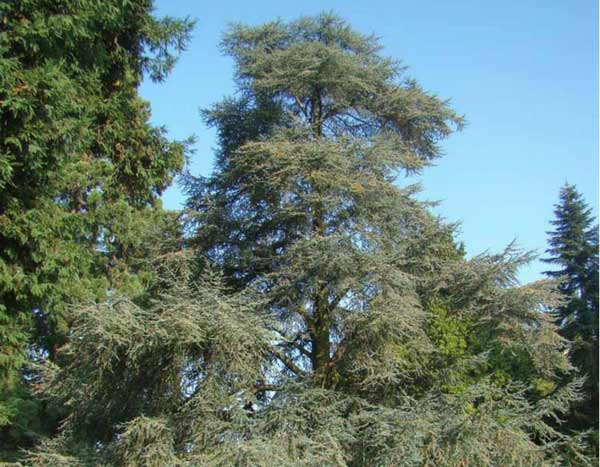
The Himalayan Cedar (Cedrus deodara) is a large evergreen conifer with a very special charm. Its pyramidal habit, long branches with trailing tips, and soft-to-the-touch foliage make a beautiful presence in the garden. Sowing seed offers real advantages: moderate cost, the possibility of a large number of young plants, and young trees well adapted to your soil and climate. In return, you must be patient: a few years of attentive care for young cedars, then around ten years to obtain a well-formed tree, several metres tall.
The Himalayan Cedar belongs to the Pinaceae family. It is a tree that can live for several centuries. It grows naturally on the temperate slopes of the western Himalayas, between 1,500 and 3,000m altitude, from northern India and Nepal to Pakistan, Afghanistan, and Tibet. Its main botanical synonyms are Abies deodara, Cedrus libani var. deodara, Larix deodara and Pinus deodara. It is also known as the sacred cedar or deodar cedar.
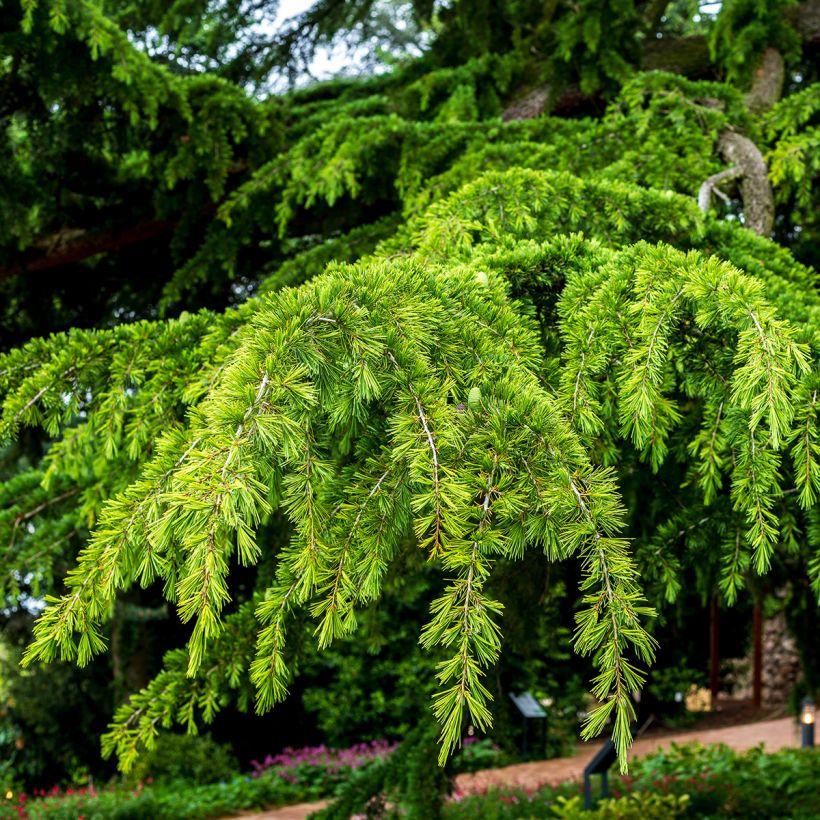
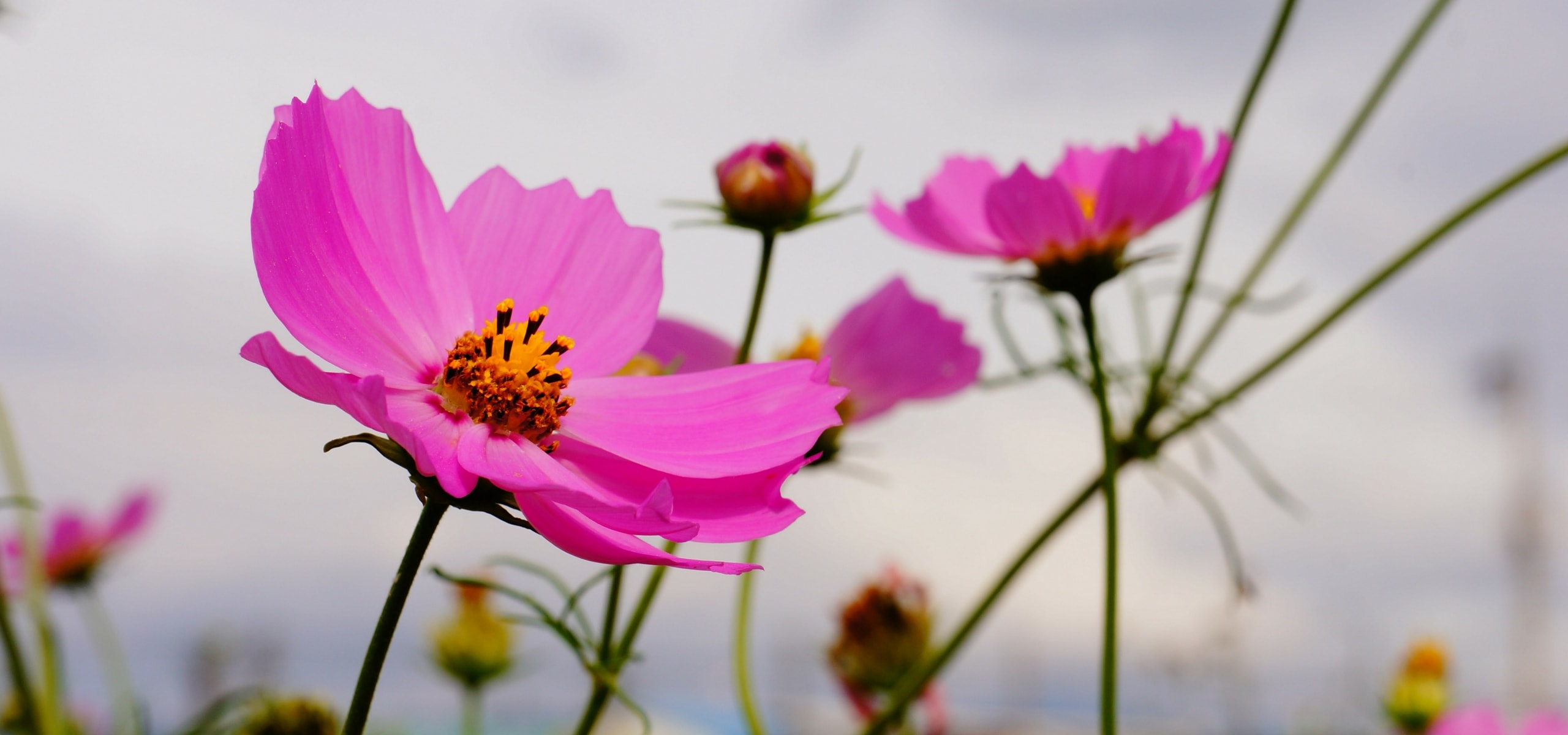
The very upright trunk bears dark grey bark that is initially smooth, then fissured with age. The branches are arranged in almost horizontal tiers, and the secondary branches trail elegantly. The evergreen, fine and flexible needles are 3 to 5cm long, grouped in dense tufts on the short shoots. Their colour ranges from soft green to slightly glaucous green. The tree keeps its foliage all year round. Male and female flowers develop on the same individual: dusty male catkins appear in autumn, while the upright and ovoid female cones measure 7 to 12cm long. They take just over a year to mature, then release pale brown, winged, fairly large seeds.
The root system is deep and extensive, with a main descending axis complemented by a network of lateral roots. This enables the cedar to withstand wind and relative drought well. Its aromatic, highly durable wood is prized for timber framing and construction, but also as sacred wood: the name 'deodara' comes from Sanskrit and means 'wood of the gods'. The species is considered the national tree of Pakistan and is traditionally planted near certain temples.
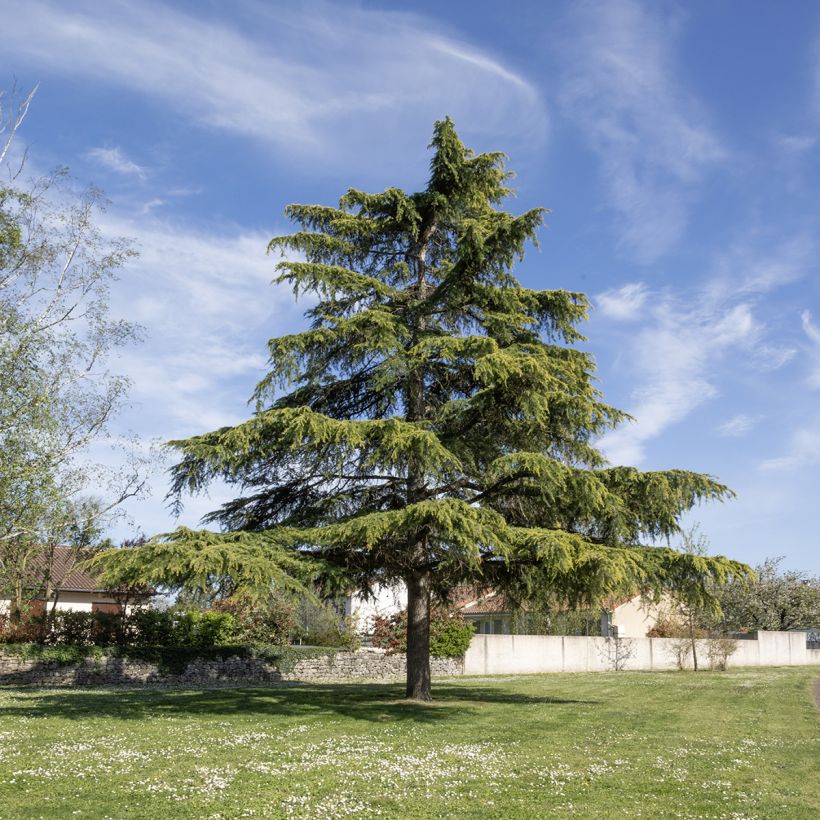
A Himalayan Cedar reaches 4 to 6m in about ten years in good, deep soil, and 15 to 20m in height with an 8 to 10m spread over time. Its growth is moderate in the first few years, while the roots establish, then becomes fairly rapid in rich, moist soil. Allow ten to fifteen years for a fine tree, and 20 to 30 years or more for an imposing specimen.
The Himalayan Cedar is only for large gardens, parks, or vast lawns where it can be planted as a specimen to enjoy its languid silhouette and luminous foliage. Place it at a good distance from buildings. At its base, you can plant a carpet of bluebells, snowdrops, lily of the valley, pink ivy-leaved cyclamen or very robust perennials such as greater periwinkles.
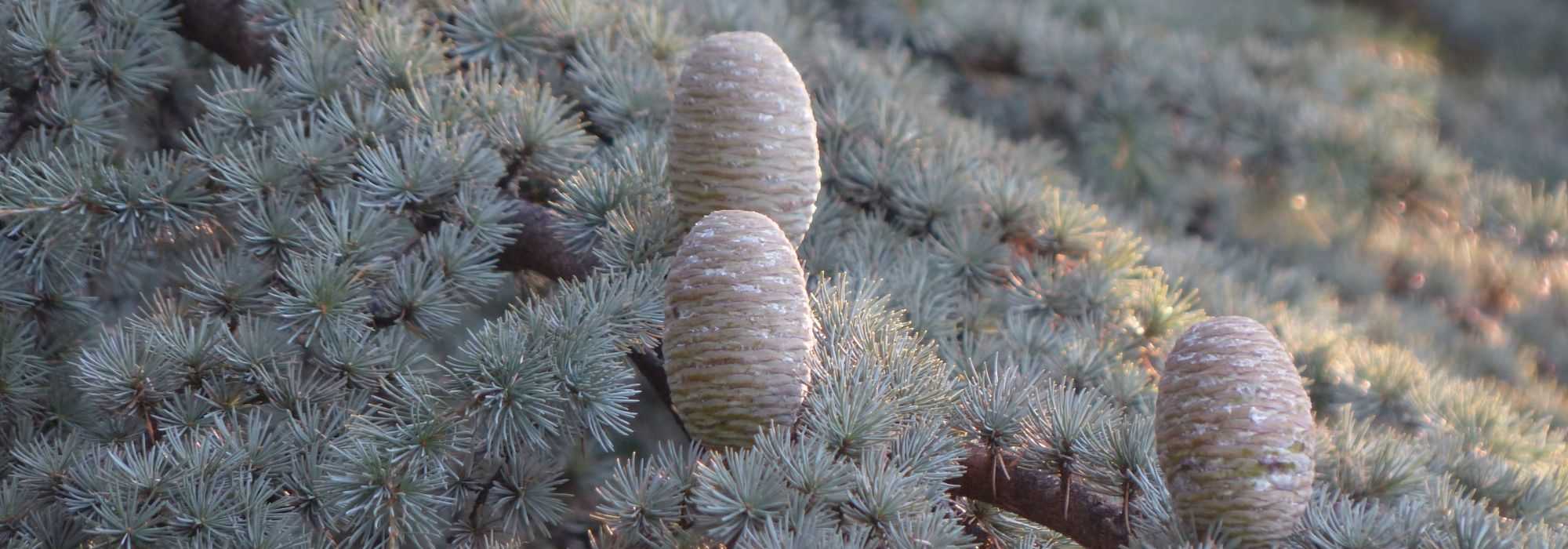
Cedrus deodara seeds - Himalayan Cedar in pictures
Flowering
Foliage
Plant habit
Botanical data
Cedrus
deodara
Pinaceae
Deodar Cedar, Himalayan Cedar
Pinus deodara, Abies deodara, Cedrus libani var. deodara, Larix deodara
Himalayas
Planting and care
Sowing Himalayan Cedar seeds is simple if you follow a few steps.
On receipt, keep the seeds cool and dry until sowing time.
Preferably sow in late winter or very early spring, in a seed tray or deep pot filled with a very well-draining mix (for example, half fine potting compost and half sand or pozzolana). Place the seeds flat, at a depth of 1 to 1.5cm, firm down lightly, then water to moisten thoroughly without waterlogging. A period of cold encourages germination: either leave the pots outdoors all winter, sheltered from heavy rain and rodents, or place the seeds in the refrigerator for a few weeks before sowing.
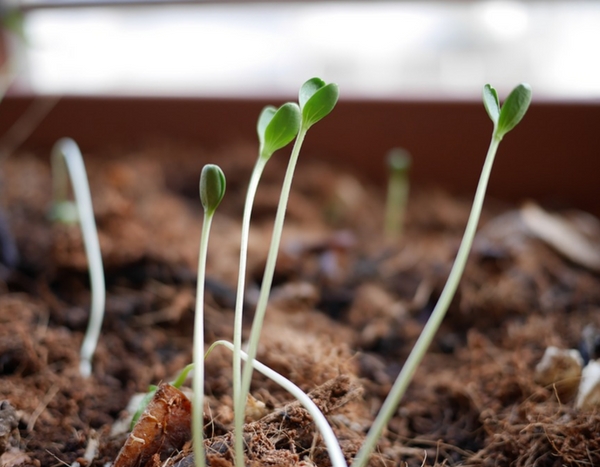
Germination occurs after a few weeks in spring, when temperatures rise. The substrate should then be kept just moist, and the young seedlings should be kept sheltered from scorching sun and wind.
During the first few months, the young cedars remain fragile: regular watering, without excess, and protection against hard frosts are essential.
They can be pricked out into individual pots when they reach 8 to 10cm in height, then grown on for a further one to two years in a deep pot to allow time for the taproot to develop properly.
Plant in open ground in autumn or spring, in deep, well-drained soil, choosing a sunny location sheltered from cold winds, at least 6 to 8 metres away from buildings and other large trees. Dig a wide hole, loosen the bottom well, position the root ball without burying the collar, backfill with crumbled soil, then water generously. A watering basin and a light mulch will help the roots establish. In the first few years, a sturdy stake, regular watering in summer, and protection against late frosts will ensure good establishment.
Sowing period
Intended location
Planting & care advice
-
-
-
-
-
-
-
-
This item has not been reviewed yet - be the first to leave a review about it.
Recently viewed products
Haven't found what you were looking for?
Hardiness is the lowest winter temperature a plant can endure without suffering serious damage or even dying. However, hardiness is affected by location (a sheltered area, such as a patio), protection (winter cover) and soil type (hardiness is improved by well-drained soil).

The flowering period indicated on our website applies to countries and regions located in USDA zone 8 (France, the United Kingdom, Ireland, the Netherlands, etc.)
It will vary according to where you live:- In zones 9 to 10 (Italy, Spain, Greece, etc.), flowering will occur about 2 to 4 weeks earlier.
- In zones 6 to 7 (Germany, Poland, Slovenia, and lower mountainous regions), flowering will be delayed by 2 to 3 weeks.
- In zone 5 (Central Europe, Scandinavia), blooming will be delayed by 3 to 5 weeks.
In temperate climates, pruning of spring-flowering shrubs (forsythia, spireas, etc.) should be done just after flowering.
Pruning of summer-flowering shrubs (Indian Lilac, Perovskia, etc.) can be done in winter or spring.
In cold regions as well as with frost-sensitive plants, avoid pruning too early when severe frosts may still occur.
The planting period indicated on our website applies to countries and regions located in USDA zone 8 (France, United Kingdom, Ireland, Netherlands).
It will vary according to where you live:
- In Mediterranean zones (Marseille, Madrid, Milan, etc.), autumn and winter are the best planting periods.
- In continental zones (Strasbourg, Munich, Vienna, etc.), delay planting by 2 to 3 weeks in spring and bring it forward by 2 to 4 weeks in autumn.
- In mountainous regions (the Alps, Pyrenees, Carpathians, etc.), it is best to plant in late spring (May-June) or late summer (August-September).
The harvesting period indicated on our website applies to countries and regions in USDA zone 8 (France, England, Ireland, the Netherlands).
In colder areas (Scandinavia, Poland, Austria...) fruit and vegetable harvests are likely to be delayed by 3-4 weeks.
In warmer areas (Italy, Spain, Greece, etc.), harvesting will probably take place earlier, depending on weather conditions.
The sowing periods indicated on our website apply to countries and regions within USDA Zone 8 (France, UK, Ireland, Netherlands).
In colder areas (Scandinavia, Poland, Austria...), delay any outdoor sowing by 3-4 weeks, or sow under glass.
In warmer climes (Italy, Spain, Greece, etc.), bring outdoor sowing forward by a few weeks.
Shipping country and language
Your country of residence may be:
Your country of residence is:
For a better user experience on our website, you can select:
Your shipping country:
-
 Austria
-
 Belgium
-
 Bosnia & Herzegovina
-
 Bulgaria
-
 Croatia
-
 Cyprus
-
 Czechia
-
 Denmark
-
 Estonia
-
 Finland
-
 France
-
 Germany
-
 Greece
-
 Hungary
-
 Iceland
-
 Ireland
-
 Italy
Italy
-
 Latvia
-
 Liechtenstein
-
 Lithuania
-
 Luxembourg
-
 Malta
Malta
-
 Netherlands
-
 Poland
-
 Portugal
-
 Romania
-
 Serbia
-
 Slovakia
-
 Slovenia
-
 Spain
Spain
-
 Sweden
-
 Switzerland
Language:
-
French
-
 English
-
Spanish
-
Italian
-
German
-
Portuguese
-
Dutch
-
Finnish
My Account
Hello
My wish lists
My cart
Log in / Register
Existing customer?
This form is protected by reCAPTCHA - the Google Privacy Policy and Terms of Service apply.
New customer?
Create an account to track your orders, access our customer service and, if you wish, make the most of our upcoming offers.