Ravenala madagascariensis seeds - Traveller's palm
Ravenala madagascariensis seeds - Traveller's palm
Ravenala madagascariensis seeds - Traveller's palm
Ravenala madagascariensis seeds - Traveller's palm

Ravenala madagascariensis seeds - Traveller's palm
Ravenala madagascariensis seeds - Traveller's palm
Ravenala madagascarensis
Back-to-school special offer!
Get €10 off for every €50 you spend! And get up to €40 off on a single order.
How does it work?
1. Shop your favourites
Add your favourite plants to your basket. For every €50 you spend (excluding delivery charges, store credit and the plastic-free option), you’ll receive a €10 voucher.
€50 spent = €10 voucher
€100 spent = €20 voucher
€150 spent = €30 voucher
€200 spent = €40 voucher
2. Place your order
Once your basket reaches one of the spending thresholds, place your order. You can even choose your delivery date!
3. Receive your voucher
As soon as your order has been shipped, you’ll receive an email containing your personal voucher code and its value.
4. Use it on your next order
Your voucher is valid for 90 days from the date you receive it. It can be used once only, on a new order worth at least the value of the voucher, excluding delivery charges.
Please note: Vouchers can be combined with other offers, but cannot be split or refunded.
Home or relay delivery (depending on size and destination)
Important: You may be charged customs duties by your country’s customs authorities upon delivery.
Schedule delivery date,
and select date in basket
This plant carries a 6 months recovery warranty
More information
We guarantee the quality of our plants for a full growing cycle, and will replace at our expense any plant that fails to recover under normal climatic and planting conditions.
Would this plant suit my garden?
Set up your Plantfit profile →
Description
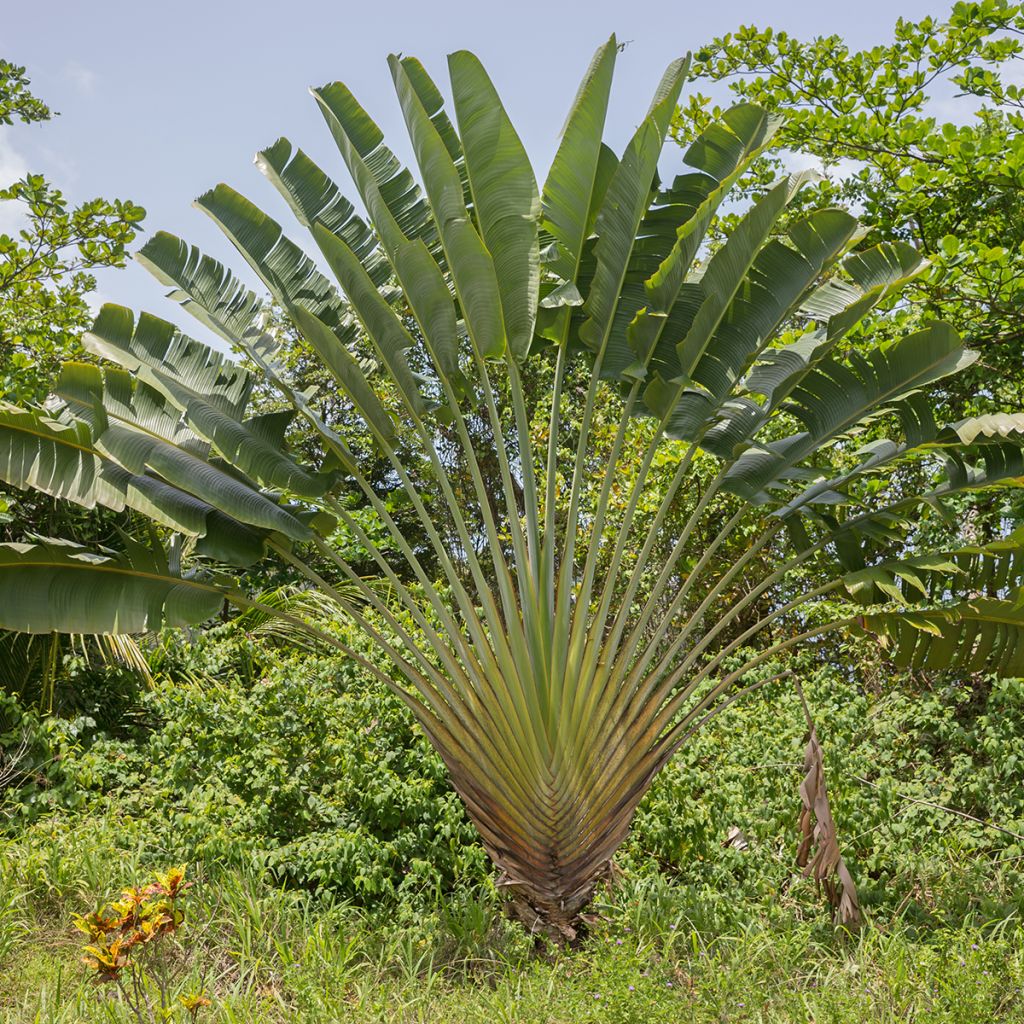
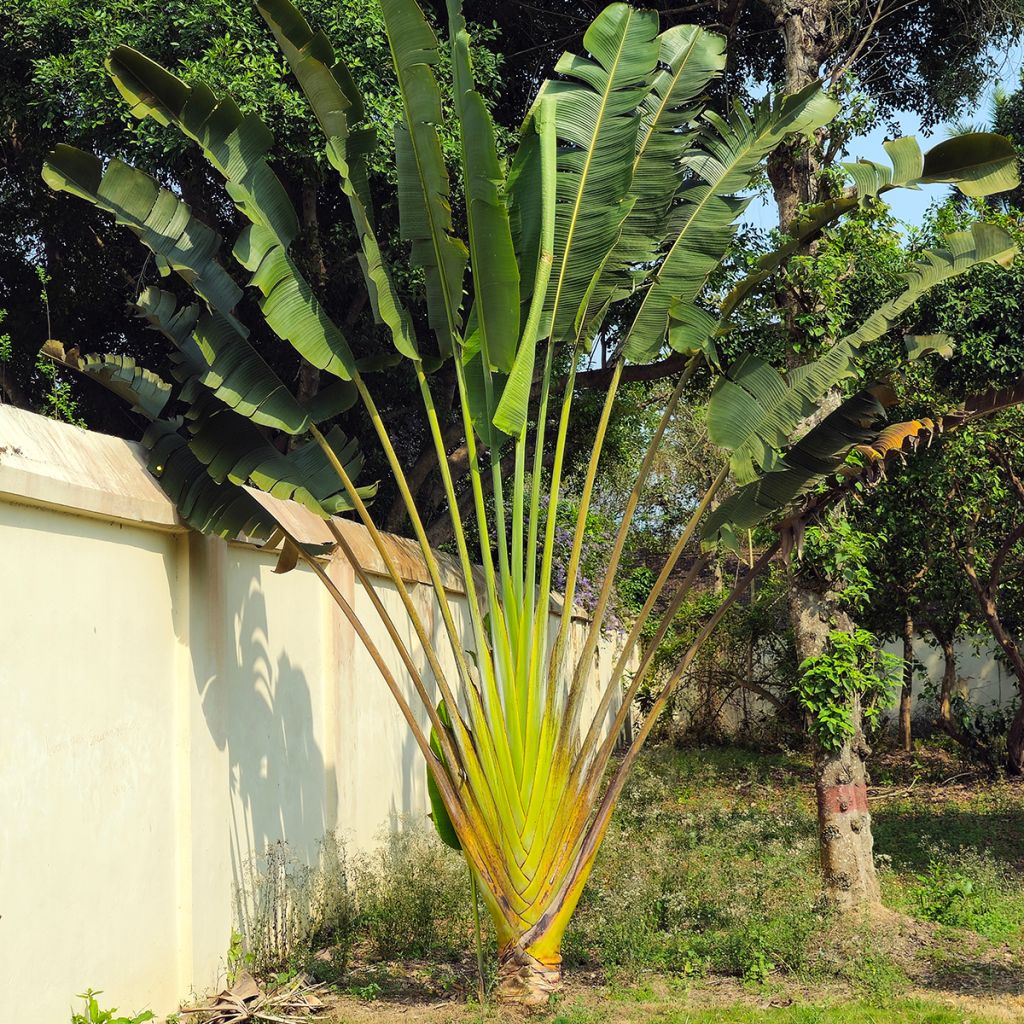
Grow the Traveller's Palm, or Ravenala madagascariensis, from seed. This spectacular tropical plant is famous for its symmetrical fan-shaped habit and its large leaves reminiscent of the banana tree. Native to Madagascar, it is prized for its exotic and architectural effect, whether in sheltered Mediterranean gardens, heated greenhouses, or indoors to be brought outside during summer. Its seeds, enclosed in woody capsules, are surrounded by a particularly attractive bright blue coating. Seeds require constant warmth and humidity to ensure good germination.
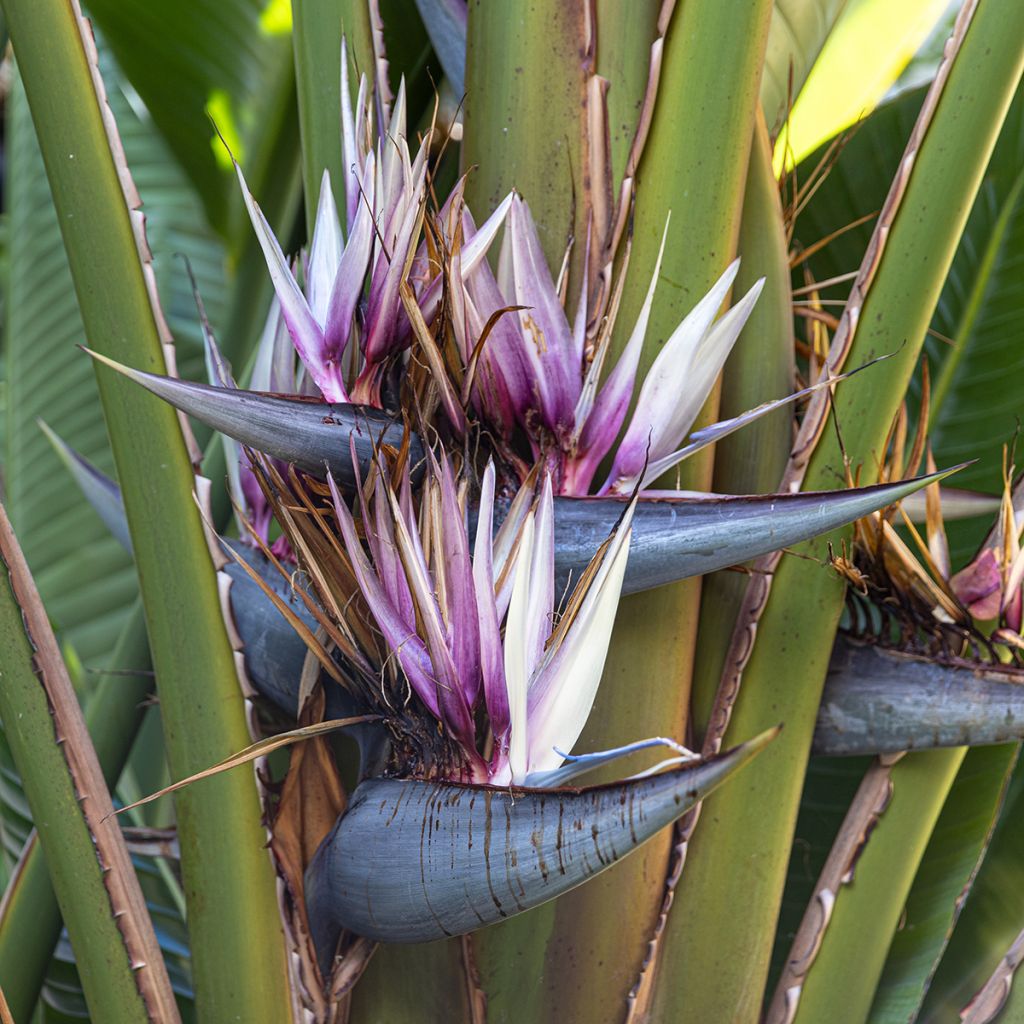
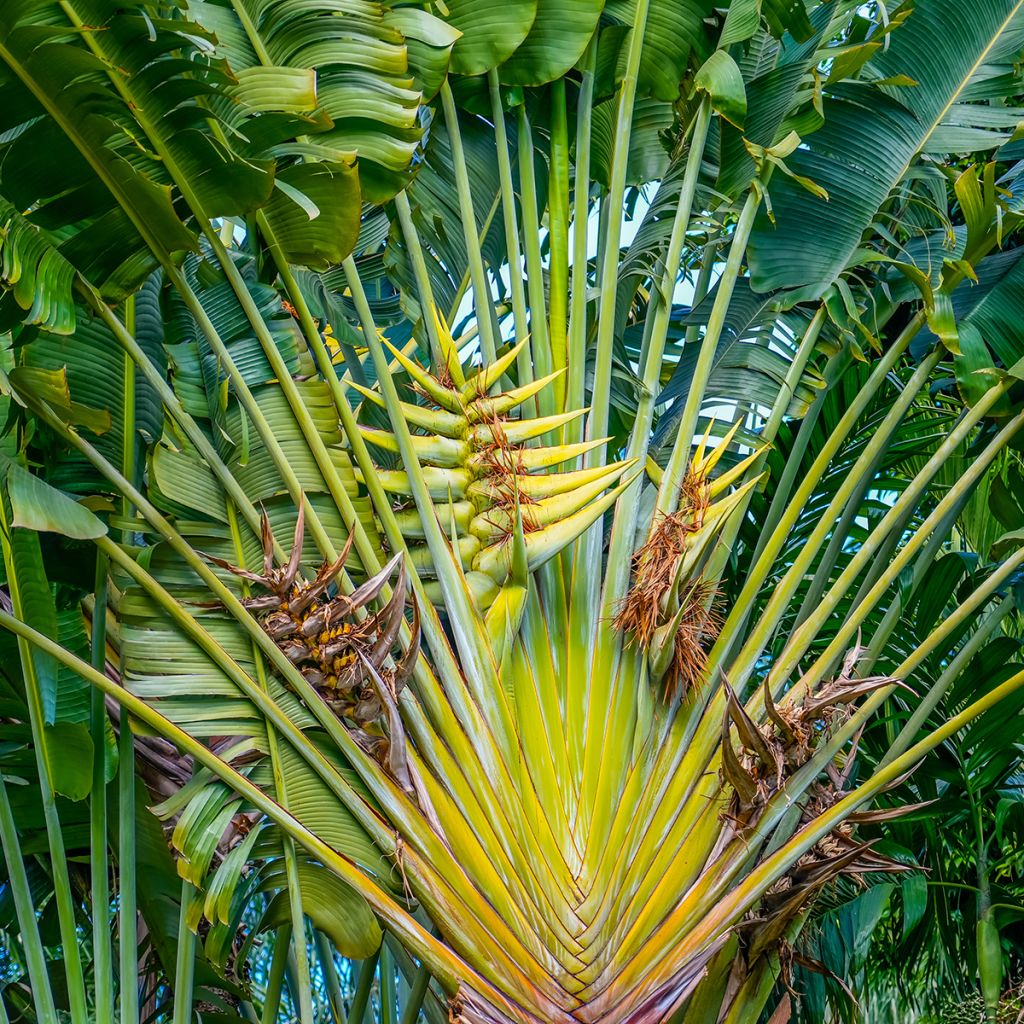
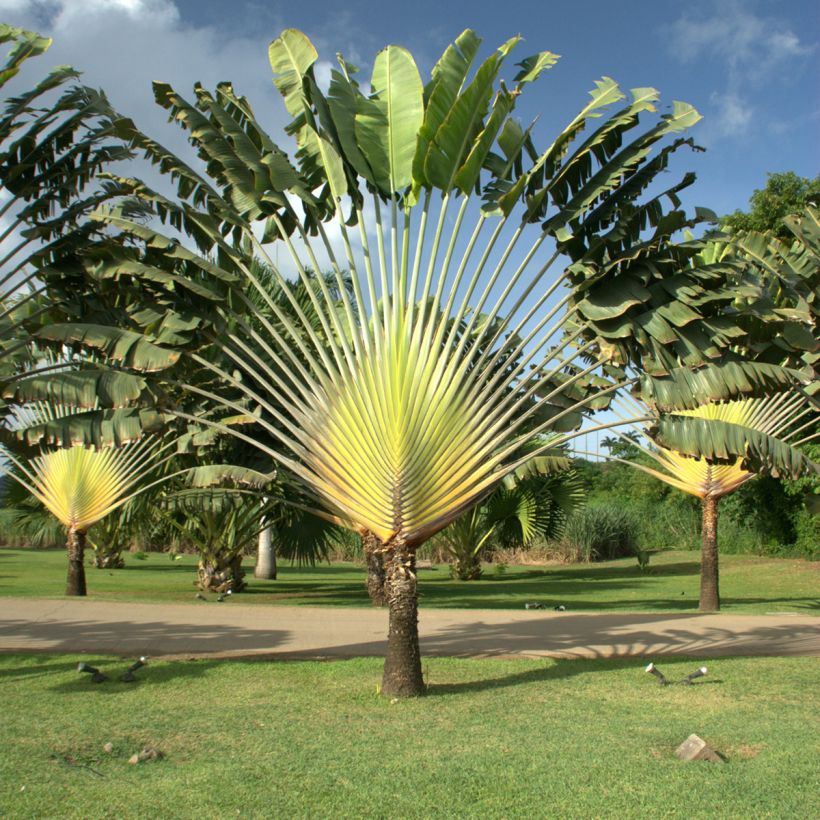
Ravenala madagascariensis belongs to the Strelitziaceae family, closely related to Strelitzia and Heliconia. Endemic to Madagascar, this herbaceous perennial plant grows in humid forests and tropical plains, where it can reach 10 to 20metres in height at maturity. In cultivation, its size is generally more moderate, ranging between 7 and 10 metres. Its name, Traveller's Palm, is said to come from the water reserve contained in the base of its petioles, which thirsty travellers could once enjoy. This plant develops a vertical woody bole, resembling a trunk, topped with a regular fan of large leaves that can reach 3 metres in length. These leaves, borne on rigid, elongated petioles, often orient themselves perpendicular to the prevailing winds, forming a characteristic silhouette. The inflorescences in the form of green bracts contain creamy-white flowers with waxy petals, resembling Strelitzia flowers, naturally pollinated by lemurs and certain bird species in their natural habitat. After pollination, elongated woody fruits develop, releasing black seeds surrounded by a brilliant blue aril. Flowering in cultivation may eventually occur on mature plants. Its shallow root system allows it to quickly absorb water, but also makes it sensitive to strong winds that can uproot mature specimens. Although this species is mainly grown in warm climates, it can be acclimatised in well-sheltered gardens in the orange zone, in greenhouses, or in bright indoor spaces in temperate regions. It prefers temperatures above 5°C.
Ravenala madagascariensis does not tolerate frost; it requires warmth, humidity, and abundant light. Outdoors, it finds a place in an exotic garden, as a specimen to highlight its unique habit, or in groups for a tropical forest effect. It pairs well with dense-foliage plants such as Alocasia, Musa, or Palms, creating a lush atmosphere. It prefers rich, humus-bearing, well-drained soil, with regular watering during the growth period. When grown in a pot outdoors, it can be brought indoors or into a temperate greenhouse; it requires a humid atmosphere and a spacious pot to develop its roots. A good mulch at the base helps maintain substrate moisture and protect young plants.
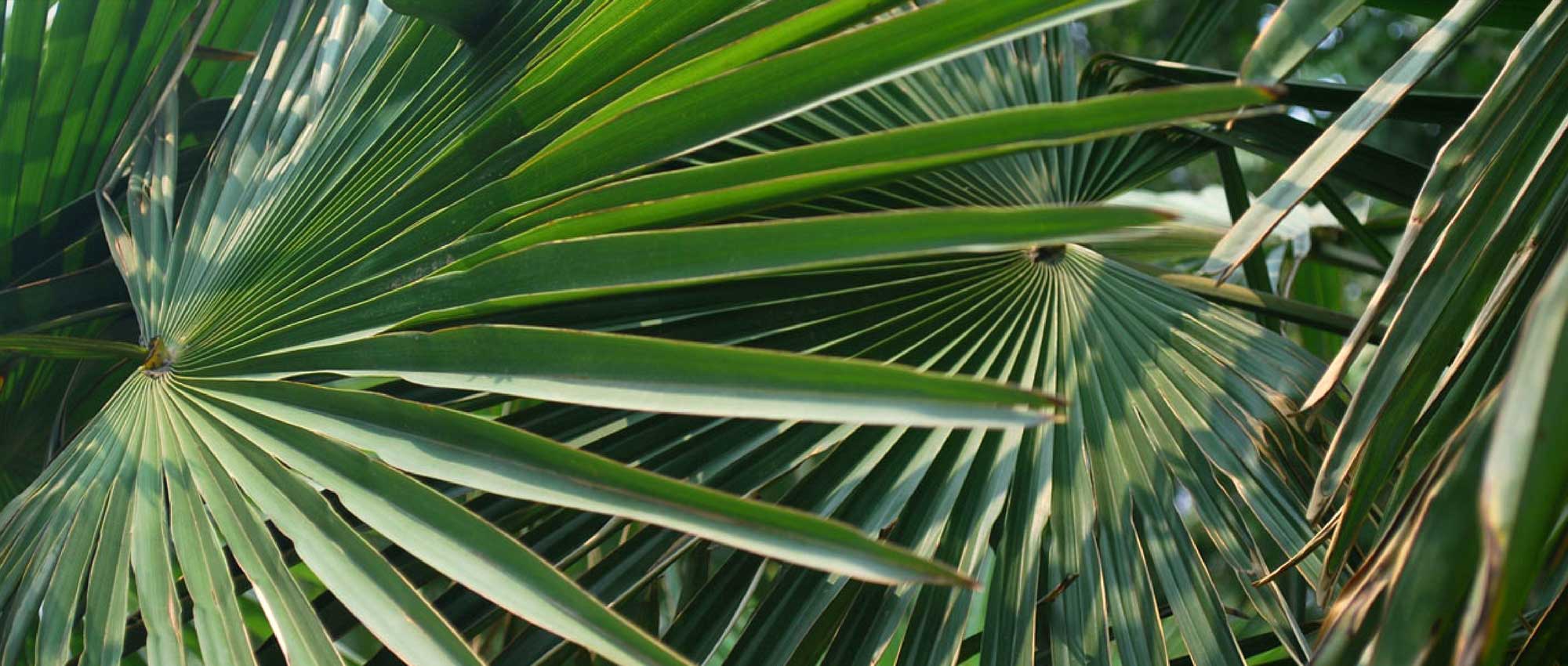
Ravenala madagascariensis seeds - Traveller's palm in pictures
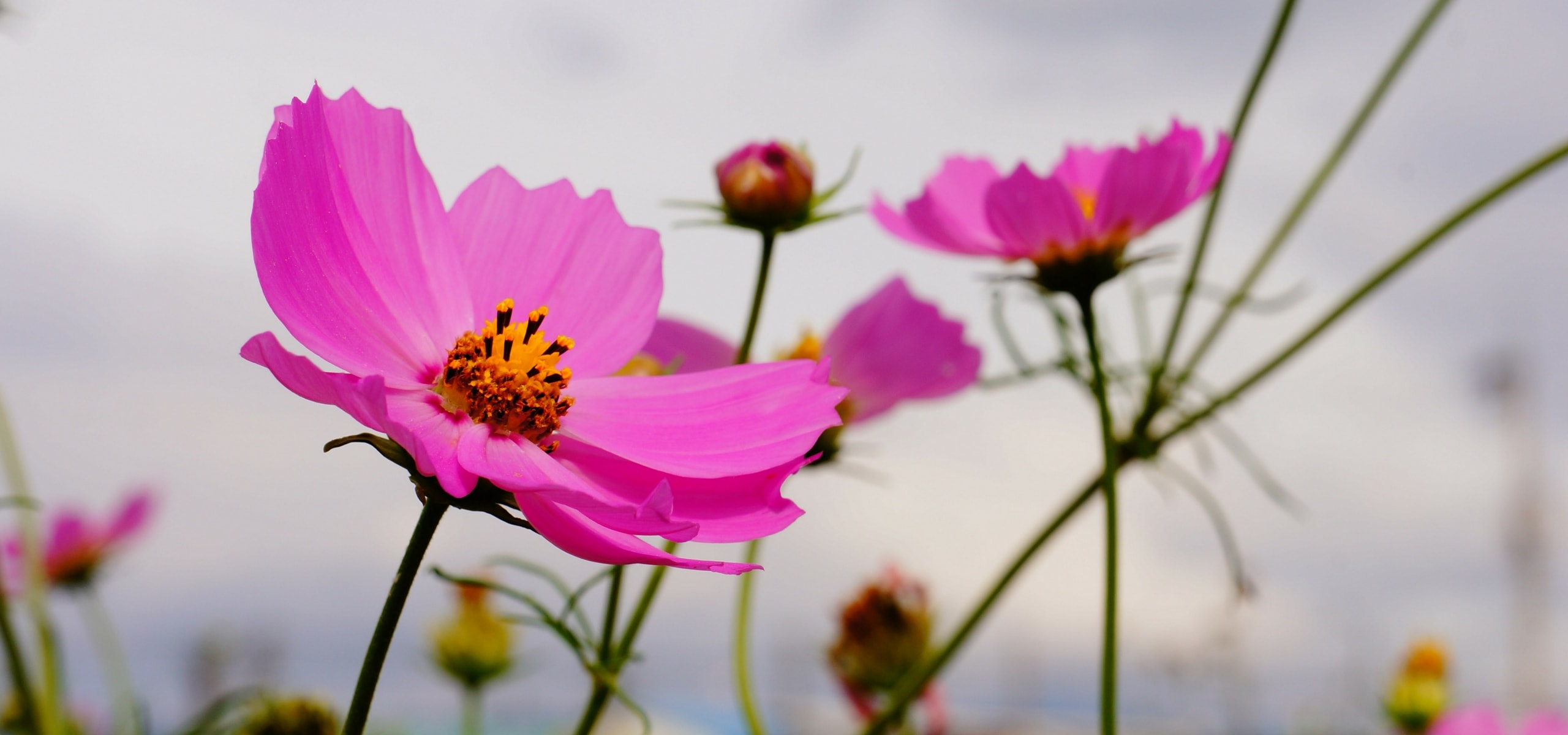
Flowering
Foliage
Plant habit
Botanical data
Ravenala
madagascarensis
Strelitziaceae
Madagascar
Planting and care
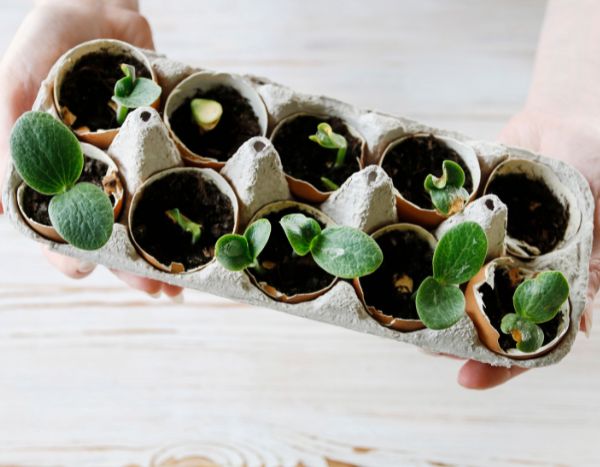
Sowing Ravenala madagascariensis requires careful preparation to ensure successful germination. Here are the recommended steps:
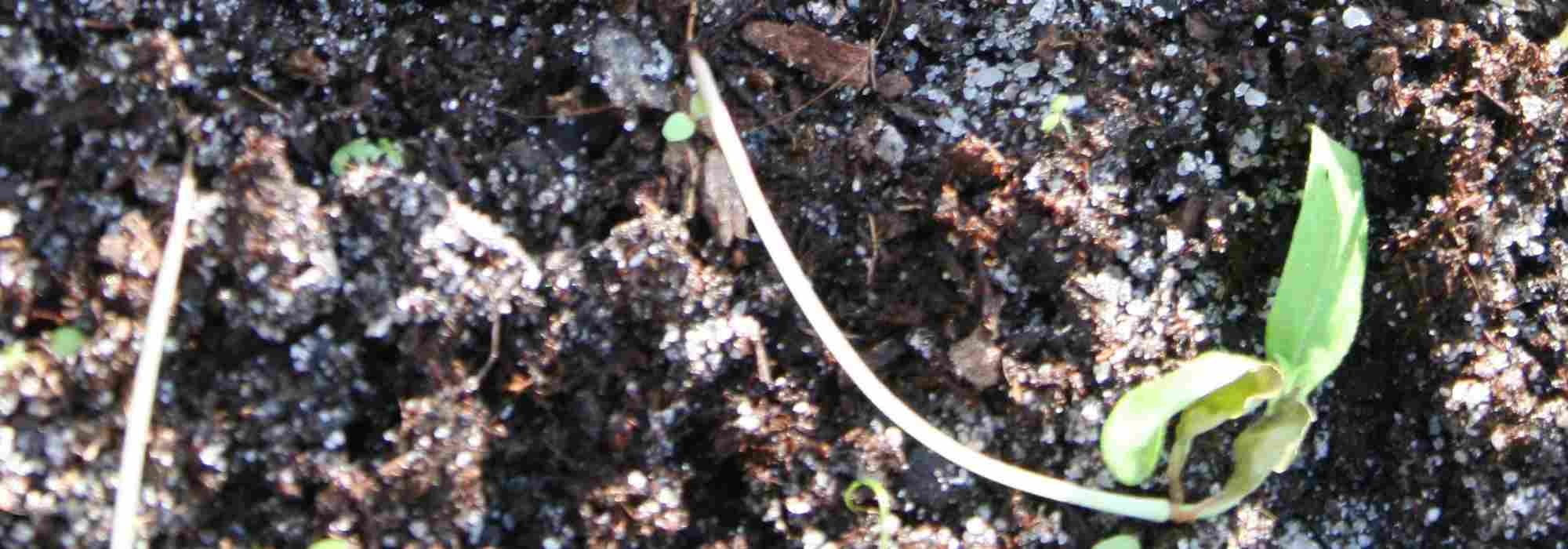
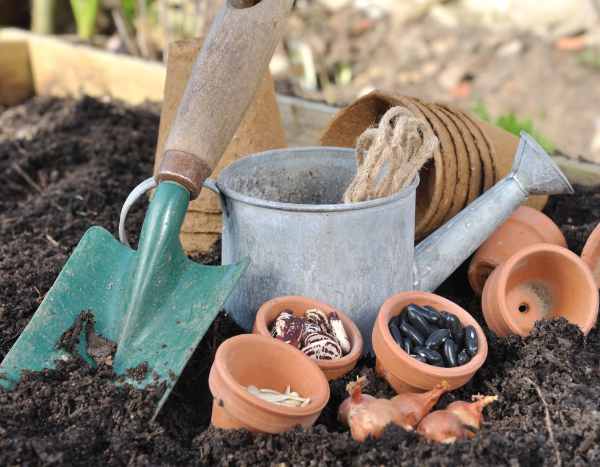
Seed preparation: Begin by lightly scarifying the outer coat of the seeds using sandpaper or a file, without reaching the germ, to aid water absorption. Then, soak the seeds in warm water for 12 to 48 hours, renewing the water every 12 hours, until they swell.
Substrate and sowing: Use a well-drained mixture formed of seed compost and sand. Sow the seeds at a depth equivalent to their diameter, lightly firm the substrate, and water to maintain constant moisture.
Germination conditions: Place the pots in a propagator or cover them with plastic film to retain moisture, ensuring regular ventilation to prevent mould. Maintain a daytime temperature of 30 to 35°C and a night-time temperature of 20 to 25°C, with a difference of about 10°C between day and night. Germination is slow and irregular, potentially taking from 3 weeks to 3 months, or even longer.
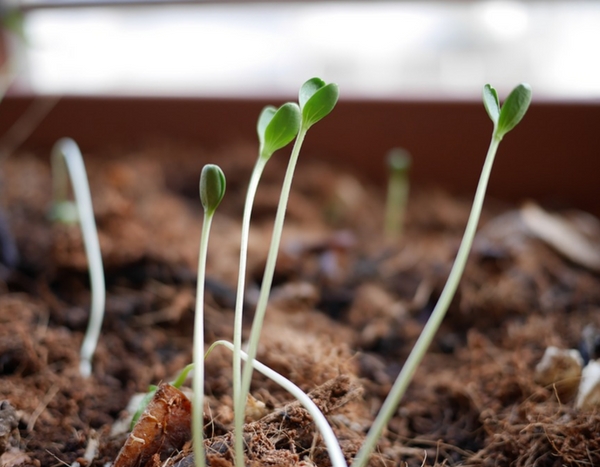
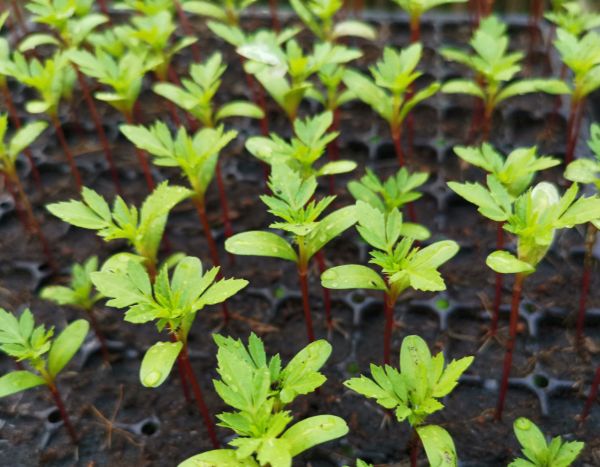
Once the seedlings are sufficiently developed, transplant them individually into pots containing a similar substrate. Place them in a bright environment, sheltered from the wind, and keep the substrate moist without overdoing it.
The Traveller's Palm shows fairly rapid growth, especially when regularly watered in a warm climate. It requires sun and warmth, which will encourage faster shoot development. Plant it in open ground or in a very large pot to overwinter. Position it in full sun.
Sowing period
Intended location
Planting & care advice
-
-
-
-
-

-
-
-
This item has not been reviewed yet - be the first to leave a review about it.
Recently viewed products
Haven't found what you were looking for?
Hardiness is the lowest winter temperature a plant can endure without suffering serious damage or even dying. However, hardiness is affected by location (a sheltered area, such as a patio), protection (winter cover) and soil type (hardiness is improved by well-drained soil).

The flowering period indicated on our website applies to countries and regions located in USDA zone 8 (France, the United Kingdom, Ireland, the Netherlands, etc.)
It will vary according to where you live:- In zones 9 to 10 (Italy, Spain, Greece, etc.), flowering will occur about 2 to 4 weeks earlier.
- In zones 6 to 7 (Germany, Poland, Slovenia, and lower mountainous regions), flowering will be delayed by 2 to 3 weeks.
- In zone 5 (Central Europe, Scandinavia), blooming will be delayed by 3 to 5 weeks.
In temperate climates, pruning of spring-flowering shrubs (forsythia, spireas, etc.) should be done just after flowering.
Pruning of summer-flowering shrubs (Indian Lilac, Perovskia, etc.) can be done in winter or spring.
In cold regions as well as with frost-sensitive plants, avoid pruning too early when severe frosts may still occur.
The planting period indicated on our website applies to countries and regions located in USDA zone 8 (France, United Kingdom, Ireland, Netherlands).
It will vary according to where you live:
- In Mediterranean zones (Marseille, Madrid, Milan, etc.), autumn and winter are the best planting periods.
- In continental zones (Strasbourg, Munich, Vienna, etc.), delay planting by 2 to 3 weeks in spring and bring it forward by 2 to 4 weeks in autumn.
- In mountainous regions (the Alps, Pyrenees, Carpathians, etc.), it is best to plant in late spring (May-June) or late summer (August-September).
The harvesting period indicated on our website applies to countries and regions in USDA zone 8 (France, England, Ireland, the Netherlands).
In colder areas (Scandinavia, Poland, Austria...) fruit and vegetable harvests are likely to be delayed by 3-4 weeks.
In warmer areas (Italy, Spain, Greece, etc.), harvesting will probably take place earlier, depending on weather conditions.
The sowing periods indicated on our website apply to countries and regions within USDA Zone 8 (France, UK, Ireland, Netherlands).
In colder areas (Scandinavia, Poland, Austria...), delay any outdoor sowing by 3-4 weeks, or sow under glass.
In warmer climes (Italy, Spain, Greece, etc.), bring outdoor sowing forward by a few weeks.
Shipping country and language
Your country of residence may be:
Your country of residence is:
For a better user experience on our website, you can select:
Your shipping country:
-
 Austria
-
 Belgium
-
 Bosnia & Herzegovina
-
 Bulgaria
-
 Croatia
-
 Cyprus
-
 Czechia
-
 Denmark
-
 Estonia
-
 Finland
-
 France
-
 Germany
-
 Greece
-
 Hungary
-
 Iceland
-
 Ireland
-
 Italy
Italy
-
 Latvia
-
 Liechtenstein
-
 Lithuania
-
 Luxembourg
-
 Malta
Malta
-
 Netherlands
-
 Poland
-
 Portugal
-
 Romania
-
 Serbia
-
 Slovakia
-
 Slovenia
-
 Spain
Spain
-
 Sweden
-
 Switzerland
Language:
-
French
-
 English
-
Spanish
-
Italian
-
German
-
Portuguese
-
Dutch
-
Finnish
My Account
Hello
My wish lists
My cart
Log in / Register
Existing customer?
This form is protected by reCAPTCHA - the Google Privacy Policy and Terms of Service apply.
New customer?
Create an account to track your orders, access our customer service and, if you wish, make the most of our upcoming offers.