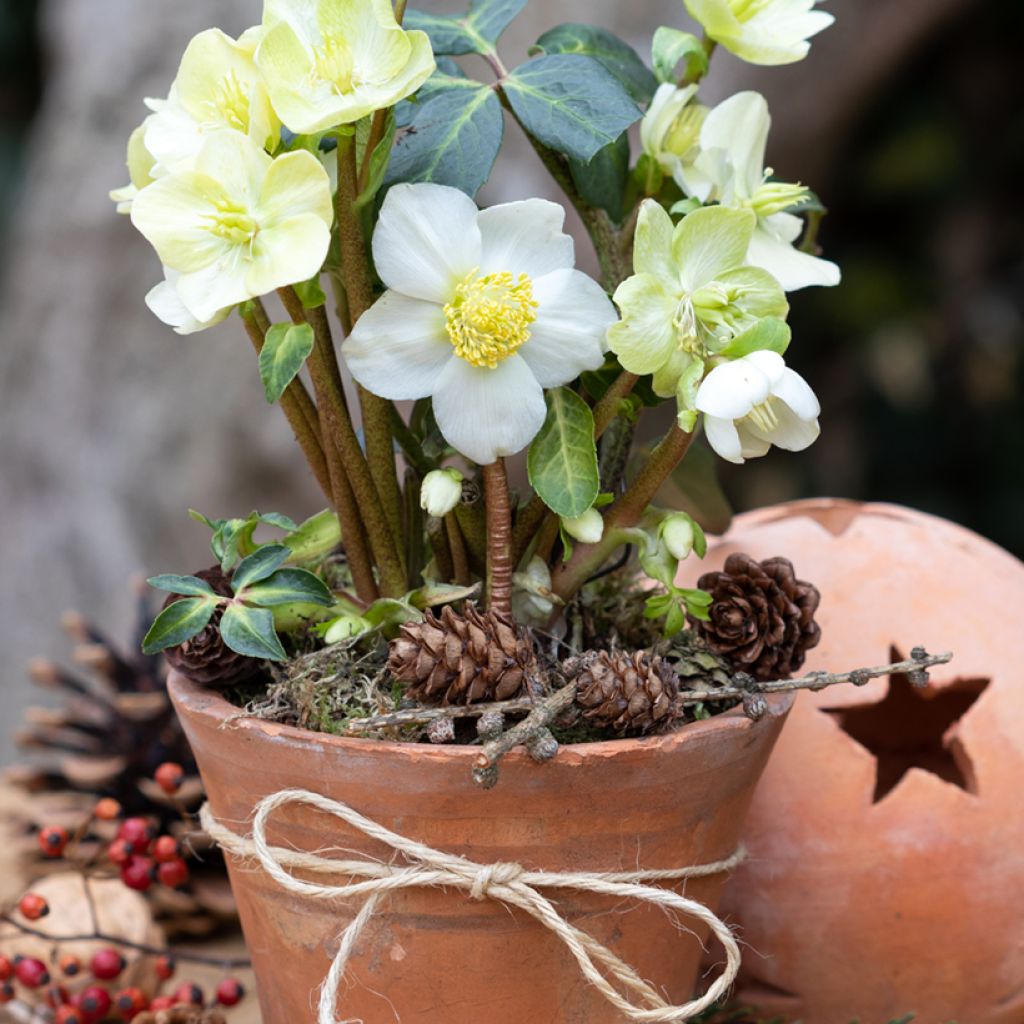
Helleborus niger - Christmas Rose (seeds)
Helleborus niger - Christmas Rose (seeds)
Helleborus niger
Christmas Rose, Black Hellebore
Back-to-school special offer!
Get €10 off for every €50 you spend! And get up to €40 off on a single order.
How does it work?
1. Shop your favourites
Add your favourite plants to your basket. For every €50 you spend (excluding delivery charges, store credit and the plastic-free option), you’ll receive a €10 voucher.
€50 spent = €10 voucher
€100 spent = €20 voucher
€150 spent = €30 voucher
€200 spent = €40 voucher
2. Place your order
Once your basket reaches one of the spending thresholds, place your order. You can even choose your delivery date!
3. Receive your voucher
As soon as your order has been shipped, you’ll receive an email containing your personal voucher code and its value.
4. Use it on your next order
Your voucher is valid for 90 days from the date you receive it. It can be used once only, on a new order worth at least the value of the voucher, excluding delivery charges.
Please note: Vouchers can be combined with other offers, but cannot be split or refunded.
Why not try an alternative variety in stock?
View all →
Available in 1 sizes
Available in 1 sizes
Available in 1 sizes
Available in 1 sizes
Available in 1 sizes
Available in 1 sizes
Available in 1 sizes
Available in 1 sizes

Available in 1 sizes
Available in 1 sizes
This plant carries a 6 months recovery warranty
More information
We guarantee the quality of our plants for a full growing cycle, and will replace at our expense any plant that fails to recover under normal climatic and planting conditions.
Would this plant suit my garden?
Set up your Plantfit profile →
Description
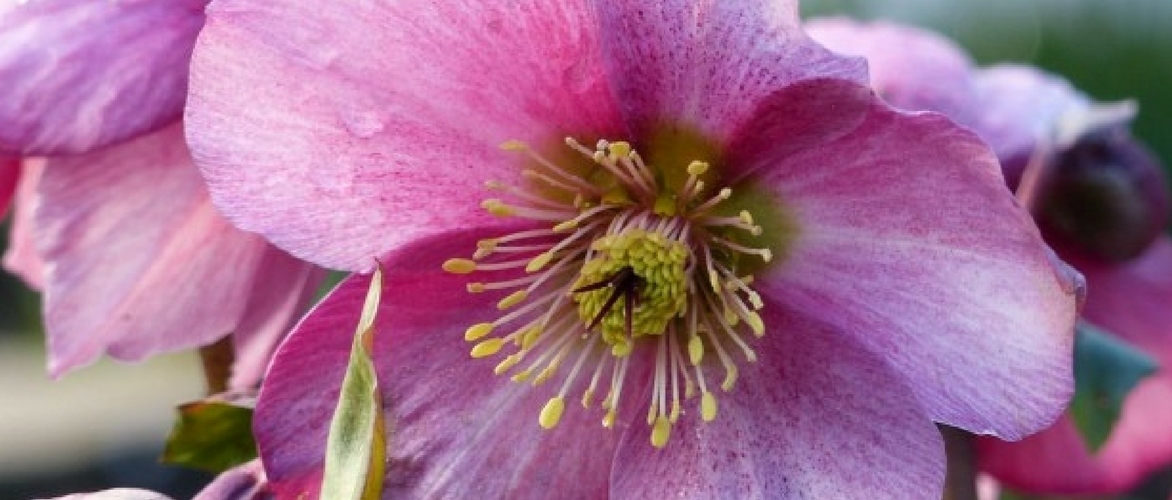
The Helleborus niger is the original botanical species of Christmas Rose or Black Hellebore. It is a robust perennial plant, with a long lifespan and exclusively prefers limestone soil. It forms a clump of large flexible leaves from which emerge simple white cup-shaped flowers in winter for several weeks, taking on green to pink-purple hues towards the end of flowering. For optimal growth, plant the Helleborus niger in partial shade in well-drained, fertile soil. This plant grows slowly but steadily, offering more flowers each year and tolerating root competition.
Native to Western and Central Europe, from Germany to Slovenia through Austria, Switzerland, and Italy, the Helleborus niger is a perennial plant of the Ranunculaceae family that readily hybridizes with other species like Helleborus orientalis or H.argutifolius, producing charming and easy-to-cultivate hybrids from random seedlings. The Black Hellebore is a very robust plant, long-lived and highly cold-resistant, adapting to most soils and tolerating summer drought fairly well, although it prefers some coolness. In its natural habitat, it thrives in forests covering the slopes of the Central and Eastern Alps, between 300 and 1800m altitude, exclusively on limestone soil. The plant grows in a tuft of basal leaves, 30 cm tall and 50 cm wide. It consists of bright green leaves, divided into 5 to 7 lanceolate, toothed, fairly wide leaflets. The leaves last about 8 months before disappearing, while new ones are already emerging from the ground. Between December and March, brownish stems appear bearing 1 to 3 simple flowers, 4.5 to 8 cm in diameter. These are cup-shaped flowers, slightly nodding downwards. Their colour ranges from pure white, with a pinkish reverse, to pink-purple depending on their age. The centre is filled with yellow stamens. The Hellebore is a plant that dislikes being moved once established, with young plants sometimes taking 2 years to bloom. The seeds, produced abundantly, are sown by ants in April-May. They germinate easily after exposure to cold, during the following winter.
Use hellebores to create a rich and colourful garden scene, combining them with brighter shaded woodland plants. The Black Hellebore has only one requirement: a deep, fertile, limestone soil, even if it is clayey and somewhat dry in summer. Plant it in groups, like a bouquet, near the entrance of your house, in a shaded spot to fully enjoy its bright and early flowering. It perfectly lights up a shaded area, whether on the edge of a grove or understorey, alongside Euphorbia amygdaloides, Geranium macrorrhizum, Glechoma hederacea, wood anemones, corydalis or spring-flowering bulbs, enriching your garden landscape.
Flowering
Foliage
Plant habit
Botanical data
Helleborus
niger
Ranunculaceae
Christmas Rose, Black Hellebore
Cultivar or hybrid
Planting and care
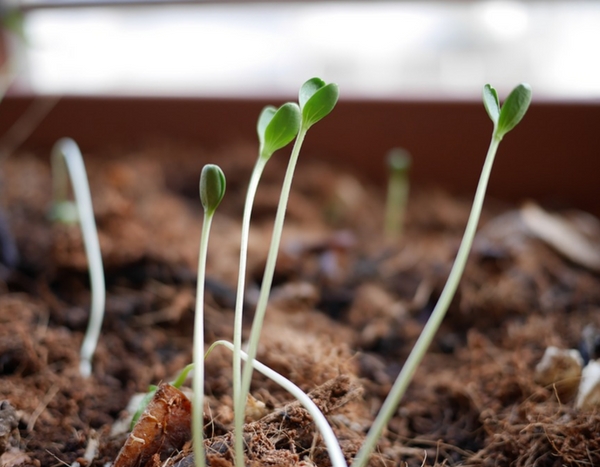
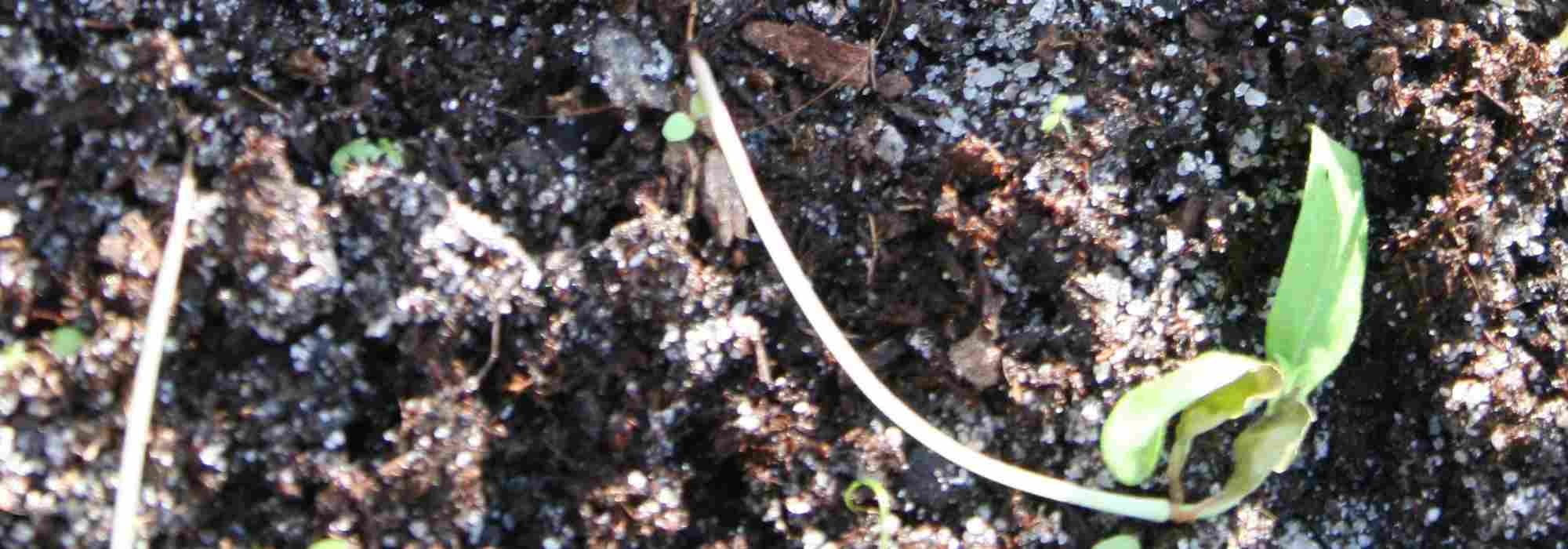
Hellebore seeds may require a vernalization period (cold storage) to germinate. Sow the seeds immediately upon receipt in pots or trays filled with moist compost and cover them with a very fine pinch of compost or vermiculite. After sowing, enclose the trays or pots in a clear plastic bag and keep them around 20°C for 3 months. Then, place the enclosed container in its bag in a refrigerator for a 3-month period. After this cold period, return the seedlings to 20°C. Germination may be slow. Regularly check the pots and carefully remove the germinating seedlings as they appear, to plant them when manageable in 7.5 cm pots or trays. If germination has not occurred during this period, repeat the cold/hot cycle as indicated above.
Another germination method is to sow as follows: enclose the seedlings in a clear plastic bag and place them in a cold frame in a sheltered area of the garden. Regularly check the moisture of the compost, which should not dry out. Germination can take up to a year. The recommended methods for germinating seeds of this particular variety actually mimic how seeds germinate in natural conditions. By following these instructions, you should achieve a good germination rate.
Gradually acclimate the young plants to cooler conditions for a few weeks before planting them, after all risk of frost, maintaining a spacing of 45cm between each plant. Plant hybrid hellebores in a cool, humus-rich, fertile, well-drained soil, in non-burning sun or partial shade. Avoid moving a well-established hellebore.
The roots should not completely dry out in summer. Hellebores can fall victim to a cryptogamic disease transmitted by aphids, known as black spot disease. Remove old leaves from deciduous species or spotted leaves from evergreen species when floral buds appear. Remove faded flowers after seed drop. They can also suffer from grey rot or die from collar rot. This often stems from poor growing conditions, in overly wet situations.
On a balcony or terrace, plant them in pots 4 to 5 times larger than their size, as they need space to develop their root system. Very hardy, most hellebores can withstand negative temperatures down to -15°C without suffering, allowing them to adapt to almost all regions of the UK.
Sowing period
Intended location
Planting & care advice
-
-

-
-
-
-
-

-

This item has not been reviewed yet - be the first to leave a review about it.
Recently viewed products
Haven't found what you were looking for?
Hardiness is the lowest winter temperature a plant can endure without suffering serious damage or even dying. However, hardiness is affected by location (a sheltered area, such as a patio), protection (winter cover) and soil type (hardiness is improved by well-drained soil).

The flowering period indicated on our website applies to countries and regions located in USDA zone 8 (France, the United Kingdom, Ireland, the Netherlands, etc.)
It will vary according to where you live:- In zones 9 to 10 (Italy, Spain, Greece, etc.), flowering will occur about 2 to 4 weeks earlier.
- In zones 6 to 7 (Germany, Poland, Slovenia, and lower mountainous regions), flowering will be delayed by 2 to 3 weeks.
- In zone 5 (Central Europe, Scandinavia), blooming will be delayed by 3 to 5 weeks.
In temperate climates, pruning of spring-flowering shrubs (forsythia, spireas, etc.) should be done just after flowering.
Pruning of summer-flowering shrubs (Indian Lilac, Perovskia, etc.) can be done in winter or spring.
In cold regions as well as with frost-sensitive plants, avoid pruning too early when severe frosts may still occur.
The planting period indicated on our website applies to countries and regions located in USDA zone 8 (France, United Kingdom, Ireland, Netherlands).
It will vary according to where you live:
- In Mediterranean zones (Marseille, Madrid, Milan, etc.), autumn and winter are the best planting periods.
- In continental zones (Strasbourg, Munich, Vienna, etc.), delay planting by 2 to 3 weeks in spring and bring it forward by 2 to 4 weeks in autumn.
- In mountainous regions (the Alps, Pyrenees, Carpathians, etc.), it is best to plant in late spring (May-June) or late summer (August-September).
The harvesting period indicated on our website applies to countries and regions in USDA zone 8 (France, England, Ireland, the Netherlands).
In colder areas (Scandinavia, Poland, Austria...) fruit and vegetable harvests are likely to be delayed by 3-4 weeks.
In warmer areas (Italy, Spain, Greece, etc.), harvesting will probably take place earlier, depending on weather conditions.
The sowing periods indicated on our website apply to countries and regions within USDA Zone 8 (France, UK, Ireland, Netherlands).
In colder areas (Scandinavia, Poland, Austria...), delay any outdoor sowing by 3-4 weeks, or sow under glass.
In warmer climes (Italy, Spain, Greece, etc.), bring outdoor sowing forward by a few weeks.
Shipping country and language
Your country of residence may be:
Your country of residence is:
For a better user experience on our website, you can select:
Your shipping country:
-
 Austria
-
 Belgium
-
 Bosnia & Herzegovina
-
 Bulgaria
-
 Croatia
-
 Cyprus
-
 Czechia
-
 Denmark
-
 Estonia
-
 Finland
-
 France
-
 Germany
-
 Greece
-
 Hungary
-
 Iceland
-
 Ireland
-
 Italy
Italy
-
 Latvia
-
 Liechtenstein
-
 Lithuania
-
 Luxembourg
-
 Malta
Malta
-
 Netherlands
-
 Poland
-
 Portugal
-
 Romania
-
 Serbia
-
 Slovakia
-
 Slovenia
-
 Spain
Spain
-
 Sweden
-
 Switzerland
Language:
-
French
-
 English
-
Spanish
-
Italian
-
German
-
Portuguese
-
Dutch
-
Finnish
My Account
Hello
My wish lists
My cart
Log in / Register
Existing customer?
This form is protected by reCAPTCHA - the Google Privacy Policy and Terms of Service apply.
New customer?
Create an account to track your orders, access our customer service and, if you wish, make the most of our upcoming offers.