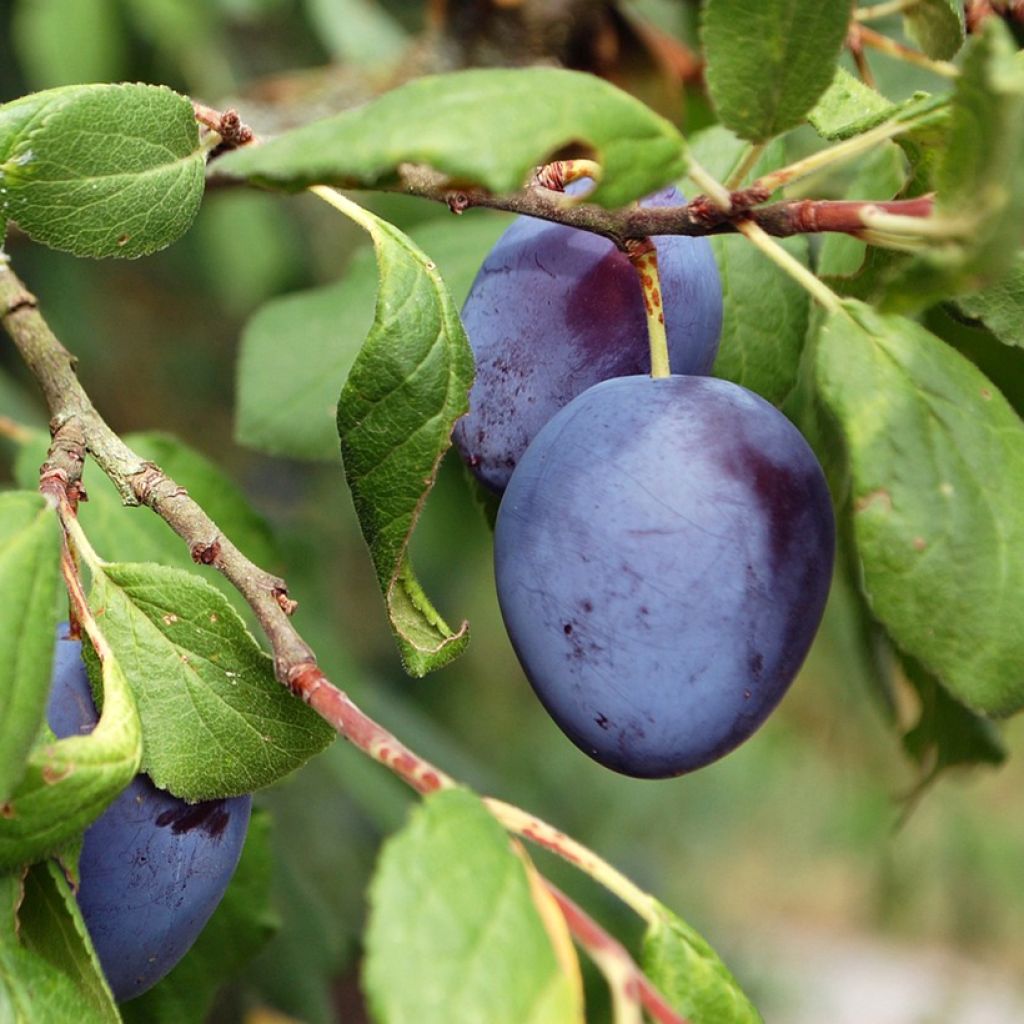
Prunus domestica Royale de Tours - Common plum
Prunus domestica Royale de Tours - Common plum
Prunus domestica Royale de Tours
Plum, European plum, Common plum
Back-to-school special offer!
Get €10 off for every €50 you spend! And get up to €40 off on a single order.
How does it work?
1. Shop your favourites
Add your favourite plants to your basket. For every €50 you spend (excluding delivery charges, store credit and the plastic-free option), you’ll receive a €10 voucher.
€50 spent = €10 voucher
€100 spent = €20 voucher
€150 spent = €30 voucher
€200 spent = €40 voucher
2. Place your order
Once your basket reaches one of the spending thresholds, place your order. You can even choose your delivery date!
3. Receive your voucher
As soon as your order has been shipped, you’ll receive an email containing your personal voucher code and its value.
4. Use it on your next order
Your voucher is valid for 90 days from the date you receive it. It can be used once only, on a new order worth at least the value of the voucher, excluding delivery charges.
Please note: Vouchers can be combined with other offers, but cannot be split or refunded.
Why not try an alternative variety in stock?
View all →
Available in 0 sizes
Available in 0 sizes
Available in 0 sizes
Available in 1 sizes
Available in 1 sizes
Available in 5 sizes
Available in 1 sizes
Available in 0 sizes
Available in 2 sizes
Available in 2 sizes
This plant carries a 12 months recovery warranty
More information
We guarantee the quality of our plants for a full growing cycle, and will replace at our expense any plant that fails to recover under normal climatic and planting conditions.
Description
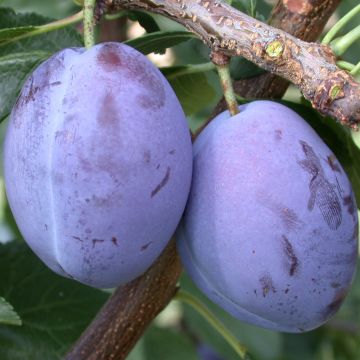
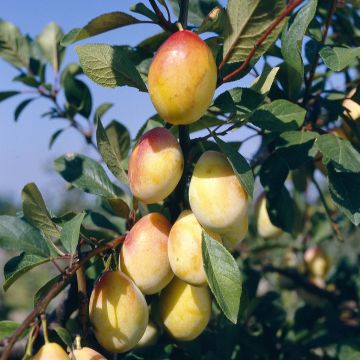
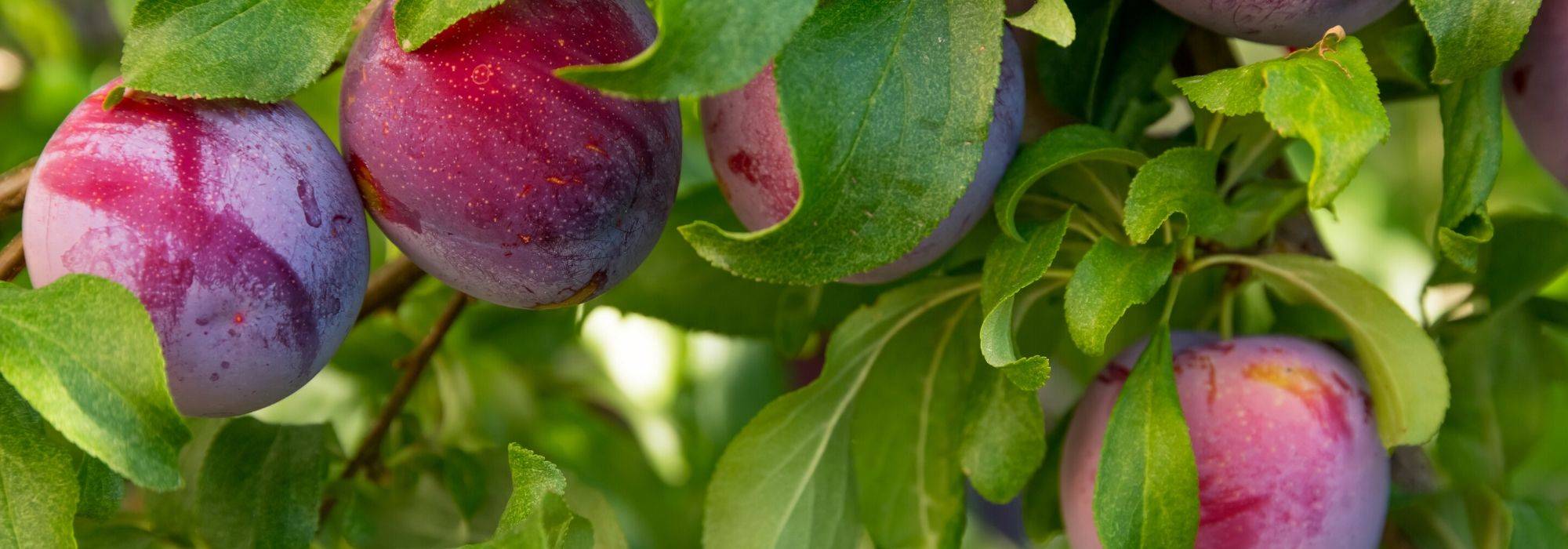
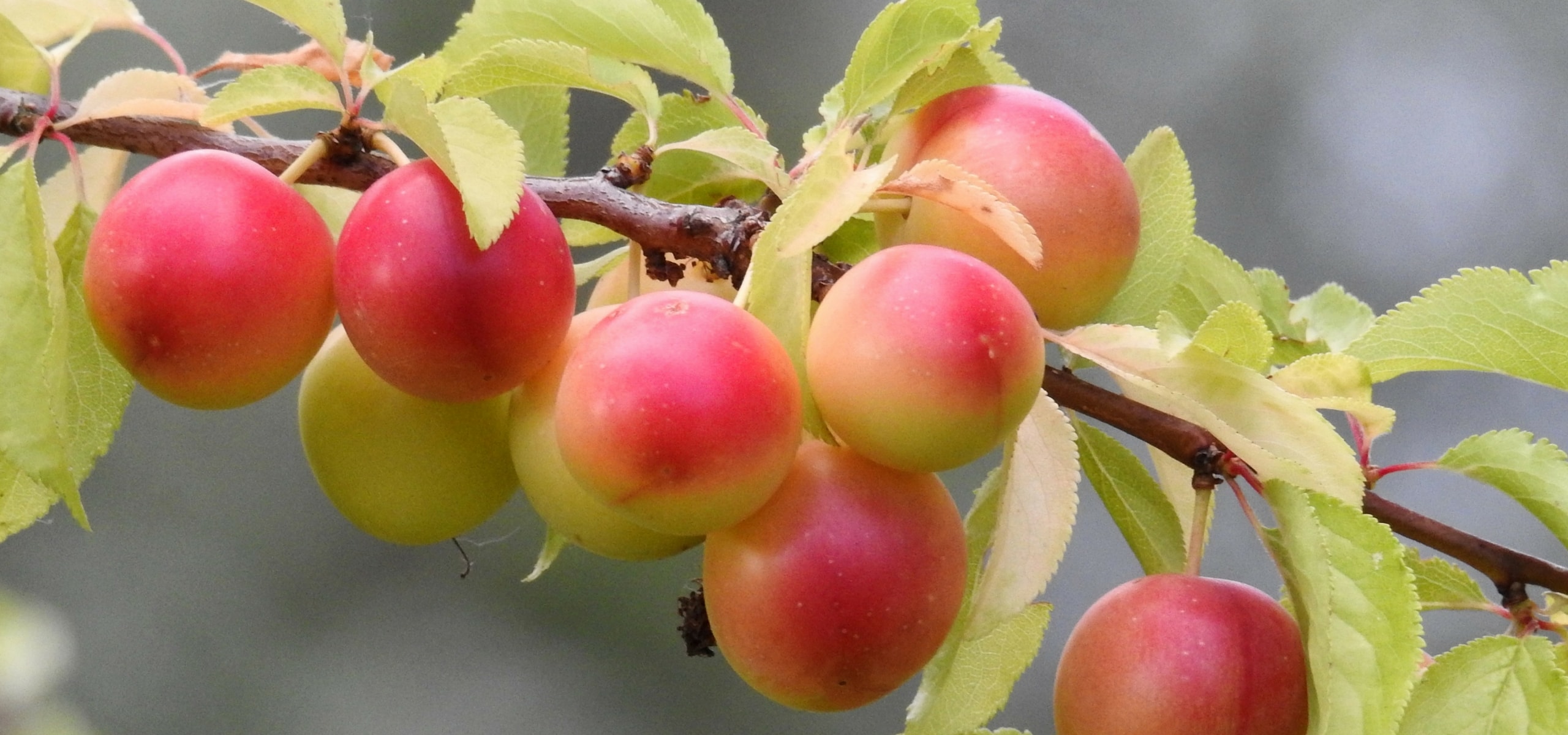
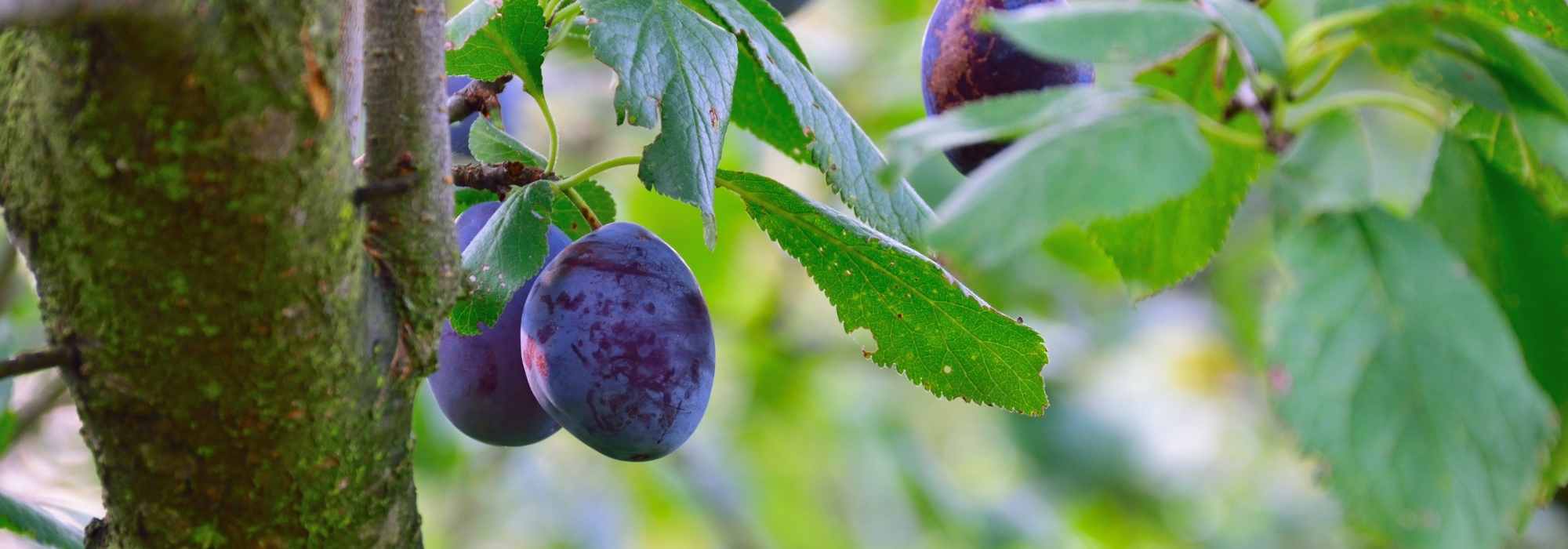
Prunus domestica 'Royale de Tours' is a Plum tree that will delight enthusiasts of old varieties. This medium-sized tree, very floriferous and productive, produces large purple-red plums with hints of yellow. Their thin skin protects the yellow-green, juicy and very sweet flesh. Hardy and easy to cultivate, this plum tree will require another pollinator nearby to bear fruit well.
The Prunus genus is part of the vast family of Rosaceae, which houses the vast majority of our fruit trees (Apple trees, Apricot trees, Cherry trees...), small fruits (Blackberries, Raspberries, Strawberries), many wild plants from the countryside and forests, as well as numerous ornamental plants, herbaceous (Lamb's quarters, or Acaena) or woody (Physocarpus...). There are over 300 species of Prunus, including trees and bushes, wild, fruit-bearing or ornamental.
The Prunus domestica that grows spontaneously in Europe originated from Anatolia and the Caucasus, where it grows up to 1300 m. Cultivated for over 2000 years in Western Asia, particularly in Damascus, it may have resulted from cross-breeding between the Sloe (P. spinosa) and the Myrobalan Plum (P. cerasifera). In the wild, it can reach heights of 8 to 10 m and there are several hundred cultivated varieties known.
'Royale de Tours' is a variety of unknown origin, cultivated since at least 1736. With quite vigorous growth, the tree has a spreading habit, reaching approximately 6 m in height and 5 m in spread. The medium to dark green leaves are wide elliptical, about one third longer than they are wide. The leaf has quite deep teeth. The flowering is very abundant and occurs around the end of March, depending on the region. This flowering is quite sensitive to late frosts, which is why it is advisable to shelter this tree from cold winds, for example by planting it against a well-exposed stone wall in the sun. The simple white flowers with five petals are honey-bearing. As this variety is not sufficiently self-fertile, it is necessary to plant another variety nearby, such as 'Reine Claude dorée' or 'Reine Claude d'Althan' to ensure good fertilisation. Once this is secured, the fruit set rate (that is to say the transformation of the ovary into fruit) is excellent. This results in large, rounded plums, with a well-marked albeit shallow central furrow. The thin epidermis is light red on the shaded side and purplish red on the sunny side, with very fine yellow speckles giving a slightly grainy appearance. The flesh is yellow, slightly greenish, juicy and sweet, truly succulent to taste. The plums reach ripeness in late July and August, and it is preferable to pick them quite quickly to preserve their taste qualities.
The 'Royale de Tours' Plum tree, reminiscent of days gone by, could serve as the starting point for a small heritage orchard, where you can associate it with other old varieties. The Apple tree 'Reinette Clochard' would be a good companion, offering you beautiful yellow-dominant apples with sweet and tangy flesh, provided you plant a pollinator nearby. Another fruit tree from the late 18th century, the famous Pear tree 'William's Bon Chrétien' will also be part of the mix, along with 'Louise Bonne d'Avranche', slightly older and a bit less known, with fine and juicy flesh. And to add a touch of originality, plant a Medlar (Mespilus germanica), a wild fruit tree appreciated in the past and somewhat fallen out of favour, but which will fit well with the theme of your orchard.
Plant habit
Fruit
Flowering
Foliage
Planting and care
The 'Royale de Tours' Plum tree prefers to grow in deep clay-limestone soil, but it can adapt to other types of soil. However, it is quite demanding in terms of sunlight, and while it is fairly hardy (down to about -20 °C), it does not like to be exposed to winter winds. Therefore, it is essential to choose its location carefully at the outset. Then, dig a planting hole at least 50 cm wide in all directions, and even more, as this tree enjoys deep soils. It also appreciates a certain level of moisture so water it regularly during the summer and in autumn during the first few years. Once well-rooted, it becomes a resilient and low-maintenance tree.
Planting period
Intended location
Care
Planting & care advice
-
-
-
-
-
-
-

-
This item has not been reviewed yet - be the first to leave a review about it.
Recently viewed products
Haven't found what you were looking for?
Hardiness is the lowest winter temperature a plant can endure without suffering serious damage or even dying. However, hardiness is affected by location (a sheltered area, such as a patio), protection (winter cover) and soil type (hardiness is improved by well-drained soil).

The flowering period indicated on our website applies to countries and regions located in USDA zone 8 (France, the United Kingdom, Ireland, the Netherlands, etc.)
It will vary according to where you live:- In zones 9 to 10 (Italy, Spain, Greece, etc.), flowering will occur about 2 to 4 weeks earlier.
- In zones 6 to 7 (Germany, Poland, Slovenia, and lower mountainous regions), flowering will be delayed by 2 to 3 weeks.
- In zone 5 (Central Europe, Scandinavia), blooming will be delayed by 3 to 5 weeks.
In temperate climates, pruning of spring-flowering shrubs (forsythia, spireas, etc.) should be done just after flowering.
Pruning of summer-flowering shrubs (Indian Lilac, Perovskia, etc.) can be done in winter or spring.
In cold regions as well as with frost-sensitive plants, avoid pruning too early when severe frosts may still occur.
The planting period indicated on our website applies to countries and regions located in USDA zone 8 (France, United Kingdom, Ireland, Netherlands).
It will vary according to where you live:
- In Mediterranean zones (Marseille, Madrid, Milan, etc.), autumn and winter are the best planting periods.
- In continental zones (Strasbourg, Munich, Vienna, etc.), delay planting by 2 to 3 weeks in spring and bring it forward by 2 to 4 weeks in autumn.
- In mountainous regions (the Alps, Pyrenees, Carpathians, etc.), it is best to plant in late spring (May-June) or late summer (August-September).
The harvesting period indicated on our website applies to countries and regions in USDA zone 8 (France, England, Ireland, the Netherlands).
In colder areas (Scandinavia, Poland, Austria...) fruit and vegetable harvests are likely to be delayed by 3-4 weeks.
In warmer areas (Italy, Spain, Greece, etc.), harvesting will probably take place earlier, depending on weather conditions.
The sowing periods indicated on our website apply to countries and regions within USDA Zone 8 (France, UK, Ireland, Netherlands).
In colder areas (Scandinavia, Poland, Austria...), delay any outdoor sowing by 3-4 weeks, or sow under glass.
In warmer climes (Italy, Spain, Greece, etc.), bring outdoor sowing forward by a few weeks.
Shipping country and language
Your country of residence may be:
Your country of residence is:
For a better user experience on our website, you can select:
Your shipping country:
-
 Austria
-
 Belgium
-
 Bosnia & Herzegovina
-
 Bulgaria
-
 Croatia
-
 Cyprus
-
 Czechia
-
 Denmark
-
 Estonia
-
 Finland
-
 France
-
 Germany
-
 Greece
-
 Hungary
-
 Iceland
-
 Ireland
-
 Italy
Italy
-
 Latvia
-
 Liechtenstein
-
 Lithuania
-
 Luxembourg
-
 Malta
Malta
-
 Netherlands
-
 Poland
-
 Portugal
-
 Romania
-
 Serbia
-
 Slovakia
-
 Slovenia
-
 Spain
Spain
-
 Sweden
-
 Switzerland
Language:
-
French
-
 English
-
Spanish
-
Italian
-
German
-
Portuguese
-
Dutch
-
Finnish
My Account
Hello
My wish lists
My cart
Log in / Register
Existing customer?
This form is protected by reCAPTCHA - the Google Privacy Policy and Terms of Service apply.
New customer?
Create an account to track your orders, access our customer service and, if you wish, make the most of our upcoming offers.