Whether shrubby or herbaceous, peonies beautify the garden every spring. With their vibrant white, cream, yellow, pink, or red dresses, they captivate and play the divas… and sometimes, they can be quite elusive when it comes to taking the stage. Imagine for a moment that you decide to deliberately sabotage the show, not out of malice, but simply for the pleasure of seeing how these grand ladies would react?
In this article, we will explore with a dash of irony and a pinch of sarcasm the most effective methods to fail with your peonies, while inadvertently slipping in the secrets to achieving success. Because yes, even in failure, there are lessons to be learned, right?
Lesson 1: Ignore the sunlight needs of the peony
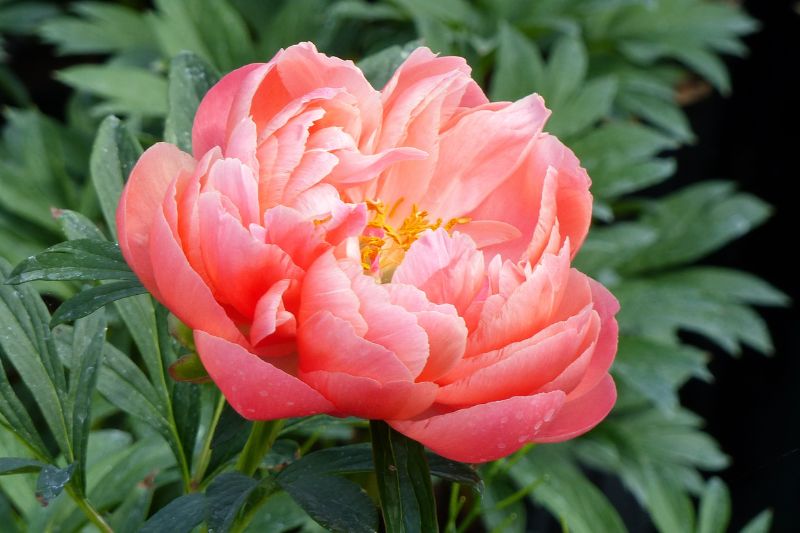
To fail with your peonies right from the planting stage, placing them in the shade is a masterstroke. It is there, under the cover of trees and shielded from the sun's rays, that you unknowingly create the perfect setting for a despairing performance. Peonies, deprived of their main light source, will become leggy... or worse, may not flower at all!
But what if, in a fit of rebellion against this scenario of shade and sadness, you decided to change the script? Yes, these garden divas demand sunlight as their spotlight, and that for at least six hours a day! This is their secret to spectacular flowering.
Lesson 2: Neglect the type of soil
In this second act of our gardening opera, the soil plays the role of the conductor, dictating the tempo and quality of our plant stars' performance. By deliberately choosing compact, clayey soil that is, of course, waterlogged, you compose a dissonant symphony for your peonies. Their roots, like frustrated musicians, struggle to find their rhythm, suffocated in an environment that does not allow them to breathe… or to thrive.
Yet, in a surge of rebellion against this underground cacophony, what if you decided to tune the violins? For the secret lies in the composition of the soil! Indeed, peonies appreciate well-drained soil enriched with organic matter (compost will be your friend) and preferably with a neutral pH. The roots of the peonies will then find a vibrant echo, nourishing and allowing for a flowering worthy of the loudest ovations.
Lesson 3: Water too much or not enough
Let’s continue our improvisational theatre, with the main character being: watering. Alternate between abundant watering, worthy of a torrent, and the dryness of a desert. You will plunge your peonies into a state of constant stress. The roots of your plants, like dancers trying to follow chaotic music, are sometimes drowned by a wave of water, sometimes desperately searching for a drop to drink in cracked, thirsty soil. There, it’s certain: the dance will soon come to an end!
However, if you feel inclined not to let them drown or dry out, the key lies in seeking the middle ground. Practice the dance of measured watering, watering when the soil becomes dry to a depth of 2 cm. This balance will provide your peonies with the ideal stage to shine brightly.
Lesson 4: Ignore diseases and pests
Let’s return to our garden scene, where you decide that diseases and pests also have a role to play in this play, without being countered, thus taking centre stage. Your peonies, the main actresses, find themselves vulnerable, exposed to a scenario where they struggle alone against sometimes invisible… but dreadfully effective adversaries. Without your intervention, the garden becomes a tragic scene where fungal diseases and pests become the leading roles. That’s what you wanted, right?
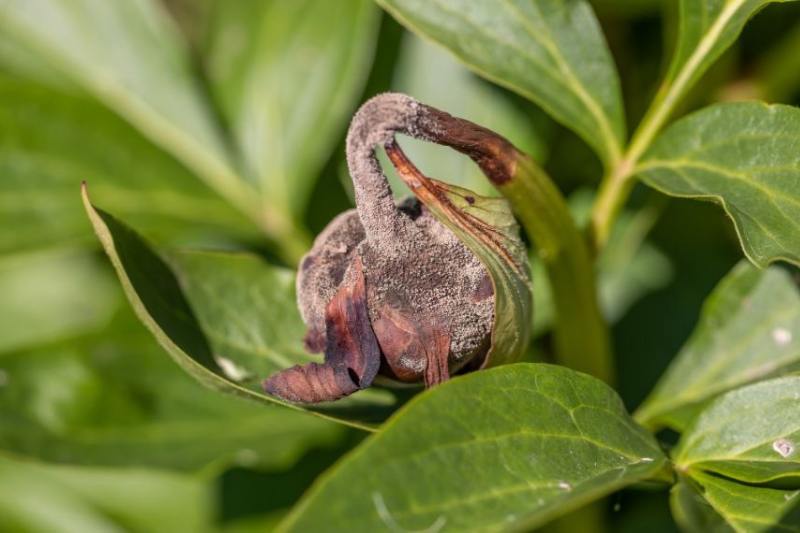
However, by taking on the role of the attentive gardener-director, scrutinising the set for signs of impending harmful intrigue, you can take the necessary measures to protect your peonies. Intervening with targeted treatments and preventive care is like rewriting the script in favour of your peonies, allowing them to play their role with brilliance.
Lesson 5: Improvised pruning
And for the final act of this article, what if you transformed into "Edgar with the silver hands," a doppelgänger of the famous Edward, but with less talent? Prune the peonies with scissors that you haven’t cleaned beforehand, without a plan or discernment. You might think you’re shaping an avant-garde masterpiece, while in reality… you’re just improvising, cutting here and there, in the middle of the flowering period! This reckless approach is the perfect scenario for a botanical drama, where the peonies, the actresses of their own tragedy, find themselves stripped and weakened… The perfect melodrama!
However, for gardeners who, in a burst of controlled creativity, aspire to sculpt their garden, wait until after flowering to intervene, when the curtain falls and the peonies are ready to regenerate backstage. This thoughtful pruning, far from being an improvisation, is a meticulous rehearsal for next year’s show. It not only helps keep the plant healthy but also encourages even more spectacular flowering, ensuring that the next act is welcomed with even more brilliance.
Whether shrubby or herbaceous, peonies beautify the garden every spring. With their vibrant white, cream, yellow, pink, or red dresses, they captivate and play the divas… and sometimes, they can be quite elusive when it comes to taking the stage. Imagine for a moment that you decide to deliberately sabotage the show, not out of […]
The peony is one of my little spring pleasures. What a joy to come back from the garden with an armful of multicoloured flowers to make into bouquets. In good conditions, they last a few days in a vase, five days at most, but have incomparable charm and generosity. Today I share my tips for making beautiful peony bouquets!
1/ Choose peonies while still in bud, nicely rounded but not too tight. Buds will open in the vase, giving you longer enjoyment.
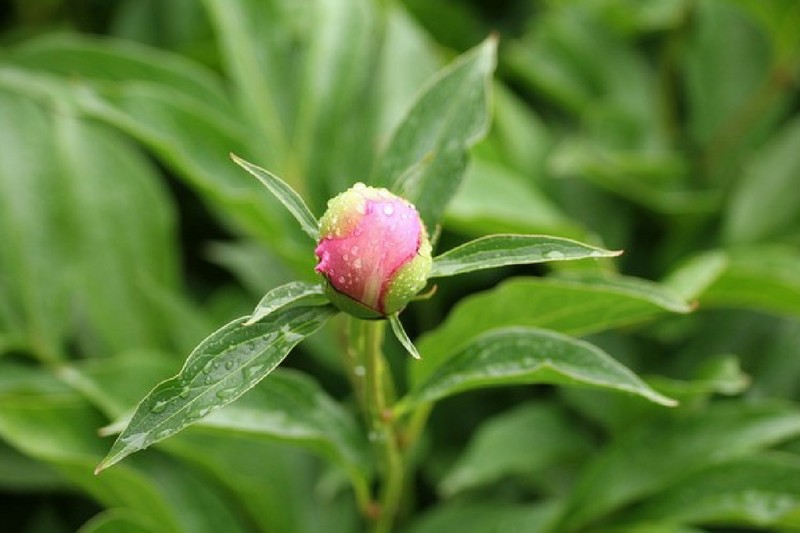
Peony bud slightly open; it will open in the vase.
2/ Remove leaves from lower part of stem; they must not sit in water.
3/ Cut stems at an angle with sharp scissors to optimise their hydration.
4/ Peonies need plenty of water: fill the vase well and, if desired, add a pinch of bicarbonate of soda.
5/ Change water and recut stems a little each day.
6/ Keep bouquet in a cool place, out of direct sun.
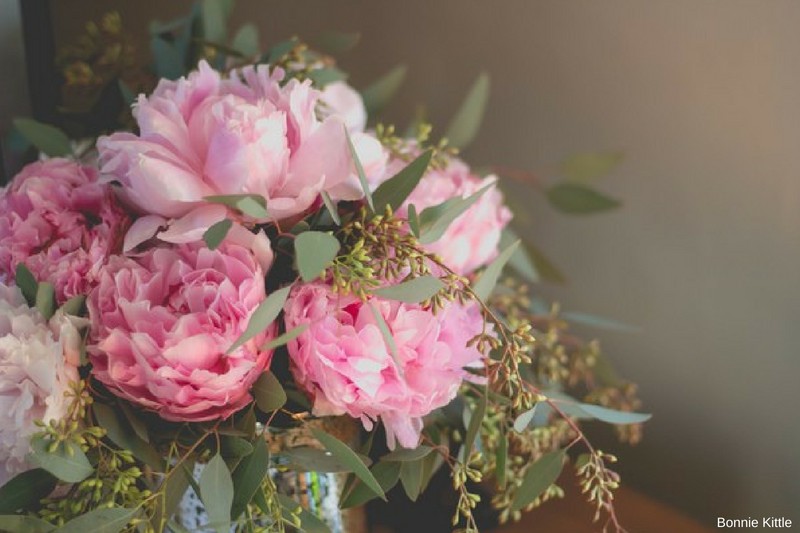
Peony is a flower that stands on its own. For a bouquet, you can use it alone or mix different colours. You can also combine it with other flowers: gypsophila, lilac, astilbe, cow parsley (Anthriscus sylvestris), small-flowered roses, Alchemilla, Smyrnium perfoliatum, spirea branches, or fern fronds or eucalyptus stems. Let your imagination run free!
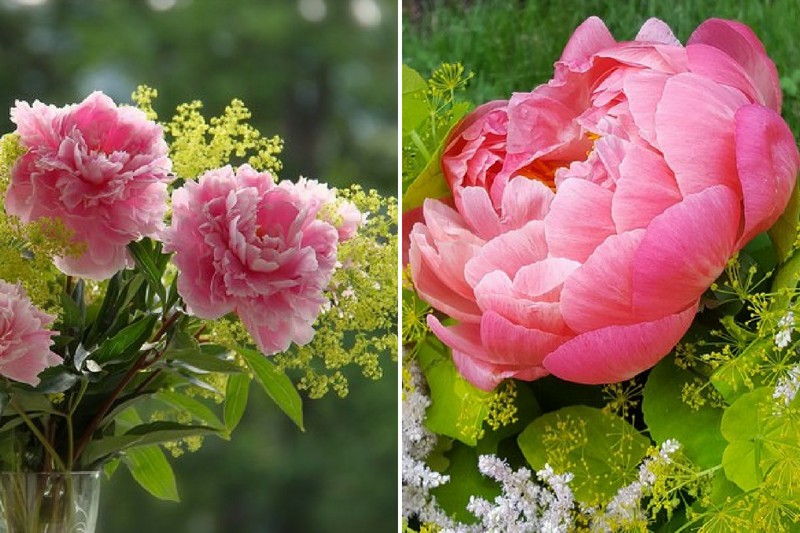
Examples of happy pairings: pink peony with Alchemilla mollis (left) and with Smyrnium perfoliatum (right).
The peony is one of my little spring pleasures. What a joy to come back from the garden with an armful of multicoloured flowers to make into bouquets. In good conditions, they last a few days in a vase, five days at most, but have incomparable charm and generosity. Today I share my tips for […]
Peony or Paeonia continues to enchant us with its large flowers in various shapes and colours. This is what makes it so charming!
Its generous flowering in spring is accompanied by great ease of cultivation, excellent hardiness, and good resistance to diseases... not to mention that some varieties are delightfully fragrant. It is a beauty with a captivating charm that, although it does not bloom for long, returns faithfully for many years.
HERBACEOUS PEONIES, SHRUB PEONIES, AND HYBRIDS
- The herbaceous peonies (Paeonia lactiflora) are the most well-known. I particularly love them for their longevity and easy-going nature. A staple of traditional gardens, they thrive in both old and contemporary gardens. Personally, I prefer them simple or semi-double, or even with an anemone heart if I fancy a touch of whimsy. They blend quite well into the decor of my naturalistic garden. Well, I admit, I also have some doubles. In fact, one of them comes from my great-grandmother's garden, passed down from mother to daughter, from gardener to gardener. Suffice it to say, I cherish it!
- The shrub or tree peonies (Paeonia suffruticosa) form majestic bushes with large flowers adorned with a lovely bouquet of golden stamens. They grow very slowly, but what a spectacle after a few years! I started planting them five years ago. First, a Paeonia delavayi var. lutea from a seedling, a gift from a friend, which I patiently waited for three years. I particularly admire its young copper-tinted foliage in spring, finely cut, and its pure yellow flowers. Another shrub peony joined the garden last year, namely Paeonia suffruticosa 'Charming Garden', but this one has yet to bloom. I shall be patient!
- Finally, the Itoh hybrids are the result of cross-breeding between a herbaceous and a shrub peony. They are characterised by exceptional robustness and traits from both parent types. The flowering period is extended, the beauty of the foliage lasts all season, and the colour palette is varied. I haven't planted any yet, but it won't be long.
A MULTITUDE OF SHAPES AND COLOURS
Peony flowers can be classified into several categories, knowing that the boundary between them is not always clear. Moreover, the shape and colour of the flowers can vary from year to year depending on climatic conditions and soil quality.
That said, we distinguish between singles (P. 'Flame'), Japanese (P. 'Neon'), anemones (P. 'Gay Paree'), crowns (P. 'Félix Crousse'), globular (P. 'Karl Rosenfield'), semi-doubles (P. 'Golden Treasure' and 'Lilac'), and doubles (P. 'Coral Sunset' and 'Sarah Bernardt').
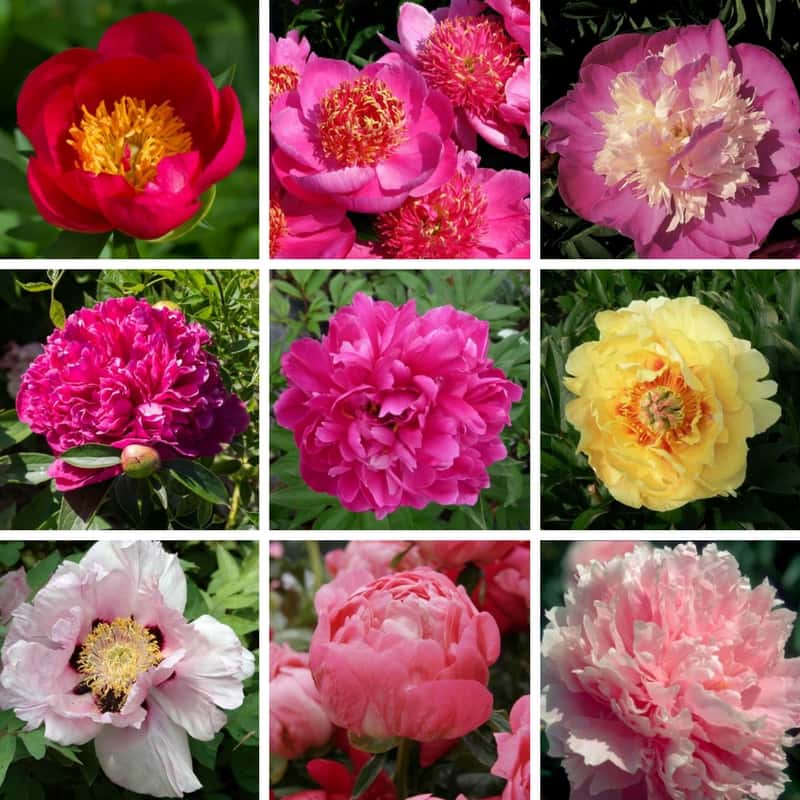
From left to right and top to bottom: Paeonia ‘Flame’ - Paeonia lactiflora ‘Neon’ - Paeonia ‘Gay Paree’ - Paeonia lactiflora ‘Felix Crousse’ - Paeonia lactiflora ‘Karl Rosenfield’ - Paeonia itoh ‘Garden Treasure’ - Paeonia ‘Lilac’ - Paeonia ‘Coral Sunset’ - Paeonia ‘Sarah Bernardt’
FRAGRANT FLOWERS
Peonies are renowned for their fragrance. They are famous in perfumery for their scents reminiscent of rose or lily of the valley. However, not all of them are fragrant! Generally, double-flowered peonies are more aromatic than single-flowered ones, but there are many exceptions. Among the varieties with the most remarkable fragrance are: ‘Myrtle Gentry’, ‘Alice Crousse’, ‘White Cap’, ‘Duchesse de Nemours’, and ‘Alice Harding’.
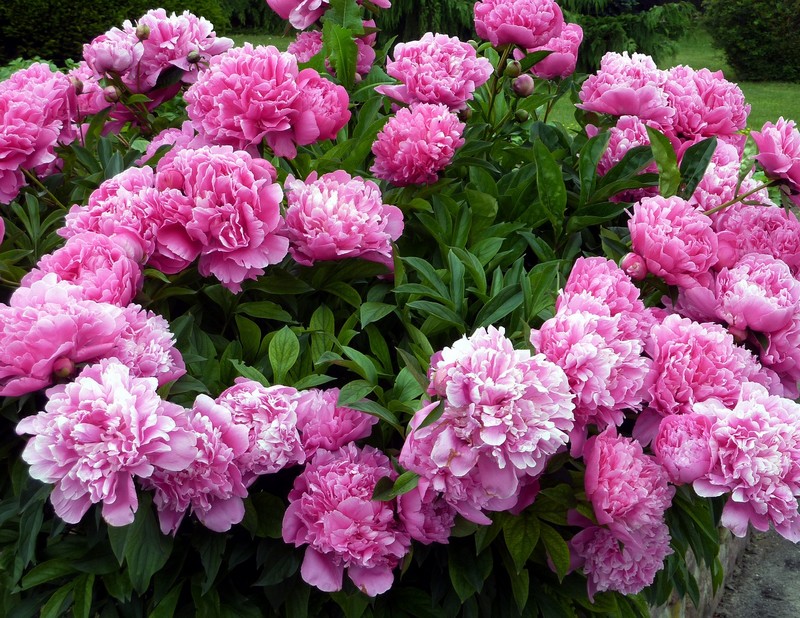
By the way, my ancestor's peony smells divine! When I sense rain approaching, I pick a bouquet to enjoy the flowers and their fragrance in the house.
WHERE DO PEONIES THRIVE?
The hardiness of peonies is no myth! They are not afraid of the cold and, with a few exceptions, they grow wild at altitudes where frosts are common. At worst, a few branches may suffer, but they will regrow beautifully the following spring. However, late frosts can impact flowering. I experienced this issue this spring, with frosts in May while the buds of my Paeonia delavayi var. lutea were already well-formed. Sheltered near a wall, most of its buds turned black, and a few survivors produced somewhat deformed flowers. In the rest of the garden, the herbaceous peonies simply did not bloom.
Choosing the right location is key to successful planting. Peonies thrive in the sun, otherwise, flowering may suffer. However, the ideal exposure varies depending on your geographical location. In Mediterranean regions, it is better to avoid full sun in the early afternoon. An east or southeast exposure is preferable. Similarly, in areas where late frosts are common (like mine in the Ardennes), prefer a west exposure to prevent the first rays of morning sun from causing too rapid a thaw, which can affect the quality of flowering. Elsewhere, full sun exposure is recommended. Note that a minimum of half a day of sun is necessary for good flowering.
Remember that peonies dislike waterlogged soils, so it is important to plant them in well-drained soil. In my clay soil, I have added plenty of humus (homemade compost, horse manure... an 8-year-old vintage from my farmer neighbours), as well as wood chips over the years to improve the soil. You can also add gravel or pumice at the bottom of the planting hole. These are greedy plants that do not appreciate competition. Mix good quality compost or well-decomposed manure into the planting soil. Be careful not to bury them too deeply: 2 to 3 cm of soil should cover the buds, no more! Finally, they do not like being moved, so choose the location of your new acquisition carefully; otherwise, it may sulk for 2 or 3 years before blooming again.
After that, maintenance consists of removing dead wood and dry or damaged parts when the buds start to swell in late winter for the shrub types, and simply cleaning the dry parts in March for the herbaceous types. A piece of cake!
TIPS FOR GOOD FLOWERING
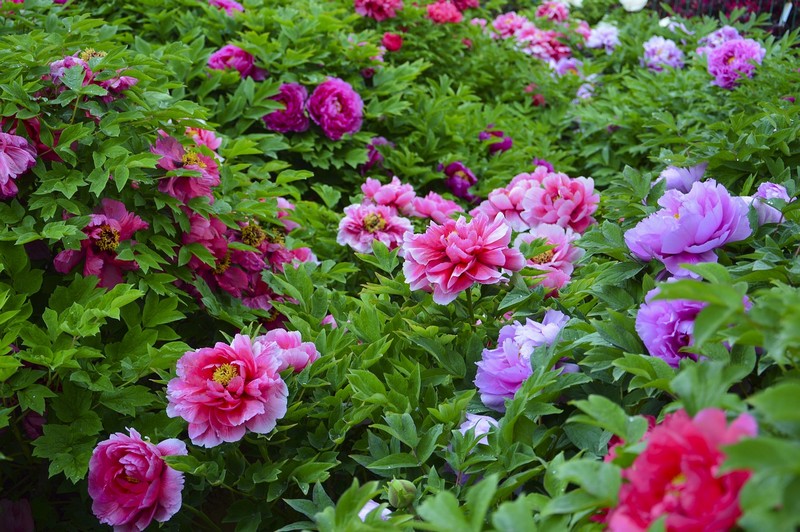
The first flowering of herbaceous peonies can occur between the first and third year after planting. This depends on the size of the plant. If it has one root and one eye, it will easily take three years to bloom. However, if it has four to five roots with three or four well-swollen eyes, there is a good chance it will bloom in the first spring if planted under good conditions.
The same goes for shrub peonies, but the probability of flowering is slightly lower in the first two years.
An application of humus is necessary every autumn. I spread a good amount of well-decomposed manure all around the plant. Then I bury it in the following spring during weeding. Peonies appreciate a potash boost that encourages flowering. However, be aware that nitrogen should be limited as it weakens the foliage and promotes the development of botrytis. Choose a fertiliser accordingly, or do as I do, a bit of wood ash each spring, and you're good to go!
Some peonies with fragile stems and particularly heavy flowers need support. This comes in the form of a metal circle with stakes to drive into the ground. Once the foliage develops, the device is completely hidden. It's simple and effective!
SUCCESSFUL PAIRINGS
Peonies lend themselves well to planting in borders or mixed beds. I find them wonderful with smaller flowers that highlight them, such as Cirsium rivulare ‘Atropurpureum’ or hardy geraniums, but also with irises, lupins, Centaurea montana, poppies, roses, alchemilla, delphiniums, alliums, and anthemis for an English garden, romantically appealing, or even with colourful foliage, particularly the purple of Sambucus nigra ‘Black Beauty’ or ‘Black Lace’.
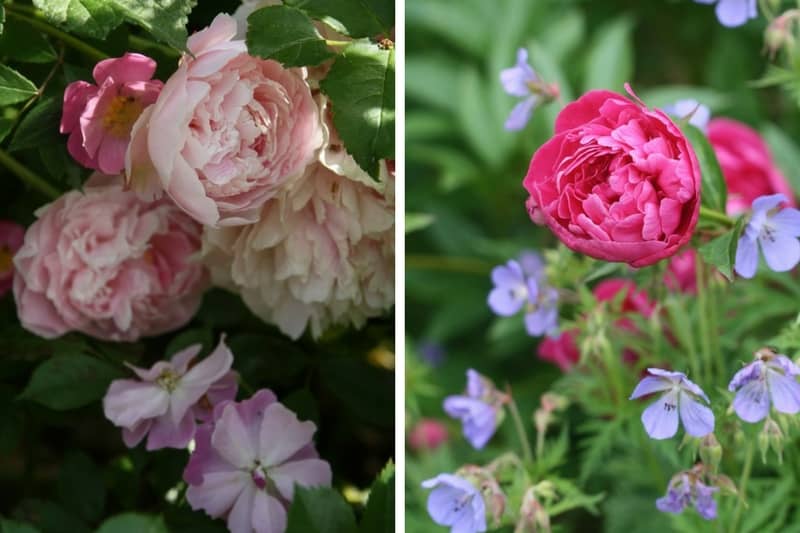
Paeonia lactiflora 'Sarah Bernardt' with the rose 'Lavender Dream' - Paeonia lactiflora from my ancestor with the Geranium pratense 'Mrs Kendall Clark'[/caption>
In my garden, the peonies ‘Bowl of Beauty’, ‘Springfield’, and ‘Do Tell’ are always very much admired by my visitors. They are surrounded by a variety of hardy geraniums, creating a very natural tableau.
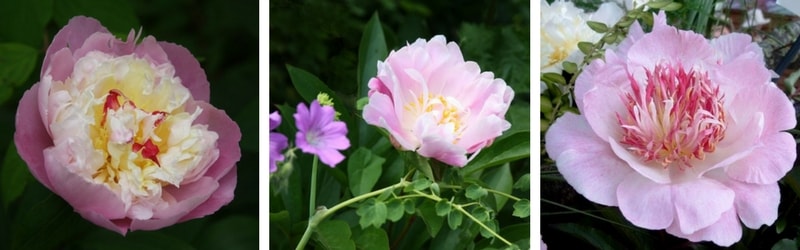 From left to right: Paeonia lactiflora 'Bowl of Beauty' - Paeonia lactiflora 'Springfield' - Paeonia lactiflora 'Do Tell'
And you, tell me, what are your favourite peonies?
Peony or Paeonia continues to enchant us with its large flowers in various shapes and colours. This is what makes it so charming! Its generous flowering in spring is accompanied by great ease of cultivation, excellent hardiness, and good resistance to diseases… not to mention that some varieties are delightfully fragrant. It is a beauty […]