In the soft glow of a bright interior or nestled within a terrarium with walls beaded with moisture, Begonia cleopatrae thrives in a terrarium, under a cloche, or in a dedicated display case for tropical plants where humidity is high. It pairs beautifully with moss like Selaginella apoda, the silver-veined Pilea glaucophylla 'Greyzy', or the small variegated foliage of Ficus pumila 'Bellus'. Placed in an indoor living wall, it adds a subtle yet highly decorative touch for those who can create a microclimate of patience and care.
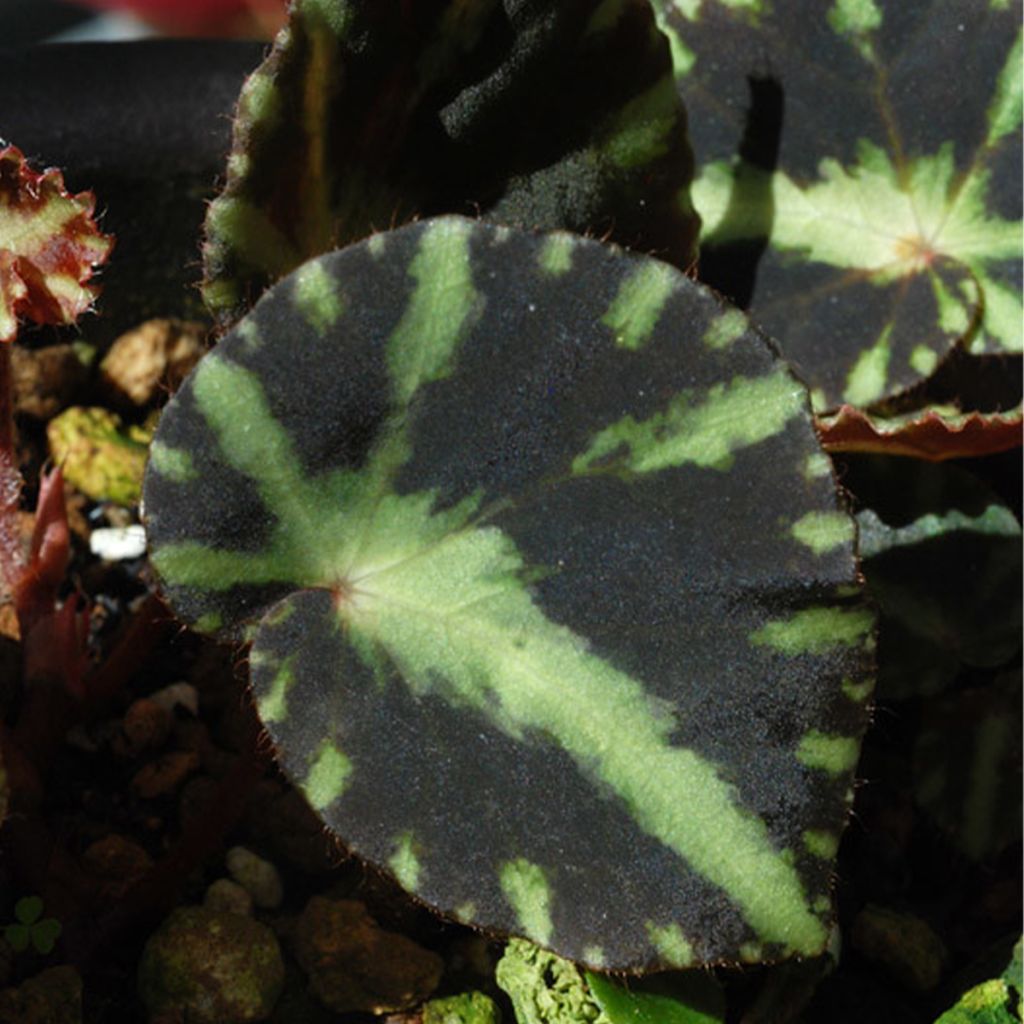
Begonia cleopatrae
Begonia cleopatrae
Begonia cleopatrea
Be the first to leave a review
Back-to-school special offer!
Get €10 off for every €50 you spend! And get up to €40 off on a single order.
How does it work?
1. Shop your favourites
Add your favourite plants to your basket. For every €50 you spend (excluding delivery charges, store credit and the plastic-free option), you’ll receive a €10 voucher.
€50 spent = €10 voucher
€100 spent = €20 voucher
€150 spent = €30 voucher
€200 spent = €40 voucher
2. Place your order
Once your basket reaches one of the spending thresholds, place your order. You can even choose your delivery date!
3. Receive your voucher
As soon as your order has been shipped, you’ll receive an email containing your personal voucher code and its value.
4. Use it on your next order
Your voucher is valid for 90 days from the date you receive it. It can be used once only, on a new order worth at least the value of the voucher, excluding delivery charges.
Please note: Vouchers can be combined with other offers, but cannot be split or refunded.
Home or relay delivery (depending on size and destination)
Important: You may be charged customs duties by your country’s customs authorities upon delivery.
Schedule delivery date
and select date in basket
This plant carries a 30 days recovery warranty
More information
We guarantee the quality of our plants for a full growing cycle, and will replace at our expense any plant that fails to recover under normal climatic and planting conditions.
A rare tropical species, with a compact habit and dark green rounded leaves, marked with light green patterns and a striking red underside. Native to the humid woodlands of Palawan Island in the Philippines, it requires warmth, constant humidity, and protection from the cold, making it an excellent indoor plant, to grow in a terrarium, conservatory, or under a cloche. Not well-suited to dry air or temperatures below 15°C, it's a little gem for lovers of exotic plants.
Watering frequency
Moderate (once a week)
Indoor exposure
Moderate light, Indirect bright light
Specialties
Colourful foliage
Specialties
Terrarium
Description
The Begonia cleopatrae is a botanical species with a low, dense, and delicately spreading habit. Its dark green to chocolate brown foliage, adorned with light green patterns featuring iridescent highlights and an intense red underside, makes it a standout ornamental plant. Native to the humid forests of Southeast Asia, it requires a warm and consistently moist atmosphere, away from drafts and dry conditions. Ideal for terrariums, indoor living walls, or greenhouse displays, it demands special attention but rewards with its exceptionally beautiful foliage.
The Begonia cleopatrae can be confused with the Begonia 'Cleopatra' cultivar due to the similarity of their names. It belongs to the Begoniaceae family. Described in 2010 by C. Coyle, it is endemic to Palawan Island in the Philippines, particularly the mountain known by its English name, "Cleopatra's Needle". This rhizomatous species has a creeping and compact habit, typically reaching 15 cm in height and spread. Its growth is moderate. The ovate, pointed leaves measure around 5 cm in length and display a green-brown hue with a broad light green band along the central vein, as well as similar markings on the margins; the underside is red. The small, pink flowers appear sporadically throughout the year, especially in conditions of high humidity. The fruits are bilocular capsules, but their formation in cultivation is rare. The stems are short and discreet, emerging from a fleshy rootstock that serves as the primary root system.
Despite its delicate appearance, the Begonia cleopatrae is relatively hardy in indoor cultivation, tolerating occasional dry spells, though it prefers consistent moisture. It thrives in medium to bright light, avoiding direct sunlight which may scorch its delicate leaves. Air humidity should be kept high, ideally between 80 and 95%, conditions it will find in terrariums or tropical greenhouses. The ideal ambient temperature ranges between 20 and 25°C. Regular watering is necessary, keeping the substrate slightly moist but well-drained to prevent root rot.
Report an error about the product description
Foliage
Foliage colour
dark green,
Foliage persistence
Evergreen
Plant habit
Growth habit
Rosette
Height at maturity
15 cm
Spread at maturity
15 cm
Growth rate
slow
Flowering
Flower colour
pink,
Flowering time
January to December
Botanical data
Genus
Begonia
Species
cleopatrea
Family
Begoniaceae
Origin
Southeast Asia
Safety measures
Toxic plant
Irritating sap
Product reference
•
23755
Location
Place the young plant in a living room, conservatory or bathroom (if humidity is sufficient), away from draughts. Avoid direct sunlight to prevent leaf scorch.
Location
Indoor exposure
Moderate light, Indirect bright light
For which room?
Lounge, Bathroom, Veranda
Plant spread
15 cm high x 15 cm wide when fully grown
Low temperature tolerance
>20°C (tropical greenhouse)
Humidity level
Tropical (>80%)
Maintenance & care
Watering tips
Water from below to avoid wetting the leaves. Keep the compost slightly moist but never waterlogged. Mist frequently.
Potting advice, substrates and fertilisers
Repot every 1 to 2 years.
Use a mix of tropical plant compost with coconut fibre and clay pebbles to ensure good drainage.
Apply a liquid fertiliser for green plants (NPK 3-1-6) in spring and summer every 4 weeks.
Houseplant care
Leaves may yellow or drop if conditions are not optimal (too much direct light or stagnant water). Remove dead leaves to prevent the spread of diseases.
Begonia cleopatrae does not require pruning. However, you can pinch back the stems to encourage branching and maintain a denser, more compact habit.
Disease and pest advice
A delicate plant when grown in poor conditions, particularly with improper humidity levels or overly dry air.
Maintenance & care
Watering frequency
Moderate (once a week)
Fogging
2 to 3 times a week
Type of soil
Light soil, Draining soil
Pests and diseases
Mealybugs, Red spider mites, Aphids, Powdery mildew, Black spots, Rots
Susceptibility to diseases
High
Ease of cultivation
Experienced
This item has not been reviewed yet - be the first to leave a review about it.
Leave a review →
Share your review
Recently viewed products
Haven't found what you were looking for?
Hardiness is the lowest winter temperature a plant can endure without suffering serious damage or even dying. However, hardiness is affected by location (a sheltered area, such as a patio), protection (winter cover) and soil type (hardiness is improved by well-drained soil).

Flora
Online now
The flowering period indicated on our website applies to countries and regions located in USDA zone 8 (France, the United Kingdom, Ireland, the Netherlands, etc.)
It will vary according to where you live:- In zones 9 to 10 (Italy, Spain, Greece, etc.), flowering will occur about 2 to 4 weeks earlier.
- In zones 6 to 7 (Germany, Poland, Slovenia, and lower mountainous regions), flowering will be delayed by 2 to 3 weeks.
- In zone 5 (Central Europe, Scandinavia), blooming will be delayed by 3 to 5 weeks.
In temperate climates, pruning of spring-flowering shrubs (forsythia, spireas, etc.) should be done just after flowering.
Pruning of summer-flowering shrubs (Indian Lilac, Perovskia, etc.) can be done in winter or spring.
In cold regions as well as with frost-sensitive plants, avoid pruning too early when severe frosts may still occur.
The planting period indicated on our website applies to countries and regions located in USDA zone 8 (France, United Kingdom, Ireland, Netherlands).
It will vary according to where you live:
- In Mediterranean zones (Marseille, Madrid, Milan, etc.), autumn and winter are the best planting periods.
- In continental zones (Strasbourg, Munich, Vienna, etc.), delay planting by 2 to 3 weeks in spring and bring it forward by 2 to 4 weeks in autumn.
- In mountainous regions (the Alps, Pyrenees, Carpathians, etc.), it is best to plant in late spring (May-June) or late summer (August-September).
The harvesting period indicated on our website applies to countries and regions in USDA zone 8 (France, England, Ireland, the Netherlands).
In colder areas (Scandinavia, Poland, Austria...) fruit and vegetable harvests are likely to be delayed by 3-4 weeks.
In warmer areas (Italy, Spain, Greece, etc.), harvesting will probably take place earlier, depending on weather conditions.
The sowing periods indicated on our website apply to countries and regions within USDA Zone 8 (France, UK, Ireland, Netherlands).
In colder areas (Scandinavia, Poland, Austria...), delay any outdoor sowing by 3-4 weeks, or sow under glass.
In warmer climes (Italy, Spain, Greece, etc.), bring outdoor sowing forward by a few weeks.
Shipping country and language
Your country of residence may be:
Your country of residence is:
For a better user experience on our website, you can select:
Your shipping country:
-
 Austria
-
 Belgium
-
 Bosnia & Herzegovina
-
 Bulgaria
-
 Croatia
-
 Cyprus
-
 Czechia
-
 Denmark
-
 Estonia
-
 Finland
-
 France
-
 Germany
-
 Greece
-
 Hungary
-
 Iceland
-
 Ireland
-
 Italy
Italy
-
 Latvia
-
 Liechtenstein
-
 Lithuania
-
 Luxembourg
-
 Malta
Malta
-
 Netherlands
-
 Poland
-
 Portugal
-
 Romania
-
 Serbia
-
 Slovakia
-
 Slovenia
-
 Spain
Spain
-
 Sweden
-
 Switzerland
Language:
-
French
-
 English
-
Spanish
-
Italian
-
German
-
Portuguese
-
Dutch
-
Finnish
Confirm
My Account
Hello
My wish lists
My cart
We have merged your shopping carts! Items added to the basket during a previous session have been retrieved.
Log in / Register
Existing customer?
This form is protected by reCAPTCHA - the Google Privacy Policy and Terms of Service apply.
New customer?
Create an account to track your orders, access our customer service and, if you wish, make the most of our upcoming offers.