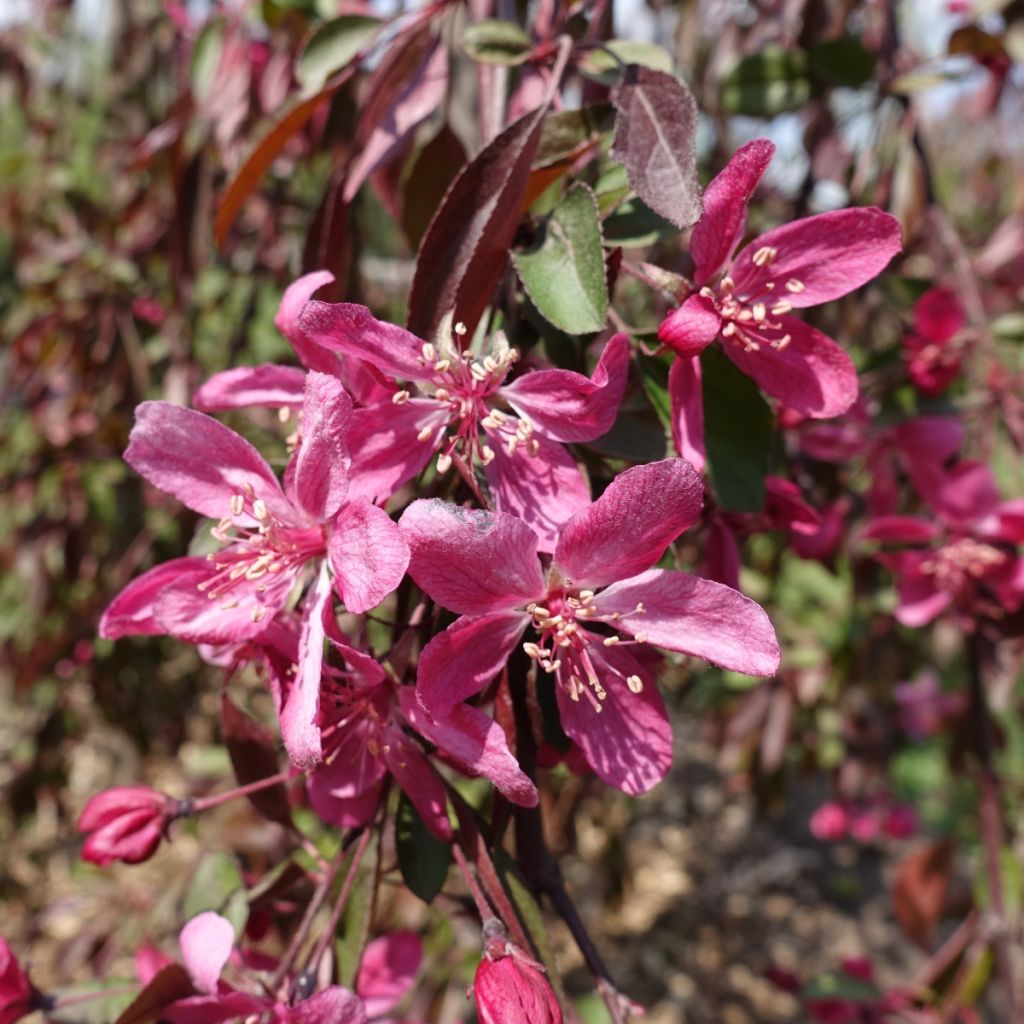
Malus Royal Beauty Variegata - Crab Apple
Malus Royal Beauty Variegata - Crab Apple
Malus Royal Beauty Variegata
Apple Tree, Crab Apple
Back-to-school special offer!
Get €10 off for every €50 you spend! And get up to €40 off on a single order.
How does it work?
1. Shop your favourites
Add your favourite plants to your basket. For every €50 you spend (excluding delivery charges, store credit and the plastic-free option), you’ll receive a €10 voucher.
€50 spent = €10 voucher
€100 spent = €20 voucher
€150 spent = €30 voucher
€200 spent = €40 voucher
2. Place your order
Once your basket reaches one of the spending thresholds, place your order. You can even choose your delivery date!
3. Receive your voucher
As soon as your order has been shipped, you’ll receive an email containing your personal voucher code and its value.
4. Use it on your next order
Your voucher is valid for 90 days from the date you receive it. It can be used once only, on a new order worth at least the value of the voucher, excluding delivery charges.
Please note: Vouchers can be combined with other offers, but cannot be split or refunded.
Why not try an alternative variety in stock?
View all →
Available in 1 sizes
Available in 3 sizes
Available in 1 sizes
Available in 2 sizes
Available in 1 sizes
Available in 4 sizes
Available in 1 sizes
Available in 1 sizes
Available in 1 sizes
Available in 1 sizes
This plant carries a 24 months recovery warranty
More information
We guarantee the quality of our plants for a full growing cycle, and will replace at our expense any plant that fails to recover under normal climatic and planting conditions.
Would this plant suit my garden?
Set up your Plantfit profile →
Description
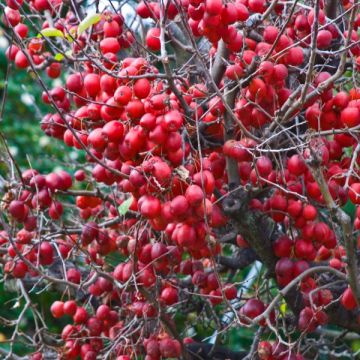
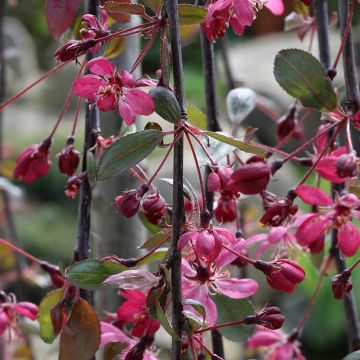
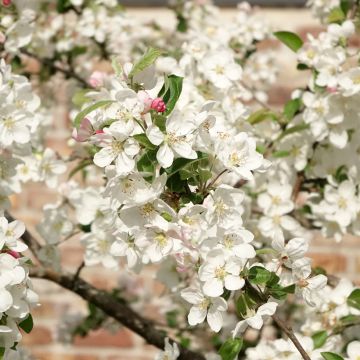
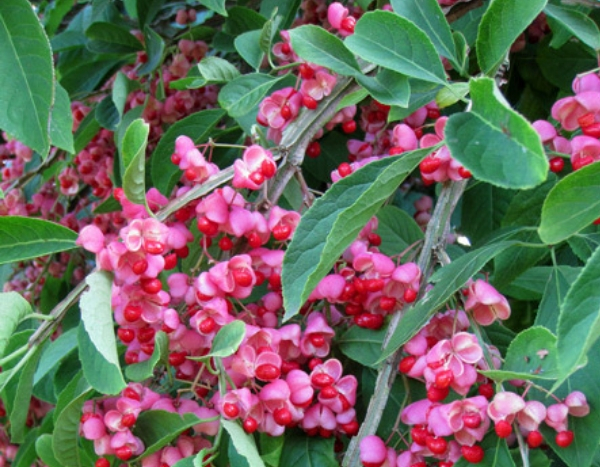
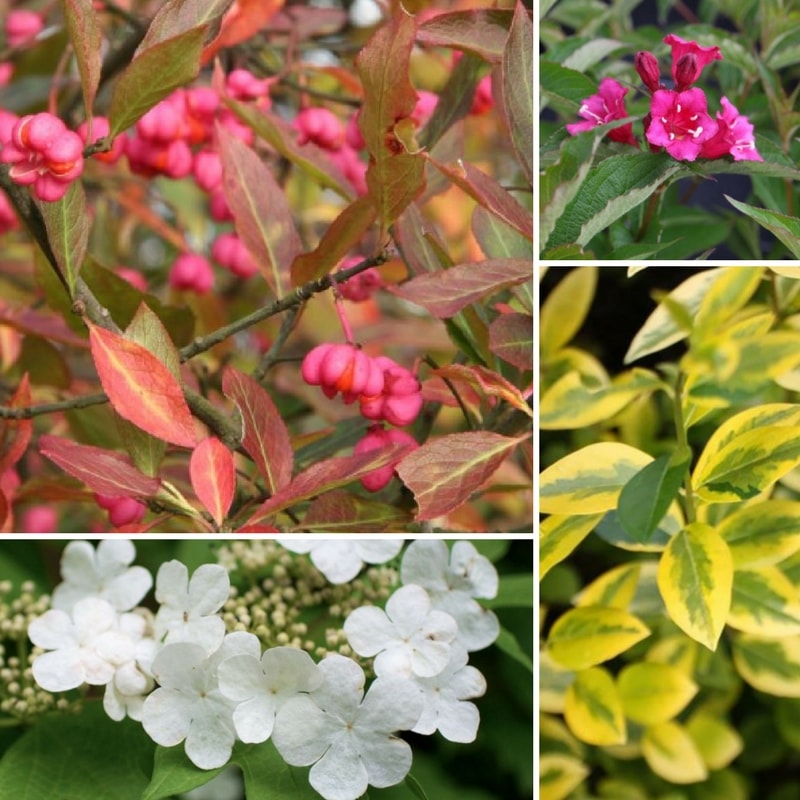
Malus Royal Beauty Variegata is an original cultivar of ornamental apple tree. It naturally adopts a particularly compact weeping habit, whose dome is literally covered in spring with small, single flowers of intense dark pink. These flowers then develop into small dark red fruits gathered in clusters, also very decorative. Its foliage is an additional asset, with the cream yellow that randomly speckles the original green, giving a luminous aspect to the dense vegetation. This fairly hardy, small flowering apple tree with an architectural habit grows in full sun and adapts to most soils.
Ornamental apple trees are derived from various botanical species of the genus Malus belonging to the large botanical family Rosaceae. This family gives us most of our temperate climate fruit trees (Apple trees, Pear trees, Plum trees, Apricot trees, Peach trees, etc.), but also many ornamental plants (Hawthorn, Cotoneaster, Rose, Photinia, Prunus...) as well as numerous wild plants that brighten our countryside. Hardy, accommodating and easy to grow, flowering apple trees are content with ordinary soil, but prefer loamy, deep, loose and moist soils and sunny positions. Once established, they tolerate being forgotten while retaining their generous nature. Numerous cultivars have appeared, both in Europe and the United States, each bringing its own touch of originality.
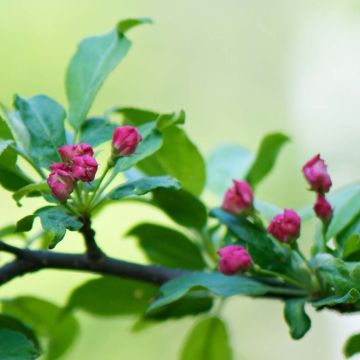
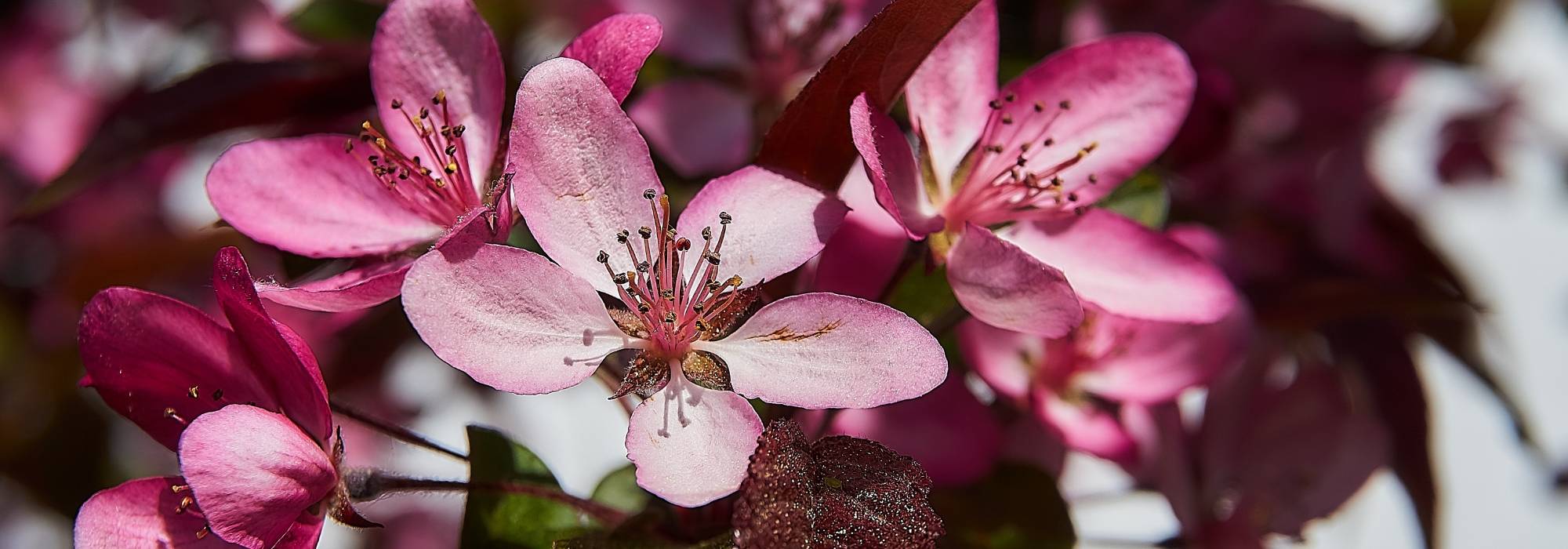
This variegated flowering apple tree is a mutation of the variety Royal Beauty. Just like it, it forms a small tree with a weeping habit, but of slightly more compact dimensions, since it reaches approximately 2.5m in height and 1.75m in width after 10 years, and at maturity (around 20 years), 3m x 2m at most. Its irregular crown naturally forms a well-rounded dome, from which very slender twigs hang down towards the ground. In spring, these dark purple twigs produce young green leaves irregularly variegated with yellow or cream. Elliptical to almost lanceolate in shape and with a pointed tip, they are medium-sized, borne on petioles a few centimetres long. From April to May, the purple flower buds open into pretty single flowers of a strong pink, slightly tending towards red or purple. This extremely abundant flowering completely covers the tree, eye-catching for metres around. The flowering, visited by bees, is followed by the formation of many small, dark red apples reminiscent of cherry clusters. These persist on the tree until winter, after leaf fall, adding yet another ornamental interest to this apple tree, and also helping to feed birds in winter.
Hardy to at least -20°C, this small tree grows in any good garden soil, with a preference for clay soils, moist and loose. It particularly appreciates sunny positions, but also tolerates partially shaded situations, where its flowering will be slightly less intense.
Malus 'Royal Beauty Variegata' is a real gem for small urban gardens, in which its architectural and compact habit will bring a touch of originality without taking up too much space. With its multiple assets, it will easily occupy the centre of a lawn, but can equally be integrated into a bed of varied plants. To create a strong contrast, plant it beside purple shrubs such as Physocarpus opulifolius Little Devil. This dwarf shrub, not exceeding 1m in height, has a pretty cut foliage of an almost black purple in spring, which will contrast well with the yellow variegation of the apple tree, and in autumn turns a coppery orange. It also produces small white flowers from May to July, which will take over from your crab apple tree. Equally compact, Caryopteris clandonensis Sterling Silver will add a very complementary grey-silver tone, and above all extend the flowering season even further thanks to its superb deep blue flowering that stretches from August to October.
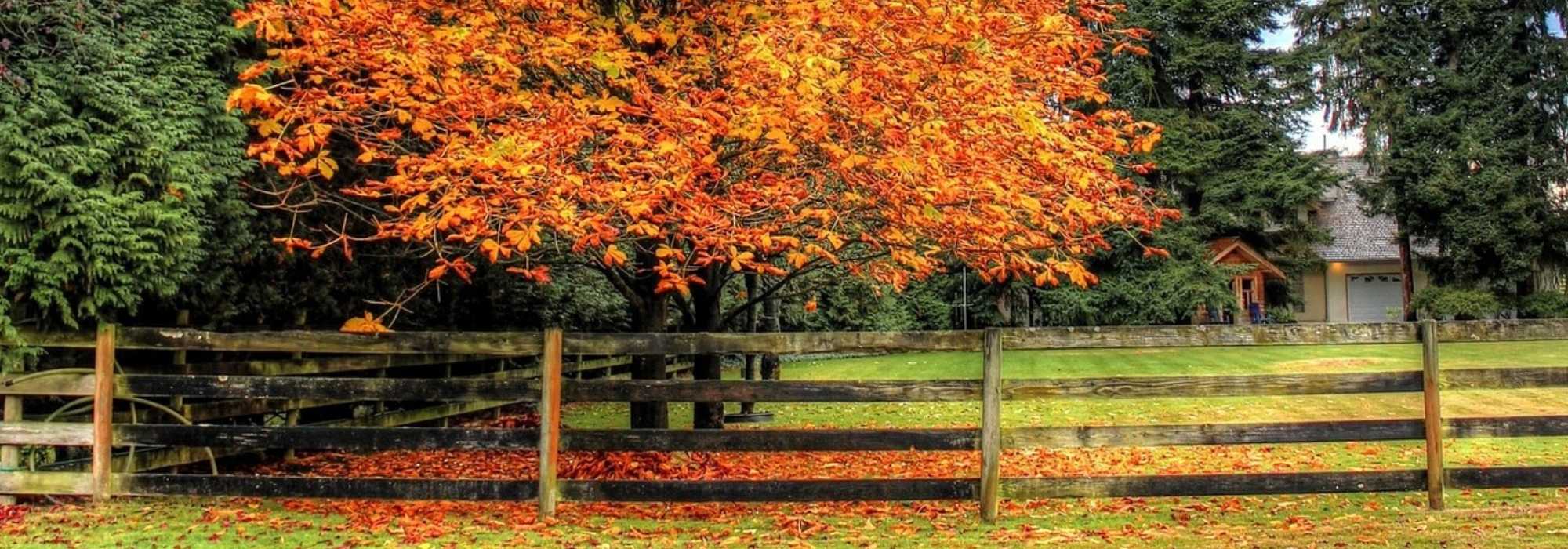
Plant habit
Flowering
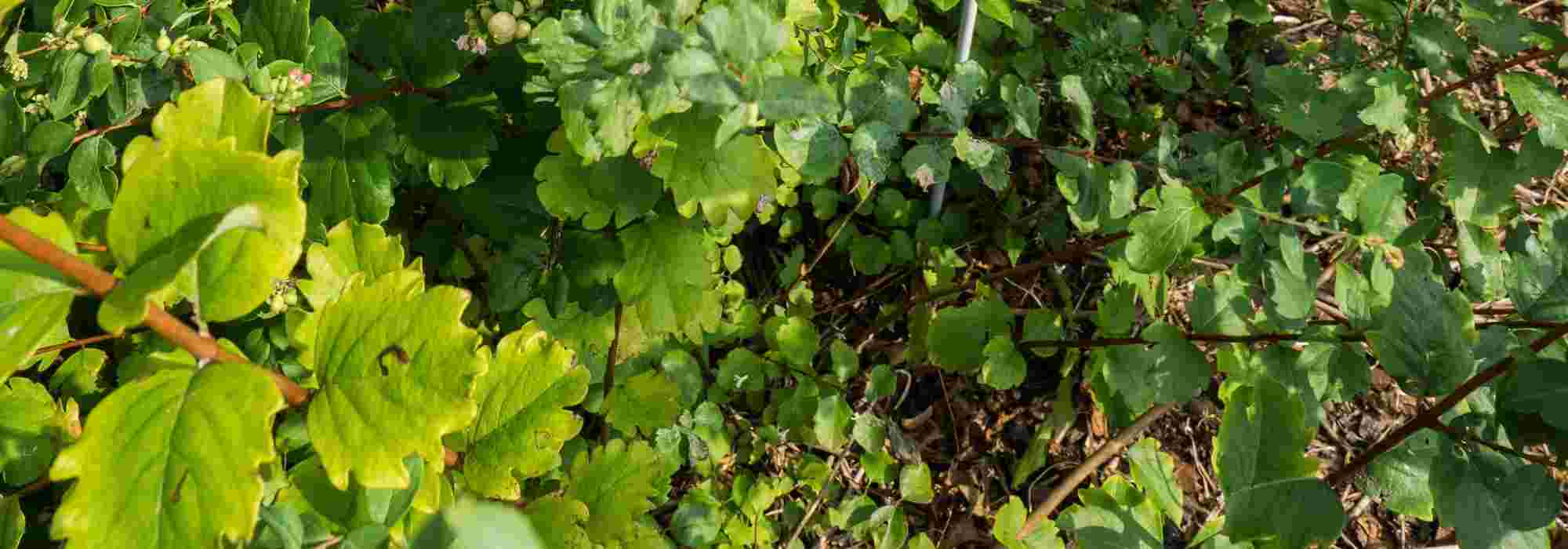
Foliage
Botanical data
Malus
Royal Beauty Variegata
Rosaceae
Apple Tree, Crab Apple
Cultivar or hybrid
Planting and care
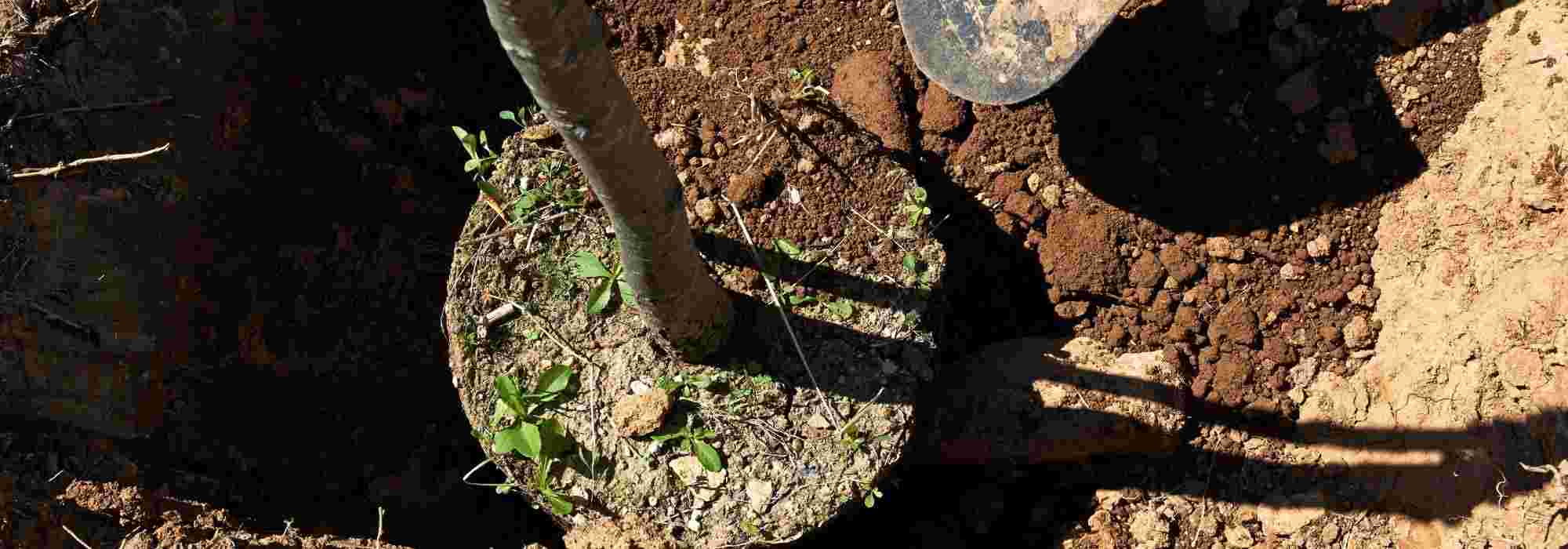
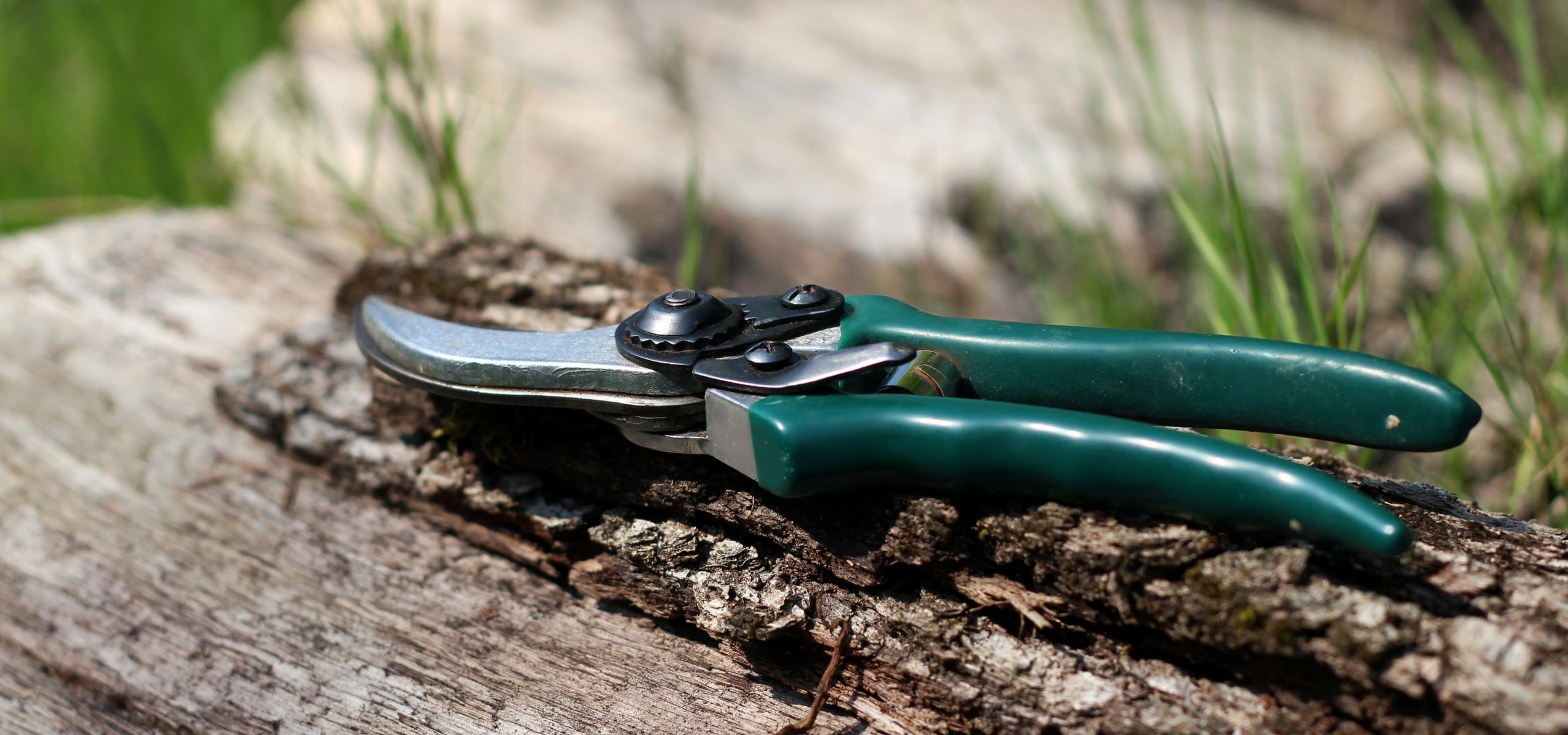
Easy to grow in ordinary soil, Malus ‘Royal Beauty Variegata’ prefers a bright, sunny position for good flowering, but will tolerate light shade. Ornamental crab apples are generally very accommodating, but they like fertile, moist, deep soil. Dig a large planting hole. If the soil is poor, add potting compost to the planting soil, and apply organic fertiliser or compost at its base each spring. After careful planting and establishment supported by regular watering during the first two years, they usually manage on their own. Pruning is not necessary; this flowering apple tree naturally develops a weeping habit. To prevent diseases, especially apple scab, treat in spring with Bordeaux mixture.
Planting period
Intended location
Care
Planting & care advice
-
-
-

-
-
-
-
-
This item has not been reviewed yet - be the first to leave a review about it.
Recently viewed products
Haven't found what you were looking for?
Hardiness is the lowest winter temperature a plant can endure without suffering serious damage or even dying. However, hardiness is affected by location (a sheltered area, such as a patio), protection (winter cover) and soil type (hardiness is improved by well-drained soil).

The flowering period indicated on our website applies to countries and regions located in USDA zone 8 (France, the United Kingdom, Ireland, the Netherlands, etc.)
It will vary according to where you live:- In zones 9 to 10 (Italy, Spain, Greece, etc.), flowering will occur about 2 to 4 weeks earlier.
- In zones 6 to 7 (Germany, Poland, Slovenia, and lower mountainous regions), flowering will be delayed by 2 to 3 weeks.
- In zone 5 (Central Europe, Scandinavia), blooming will be delayed by 3 to 5 weeks.
In temperate climates, pruning of spring-flowering shrubs (forsythia, spireas, etc.) should be done just after flowering.
Pruning of summer-flowering shrubs (Indian Lilac, Perovskia, etc.) can be done in winter or spring.
In cold regions as well as with frost-sensitive plants, avoid pruning too early when severe frosts may still occur.
The planting period indicated on our website applies to countries and regions located in USDA zone 8 (France, United Kingdom, Ireland, Netherlands).
It will vary according to where you live:
- In Mediterranean zones (Marseille, Madrid, Milan, etc.), autumn and winter are the best planting periods.
- In continental zones (Strasbourg, Munich, Vienna, etc.), delay planting by 2 to 3 weeks in spring and bring it forward by 2 to 4 weeks in autumn.
- In mountainous regions (the Alps, Pyrenees, Carpathians, etc.), it is best to plant in late spring (May-June) or late summer (August-September).
The harvesting period indicated on our website applies to countries and regions in USDA zone 8 (France, England, Ireland, the Netherlands).
In colder areas (Scandinavia, Poland, Austria...) fruit and vegetable harvests are likely to be delayed by 3-4 weeks.
In warmer areas (Italy, Spain, Greece, etc.), harvesting will probably take place earlier, depending on weather conditions.
The sowing periods indicated on our website apply to countries and regions within USDA Zone 8 (France, UK, Ireland, Netherlands).
In colder areas (Scandinavia, Poland, Austria...), delay any outdoor sowing by 3-4 weeks, or sow under glass.
In warmer climes (Italy, Spain, Greece, etc.), bring outdoor sowing forward by a few weeks.
Shipping country and language
Your country of residence may be:
Your country of residence is:
For a better user experience on our website, you can select:
Your shipping country:
-
 Austria
-
 Belgium
-
 Bosnia & Herzegovina
-
 Bulgaria
-
 Croatia
-
 Cyprus
-
 Czechia
-
 Denmark
-
 Estonia
-
 Finland
-
 France
-
 Germany
-
 Greece
-
 Hungary
-
 Iceland
-
 Ireland
-
 Italy
Italy
-
 Latvia
-
 Liechtenstein
-
 Lithuania
-
 Luxembourg
-
 Malta
Malta
-
 Netherlands
-
 Poland
-
 Portugal
-
 Romania
-
 Serbia
-
 Slovakia
-
 Slovenia
-
 Spain
Spain
-
 Sweden
-
 Switzerland
Language:
-
French
-
 English
-
Spanish
-
Italian
-
German
-
Portuguese
-
Dutch
-
Finnish
My Account
Hello
My wish lists
My cart
Log in / Register
Existing customer?
This form is protected by reCAPTCHA - the Google Privacy Policy and Terms of Service apply.
New customer?
Create an account to track your orders, access our customer service and, if you wish, make the most of our upcoming offers.