
Tulipa Royal Pride - Darwin Hybrid Tulip
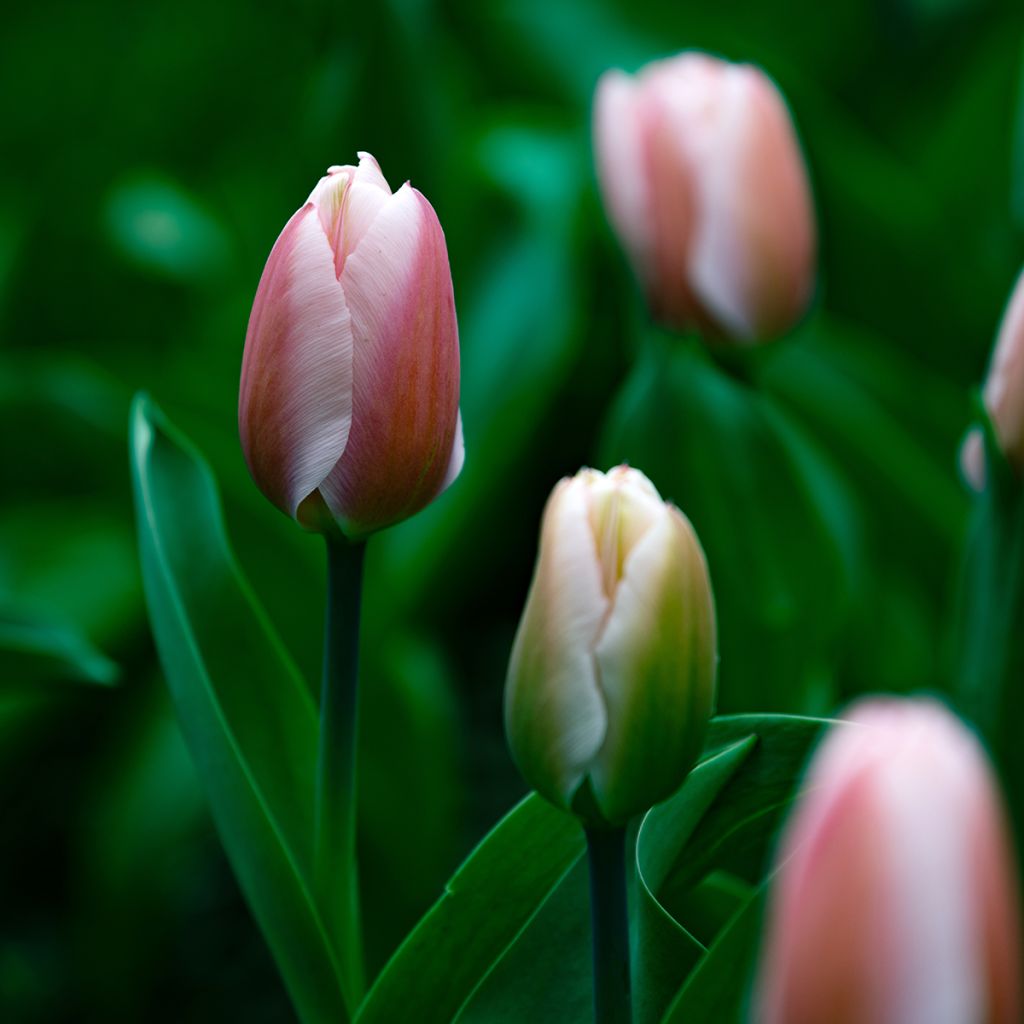
Tulipa Royal Pride - Darwin Hybrid Tulip

Tulipa Royal Pride - Darwin Hybrid Tulip
Tulipa Royal Pride - Darwin Hybrid Tulip
Tulipa Royal Pride
Darwin Hybrid Tulip
Initially they came out more salmon/beige than pink/white, but over the days they lightened to reach the advertised colour. Very good staying power and incredibly elegant.
Sandra, 25/03/2026
Back-to-school special offer!
Get €10 off for every €50 you spend! And get up to €40 off on a single order.
How does it work?
1. Shop your favourites
Add your favourite plants to your basket. For every €50 you spend (excluding delivery charges, store credit and the plastic-free option), you’ll receive a €10 voucher.
€50 spent = €10 voucher
€100 spent = €20 voucher
€150 spent = €30 voucher
€200 spent = €40 voucher
2. Place your order
Once your basket reaches one of the spending thresholds, place your order. You can even choose your delivery date!
3. Receive your voucher
As soon as your order has been shipped, you’ll receive an email containing your personal voucher code and its value.
4. Use it on your next order
Your voucher is valid for 90 days from the date you receive it. It can be used once only, on a new order worth at least the value of the voucher, excluding delivery charges.
Please note: Vouchers can be combined with other offers, but cannot be split or refunded.
Home or relay delivery (depending on size and destination)
Important: You may be charged customs duties by your country’s customs authorities upon delivery.
Schedule delivery date,
and select date in basket
This plant carries a 6 months recovery warranty
More information
We guarantee the quality of our plants for a full growing cycle, and will replace at our expense any plant that fails to recover under normal climatic and planting conditions.

Would this plant suit my garden?
Set up your Plantfit profile →
Description
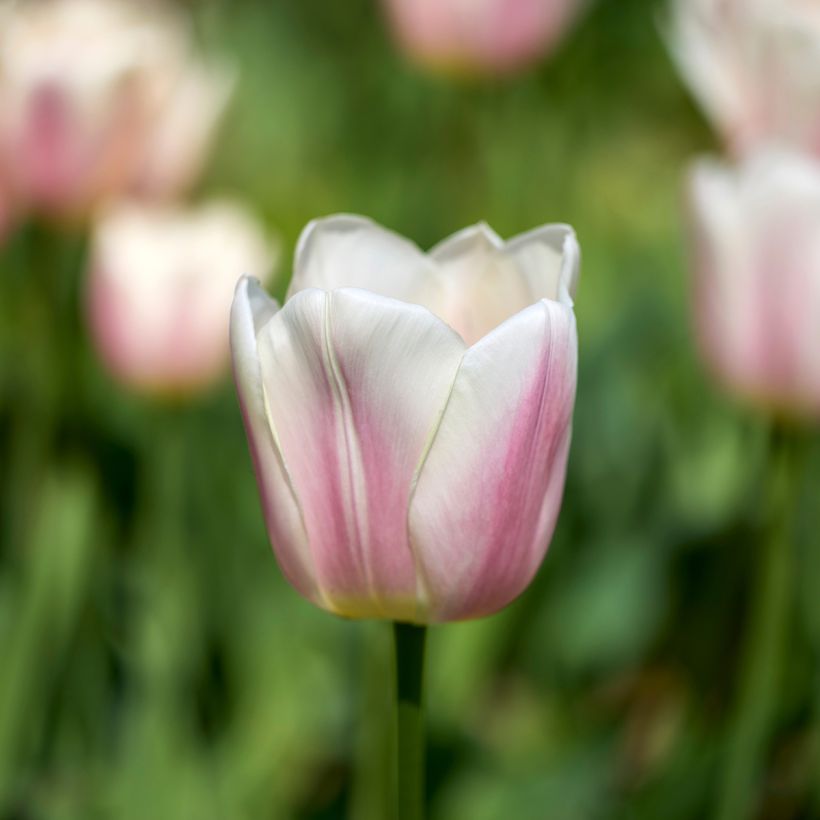
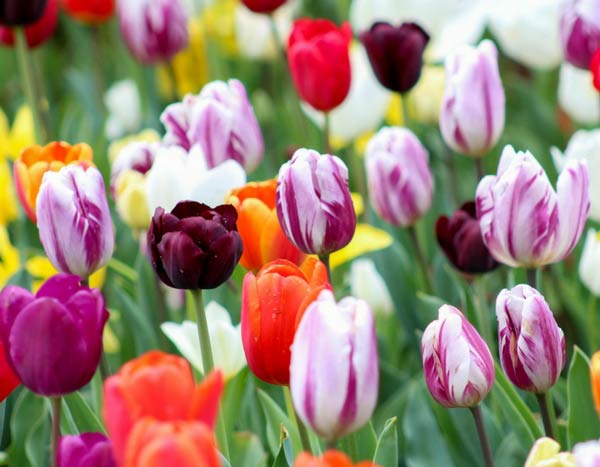
The Darwin Tulip 'Royal Pride' is a majestic variety that illuminates gardens with its generous spring flowering. With an upright and vigorous habit, it produces large, elongated, cup-shaped flowers with satin-like petals blending soft pink hues with a luminous white, featuring a pink median stripe on each petal. This robust, fairly tall tulip is ideal for structured beds, borders, or container growing on balconies. Hardy and easy to grow, it thrives in well-drained soil and prefers a sunny position. Thanks to its floriferous nature and exceptional stance, it is prized both for the garden and for cut flower arrangements.
The Tulip 'Royal Pride' belongs to the Liliaceae family, classified in the Darwin Hybrid Group. This Dutch cultivar introduced around 2018 distinguishes itself from the typical species by its gigantic flowers (approximately 12 cm in diameter) and its spectacular pink and white colour gradient that surpasses the width and stance of wild tulips originating from Central Asia. This vigorous plant adopts an upright and slender habit, reaching 50–60 cm in height in open ground. Its growth is rapid after autumn planting, reaching its mature size in spring, with each bulb producing a single stem. The open bell-shaped flower is formed of six robust petaloid sepals measuring 12 cm in diameter, of a medium pink that lightens towards the edges, often used as a cut flower thanks to its long, sturdy stem. Flowering occurs from late April to May. The deciduous, medium green foliage formed of 4–5 lanceolate leaves 3–5 cm wide, naturally dies back after flowering. The sturdy, slightly thickened at the base stems ensure excellent wind resistance. The root system develops from a fleshy bulb requiring cool, well-drained soil to avoid rot. Descended from the classic 'Pride' line, the 'Royal Pride' is appreciated for its ability to return year after year when grown in fertile soil. It has quickly gained popularity in show gardens for its visual impact and its superior longevity compared to early tulips.
In a large, structured garden or on a sunny patio, the 'Royal Pride' tulip stands out as a clear and powerful statement. Its stately habit and the softness of its hues make it a perfect candidate for mass planting among perennials with discreet foliage like lady's mantle or silvery lungwort. It can be slipped into a spring bed with 'Hakuun' tulips for pure white contrast, 'Pink Impression' for tonal harmony, and 'Cummins' whose lilac fringe adds a subtle texture. In pots, it can be accompanied by pastel pansies or blue forget-me-nots.
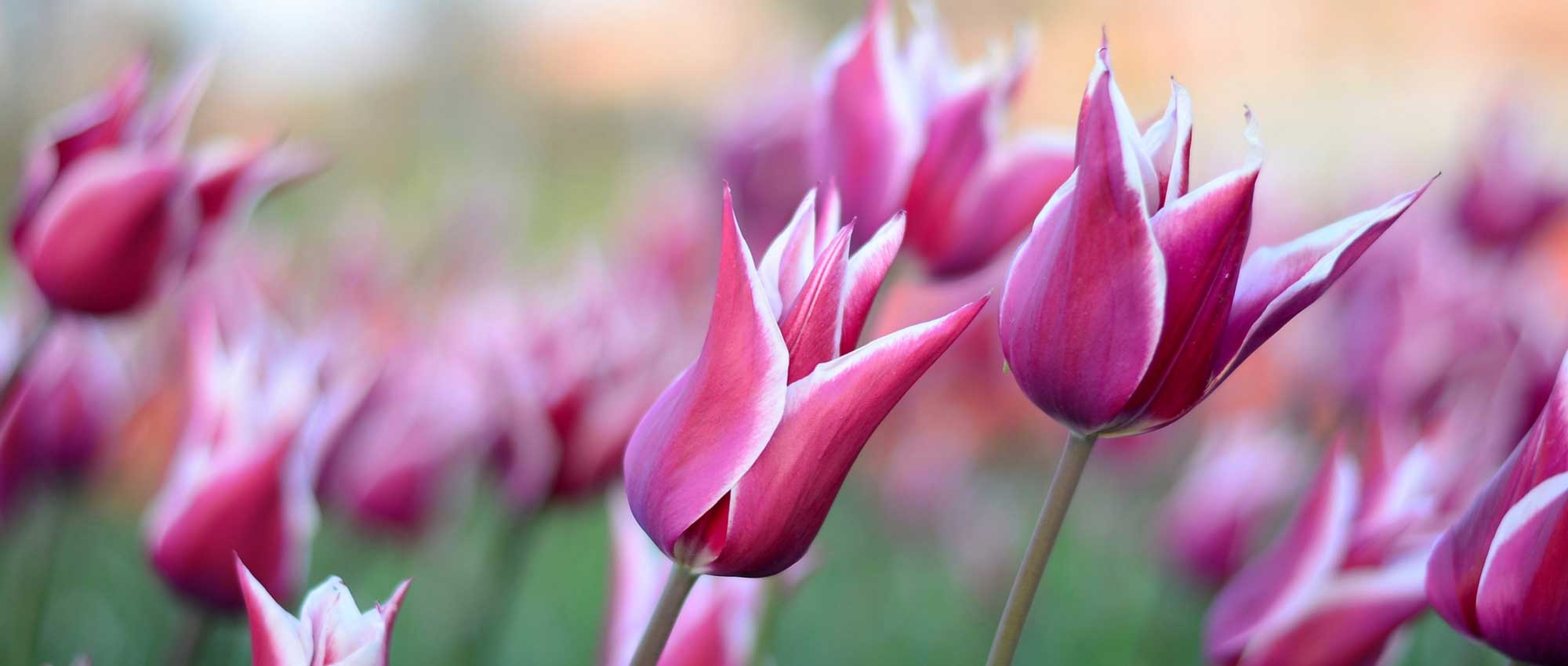
Tulipa Royal Pride - Darwin Hybrid Tulip in pictures
Plant habit
Flowering
Foliage
Botanical data
Tulipa
Royal Pride
Liliaceae
Darwin Hybrid Tulip
Tulipa Royal Pride
Cultivar or hybrid
Planting and care
Darwin Royal Pride tulip bulbs should be planted from October to mid-December for spring flowering. Position them in full sun or possibly partial shade, in a sheltered location. Tulips appreciate rich, well-drained soil and tolerate dry soil in summer. If your soil is very clayey, incorporate sand into the soil before planting or add some gravel at the bottom of the planting hole.
Work the soil deeply and remove any weeds or stones. Dig a hole using a bulb planter and bury the bulbs, pointed end upwards, at two to three times their height. Space the bulbs about 10 cm apart. Bulbs can be planted individually or in groups of 5 to 10 for a beautiful colour effect. You can place them one by one on the soil or 'scatter' them for a more natural bedding effect. Water lightly after planting.
For container planting, ensure drainage at the bottom of the pot (clay pebbles or gravel) then place the bulbs in a mixture of compost, garden soil and a little sand. Add a small amount of compost during flowering.
Tulips require little maintenance. Water in spring if necessary. Remove faded flowers to avoid exhausting the bulb. After flowering, allow the foliage to die back naturally and only cut it when it turns yellow, to encourage the accumulation of new reserves in the bulb.
Unlike botanical tulips, large-flowered tulips will deteriorate after 2 to 3 years if left in the ground. You can choose to leave them in place and renew them regularly. If you wish to prolong flowering, dig up the bulbs when the foliage has dried. Remove soil from around the bulbs then store them in a cool, dry, dark place. Replant them the following autumn.
Planting period
Intended location
Care
Planting & care advice
-
-
-
-

-

-

-

-
-
, onOrder confirmed
Reply from on Promesse de fleurs
Recently viewed products
Haven't found what you were looking for?
Hardiness is the lowest winter temperature a plant can endure without suffering serious damage or even dying. However, hardiness is affected by location (a sheltered area, such as a patio), protection (winter cover) and soil type (hardiness is improved by well-drained soil).

The flowering period indicated on our website applies to countries and regions located in USDA zone 8 (France, the United Kingdom, Ireland, the Netherlands, etc.)
It will vary according to where you live:- In zones 9 to 10 (Italy, Spain, Greece, etc.), flowering will occur about 2 to 4 weeks earlier.
- In zones 6 to 7 (Germany, Poland, Slovenia, and lower mountainous regions), flowering will be delayed by 2 to 3 weeks.
- In zone 5 (Central Europe, Scandinavia), blooming will be delayed by 3 to 5 weeks.
In temperate climates, pruning of spring-flowering shrubs (forsythia, spireas, etc.) should be done just after flowering.
Pruning of summer-flowering shrubs (Indian Lilac, Perovskia, etc.) can be done in winter or spring.
In cold regions as well as with frost-sensitive plants, avoid pruning too early when severe frosts may still occur.
The planting period indicated on our website applies to countries and regions located in USDA zone 8 (France, United Kingdom, Ireland, Netherlands).
It will vary according to where you live:
- In Mediterranean zones (Marseille, Madrid, Milan, etc.), autumn and winter are the best planting periods.
- In continental zones (Strasbourg, Munich, Vienna, etc.), delay planting by 2 to 3 weeks in spring and bring it forward by 2 to 4 weeks in autumn.
- In mountainous regions (the Alps, Pyrenees, Carpathians, etc.), it is best to plant in late spring (May-June) or late summer (August-September).
The harvesting period indicated on our website applies to countries and regions in USDA zone 8 (France, England, Ireland, the Netherlands).
In colder areas (Scandinavia, Poland, Austria...) fruit and vegetable harvests are likely to be delayed by 3-4 weeks.
In warmer areas (Italy, Spain, Greece, etc.), harvesting will probably take place earlier, depending on weather conditions.
The sowing periods indicated on our website apply to countries and regions within USDA Zone 8 (France, UK, Ireland, Netherlands).
In colder areas (Scandinavia, Poland, Austria...), delay any outdoor sowing by 3-4 weeks, or sow under glass.
In warmer climes (Italy, Spain, Greece, etc.), bring outdoor sowing forward by a few weeks.
Shipping country and language
Your country of residence may be:
Your country of residence is:
For a better user experience on our website, you can select:
Your shipping country:
-
 Austria
-
 Belgium
-
 Bosnia & Herzegovina
-
 Bulgaria
-
 Croatia
-
 Cyprus
-
 Czechia
-
 Denmark
-
 Estonia
-
 Finland
-
 France
-
 Germany
-
 Greece
-
 Hungary
-
 Iceland
-
 Ireland
-
 Italy
Italy
-
 Latvia
-
 Liechtenstein
-
 Lithuania
-
 Luxembourg
-
 Malta
Malta
-
 Netherlands
-
 Poland
-
 Portugal
-
 Romania
-
 Serbia
-
 Slovakia
-
 Slovenia
-
 Spain
Spain
-
 Sweden
-
 Switzerland
Language:
-
French
-
 English
-
Spanish
-
Italian
-
German
-
Portuguese
-
Dutch
-
Finnish
My Account
Hello
My wish lists
My cart
Log in / Register
Existing customer?
This form is protected by reCAPTCHA - the Google Privacy Policy and Terms of Service apply.
New customer?
Create an account to track your orders, access our customer service and, if you wish, make the most of our upcoming offers.