Organic Fodder radish seeds, green manure
Organic Fodder radish seeds, green manure
Raphanus sativus var. oleiformis
Fodder radish, green manure
Back-to-school special offer!
Get €10 off for every €50 you spend! And get up to €40 off on a single order.
How does it work?
1. Shop your favourites
Add your favourite plants to your basket. For every €50 you spend (excluding delivery charges, store credit and the plastic-free option), you’ll receive a €10 voucher.
€50 spent = €10 voucher
€100 spent = €20 voucher
€150 spent = €30 voucher
€200 spent = €40 voucher
2. Place your order
Once your basket reaches one of the spending thresholds, place your order. You can even choose your delivery date!
3. Receive your voucher
As soon as your order has been shipped, you’ll receive an email containing your personal voucher code and its value.
4. Use it on your next order
Your voucher is valid for 90 days from the date you receive it. It can be used once only, on a new order worth at least the value of the voucher, excluding delivery charges.
Please note: Vouchers can be combined with other offers, but cannot be split or refunded.
Home or relay delivery (depending on size and destination)
Important: You may be charged customs duties by your country’s customs authorities upon delivery.
Schedule delivery date,
and select date in basket
This plant carries a 6 months recovery warranty
More information
We guarantee the quality of our plants for a full growing cycle, and will replace at our expense any plant that fails to recover under normal climatic and planting conditions.
Description
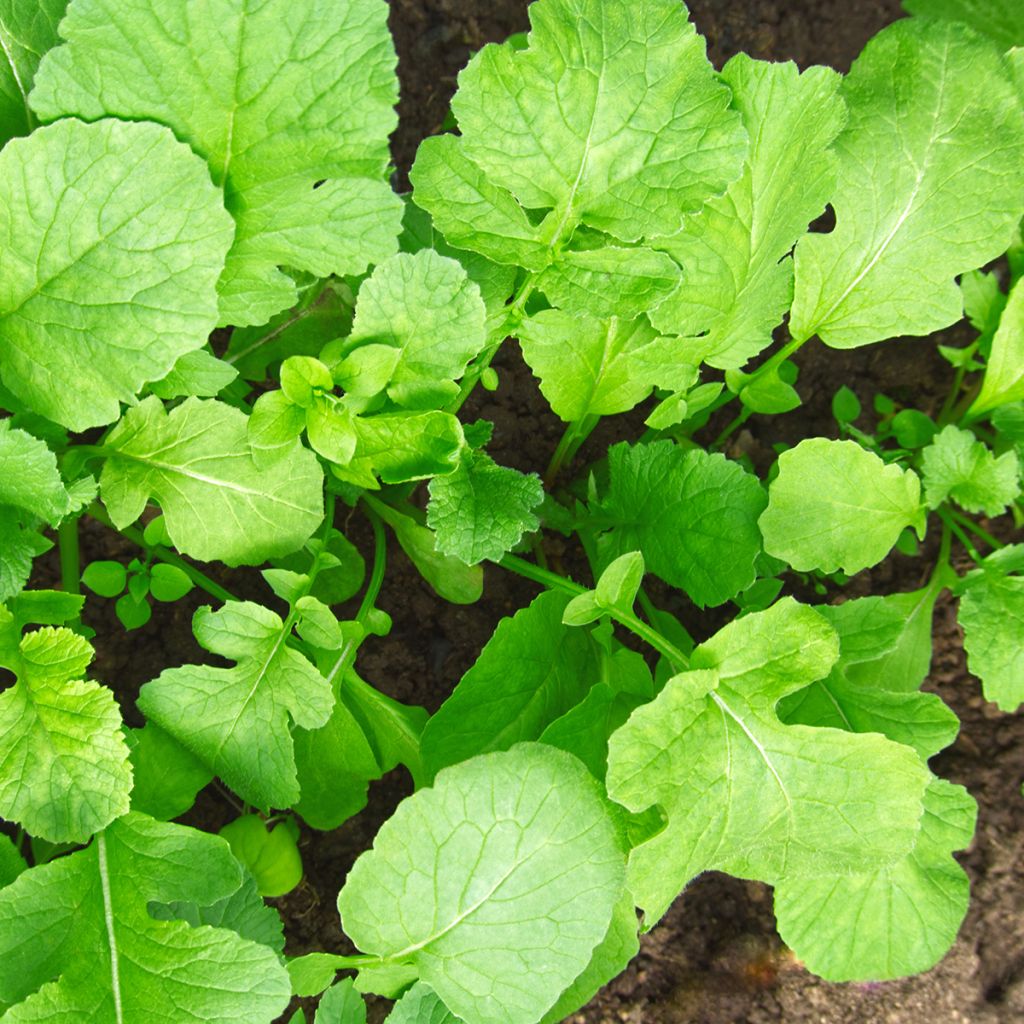
Organic Fodder Radish, of the oleiferous type, is an excellent green manure for the vegetable garden as well as for small orchards. It germinates within a few days, quickly forms a carpet of greenery, and produces an abundant standing crop. Its taproot seeks water and nutrients deep down, improves soil aeration and limits nitrate leaching. Honey-producing and well-suited to temperate climates, its flowers feed bees, and its vegetation prepares the ground for hungry vegetables.
The Fodder Radish belongs to the Brassicaceae family, like cabbages and mustards. Its botanical name is Raphanus sativus var. oleiformis, with synonyms Raphanus sativus convar. oleifer, Raphanus sativus subsp. oleiferus and Raphanus sativus var. oleifera. It is a cultivated radish of Mediterranean origin, resulting from the long domestication of the radish between the Mediterranean, the Middle East and Asia, now widely distributed in temperate regions.
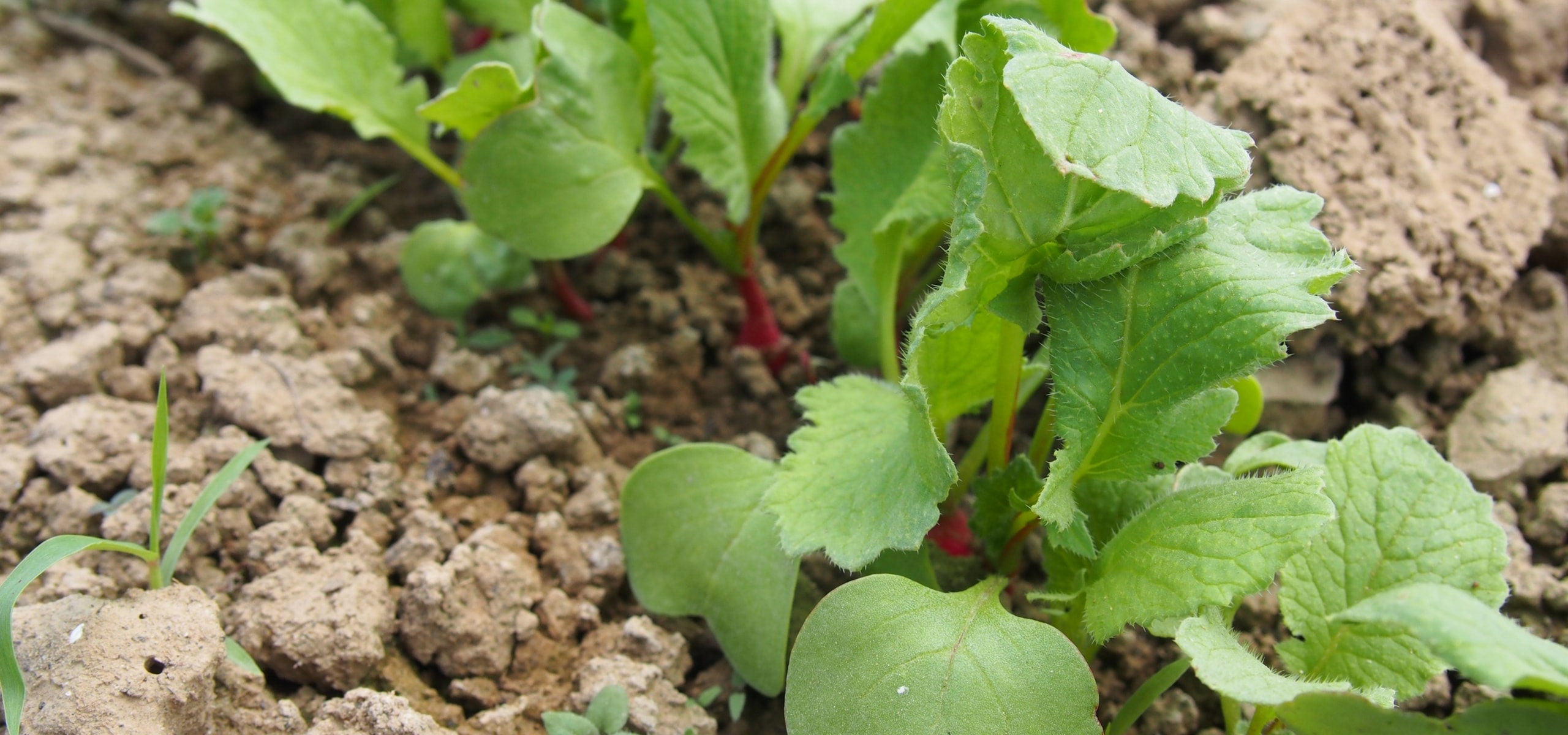
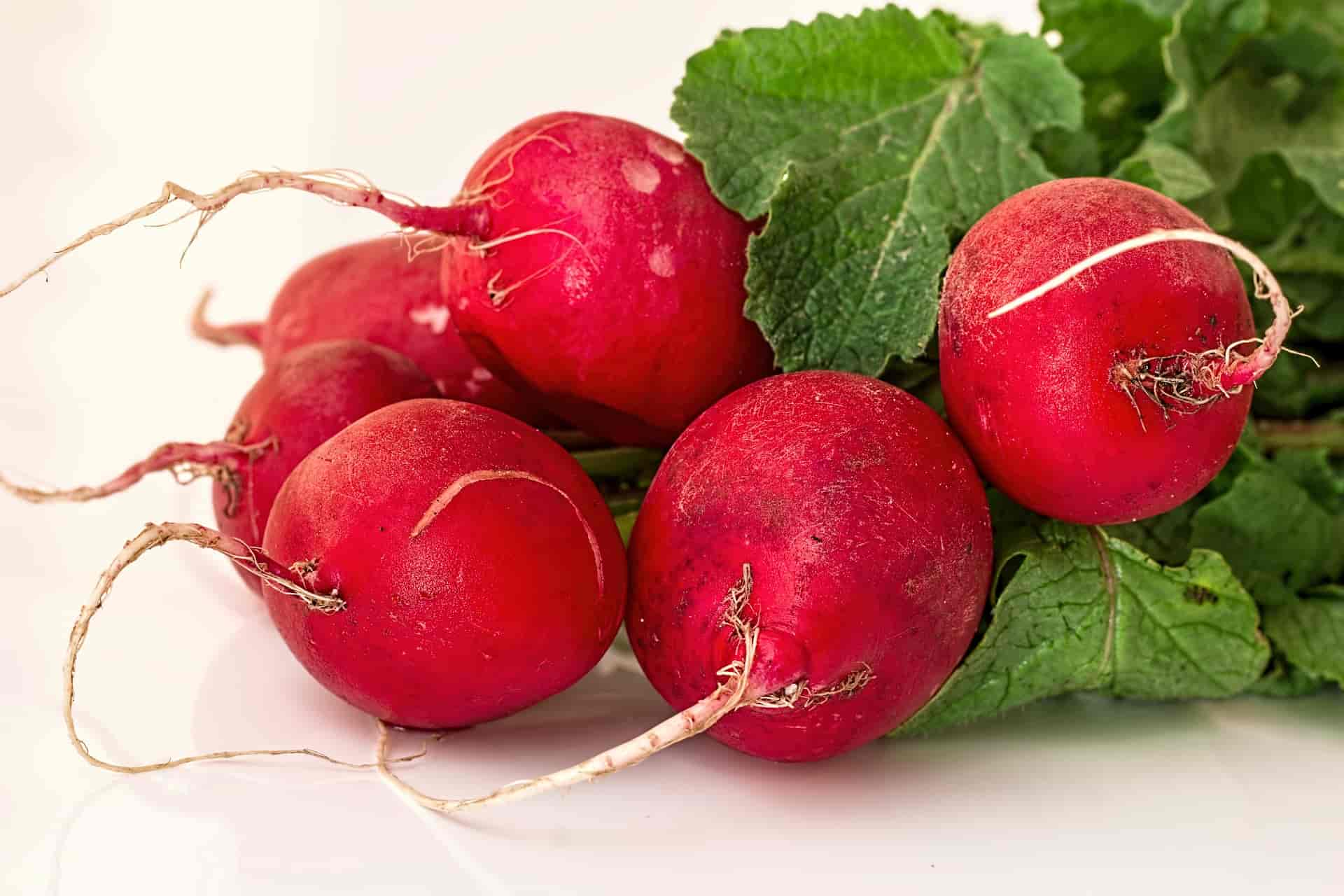
In the garden, it is an annual herbaceous plant with a short cycle of 60 to 80 days. It begins by forming a rosette of large, bright green, quite broad, slightly rough and deeply cut leaves, then sends up erect stems bearing white to lilac, small but very nectar-rich flowers. The root is a powerful taproot which goes deep into the soil and cracks it. The plant reaches 60 to 90cm in height and 30 to 40cm in width, with dense foliage that covers the ground well. Frost-sensitive, it disappears in winter, leaving loose soil rich in organic matter. Compared to table radishes, the fodder radish develops much more foliage and a less fleshy, more fibrous root, which makes it primarily a soil-improvement and fodder plant.
In the vegetable garden, Organic Fodder Radish is mainly used as a green manure, sown as a catch crop or along the edges of beds. It is sown densely, then mown before it goes to seed to mulch the soil or lightly dig it in. It prepares the soil for a future row of carrots. It can also be inserted into a rotation with 'Crapaudine' Beetroot, an old French variety with fine flesh, which benefits from well-structured soil. Crisp salads, such as 'All The Year Round' Lettuce, appreciate a growing bed enriched by this radish. If you want to attract pollinators to the vegetable garden, pair it with Organic Phacelia.
From a nutritional standpoint, it shares the nutritional qualities of other radishes: roots and foliage are low in calories, rich in water, vitamin C and the sulphur compounds typical of crucifers, which give them their pungent flavour.
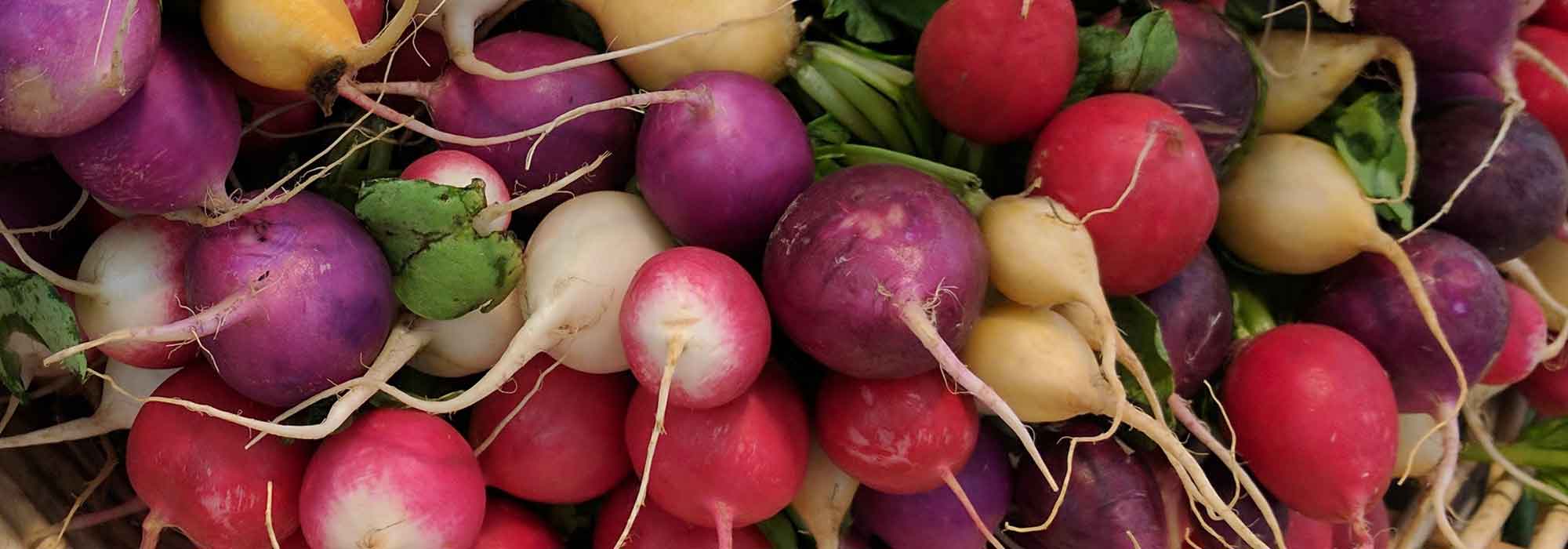
In the kitchen: its young leaves can be used in leaf-top soups, green purées, pestos and stir-fries with potatoes or other root vegetables. The small roots, harvested young, can be grated into salads or prepared as pickles, a bit like black radishes or daikons.
A bit of history: the radish was cultivated in the Mediterranean and ancient Egypt for its root and for an oil extracted from the seeds; the fodder radish today stands as a versatile service plant, used in farming, organic gardening and waste-free cooking.
Harvest
Plant habit
Foliage
Botanical data
Raphanus
sativus var. oleiformis
Brassicaceae
Fodder radish, green manure
Raphanus sativus convar. oleifer, Raphanus sativus subsp. oleiferus, Raphanus sativus var. oleifera
Annual
Planting and care
Sowing Organic Fodder Radish:
Prepare well-loosened soil, free of large clods and stones, in fairly moist ground.
Sow preferably from late April to September, after hard frosts, in rows spaced about 20cm apart, or broadcast if you want a very dense cover.
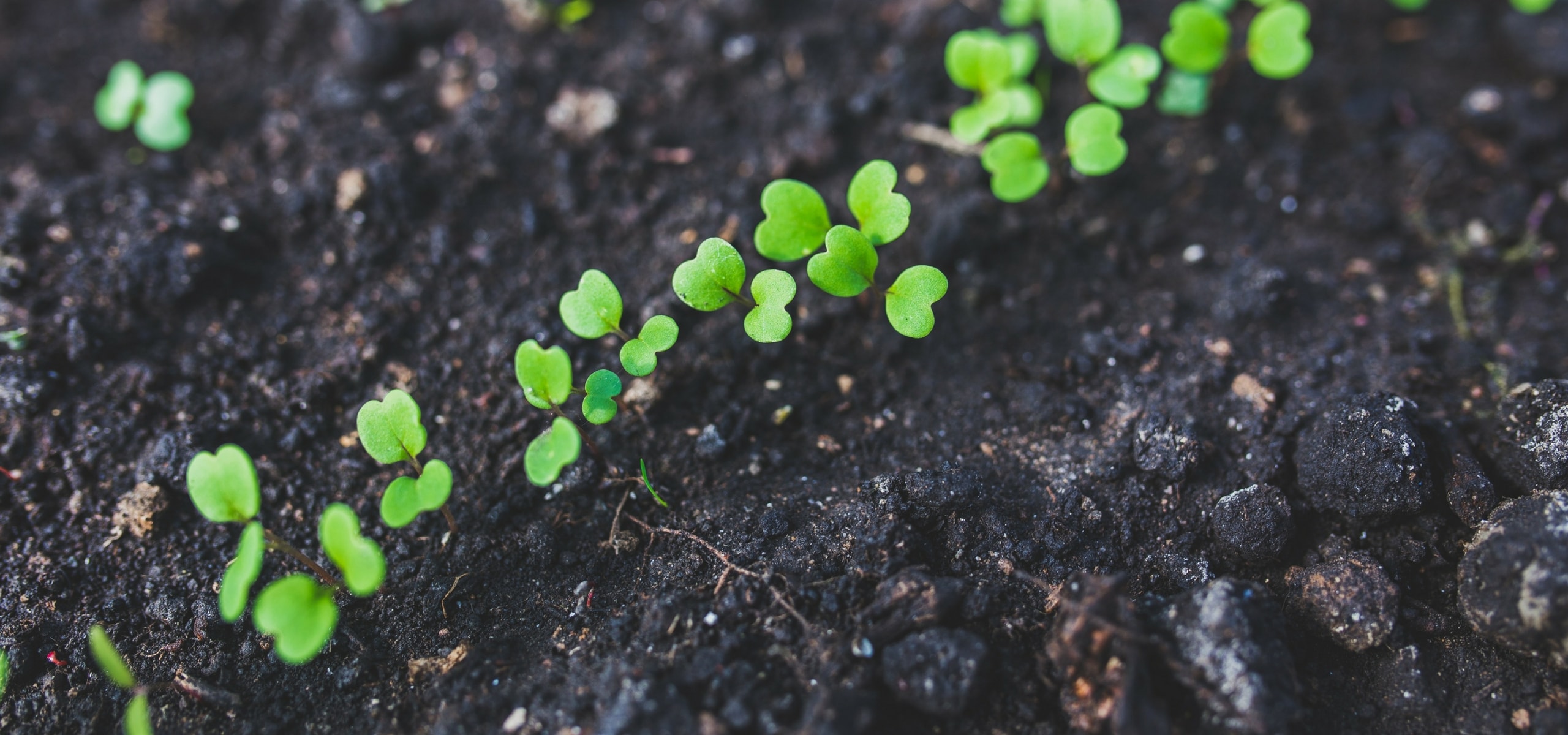
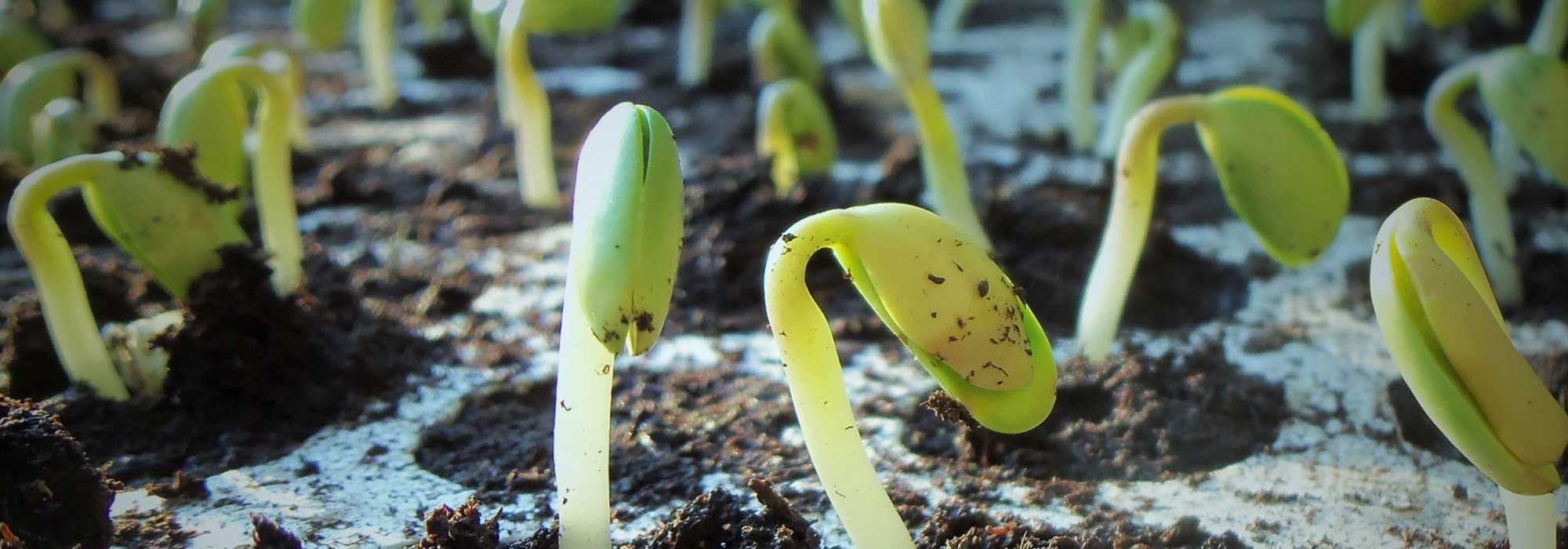
Bury the seeds 1 to 2cm deep, then lightly firm the soil with the back of a rake to ensure good seed-to-soil contact. Water with a fine spray to keep the surface moist until germination, which usually occurs within 3 to 6 days depending on temperature.
For a cover crop sowing, you can leave the young plants quite dense; for more vegetable-like use (young leaves and small white roots), thin to 10–15cm apart in the row.
Care:
Organic Fodder Radish requires little care. It enjoys full sun but tolerates light partial shade, in ordinary to heavy soil that is not too dry. Regular watering at the start encourages rapid soil coverage and limits premature bolting to seed; afterwards, it generally relies on rainfall, except during periods of severe drought.
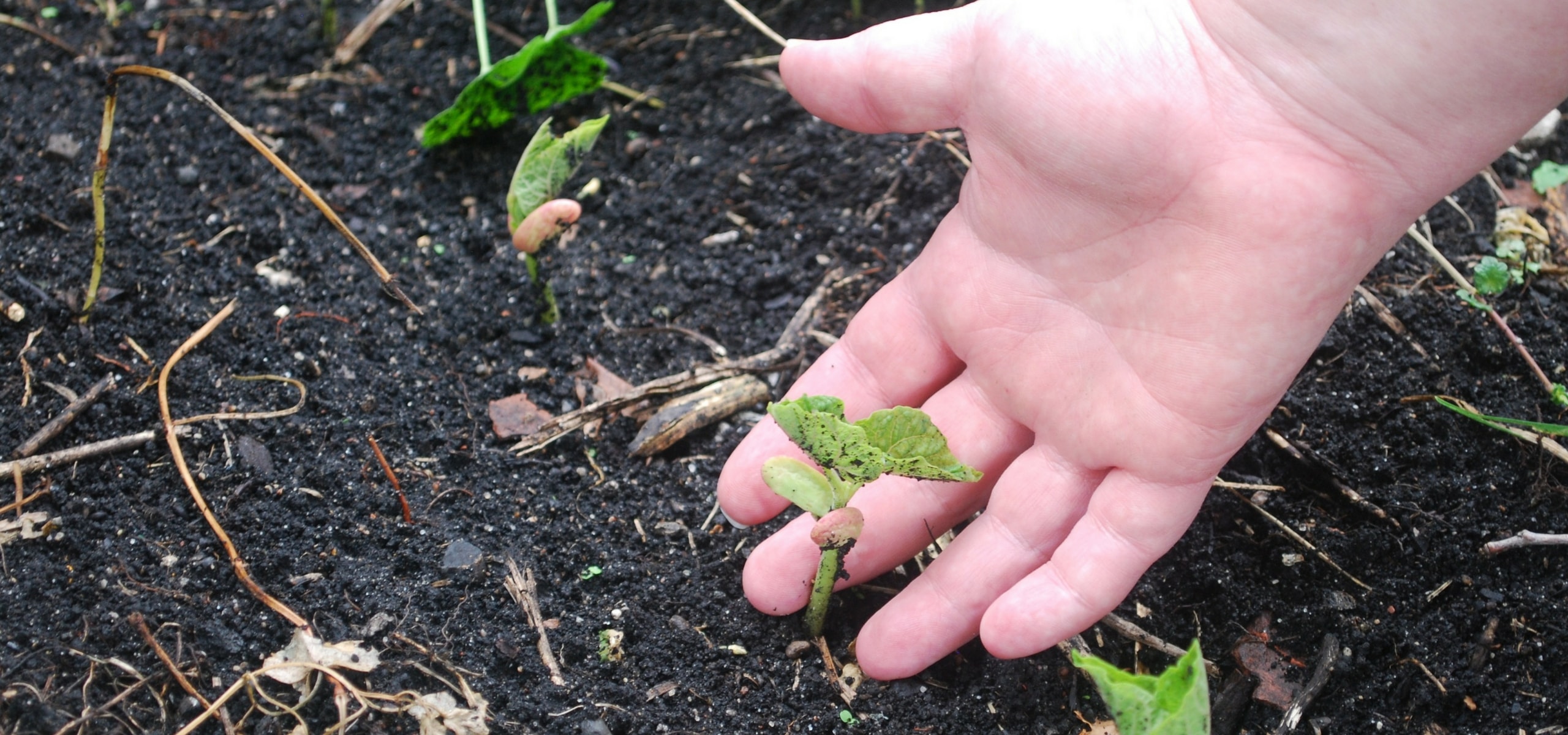
Keep an eye out for slug attacks, especially at the young plant stage.
To use it as a green manure, mow it before it fully goes to seed, then let it dry in place as mulch or lightly incorporate it into the top few centimetres of soil.
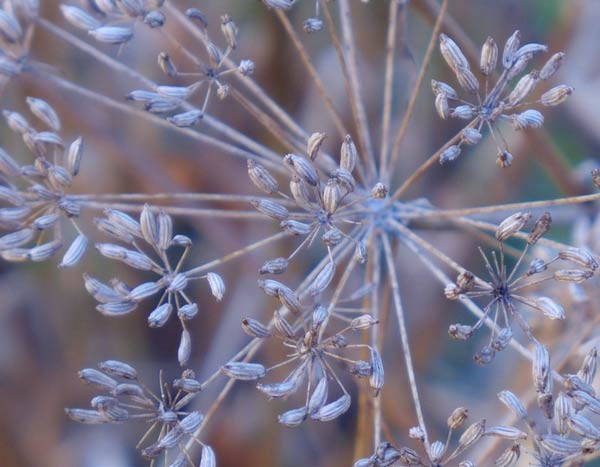
If you wish to avoid self-seeding, do not allow the pods to ripen.
No fertiliser is needed: it is a hardy plant, suitable for organically managed vegetable gardens.
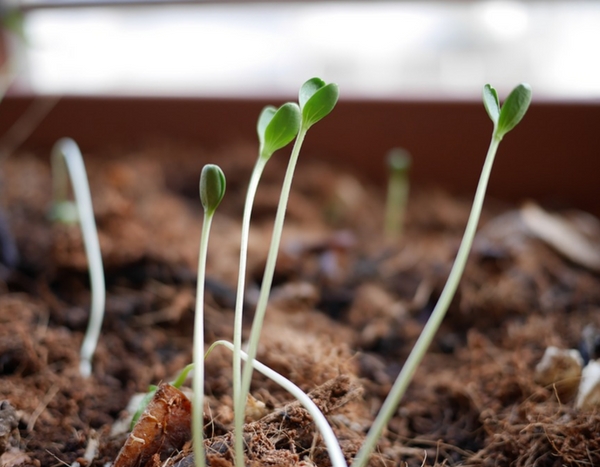
Seedlings
Care
Intended location
Planting & care advice
-
-
-
-
-
-
-
-
This item has not been reviewed yet - be the first to leave a review about it.
Recently viewed products
Haven't found what you were looking for?
Hardiness is the lowest winter temperature a plant can endure without suffering serious damage or even dying. However, hardiness is affected by location (a sheltered area, such as a patio), protection (winter cover) and soil type (hardiness is improved by well-drained soil).

The flowering period indicated on our website applies to countries and regions located in USDA zone 8 (France, the United Kingdom, Ireland, the Netherlands, etc.)
It will vary according to where you live:- In zones 9 to 10 (Italy, Spain, Greece, etc.), flowering will occur about 2 to 4 weeks earlier.
- In zones 6 to 7 (Germany, Poland, Slovenia, and lower mountainous regions), flowering will be delayed by 2 to 3 weeks.
- In zone 5 (Central Europe, Scandinavia), blooming will be delayed by 3 to 5 weeks.
In temperate climates, pruning of spring-flowering shrubs (forsythia, spireas, etc.) should be done just after flowering.
Pruning of summer-flowering shrubs (Indian Lilac, Perovskia, etc.) can be done in winter or spring.
In cold regions as well as with frost-sensitive plants, avoid pruning too early when severe frosts may still occur.
The planting period indicated on our website applies to countries and regions located in USDA zone 8 (France, United Kingdom, Ireland, Netherlands).
It will vary according to where you live:
- In Mediterranean zones (Marseille, Madrid, Milan, etc.), autumn and winter are the best planting periods.
- In continental zones (Strasbourg, Munich, Vienna, etc.), delay planting by 2 to 3 weeks in spring and bring it forward by 2 to 4 weeks in autumn.
- In mountainous regions (the Alps, Pyrenees, Carpathians, etc.), it is best to plant in late spring (May-June) or late summer (August-September).
The harvesting period indicated on our website applies to countries and regions in USDA zone 8 (France, England, Ireland, the Netherlands).
In colder areas (Scandinavia, Poland, Austria...) fruit and vegetable harvests are likely to be delayed by 3-4 weeks.
In warmer areas (Italy, Spain, Greece, etc.), harvesting will probably take place earlier, depending on weather conditions.
The sowing periods indicated on our website apply to countries and regions within USDA Zone 8 (France, UK, Ireland, Netherlands).
In colder areas (Scandinavia, Poland, Austria...), delay any outdoor sowing by 3-4 weeks, or sow under glass.
In warmer climes (Italy, Spain, Greece, etc.), bring outdoor sowing forward by a few weeks.
Shipping country and language
Your country of residence may be:
Your country of residence is:
For a better user experience on our website, you can select:
Your shipping country:
-
 Austria
-
 Belgium
-
 Bosnia & Herzegovina
-
 Bulgaria
-
 Croatia
-
 Cyprus
-
 Czechia
-
 Denmark
-
 Estonia
-
 Finland
-
 France
-
 Germany
-
 Greece
-
 Hungary
-
 Iceland
-
 Ireland
-
 Italy
Italy
-
 Latvia
-
 Liechtenstein
-
 Lithuania
-
 Luxembourg
-
 Malta
Malta
-
 Netherlands
-
 Poland
-
 Portugal
-
 Romania
-
 Serbia
-
 Slovakia
-
 Slovenia
-
 Spain
Spain
-
 Sweden
-
 Switzerland
Language:
-
French
-
 English
-
Spanish
-
Italian
-
German
-
Portuguese
-
Dutch
-
Finnish
My Account
Hello
My wish lists
My cart
Log in / Register
Existing customer?
This form is protected by reCAPTCHA - the Google Privacy Policy and Terms of Service apply.
New customer?
Create an account to track your orders, access our customer service and, if you wish, make the most of our upcoming offers.