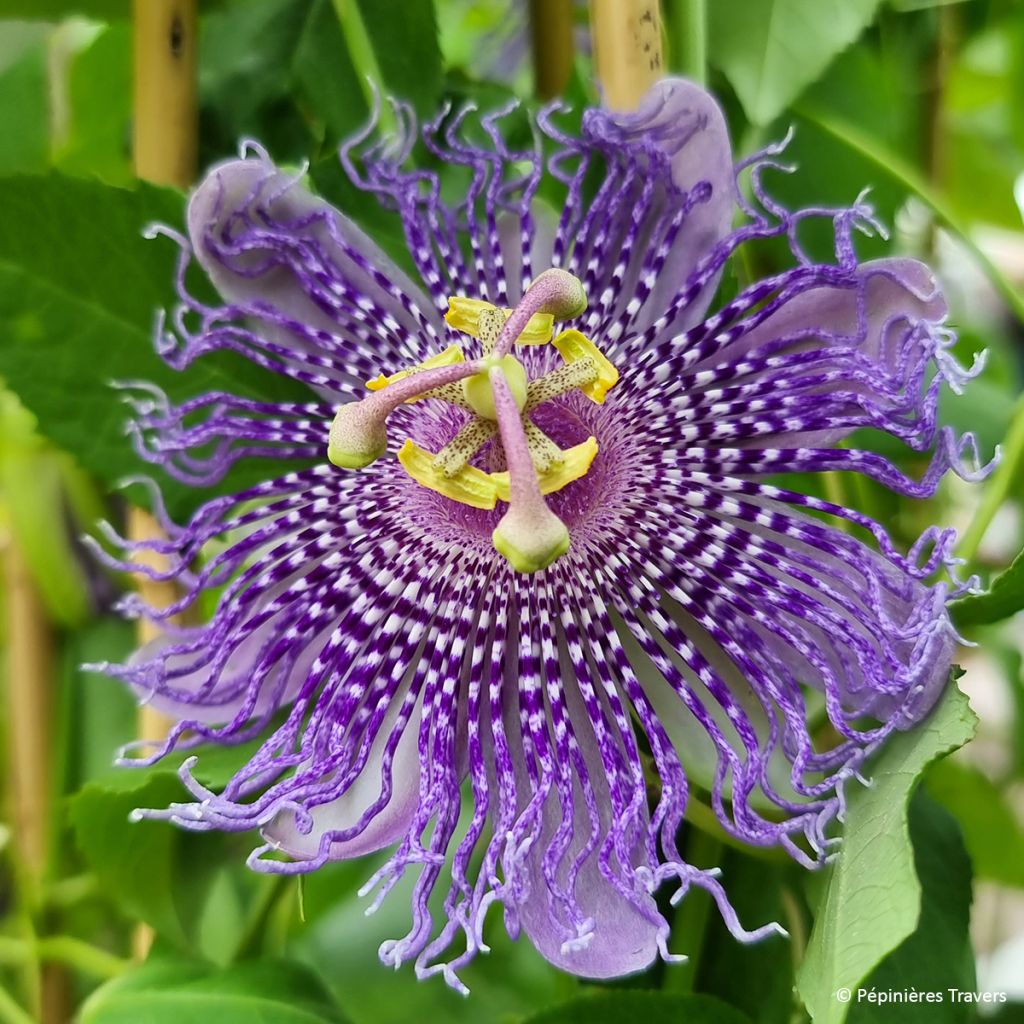
Passiflora Fata Confetto
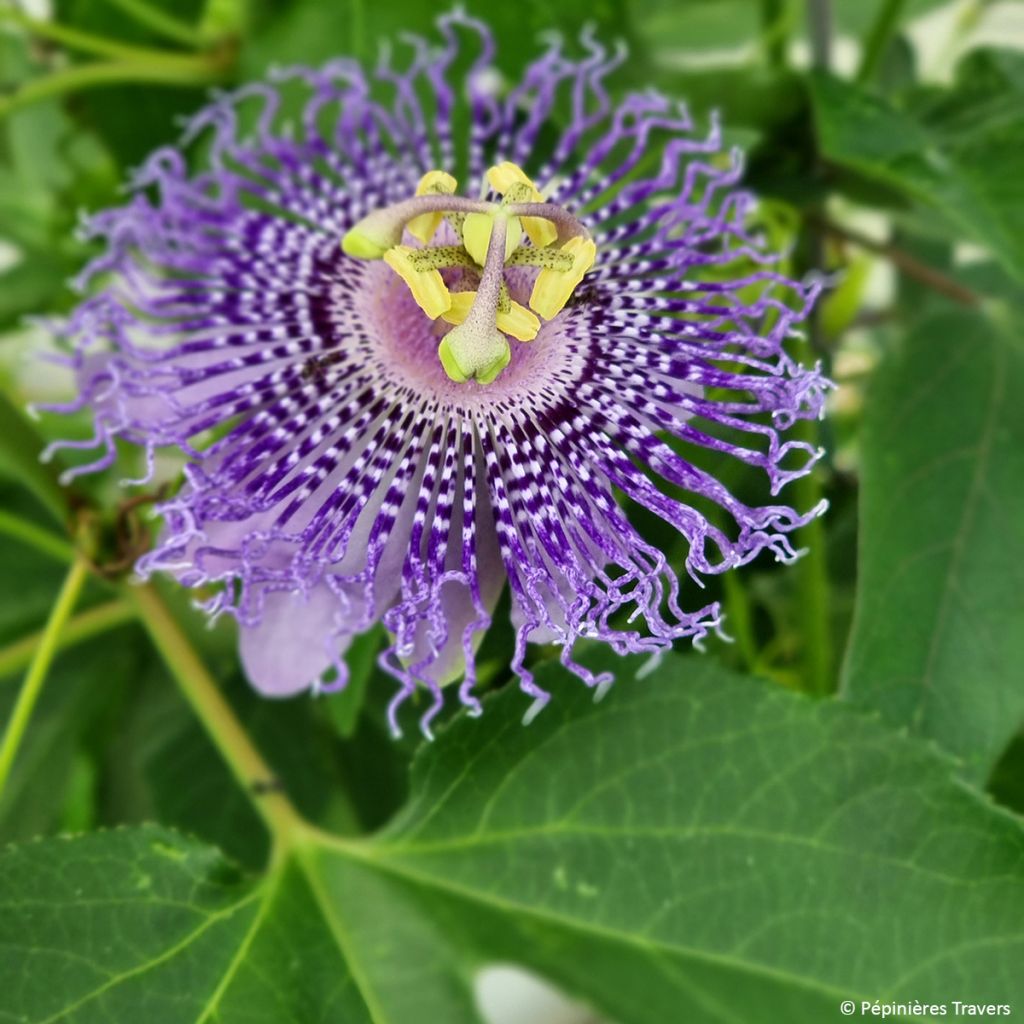
Passiflora Fata Confetto
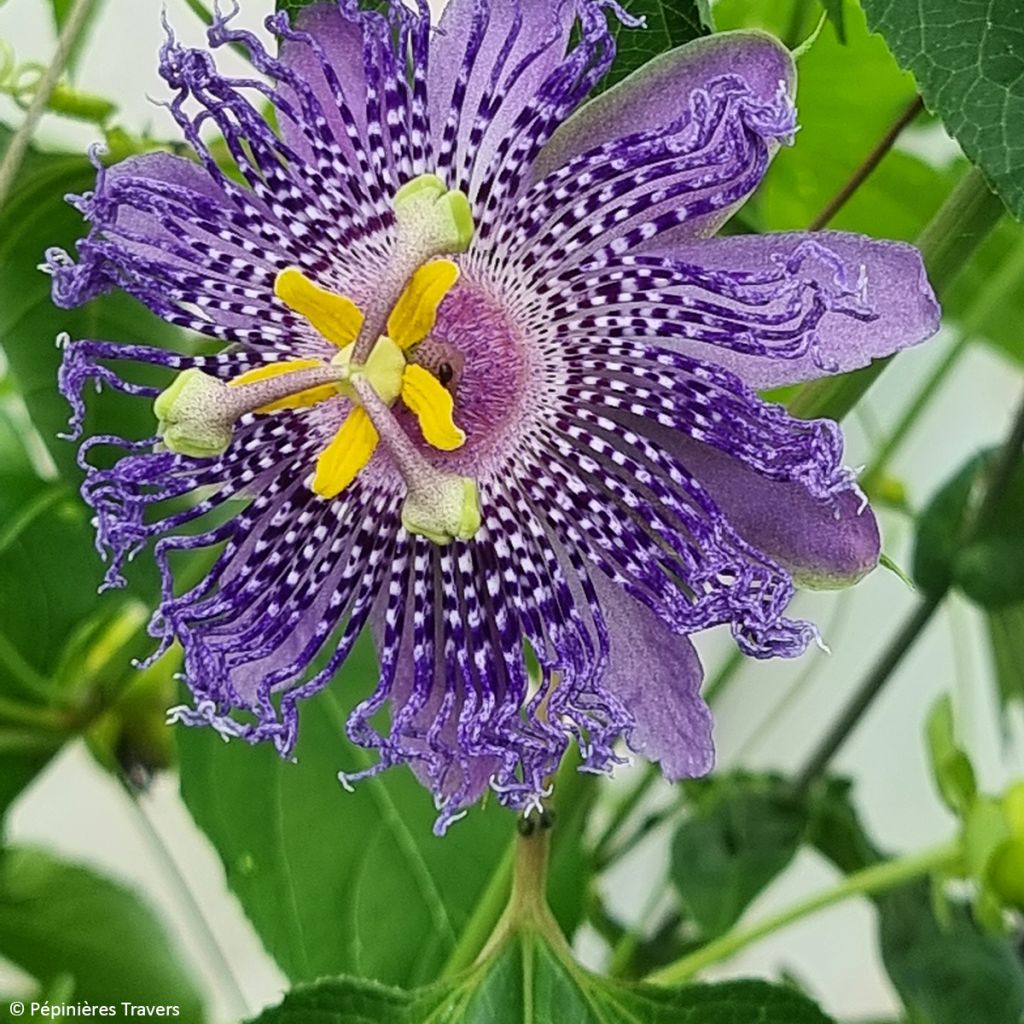
Passiflora Fata Confetto
Passiflora Fata Confetto
Passiflora x incarnata 'Fata Confetto'
Maypop, Purple Passionflower
At my daughter's, a year after planting, it is flowering: exactly as in the photos! It came through the winter (not very cold, -8°C) and new shoots have emerged. It's a very beautiful climbing plant!
Mi, 01/08/2024
Back-to-school special offer!
Get €10 off for every €50 you spend! And get up to €40 off on a single order.
How does it work?
1. Shop your favourites
Add your favourite plants to your basket. For every €50 you spend (excluding delivery charges, store credit and the plastic-free option), you’ll receive a €10 voucher.
€50 spent = €10 voucher
€100 spent = €20 voucher
€150 spent = €30 voucher
€200 spent = €40 voucher
2. Place your order
Once your basket reaches one of the spending thresholds, place your order. You can even choose your delivery date!
3. Receive your voucher
As soon as your order has been shipped, you’ll receive an email containing your personal voucher code and its value.
4. Use it on your next order
Your voucher is valid for 90 days from the date you receive it. It can be used once only, on a new order worth at least the value of the voucher, excluding delivery charges.
Please note: Vouchers can be combined with other offers, but cannot be split or refunded.
Home or relay delivery (depending on size and destination)
Important: You may be charged customs duties by your country’s customs authorities upon delivery.
Schedule delivery date,
and select date in basket
This plant carries a 12 months recovery warranty
More information
We guarantee the quality of our plants for a full growing cycle, and will replace at our expense any plant that fails to recover under normal climatic and planting conditions.

Would this plant suit my garden?
Set up your Plantfit profile →
Description
The 'Fata Confetto' Passionflower is a hybrid variety appreciated for the beauty of its flowers as well as the taste quality of its fruits. It is also among the most hardy fruit varieties. Derived from Passiflora x incarnata, it offers large, fragrant purple flowers, followed by round fruits that are yellow-orange when ripe, more flavourful than the species, with a sweeter taste and a slight hint of acidity. The passionflower requires well-drained, not too dry soil and heat in summer to bloom, and not too wet soil in winter.
Mostly native to tropical areas of South America, passionflowers belong to the large family of Passifloraceae, which includes 400 species and numerous spontaneous or horticultural hybrids. Passiflora incarnata is a wild species native to the southeastern United States and Mexico. The 'Fata Confetto' variety is a 2006 creation by Italian Maurizio Vecchia, it is a hybrid between Passiflora 'Guglielmo Betto' and Passiflora cincinnata 'Dark Pollen'.
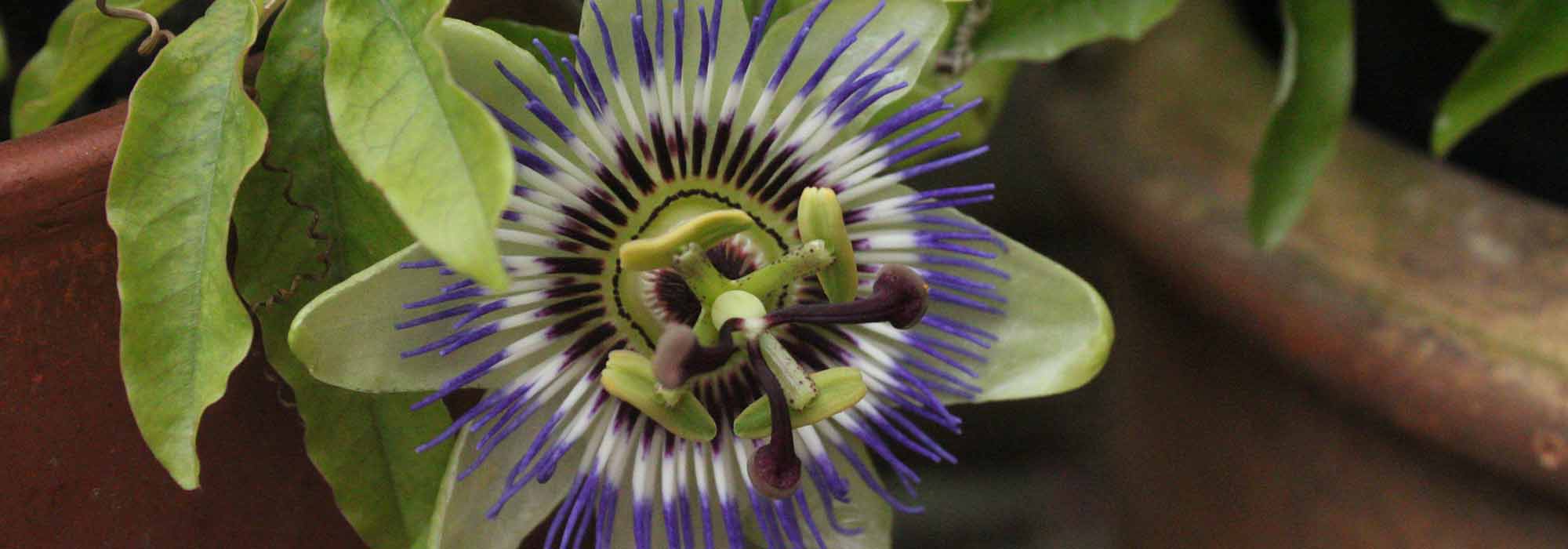
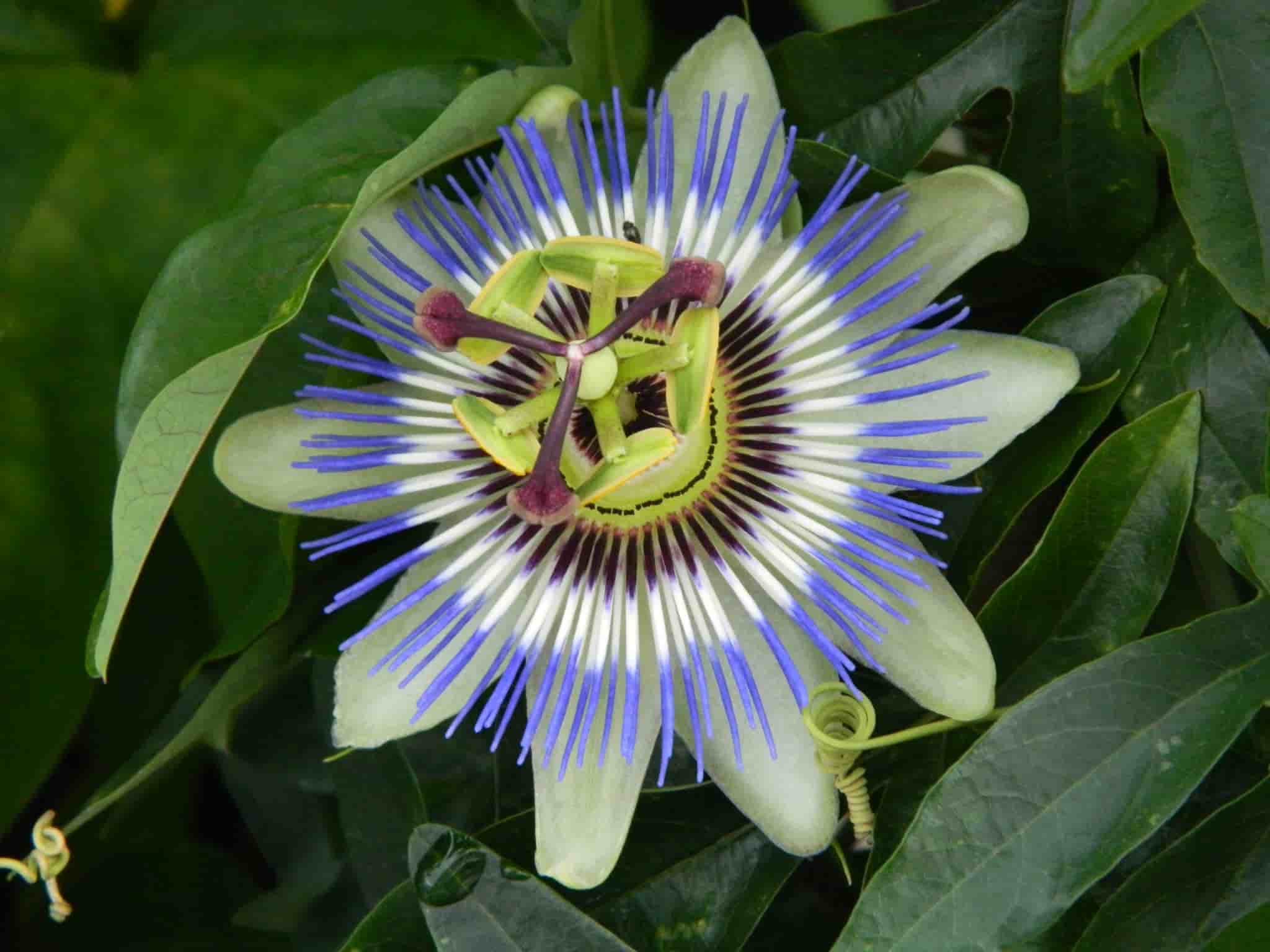
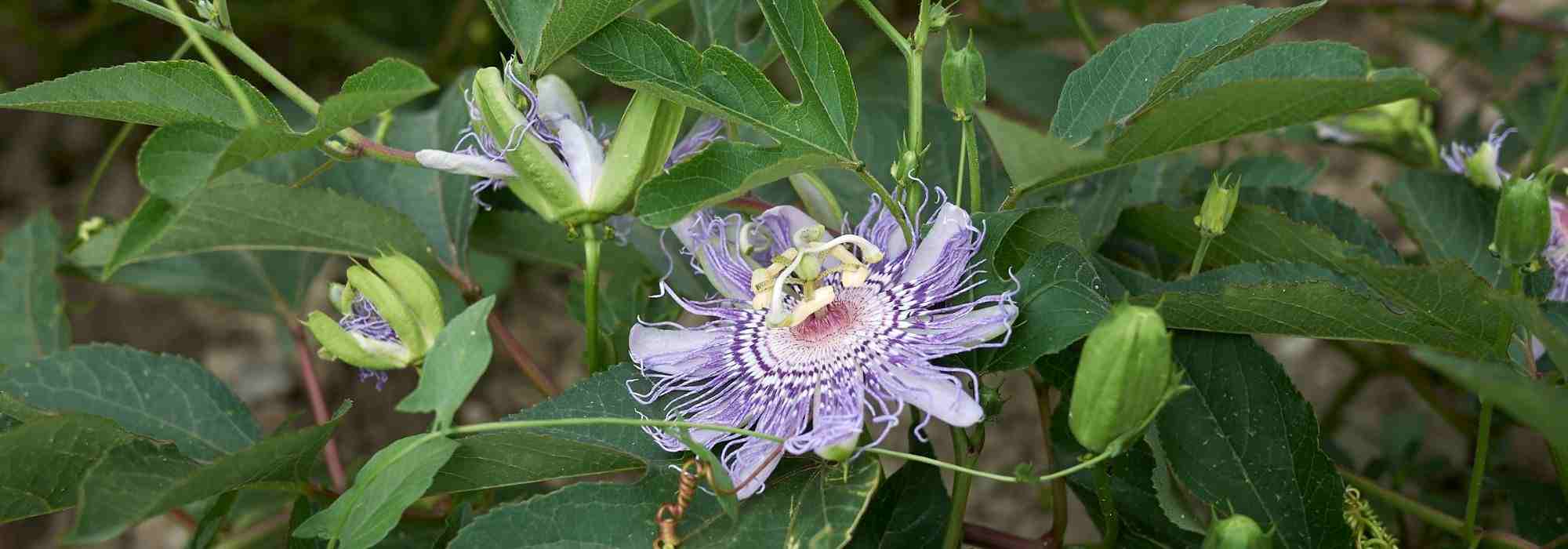
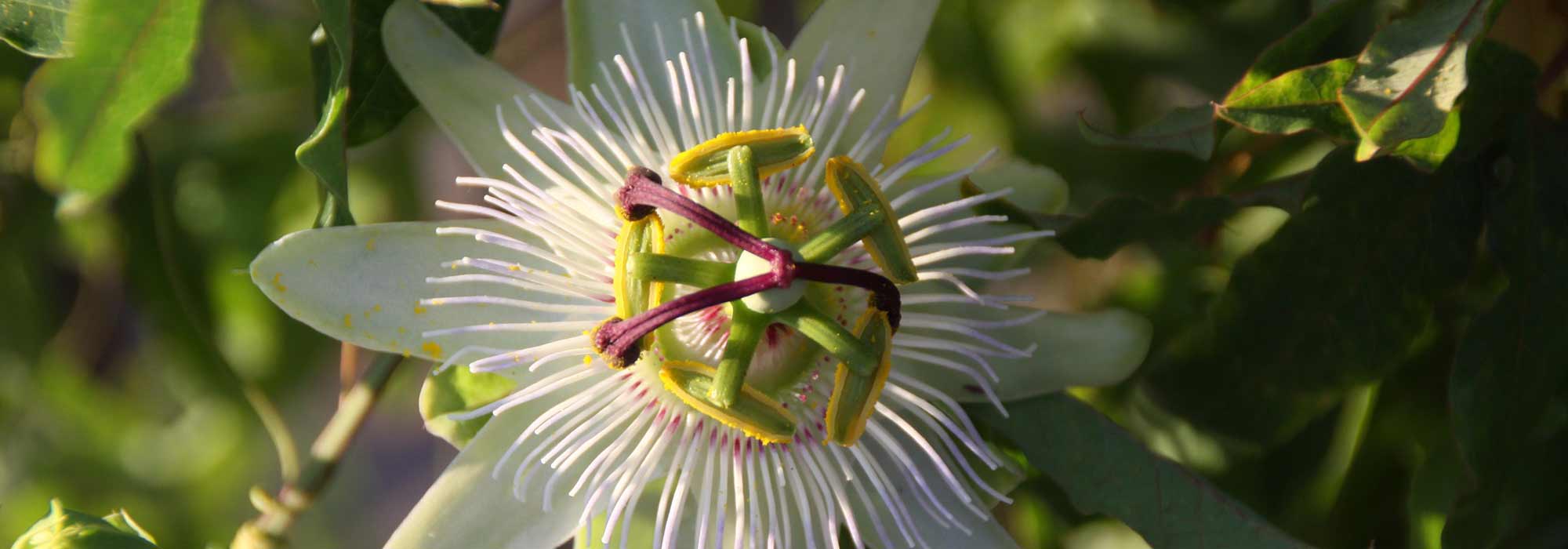
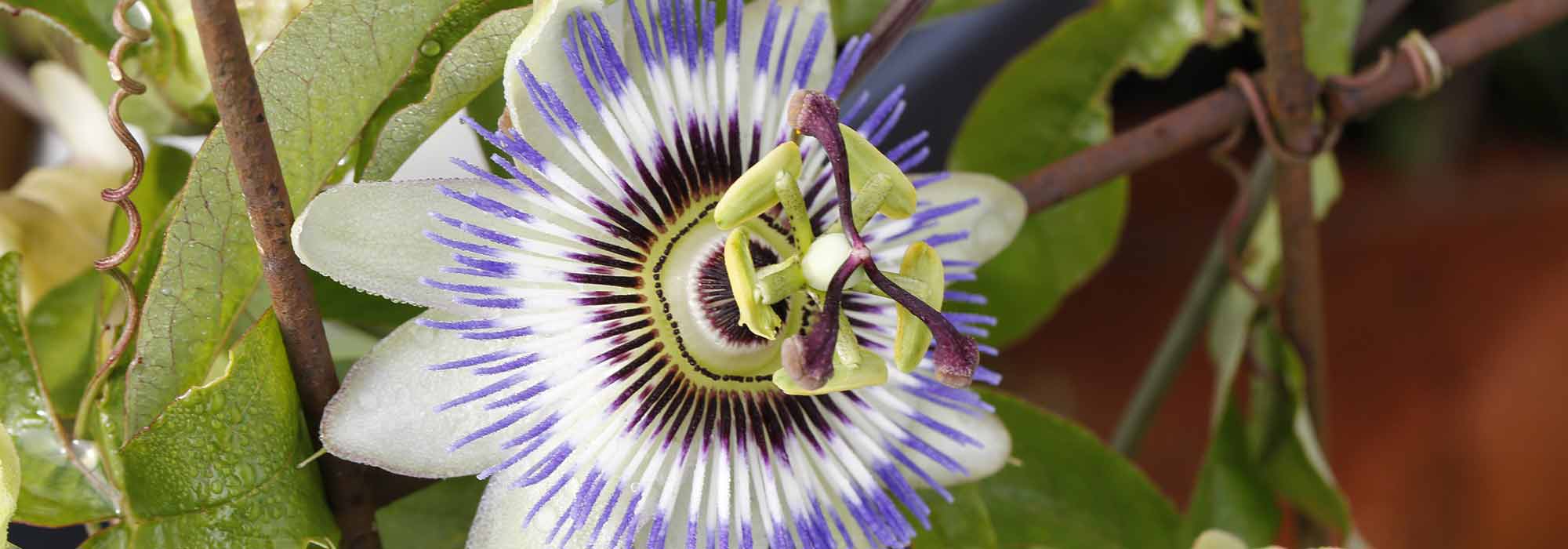
The 'Fata Confetto' Passionflower has a perennial crown that produces new twining stems each spring. The vegetation completely disappears in winter. The well-branched stems cling to their support with tendrils, reaching a height of 3m in one season and disappear with the first true frost. They are adorned with smooth, thick leaves, 8-12cm long by 7-11cm wide, divided into 3 lanceolate elliptical lobes with dentate margins, medium green on the upper side, traversed by light yellow veins. Its flowering period extends from June to October in favourable climates. Each stem bears 5 to 10, 8cm diameter, quite ephemeral flowers, constantly renewing on the plant. Its pleasantly fragrant flowers are formed by cream-white tepals. The fringed filaments of the crown are purple, striped with white. The heart of the flower is occupied by 5 tiger-striped stamens with yellow anthers and 3 mauve tiger-striped styles, united at the base. The unusual shape of the flower evolves: petals and sepals curve, while the crown of filaments folds and then straightens to avoid self-pollination. Once pollinated, the flowers produce edible egg-shaped fruits, measuring 5cm long. The translucent pulp is sweet, flavourful, and fragrant.
This Passionflower has crown hardy down to -12°C, after 2 or 3 years of cultivation. It is very important to protect the crown from cold and humidity during the first 2 winters. It thrives in all southern and Atlantic regions, venturing into well-protected inland gardens as well. It is used to dress walls, fences, porches, and trellises. When combined with an evergreen or winter-flowering climber, the decoration lasts all year round. Consider Clematis cirrhosa, for example. Plant it against a hedge, and it will decorate it with its flowers and fruits in summer. It is also lovely in conservatories, where it withstands very cold winters without damage.

Plant habit
Flowering
Foliage
Botanical data
Passiflora
x incarnata
'Fata Confetto'
Passifloraceae
Maypop, Purple Passionflower
Cultivar or hybrid
Planting and care
The Fata Confetto passionflower is a sun and heat-loving plant, which should be sheltered from cold and drying winds. Plant it in ordinary, deep, well-worked and well-drained soil, moist in summer and not too wet in winter. Its crown is hardy to -12°C, so it can be planted in open ground in the south in the olive tree zone as well as along the entire Atlantic coast. Inland, it needs a protected position, with good winter mulching. Grow it on a support to hold the weight of vegetation. Secure its branches well on the support, as the vegetation is exuberant. Prune before winter to maintain a reasonable size and cut back the main branches to encourage growth. In early spring, remove dead branches near the crown. Beware of scale insects and whiteflies, as well as cucumber mosaic virus. Treat preventively.
Fruits will only form on the plant in the presence of another passionflower, through cross-pollination. They can be consumed while still green or barely tinged with yellow.
Planting period
Intended location
Care
Planting & care advice
-
-
-

-
-
-
-
-

-
, onOrder confirmed
Reply from on Promesse de fleurs
Recently viewed products
Haven't found what you were looking for?
Hardiness is the lowest winter temperature a plant can endure without suffering serious damage or even dying. However, hardiness is affected by location (a sheltered area, such as a patio), protection (winter cover) and soil type (hardiness is improved by well-drained soil).

The flowering period indicated on our website applies to countries and regions located in USDA zone 8 (France, the United Kingdom, Ireland, the Netherlands, etc.)
It will vary according to where you live:- In zones 9 to 10 (Italy, Spain, Greece, etc.), flowering will occur about 2 to 4 weeks earlier.
- In zones 6 to 7 (Germany, Poland, Slovenia, and lower mountainous regions), flowering will be delayed by 2 to 3 weeks.
- In zone 5 (Central Europe, Scandinavia), blooming will be delayed by 3 to 5 weeks.
In temperate climates, pruning of spring-flowering shrubs (forsythia, spireas, etc.) should be done just after flowering.
Pruning of summer-flowering shrubs (Indian Lilac, Perovskia, etc.) can be done in winter or spring.
In cold regions as well as with frost-sensitive plants, avoid pruning too early when severe frosts may still occur.
The planting period indicated on our website applies to countries and regions located in USDA zone 8 (France, United Kingdom, Ireland, Netherlands).
It will vary according to where you live:
- In Mediterranean zones (Marseille, Madrid, Milan, etc.), autumn and winter are the best planting periods.
- In continental zones (Strasbourg, Munich, Vienna, etc.), delay planting by 2 to 3 weeks in spring and bring it forward by 2 to 4 weeks in autumn.
- In mountainous regions (the Alps, Pyrenees, Carpathians, etc.), it is best to plant in late spring (May-June) or late summer (August-September).
The harvesting period indicated on our website applies to countries and regions in USDA zone 8 (France, England, Ireland, the Netherlands).
In colder areas (Scandinavia, Poland, Austria...) fruit and vegetable harvests are likely to be delayed by 3-4 weeks.
In warmer areas (Italy, Spain, Greece, etc.), harvesting will probably take place earlier, depending on weather conditions.
The sowing periods indicated on our website apply to countries and regions within USDA Zone 8 (France, UK, Ireland, Netherlands).
In colder areas (Scandinavia, Poland, Austria...), delay any outdoor sowing by 3-4 weeks, or sow under glass.
In warmer climes (Italy, Spain, Greece, etc.), bring outdoor sowing forward by a few weeks.
Shipping country and language
Your country of residence may be:
Your country of residence is:
For a better user experience on our website, you can select:
Your shipping country:
-
 Austria
-
 Belgium
-
 Bosnia & Herzegovina
-
 Bulgaria
-
 Croatia
-
 Cyprus
-
 Czechia
-
 Denmark
-
 Estonia
-
 Finland
-
 France
-
 Germany
-
 Greece
-
 Hungary
-
 Iceland
-
 Ireland
-
 Italy
Italy
-
 Latvia
-
 Liechtenstein
-
 Lithuania
-
 Luxembourg
-
 Malta
Malta
-
 Netherlands
-
 Poland
-
 Portugal
-
 Romania
-
 Serbia
-
 Slovakia
-
 Slovenia
-
 Spain
Spain
-
 Sweden
-
 Switzerland
Language:
-
French
-
 English
-
Spanish
-
Italian
-
German
-
Portuguese
-
Dutch
-
Finnish
My Account
Hello
My wish lists
My cart
Log in / Register
Existing customer?
This form is protected by reCAPTCHA - the Google Privacy Policy and Terms of Service apply.
New customer?
Create an account to track your orders, access our customer service and, if you wish, make the most of our upcoming offers.