Which fruit trees to plant for an autumn harvest?
Our selection of trees that bear fruit in autumn
Contents
Peaches and apricots are gently bowing out, marking the end of summer. Yet the season in the orchard and vegetable garden is not over. By planting the right fruit trees (make the most of it, as autumn and winter are the planting seasons!), you can harvest fruit throughout autumn, a transitional season before the garden goes to sleep. Some of these autumn fruits can also be stored and enjoyed in winter. Discover our selection of fruit trees to plant for a wonderful autumn harvest.

Pip fruit trees, the orchard essentials
When we talk about autumn fruit, it is difficult to overlook the season’s star fruits: apples and pears. These two fruit trees are perfectly suited to the different climates found throughout France, and offer an immense diversity of flavours, textures, colours, sizes…
The apple tree, the most common tree in our orchards
Impossible not to mention the apple tree (Malus domestica) when discussing autumn fruit trees. Indeed, depending on the variety, harvesting takes place from the end of summer, in September, through to November for the latest varieties. By carefully selecting varieties, it is therefore possible to harvest apples for three months, bearing in mind that a large proportion of varieties can be stored throughout the winter. Although around ten varieties occupy the top spots, including the essential ‘Gala’, ‘Golden Delicious’, ‘Granny Smith’ and ‘Fuji’, it is perfectly possible to plant less well-known, heritage or local varieties.
The ‘Reine des Reinettes’ is one such variety, opening the harvesting season in early September with its sharp, juicy and fragrant apples. For an October harvest, the ‘Cox’s Orange Pippin‘ is well worth considering. It produces apples with a sweet, fragrant flavour and fine-textured flesh. To take you into winter, the ‘Belle de Boskoop’ is perfect: its juicy, sharp-fleshed fruit is harvested in October-November. These apples have excellent storage potential, as does ‘Fuji’, which is harvested from mid-October to mid-November.
Very hardy, the apple tree needs fertile, well-drained soil that is not too chalky, in a sunny position. Annual fruiting pruning in winter encourages generous harvests.
Further reading: Apple tree: how do you choose the best variety?
The pear tree, the other star of the autumn orchard
The pear tree (Pyrus communis) is the other essential fruit tree in the autumn orchard, with its fleshy, juicy and meltingly tender fruit, perfect for all kinds of indulgent treats. Like its cousin the apple tree, it produces successive harvests from September to November. ‘Williams Bon Chrétien‘, the most widely grown variety in the world, is harvested from August through to the very beginning of autumn. ‘Louise Bonne d’Avranches‘ produces medium-sized pears with sweet, juicy flesh in September. ‘Conférence‘ takes over in October, with its elongated pears and white, meltingly tender, very sweet flesh. To broaden the range of flavours, ‘Doyenné du Comice‘ is also harvested in October, but it is best enjoyed later, as it is a storing pear.
Pear trees particularly appreciate deep, cool, humus-rich soils and dislike excessive summer drought, which can cause the fruit to drop prematurely.
Further reading: Pear tree: our buying guide
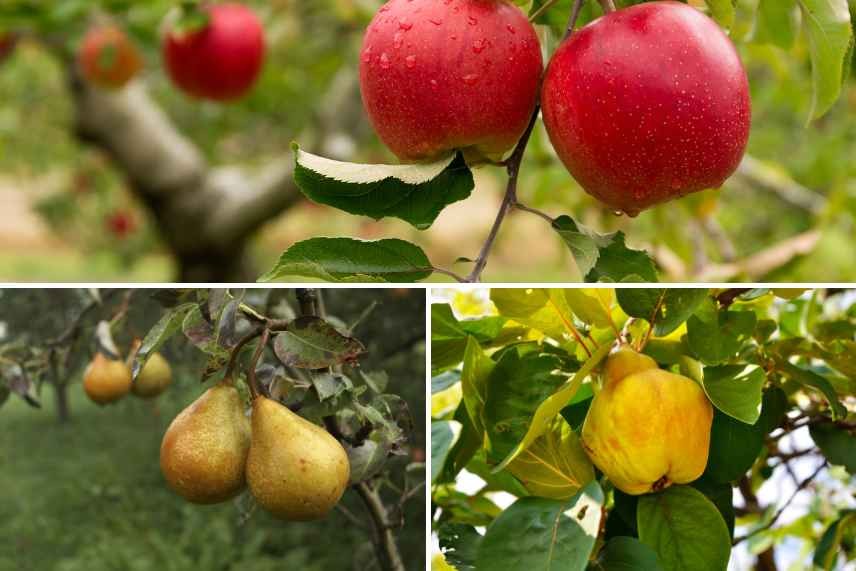
Apple trees, pear trees and quince trees: the essential trees of autumn
The quince tree, for subtle flavours
The quince tree perfectly symbolises autumn abundance, with its golden, downy fruit. This hardy, undemanding tree thrives in cool, deep, slightly clayey soils bathed in sunshine. Harvesting generally takes place during October, precisely when the quinces turn a bright yellow and detach more easily from their branches, while giving off a characteristic fragrance. High in tannins, quinces cannot be eaten raw. Once cooked, however, they develop an exceptional fragrance and flavour, and can be made into fruit jellies, jams, compotes…
The most common and highest-yielding varieties include ‘Cognassier Champion‘ and ‘Monstrueux de Wranja‘, which stand out for the generous size of their fruit and their yield.
Further reading: Quince tree: how do you choose the right variety?
Stone fruit trees to prolong summer
To enjoy stone fruits in autumn, choose a plum tree (Prunus domestica). Although the main plum season traditionally comes to an end in midsummer, certain late varieties extend the harvest until the first days of October. Among the best-performing selections for autumn, ‘Quetsche d’Alsace‘ and ‘Prune d’Ente‘ are essential choices. ‘Reine-Claude de Chambourcy’ is also a late variety, ideal for those who enjoy juicy, sweet and fragrant plums.
Plum trees particularly enjoy rich, deep soils that remain moist but are perfectly well drained. They need a position in full sun so that their sugar-rich fruits can develop their full aromatic potential. Light maintenance pruning carried out just after the harvest helps to maintain an open framework and prevent the appearance of wood diseases.
Further reading: Plum tree: how to choose the right variety?
Nuts, autumn treasures
Autumn is inseparable from the traditional harvest of nuts, with walnuts and hazelnuts being rich in nutrients to help us face the cold season. But chestnuts also have their place.
The hazel
Planting varieties of hazel (Corylus avellana) such as ‘Merveille de Bollwiller‘ or ‘Longue d’Espagne‘ promotes effective cross-pollination and guarantees an abundant harvest from September onwards. Hazelnuts are gathered when the husks open naturally and the shells turn a characteristic brown colour. They then need to be dried quickly in the open air to ensure optimal storage for several months.
The walnut
The walnut (Juglans regia), a majestic and imposing fruit tree, needs plenty of space in the garden and thrives in deep, perfectly drained soil. Walnuts are harvested from the ground as soon as they naturally fall from their split husks, generally between the end of September and the end of October. Cultivars such as ‘Franquette‘ adapt remarkably well and produce tasty kernels rich in essential fatty acids and minerals.
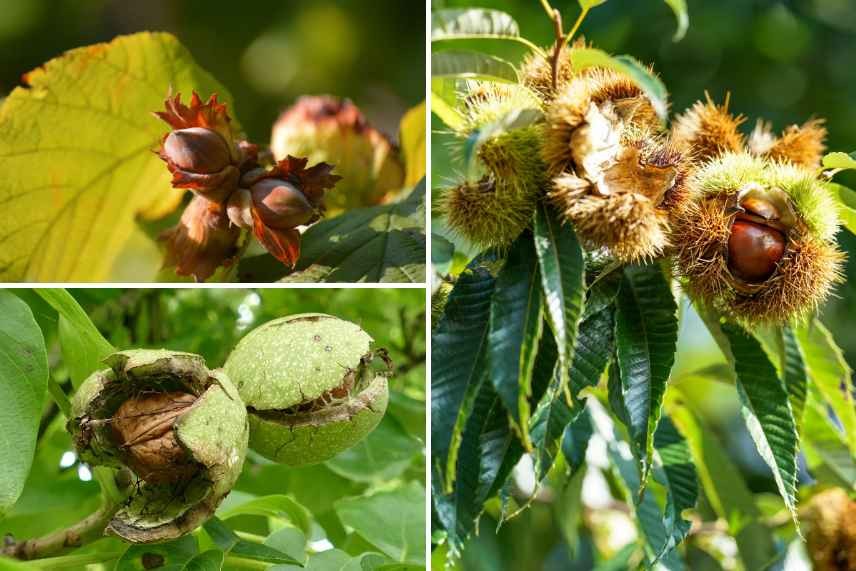
Traditional nut trees
The sweet chestnut
The sweet chestnut (Castanea sativa) instantly evokes the landscapes of upland areas, or misty October afternoons spent gathering chestnuts. The harvest takes place from September to November, precisely when the spiny husks open on the ground. To grow this giant of acidic, well-drained soils in the garden, choosing grafted varieties is essential for obtaining large, high-quality fruit, such as the variety ‘Marigoule’. This cultivar offers excellent natural resistance to disease while guaranteeing fruit that is easy to peel.
Read also
11 hardy fruit trees for winter coldGrapevine, the symbol of autumn
The grapevine (Vitis vinifera) naturally finds its place in autumn landscapes punctuated by the grape harvest. Grape ripeness extends from September to October, depending on the growing regions and the varieties chosen. For family table use, it is preferable to choose varieties suited to temperate climates and resistant to the main fungal diseases, such as ‘Muscat de Hambourg‘ for its deliciously fragrant black grapes, ‘Chasselas‘ for its golden grapes with juicy flesh, or ‘‘Alphonse Lavallée‘ for its generous clusters of large, pruinose grapes that tempt the taste buds.
Plant grapevines in a sunny position, ideally leaning against a wall facing due south or trained over an attractive pergola, in stony, free-draining, moderately fertile soil.
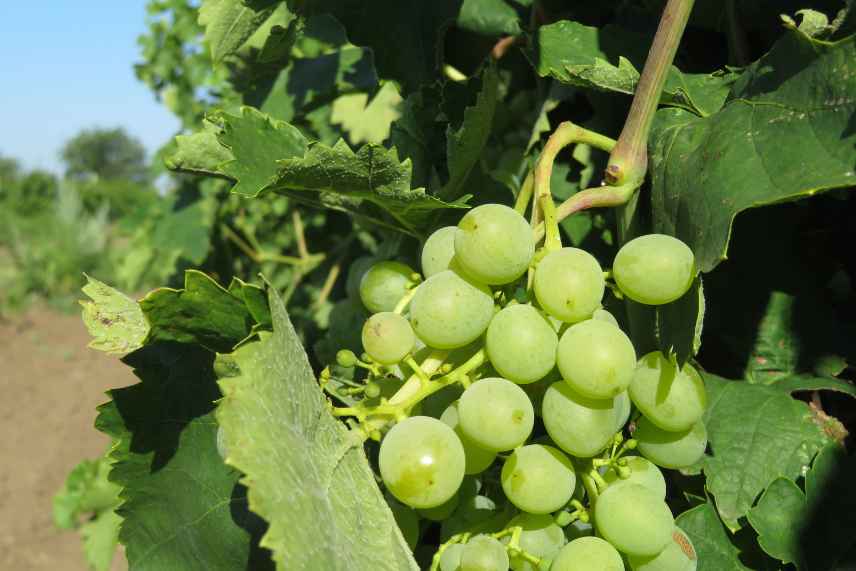
‘Chasselas’ grapes with golden fruits and juicy flesh,
More unusual fruit trees
In addition to these traditional fruit trees, the orchard can accommodate less common species with fruits that are just as delicious.
- The kiwi (Actinidia deliciosa) and its smaller cousin, the kiwaï (Actinidia arguta), ripen in mid-autumn, just before the first hard frosts arrive. They form hardy fruiting lianas. To obtain fruit, you generally need one male plant for several female plants. Among kiwis, ‘Hayward‘ is a classic and essential dioecious variety, producing brown, villous fruits with highly acidic emerald-green flesh, traditionally harvested in November. Kiwaïs, on the other hand, are characterised by their smooth skin, which makes them entirely edible, and are sweeter. Self-fertile varieties such as ‘Issai‘ or carefully selected combinations of male and female plants such as ‘Weiki‘ guarantee an abundant crop.
- The common medlar (Mespilus germanica), once widespread in old orchards, is a botanical curiosity. This hardy tree, with its twisted habit and downy foliage that turns coppery bronze before falling, produces unusual globose fruits topped with broad evergreen sepals, commonly known as medlars. What makes them special is that they are eaten when over-ripe, so they should only be harvested after the first frosts. The medlar is quite happy in ordinary soils, even chalky or slightly clay soils, provided they are well drained.
- The pomegranate (Punica granatum) brings a Mediterranean touch to the autumn garden, with both its bright golden-yellow foliage and its spherical fruits with beautiful coppery highlights. The tree enjoys a hot aspect and poor but perfectly drained soil, and dislikes stagnant winter moisture, which tends to rot its fragile roots. It is only hardy down to -8 to -10 °C, so should be reserved for warm regions. Varieties such as ‘Wonderful‘ or ‘Mollar de Elche‘ produce pomegranates with excellent flavour.
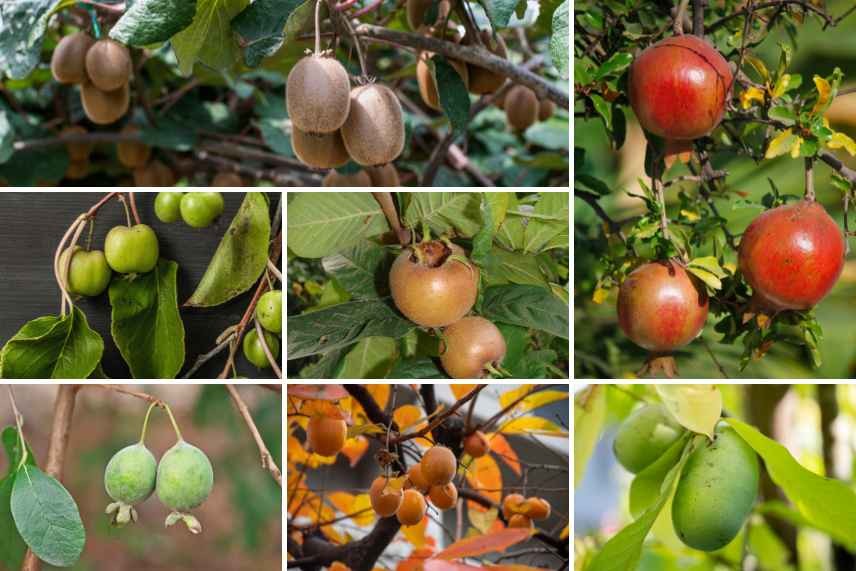
A touch of originality in the orchard with these fruit trees
- The Brazilian guava or feijoa (Acca sellowiana) produces matt green, ovoid fruits that naturally fall to the ground when they ripen between October and November. This evergreen shrub, with downy, silvery grey-green foliage and surprising white flowers with purple stamens, thrives particularly well in mild oceanic or Mediterranean climates, while tolerating moderate frosts. The fruit’s translucent, jelly-like and creamy flesh has a subtle, complex and deeply exotic fragrance. To encourage fruiting, it is best to plant two different varieties together, such as ‘Mammoth‘ and ‘Coolidge‘. Feijoa prefers fertile, humus-bearing, perfectly drained soil and a sunny position.
- The trilobed pawpaw (Asimina), also known as pawpaw, produces fruit with tropical flavours between September and October. Able to withstand cold, it also develops magnificent yellow foliage in autumn. Growing pawpaw requires particular care when choosing the soil, which must be deep, rich, moist, slightly acidic and perfectly drained to prevent excess stagnant water.
- The Japanese persimmon (Diospyros kaki) is a fruit tree that puts on a striking display in late autumn with its persimmons, which remain on the bare branches. The choice falls between two main categories: astringent persimmons, which must become over-ripe to lose all their harshness, and non-astringent persimmons, known as Sharon fruit, such as ‘Fuyu‘ or ‘Sharon‘, which remain firm and crunchy.
- Subscribe!
- Contents
This form is protected by reCAPTCHA - the Google Privacy Policy and Terms of Service apply.

































Comments