How can you tell if a plant has been damaged by frost?
Our tips for easily recognising damage caused by freezing temperatures
Contents
Blackened leaves, softened stems and drooping foliage: a plant that has been damaged by frost often displays characteristic symptoms. However, your plant is not necessarily dead! To find out whether it can recover, you need to examine its stems, buds and sometimes its roots. Discover all our advice on recognising frost damage and, above all, assessing your plant’s chances of recovery, whether it is grown in a pot or in the open ground.

Essential information on frost-damaged plants
|
What are the signs that a plant has been damaged by frost?
The first symptoms of frost logically appear on the leaves and young shoots. The damage can vary depending on the plant, the length of exposure to frost and the severity of the cold.
Blackened, limp or dried-out leaves
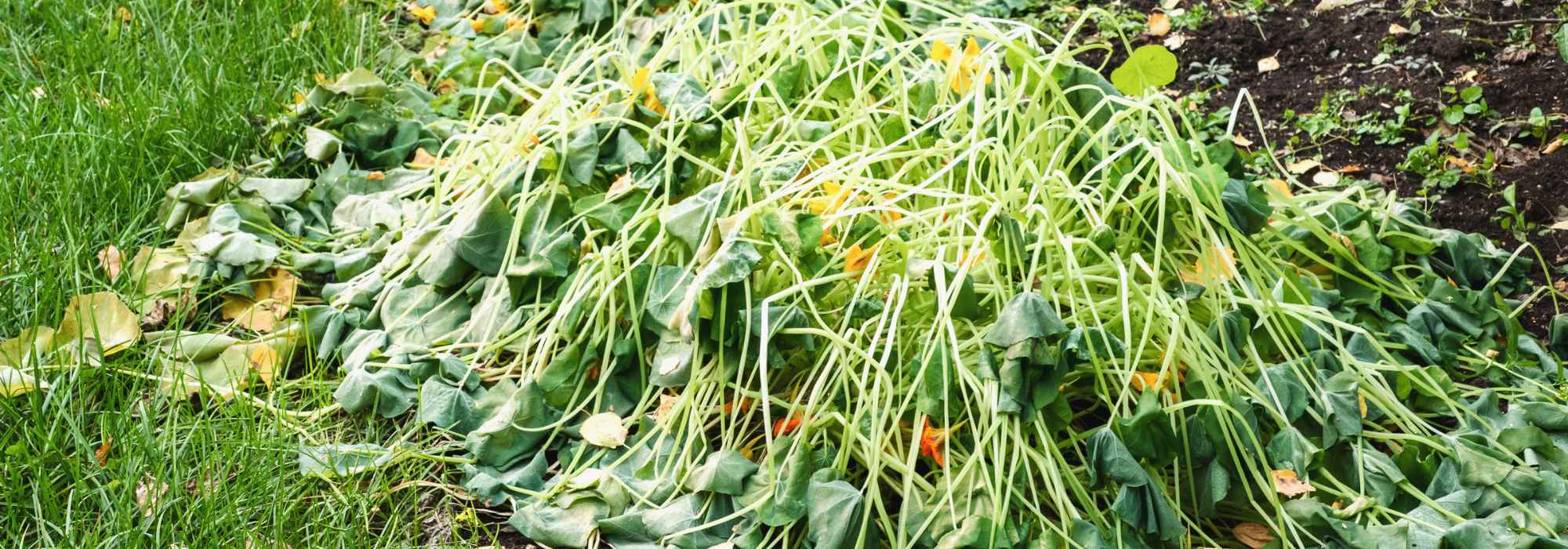
After a frost, leaves may become translucent and waterlogged, as if saturated with water, then turn brown or black. Tender stems lose their firmness and collapse. This is particularly common in dahlias, cannas and pelargoniums. In succulent plants, the tissues, which are naturally saturated with water, become completely soft and turn into a soft, watery mass.
On evergreen shrubs, such as pittosporums, frost tends to cause browning and drying of the foliage, sometimes several days after the cold spell.
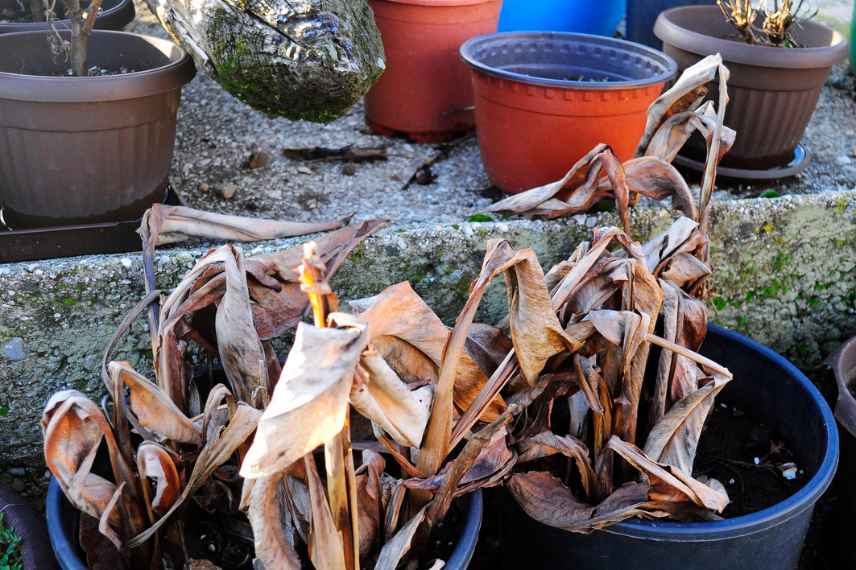
Blackened or dry foliage after frost does not necessarily mean that the plant’s crown has died.
Stems, buds and roots: less visible damage
Cold can also destroy spring buds and damage young shoots, simply because they contain more sap, but less of the protective compounds it carries. Severe frosts can also reach the roots. The damage is not always immediately visible, particularly in woody plants.
Plants grown in pots are much more vulnerable, as their roots benefit less from the thermal insulation provided by garden soil.
How can you tell whether a frost-damaged plant is still alive?
To determine whether a frost-damaged plant can recover, you need to check the condition of its living tissues. Several simple checks can help you assess its chances of survival.
Carry out the scratch test on the stems
For a tree or shrub, gently scratch a small area of bark on a stem or branch with your fingernail. If the tissues beneath the bark, known as the cambium, are green and slightly moist, the stem is still alive. If they are brown and dry, this section is probably dead.
Repeat the test progressively lower down the branch, moving towards the root collar. Even when the tips have been destroyed, the base may still be alive.
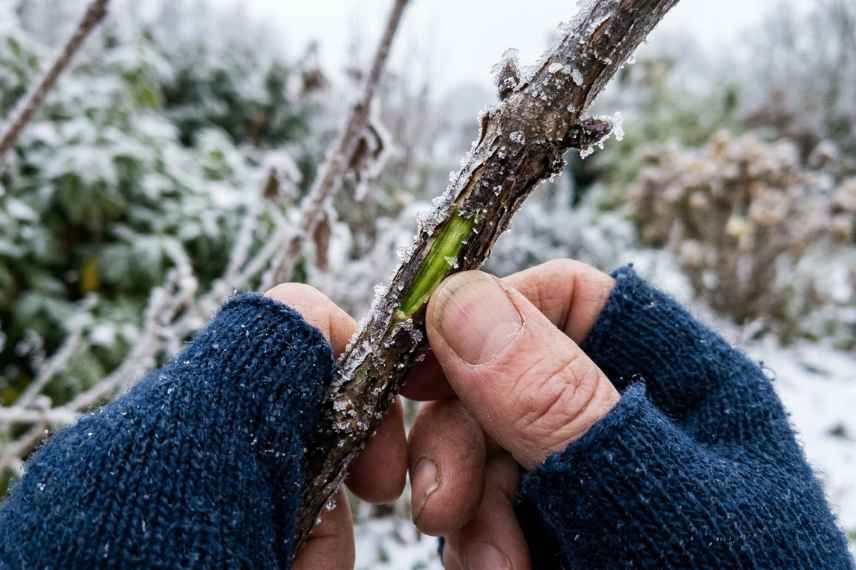
The scratch test checks whether the tissues of a woody stem are still alive (AI-generated image)
Check the buds and new shoots
Firm, well-formed buds are encouraging, but their appearance does not guarantee that they are alive. Blackened or dried-out buds are more worrying.
In some perennial plants, such as fuchsias and agapanthus, the above-ground parts may be destroyed while the crown remains alive. The plant may then produce new shoots from its base.
Check whether the root collar or roots have frozen
The survival of the root collar is crucial to the plant’s recovery. A firm root collar, without any softening or rot, is a fairly positive sign. On the other hand, soft, deeply browned tissues may indicate serious damage.
For plants in pots, simply examine the surface roots of the rootball. Firm, flexible roots are generally a good sign, whereas soft roots are cause for concern.
Recognise the different symptoms in different plants and assess their chances of recovery
| Type of plant | Immediate symptoms of frost damage | What to observe | Interpretation and prognosis |
| Herbaceous perennial plants | Foliage completely liquefied or dry | Root collar and crown | Healthy, firm root collar: very favourable sign for survival. Protected underground crown: good recovery |
| Plants in pots | Complete collapse of the foliage | Roots | Soft, decomposed roots: damaged root system, with recovery seriously compromised |
| Mediterranean and exotic plants | Severe defoliation, deeply blackened wood | Buds, foliage | Black, soft leaves: the foliage may be affected, but the plant is not necessarily dead if the heart and crown have not frozen. Firm buds: recovery is possible |
| Trees and shrubs with hardwood | Split bark, dry branch tips | Twigs and stems | Green stem beneath the bark: tissues are still alive. Brown, brittle twigs: the twigs are probably dead |
What should you do when a plant has been damaged by frost?
A plant damaged by frost should be protected and, above all, left to rest. Acting too soon can be counterproductive. Indeed, premature pruning or excess water can do more harm than good.
Should you cut off frost-damaged leaves and branches?
It is best to wait until the severe frosts are over before pruning the damaged parts. Dead stems and leaves may still protect the crown from the cold. Unless they visibly show signs of advanced decomposition, which could increase the risk of rotting.
In spring, when new growth is clearly visible, remove dead branches by cutting back to healthy wood.
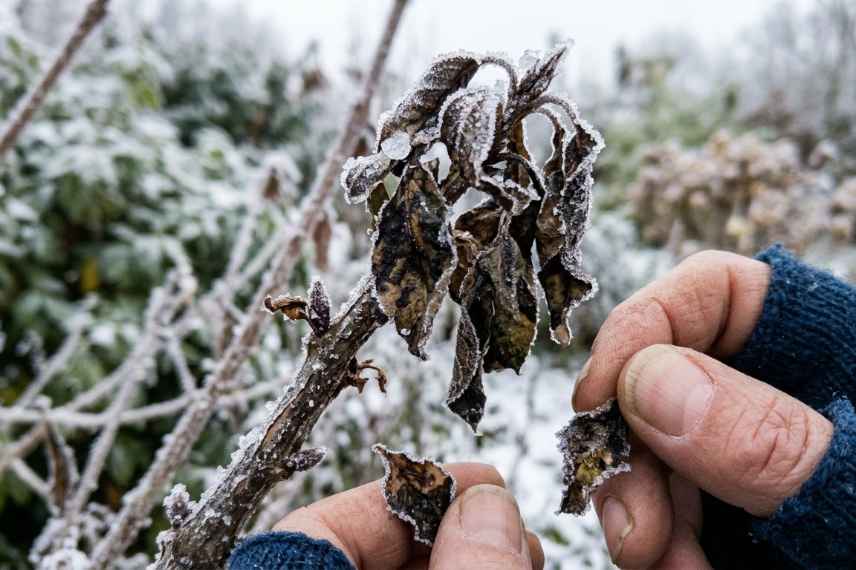
It is best to wait until the severe frosts are over before pruning the damaged parts. (AI-generated image)
How can you help a frost-damaged plant to recover?
- Plants in pots can be moved to a position sheltered from wind and further frosts. The compost should be kept moist, but not waterlogged. As for fertilising, this is not recommended until the plant shows signs of recovery in spring.
- Plants growing in the ground can be protected with a thick mulch, which will protect the crown and roots from further frosts.
How long should you wait to find out whether a plant has really been damaged by frost?
You need to wait several weeks, or even several months, for signs of recovery to appear. For later plants, the latest you may have to wait is the end of spring or the beginning of summer. The recovery period depends on the species, the climate and the severity of the damage. For example, a crape myrtle (Lagerstroemia) has a very late spring recovery, so it is wiser to wait until the beginning of summer.
Frequently asked questions about frost-damaged plants
Can a frost-damaged plant turn green again?
Leaves destroyed by frost will not turn green again. However, if the stems, buds or crown are still alive, the plant may produce fresh, healthy green foliage the following spring.
Can you save a potted plant that has been damaged by frost?
Yes, if its roots have survived. Move the pot to a sheltered spot, allow the rootball to thaw gradually and check the moisture level of the growing medium. Avoid placing a frost-damaged plant directly next to a radiator.
How can you tell the difference between a frost-damaged plant and a dehydrated plant?
Both may have brown, wilted leaves. The sudden appearance of symptoms after a frost points to cold damage, while the condition of the soil and a prolonged lack of watering suggest a possible lack of water.
Can a hardy plant die because of frost?
Yes. A plant’s hardiness also depends on its growing conditions. Prolonged cold, excessively wet soil, recent planting or repeated freezing and thawing can compromise its survival, even if it is reputed to be hardy.
- Subscribe!
- Contents
This form is protected by reCAPTCHA - the Google Privacy Policy and Terms of Service apply.

































Comments